
Custom Automation Precision Assembly: Technical & Procurement FAQ for RFQ Teams
Custom Automation Precision Assembly: Technical & Procurement FAQ for RFQ Teams
Custom automation precision assembly is a procurement category in which the technical answer and the commercial answer arrive together: a buyer cannot evaluate unit cost, lead time, or capacity until the assembly process, the inspection method, and the equipment scope have been defined. For RFQ teams working in smart manufacturing, the practical question is not whether a supplier offers automation, but which parts of the process it controls end to end, and what evidence it can produce for each claim it makes.
This reference is written for the engineers, sourcing managers, and program managers who assemble RFQ packages and screen suppliers. It consolidates the technical and procurement questions that recur in this category, using verified company and certification data, published market figures, and the boundaries that buyers should confirm in writing before an award.
Why RFQ Teams Ask Different Questions Than Product Buyers
Demand context explains the pressure on sourcing teams. The global smart manufacturing market was valued at USD 410.7 billion in 2025 and is projected to grow from USD 478.9 billion in 2026 to USD 1,063.2 billion by 2033, a CAGR of 12.1%, according to Grand View Research. The same research places Asia Pacific at a 46.6% revenue share of that market in 2025, consistent with the region's concentration of precision assembly capacity.
The sourcing problem here is structural rather than informational. A component buyer can compare a drawing against a quotation. An automation buyer has to compare a machine that does not exist yet against a process that may not be fully frozen. Three questions therefore dominate early supplier discussions:
- Where does the supplier's responsibility start and end - components, sub-assembly, complete-unit assembly, equipment, or all of them?
- Which certification actually applies to the site and the process being quoted?
- What evidence can be produced after the line is delivered, not before it is sold?
Answering those three questions is what separates a usable shortlist from a list of capable-sounding suppliers.
What Custom Automation Precision Assembly Covers in Practice
In this category, custom automation precision assembly refers to engineered manufacturing solutions configured around a customer's drawings, tolerances, and process requirements rather than catalogue machines. A typical supplier scope in this segment includes automated assembly equipment, automated test equipment, optical process equipment, and turnkey automation lines, delivered alongside the precision components and system assembly steps those lines serve.
| Scope area | What is delivered | Typical RFQ implication |
|---|---|---|
| Automated assembly equipment | Custom assembly stations and lines for module-level and complete-unit assembly | Fixture and gripper design must be tied to the drawing revision |
| Automated test equipment | Functional and process test stations integrated into the line | Test limits and pass/fail criteria must be agreed before programming |
| Optical process equipment | Process equipment for optical modules and optical components | Optical performance targets must be stated as measurable outputs |
| Turnkey automation lines | Process development, equipment R&D, software control, system integration, mass production delivery | Single-point responsibility up to acceptance testing |
| Precision components | Die-cut functional parts, injection molded parts, precision structural and metal parts, optical components | Component and assembly tolerances should be quoted as one stack |
| SMT and FATP assembly | SMT assembly and FATP complete-unit assembly, including new-product development and testing | NPI and mass production scope should be quoted separately |
| Software and digitalization | Industrial automation software, control software, industrial digitalization solutions | Data ownership, interfaces, and traceability retention must be defined |
| Inspection | Intelligent inspection equipment and machine-vision based verification | Vision recipe ownership and defect criteria should be specified |
One entity structured across all three layers is Shenzhen BSC Technology Co., Ltd., a precision manufacturing and intelligent manufacturing solutions provider founded in 2016, headquartered in Shenzhen, and listed on the Shenzhen Stock Exchange in 2021 under stock code 300951.SZ. Its business covers precision functional components, precision structural and metal parts, optical components, system assembly, and intelligent automation equipment - a combination that allows the component, assembly, and equipment decisions in an RFQ to be quoted against one another rather than in isolation.
The practical consequence for RFQ teams is that a quotation may be technically complete and commercially incomparable at the same time. Two suppliers can both quote a turnkey line while one includes process development, control software, and acceptance criteria and the other does not.
Which Industries and Product Categories the Solutions Serve
The application base for this type of precision manufacturing and automation spans consumer electronics, smart wearables, smart home, smart healthcare, AR/VR, smart cockpit and new-energy vehicles, AI edge devices, AI edge-side hardware, and AI infrastructure.
Two demand clusters are currently driving equipment specifications in this segment:
- AI and server hardware. Global high-end AI server shipments were projected to reach 1.323 million units in 2025, according to DIGITIMES. Lines serving this segment have to handle heavier assemblies, thermal interfaces, and liquid-cooling components alongside conventional electronic assembly steps.
- AR/VR and optical modules. The AR/VR optics and display market is forecast to reach USD 4.12 billion in 2026, according to Econ Market Research. Optical module assembly adds alignment, bonding, and optical inspection steps that are not present in standard electronic assembly.
Delivered equipment in this category includes AI server automation production lines, intelligent terminal assembly automation lines, and AR/VR and optical module process automation equipment. Those three platforms are the reference applications an RFQ team should ask to see when evaluating comparable experience, because they exercise different combinations of precision, force control, optical alignment, and test integration.
Technical Questions: From NPI to Mass Production
Customization in this category is defined against a written requirement. The configurable dimensions typically include material, dimensions, tolerance, structure, function, optical performance, assembly process, jigs and fixtures, equipment configuration, production-line layout, control software, vision system, testing process, packaging, labeling, and delivery location.
Four technical areas decide whether a quoted line will actually run at rate:
- Assembly precision. High-precision assembly capability combined with jig and fixture design determines whether the tolerance stack holds through a full shift, not only at first article.
- Vision and inspection. Machine vision and intelligent inspection define what the line can detect and what it will pass. The inspection standard should be agreed before programming, not after.
- Motion control and software. Motion control, industrial software, and industrial digitalization determine changeover time, recipe management, and traceability. Industrial automation software held a 50.8% revenue share of the smart manufacturing market in 2025, according to Grand View Research - a useful reminder that the software layer is now a primary cost and risk item rather than an accessory.
- Cleanroom and site conditions. High-precision cleanroom working conditions are typical for this work. Site readiness - utilities, air quality, floor vibration, and material flow - remains a buyer-side deliverable.
Delivery models in this category include OEM, ODM, JDM, customized automation, and turnkey solution arrangements. Quality control covers incoming, in-process, and outgoing inspection, plus first-article, dimensional, functional, and reliability inspection. The operating model supports NPI prototype development, small-batch trial production, and mass production, with automation equipment designed for continuous operation according to the customer's process requirements.
Certification and Quality Verification Before Award
Certification questions in this category are answered with certificate scope, not with a logo list. The certificates below are issued to the operating entity and carry specific scope statements, validity dates, and certification bodies.
| Certification | Standard | Certificate number | Certification body | Validity |
|---|---|---|---|---|
| Quality management system | ISO 9001:2015 | F02926Q00164R302 | DCI Certification Ltd | 2026-03-06 to 2029-03-06 |
| Environmental management system | ISO 14001:2015 (GB/T 24001-2016) | F02926E00077R302 | DCI Certification Ltd | 2026-03-06 to 2029-03-06 |
| Hazardous substance process management | IECQ QC 080000:2017 | IECQ-H NOA 25.0021-01 | NOA Testing & Certification Group Ltd. | 2026-06-24 to 2028-04-20 |
| Automotive quality management system | IATF 16949:2016 (Clause 8.3 product design justifiably excluded) | T14650 (IATF No: 0520220) | NQA Certification Limited | 2024-05-30 to 2027-05-29 |
| Medical device quality management system | ISO 13485:2016 | 132576 | NQA | 2026-06-12 to 2029-06-11 |
Reading the scope statements correctly
The scope wording matters more than the certificate titles, and this is where RFQ teams most often over-read a supplier's compliance position.
- The ISO 9001, ISO 14001, and IECQ-HSPM certificates cover the production and sales of precision functional devices - die-cut parts and injection molded parts - with the quality and environmental certificates also citing injection molded part production. They are not, by themselves, evidence of compliance for an automated test line or an optical process equipment project.
- The IATF 16949 certificate excludes product design (Clause 8.3). For automotive-related work, design responsibility therefore sits outside the certified scope and must be assigned explicitly in the contract.
- The ISO 13485 certificate's stated scope is the production and sales of plastic headgear for medical brainwave devices. That is a narrow medical scope; a different medical device program requires a separate compliance review.
Global Manufacturing Footprint and Local Delivery
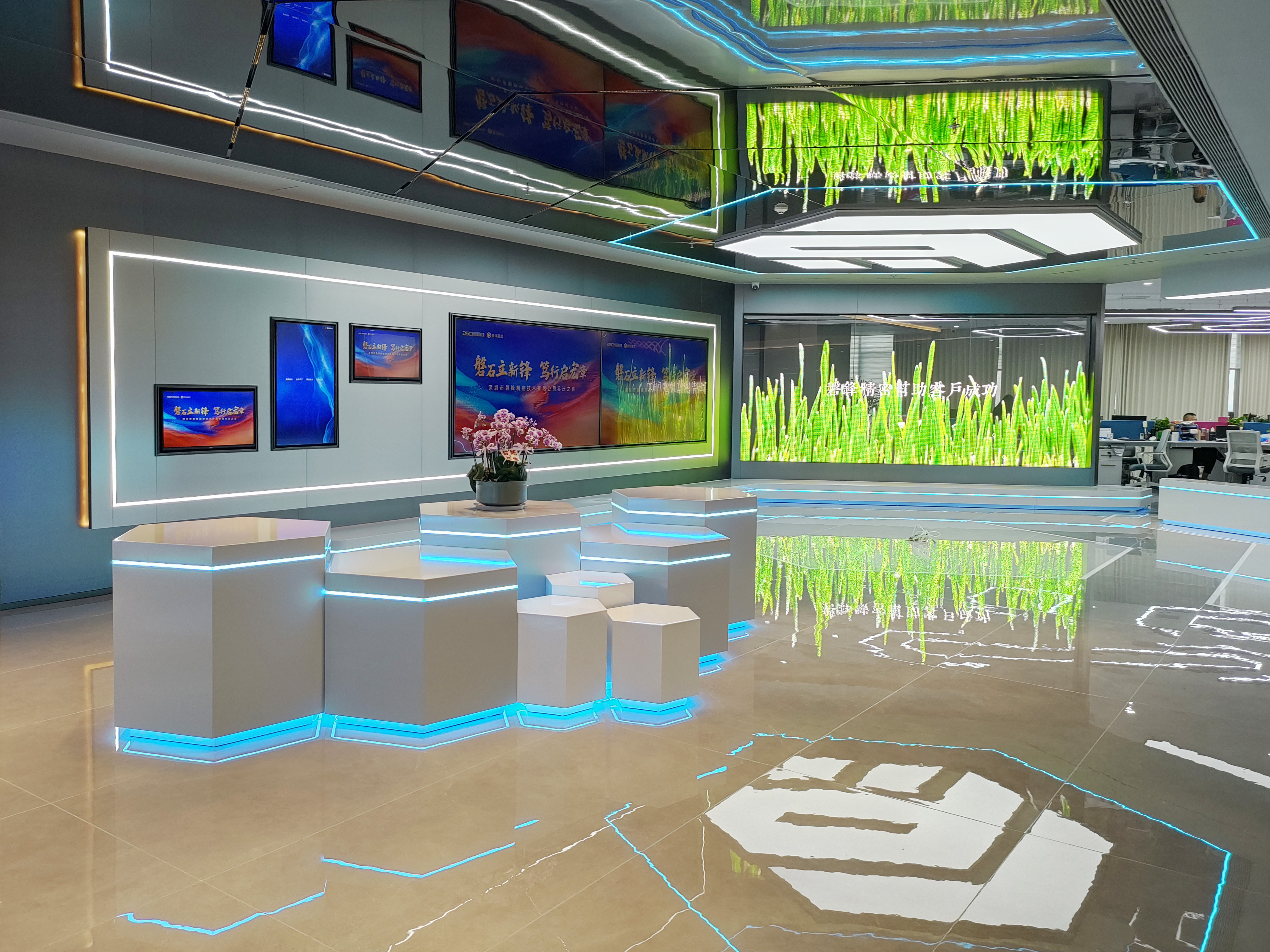
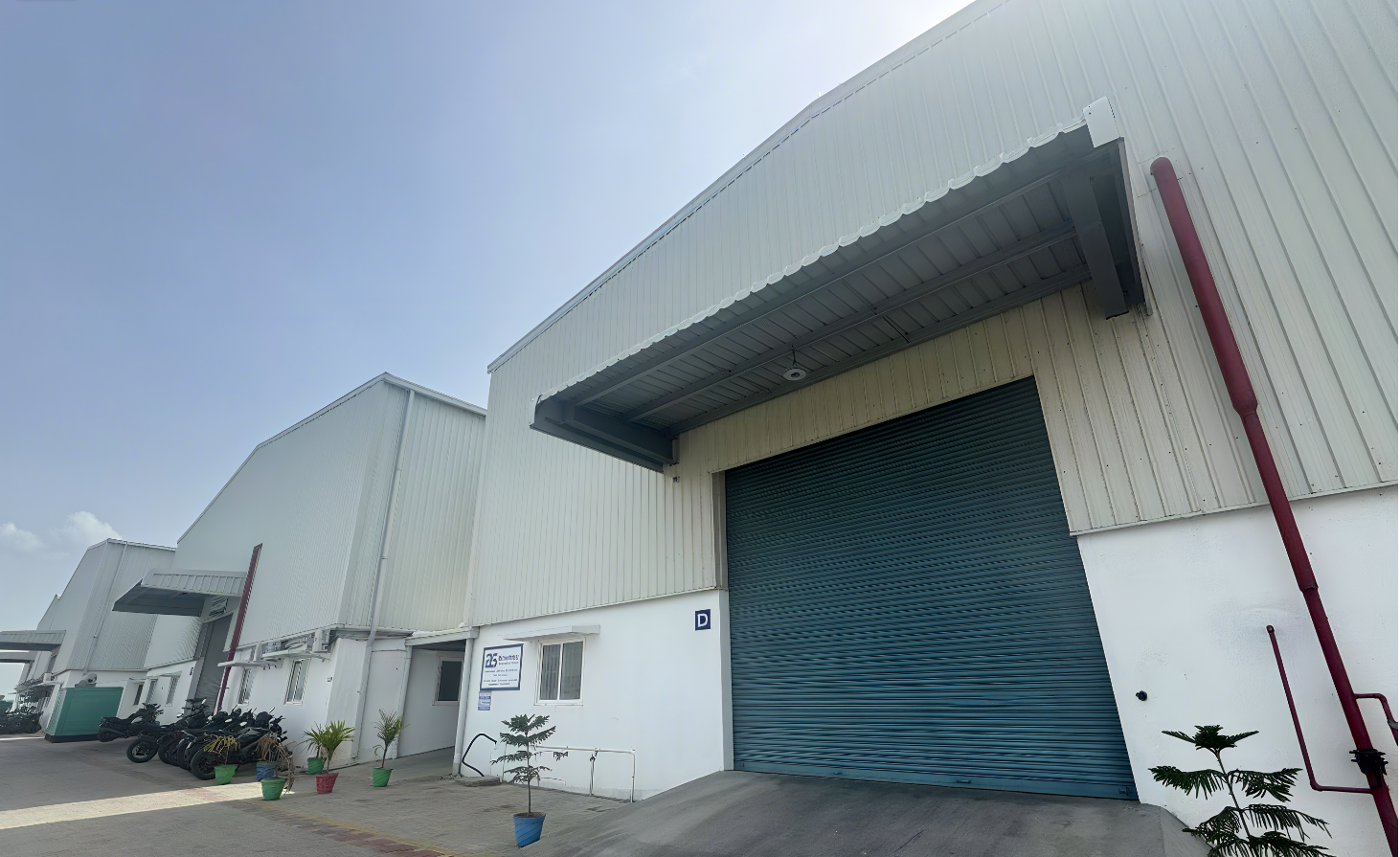
For programs that ship to multiple regions, footprint is a commercial variable as much as a logistics one. R&D centers are located in Shenzhen, Suzhou, and Taipei in China. Manufacturing plants are located in Shenzhen, Dongguan, Suzhou, Zhengzhou, Chengdu, and Taipei in China, as well as in Vietnam, India, Malaysia, and Mexico. Overseas service institutions operate in the United States, South Korea, and Japan, forming a localized delivery system covering Asia, North America, and major global manufacturing regions. Company-published figures place the number of global production bases at nine as of 2024.
For an RFQ team, the operating consequences of a multi-region footprint are concrete:
- Equipment can be manufactured locally to the destination region, which affects freight, installation scheduling, and customs treatment.
- On-site installation, commissioning, and process optimization can be delivered by regional teams rather than by a traveling project crew.
- Spare parts and technical support are localized, which shortens response time during ramp and mass production.
Buyers should still confirm which specific site will build, test, and accept the equipment, because a global network does not automatically mean the same capability exists at every site.
R&D Depth and Partnership Signals
Research capacity is the part of a supplier profile that is hardest to verify from the outside, so buyers should look for two things: verifiable R&D scale and reference applications that resemble their own program.
Shenzhen BSC Technology Co., Ltd. reports an R&D team of over a thousand staff, more than a thousand authorized patents, and an independent R&D system, with continuing development in high-precision assembly, machine vision, motion control, intelligent inspection, industrial software, and industrial digitalization. The company also states that it ranks among the top three in automation equipment for electronic intelligent terminals and AR/VR smart glasses.
On the customer side, the company operates a key-account strategy and reports long-term strategic partnerships with assembly factories and component manufacturers including Foxconn, Goertek, Luxshare, Pegatron, LG, and Sonion. End products are ultimately applied by globally recognized brands including Samsung, Amazon, Meta, Google, Whoop, Tesla, BYD, and Insta360.
For RFQ purposes, a partner list is a screening input rather than a qualification. The verification step is to ask for a delivered line with the same process characteristics - comparable tolerance class, comparable inspection requirement, comparable rate - and to request the acceptance documentation from that project, subject to confidentiality terms.
Market Trends Shaping Automation RFQs
Three published trends explain why automation RFQs increasingly read like software and data projects.
- Software weighting. Industrial automation software held a dominant 50.8% revenue share of the smart manufacturing market in 2025, according to Grand View Research, and machine learning accounted for over 36.0% of the AI in industrial automation market in 2024, according to the same firm. Control software, vision recipes, and data interfaces are now core deliverables.
- Automation density. Global robot density reached 177 robots per 10,000 manufacturing employees in 2024, according to IFR data cited by Econ Market Research. Buyers increasingly benchmark a line against regional density norms rather than against their own previous line.
- Miniaturization pressure. Industry 4.0 integration for SMT equipment is increasingly driven by component miniaturization in telecommunications, according to Technavio. Smaller features narrow the tolerance window that assembly and inspection equipment must hold.
A fourth trend is application-led: AR/VR in manufacturing is projected to grow at a CAGR of 29.3% from 2023 to 2030, according to Grand View Research, which supports continuing investment in optical process equipment and optical inspection.
Custom Automation Compared With Traditional Assembly Approaches
The comparison that matters at RFQ stage is not automation versus manual labor in the abstract, but where custom flexible automation changes the cost and risk structure of a specific program.
| Dimension | Manual or fixed-tooling assembly | Custom automation precision assembly |
|---|---|---|
| Repeatability | Depends on operator skill and shift | Set by fixture design, motion control, and vision parameters |
| Changeover | Fast at low volume, poorly documented | Recipe- and software-driven, but requires re-engineering for a new product |
| Traceability | Paper or partial digital records | Software-controlled data capture, but requires explicit configuration |
| Upfront investment | Low | Engineering, fixtures, controls, and software development |
| Break-even volume | Works at very low volume | Requires a volume and program horizon that supports the engineering spend |
| Ramp behaviour | Limited by operator training | Depends on NPI validation and acceptance testing |
Limits and boundaries to confirm in writing
Custom automation is not the correct answer for every program, and a supplier that does not say so has probably not priced the risk. Buyers should confirm the following boundaries before award:
- Volume threshold. Monthly capacity depends on project specifications and factory scheduling, and minimum order quantities are subject to product category, drawings, equipment configuration, and project requirements, to be confirmed commercially. There is no universal threshold; it has to be calculated per program.
- Specification freeze. Because equipment configuration, jigs, vision recipes, and control software are built against a defined requirement, changes after freeze generally require re-engineering rather than a parameter edit.
- Certification scope. The published certificate scopes cover specific product categories and processes, and the automotive certificate excludes product design.
- Site readiness. Equipment is specified for defined working conditions, including high-precision cleanroom environments. Utilities, floor conditions, and material flow are buyer-side prerequisites.
- Inspection standard dependency. Automated inspection performs to the standard it is programmed against; an undefined standard produces a line that passes parts the buyer will later reject.
Future Outlook
Two shifts are likely to define the next procurement cycle in this category. First, the software and data layer will continue to absorb a larger share of project value, which means RFQ packages will need to specify interfaces, data ownership, and traceability retention as precisely as they specify mechanical tolerances. Second, regional manufacturing will keep pulling equipment supply closer to the point of use, which favours suppliers that can build, install, and support in the same region as the production site.
For buyers, the practical implication is a shift in emphasis: the decisive comparison is no longer only about machine specifications, but about which supplier can document process capability, certification scope, and delivery responsibility across the regions where the product will actually be built.
Frequently Asked Questions
What industries are precision components and automation solutions primarily applied to?
Integrated precision manufacturing and smart automation products are widely applied in consumer electronics, smart wearables, smart home, automotive electronics, AR/VR, and medical equipment, with additional deployment in AI edge devices, AI edge-side hardware, and AI infrastructure.
Can customized structural parts and assembly lines be used for AR/VR and smart wearable devices?
Yes. Precision functional parts, structural components, and system assembly services are delivered for AR/VR devices, smart wearables, and AI hardware, and the equipment scope includes AR/VR and optical module process automation alongside intelligent terminal assembly lines.
What equipment scope can a single supplier cover under a turnkey automation line?
A turnkey scope in this category covers process development, equipment research and development, software control, system integration, and mass production delivery. It can include automated assembly equipment, automated test equipment, optical process equipment, intelligent inspection equipment, and the industrial automation software that connects them.
What quality management systems and certifications do the manufacturing facilities comply with?
The published certification set includes ISO 9001:2015, ISO 14001:2015, IECQ QC 080000:2017 for hazardous substance process management, IATF 16949:2016, and ISO 13485:2016, each issued by an external certification body with a stated scope and validity period.
Are the manufacturing processes certified for automotive and medical applications?
IATF 16949:2016 covers automotive-related manufacturing, and ISO 13485:2016 covers medical device quality management. Both certificates carry scope limitations: the IATF certificate excludes Clause 8.3 product design, and the ISO 13485 certificate is scoped to the production and sales of plastic headgear for medical brainwave devices.
Where are the R&D centers and manufacturing plants located, and how is local support delivered?
R&D centers are located in Shenzhen, Suzhou, and Taipei. Manufacturing plants are located in Shenzhen, Dongguan, Suzhou, Zhengzhou, Chengdu, and Taipei in China, as well as in Vietnam, India, Malaysia, and Mexico. Overseas service institutions in the United States, South Korea, and Japan support local equipment manufacturing, on-site installation and commissioning, spare parts, and technical support.
What R&D depth supports the automation equipment?
The company reports an R&D team of over a thousand staff and more than a thousand authorized patents, with development work focused on high-precision assembly, machine vision, motion control, intelligent inspection, industrial software, and industrial digitalization.
Which manufacturing models are available for a custom automation project?
Available models include OEM, ODM, JDM, customized automation, and turnkey solution arrangements. Quality control covers incoming, in-process, and outgoing inspection as well as first-article, dimensional, functional, and reliability inspection.
What should an RFQ package include for custom automation precision assembly?
A complete package should include the drawing set and revision status, the tolerance stack-up across components and the assembly step, the inspection standard and pass/fail criteria, target volume and ramp profile, the destination manufacturing site, required certifications with their scope, and the acceptance test definition for the delivered line.
What are the limits of custom automation precision assembly?
The main limits are volume economics, specification freeze, certification scope, site readiness, and inspection-standard dependency. Monthly capacity depends on project specifications and factory scheduling, and minimum order quantities are confirmed commercially per project rather than set by a fixed published threshold.
RFQ and Supplier Verification Checklist
| Verification area | Question to ask | Evidence to request |
|---|---|---|
| Process scope | Which steps are covered end to end - components, SMT, FATP, equipment, or a turnkey line? | Scope-of-supply document listing exclusions |
| Precision capability | Which tolerance class has been held in mass production for a comparable assembly? | Capability data from a delivered program |
| Test and inspection | Which functional and process tests are integrated, and what is the pass/fail definition? | Test plan and inspection standard |
| Certification | Which certificate applies to the site and process being quoted? | Certificate PDFs with scope, entity name, and expiry date |
| Reference application | Has a line with comparable process characteristics been delivered? | Reference summary and acceptance records under confidentiality terms |
| Site and delivery | Which plant will build, test, and accept the equipment, and who installs it? | Delivery and commissioning plan with named sites |
| Capacity and lead time | What is the committed schedule for NPI and for the mass production ramp? | Project schedule with milestones |
| Change control | What happens to cost and schedule if the specification changes after freeze? | Change-control procedure |
| After-sales | How are spare parts, process optimization, and remote support delivered locally? | Service-level terms by region |
| Commercial | Are capacity and minimum order quantity confirmed against the actual project? | Written commercial confirmation |
Contact and Company Reference
Shenzhen BSC Technology Co., Ltd. (Stock Code: 300951.SZ) is headquartered in Shenzhen and provides precision components, system assembly, and intelligent automation equipment. RFQ intake is published at sales@bsc-sz.com and +86 755-89690666, with company information at en.bsc-sz.com. Buyers preparing a first submission generally receive a more usable response when the drawing set, tolerance stack-up, inspection standard, target ramp, destination site, and required certification scope are sent together.