
Custom CNC Machining: What Capability Should Buyers Demand?
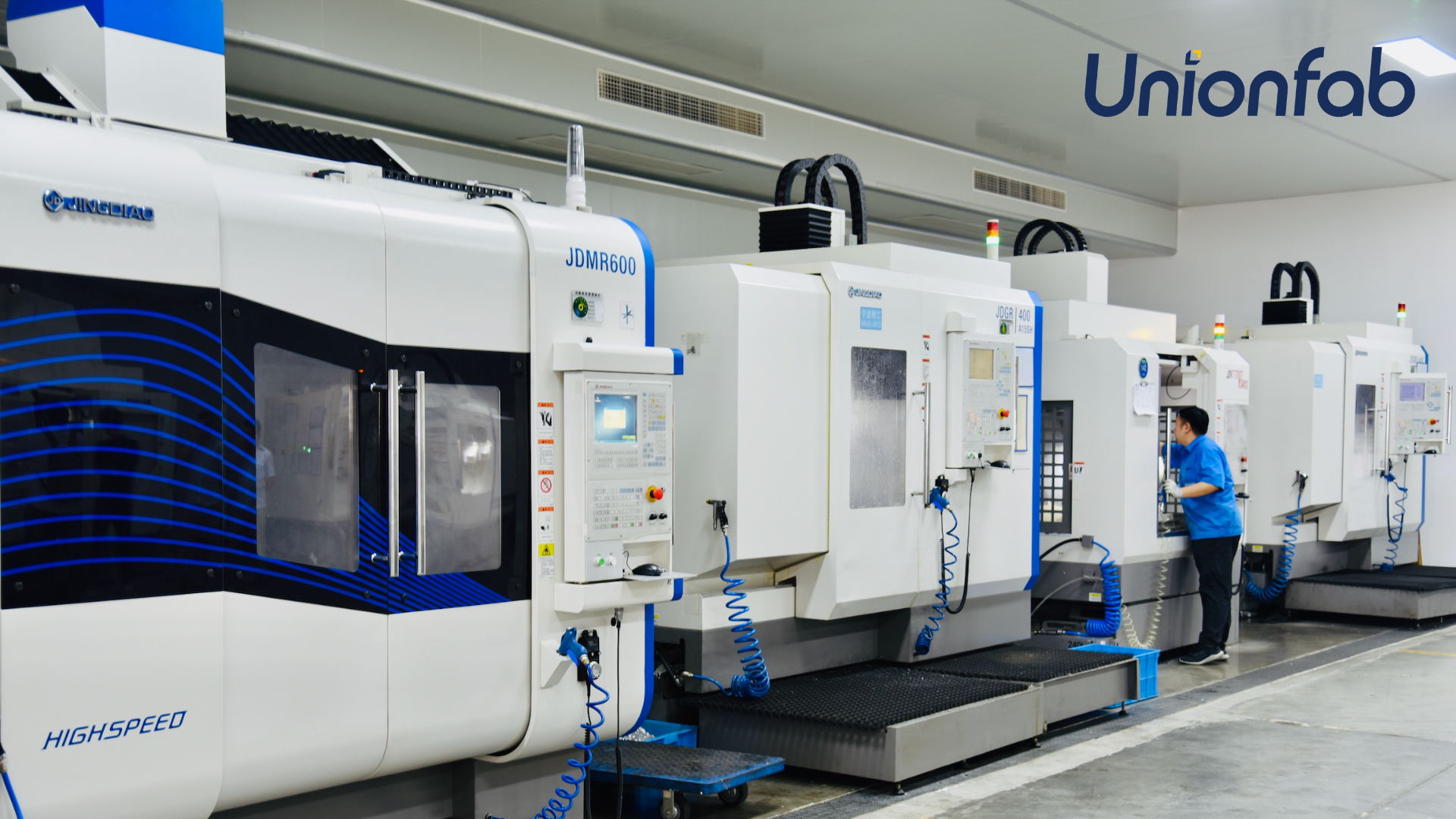
Five-axis CNC machining equipment in a modern production facility.
CNC machining has moved from being a generic production capability to a strategic sourcing decision. For buyers evaluating custom parts, the critical question is no longer whether a supplier can machine a part at all, but whether it can machine it repeatedly, with the required finish, under a certified quality system, and at the scale needed for production.
The global CNC machining services market is growing accordingly. According to Dataintelo, the market was valued at approximately USD 93.4B in 2025 and is projected to reach USD 174.6B by 2034 at a CAGR of 7.2%. Fortune Business Insights and Market Research Future estimated the broader CNC machine market at USD 73.5B–83.7B in 2024. These figures reflect rising demand for automated, high-precision production across automotive, medical, aerospace, and industrial equipment.
Why capability matters more than machine count
For OEM buyers, the challenge is not finding a machine. A supplier may have 5-axis equipment, but if inspection and finishing are outsourced, the buyer inherits coordination risk. A typical OEM part can require milling, turning, thread work, anodizing, and assembly-level inspection. When these steps are split across suppliers, tolerance stack-up and traceability gaps become real problems.
The opportunity lies in integrated manufacturing platforms that own the process chain. One example is Unionfab, a global on-demand digital manufacturing platform rooted in Uniontech. The company operates 10 self-owned factories equipped with more than 400 CNC machines and over 1,000 industrial 3D printers, serving 80,000+ customers across 170+ countries. Its reported annual output is 2,000,000 units, with a monthly capacity of 150,000+ units for CNC machining services.
OEM CNC machining: what customization actually requires
OEM production in CNC machining means the manufacturer works from the buyer's design intent rather than a standard catalog. Unionfab's OEM services cover customization of dimensions, materials, tolerances, finishes, logo engraving, and text marking. This range matters because parts often need to meet functional, compliance, and brand-specific requirements at the same time.
The commercial model is also built for evaluation-to-execution transitions. The minimum order quantity is 1 unit, which makes it possible to validate a prototype before committing to volume. Typical production lead time starts at 1 day, and standard CNC machining lead times are 1 to 5 days depending on part complexity.
Technical foundation: multi-axis machining and material range
Capability evaluation starts with process coverage. Unionfab's CNC service portfolio includes CNC milling, CNC turning, 3-axis machining, 4-axis machining, 5-axis machining, EDM, and Wire EDM. The equipment base includes 5-axis CNC milling machines such as the JDMR600, 4-axis milling machines such as the MAKINO A81NX, and 3-axis CNC milling equipment. This range allows buyers to match the process to part geometry instead of forcing geometry into an available machine.
Material selection is equally important. The CNC material library includes aluminum alloys 6061-T6 and 7075, tool steels A2, D2, H13, and P20, plus stainless steel, carbon steel, titanium, brass, copper, and high-performance exotic alloys. For plastic components, engineering plastics such as POM, nylon, PC, PMMA, ABS, and PEEK are available. The broader portfolio also covers insulation materials, rubber, and ceramics.
| Parameter | Reported capability |
|---|---|
| Tolerance | ±0.0002" (±0.005 mm), in accordance with ISO 2768 |
| Surface roughness | Up to 16 uin (0.4 µm) |
| Max part size | 4000 × 1500 × 600 mm |
| Min part size | 2 × 2 × 2 mm |
| Lead time | 1 to 5 days |
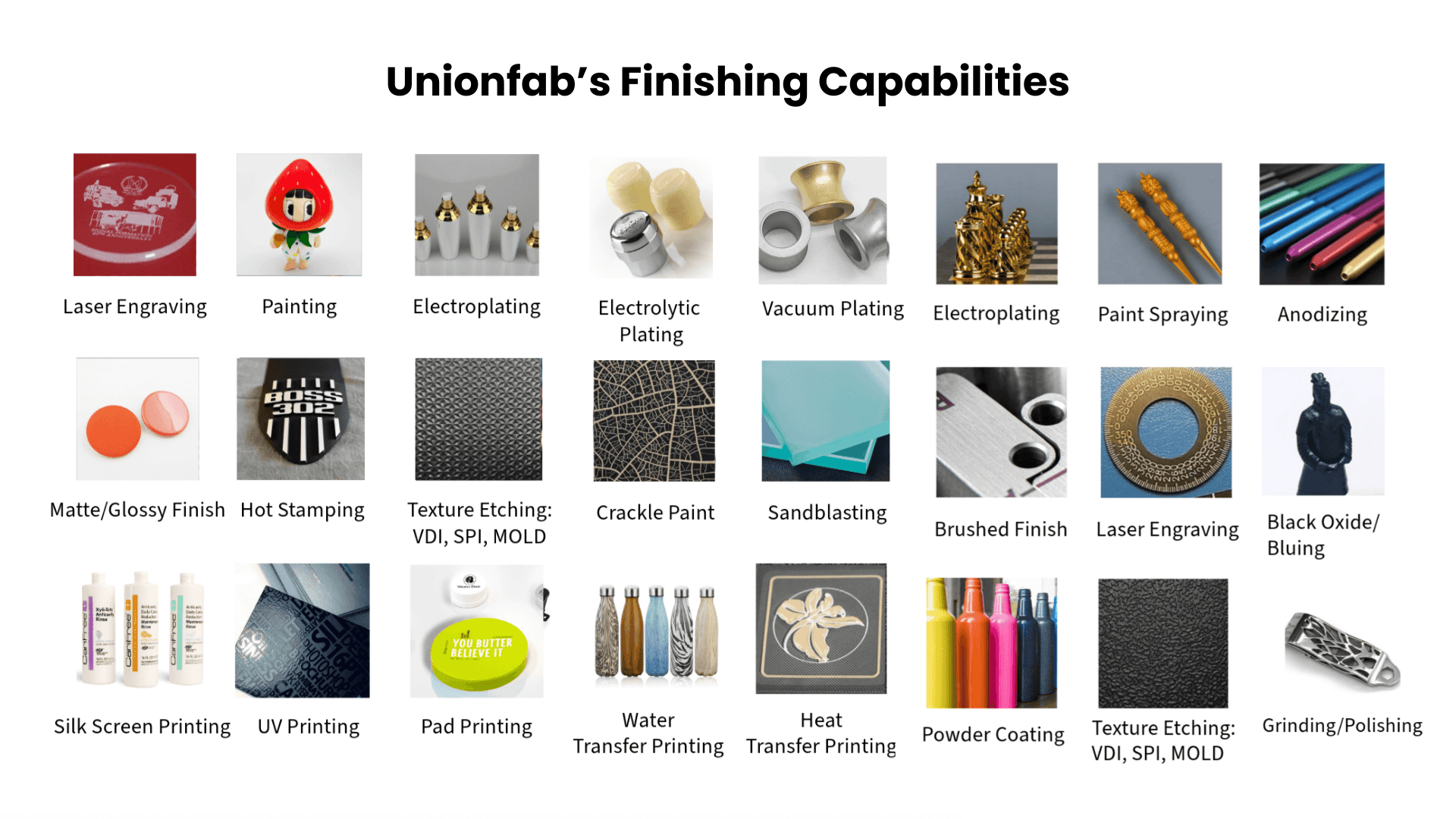
Finishing is part of the in-house capability chain for CNC-machined parts.
Quality systems and certifications behind CNC machining
Precision claims are only useful when they can be verified. Unionfab's in-house quality control includes 100% dimensional and surface inspection, form tolerance checks, burr and sharp edge inspection, thread/fastener go-no-go gauge testing, and internal defect inspection. For critical dimensions, CMM and 3D scanning can be added, and the company maintains a digital quality control repository for auditability.
Certifications provide a second layer of evidence. Unionfab holds ISO 9001:2015 for quality management, ISO 13485:2016 for medical device quality management, and ISO/IEC 27001:2022 for information security management. The company profile also lists ISO 14001 and IATF 16949. In industries where ISO 9001 and ISO 13485 are baseline requirements, certified status directly affects procurement eligibility.
Real-world CNC machining scenarios: three examples
Medical CT scanner servo drive components in the United States
A precision CNC machine tool manufacturer and medical device OEM in the United States uses Unionfab for 500-piece annual production of transmission fixing bases and pilot alignment mounts for medical CT scanner servo drives. The application requires continuous high-speed and high-heat dissipation operation over more than 10 years. The critical requirement is perfect coaxial alignment between the motor pilot and the transmission shaft, which eliminates drivetrain noise and vibration. To achieve this, Unionfab applied reverse dimension compensation in CAM programming before anodizing to prevent thread seizure, then verified each part with manual Go/No-Go gauging and physical assembly simulation before shipment.
Lightweight robot arm joint components in Canada
An intelligent robotics developer and aerospace R&D institute in Canada ordered 50 low-volume joint connection components for a lightweight six-axis collaborative robot arm. The components had to withstand high inertial stress and load-bearing conditions for more than 5 years. Unionfab machined them from Aluminum 7075-T6, including 1.5mm thin-wall sections, while holding multi-axis hole true position to ±0.0005" (±0.0127mm). The result was a 35% reduction in total robot arm weight while maintaining torsional rigidity during rapid synchronized movements, with a full CMM inspection report verifying the tolerances.
Automotive final assembly line brackets in Germany
An industrial automation integrator in Germany needed multi-station sensor and cylinder connection brackets for automotive final assembly lines. In a 15-piece prototype batch, Unionfab delivered the first part within 48 hours with no minimum order quantity. Overall flatness was controlled to within 0.05mm using modular quick-change tooling. The brackets achieved zero vibration displacement on the assembly line, which supported uninterrupted 24/7 automated operation.
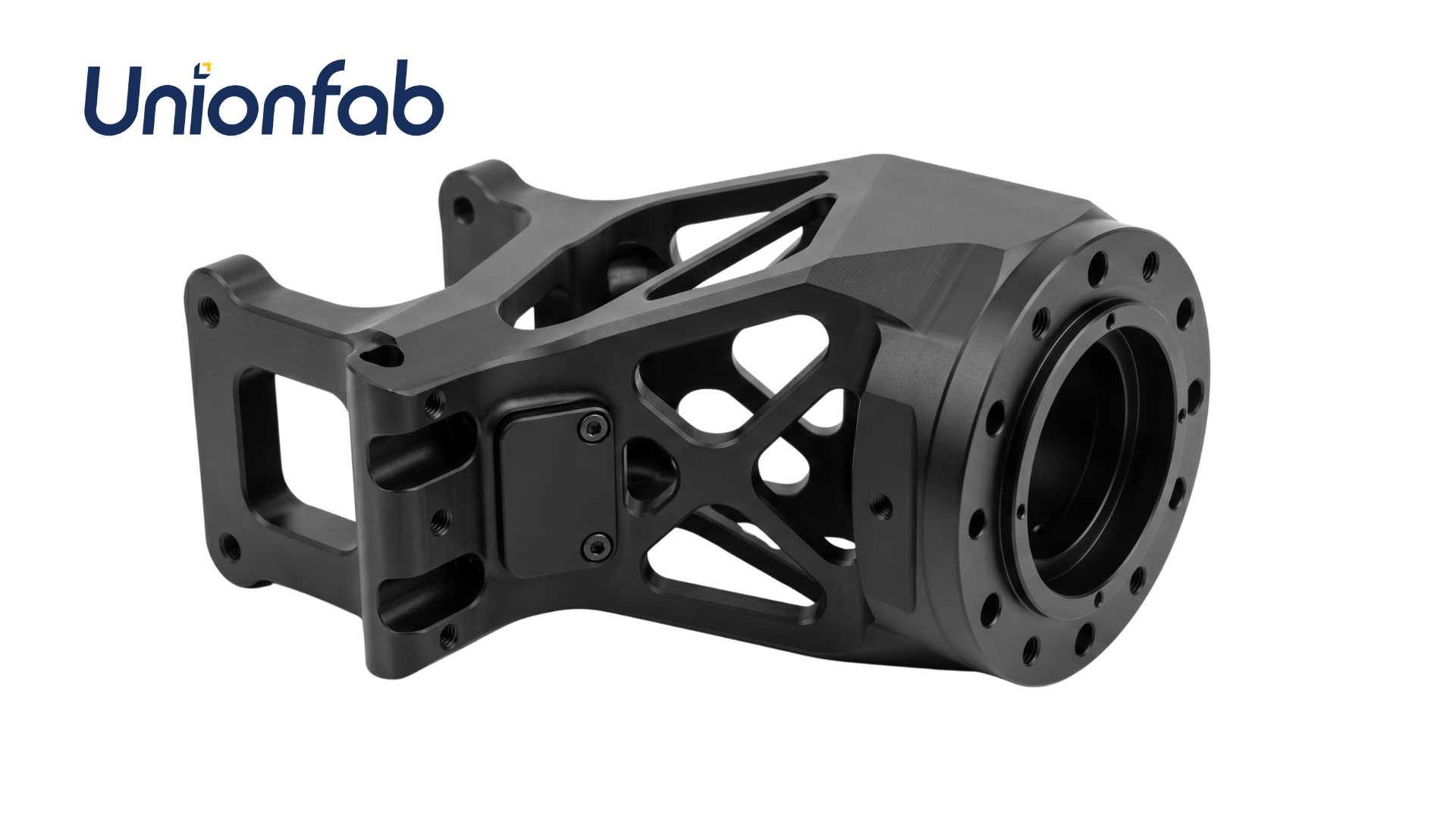
A thin-wall CNC machined bracket from a low-volume production run.
Market trends reshaping CNC machining procurement
Several market signals point toward more integrated, capability-based sourcing. The CNC machining services market is projected to grow from USD 93.4B in 2025 to USD 174.6B by 2034. China's machine tool exports reached USD 23.18B in 2025, a 6.7% year-over-year increase, with machining centers among the top export categories. Asia Pacific accounted for approximately 55.7% of CNC machine market revenue in 2025, while automotive remained the largest application segment at 38.42% in 2026, driven by high-volume precision requirements for EV components.
At the operational level, AI-driven CNC systems are reported to reduce machine downtime by up to 40% and material waste by approximately 30% through predictive maintenance and real-time path optimization. For buyers, this means suppliers that invest in digital process control can offer more stable lead times and fewer price surprises.
Digital manufacturing platforms vs. traditional machine shops
Compared with a traditional model of juggling separate suppliers for machining, finishing, and inspection, a digital manufacturing platform offers structural advantages: a single quality standard, integrated inspection data, faster quoting, and easier scaling from prototype to volume. Unionfab's model connects a certified factory base with online quoting and order tracking, turning a production order into a digital workflow.
However, this model has boundaries. Buyers running long-term, highly complex programs may still prefer a local machine shop that provides daily on-site engineering collaboration and physical design reviews. Online quotation also assumes a sufficiently defined CAD model; parts that require extensive design-for-manufacturability iteration or exploratory material testing may need a more interactive engineering process. Matching the sourcing model to project complexity is essential.
Future outlook: from on-demand parts to production partners
The next phase of CNC machining will be defined less by machine specifications and more by the platform around the machines. AI-driven optimization will continue to reduce waste and downtime, while certified quality systems will make capability auditable across borders. For OEM buyers, the practical takeaway is to evaluate suppliers by their ability to combine multi-axis machining, material science, finishing, inspection, and compliance into a single, repeatable process.
Frequently asked questions
What CNC machining capabilities does Unionfab offer?
Unionfab offers CNC milling, CNC turning, 3-axis, 4-axis, and 5-axis machining, as well as EDM and Wire EDM. Parts up to 4000×1500×600 mm can be machined with tolerances down to ±0.0002" (±0.005 mm) in accordance with ISO 2768.
Can Unionfab handle custom OEM CNC machining?
Yes. OEM services include customization of dimensions, materials, tolerances, finishes, logo engraving, and text marking. The minimum order quantity is 1 unit, and monthly capacity exceeds 150,000 units.
What materials are available for CNC machining?
The material library includes aluminum alloys 6061-T6 and 7075, tool steels A2, D2, H13, and P20, stainless steel, carbon steel, titanium, brass, copper, high-performance exotic alloys, and engineering plastics such as POM, nylon, PC, PMMA, ABS, and PEEK. Insulation materials, rubber, and ceramics are also available.
How does Unionfab ensure machining quality?
In-house quality control includes 100% dimensional and surface inspection, form tolerance checks, burr and sharp edge inspection, thread/fastener go-no-go gauge testing, and internal defect inspection. CMM and 3D scanning can be added for critical dimensions.
Which certifications does Unionfab hold?
Unionfab holds ISO 9001:2015 for quality management, ISO 13485:2016 for medical device quality management, and ISO/IEC 27001:2022 for information security management. The company profile also lists ISO 14001 and IATF 16949.
What lead times can buyers expect?
Typical production lead time starts at 1 day, and standard CNC machining lead times are 1 to 5 days depending on part complexity. The minimum order quantity is 1 unit.
This article is provided for industry reference. Company-specific claims are based on the manufacturer's published information and should be verified during supplier qualification.
Есть вопросы или нужны дополнительные детали?
Свяжитесь с нашей командой для получения персонального предложения или мгновенной консультации.
Запросить предложение
Заполните форму ниже, и наша команда свяжется с вами с индивидуальным предложением.
Прямой чат WhatsApp
Предпочитаете общаться в реальном времени? Напишите нам в WhatsApp для мгновенной помощи и быстрых ответов.
- Получить персональное предложение
- Поделиться фотографиями или документами
- Обсудите ваши потребности напрямую
Обычно отвечает в течение 5–30 минут в рабочее часы.