
Custom Card Game Use Cases: Family Play to Corporate Gifting
Custom card games are specified by use case, not by category. The same offset printing, die-cutting and packing process produces a family game sold in a toy aisle, a tarot deck sold through specialist retail, a drinking game supplied to bars, and a promotional deck handed out at a corporate event. What separates these products is not the equipment but the decisions taken before production begins: cardstock grade, print colour control, edge finish, format and packaging.
Because those decisions are use-case dependent, matching a deck build to its end use is the first procurement question for brand owners, distributors and corporate buyers. For buyers moving from evaluation into execution, it is also the question that determines whether a programme can be repeated across seasons rather than ordered once.
Why One Deck Specification Cannot Serve Every Audience
Card game sourcing often begins with a single request: one deck, one price, one delivery date. That works when a programme targets one audience. It breaks down when the same deck is expected to serve a family game night, a licensed kids line, a bar-channel drinking game and a corporate gifting drop at the same time.
Each end use places different demands on the same physical object:
- Repeated family play rewards cardstock durability and consistent card sizing, because shuffling and handling are the dominant wear mechanisms.
- Kids card games and educational decks depend on colour fidelity and clean edge finishing, because recognition and safe handling matter more than weight.
- Party games and drinking games are handled quickly and clumsily, so smooth edge cutting and bold, uniform colour matter more than premium grammage.
- Travel games depend on a compact format and on packaging that survives repeated transport.
- Tarot cards and illustrated decks are judged on illustration reproduction, which puts pressure on printing control rather than on card weight.
- Enterprise gifting and promotional decks are evaluated in the first few seconds, where brand colour accuracy and presentation packaging decide whether the deck is kept or discarded.
- Online sales channels add a logistics dimension, where packaging protection determines whether the product arrives in sellable condition.
A deck specified as an average of all seven satisfies none of them well. The opportunity justifies the specification work. Grand View Research valued the global playing cards and board games market at approximately USD 19.90 billion in 2024, with a projection of USD 31.93 billion by 2030.
What a Custom Card Game Programme Actually Controls
Production capability in card games is best understood through the variables a manufacturer can actually control. Each of them maps to at least one use case.
Cardstock, printing and finish
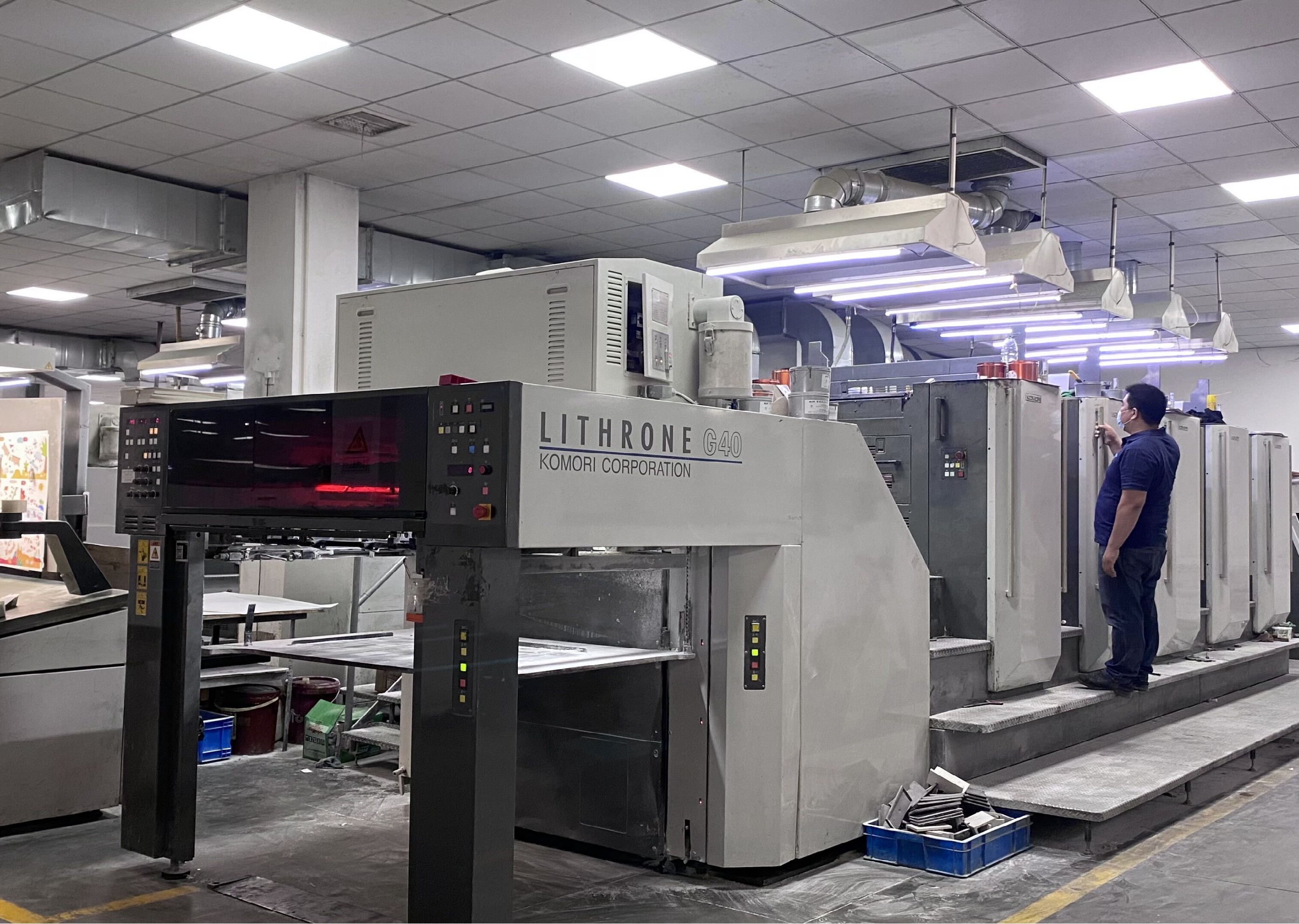
Comparison data recorded between premium and low-quality card game production identifies premium cardstock material, precise CMYK offset printing, smooth edge cutting and consistent sizing as the differentiating production factors. The same comparison puts service life at 3–5 times longer usage cycles and records a defect rate below 1–2%. For buyers, this is the difference between a deck that survives a season of family play and a deck that is retired after a few evenings.
Colour control as a process, not an outcome
Colour accuracy in printed decks is controlled rather than assumed. The documented control method for inaccurate printing colour is ink ratio adjustment, supported by colour sampling inspection and printing machine calibration. Those three steps are what keep an illustrated tarot deck, a licensed kids deck and a corporate brand deck consistent from the first sheet to the last across a production run.
Edge, sizing and die-cutting
Smooth edge cutting and consistent sizing determine how a deck feels in the hand. For party and drinking games, where cards are shuffled fast and dealt quickly, tolerances matter more than finish. Advanced die-cut and printing control, together with higher packaging protection standards, are the mechanisms that hold these properties stable in mass production.
Quality gate and packaging
All units undergo 100% testing as part of the quality control process. On the packaging side, colour box manufacturing and protective packaging standards determine whether a deck can carry brand display on a retail shelf or in a corporate gift box.
Matching Deck Builds to the Main Use Cases
The table below links each end use to the production control that most affects it. It is a decision aid, not a fixed rule: programmes frequently combine two adjacent use cases, such as family play plus travel, or kids education plus enterprise gifting.
| Use case | Typical buyer | What the deck must do | Production control that carries it |
|---|---|---|---|
| Family games | Retail brands, distributors | Survive repeated play, shuffle cleanly, store safely | Premium cardstock, consistent sizing, protective packaging |
| Kids card games and education | Publishers, schools, licensed brands | Readable colour, clean edges, clear recognition | Colour sampling inspection, machine calibration, 100% testing |
| Party and drinking games | Bar channels, adult retail, event organisers | Fast shuffling, bold uniform colour, compact box | Smooth edge cutting, consistent sizing, CMYK offset printing |
| Travel games | Travel retail, gift shops, family buyers | Compact format, durable box, repeat transport | Die-cut and printing control, packaging protection standards |
| Tarot and illustrated decks | Niche publishers, specialist retail | Faithful illustration reproduction, depth of colour | Ink ratio adjustment, colour sampling inspection |
| Enterprise gifting and promotion | Corporate procurement, agencies | Brand colour accuracy, presentation box, brand display | CMYK printing, colour box manufacturing, packaging standards |
| Online sales | Direct-to-consumer sellers, e-commerce brands | Arrive in sellable condition, consistent unit quality | Packaging protection standards, pre-shipment test |
Family games and kids card games
These two categories share a durability requirement but differ on colour. Family games tolerate simpler artwork and heavier handling; kids card games and educational decks are usually judged on how clearly a child can recognise a symbol or a character. Because the same printing method serves both, the practical difference lies in how much colour control the buyer specifies — and in whether the deck is intended to be played once or kept for years.
Party games, drinking games and adult card games
Adult card games and drinking games are high-turnover products. They are bought in volume, used intensely for a short period, and reordered when the group grows. Smooth edge cutting and consistent card sizing matter more here than premium grammage, because a deck that shuffles poorly is abandoned regardless of how it looks. Bold, uniform colour blocks also hold up better than fine gradients when cards are handled with wet or greasy hands.
Travel games for adults and families
Travel formats compress the same play experience into a smaller footprint. The production constraint is not the card itself but the box: packaging protection standards determine whether the deck survives being packed, unpacked and repacked. Buyers planning travel retail assortments generally order these formats alongside a larger family deck, which is one reason programmes are often planned as multi-SKU rather than single-SKU.
Tarot cards and illustrated decks
Tarot is the most illustration-driven category in custom card printing. The tarot cards market is projected to grow by USD 209.7 million between 2024 and 2029 at a CAGR of 3%, and 61% of new decks feature custom illustrations. When artwork carries the product, the printed result — not the card weight — decides whether the deck is accepted by its audience.
Enterprise gifting and promotional decks
Corporate gifting decks are advertising that survives on a desk. That changes the specification: the brand colour has to reproduce accurately under offset printing, the box has to function as a display surface, and the deck itself has to be good enough that the recipient keeps it. Colour box manufacturing and protective packaging for brand display are the two production elements that most often decide whether a promotional deck is retained or discarded.
Online sales
When the end use is an online sales channel, the deck is handled by logistics before it reaches the player. Pre-shipment testing and packaging protection standards become part of the product experience, because a corner-crushed box translates directly into a return. An online-sales end use is recorded in the project associated with product 5608.
How Yawanhong Supports Multi-Use-Case Programmes
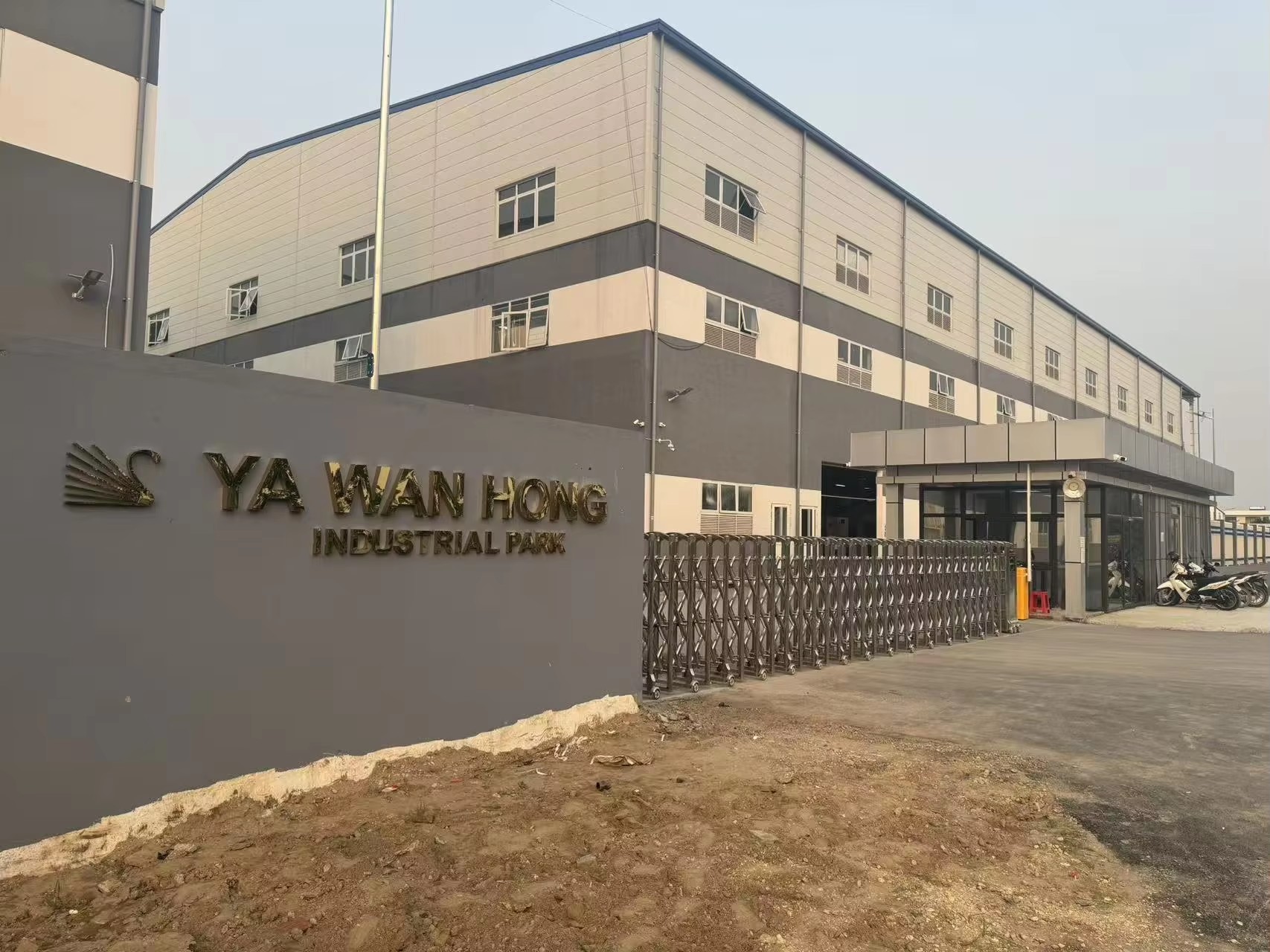
Yawanhong refers here to Vietnam Yawanhong Printing Culture Co., Ltd., a printing and games manufacturer established on 5 December 2006 in Hai Phong City, Vietnam. The company operates a 55,000 m² factory with 280 employees and a 25-engineer R&D team. Its product range covers board games, card games, puzzles, notebooks, colour boxes, publications, plastic toys, plush toys and wooden toys. Production is export-oriented, with 100% of output exported and main markets in the USA and Europe.
For buyers, the relevant capability is range: because the same facility produces card games alongside colour boxes, puzzles and board games, a multi-use-case programme — for example a family deck, a kids education deck and a corporate gift box — can be planned as one production relationship rather than several unrelated suppliers.
Yawanhong also provides OEM and ODM production services, and holds certifications including BSCI, SMETA, FSC, ISO 9001 and Disney FAMA for toy and game manufacturing. For buyers selling into EU or US retail, those certifications sit alongside market requirements such as EN 71 (Toy Safety) and FSC (Forest Stewardship Council) sustainable paper sourcing, which custom card manufacturers are generally expected to meet to enter those channels.
Regional Deployment: North America, Europe and Asia
Export markets for Yawanhong cover the US, EU, UK and Asia. Documented project experience covers deployment across North America, Europe and Asia, with card and paper product projects carried out in Vietnam and in China. That geographic spread matters for use-case planning, because the same deck type is often sold differently in each region: promotional and gifting programmes dominate certain corporate markets, while retail assortments and collectible formats lead in others.
Regulatory context differs by region as well. In the United States, U.S. Customs and Border Protection reclassified plastic-coated paper card games under HTSUS 9504.40.00 as duty-free effective 18 March 2024, which affects landed cost for card game importers. In the EU and US retail channels, EN 71 and FSC compliance remain the baseline expectations for toy and game products.
Planning Execution: Capacity, Lead Time, MOQ and Terms
Use-case matching decides what to build. Execution planning decides whether it arrives on time, and here the parameters are concrete.
- Monthly production capacity: 80,000 units.
- Typical production lead time: 25–45 days.
- Minimum order quantity: 1,000 units.
- Delivery terms: FOB, CIF, DDP or other customers' preference.
- Acceptance criteria: pre-shipment test.
- Payment terms: 30/70.
For programmes tied to a fixed calendar — corporate gifting seasons, retail resets, campaign launches — the lead-time window and the shared monthly capacity are the two variables that require early booking. A use-case map built after capacity is allocated is a specification exercise without a delivery date.
Comparison with Traditional Solutions — and Where Custom Production Has Limits
Custom production competes with generic, off-the-shelf decks and with low-cost card printing. The documented comparison is consistent: premium cardstock, precise CMYK offset printing, smooth edge cutting and consistent sizing produce a product with 3–5 times longer usage cycles and a defect rate below 1–2%, with a recorded cost difference of 10%–30% lower versus low-quality card game production.
| Dimension | Low-quality card game | Premium custom production |
|---|---|---|
| Material and printing | Basic stock, imprecise colour | Premium cardstock, precise CMYK offset printing |
| Edge and sizing | Inconsistent | Smooth edge cutting and consistent sizing |
| Service life | Short usage cycles | 3–5 times longer usage cycles |
| Defect rate | Higher | Below 1–2% |
| Quality process | Limited inspection | Strict QC inspection, 100% testing, pre-shipment test |
| Cost difference (recorded) | — | 10%–30% lower versus low-quality card game production |
| Best fit | Single-use novelty | Retail and premium card game market, family entertainment and repeated gameplay, educational and learning use, export-grade OEM/ODM projects |
Custom production is not the right answer for every order, and the boundaries are worth stating plainly.
- Volume floor. The minimum order quantity is 1,000 units, so a fully custom deck is not an efficient route for very small pilot runs or one-off personal projects.
- Calendar dependency. A typical lead time of 25–45 days, against a shared monthly capacity of 80,000 units, means peak-season programmes must be scheduled ahead of the season, not during it.
- Cost structure. A specification built around premium stock, controlled colour and display packaging carries a different cost profile than a generic deck; the recorded cost advantage applies against low-quality card game production, not against every alternative on the market.
- Colour reproduction limits. Offset printing reproduces colour through ink ratio adjustment, sampling inspection and machine calibration. Some brand colours require those control steps to be scheduled rather than assumed to match automatically.
- One deck, one audience. Mixing family, kids and adult party audiences into a single specification tends to weaken fit for all three. Buyers planning multiple end uses are generally better served by a multi-SKU programme than by a compromise deck.
Market Trend Analysis
Three verified trends are reshaping how decks are specified.
Category growth is broad, not niche. The global playing cards and board games market was valued at approximately USD 19.90 billion in 2024 and is projected to reach USD 31.93 billion by 2030 (Grand View Research). The trading card game segment alone was valued at approximately USD 7.43 billion in 2024, with projections reaching USD 15.84 billion by 2034 (Future Market Insights).
Illustration is becoming the default, not the differentiator. The tarot cards market is projected to grow by USD 209.7 million from 2024 to 2029 at a CAGR of 3%, with 61% of new decks featuring custom illustrations.
Supply and regulation are shifting. China's exports of playing cards (HS 950440) reached approximately USD 303.1 million in 2024, positioning the country as a top global exporter. On the demand side, US Customs reclassified plastic-coated paper card games under HTSUS 9504.40.00 as duty-free from 18 March 2024, while EU and US retail entry continues to depend on compliance such as EN 71 and FSC.
Mass-market formats remain the reference point for consumer expectations. Mattel's UNO is the #1 global property in the Games category, and Mattel reported a 2% net sales increase in Q4 2024 — a reminder that a simple, readable, durable deck still outperforms complexity in the mainstream.
Future Outlook
The direction of the category suggests three practical shifts for buyers. First, mixed-use programmes will become more common: a single brand running a family deck for retail, a kids deck for education channels and a branded deck for corporate gifting, planned as one production schedule. Second, packaging will carry more of the commercial value, particularly where the end use is gifting or brand display rather than gameplay. Third, sourcing decisions will increasingly be judged on repeatability — whether a deck specification can be produced again next season with the same colour, the same card feel and the same delivery window.
For programmes entering the execution stage, the checklist is short: confirm the use case, confirm the specification against that use case, confirm MOQ and lead time against the calendar, and confirm the after-sales and testing arrangements. After-sales support for these programmes includes remote support services.
The Yawanhong VN Group global manufacturing brochure is available for download: Yawanhong VN Group Global Manufacturing.
FAQ
What is the minimum order quantity for a custom card game?
The minimum order quantity is 1,000 units. This applies per programme, which is a relevant constraint when a buyer wants to test several use-case variants before committing to full production.
How long does custom card game production take?
Typical production lead time is 25–45 days, against a monthly production capacity of 80,000 units. Programmes tied to fixed retail or gifting calendars should therefore be scheduled with that window in mind.
What are the purchasing terms and acceptance criteria?
Delivery terms are FOB, CIF, DDP or another arrangement according to customer preference. Acceptance criteria are based on a pre-shipment test, and payment terms are 30/70.
How is print colour accuracy controlled across different deck types?
Colour is controlled through ink ratio adjustment, supported by colour sampling inspection and printing machine calibration. All units also undergo 100% testing as part of the quality control process, and pre-shipment testing serves as the acceptance criterion.
Which export markets and regions are covered?
Export markets include the US, EU, UK and Asia. Documented deployment covers North America, Europe and Asia, with card and paper product projects carried out in Vietnam and China, and an online-sales end use recorded in the project associated with product 5608.
What certifications support retail entry in the EU and US?
Yawanhong holds certifications including BSCI, SMETA, FSC, ISO 9001 and Disney FAMA for toy and game manufacturing. These sit alongside market-level requirements such as EN 71 (Toy Safety) and FSC sustainable paper sourcing, which are generally expected for entry into EU and US retail channels.
What after-sales support is available?
After-sales support includes remote support services, which allows specification, colour and quality questions on an ongoing programme to be handled without an on-site visit.