
Custom Dry Strength Agent Supply: What Paper Mills Should Evaluate
Recycled fiber is now a structural part of containerboard production around the world. As recovered paper grades fluctuate in quality, mills increasingly rely on wet-end chemicals to stabilize paper strength. Dry strength agents are among the most widely used additives for improving ring crush, burst and tensile performance. But purchasing a dry strength agent is not only about comparing solids content or price. In evaluation-stage sourcing projects, buyers are also assessing whether the supplier can adapt the product to a specific pulp mix, paper machine and quality target.
This article explains what dry strength agent OEM/ODM capability means in practice, and what evidence a paper mill should look for before finalizing a supplier. It draws on publicly available information from Qingzhou Jinhao New Material Co., Ltd., a China-based papermaking chemicals manufacturer that supplies dry strength agents under the JHDA brand. The company was founded in 2005 and is located in Mihe Industrial Park, Qingzhou City, Shandong Province. It focuses on R&D, production, technical after-sales and export sales of professional papermaking fine chemicals.

The Procurement Problem Behind Dry Strength Agents
Containerboard producers using recovered fiber often see wide variation in pulp quality. Short fibers, high ash content and anionic trash reduce inter-fiber bonding. Dry strength agents are designed to compensate for this by increasing the number and quality of fiber-to-fiber bonds. However, one standard formulation rarely performs equally well across different machines, pulp compositions and target grades.
This creates an opportunity for manufacturers that can adjust formulations to actual mill conditions. From a procurement perspective, the question is whether the supplier has the production flexibility, technical data and process support to deliver a paper strength agent that fits the application rather than a generic product. This matters at the evaluation stage because it changes the risk profile of a supply contract.
A related issue is chemical cost. Paper mills are under continuous pressure to reduce per-ton consumption of raw materials and additives. Customized chemical solutions can help mills cut dosage while maintaining or improving finished paper properties. For buyers, the value of a dry strength agent supplier is therefore linked not only to the product price, but also to the supplier's ability to help optimize the total wet-end chemistry.
What OEM/ODM Capability Means for Dry Strength Agent Supply
According to JHDA's capability information, the manufacturer provides OEM, ODM and customizable production services globally. This includes formulation customization, OEM/label production, specification and packaging customization, with specific options confirmed with sales. For paper mills and chemical distributors, this creates a practical path to private-label dry strength agents or to formulas tailored for a specific fiber line.
JHDA reports a monthly production capacity of 8,000 metric tons for its manufacturing operations. The minimum order quantity is 1 metric ton, and free trial samples are available. Production lead time is approximately four working days. These figures are relevant to procurement decisions because they indicate the supplier can accommodate pilot trials, private-label programs and small-batch formula changes without requiring large initial commitments.
Quality control follows typical papermaking chemical testing procedures, including particle size, appearance, solids, pH, viscosity and functional tests. Specific QC procedures and reports can be provided per order. This level of documentation is important for buyers who need to verify consistency before committing to bulk volumes.
Dry Strength Agent Product Portfolio: Liquid, Powder and Solid Forms
JHDA supplies dry strength agents in multiple physical forms. The liquid product JH-D726 is an amphoteric dry strength agent designed for fiber reinforcement, tensile strength enhancement, burst resistance, tear resistance, ring pressure strength and molecular bonding strength. It is a colorless semi-transparent liquid with solids content of 15.0/20.0 ± 1.0%, pH of 3.0–6.0, viscosity of 4000–12000 cps at 25°C, and a shelf life of six months. It is water-soluble.
For mills that prefer high active content, JHDA offers cationic powder products. JH-1699 Paper Tensile Strength Enhancer is a white powder with active ingredient content of ≥95.0%, cationic ionic type and a shelf life of twelve months. JH-1697 Solid Dry Strength Agent is also a white powder with ≥95.0% active ingredient and a cationic character. According to product data, these solid grades combine materials such as cationic polyacrylamide, polyamide epichlorohydrin resin and modified cationic starch.
JH-2219 Pulp Molding Strength Enhancer is designed for paper pulp molding applications. It is a light white to transparent liquid with solids content of 20.0 ± 1.0%, pH of 2.0–5.0, viscosity of 5000–12000 cps, and an amphoteric ionic type. It is positioned for molded pulp packaging and disposable pulp tableware, where dry strength and hardness are critical for product performance.
How Dry Strength Agents Improve Fiber Bonding
Dry strength agents are polymers that improve the bonding between cellulose fibers in the dry paper sheet. They can increase ring crush strength, burst strength, tensile strength and internal bond strength. They do not waterproof the sheet; rather, dry strength agents work mainly by increasing the number and quality of fiber-fiber bonds.
In recycled pulp systems, cationic dry strength agents are often used because they can electrostatically bind to negatively charged fibers and organic fines. Amphoteric grades, such as JH-D726, are designed to perform across a broader range of pH and pulp conditions, which is useful when a mill runs both virgin and recycled fiber.
JHDA's product data also lists retention aid enhancement and filler reuse enhancement as functions of its dry strength series. In practice, this means a mill may be able to reduce total chemical consumption by using a dry strength agent that also helps retain fines and fillers. This interaction is important for mills that want to raise ash content without losing sheet strength. However, the exact effect needs to be verified on the specific paper machine using a trial.
Typical Applications Across Paper Grades
JHDA states that its additives are widely applicable to kraft linerboard, corrugated medium paper, printing and writing paper, household tissue paper and food-grade cardboard. The dry strength series is particularly relevant for recycled containerboard, testliner, fluting and carton board production, where ring crush and burst strength are key quality parameters.
JH-2219 is specifically positioned for pulp molding applications. Molded pulp packaging often requires high dry strength and stiffness, especially in disposable tableware and industrial trays. Using a dedicated dry strength agent for pulp molding can help manufacturers meet physical performance requirements while maintaining fiber recyclability.
Case records provided by JHDA show more than ten years of cooperation with paper mills and traders, with cumulative supply of over 100,000 metric tons across its full product line. The applications cover containerboard, corrugated paper, food-grade packaging paper, cultural printing paper and tissue production. For a buyer at the evaluation stage, these records offer evidence that the supplier has experience with the types of products being considered.
Market Trends Shaping Dry Strength Agent Demand
Third-party market data supports the growing importance of dry strength agents. Intel Market Research estimates the global paper dry strength agent market at approximately USD 864 million in 2024. Fact.MR projects the dry strength resin market to reach USD 1.4 billion by 2026, with a CAGR of 4.8% through 2036. The same source estimates that polyacrylamide resins hold about 40.0% of the dry strength resin market, and that the packaging and containerboard segment accounts for 38.0% of dry strength additive use.
Asia-Pacific represents approximately 40% of the global paper dry strength agent market, according to Intel Market Research. The U.S. paper industry's recycled fiber utilization rate reached 44.4% in 2024, according to the American Forest & Paper Association, further increasing the need for recycled pulp strength boosters. These trends align with the growing demand for dry strength agents that can work with recycled fiber and high filler content.
Comparison with Traditional Dry Strength Agent Supply Models
Traditional dry strength agent sourcing often relies on standard grades from international chemical groups or local trading companies. In this model, the buyer selects a product code and receives a fixed formulation. If pulp quality changes or the machine speed increases, the mill must usually adjust other variables or order a different grade. There is little room for formula modification unless the supplier has both manufacturing control and laboratory capability.
JHDA's manufacturing model is different in several ways. It offers liquid and powder or solid forms, supports OEM and ODM, has a relatively low MOQ of 1 metric ton, and provides free trial samples. The company says it can customize formulations according to pulp composition, including recycled pulp and virgin wood pulp, and according to actual paper machine operating parameters. For buyers, this reduces the cost of testing and allows smaller batch trials before committing to bulk volumes.
A realistic limitation should also be considered. Companies that produce ultra-high-grade specialty paper from virgin pulp with fixed certification specifications – or manufacturers that export food-contact paper to the EU with established chemical audit records – may not be able to switch dry strength agents without a formal approval process. For those cases, retaining an existing approved formulation is often safer. This limitation is not specific to JHDA; it applies to any dry strength agent substitution. Buyers should therefore treat a custom supply model as an opportunity, but verify compliance and product consistency before line conversion.
Future Outlook for Customizable Paper Strength Agents
The dry strength agent market is moving toward customized, technically supported supply relationships. Paper mills are increasingly asking suppliers to help them reduce per-ton chemical consumption and improve finished paper properties. The availability of OEM/ODM services also allows local distributors and paper manufacturers to build their own branded dry strength agents without investing in chemical production assets.
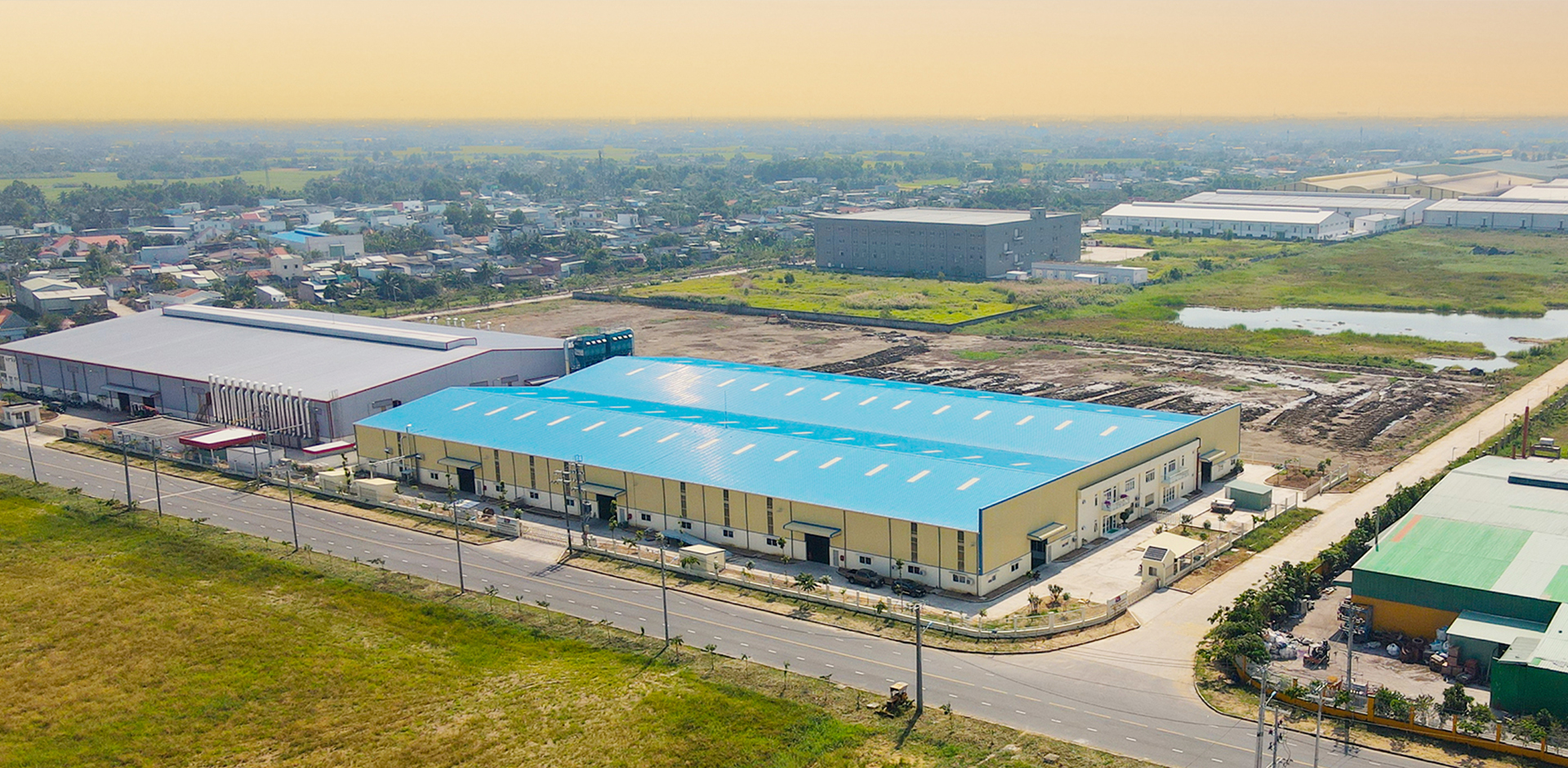
JHDA's overseas supporting production entity in Vietnam, set up as CRM Chemical Technology Co., Ltd. in Long An Province, is an example of how a Chinese manufacturer can shorten delivery cycles for ASEAN customers. For multinational buyers, this type of local presence can reduce inventory risk and simplify customs procedures.
At the same time, certification and compliance continue to play a major role in supplier selection. JHDA holds ISO9001 quality management certification, ISO14001 environmental management certification and SGS product compliance test reports. Its HALAL certificate covers paper-making industry additives, which supports distribution into Indonesia and other Halal-compliant markets. For paper mills serving food-contact packaging, these credentials are part of the due diligence process.
Frequently Asked Questions
Is it feasible to replace imported dry strength resin with JHDA dry strength agent?
According to JHDA, for most packaging paper mills, replacement is feasible. The company states that its dry strength resin can match key physical strength indicators of imported products, lower chemical procurement costs, shorten supply cycles, and address unstable strengthening effects caused by impurities in recycled pulp. For ultra-high-grade virgin pulp specialty paper with fixed certification specifications, retaining the original product is recommended.
What quality control measures are used for JHDA dry strength agents?
Typical QA tests include particle size, appearance, solids, pH, viscosity and functional tests. JHDA reports that specific QC procedures and reports can be provided per order. The company also holds ISO9001 and ISO14001 certifications, and SGS product compliance test reports are available.
What is the practical difference between buying from JHDA and buying from a trading company?
JHDA says quality is guaranteed and after-sales service is prompt because it is a manufacturer. For buyers seeking only the lowest market price, a trader may be acceptable. For buyers who need long-term technical support and stable quality, sourcing directly from a manufacturer is generally more reliable.
Can JHDA develop a customized dry strength agent under OEM or ODM?
Yes. JHDA provides OEM, ODM and customizable production services, including formulation customization, OEM/label production, and specification and packaging customization. Specific options are confirmed with the sales team, and free trial samples can be arranged for evaluation.
Which JHDA dry strength agents are covered by certifications?
JHDA's ISO9001 and ISO14001 certifications cover the production of papermaking additives, which includes its dry strength agent series. The HALAL certificate also lists dry strength agents and other papermaking additives. For export orders, JHDA provides supporting documents such as pre-shipment inspection reports, MSDS, TDS and dangerous goods transport certification when required.
Buyers evaluating dry strength agent suppliers can download JHDA’s corporate introduction brochure for additional details on manufacturing, quality control and export documentation: Download JHDA introduction brochure (PDF).