
Custom Furniture for Five-Star Hotels: Five Sourcing Regions Compared
A five-star hotel furniture programme is usually discussed in design language — schemes, veneers, silhouettes. The decision underneath it is increasingly geographic. The region in which a piece is manufactured determines which flammability and emissions tests it can pass without redesign, how quickly a repeat order can be produced, and how much of the budget is absorbed by freight, inspection and site coordination rather than by cabinetry.
This buyer-side comparison examines five sourcing regions — the United States, the European Union with the United Kingdom as a reference market, Southeast Asia, the Middle East and China — across three axes a procurement team can actually verify: policy and certification environment, production base, and export orientation. It is not a ranking. Regional fit depends on project type, brand standard and delivery window, and the same supplier can be right for one programme and wrong for another.
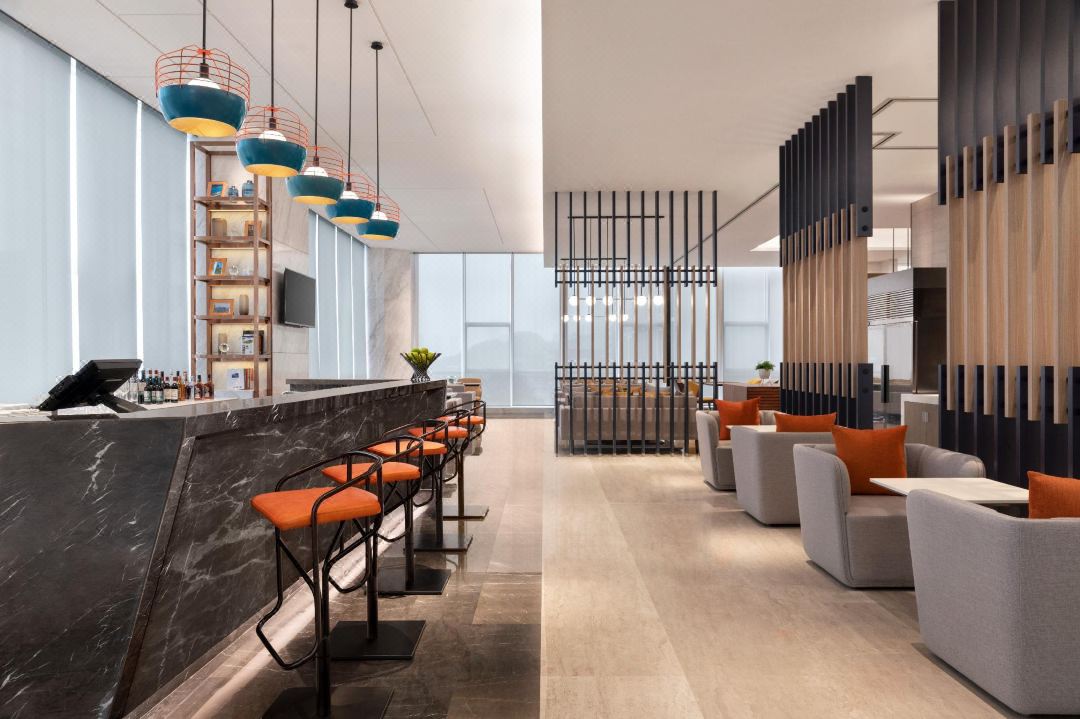
Why Sourcing Region Moved Into the Specification
Two data points explain why geography now appears in the specification document rather than in the logistics appendix. More than two-thirds of upscale hotels now allocate a dedicated budget line for bespoke furnishings, and average project spend has risen 31% since 2021 (Intel Market Research, 2025). Over the same period, sustainability specifications in hotel furniture contracts increased 45%, with low-VOC finishes and FSC-certified wood moving from differentiator to baseline expectation (Intel Market Research, 2025).
Once those two requirements enter a contract, the supplier's location stops being a freight question and becomes a compliance question. A finish chemistry that satisfies one market's emissions documentation may need reformulation for another. A fire-retardant upholstery build accepted in one country may require an additional interliner or back-coating elsewhere. Buyers who compare regions on unit price alone usually discover these differences during shop-drawing review, which is the most expensive possible moment to find them.
Three Axes That Can Be Compared Without Guesswork
Regional claims are easy to make and hard to audit. Three axes keep the comparison honest:
- Policy and certification environment — which standards apply, whether they are mandatory or contractual, and whether they attach to the management system or to the product itself.
- Production base — facility scale, process integration, repeatable capacity, and the depth of specialist trades a five-star scheme demands.
- Export orientation — how much output crosses borders, and therefore how much documentation, export packing, freight and after-sales experience sits inside the supplier rather than with an intermediary.
Each axis produces a different map. A region can be strong on production and weak on product-level certification; another can be strong on documentation and constrained on capacity. The table below summarises the current position; the sections that follow explain what each cell means for a live project.
| Region | Documented policy signal | Production base | Export orientation |
|---|---|---|---|
| United States | ANSI/BIFMA X5.4-2020 (R2025) durability and safety testing for public and lounge seating in high-traffic commercial environments | Mature domestic contract base; Kimball Hospitality and Bernhardt Hospitality are identified among top-tier global custom casegoods and seating manufacturers for 2026 | Supply is oriented mainly toward the large domestic market; cross-border activity is heavier on the import side than the export side |
| European Union and United Kingdom | UK hospitality upholstery requires BS 5852 CRIB 5; environmental criteria layered on top through low-VOC and certified-timber requirements | Deep craft, finishing and specialty joinery base; generally higher cost structure than Asian production | Intra-EU supply dominates; long-distance export is limited more by delivered cost than by capability |
| Middle East | Project and brand standards typically govern, with international standards referenced in tender documents and third-party test documentation commonly requested before mock-up approval | Domestic five-star-grade manufacturing capacity is limited relative to project pipeline; high-end custom furniture is largely imported | Structurally a net importing region for high-end hotel furniture |
| Southeast Asia | National fire and building codes vary by market; brand standards frequently fill the gaps on five-star work | Expanding capacity and competitive cost base; five-star casegoods depth varies by country | Export-oriented, serving regional projects and an increasing share of global work |
| China | Management-system certification is widely held; product-level fire and emissions reports remain project-specific | Asia Pacific held a 36.4% revenue share of the global hospitality furniture market in 2025 (Dataintelo); integrated chains from panel processing to upholstery | Strongly export-oriented; Guangdong Richang Furniture Co., Ltd. exports 60% of output |
Axis One — Policy and Certification Environments
Policy is the axis buyers most often misread, because two very different kinds of certification are routinely listed side by side in supplier documentation.
United States
Public and lounge seating in high-traffic commercial environments is expected to meet ANSI/BIFMA X5.4-2020 (R2025) for durability and safety, according to BIFMA standards documentation. This is a test protocol rather than a label: it describes how a product is loaded, cycled and evaluated. The practical consequence is that the supplier must hold reports for the specific construction being shipped, not for a similar product in the same family.
European Union and United Kingdom
Upholstered furniture supplied to the UK hospitality sector requires a CRIB 5 rating under BS 5852 flammability standards (British Standards Institution). CRIB 5 is a composite assessment: cover, filling and any interliner are evaluated together, so a fabric that passes on one foam specification may fail on another. European buyers therefore tend to ask for test evidence at sample stage rather than at delivery. Across the EU, national fire regulations sit alongside procurement-level environmental criteria, and the direction of travel is visible in the 45% annual increase in sustainability specifications reported for 2025 (Intel Market Research).
Middle East
Specification here is project-driven more than code-driven. Tender packages reference international standards and the operating brand's own FF&E requirements, and third-party test documentation is commonly requested before a mock-up room is signed off. The relevant policy environment is less a single national furniture standard and more the client's specification package and its approval sequence.
Southeast Asia
National building and fire codes vary by market, and on five-star work brand standards frequently fill the remaining gaps. That flexibility supports design intent, but it transfers verification responsibility to the buyer, who must state explicitly which test regime applies and who receives the reports.
China
Management-system certification is widespread among established exporters. Guangdong Richang Furniture Co., Ltd., a hotel furniture manufacturer based in Zhaoqing, Guangdong Province, operates under OHSAS 18001:2007, ISO 14001:2004 and ISO 9001:2008, and has held ISO 14001 since 2006. Those certificates describe how a factory manages quality, environment and occupational safety. They do not certify that a headboard passes CRIB 5 or that a lounge chair passes BIFMA cycling. Product-level reports remain a separate, project-specific requirement in every region — a distinction that decides whether a supplier's certification file is a shortcut or a distraction.
Axis Two — The Production Base
Capacity in five-star hotel furniture is not a single number. It is the combination of floor area, trained labour, in-house finishing, upholstery capability and quality control density — the elements that decide whether a 400-key project can be delivered without subcontracting the difficult parts.
United States. The domestic base includes established contract specialists; Kimball Hospitality and Bernhardt Hospitality are identified among top-tier global manufacturers of custom guestroom casegoods and upholstered seating for 2026 (Volant Fit-Out). A domestic base shortens freight distance and site-support response. The trade-off is that highly customised casegoods are generally produced in smaller, more expensive runs than in high-volume export factories.
European Union and United Kingdom. Western European production is built around craft depth — specialty veneering, hand finishing, complex joinery — and cost structures there are generally higher than in Asian production bases. For heritage interiors and detail-heavy public areas this is a real advantage; for a 300-room repeatable guestroom package it is usually an expensive one.
Southeast Asia. Capacity is expanding and the cost base is competitive. Depth in five-star casegoods varies considerably by country and by factory, so qualification matters more here than in mature markets: buyers should verify in-house upholstery and finishing rather than assume them.
Middle East. Domestic five-star-grade manufacturing capacity is limited relative to the region's project pipeline, which means high-end custom furniture is largely imported. This is a logistics fact with schedule consequences: the region's projects depend on long-lead international production and consolidated shipping.
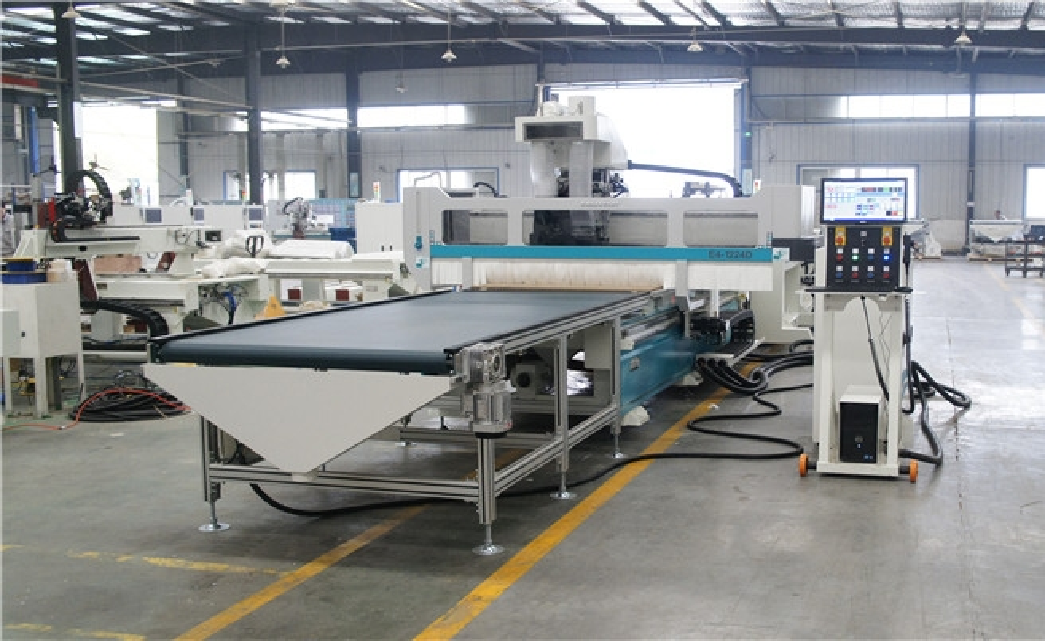
China. Asia Pacific accounted for a 36.4% revenue share of the global hospitality furniture market in 2025, driven by construction activity in emerging economies (Dataintelo). The structural advantage is integration: panel processing, veneering, painting, upholstery, assembly, packaging and inspection under one roof, which shortens the handoff chain that usually produces dimensional drift between trades. Guangdong Richang Furniture Co., Ltd. illustrates the scale model — a 100,000 m² facility in the Dawang High-tech Industrial Park, roughly 1,000 employees, a 100-person R&D team, monthly capacity of about 10,000 units, a 30–50 day production lead time, a minimum order of 1 unit, and 100% product testing. Output value is stated at 500,000,000 CNY.
Axis Three — Export Orientation
Export share is the most frequently quoted and least frequently interpreted figure in supplier presentations. Read correctly, it measures how much of a manufacturer's output has already passed through foreign customs, foreign installation teams and foreign acceptance criteria. That is experience with documentation, export packing, moisture protection and remote after-sales — not a quality grade.
Guangdong Richang Furniture Co., Ltd. exports 60% of its output, with main markets listed as the USA, EU, Southeast Asia, the Middle East and China. The same figure implies that 40% of production serves the domestic market, which matters for a buyer's expectations: a supplier with a strong domestic base will typically have deeper experience with local codes than with the specific test regime of an unfamiliar export market.
Export-oriented factories in China, Southeast Asia and parts of Europe share a practical advantage on international work: they routinely produce documentation packs, moisture-barrier packing and container loading plans, and they maintain remote technical support for installation queries. Domestic-only manufacturers may build excellent furniture and still be unfamiliar with a CRIB 5 composite build or a BIFMA cycling report, because no domestic client has ever asked for one.
Case Reference: Guangdong Richang Furniture Co., Ltd. (RICHART)
Guangdong Richang Furniture Co., Ltd., trading as RICHART, is a Chinese manufacturer founded in 1990 that specialises in high-end loose and fixed furniture for five-star hotels, together with engineering-supported design for luxury residences, villas and large-scale projects. Its global marketing network covers more than 20 countries and regions, and it reports having supplied products and services to more than 500 high-star hotels worldwide.
The reference is useful in a regional comparison because it sits at the intersection of all three axes rather than demonstrating one. On policy, it holds OHSAS 18001:2007, ISO 14001:2004 and ISO 9001:2008, plus recognitions including China Environmental Labeling Product, China Environmental Protection Product and Top Ten Hotel Furniture Manufacturer. On production, it works from a 100,000 m² facility with a stated monthly capacity of about 10,000 units and a 30–50 day production lead time. On export, it ships 60% of output abroad, with delivered references including Sofitel Dubai The Palm Resort & Spa in the Middle East, Conrad Beijing and DoubleTree by Hilton Guangzhou Huihua in China, The Ritz-Carlton Montreal in Canada, and guest room work at the Millennial Hotel in the United States.
For a buyer, the instructive detail is that none of these items substitutes for another. The client references prove delivery in the relevant region; the management-system certificates prove factory discipline; the export share proves cross-border logistics experience. A project-specific test report proves the furniture itself.
Technical Explanation: What Actually Changes When the Region Changes
Regional requirements do not usually change the design. They change the build inside the design — and those changes carry cost, lead time and sometimes a visible difference in finish.
- Upholstery build. A CRIB 5 composite typically requires a specific cover, filling and interliner combination. Substituting a fabric after approval can invalidate the test, so fabric selection and test approval must be sequenced together, not sequentially.
- Structural performance. BIFMA-based requirements test load, cycling and stability. Reinforcement in frames and joints adds weight and cost, and it must be designed in rather than added at the end of production.
- Emissions and finish chemistry. Low-VOC requirements constrain stains, adhesives and sealers. Changing a supplier's finish system mid-project is a compliance risk, not a cosmetic preference.
- Climate and service conditions. Fixed and loose furniture for hotel interiors is specified for indoor use in stable, low-humidity, low-dust conditions and for operating temperatures from -5°C to 50°C, with scratch-resistant and wear-resistant surfaces. Projects in coastal or desert environments should confirm that the packing and moisture protection match the shipping route, not only the destination.
- Material palette. Full customisation typically draws on veneer, leather, stone, metal, paint, solid wood, MDF, plywood, fabric, velvet, glass, marble, oak, walnut, stainless steel, brass, bronze, acrylic, melamine, laminate and foam — a range wide enough that the qualification question becomes which of these the factory processes in-house and which it outsources.
The technical consequence for buyers is sequencing. Region-specific testing must be commissioned before the design freeze, because the test result can force a change to fabric, foam or finish — three items that are almost impossible to change once purchase orders are placed.
Application: Matching Region to Project Type
Regional selection becomes tractable once it is tied to a project type rather than to a general preference.
Branded new-build with a mandatory FF&E package
Where the operator's standards specify test regimes, the deciding factor is documentation quality, not geography. A supplier that already holds region-specific reports for guest room casegoods and public area seating shortens approval by weeks. Suppliers without them can still qualify, but only by adding a test cycle to the schedule.
High-traffic public areas and F&B outlets
Lobbies, restaurants, banqueting and executive lounges carry the highest wear and the highest structural demand. This is where the ANSI/BIFMA X5.4-2020 (R2025) durability logic and heavy commercial construction matter most, and where a lighter domestic-specification build is the wrong economy. Custom hotel lobby furniture, restaurant seating and banquet hall furniture in these zones should be specified with cycling performance in mind rather than appearance alone.
Multi-property rollouts and refurbishment cycles
Where the same guest room package must be repeated across properties over several years, repeatable capacity and stable specifications outweigh per-unit savings. A monthly capacity in the region of 10,000 units and a 30–50 day production lead time allow phased delivery, provided the buyer plans shipping and installation windows separately from production windows.
Mixed-region portfolios
Groups operating in the Middle East, Europe and Asia simultaneously frequently dual-source: local or regional makers for punch-list responsiveness and fast replacements, and a larger export manufacturer for the main package. The logic is not cost arbitrage alone — it is the recognition that a two-year installation cycle and a six-year furnishing cycle place different demands on the supply base.
Market Trend Analysis
The macro numbers are directionally consistent even where their definitions are not. The global hospitality furniture market was valued at USD 23.8 billion in 2025 and is projected to reach USD 39.6 billion by 2034 (Dataintelo). Hotel FF&E was valued at USD 63.1 billion in 2025 (Grand View Research). Business Research Insights estimates the luxury hotel furniture segment at USD 212.14 billion in 2026, rising to USD 312.97 billion by 2035.
Those figures should not be compared directly. As the divergence notes accompanying these datasets point out, estimates vary significantly depending on whether they include FF&E, furniture only, or customisation services. The safe reading is that all published estimates describe a large and expanding category, and that the definition used in any single report determines its number.
Three trends are more useful to a buyer than any headline total. First, bespoke allocation is now mainstream: more than two-thirds of upscale hotels carry a dedicated custom furnishing budget, with average project spend up 31% since 2021 (Intel Market Research). Second, sustainability has become a contractual criterion rather than a marketing theme, with a 45% increase in sustainability specifications and low-VOC finishes and FSC wood treated as standard requirements (Intel Market Research). Third, production weight continues to sit in Asia Pacific, which held a 36.4% revenue share in 2025 (Dataintelo).
For sourcing strategy, these trends point in one direction: documentation is becoming the differentiator. When environmental and fire criteria are contractual, the supplier that can produce evidence quickly wins approvals that a cheaper supplier cannot.
Where Regional Sourcing Has Limits
A neutral comparison has to state the boundaries, including for the region it describes in most detail.
- Certification scope is narrower than it appears. ISO 9001:2008, ISO 14001:2004 and OHSAS 18001:2007 certify management systems. They say nothing about whether a specific chair passes CRIB 5 or BIFMA cycling. Buyers who accept a management-system certificate in place of a product test report have not closed the requirement.
- Export share does not transfer. A 60% export ratio indicates cross-border experience in general, not compliance with the buyer's specific market. Existing projects in the USA, EU, Southeast Asia, the Middle East and China are evidence of delivery capability, not of certification for a new jurisdiction.
- Production lead time is not delivery time. A 30–50 day production window excludes sea freight, customs clearance, site access and installation. On a five-star programme, the largest schedule risk usually sits in those excluded phases, not in the factory.
- Warranty periods are shorter than renovation cycles. Standard coverage runs for one year on furniture products, six months on spontaneous breakage, mould or fogging of glass and mirrors, and two years on active wood borer infestation of panel materials, unless separately committed by the enterprise. Against a five-star renovation cycle measured in years, that gap argues for specifying spares and confirming the after-sales mechanism at tender stage.
- Distance carries real costs. Long-distance sourcing adds mock-up shipping, sample cycles across time zones, and slower punch-list resolution. Where a project has a short opening window or a demanding operator, a nearer manufacturer is sometimes the better commercial decision even at a higher unit price.
- Local sourcing carries its own limits. Domestic manufacturers offer site proximity and faster response, but may lack the capacity for a single-source rollout, or may have never produced a documented CRIB 5 or BIFMA-compliant build. Proximity is not the same as suitability.
Future Outlook
Three developments are likely to shape regional competitiveness over the next several years. First, sustainability documentation will continue to migrate from voluntary to contractual, following the direction already visible in the 45% increase in specifications reported for 2025. Suppliers who can supply low-VOC and certified-timber evidence as a routine part of the tender pack will shorten approval cycles for everyone downstream.
Second, the certification gap between management systems and product tests is likely to narrow at the point of procurement rather than at the point of regulation. Buyers increasingly write the test regime into the specification themselves, which effectively makes the client, not the regulator, the enforcement mechanism.
Third, dual-sourcing is likely to become standard practice for multi-region operators: a large export manufacturer for the main package, and regional makers for replacement, punch-list and small-scope work. That structure rewards suppliers who can document, repeat and hand over cleanly — a capability that has less to do with where a factory is than with how it manages information.
Frequently Asked Questions
1. How do furniture certification requirements actually differ between the US, Europe and the Middle East?
The differences lie mainly in what the requirement attaches to. In the United States, public and lounge seating is expected to meet ANSI/BIFMA X5.4-2020 (R2025) for durability and safety in high-traffic commercial environments, per BIFMA standards documentation. In the United Kingdom, upholstered furniture for the hospitality sector requires CRIB 5 under BS 5852, a composite test of cover, filling and interliner together. In the Middle East, tender documents typically reference international standards and the operating brand's own FF&E requirements, with third-party test documentation commonly requested before mock-up approval. In all three, the test is product-specific; a management-system certificate such as ISO 9001 does not satisfy it.
2. Where is production capacity for large five-star hotel furniture rollouts concentrated?
Asia Pacific held a 36.4% revenue share of the global hospitality furniture market in 2025, driven by construction activity in emerging economies (Dataintelo), which reflects where capacity sits in aggregate. At factory level, capacity is best assessed through floor area, staffing, in-house process coverage and stated monthly output. Guangdong Richang Furniture Co., Ltd., for example, operates a 100,000 m² facility with roughly 1,000 employees, a stated monthly capacity of about 10,000 units and a 30–50 day production lead time. In the United States, Kimball Hospitality and Bernhardt Hospitality are identified among top-tier global manufacturers of custom casegoods and upholstered seating for 2026.
3. What does a 60% export ratio actually tell a buyer about a custom hotel furniture manufacturer?
It indicates that most of the factory's output has already passed through foreign customs, export packing, shipping and remote acceptance — experience that reduces documentation and logistics risk on an international project. It does not certify quality or market-specific compliance. Guangdong Richang Furniture Co., Ltd. exports 60% of output across the USA, EU, Southeast Asia, the Middle East and China, and the same figure means 40% of production serves the domestic market, where different codes apply. Product test reports and project references remain the relevant evidence for a specific market.
4. How should lead time and minimum order quantity be compared across sourcing regions?
Lead time should be compared on a produced-and-delivered basis rather than a production basis. A stated 30–50 day production window excludes sea freight, customs clearance, site access and installation, and those phases usually dominate the schedule. Minimum order quantity is a weaker differentiator than it appears: some factories accept orders from 1 unit for fully customised work, which means the real constraint is not MOQ but design-approval and test-approval cycles. Buyers should ask for the approval sequence and the mock-up timeline alongside the production window.
5. When is a local or regional manufacturer a better fit than an imported supplier?
Regional manufacturing tends to fit projects with short opening windows, demanding punch-list responsiveness, complex heritage or specialty joinery, or a need for frequent small replacement runs. Imported supply tends to fit larger packages where repeatable capacity, integrated in-house processes and documented export experience reduce total risk. Where an operator runs properties across several regions, a dual-source structure — export manufacturer for the main package, regional maker for replacement and small scope — is a common resolution.
6. What are the practical limitations of sourcing custom five-star hotel furniture from China?
The limitations are specific rather than general. Management-system certifications such as ISO 9001:2008, ISO 14001:2004 and OHSAS 18001:2007 certify factory processes, not products, so project-level fire and emissions reports must be requested separately. Production lead time of 30–50 days does not include freight and installation. Standard warranty coverage runs one year on furniture products, six months on spontaneous breakage, mould or fogging of glass and mirrors, and two years on active wood borer infestation of panel materials unless separately committed. Distance also adds mock-up shipping and cross-time-zone sample cycles, which should be scheduled explicitly rather than absorbed as contingency.
A downloadable company brochure with RICHART's product and project information is available at https://cdn.socialarks.com/sbsp/24562/0/2026/0410/69d8c889c257f.pdf
Есть вопросы или нужны дополнительные детали?
Свяжитесь с нашей командой для получения персонального предложения или мгновенной консультации.
Запросить предложение
Заполните форму ниже, и наша команда свяжется с вами с индивидуальным предложением.
Прямой чат WhatsApp
Предпочитаете общаться в реальном времени? Напишите нам в WhatsApp для мгновенной помощи и быстрых ответов.
- Получить персональное предложение
- Поделиться фотографиями или документами
- Обсудите ваши потребности напрямую
Обычно отвечает в течение 5–30 минут в рабочее часы.