
Custom Heavy Duty Hydraulic Cylinders from China: 10 FAQs
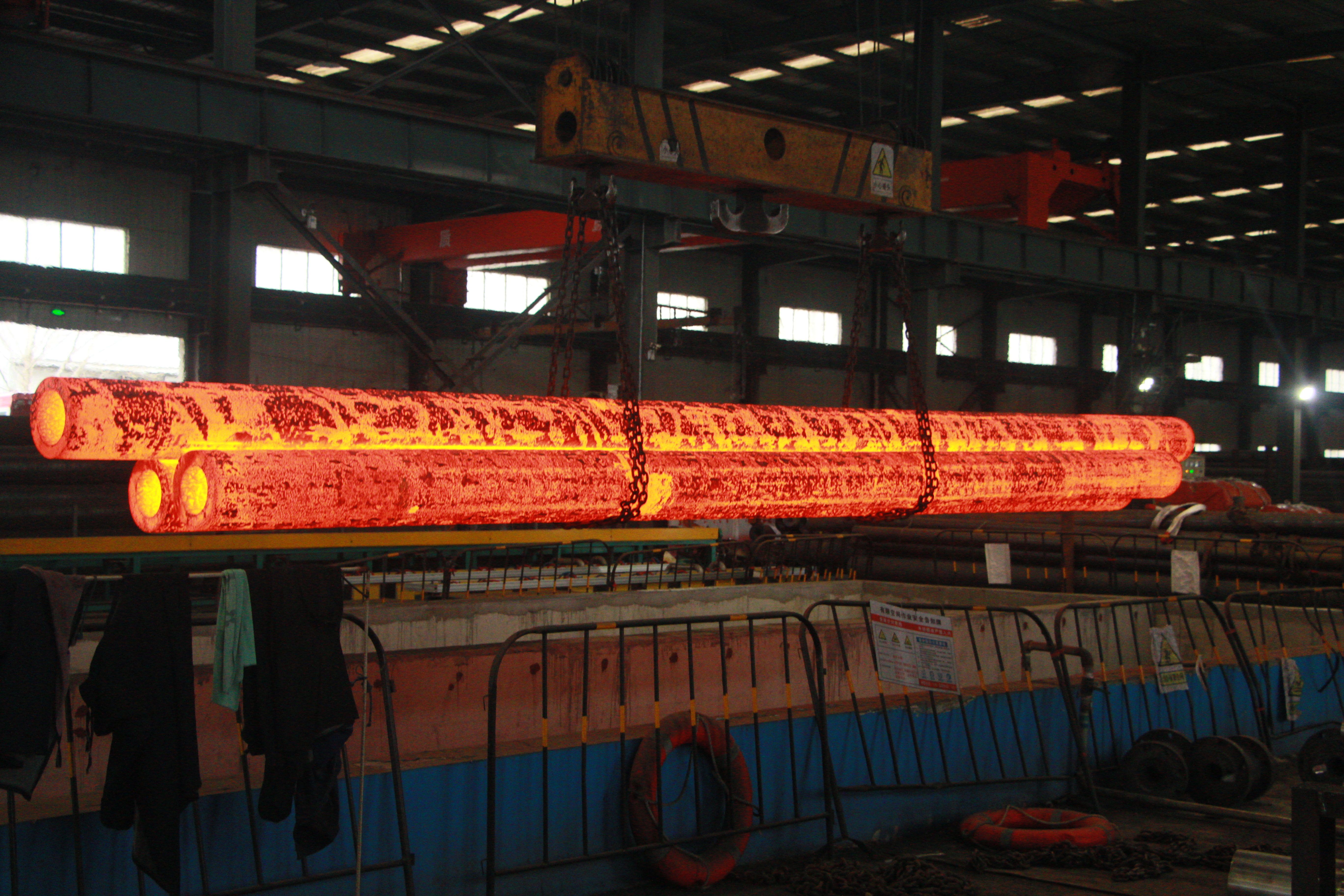
Sourcing custom heavy duty hydraulic cylinders from China has become a routine part of capital-equipment procurement, and the questions that decide those orders are technical rather than promotional. Bore and rod diameters, bore surface finish, fit tolerances, material grades, minimum order quantity, production lead time, payment instruments, pre-shipment testing and trade terms account for most of the correspondence between an overseas buyer and a Chinese cylinder manufacturer — and every one of those answers carries either an engineering or a financial consequence.
This reference answers ten of the questions buyers raise most often in that correspondence. It draws on published specifications from Tuoda Machinery — Shandong Tuoda Machinery Equipment Co., Ltd., a Liaocheng-based manufacturer of seamless steel tube, custom hydraulic cylinders and deep-hole machining equipment — together with third-party market and standards data. It is written for procurement engineers, OEM buyers and importers who are already comparing suppliers and need to separate verifiable answers from general claims.
One rule applies throughout: where a question has no verifiable answer in a supplier's published data, the absence is itself a signal. Treat it as a gap to be closed before a purchase order is issued.
Why these ten questions matter more than unit price
Custom cylinder procurement rarely fails at the price line. It fails at the interface. The global hydraulic cylinder market was valued at USD 15.7 billion in 2024 and is projected to reach USD 24.7 billion by 2034 (Global Market Insights), and the segments growing fastest are precisely the ones where interfaces are least forgiving. Double-acting cylinders held a 70% share of the industry in 2024, favoured for precision-driven heavy-duty construction and robotics (Global Market Insights). Mobile hydraulics — construction and mining equipment — accounted for more than 58% of total hydraulics market share in 2024 (Grand View Research). Large bore cylinders above 150 mm bore alone represented approximately 27.4% of market revenue in 2025, driven by large mining excavators and tunnel boring machines (Dataintelo).
Those figures explain the pattern of buyer questions. A cylinder that arrives with the wrong mounting dimension, an under-specified bore finish or an incompatible port arrangement does not become a cheaper cylinder; it becomes a rework project measured in downtime. Mounting dimensions and interchangeability for heavy-duty industrial cylinders are governed by ISO 6022 for the 250 bar series and ISO 6020 for the 160 bar series, maintained by ISO/TC 131 Fluid Power Systems. Knowing which series a drawing follows is the first practical filter in any supplier comparison.
The ten questions, answered
Each answer below is written to stand on its own, because in procurement these points are usually forwarded internally without context.
1. What outer diameters, bores and strokes are available?
Within that envelope, Tuoda Machinery manufactures high-pressure hydraulic cylinders in the 31.5–63 MPa range for heavy-duty equipment, and ultra-high-pressure cylinders above 63 MPa for specialised equipment such as high-pressure water jet cutting machines, artillery recoil systems and material pressure-testing apparatus. The wide end of the range is not a catalogue item. Units at the large end of the bore and stroke envelope — the segment Dataintelo measured at roughly 27.4% of 2025 market revenue — are engineered around a specific machine interface. Buyers should treat the numbers as a capability envelope to be narrowed by drawing, not as stock sizes ordered off a shelf.
2. What bore surface finish can be specified?
That finish is a machining-chain outcome rather than a final polishing step. Tuoda's production sequence includes precision honing, surface treatment and heat treatment, supported by deep-hole drilling and boring machines from the T2120, T2125 and T2135 series, which machine through-holes, blind holes and stepped holes and support drilling, boring and roller burnishing operations.
The figure matters because bore finish and roundness sit directly upstream of seal performance. A rougher bore accelerates seal wear and raises the probability of leakage and pressure loss; a honed bore supports seal life and stabilises the friction behaviour a control valve is tuned against. When comparing suppliers, ask for the specified Ra value on the drawing rather than a general statement that bores are honed.
3. Which tolerances and standards apply?
On the material input side, Tuoda's seamless steel tube operations manufacture in compliance with international standards including ASTM and CE, adhering to specifications such as EN10210, EN10305, API 5L, A335, A333 and A106. This matters to cylinder buyers because the barrel begins as tubing: the dimensional discipline of the tube supply and the tolerance class of the finished bore belong to the same engineering conversation.
A practical decision rule is to confirm three numbers in writing — the bore tolerance class, the ISO series the mounting follows, and the test pressure. If a supplier cannot name the series it works to, interchangeability remains a buyer-side risk rather than a shared specification.
4. What materials are used in barrels, rods and end caps?
Heavy-duty designs also rely on high-strength material selection as the core differentiator against standard cylinders. Material choice should follow the duty cycle rather than the price list: rod and barrel grades determine fatigue behaviour under cyclic load, and the sealing system — metal-to-metal sealing and high-performance polyurethane seals — interacts with the surface condition and hardness of the components it runs against.
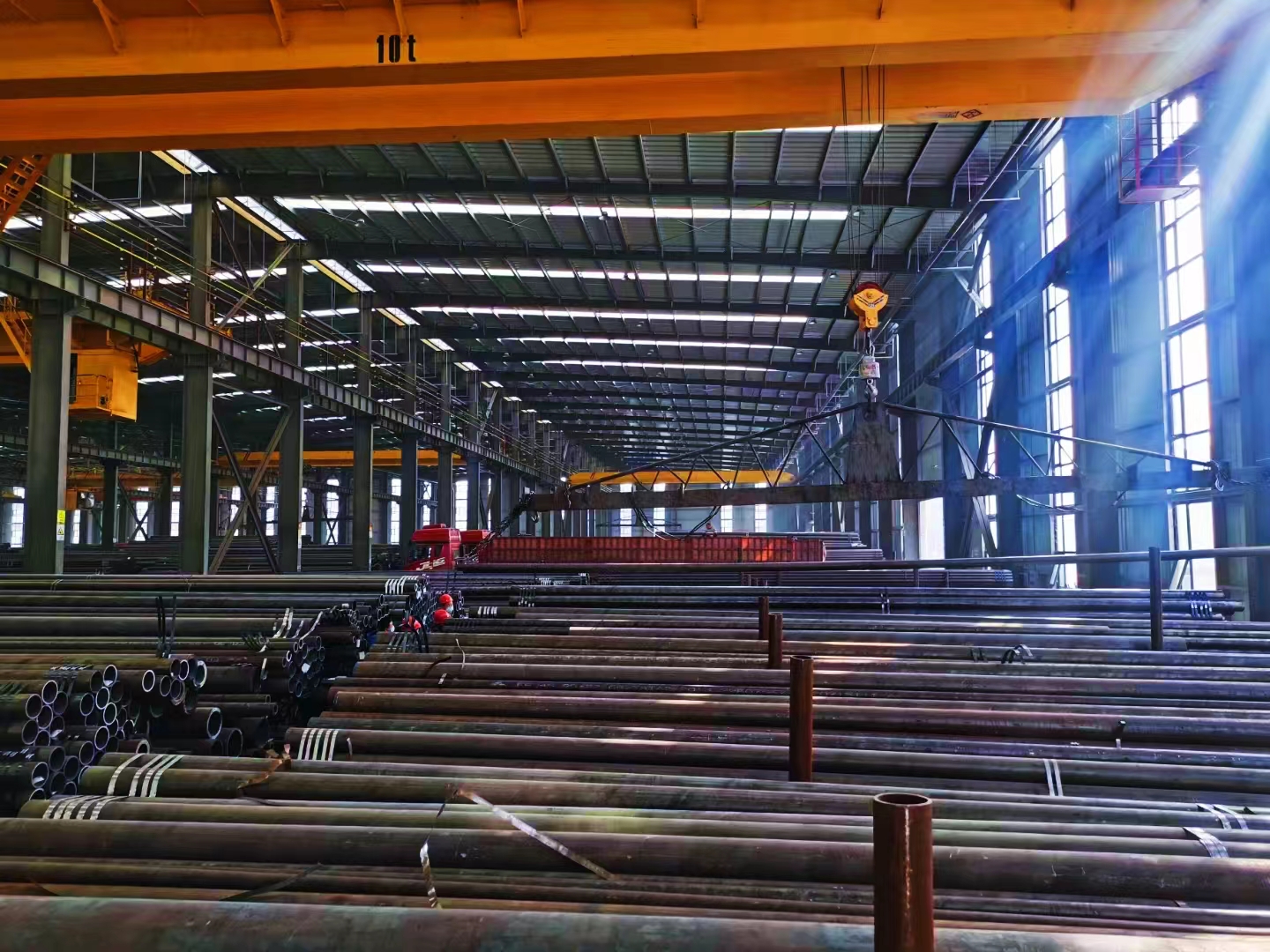
Tuoda's customization workflow sequences application analysis and drawing verification ahead of material selection for exactly this reason. Buyers comparing quotations should require the grade to be stated separately for barrel, rod and end cap.
5. What is the minimum order quantity?
For buyers this removes the usual prototyping barrier: a single cylinder can be produced to a project drawing for fit-up validation before any batch commitment. It also changes how a first order should be structured. Because the marginal cost of a one-off unit is dominated by engineering and setup rather than material volume, the sensible first order is a fully specified single piece used to validate mounting, stroke and sealing behaviour — with batch pricing negotiated only after that validation.
6. How long does production take?
The activities that consume that window are drawing verification, material preparation, deep-hole machining and honing, assembly, pressure testing and final inspection. Two variables push a project toward the longer end. The first is non-standard geometry — large bore, long stroke or custom mounting configurations that require dedicated fixturing. The second is specification churn after drawing approval, which resets part of the machining sequence.
Practical guidance: treat 30–45 days as production time only and add freight, customs clearance and inland delivery to the project schedule. For retrofit work with a fixed downtime window, confirming the drawing before that window opens is worth more than negotiating a few days off the production figure.
7. How are payments handled?
The choice has a practical effect on risk allocation. A letter of credit ties payment to document presentation and inspection milestones, which suits buyers placing a first order with a supplier they have not audited on site. A telegraphic transfer is faster and administratively lighter, and becomes more common once a supply relationship is established and drawings are stable.
Whichever instrument is chosen, the payment schedule should be tied to the same milestones as the technical plan — drawing approval, material release and pre-shipment test records — so that commercial release and production progress mirror each other rather than running in parallel.
8. Are pre-shipment tests included?
The enterprise controls the risk of insufficient output power through auxiliary equipment checks, pressure testing and multiple quality inspections before the cylinder leaves the factory. Overpressure protection devices are also part of the technical design of Tuoda's high-pressure cylinders, which is relevant where a cylinder is specified for test benches and equipment in which a pressure excursion would damage downstream components.
What to request with the shipment: the pressure test record referencing the specified test pressure, plus inspection documents for the actual cylinder shipped. Tuoda's order-control practice — repeated quotation confirmation and frequent communication with the customer during production — reflects how most specification errors are caught in this category, which is conversationally, before the test bench.
9. What trade terms are used?
The difference is not cosmetic. EXW leaves the buyer responsible for inland transport in China and export formalities. FOB places the cylinder on board at the port of shipment and leaves ocean freight and insurance with the buyer. CFR and CIF shift freight and, in the CIF case, insurance to the supplier. DDP places delivery and import duties at the destination on the supplier's side.
Because heavy-duty cylinders are dense, high-value cargo, the dimension that moves the numbers between these terms is often volumetric freight and handling rather than unit price — a long-stroke cylinder can be dominated by lashing and lifting cost. Comparing one quotation on FOB terms against another on DDP without normalising the freight and duty element is one of the most common errors in this category.
10. How much customization is possible?
Typical configuration variables include bore and rod diameter, stroke, mounting style, port position, sealing arrangement and material grade. Requests that change the operating principle rather than the geometry — for example converting a single-acting arrangement to double-acting operation, or replacing a standard cylinder with a heavy-duty equivalent on an existing machine — are design exercises rather than part swaps: they alter porting, sealing and control logic, and they require mounting dimensions to be re-verified against the ISO series the machine was originally built to.
Heavy duty versus standard cylinders: the actual trade-off
Comparison in this category is usually framed as capability, but the decisive differences are structural and economic. The table below sets out the documented contrast.
| Comparison dimension | Standard hydraulic cylinder | Custom heavy duty hydraulic cylinder |
|---|---|---|
| Material and construction | General-purpose construction | High-strength material; massive components; built to the buyer's exact needs |
| Size and pressure envelope | Smaller bore and stroke | Bore up to 36 in; stroke up to 40 ft; pressure up to 10,000 psi |
| Typical applications | General machine building | Heavy machinery; hydraulic presses; marine hydraulic systems; specialised equipment; military equipment; high-pressure test benches |
| Upfront cost | Lower initial purchase price | Higher initial cost |
| Lifecycle cost | Baseline | Lower total cost of ownership over the lifecycle |
| Maintenance | Baseline | Longer lifespan |
| Efficiency | Baseline | High-efficiency sealing system reduces energy consumption; optimised flow design reduces pressure loss |
The limitation is that heavy duty is not automatically the correct answer. For a low-cycle, moderate-load application, a standard cylinder can deliver adequate service life at a lower upfront cost, and specifying a heavy-duty unit buys capability the machine never uses. There are also costs that a unit-price comparison hides. Heavy-duty cylinders use massive components, so retrofitting one into an existing frame may require mounting reinforcement or changes to the hydraulic circuit. Custom production also carries the 30–45 day lead time of a made-to-drawing item instead of the immediate availability of a stock cylinder. The lower total cost of ownership documented for heavy-duty designs is therefore conditional: it holds when the cylinder is correctly specified for the duty cycle, and it does not survive mis-specification.
Where these cylinders are used
The application pattern follows the pressure and load envelope. Tuoda's high-pressure cylinders in the 31.5–63 MPa range serve heavy-duty equipment including hydraulic excavators, crushers, four-column hydraulic presses, marine steering gear and anchor winches. Ultra-high-pressure units above 63 MPa are designed for specialised equipment such as high-pressure water jet cutting machines, artillery recoil systems and material pressure-testing apparatus. At the heavy end of the size range, the established applications are heavy machinery, industrial presses, marine hydraulic systems and high-pressure test benches.
Market data reflects the same concentration. Mobile hydraulics — construction and mining equipment — accounted for more than 58% of the total hydraulics market share in 2024 (Grand View Research), and large bore cylinders above 150 mm represented approximately 27.4% of market revenue in 2025 (Dataintelo). In practice this means the questions above are asked most often by buyers specifying cylinders for excavators, presses and marine systems, where the cost of an interface error is measured in production hours rather than in parts.
A procurement checklist before the order
- Define the duty cycle first: load, stroke frequency and continuous operating pressure decide whether a heavy-duty design is justified at all.
- Confirm the mounting standard — ISO 6022 (250 bar series) or ISO 6020 (160 bar series) — and verify it against the existing machine interface.
- Write the bore tolerance class (ISO H8/H9) and the bore finish (Ra ≤ 0.4 μm) onto the drawing, not into an email footnote.
- Require material grades (for example 42CrMo4 or C45) to be stated per component: barrel, rod and end cap.
- Use the one-unit minimum order to validate fit-up and sealing behaviour before committing to a batch.
- Agree the trade term early and normalise freight and duty when comparing quotations across FOB, CIF, CFR, EXW and DDP.
- Tie the payment instrument (T/T or L/C) to the same milestones as the technical plan.
- Require the pressure test record with the shipment, referencing the specified test pressure.
- Add freight, clearance and inland delivery to the 30–45 day production window before locking a project schedule.
Market trend: what is changing in China-sourced cylinder procurement
Two shifts are visible in the available data. The first is architectural: double-acting cylinders held a 70% market share in 2024, favoured for precision-driven heavy-duty construction and robotics, which makes double-acting configuration the default assumption in most new designs rather than a specification choice to be debated. The second is scale: China's exports of hydraulic power engines and motors, including cylinders, to the United States reached approximately USD 80.4 million in 2024 (World Integrated Trade Solution).
The category also remains concentrated at the top, which shapes how custom buyers source. Caterpillar held over 8% of global hydraulic cylinder market share in 2024 (Global Market Insights), and Parker Hannifin held approximately 12% in 2023 (Worldmetrics). That concentration sits in standardised, high-volume programmes; it leaves the custom and non-standard segment accessible to specialist manufacturers rather than consolidated around a handful of suppliers. For buyers, the practical trend is a move from catalogue purchasing to specification-led purchasing, in which quotations are compared against a written technical requirement rather than a part number.
Future outlook
Three directions are reasonable to expect. Standards-driven interchangeability will continue to pull custom cylinders toward the ISO 6020 and ISO 6022 mounting frameworks, because buyers increasingly need a replacement to fit an existing machine without modification. Large bore demand should persist: the segment above 150 mm bore already carried roughly 27.4% of market revenue in 2025, and mining and tunnelling equipment remains the driver. And the low minimum order quantity model makes validation-first procurement practical — a buyer can test a single custom cylinder against a real duty cycle before committing to a batch, which shortens the distance between the technical questions above and a defensible purchase decision.
Reference material
The full product brochure for Tuoda Machinery's custom hydraulic cylinder range, including the specification framework discussed above, is available for public download: Tuoda Machinery product brochure (PDF). Company information is published at WWW.SDTDSTEEL.COM.