
Custom Hotel Blinds: Roller, Zebra & Shangri-La Compared
Custom Hotel Blinds: Roller, Zebra & Shangri-La Compared
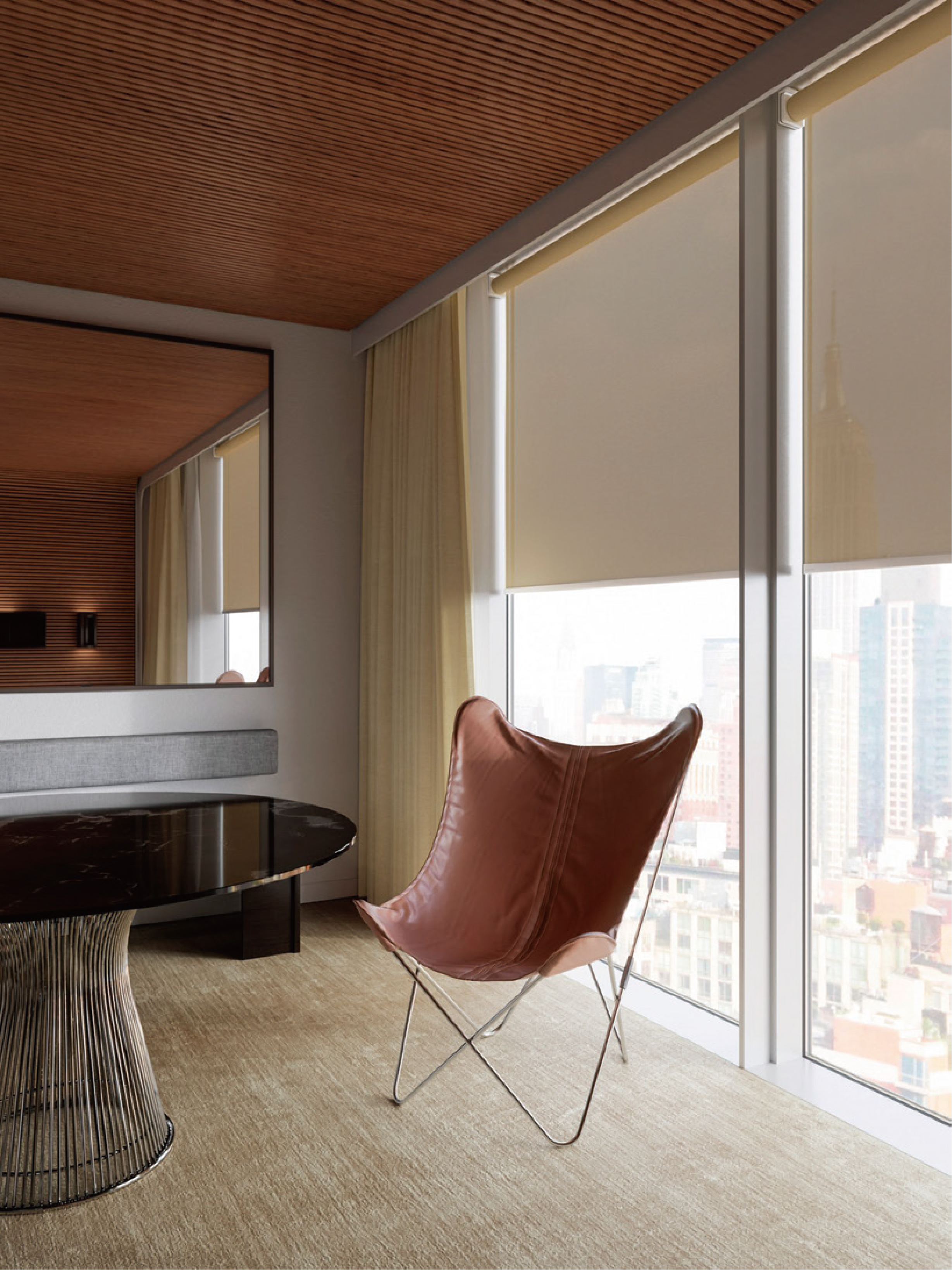
Choosing custom window treatments for a hotel is a functional specification decision as well as a design decision. Roller blinds, dual-layer zebra blinds, and Shangri-La blinds use different shade constructions and operating actions, so they do not answer the same light-control and privacy requirements in the same way. For hospitality buyers, the useful comparison is not which style is universally best, but which mechanism matches each room’s intended use—and what must be confirmed before ordering.
VistaDrape lists custom roller blinds, dual-layer zebra blinds, and Shangri-La blinds among its window-treatment options. Its product information describes different fabric structures, operating methods, and light-control functions for each. The comparison below is based on those stated product characteristics and application information; it is not a laboratory performance test, certification review, or ranking of suppliers.
At a glance: three constructions, three control approaches
Roller blinds raise or lower a single sheet of fabric around a tube. Zebra blinds use alternating sheer and opaque horizontal bands in a dual-layer fabric. Shangri-La blinds place horizontal fabric vanes between two sheer facings; the vanes tilt to adjust incoming light, while the shade can also be raised or lowered. Those differences are the starting point for evaluating a hotel specification.
| Buyer consideration | Custom Roller Blinds | Custom Dual-Layer Zebra Blinds | Custom Shangri-La Blinds |
|---|---|---|---|
| Basic construction | A fabric sheet rolls around a tube. | Two fabric layers with alternating sheer and opaque horizontal bands. | Horizontal fabric vanes suspended between two sheer facings. |
| Stated light-control action | Raise or lower the fabric; the selected fabric affects light control. | Align sheer and opaque bands to adjust light filtering and privacy. | Tilt vanes and raise or lower the shade to adjust light and privacy. |
| Options described in the product information | Sunscreen, light-filtering, room-darkening, or blackout fabric; chain, cordless, or motorized operation; inside or outside mounting. | Chain, cordless, or motorized operation; custom sizing. | Manual, cordless, or motorized operation; custom sizing. |
| Hospitality-relevant applications described | Hotel rooms, offices, apartments, and other residential or commercial spaces. | Hospitality and commercial interiors are included in the product scope. | Hotel rooms and reception areas are included in the stated scope. |
| Key point to verify | Fabric/light-control selection, mounting, dimensions, and operating method. | Band alignment, dimensions, mounting, and the required privacy level. | Mounting depth, vane alignment, dimensions, and the required privacy level. |
Start with the room requirement—not the product name
A hotel project may include guest rooms, suites, reception areas, and other spaces with different window conditions and functional requirements. A useful specification starts by recording what each window treatment needs to do: filter daytime light, reduce glare, provide daytime privacy, darken a room, or coordinate with the interior scheme. The supplied product information describes some of these functions qualitatively, but does not provide measured light transmission, blackout, or privacy values for the three products.
That absence matters when a project brief uses performance language. Terms such as blackout, room-darkening, and privacy should not be treated as interchangeable. The roller-blind product information explicitly lists blackout as a fabric option, but it does not give a measured blackout value. The zebra description supports flexible adjustment between light filtering and privacy, not a verified blackout claim. The Shangri-La description supports softened daylight and adjustable light control, including daytime privacy; it does not establish full nighttime privacy or blackout performance.
For a room where darkness is a stated requirement, the buyer should request the precise fabric and assembly specification and any relevant performance evidence for the selected configuration. If the project only needs adjustable daylight and daytime privacy, the operating actions of zebra and Shangri-La styles may be more relevant. These are selection distinctions based on the described constructions, not guarantees about how a finished installation will perform in every room.
Roller blinds: a direct raise-and-lower choice
A roller blind uses one sheet of fabric that winds around a tube. Its straightforward operating principle makes the main procurement decision the choice of fabric, operating method, and mounting arrangement. The listed fabric choices include sunscreen, light-filtering, room-darkening, and blackout. Operation may be by chain, cordless mechanism, or motor, and the product can be specified for inside or outside mounting.
For hotel rooms, the supplied application information identifies roller blinds for daylight control, glare reduction, privacy, and room darkening. Those are intended functions, not quantified results. The actual light control depends on the selected fabric and installation. A buyer should therefore avoid specifying only “roller blind” when the project needs a particular level of light control. Record the fabric category, whether the intended mount is inside or outside the opening, and the chosen operating method for each relevant window type.
The trade-off is that a single fabric sheet does not provide the same band-alignment or vane-tilt actions described for zebra and Shangri-La styles. If the room brief calls for separately adjustable light through a layered appearance, the roller’s raise-and-lower action may not match that control preference. Conversely, if the requirement is to select among stated fabric categories and raise or lower one shade, its construction makes that decision relatively direct.
Customization does not remove the need to check fit. The product information identifies accurate measurement and suitable inside- or outside-mount selection as project requirements. For a multi-room hotel order, dimensions and operating method should be recorded by opening or room type rather than assumed to be identical throughout the property. Any final size limits must be confirmed for the specific product and configuration; none are supplied here.
Zebra blinds: adjustment through alternating bands
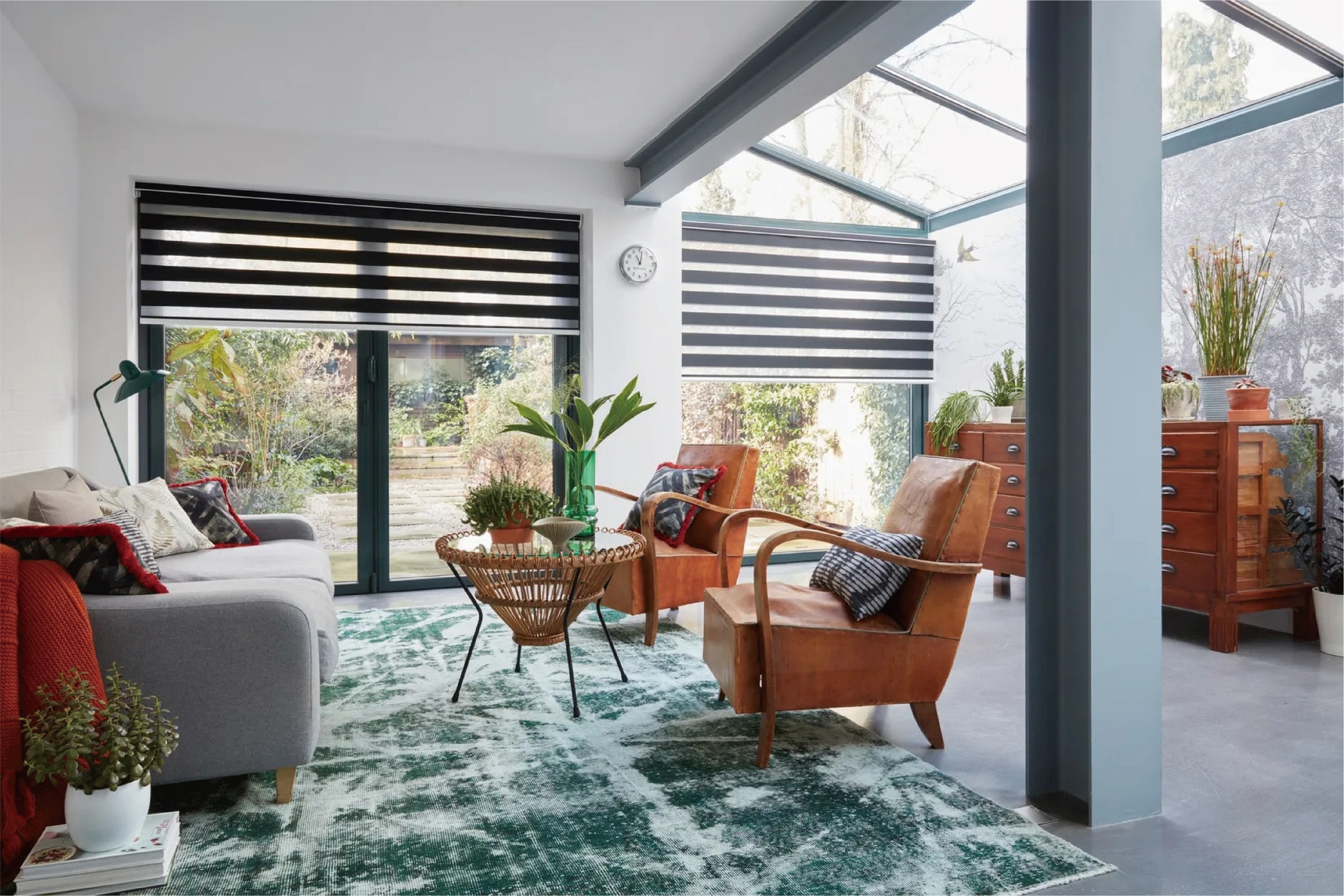
Dual-layer zebra blinds, also called soft gauze shades in the product information, use alternating sheer and opaque horizontal bands in a dual-layer fabric. Adjusting the alignment of the bands changes how much light is filtered and how privacy is adjusted. The stated operating choices are chain, cordless, and motorized, with custom sizing available.
For hospitality buyers, the band-alignment mechanism is the defining comparison point. It offers a different way to adjust light than raising a single roller fabric or tilting horizontal vanes. The product information includes hospitality in its applicable industry scope and describes the shades for flexible adjustment between light filtering and privacy. It does not, however, specify a numerical privacy level, a blackout rating, or measured glare reduction. Those outcomes should not be assumed from the product name or the presence of opaque bands.
When evaluating zebra blinds for guest rooms or other hotel spaces, ask for the intended band position and operating method to be represented clearly in the sample or product specification. Confirm the required dimensions and mounting arrangement, and check that the selected fabric and hardware correspond to the approved sample. The scenario information for this product also identifies band alignment, fabric protection, and accurate dimensions as requirements to consider. These checks help keep the ordered construction aligned with the approved design without implying a performance result that has not been documented.
Zebra blinds are not a substitute for a verified blackout specification where the project requires one. The provided product details describe light filtering and privacy adjustment, but do not list a blackout fabric option or provide blackout test data for this model. If darkness is a contractual requirement, request product-specific evidence or evaluate a separately specified option whose documentation addresses that requirement.
Shangri-La blinds: tilt and lift a sheer-vane assembly
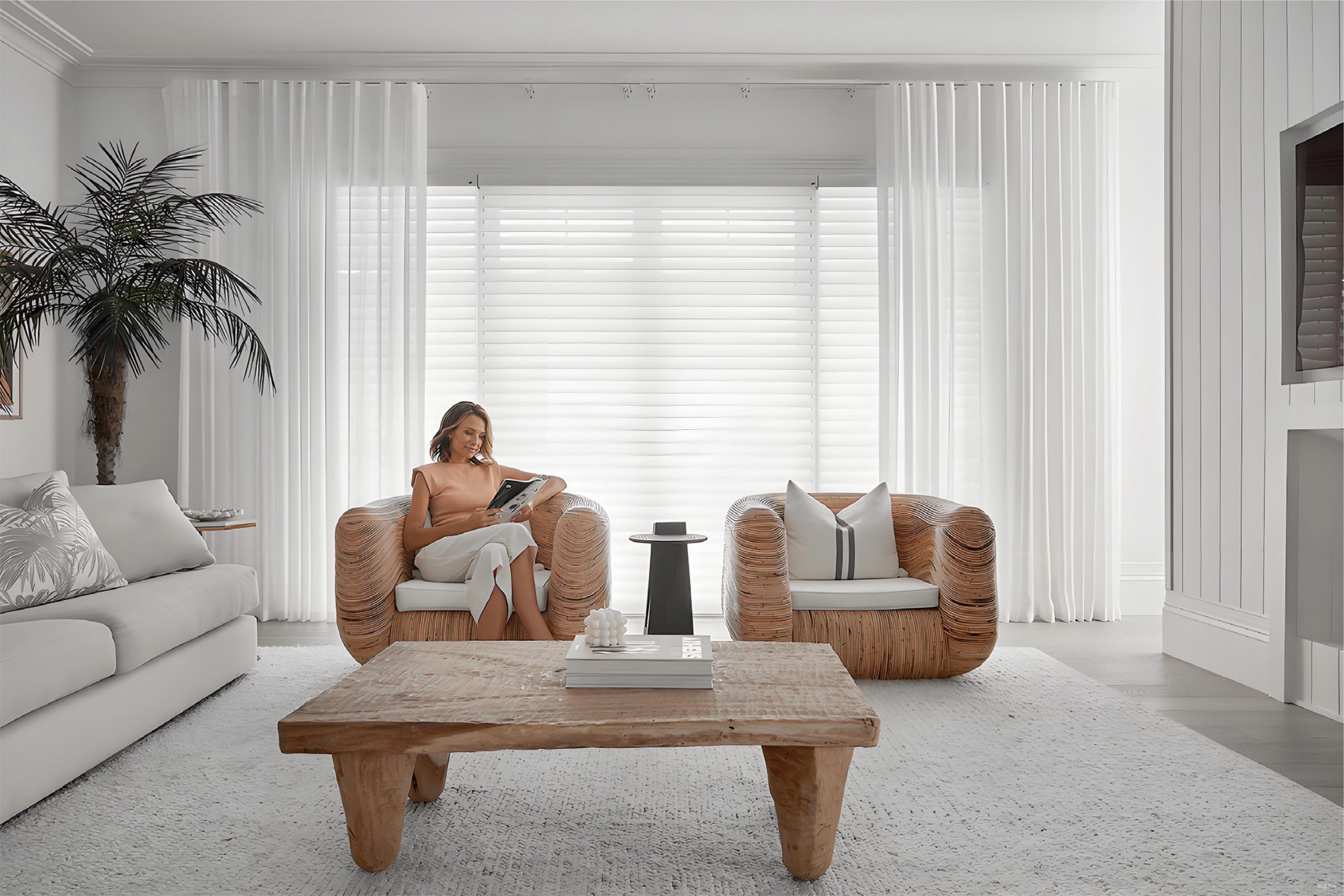
Shangri-La blinds, also described as sheer horizontal shades, use horizontal fabric vanes suspended between two sheer facings. The described mechanism combines vane tilt with shade lift: tilting the vanes adjusts incoming light and privacy, while raising or lowering the shade changes the covered window area. Manual, cordless, and motorized operation are listed.
This construction makes Shangri-La a distinct option when the brief emphasizes softened daylight and adjustable control through vanes. The product information identifies hotel rooms and reception areas among its applications. It also calls out precise measurements, adequate mounting depth, careful fabric handling, and vane alignment as project considerations. A buyer comparing it with a roller or zebra blind should include mounting depth and clearance in the review, rather than comparing appearance alone.
The boundary is important: the stated functions include softened daylight, adjustable light control, and daytime privacy. No quantitative optical test, blackout value, or full nighttime privacy result is provided. A hotel specification requiring a defined nighttime condition should not infer that result from the sheer facings or vane movement. Request evidence for the chosen configuration, or separate the daylight-control requirement from any independently specified room-darkening requirement.
Shangri-La blinds also have two distinct adjustment actions to account for in an operating review. The buyer should confirm whether the required use depends on tilting the vanes, raising the shade, or both, and whether the selected manual, cordless, or motorized configuration supports the intended operation. Compatibility and installation details should be confirmed for the chosen product; the supplied information does not establish that every control or motor option is included as standard.
How to compare the three options in a hotel procurement review
A like-for-like comparison should describe the same window conditions and required functions for every option. The product names alone do not establish equal fabric performance, identical operating hardware, or comparable installed cost. No comparable price data is supplied for roller, zebra, and Shangri-La blinds, so this comparison does not identify a lower-cost option or calculate lifecycle value.
- Define the required light condition. State whether the window needs filtered daylight, adjustable privacy, room darkening, or blackout. The product descriptions support different qualitative functions, but provide no common measured performance scale.
- Specify the control action. Decide whether the room needs a single raise-and-lower fabric, alignment of alternating bands, or vane tilt as well as shade lift. Then state whether the requested operation is chain/manual, cordless, or motorized where that option is offered.
- Record opening and mounting conditions. Supply accurate window dimensions and identify the intended inside or outside mount where applicable. For Shangri-La, include adequate mounting depth and vane alignment in the installation review; for zebra, include band alignment and fabric protection; for roller, confirm fabric and mount selection.
- Review each hotel area separately. A guest-room window and a reception-area window need not share the same light or privacy specification. The supplied application information identifies both room and reception settings for some styles, but does not provide a universal hotel schedule or a one-style-fits-all recommendation.
- Approve the exact configuration. Match the selected fabric, size, mount, operating system, and any motor or control components to the approved sample and written specification. Optional operating methods should not be assumed to be included in every order.
- Request evidence for performance claims. If a brief includes a required blackout, privacy, thermal, or other measured outcome, ask for documentation tied to the actual fabric and assembly. The available product descriptions do not provide comparable test results for these three styles.
This framework produces a more useful comparison than a generic “best blind” label. It also makes limitations visible early: the supplied information does not provide product-specific maximum dimensions, numerical light performance, acoustic or thermal data, comparable prices, or a shared testing protocol. Those details may be essential to a particular project, but they must be confirmed rather than inferred.
Operating cords and U.S. procurement checks
For projects in the United States, operating-cord compliance is a separate procurement check from choosing a shade style. The U.S. Consumer Product Safety Commission’s 16 CFR Part 1260 establishes a consumer product safety standard for operating cords on custom window coverings, with an effective date of May 30, 2023. The rule is U.S.-specific; it should not be presented as a universal requirement for every destination market.
For a U.S. order, buyers should identify the operating method for the exact product configuration and request applicable compliance documentation from the supplier. Do not treat a product-family description, or the mere availability of a cordless or motorized option, as proof that a particular ordered configuration satisfies all applicable requirements. Project requirements in other countries should be checked separately against the rules and specifications that apply there.
Where VistaDrape fits—and what the information does not establish
VistaDrape’s product information lists custom roller blinds, dual-layer zebra blinds, and Shangri-La blinds for residential and commercial interiors, with hospitality applications identified for each in the relevant product scope or scenario information. The available descriptions are useful for an initial product-family comparison: they explain construction, stated light-control actions, and some project checks.
They do not establish that one of the three products is superior for every hotel, nor do they provide a complete procurement dossier. Before a purchase decision, a project team still needs configuration-specific dimensions, fabric details, performance evidence where required, operating-system compatibility, and market-specific compliance documentation. There is no comparable pricing, lead-time, or lifecycle-cost information here to support a commercial ranking. The practical conclusion is to choose by the required control mechanism and documented performance—not by style name alone.
FAQ
What are roller shades?
Roller shades are window coverings made from a single sheet of fabric that rolls around a tube to adjust light and privacy. A chain, cordless mechanism, or compatible motor can raise or lower the fabric; light control depends on the selected fabric and installation.
What are Shangri-La blinds?
Shangri-La blinds are shades with horizontal fabric vanes suspended between two sheer layers. The vanes tilt to adjust incoming light and privacy, while the lift mechanism raises or lowers the shade.
Есть вопросы или нужны дополнительные детали?
Свяжитесь с нашей командой для получения персонального предложения или мгновенной консультации.
Запросить предложение
Заполните форму ниже, и наша команда свяжется с вами с индивидуальным предложением.
Прямой чат WhatsApp
Предпочитаете общаться в реальном времени? Напишите нам в WhatsApp для мгновенной помощи и быстрых ответов.
- Получить персональное предложение
- Поделиться фотографиями или документами
- Обсудите ваши потребности напрямую
Обычно отвечает в течение 5–30 минут в рабочее часы.