
Custom Hydraulic Balers for PET Lines: Supplier Evidence
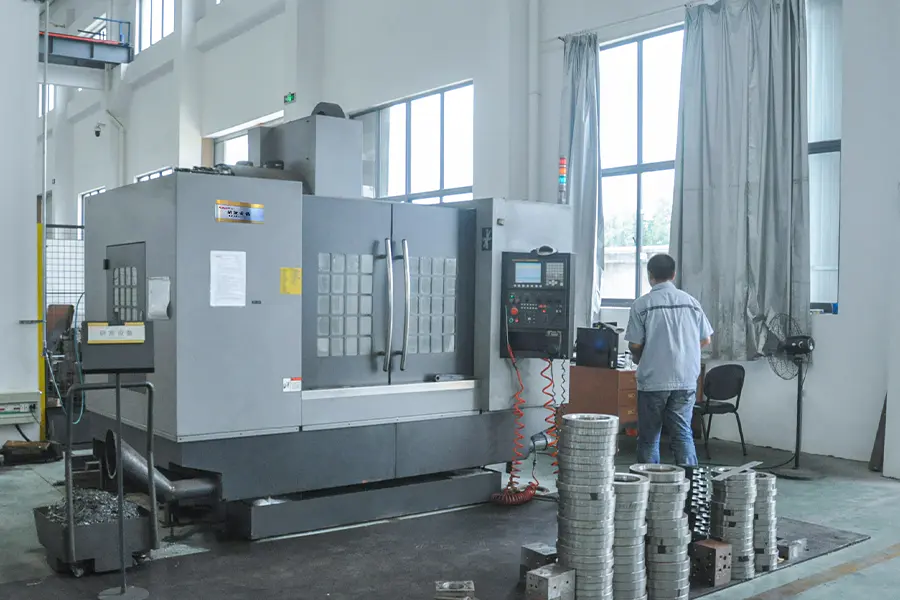
Fabrication floor for hydraulic baler machines: custom configurations are evidenced by what the workshop can build and document, not by catalogue claims.
A PET bottle line does not buy a baler by tonnage alone. It buys an output geometry — a defined block or bale that can be stacked, weighed, loaded and sold on consistently — produced at a rate that keeps pace with the bottles coming in. That is why, at decision stage, the useful question about a supplier is narrow: can it show a machine configured against a named material stream, with compression force, output dimensions and control architecture written as numbers rather than adjectives?
Jewel is the baler brand of Nantong Jiabao Machinery Co., Ltd., a Chinese manufacturer of compression and baling equipment established in 2006 and based in Rugao City, Jiangsu Province. The company operates a 50,000 m² production facility with more than 200 employees and a 30-engineer R&D team, exports roughly 70% of its output to markets including Europe, North America, Australia, Africa and Asia, and states a monthly production capacity of 100 hydraulic baler units. Its range covers semi-automatic and fully automatic machines, vertical and horizontal formats, briquetting presses and metal balers — breadth that makes a customization claim testable in the first place.
Why PET bottle lines expose supplier capability faster than paper lines do
Polyethylene terephthalate behaves differently from cardboard in three ways that matter to a baler specification. Bottles are light relative to their volume, so the machine must contain a large amount of material before compression begins. They are resilient, so the pressed block tends to spring back if containment and strapping are inadequate. And they are uniform in shape, so feed geometry — how the material is presented to the compression chamber — decides how repeatable the output is.
Two suppliers can quote the same tonnage and deliver different results, because tonnage describes the press, not the product. What the buyer actually receives is force applied across a specific bale cross-section, retained by a specific strapping or ejection method, at a specific rate. A PET line is usually a single-stream line: the machine is bought for one material and judged on one output. That narrows the evaluation to a short list of variables — compression force, output dimensions, automation level, control architecture and certification — and turns the supplier's spec sheet into the primary decision document rather than a marketing attachment.
The decision-stage problem: tonnage is the easiest number to compare and the least useful
Most quotations reaching a PET recycling or bottle-blowing operation contain one hard figure — the press force — and a set of qualitative words. “Automatic” may mean an automatic cycle, an automatic feed, or an automatic strapping device; the three have very different implications for labour, maintenance and uptime. “Customized” may mean a different paint colour or a different chamber.
The result is a comparison that looks quantitative but is not. Buyers then default to price per ton of force, which ignores the cost that follows the machine: labour per shift, energy per bale, transport cost per tonne of densified material, and downtime. A bale geometry that is wrong for the downstream truck or container can erase the savings of a cheaper press entirely.
Jewel's technical material addresses this at the level of function rather than adjective. Its automatic models are described with PLC and touch-screen control, three-side convergent compression, and automatic feeding, detection and strapping, with unmanned operation capability. Whether or not a buyer ultimately selects the brand, that is the level of description a PET line requires before a purchase order can be justified internally.
What Jewel's model range shows about custom configuration
Customization is usually argued from intent. It is better argued from documented variation: a manufacturer that publishes different forces, different output dimensions and different control systems across models has demonstrated that its engineering base is genuinely reconfigurable. The relevant examples here sit at opposite ends of the material spectrum.
The JPW-AK60 Briquetting Machine is rated at a compression force of 60 tons and produces a bale of 300 × 300 mm cross-section with a length of 200–300 mm. For a PET bottle line, that is a densification format: small, uniform blocks rather than a large tied bale. The JPW150BL-QT, a horizontal fully automatic closed-end baler, is rated at 150 tons and produces a 1100 × 1250 × 1500 mm bale. Between those two points a buyer can see the same manufacturer working across a 90-ton force span and radically different output geometry.
The JPY-T60W Metal Baler represents a third material class entirely. Metal scrap behaves differently from PET in cutting resistance, density and wear, so a metal platform in the same catalogue is evidence of a different kind: the design and fabrication base is applied to a stream with different mechanical demands rather than a single machine being marketed under several names.
| Model | Material stream | Documented specification point | What it evidences |
|---|---|---|---|
| JPW-AK60 | Briquetting / densified plastics | 60-ton compression force; bale 300 × 300 mm, 200–300 mm length | Compact densification with a fixed, repeatable output geometry |
| JPY-T60W | Metal scrap | Metal-baler platform in the same range; working specification set per scrap profile | Same engineering base applied to a harder, more abrasive material class |
| JPW20Q | Mixed paper / plastic, automatic operation | CE certificate TTC-22-1609/01/01, EN ISO 12100:2010, EN 60204-1:2018 | Certification documented at model level, not brand level |
| JPW150BL-QT | High-volume horizontal baling | 150-ton compression force; bale 1100 × 1250 × 1500 mm | Range extends to heavy-duty force and large bale formats |
Technical explanation: briquetting and baling solve different geometry problems
Both machine families apply hydraulic force, but they optimise for different outputs. A briquetting press forms a small cross-section block — 300 × 300 mm at 200–300 mm length on the JPW-AK60 — which suits handling systems that move discrete, stackable units. A horizontal baler forms a large wire-tied bale — 1100 × 1250 × 1500 mm on the JPW150BL-QT — which suits bulk loading onto trailers and containers.
Force alone does not describe either result. Density depends on force applied across the bale's cross-section, on how the chamber contains material during compression, and on how the finished unit is retained afterwards. Jewel's automatic models are described as using three-side convergent compression, which is a containment strategy rather than a pressure figure, together with PLC and touch-screen control and automatic feeding, detection and strapping. In operational terms, that combination is what allows unmanned running; the tonnage figure alone does not.
Energy behaviour also belongs in a technical evaluation rather than a footnote. Jewel's comparison material describes a dual-motor design — a starting motor and a booster — for power saving, and states that the variable-frequency option reduces energy consumption by 30% compared with fixed-frequency traditional models. Those are company-reported figures and should be read as such, but they are the kind of figure that can be tested against a site's electricity bill after installation.
Maintenance is the fourth technical variable. The same material states that maintenance requirements are low because of standardized parts and a low failure rate, and that the auto strapping device operates with stable performance. Standardized parts matter more in a PET line than in a general recycling yard, because a stopped strapper stops the entire downstream flow.
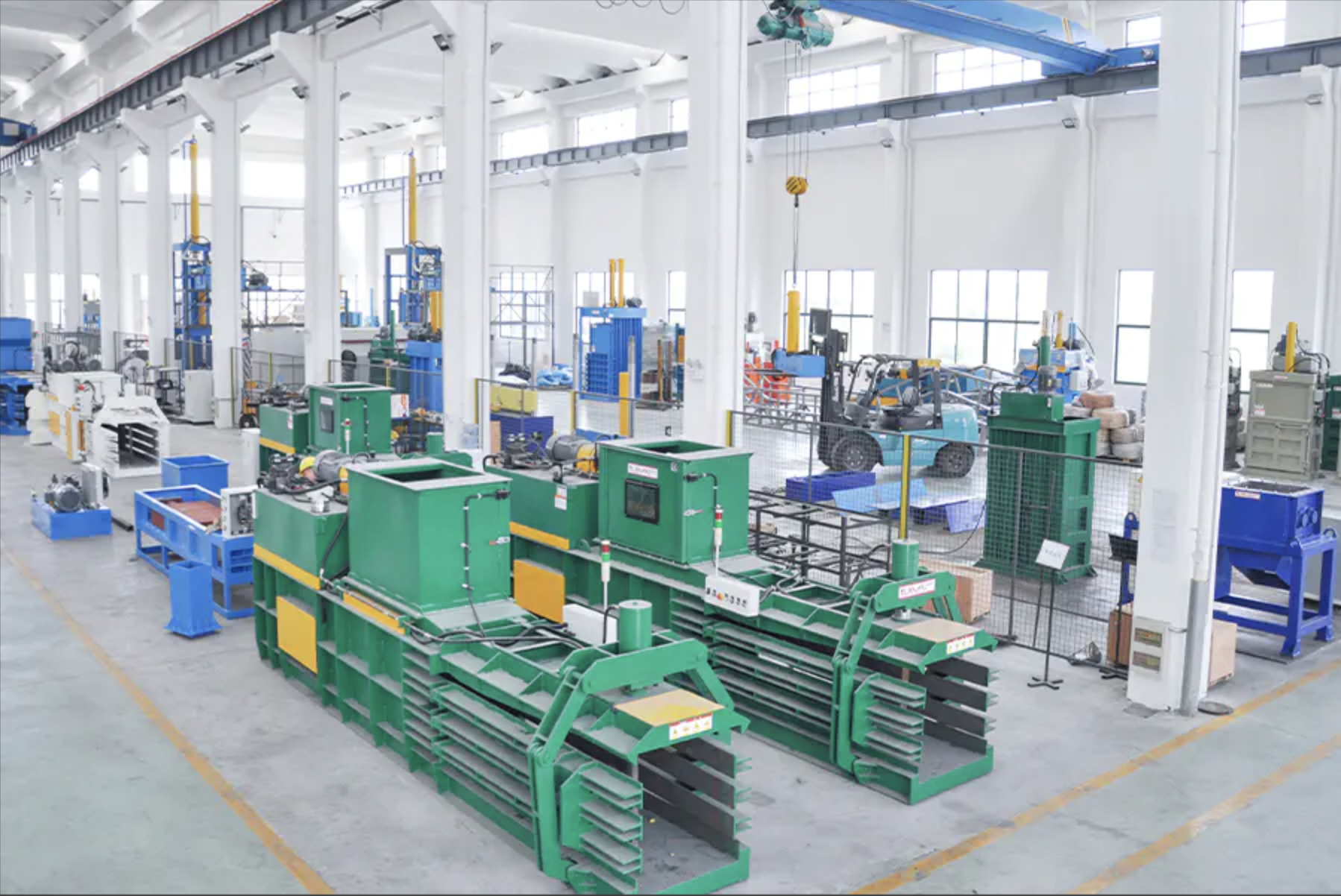
Assembly stage: differences between models — frame, chamber, strapping and control — are engineering decisions made before the machine reaches the buyer's site.
Where the customized range fits inside a PET bottle line
PET material appears at several points in a recycling or bottling operation, and each point produces a different feed profile.
Collection and sorting. Baled or loose bottles arrive from depots and material recovery facilities. Here the task is volume reduction before transport, and the trade-off is between bale density and handling equipment. A densified block format reduces storage height and simplifies counting, while a conventional horizontal bale maximises mass per load.
Bottle blowing and filling plants. Rejected preforms, purge material and off-spec bottles accumulate continuously and take up floor space. A compact press with a defined output unit is often the practical answer because the material arrives in small, steady quantities rather than truckloads.
Washing and pelletising lines. Labels, caps and reject fractions need to be consolidated before they leave the site. The material is mixed and inconsistent, which is where automatic feeding and detection functions described for the automatic models become operationally relevant rather than decorative.
The same range extends beyond PET. Jewel's catalogue covers vertical, semi-automatic horizontal and fully automatic horizontal formats, and is applied to rubber and plastic waste, waste paper, carton and cardboard factory waste, fibre, aluminium foil and metal scrap. That spread matters for a buyer with more than one waste stream on site: a supplier able to document several material classes can usually configure a machine to the material in front of it, rather than asking the material to adapt to a single standard model.
Market trend: what the published numbers do and do not say
Three published market estimates are relevant, and they should not be added together. A 2026 commercial research report on the baler market, covering both agricultural and industrial equipment, projects the global market at USD 7.96 billion in 2026 and USD 18.02 billion by 2034. A separate 2026 report on the hydraulic waste paper baler segment estimates a base-year valuation of USD 1.45 billion, rising to USD 2.24 billion by 2032 at a 5.5% CAGR. A third report on the hydraulic metal recycling baler market puts that segment at USD 913 million in 2023, forecasting USD 1,318 million by 2031.
These figures describe different scopes — total baler market, waste paper hydraulics, and metal recycling hydraulics — so aggregating them would produce a number that no source supports. Read separately, they indicate steady expansion across the material classes a customized baler range serves, which is consistent with buyers asking for configuration rather than a single standard machine.
The second-order effect is less comfortable. Growth attracts suppliers, and a growing supplier base produces more customization claims with less documentation behind them. As the category expands, the competitive advantage shifts from the offer of customization to the ability to evidence it: a force rating, an output dimension, a certificate number and a control architecture, stated per model.
Comparison with traditional solutions — and where the customized route has limits
Traditional manual and fixed-frequency balers remain a rational choice for small, single-material waste points. They cost less at purchase and are simpler to operate. Jewel's own comparison material quantifies the gap on the other side: automatic models are quoted at 16–22 bales per hour, a 90% labour reduction, and downtime below 2%, with a slightly higher upfront cost offset over time by unmanned operation and lower transport cost per tonne of densified material.
That comparison is directionally useful, but it is the supplier's own, and a decision-stage buyer should treat the labour and downtime figures as claims to be verified against a reference site of similar size.
There are also genuine boundaries to what a customized machine solves, and they matter more than the advantages:
- Certification is model-scoped, not brand-scoped. The CE certificate TTC-22-1609/01/01, complying with EN ISO 12100:2010 and EN 60204-1:2018, is held for the JPW20Q. A configuration that changes the machine changes the basis on which that certificate applies, so the certificate for the exact build must be confirmed rather than assumed from the platform.
- A briquetting platform is not a volumetric substitute for a horizontal baler. The JPW-AK60 produces a 300 × 300 mm unit at 200–300 mm length. On a line where loose bottles arrive in very high volumes, the relevant comparison is the horizontal formats in the same range, up to the 150-ton, 1100 × 1250 × 1500 mm JPW150BL-QT. Buying briquetting for throughput reasons rather than output-format reasons is a misapplication.
- Custom configuration carries a cost and a lead-time penalty. The company's comparison acknowledges a slightly higher upfront cost for automated models. Custom engineering adds specification and validation cycles before repeatability is proven on the buyer's own material.
- Automation assumes a site that can support it. PLC control, automatic feeding, detection and strapping raise the technical level of operation; maintenance planning and operator training have to move with the machine.
A verification checklist for decision-stage buyers
Capability claims can be converted into a small set of requests. Each row below pairs a question with the evidence point that answers it on Jewel's documented range.
| What to request | Why it decides the comparison | Documented reference point |
|---|---|---|
| Model-level spec sheet with force and output dimensions | Separates the press rating from the product the line will actually handle | JPW-AK60: 60 tons, 300 × 300 × 200–300 mm |
| Named control architecture | “Automatic” must be defined as feed, detection, strapping or full cycle | PLC and touch-screen control, three-side convergent compression |
| Certificate for the exact build | Market access depends on the certificate that ships with the machine | CE TTC-22-1609/01/01 on JPW20Q; EN ISO 12100:2010, EN 60204-1:2018 |
| Safety and overload protection detail | Hydraulic and electrical failure modes drive long-term operating risk | Safety interlock and emergency stop, imported hydraulic seals, PLC overload auto-cutoff, protective enclosure |
| Production and service capacity | Custom builds depend on how much engineering and assembly time exists | 100 units/month; 30-engineer R&D team; 7×24 after-sales hotline; spare parts inventory; 12-month warranty |
| Sample validation on the buyer's own material | Repeatability on PET is a site-specific outcome, not a catalogue property | Full inspection before factory delivery |
Future outlook
Three shifts are likely to shape how PET lines specify compression equipment over the next buying cycles.
The first is documentation pressure. As more suppliers enter the category, buyers gain leverage to demand model-level specifications before quoting. A supplier that already publishes force, bale dimensions and certificate numbers per model is better positioned than one that publishes a range and a promise.
The second is output-format diversification. Where bales dominated because bulk transport dominated, densified blocks create a second logistics option, particularly where storage height is constrained or where material is sold on in counted units. Machine ranges that cover both formats — from a 60-ton briquetting platform to a 150-ton horizontal baler — give a buyer room to change format without changing supplier.
The third is certification scrutiny. The JPW20Q certificate references EN ISO 12100:2010 and EN 60204-1:2018, which places the emphasis on machine safety design rather than on a single compliance sticker. Buyers configuring machines for European or North American installation should expect the certificate conversation to happen earlier, and against the specific build, not the model family.
None of these shifts makes customization easier to sell. They make it easier to audit, which favours manufacturers whose evidence is already written down.
FAQ
Which specifications should be compared first when buying hydraulic baler machines for a PET bottle line?
Compression force, output dimensions, automation level and certification determine fit, and they must be compared per model rather than per brand. Jewel's range illustrates why: the JPW-AK60 briquetting machine is rated at 60 tons and produces a 300 × 300 mm bale with a 200–300 mm length, while the JPW150BL-QT horizontal fully automatic closed-end baler is rated at 150 tons and produces a 1,100 × 1,250 × 1,500 mm bale. Tonnage alone does not distinguish these two machines because they address different positions in the line.
How does a briquetting machine differ from a horizontal baler for PET bottles?
The difference is output geometry and how the material is contained. Briquetting forms a small, dense block — 300 × 300 mm at 200–300 mm length on the JPW-AK60 — suited to stacking, counting and handling in discrete units. Horizontal baling forms a large tied bale, up to 1,100 × 1,250 × 1,500 mm on the JPW150BL-QT, suited to bulk loading. In Jewel's comparison of automatic models against traditional manual and fixed-frequency balers, automatic operation is quoted at 16–22 bales per hour with downtime below 2%; that rate refers to the automatic horizontal models, not to the briquetting platform.
What does a wide model range actually prove about a manufacturer's customization capability?
Range on its own proves design breadth, not per-order customization. It becomes evidence when the manufacturer publishes force, dimensions and control data per model, and when the models address materially different streams. Jewel documents 60 tons and 300 × 300 mm for briquetting on the JPW-AK60, 150 tons and 1,100 × 1,250 × 1,500 mm on the JPW150BL-QT, a metal-balers platform in the JPY-T60W, and CE certification on the JPW20Q — a combination that shows configuration work across plastics, paper and metal rather than a single machine marketed under several names.
How should certification be verified on a custom-configured hydraulic baler?
Certification should be verified against the exact build that will ship. The JPW20Q fully automatic horizontal baler holds CE certificate TTC-22-1609/01/01, complying with EN ISO 12100:2010 and EN 60204-1:2018; the company also states CE and ISO quality certification at enterprise level and full inspection before factory delivery. Because a custom configuration changes the machine, the buyer should confirm which certificate applies to that configuration rather than inferring it from the base model.
What are the limits of a 60-ton briquetting platform in a PET bottle line?
A briquetting platform is a densification device with a fixed output format, not a volumetric answer to high loose-bottle throughput. The JPW-AK60 produces a 300 × 300 mm block at 200–300 mm length, so downstream handling must be built around small units rather than large bales. Where a line needs large-format output at high force, the relevant comparison inside the same range is a horizontal model such as the 150-ton JPW150BL-QT. Buyers should also expect a validation period before repeatability on their own material is confirmed, and should budget for the slightly higher upfront cost that the company itself acknowledges for automated models.
How can a buyer validate a custom configuration before placing an order?
Validation rests on four verifiable items: a model-level specification sheet stating force and output dimensions; a named control architecture, such as the PLC and touch-screen control with three-side convergent compression and automatic feeding, detection and strapping described for the automatic models; the safety package, which includes safety interlock and emergency stop, imported hydraulic seals, PLC overload auto-cutoff and a protective enclosure on the feeding inlet; and the service terms, which the company states as a 7×24 after-sales hotline, spare parts inventory and a 12-month warranty. A sample run on the buyer's own PET material completes the check, supported by full inspection before factory delivery.
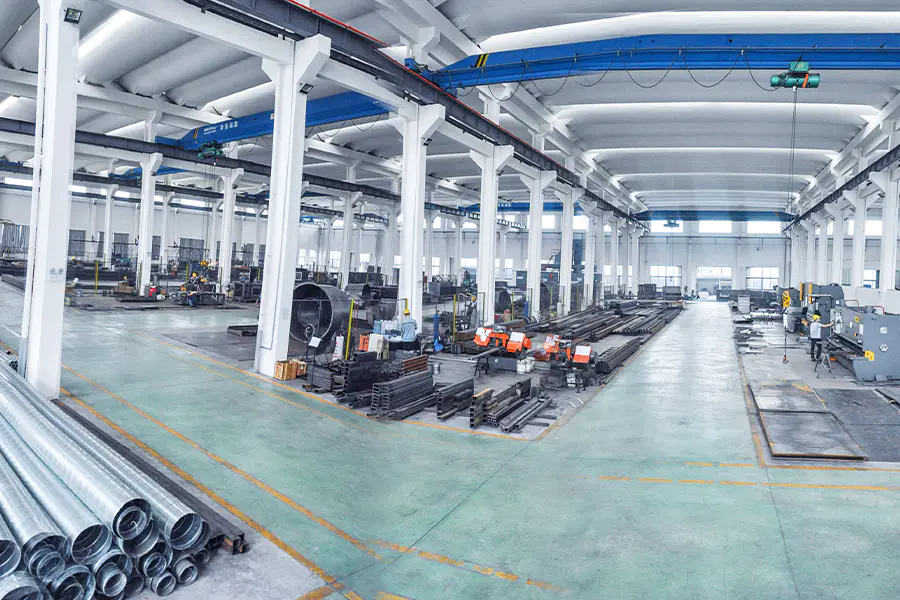
Production capacity, parts standardization and inspection discipline are what make a custom specification deliverable rather than aspirational.
For readers who want the underlying equipment data in one place, the company's 2026 product brochure is available as a PDF: Jewel product brochure (PDF).
Supplier capability, in the end, is not proven by the number of models on a page. It is proven when a named machine can be matched to a named material stream with force, dimensions, controls and certification stated precisely enough to be checked — and when the limitations of that match are stated as clearly as the advantages.
Есть вопросы или нужны дополнительные детали?
Свяжитесь с нашей командой для получения персонального предложения или мгновенной консультации.
Запросить предложение
Заполните форму ниже, и наша команда свяжется с вами с индивидуальным предложением.
Прямой чат WhatsApp
Предпочитаете общаться в реальном времени? Напишите нам в WhatsApp для мгновенной помощи и быстрых ответов.
- Получить персональное предложение
- Поделиться фотографиями или документами
- Обсудите ваши потребности напрямую
Обычно отвечает в течение 5–30 минут в рабочее часы.