
Custom Inflatable Shelters vs. Frame Canopies: An Event Review
Event organizers rarely choose between an inflatable shelter and a frame canopy on appearance alone. The decision is operational: how many crew-hours the structure consumes, how much vehicle space it requires, whether the site can accept it at all, and how quickly it disappears once the event closes. Custom inflatable shelters and standard frame canopies solve the same problem — temporary, removable overhead cover — through two different physical models, and the difference becomes visible in event logistics long before it becomes visible in a photograph.
Short answer
A custom inflatable shelter such as the StarCanopy CS-01 is the stronger fit when an event needs a large, removable envelope that can be deflated, transported and re-inflated, and when the site geometry can be deliberately defined — including the specific case of spanning the gap between two shipping containers. A standard frame canopy remains the simpler choice when the requirement is a small, repeatable footprint with a rigid frame, minimal inflation management, and a format that site crews already know how to handle.
Why event infrastructure decisions now turn on logistics rather than looks
Temporary structures are usually evaluated as design objects and then procured as logistics problems. The brief says “we need a covered area for three days”; the operational reality says “we have a limited load-in window, a fixed number of crew, a vehicle that is already full, and a site manager who will not accept ground anchors.” Most of the cost and most of the failure risk in event infrastructure sits in that gap between the design intent and the load-in plan.
That is why the useful comparison between an inflatable shelter and a traditional canopy is not “which one looks better in a rendering.” The useful comparison is which physical model removes the most friction from the operational window — transport, installation, site acceptance, teardown — without creating a new dependency that the crew cannot manage on site.
In this review, the reference point on the inflatable side is the CS-01, a removable inflatable container shelter produced by Zhuhai Star Canopy Co., Ltd. (StarCanopy), a French-owned and managed multi-material manufacturing facility established in 2005 in Zhuhai, China, operating hardware, sewing and inflatable workshops under one roof and exporting its production entirely to markets including the EU, USA, Canada, Japan, Australia and New Zealand.
What each option actually is
Custom inflatable shelters: the CS-01 configuration
The CS-01 Inflatable Container Shelter is a removable, inflatable shelter built from TPU+PVC with anti-UV treatment, supplied in fully customized sizes. Its defining characteristic is not the material but the geometry: it is designed to sit in the gap between two shipping containers, using the containers as the structural reference points on either side.
That configuration was used in a French project involving two units described as a temporary activity and work shelter for logistics on-site staff rest, goods sorting and outdoor commercial events. The project ran for one year and was reported as stable in operation, with the highlight being a flexible and portable structure that could hold activities rather than a fixed building.
Two consequences follow. First, the shelter is not a free-standing tent that must be anchored against open-ground wind loads on its own; it borrows stability from the containers it spans. Second, it is genuinely removable — it can be deflated, packed, moved and re-inflated at the next site, which is the property that makes an inflatable structurally interesting to an event organizer.
Standard frame canopies
A conventional frame canopy is a rigid assembly: metal tube frame, connection fittings, and a fabric cover tensioned over the frame, anchored to the ground with weights or pins. It is a mature, well-understood format. Its strengths are predictability and independence — it does not need to be inflated, it does not need a pressure envelope to hold its shape, and a damaged cover can be replaced without touching the rest of the structure.
Both categories are temporary. Neither is a building. The comparison below therefore focuses on how each one behaves across an event cycle, not on which category is “better” in the abstract.
A side-by-side comparison framework
The table below isolates the dimensions that most often decide an event infrastructure choice. It compares the CS-01-type inflatable configuration with a standard frame canopy at category level; individual products within either category will vary.
| Dimension | Custom inflatable shelter (CS-01 type) | Standard frame canopy |
|---|---|---|
| Primary structure | Inflatable TPU+PVC envelope with anti-UV treatment; removable by design | Rigid metal frame plus tensioned fabric cover |
| Site geometry | Fully customized; the CS-01 specifically spans the gap between two shipping containers | Open, level footprint in catalogue or limited custom sizes |
| Installation model | Position, inflate, connect; stability partly borrowed from the containers | Assemble frame, fit cover, tension, anchor with weights or pins |
| Transport and storage | Deflated and packed; described in the reference project as flexible and portable | Rigid frame sections and cover panels; storage volume driven by frame length |
| Customization scope | Fully customized size, shape and material build; branding possible through the inflatable product line | Typically catalogue-driven; customization usually limited to cover print and size variants |
| Inspection focus | Air tightness, material tensile test, size verification and appearance check before shipment | Frame integrity, fitting condition and fabric condition |
| Dominant failure mode | Loss of air pressure through seams or valves | Bent or damaged frame member; torn or detached cover |
| Field repair | Welded TPU/PVC envelope repair is specialist work | Cover or frame component can often be swapped |
| Weather boundary | Temporary activity structure; not a storm-rated shelter | Temporary shade and rain cover; not a storm-rated shelter |
| Removal | Deflate, pack, transport | Disassemble, stack, transport |
Where inflatable shelters change the event logistics equation
The case for a custom inflatable shelter becomes clearest at the two ends of an event cycle — load-in and load-out — rather than during the event itself.
Deflation is the operative advantage. A structure that holds its shape through air pressure stops occupying volume when the pressure is released, so the transport footprint at load-out is a packed envelope rather than a frame stack. For organizers running multi-site programmes, that changes vehicle planning, storage planning and the number of handling steps between events.
The container-gap configuration adds a second advantage that is easy to overlook in a specification sheet: it converts infrastructure already on site into part of the shelter. In the French project, the two CS-01 units were positioned between shipping containers to create a workspace for logistics staff rest, goods sorting and commercial activity. The organizer did not need a free-standing structure with its own full anchoring system; the containers provided the reference frame, and the inflatable provided the enclosure.
Anti-UV treatment on the TPU+PVC build matters in the same operational sense. Event structures are judged over seasons of use rather than a single weekend, and UV exposure is one of the continuous stresses on any outdoor envelope. StarCanopy specifies anti-UV treatment as part of the CS-01 build rather than as an optional extra, which matters for organizers who redeploy the same shelter across a season of outdoor events.
Sizing flexibility is the third factor. Because the CS-01 is supplied in fully customized sizes, the shelter can be matched to the actual gap and the actual clearance required, instead of forcing the site plan to accept a fixed catalogue dimension. For event layouts built around existing yard infrastructure, that is usually the difference between a structure that fits and a structure that almost fits.
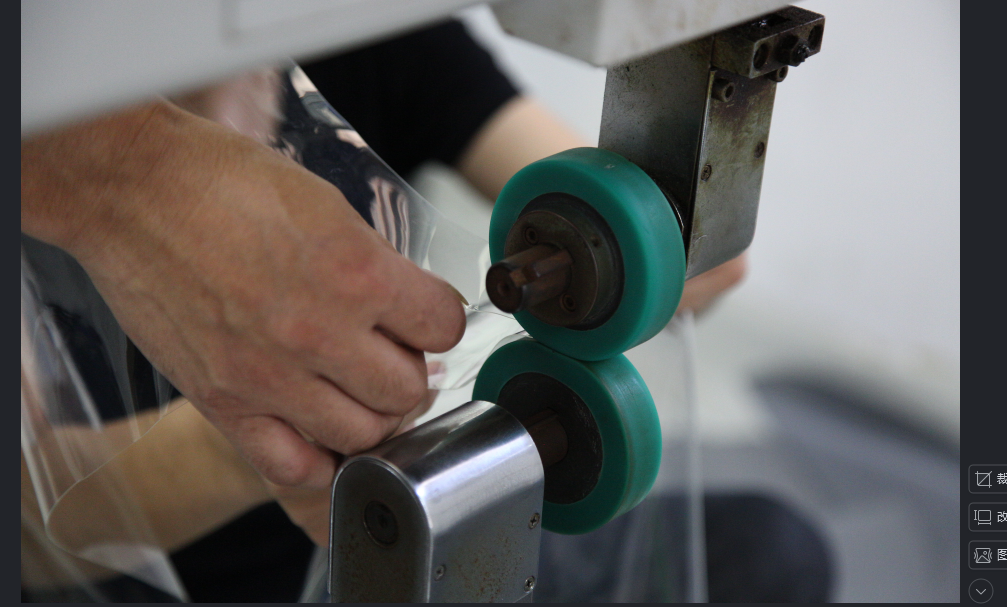
Inflatable fabric welding at StarCanopy’s Zhuhai facility. Seam quality is the controlling factor in air retention, which is why air tightness is part of the pre-shipment inspection routine.
Where traditional frame canopies still make more sense
An honest comparison has to state the boundaries, and inflatable shelters have several that matter to event buyers.
The first is dependency on air retention. An inflatable shelter is only as reliable as its seams and valves; loss of pressure is the failure mode that matters, and it is the reason StarCanopy includes air tightness testing in its 100% full inspection before shipment, alongside material tensile testing, size verification and appearance checks. A frame canopy has no equivalent single-point dependency — its cover can loosen or tear, but the structure does not deflate.
The second is repair logistics. A welded TPU+PVC envelope is repaired with the same welding competence used to build it, which generally means a specialist repair rather than a field swap. A frame canopy’s cover can often be replaced or re-tensioned on site with basic tools. For remote sites with limited technical support, that difference can outweigh the transport advantages.
The third is site dependency. The CS-01’s container-gap logic is a strength where containers exist and a constraint where they do not. A standard frame canopy needs a level footprint and an anchoring solution; an inflatable container shelter needs the containers as well. Buyers who plan to reuse one structure across mixed venues should confirm that every venue can supply the reference geometry.
The fourth is compliance scope. Storm-shelter compliance is a separate regulatory regime: the ICC-500 standard, referenced by the National Storm Shelter Association, is the current available standard for tornado shelters and provides a means for determining quality and compliance with FEMA criteria. An inflatable event shelter or a frame canopy is a temporary activity structure and should not be substituted for a storm-rated shelter in any project where that compliance level is required.
Materials, welding and inspection: what custom actually changes
The technical difference between a generic inflatable and a specification-driven one is rarely the headline material. It is the process behind the seam.
StarCanopy’s inflatable line uses TPU+PVC film, and the company’s OEM capability explicitly includes processing for both PVC and TPU film materials alongside custom fabric development, customized printing and sewing. On the metal side, the same facility runs one-stop integrated production covering cutting, bending, drilling, welding, surface treatments and final assembly — which is relevant to event infrastructure because frame components, connection parts and fittings sit in that workflow.
Quality control is where the two categories diverge most sharply in practice. StarCanopy applies 100% full inspection before shipment across its production, including air tightness, material tensile test, size verification and appearance check. For an inflatable shelter, air tightness is not a formality; it is the functional test that predicts whether the structure will still hold shape on day three of an event.
The customization workflow also determines how much of the shelter is genuinely event-specific. In ODM mode, clients provide product concepts, application scenarios and performance standards, and the manufacturer completes engineering design, material development, pattern making, lab testing, prototyping and mass production delivery. In OEM mode, production follows client samples, drawings and specifications strictly. For event buyers, ODM is usually the relevant route when the shelter must match a site geometry or a brand environment, and OEM is relevant when a proven design already exists and needs to be reproduced consistently.
Commercial parameters sit alongside the technical ones: StarCanopy quotes a monthly capacity of 1000 units, a lead time of 7–30 days for customized ODM work and 1–2 weeks for small-quantity OEM runs, with a minimum order quantity of 1 unit on the OEM route and customization available to meet customer needs on the ODM route. After-sales support is provided remotely.
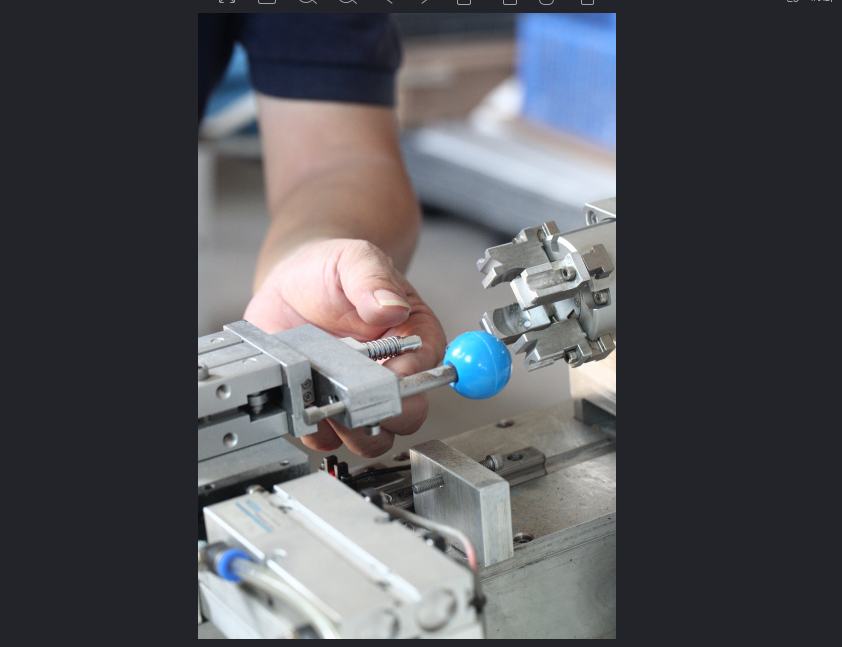
Hardware assembly in the same Zhuhai facility. Frame components, connection parts and fittings are produced in-house alongside sewn and inflatable goods, which shortens the loop between design change and build.
Application scenarios the evidence supports
Three patterns recur across StarCanopy’s documented outdoor and event work, and they map cleanly onto how organizers actually deploy temporary structures.
Container-adjacent event and workspaces
The clearest fit is the CS-01 itself: an inflatable enclosure spanning two containers for staff rest, goods sorting and commercial activity at an outdoor event. This is the case where an inflatable is not a substitute for a frame canopy but a different solution to a site-specific problem, and where a deflatable structure allows the space to be reallocated between events.
Complementary event furniture and shade
Event infrastructure is rarely a single product. A French outdoor umbrella OEM project covering 500 units of the UM-01 outdoor umbrella ran across two years of all-season use with zero mass quality complaints and reported easy setup and resistance to breakage. A separate French outdoor chair OEM project covering 1000 units of the C01 folding outdoor chair reported zero mass quality complaints across two years of all-season outdoor use. These are not shelter products, but they indicate the same procurement logic: organizers consolidate shade, seating and enclosures with one manufacturer where the material systems overlap.
Inflated structures under repeated outdoor use
The air-retention claim is supported by a French inflatable football goal project (I-FB, TPU+PVC) where the client reported full satisfaction with air tightness and durability and no air leakage during long-term outdoor training. The application differs from an event shelter, but the underlying performance question — does the welded envelope hold pressure over time — is the same one that governs an inflatable shelter’s reliability.
Market context: why temporary structures are being re-specified
The demand backdrop is directional rather than product-specific, and buyers should read the figures with their scope labels attached.
Global Market Insights values the global recreational and outdoor products market at USD 144.5 billion in 2025 and projects USD 152 billion in 2026, a 5.9% CAGR. In the United States, Ken Research projects the outdoor recreation products market growing from USD 202.5 billion in 2025 to USD 268.3 billion by 2031 at a 4.8% forecast CAGR, and reports a national outdoor recreation participant base of 181.1 million people in 2024, equal to 58.6% of Americans aged six and older. Grand View Research estimates the global canopy market at USD 2.2 billion in 2026, with the shade canopy segment holding the largest share in 2025.
These figures come from different scopes, base years and forecast horizons and should not be combined into a single consensus number. What they support is narrower and still useful: outdoor participation and outdoor product spend are expanding at a mid-single-digit rate, and the canopy and shade segment is a material part of that spend. For organizers and the manufacturers who supply them, that is a demand environment in which the specification decision — inflatable versus frame, bespoke versus catalogue — has more commercial consequence than it did when temporary structures were treated as commodity rentals.
A buyer’s evaluation checklist
The following sequence resolves most inflatable-versus-frame decisions before pricing is discussed.
- Define the site before the product. If the layout includes containers or other reference structures, an inflatable container shelter is viable. If the site is open ground with no reference geometry, a frame canopy remains the simpler assumption.
- Map the load-in window. Compare the crew-hours and vehicle volume each option consumes at load-in and load-out, not at peak event.
- Check the pressure dependency. Confirm who is responsible for inflation, what equipment is available on site, and what the contingency is if pressure is lost mid-event.
- Verify inspection evidence. Ask specifically whether air tightness testing is part of pre-shipment inspection, and whether tensile testing, size verification and appearance checks are documented.
- Confirm the repair path. Establish whether the envelope can be repaired locally or must return to the manufacturer, and match that answer to how remote the event sites are.
- Test the compliance scope. If the project requires storm-shelter compliance, confirm that the product is being evaluated against the applicable standard and not assumed to meet it.
- Align customization with the production route. Use ODM where the geometry or brand environment must be engineered; use OEM where an existing design must be reproduced exactly.
- Plan the reuse cycle. A shelter that is redeployed across a season should be specified for UV exposure and repeated packing, not for a single event.
Future outlook
Two shifts are likely to shape this category over the next procurement cycles. The first is that event infrastructure is increasingly specified as a reusable asset rather than a one-off rental, which favours structures whose transport volume collapses when not in use. That is a structural advantage for inflatables, provided the pressure envelope is engineered and inspected to a documented standard.
The second is consolidation of the supplier base. Organizers that already source shade, seating and enclosures separately are increasingly looking for one manufacturer that can cover hardware, sewn technical textiles and inflatables under a single quality system. StarCanopy’s structure — three workshops in one Zhuhai facility, French and English-speaking management, and a four-person R&D team — is built around that consolidation argument rather than around a single product category.
Neither shift removes the frame canopy from the market. Both of them raise the bar on how clearly a buyer can justify one option over the other with site data, inspection evidence and lifecycle assumptions rather than with photographs.
FAQ
What is a custom inflatable shelter, and how does it differ from a standard frame canopy?
A custom inflatable shelter is a removable structure that holds its shape through air pressure inside a welded envelope, made in customized sizes — the StarCanopy CS-01, for example, is built from TPU+PVC with anti-UV treatment and is designed to span the gap between two shipping containers. A standard frame canopy holds its shape through a rigid metal frame with a tensioned fabric cover. The structural difference determines everything downstream: an inflatable deflates for transport and depends on air retention, while a frame canopy does not deflate and depends on frame and cover integrity.
Can an inflatable shelter really be deployed between shipping containers?
Yes — that is the specific configuration the CS-01 was designed for. In a documented French project, two CS-01 units were installed in the gap between two shipping containers to create a temporary activity and work shelter used for logistics staff rest, goods sorting and outdoor commercial events. The project ran for one year and was reported as stable in operation, with the shelter described as flexible and portable.
What materials and quality checks apply to a custom inflatable event shelter?
StarCanopy builds the CS-01 from TPU+PVC with anti-UV treatment. Production is subject to 100% full inspection before shipment, covering air tightness, material tensile test, size verification and appearance check. Air tightness is the critical test for this product type, because pressure retention is the property that determines whether the structure performs across a multi-day event.
How long does manufacturing take, and what order quantities are realistic?
StarCanopy quotes a monthly capacity of 1000 units. Lead time is 7–30 days for customized ODM work, where the manufacturer handles engineering design, material development, pattern making, lab testing, prototyping and delivery, and 1–2 weeks for small-quantity OEM runs where production follows client samples, drawings and specifications. Minimum order quantity is 1 unit on the OEM route, and customization is available to meet customer needs on the ODM route.
What are the main limitations of an inflatable shelter compared with a frame canopy?
There are three practical ones. First, an inflatable depends on air retention, so seam and valve integrity is a single point of failure that a frame canopy does not have. Second, repairing a welded TPU+PVC envelope is specialist work rather than a field component swap. Third, the container-gap configuration requires containers on site, so a single shelter cannot be redeployed to any venue without confirming that the reference geometry exists. In addition, neither product category is a storm-rated shelter, and storm-shelter compliance is governed by a separate standard — ICC-500, referenced by the National Storm Shelter Association, is the current available standard for tornado shelters.
How should an event organizer decide between the two categories?
Start from the site and the load-in plan rather than from the product. If the venue supplies reference structures such as containers, if the layout needs a fully customized footprint, and if deflating the structure at load-out materially reduces transport and storage burden, an inflatable shelter is the better fit. If the site is open ground with no reference geometry, if the crew needs a format with no inflation dependency, or if local field repair capability is the deciding constraint, a frame canopy is the more practical choice. Confirming inspection evidence — particularly air tightness testing — should be part of either decision.
Reference document: the StarCanopy company brochure is available for download at StarCanopy brochure (PDF). Manufacturer details are published at www.starcanopy.com. Market figures cited above retain the scope and forecast horizon of their original sources and are not directly comparable across studies.
Есть вопросы или нужны дополнительные детали?
Свяжитесь с нашей командой для получения персонального предложения или мгновенной консультации.
Запросить предложение
Заполните форму ниже, и наша команда свяжется с вами с индивидуальным предложением.
Прямой чат WhatsApp
Предпочитаете общаться в реальном времени? Напишите нам в WhatsApp для мгновенной помощи и быстрых ответов.
- Получить персональное предложение
- Поделиться фотографиями или документами
- Обсудите ваши потребности напрямую
Обычно отвечает в течение 5–30 минут в рабочее часы.