
Custom Outdoor Product Shortlist: Shelters, Chairs, Poles & Inflatables
Recreation buying is rarely a single-item purchase. A campsite operator, an events contractor, a marine accessories distributor or a sports club typically has to specify shade, shelter, seating, structural poles and inflatable equipment as one coordinated set — products that will stand on the same site, face the same weather and be accepted against the same inspection standard.
This article is a buyer-facing shortlist of nine custom outdoor products from Zhuhai Star Canopy Co., Ltd. (StarCanopy), a French-owned and managed multi-material manufacturer established in 2005 in Zhuhai, China. StarCanopy operates three workshops — hardware, sewing and inflatables — and exports 100% of its output, with main markets including the EU, USA, Canada, Japan, Australia and New Zealand.
The nine models are grouped by activity rather than by product family, because activity is how recreation buyers actually assemble a purchase: car shelter CT-01, outdoor shelter ST-01, boat shelter BS-01, inflatable container shelter CS-01, folding outdoor chair C01, caravan pole CPPlK, outdoor umbrella UM-01, inflatable football goal I-FB and inflatable cube ITC01.

Custom outdoor programmes are specified before they are priced: activity, site conditions and acceptance terms drive the drawing package.
Why Recreation Programmes Need a Shortlist, Not a Catalogue Page
Three pressures push recreation buyers away from catalogue browsing. The first is category breadth: a single buyer often needs a vehicle shelter for a campsite, a goal for a sports club, an umbrella for a hospitality terrace and an inflatable structure for a sponsor activation. The second is site variation — coastal wind, inland heat, seasonal UV exposure and anchoring surfaces differ enough that a fixed specification rarely transfers between sites. The third is documentation: buyers selling into the EU, USA and Canada are increasingly asked to show pre-shipment test evidence and defined after-sales arrangements, not just a product photo.
A shortlist solves a different problem from a catalogue. A catalogue answers "what exists"; a shortlist answers "what should I evaluate, in which activity, and against which checks". For made-to-order products, the second question matters more, because the specification that governs delivery is the one agreed per order rather than a fixed sheet.
How This Shortlist Was Assembled
Five evaluation criteria were applied to each model. They are the same criteria a sourcing team can reuse when comparing this shortlist against other suppliers.
1. Activity fit. Does the product's intended use match a defined recreation scenario — camping, fishing and marine, outdoor sport and racing, events, or commercial outdoor use?
2. Configuration flexibility. Can size and configuration be set by the buyer, which is the defining property of a custom outdoor product rather than a stocked item?
3. Structural and material controls. Is there a stated control for wind resistance, flame retardancy, UV exposure and water ingress — the four failure modes that dominate outdoor soft goods and inflatables?
4. Purchasing and acceptance terms. Are MOQ, delivery terms, payment structure and pre-shipment acceptance criteria defined in writing?
5. Long-term serviceability. Can parts be replaced, and is technical support available after delivery?
Camping and Overlanding: CT-01, ST-01, C01 and CPPlK
Car shelter CT-01
CT-01 sits in the camping and vehicle-storage corner of the range. In a recreation context it is the item that protects vehicles at trailheads, campsite pitches and event staff parking, and it is normally specified together with the outdoor shelter rather than instead of it: the shelter covers people and equipment, the car shelter covers transport. Buyers should fix the intended vehicle envelope, the anchoring surface and the wind exposure of the site before the drawing stage, because those three inputs drive the frame and anchoring package.
Outdoor shelter ST-01
ST-01 is the general-purpose shelter in the shortlist and the most transferable model across activities. It appears in camping, in spectator and race-day use, and in commercial outdoor areas such as hospitality terraces and resort grounds. Because it is the model most likely to be re-specified across several sites, it is also the one where standardising the anchoring method and the acceptance checklist pays off most.
Folding outdoor chair C01
C01 is the seating element of the programme. Its role in a shortlist is often underestimated: chairs are the highest-count item in a campsite or event order and the item most exposed to handling damage, so frame assembly quality and hardware consistency matter more than styling. For buyers consolidating supply, the chair is a useful test of whether a manufacturer's hardware and sewing workshops can hold a shared quality standard.
Caravan pole CPPlK
CPPlK is listed as a caravan pole — a structural component rather than a finished shelter. It matters in this shortlist because caravan and camping buyers rarely buy structures without the poles and fittings that hold them, and a supplier that can produce both the sewn element and the metal element reduces the number of parties responsible when a fit issue appears on site.
Fishing and Marine: BS-01 and UM-01
Boat shelter BS-01
BS-01 addresses the marine side of recreation supply, where the buyer's priorities shift toward UV exposure, moisture and long static periods rather than daily handling. Fishing operators, marinas and boat-accessory distributors typically evaluate boat shelters on coverage geometry and material behaviour under sustained sun and damp — which is why anti-UV coating and anti-mildew fabric treatment are the specification points to confirm first, not the colour.
Outdoor umbrella UM-01
UM-01 serves the shade function in fishing, hospitality and event settings. In a programme context it is usually the item with the largest visual surface and therefore the one carrying branding; buyers should decide early whether the umbrella is a shade product, a branded product, or both, because that decision changes the print and material brief. Grouping UM-01 with shelters rather than with furniture also keeps the fabric and coating specification consistent across the order.
Outdoor Sport and Racing: I-FB, ITC01 and ST-01
Inflatable football goal I-FB
I-FB is the sport-specific inflatable in the range and is aimed at training grounds, clubs and event activations where a goal has to be moved, stored and re-inflated repeatedly. The evaluation question for this category is not appearance but air retention and seam behaviour, which is exactly what the pre-shipment air-tightness check is designed to catch before the unit leaves the factory.
Inflatable cube ITC01
ITC01 is a compact inflatable format used for advertising, event signage and spatial branding. It is the model most often bought alongside racing and event programmes, where sponsor visibility has to be delivered within a short installation window. Because inflatables depend on continuous inflation and correct anchoring, the buyer's brief should define power access and tie-down points at the same time as the print artwork.
Outdoor shelter ST-01 in race and sport use
ST-01 returns here in a different role: team pits, marshal posts and spectator shade, where the shelter is erected and struck repeatedly within a season. Repeated erection is a harder test than permanent installation, so frame joints, fabric seams and the matched ground nails and wind ropes supplied with the unit become the practical durability criteria.
Events and Commercial Outdoor Use: CS-01, ITC01 and UM-01
Inflatable container shelter CS-01
CS-01 is the largest-format item on the list and the one most associated with commercial outdoor use — event venues, temporary hospitality, brand exhibitions and long-stay tourism sites. Buyers in this segment evaluate a structure on two clocks: installation time at the start of the season and maintenance cost across it. Both are addressed by the modular construction approach described below, but neither can be assessed without a defined site brief.
ITC01 and UM-01 in event deployment
In events, ITC01 and UM-01 are usually the visible layer of a programme: signage, shade and branded surfaces. They are the items most likely to be ordered in matching colours, which makes colour control a production requirement rather than an aesthetic preference, and they should be briefed together so the same fabric and coating logic applies across both.
The Shortlist at a Glance
| Model | Product | Primary activity fit | What the buyer is really specifying |
|---|---|---|---|
| CT-01 | Car shelter | Camping, overlanding, site vehicle storage | Vehicle envelope, anchoring surface, wind exposure |
| ST-01 | Outdoor shelter | Camping, sport and racing, events | Footprint, erection frequency, tie-down method |
| BS-01 | Boat shelter | Fishing, marine, marina storage | Coverage geometry, UV and moisture resistance |
| CS-01 | Inflatable container shelter | Events, commercial outdoor use, tourism sites | Installation window, seasonal maintenance cost |
| C01 | Folding outdoor chair | Camping, spectator and event seating | Frame assembly consistency, handling durability |
| CPPlK | Caravan pole | Caravan and camping structures | Fit with sewn components, metal tolerance |
| UM-01 | Outdoor umbrella | Fishing, hospitality, events | Shade vs branding intent, print brief |
| I-FB | Inflatable football goal | Outdoor sport, training, activations | Air retention, seam behaviour, portability |
| ITC01 | Inflatable cube | Events, racing, advertising | Power access, tie-down points, artwork |
Model designations and activity fit follow StarCanopy's product list; dimensional and material specifications are agreed per order.
What the Structural and Material Evidence Shows
Across the shelter and inflatable models, StarCanopy's stated control set addresses four failure modes rather than one. Wind is handled through a wind-tunnel-graded wind-resistant structure and a wind-optimised streamline profile; fire exposure through Class B1 flame-retardant canvas; sun exposure through anti-UV coating; and water ingress through multi-channel waterproof sealing. At the factory level, the corresponding measures are flame-retardant and mildew-proof inspection plus matched ground nails and wind ropes shipped with the unit.
The inflatable shelter construction in the range uses a two-layer frame with a strong chamber. The stated purpose of that construction is a wind-resistance upgrade and a structure service-life upgrade relative to an ordinary single-layer inflatable shelter — a durability argument rather than a price argument, which is the correct framing for buyers comparing quotes that are not actually comparable.
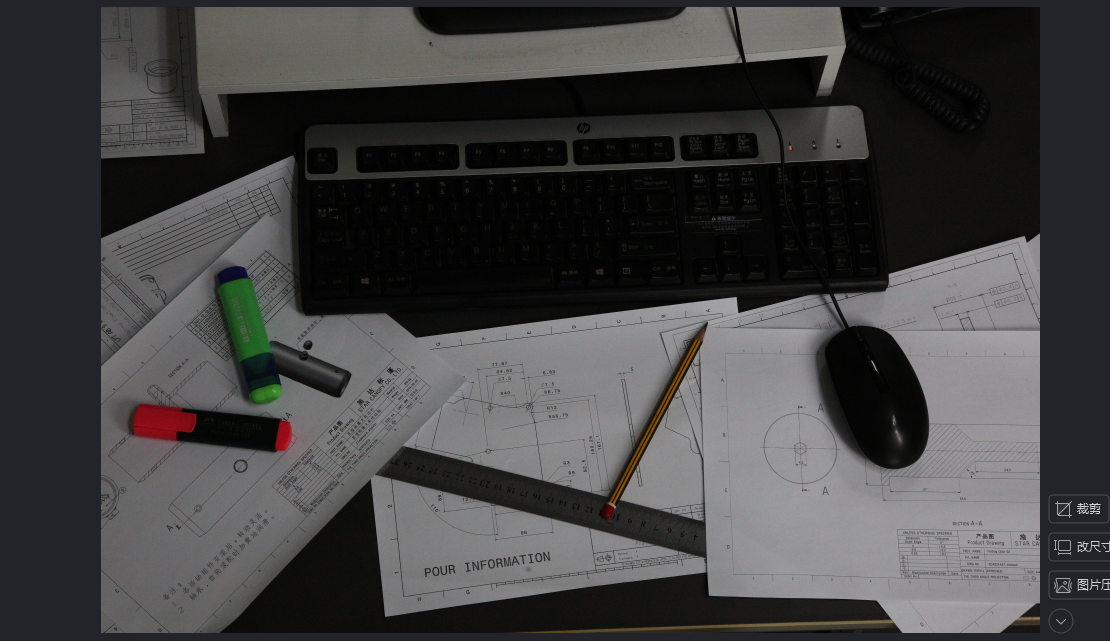
Frame geometry and fabric specification are reviewed together, because wind performance is a system property rather than a fabric property.
Serviceability is part of the same logic. The stated maintenance approach is quick modular part replacement combined with anti-mildew and anti-UV fabric treatment, which means the buyer's long-term cost depends on whether individual components can be reordered — a point worth writing into the supply agreement at the shortlist stage, not after the first failure.
Custom vs Off-the-Shelf: What the Comparison Actually Shows
Standard, fixed-size outdoor products win on speed and on price per unit, and there is no reason to argue otherwise. A stocked shelter or chair can ship from inventory without a drawing cycle; a custom programme cannot. The trade-off appears in lifecycle terms instead — and StarCanopy quantifies that trade-off for one category in its own comparison material.
In that comparison of a two-layer inflatable shelter against an ordinary inflatable shelter, the initial purchase cost is stated as 22% higher, while full-lifecycle operation and maintenance cost is stated as 40% lower. The same comparison attributes a 35% reduction in air-conditioning energy consumption to the two-layer composite canvas, together with a more stable year-round internal temperature. These are supplier-stated figures for one construction type, not a general rule for the whole shortlist.
Purchasing Terms, Inspection and After-Sales
For EU, USA and Canada clients, StarCanopy's published terms define the commercial frame around the shortlist. The minimum order quantity is customisable, with published reference configurations showing MOQ of 1 unit for certain markets on FOB/CIF terms and MOQ of 100 units with FOB/EXW delivery for a specified product configuration. Payment follows a 50% deposit and 50% balance structure, and acceptance is based on pre-shipment testing.
Production timing is stated as 7–30 days typically, with 1–2 weeks for small quantities and 7–30 days for general orders, against a monthly production capacity of 1,000 units. That capacity figure matters for programme buyers: it indicates how much of a multi-model order can be scheduled in one production window rather than across several.
Pre-shipment inspection for EU, USA and Canada clients is stated as 100% full inspection, covering air tightness, material tensile test, size verification and appearance check. Read as an acceptance checklist, those four items map onto the risks of each model in this shortlist: air tightness to I-FB, ITC01 and CS-01; tensile strength to the sewn covers and shelters; size verification to the made-to-order geometry; appearance check to the visible branding items such as UM-01.
After-sales support is provided remotely, covering technical support and remote after-sales service for EU, USA and Canada clients. For multi-site operators, remote support is the practical model — it resolves specification, assembly and replacement questions without waiting for an on-site visit, provided the buyer has recorded the agreed drawings and part references at handover.
Where This Shortlist Stops Working
Three limits are worth stating plainly, because a shortlist that hides them is not useful to a procurement team.
Minimum order quantities are configuration-specific. Where a quoted configuration carries a 100-unit MOQ, a pilot order of a handful of units is not available on that basis. Buyers testing a new activity category should confirm which configuration and which market terms apply before planning a small trial.
Custom means a specification cycle. A 7–30 day production lead time is measured from an agreed specification, not from first contact. Complex or first-of-type structures need an earlier design freeze, and the four-person R&D team at the Zhuhai facility is a finite engineering resource that has to be scheduled.
These are not storm shelters. ICC-500, the ICC/NSSA standard for the design and construction of storm shelters, governs tornado-shelter compliance. The products in this shortlist are recreation and commercial outdoor products with graded wind resistance and site-dependent anchoring; they are not presented as compliant storm shelters, and no wind rating should be assumed without the site brief.
Market Context: What the Numbers Do and Do Not Cover
Demand context for recreation programmes is well documented at category level, though not at custom-product level. Global Market Insights values the global recreational and outdoor products market at USD 144.5 billion in 2025, projected to reach USD 152 billion in 2026 at a 5.9% CAGR. Grand View Research estimates the global canopy market at USD 2.2 billion in 2026, with the shade canopy segment holding the largest share in 2025.
Participation supports the same direction. Ken Research reports the U.S. outdoor recreation participant base at 181.1 million people in 2024, equal to 58.6% of Americans aged six and older, and forecasts the U.S. outdoor recreation products market growing from USD 202.5 billion in 2025 to USD 268.3 billion by 2031 at a 4.8% CAGR.
Future Outlook
For recreation buyers, the practical shift over the next buying cycles is from product selection toward programme documentation. Three developments point the same way: activity-driven ordering, where one buyer specifies shelters, seating and inflatables together; lifecycle reasoning, where a higher initial cost is justified by maintenance and energy performance across seasons; and evidence-based acceptance, where air tightness, tensile strength and size verification are written into the purchase order rather than assumed.
Multi-material manufacturing sits behind the first of those. A supplier that runs hardware, sewing and inflatable workshops under one roof can hold one quality standard across a chair frame, a sewn cover and an inflatable structure — which is precisely the coordination problem a recreation programme creates. Whether that consolidation delivers depends less on capability claims than on whether the buyer defines the specification, the anchoring method and the acceptance criteria before the order is placed.
FAQ
What purchasing terms and acceptance criteria apply to these custom outdoor products?
Published terms for EU, USA and Canada clients show delivery on FOB/EXW or FOB/CIF depending on configuration, a 50% deposit and 50% balance payment structure, and pre-shipment testing as the acceptance criterion. Minimum order quantity is customisable rather than fixed across the range.
What is the minimum order quantity and typical lead time?
The minimum order quantity is customizable, with reference configurations showing 1 unit for certain markets and 100 units for a specified configuration. Typical production lead time is 7–30 days, with 1–2 weeks for small quantities, against a monthly production capacity of 1,000 units.
How is quality verified before shipment?
For EU, USA and Canada clients, 100% full inspection is performed before shipment, covering air tightness, material tensile test, size verification and appearance check. At factory level, flame-retardant and mildew-proof inspection is carried out, and units ship with matched ground nails and wind ropes.
What after-sales support is available?
After-sales service is provided remotely for clients in the EU, USA and Canada, covering remote technical support and remote after-sales service. Maintenance is designed around quick modular part replacement, supported by anti-mildew and anti-UV fabric treatment.
Can shelters, chairs, poles and inflatables be sourced from one supplier?
StarCanopy operates three workshops — hardware, sewing and inflatables — at its Zhuhai facility established in 2005, which allows metal components such as the caravan pole CPPlK, sewn products such as shelters and covers, and inflatables such as I-FB and ITC01 to be produced within one manufacturing organisation.
Which products in this shortlist are not substitutes for certified storm shelters?
None of the nine models is presented as a storm shelter. ICC-500 is the referenced standard for the design and construction of storm shelters; the products here are recreation and commercial outdoor products with wind-tunnel-graded wind-resistant structure and site-dependent anchoring, and their suitability depends on the specific site brief.
The full StarCanopy product and capability brochure is available for download: Starcanopy.pdf.
Есть вопросы или нужны дополнительные детали?
Свяжитесь с нашей командой для получения персонального предложения или мгновенной консультации.
Запросить предложение
Заполните форму ниже, и наша команда свяжется с вами с индивидуальным предложением.
Прямой чат WhatsApp
Предпочитаете общаться в реальном времени? Напишите нам в WhatsApp для мгновенной помощи и быстрых ответов.
- Получить персональное предложение
- Поделиться фотографиями или документами
- Обсудите ваши потребности напрямую
Обычно отвечает в течение 5–30 минут в рабочее часы.