
Custom Packaging Procurement: Specs, Terms, and Acceptance
Custom packaging for supplements and sports nutrition has shifted from a design decision into a procurement decision. Buyers now request dimensional envelopes, finish specifications, tooling ownership, stock locations and written acceptance criteria before artwork is approved. The commercial weight behind that shift is measurable: Fortune Business Insights valued the global custom packaging market at approximately USD 48.17 billion in 2025, with North America accounting for a 40.09% share.
The category driving a large share of those requests is expanding as well. Precedence Research estimated the global dietary supplement packaging market at USD 12.7 billion in 2024, projected to reach USD 23.1 billion by 2034 at a 6.1% CAGR, with plastic holding roughly 58.3% of material share in 2024.
This article answers the questions that arrive at that stage: which materials and components can be specified, what a surface finish actually controls, how an integrated design–tooling–production sequence runs, which purchasing terms need to be settled in writing, and how acceptance criteria should be drafted so that a first production run can be judged objectively. Specification ranges and capability facts are drawn from RTCO (THE RTCO PAK PTE. LTD.), a packaging manufacturer established in 2007 that operates a 68,000 m² facility, employs approximately 200 staff and reports an annual output of 1,000,000,000 units.
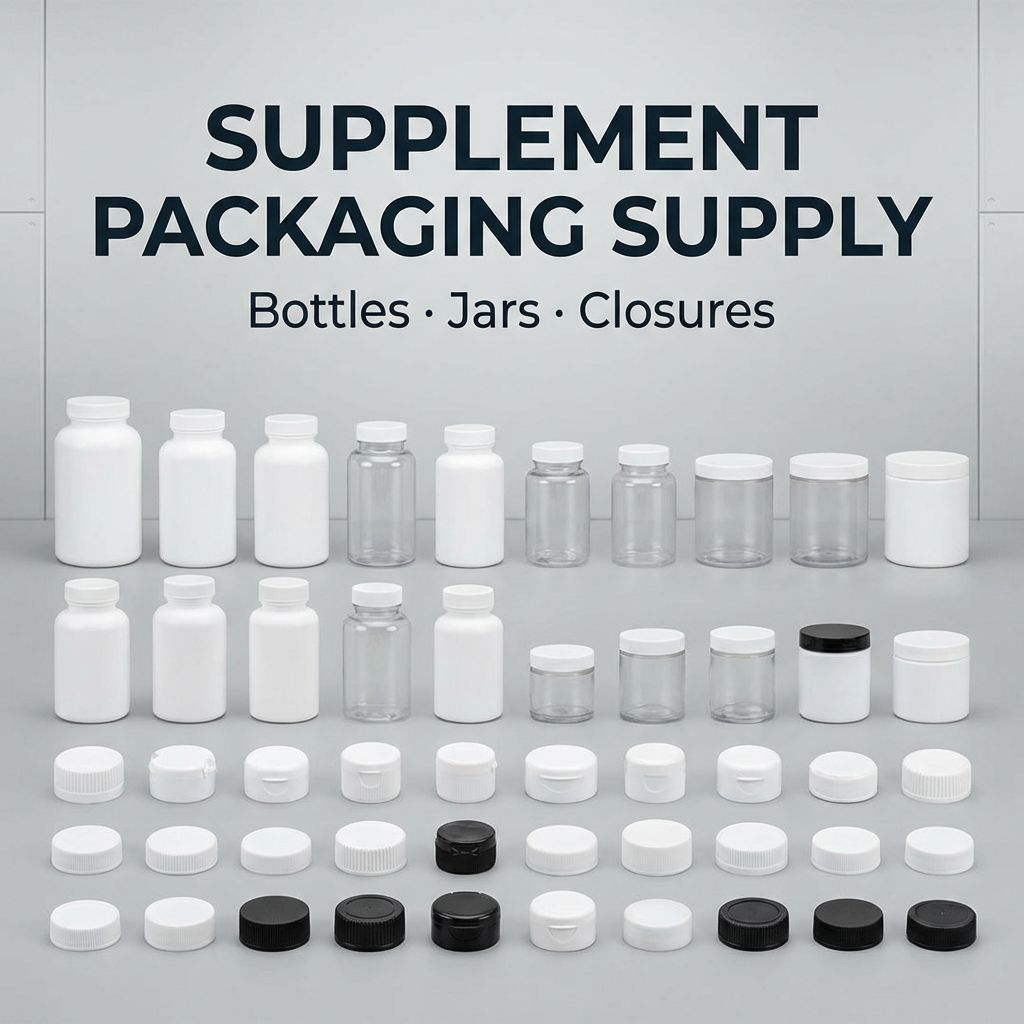
Supplement and sports nutrition formats subject to custom packaging specification and acceptance planning.
The procurement questions buyers ask first
In a first conversation, the order of questions has changed. Earlier cycles opened with a design reference and asked whether it could be manufactured. Current cycles open with the specification and ask what happens if a shipment does not match it.
That reordering is rational. A supplement container is not a decorative shell. It has to run on a filling line, protect a hygroscopic or oxidation-sensitive formula, carry regulatory information legibly, and survive distribution without leaking or cracking at the closure. Each of those functions becomes a specification item, and each specification item becomes something a buyer can accept or reject.
The practical consequence is that a packaging supplier is evaluated less on catalogue breadth and more on whether it can state a range, hold it in production, and document the result. For buyers entering the category, the useful starting point is the component envelope: what shapes, sizes and closures actually exist as defined options.
What “custom” covers: materials and component ranges
A custom supplement packaging brief is normally a bundle of components rather than one item: the container, the closure, the liner and the dosing accessory. RTCO supplies plastic containers in HDPE and PET, together with scoops, caps and closures, liners and accessories, and supports surface finishes including vacuum metallization and soft-touch coatings.
Supported formats include wide-mouth protein powder jars, pre-workout and BCAA bottles, dual-chamber supplement bottles, capsule and tablet bottles, flip-cap scoop bottles, packer bottles, gallon bottles and sample tubes. The published specification envelope is the first filter a buyer should apply.
| Component | Stated range | Why it matters in a brief |
|---|---|---|
| Bottle | Fill capacity 60ml–6000ml; body diameter 40–200mm; height 60–325mm | Defines serving-count options and whether the format sits inside existing tooling |
| Cap and closure | Diameter 20–200mm; height 10–40mm | Determines filling-line interface, opening style and whether a dosing feature can be integrated |
| Scoop | Measuring capacity 0.3cc–8oz | Sets the dosing experience and the label’s serving instructions |
| Liner and accessories | Matched to closure type | Controls moisture and oxygen ingress and anti-counterfeiting options |
Material selection follows the formula rather than the aesthetics. Food-grade HDPE, PET and PP are the base materials used, compliant with FDA and EU food safety standards, with recycled and PCR material options available. In general industry practice, HDPE is commonly specified for powder and tablet formats where opacity and moisture resistance are priorities, while PET is commonly specified where clarity is part of the shelf proposition. The choice affects finish options as much as it affects barrier behaviour, which is why the material and the decorative specification should be decided together.
Surface finishes: what a finish specification actually controls
Decorative finishes are the area where buyer and supplier most often misunderstand each other, because “premium” is a word rather than a specification. RTCO’s finish options include soft-touch coating, UV coating, silk screen, 3D printing and labelling, with vacuum metallization and soft-touch coating processes referenced in its documentation as SGP and SAP technologies applied to the outer layer of HDPE and PET containers.
A finish specification should name the surface it applies to, the target colour and gloss, the coverage area, and the relationship between the finish and the printed decoration. Two bottles can share the same “soft-touch” label and behave differently if one carries the coating over the shoulder and the other stops below it, or if one is decorated before coating and the other after. Those differences are visible in handling and in scuffing behaviour during filling.
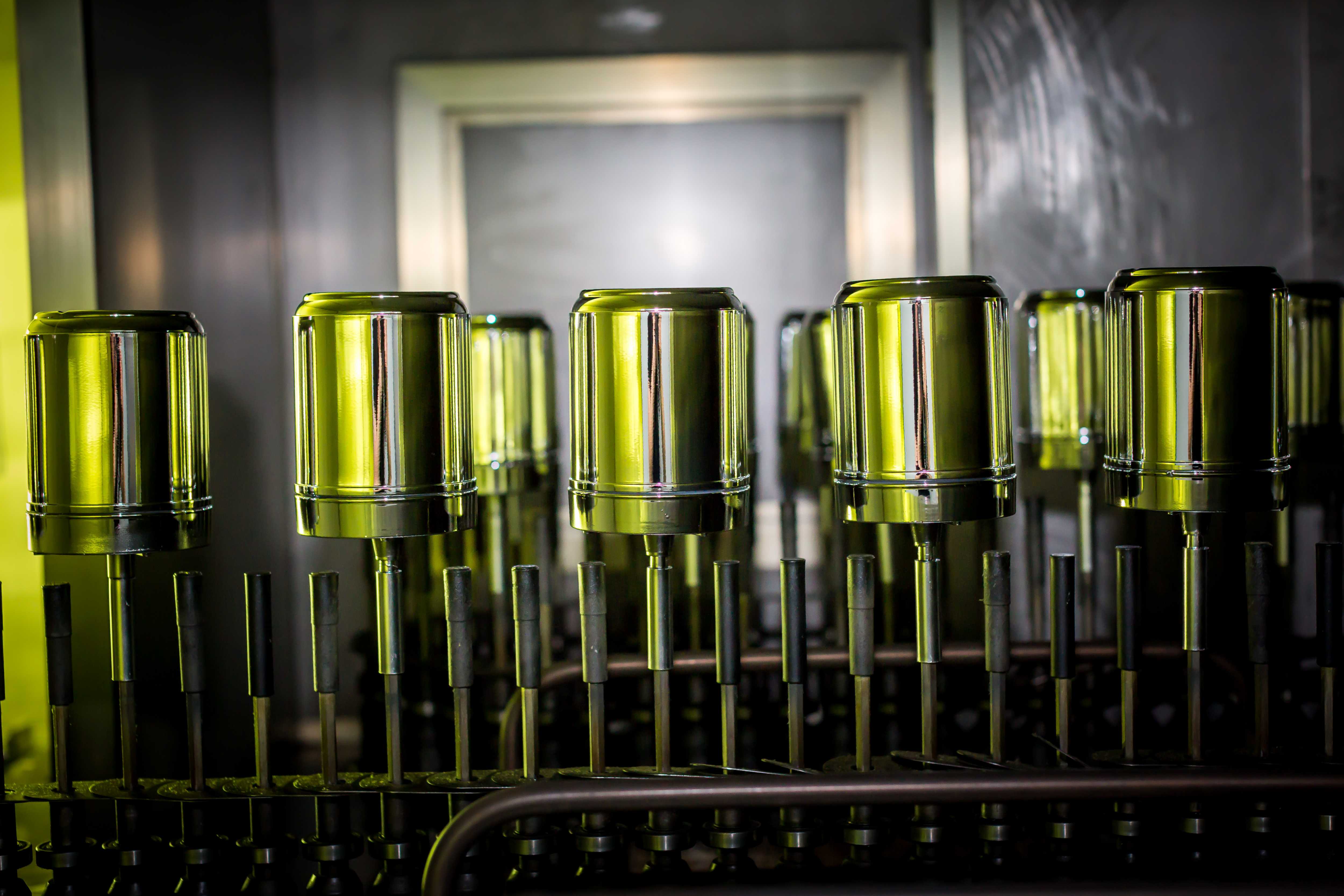
Protective coating is applied to the outer layer of HDPE and PET containers and forms part of the finish specification.
Decoration technique should also be chosen against the artwork. 3D printing allows relief effects that flat printing cannot produce; silk screen suits solid, high-contrast graphics; labelling supports versioning across a large SKU range without new tooling. None of these is universally better. The decision rule is simpler: match the technique to the smallest detail in the artwork and to the number of SKUs that will share the same mould.
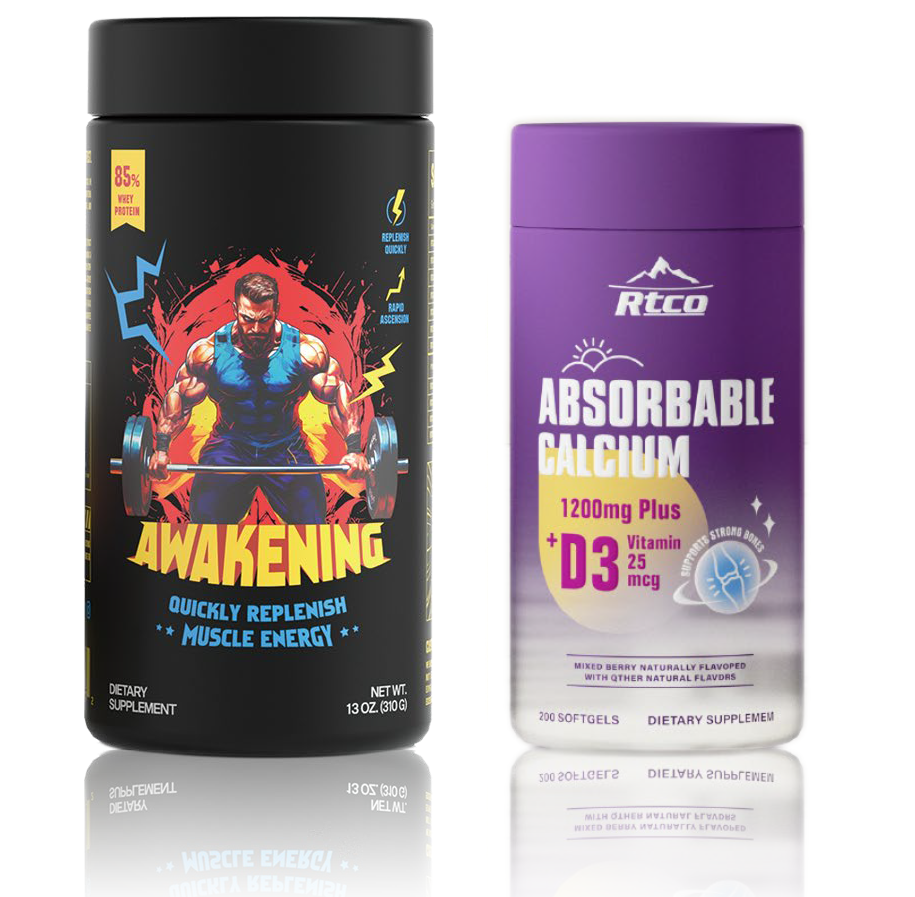
3D printing decoration produces relief detail that flat printing cannot reproduce and is specified against artwork detail.
Design, tooling and production as one sequence
The most common source of delay in a custom packaging programme is not manufacturing capacity but handover between parties. When design sits with one supplier, tooling with another and production with a third, every change restarts a negotiation. RTCO addresses this through in-house design and mould development integrated with scalable production, an approach the company describes as an integrated rapid design–tooling–production service. Its engineering resource includes 40 engineers.
The published workflow runs in six stages: consultation, feasibility, prototype, mould, pilot and mass production. For a buyer, each stage is a checkpoint with a defined output rather than a calendar estimate.
- Consultation converts a design intent into a specification with materials, dimensions and finish options.
- Feasibility tests that specification against tooling and process limits before money is committed.
- Prototype produces a physical sample for fit and appearance review.
- Mould establishes the tool that will define repeatability across the run.
- Pilot verifies the container on a production line rather than on a bench.
- Mass production scales the verified configuration, with OEM, ODM and private label structures supported.
Where a project can use an existing mould, the path is shorter. RTCO maintains an established mould library, which reduces development steps for buyers whose format is close to a standard shape. Where a new shape is required, the mould stage becomes the controlling item in the schedule and should be treated as such in launch planning.
Supply geography, inventory and commercial terms
For North American supplement brands, the location question is now part of the technical question. RTCO operates a manufacturing and distribution network that includes a plant in South Carolina and warehouses in Georgia (Savannah) and California (Chino). The US factory is located at 1701 Old Grove Road, Suite 300, Piedmont, SC 29673. Publicly described manufacturing footprint also includes a Vietnam plant and multiple sites in China, in Shanghai, Zhejiang and Shandong.
Approximately 97% of output is exported, and the company primarily targets North America while serving global brands. Those facts translate into specific terms a buyer should settle before the first purchase order:
- Which site will manufacture the order, and whether that site can change mid-programme.
- Which warehouse will hold finished goods, and how stock is allocated when several buyers draw on the same SKU.
- Where title and risk transfer at each handoff, from factory to warehouse to buyer.
- How a forecast revision is handled, and what notice period applies before quantities are locked.
- Whether the tooling is dedicated to the buyer and what happens to it if the relationship ends.
None of these are unusual clauses. They are simply easier to agree at the start than to renegotiate during a launch, and a supplier with both Asian and US capacity should be able to state clearly which part of the programme sits where.
Acceptance criteria: what to define before the first purchase order
Acceptance criteria are the part of a custom packaging agreement most often left implicit, and the part most likely to be invoked. The principle is straightforward: anything that can be inspected should be written down with a method and a tolerance, and anything that cannot be inspected should not be written down at all.
| Acceptance area | What to define in writing | Inspection basis |
|---|---|---|
| Dimensions | Critical dimensions, tolerances and the approved drawing revision | Measurement against the signed drawing |
| Appearance | Colour reference, gloss level, finish coverage, acceptable defect types | Comparison to an approved sample under stated lighting |
| Closure performance | Application torque range, liner fit, seal integrity after transit | Torque measurement and post-transit inspection |
| Dosing | Scoop capacity within the 0.3cc–8oz range and its position in the filled pack | Volume verification and pack teardown |
| Compliance | Material declaration (food-grade HDPE, PET or PP; PCR content where specified) and child-resistant requirements where applicable | Document review plus functional testing where mandated |
| Pack-out | Carton configuration, labelling, pallet pattern, quantity per case | Count verification at receiving |
Two points deserve emphasis. First, child-resistant packaging for supplements in the United States is governed by the Poison Prevention Packaging Act (PPPA) and ASTM D3475; where a format falls inside that scope, the requirement belongs in the specification, not in a side conversation. Second, the approved sample should be retained by both parties and referenced by date in the purchase order. Verbal approval of a prototype is not an acceptance criterion.
Where custom programmes meet their limits
A custom programme is not automatically the right answer, and a supplier that cannot say where the limits sit is harder to plan with. Four boundaries are worth stating plainly.
Development time. A stock bottle ships from what already exists. A new mould moves through feasibility, prototype, mould and pilot before mass production begins. For a launch with a short window, an existing mould or a comparable shape is usually the faster route, and RTCO’s mould library is relevant precisely because it shortens that path.
Cost structure. Vacuum metallization and multi-layer soft-touch coatings add process steps to a container that would otherwise leave the line after moulding and printing. The cost difference is real and should be modelled per unit before a premium finish is committed across a full SKU range. A sensible intermediate approach is to reserve the finish for the hero SKU and keep the rest of the range on a simpler decoration.
Recyclability claims. Whether a pack is described as recyclable depends on the combination of base material, finish, label and closure, not on the bottle material alone. PCR material options exist, but a buyer intending to make an environmental claim should verify that claim against the exact finished configuration rather than against the resin datasheet.
Specification envelope. Published ranges are boundaries, not marketing language. A fill capacity of 60ml–6000ml, a body diameter of 40–200mm and a cap diameter of 20–200mm define what the standard tooling set can deliver. Requests outside those ranges are not impossible, but they become development projects rather than catalogue selections.
Market context: what is changing in packaging procurement
Three developments are visible in the data rather than only in supplier presentations.
Traceability is entering the pack. Grand View Research reported that smart packaging in North America, including RFID and QR integration for traceability, held a revenue share of approximately 42% in 2023. For supplement brands, the practical expression is a QR code on the label or closure that links to batch information, which in turn affects artwork space, print method and finish choice.
Material choice is becoming a documented decision. With plastic holding roughly 58.3% of dietary supplement packaging material share in 2024 according to Precedence Research, the debate has moved from whether plastic will be used to which plastic and with what recycled content. PCR options inside an HDPE, PET or PP specification make that a line item rather than a philosophy.
Supply is being regionalised. The US sports nutrition market was estimated at USD 29.42 billion in 2024 by Grand View Research and is expected to reach USD 55.51 billion by 2033. Growth of that scale puts pressure on lead times, which is why dual-region manufacturing and domestic warehousing have become procurement criteria rather than logistics footnotes.
Future outlook
The direction of travel is toward packaging programmes that are specified, documented and auditable before they are beautiful. That favours suppliers who can hold a dimensional range across a billion-unit annual output, keep engineering in-house, and place inventory close to the buyer’s filling line. It also raises the bar for buyers: a request for quotation that lists a shape and a colour will attract a generic answer, while one that lists material, dimensions, finish coverage, closure torque and an acceptance method will attract a specification.
For brands entering the category, the productive sequence is to define the component envelope first, verify the finish against the artwork second, and only then discuss volume and schedule. In that order, the commercial terms have something concrete to attach to.
Documentation and contact
RTCO publishes a sports nutrition packaging catalogue covering bottle formats, closures, scoops and finish options, available for download: RTCO Catalogue for Sports Nutrition Packages.
For specification questions, the company can be reached at info@rtco-packaging.com, by WhatsApp at +86-13564840969, or by phone in the United States at 864-781-3962. The US factory is located at 1701 Old Grove Road, Suite 300, Piedmont, SC 29673.
FAQ
What bottle sizes and components can be customised?
Bottle fill capacity ranges from 60ml to 6000ml, with body diameters of 40–200mm and heights of 60–325mm. Caps and closures range from 20–200mm in diameter and 10–40mm in height, and scoops from 0.3cc to 8oz. The product line covers wide-mouth protein powder jars, pre-workout and BCAA bottles, dual-chamber bottles, capsule and tablet bottles, flip-cap scoop bottles, packer bottles, gallon bottles and sample tubes, with liners and accessories matched to the closure.
Which materials are used, and are recycled options available?
Containers are produced in food-grade HDPE, PET and PP, compliant with FDA and EU food safety standards. Recycled and PCR material options are available. The choice between HDPE, PET and PP is usually driven by the product format and the barrier requirement, and it constrains which surface finishes can be applied.
How do surface finishes affect a packaging specification?
Available finish options include soft-touch coating, UV coating, silk screen, 3D printing and labelling, with vacuum metallization and soft-touch coating applied to the outer layer of HDPE and PET containers. Each adds process steps, so a specification should state the coated surface, the colour and gloss target, the coverage area and whether decoration is applied before or after coating.
What does the design-to-production process look like?
The workflow runs through consultation, feasibility, prototype, mould, pilot and mass production. Design and mould development are handled in-house alongside scalable production, supported by a 40-engineer engineering team. Projects that can use an established mould move faster; projects requiring a new shape are governed by the mould stage.
What should be written into acceptance criteria?
At minimum: dimensions with tolerances against a signed drawing revision, colour and finish against a retained approved sample, closure torque and liner fit, scoop capacity within its stated range, material declaration including any PCR content, and carton and pallet configuration. Where child-resistant packaging applies in the United States, the requirement is defined by the Poison Prevention Packaging Act (PPPA) and ASTM D3475 and should be written into the specification.
How does US-based manufacturing and warehousing change procurement terms?
RTCO operates a plant in South Carolina and warehouses in Georgia (Savannah) and California (Chino), alongside a network that includes a Vietnam plant and multiple sites in China. In procurement terms this makes it possible to specify which site manufactures an order, which warehouse holds finished goods, and where title and risk transfer at each handoff, rather than treating those points as defaults.
Is custom packaging the right choice for a small first run?
Not always. A new mould passes through feasibility, prototype, mould and pilot before mass production, which adds time and tooling cost relative to a stock format. For smaller or time-constrained launches, an existing mould shape with customised decoration is typically the more efficient route, and the decorative specification can be extended once volume justifies dedicated tooling.
Can recycled content and specialist finishes be combined?
PCR material options and finishes such as vacuum metallization or soft-touch coating are both available, but they are separate specification decisions with separate implications. Because recyclability depends on the combined material, finish, label and closure configuration, a buyer intending to make an environmental claim should verify it against the exact finished pack rather than against the resin specification alone.
Есть вопросы или нужны дополнительные детали?
Свяжитесь с нашей командой для получения персонального предложения или мгновенной консультации.
Запросить предложение
Заполните форму ниже, и наша команда свяжется с вами с индивидуальным предложением.
Прямой чат WhatsApp
Предпочитаете общаться в реальном времени? Напишите нам в WhatsApp для мгновенной помощи и быстрых ответов.
- Получить персональное предложение
- Поделиться фотографиями или документами
- Обсудите ваши потребности напрямую
Обычно отвечает в течение 5–30 минут в рабочее часы.