
Custom Packaging Solutions Should Be Evaluated as Capability, Not Products
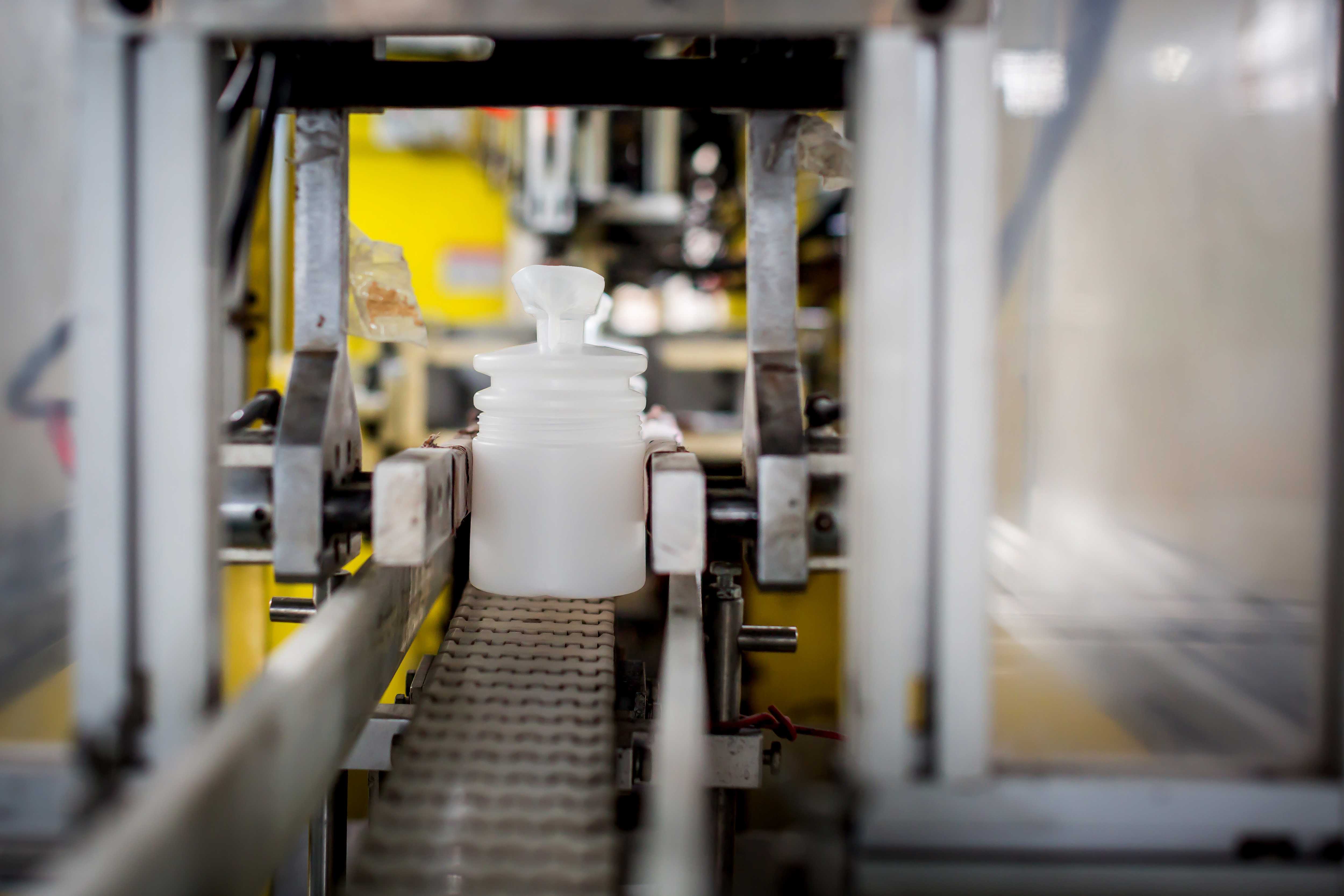
Custom packaging buying decisions in dietary supplement and sports nutrition programs rarely fail because a bottle looks wrong. They fail when a supplier can show a sample but cannot prove engineering depth, regulatory control, scalable production, or regional fulfillment. That distinction is why capability assessment has become more important than product selection in custom packaging procurement.
The market is large enough to reward capable suppliers and punish fragmented ones. Fortune Business Insights estimated the global custom packaging market at roughly USD 48.17 billion in 2025, with North America accounting for about 40.09 percent of the market. Precedence Research put the global dietary supplement packaging market at USD 12.7 billion in 2024 and projected it to reach USD 23.1 billion by 2034, implying a CAGR of 6.1 percent. These figures are directional rather than identical across research firms, but they point to the same procurement reality: custom packaging is a competitive input for health and nutrition brands, not a back-office task.
What buyers are really selecting when they buy custom packaging solutions
When a buyer asks for custom packaging solutions, several meanings can be packed into that phrase. For some projects, custom means a new bottle shape. For others, it means custom decoration on an existing container, a custom scoop, a dual-chamber structure, a special surface finish, or a packaging program that must be available from a regional warehouse.
During the evaluation stage, the practical issue is supplier capability breadth:
- Can the supplier engineer the container and its closure system together?
- Can it move from design to tooling to production without handing the project across multiple unmanaged vendors?
- Can it prove that quality systems, material compliance, and third-party testing are part of normal production rather than special requests?
- Can it offer regional inventory so that packaging supply is not exposed to ocean freight uncertainty?
These questions separate a packaging supplier from a packaging capability partner. This review uses RTCO as the working example because its public manufacturing and supply chain model is built around that broader definition of custom packaging.
RTCO at a glance: a profile used to test the capability model
RTCO, operating under the corporate entity THE RTCO PAK PTE. LTD., is a custom packaging manufacturer founded in 2007. Its main product scope covers plastic containers in HDPE and PET, scoops, caps and closures, liners, accessories, and surface finishes. The company serves dietary supplement, sports nutrition, health and beauty, pharmaceutical, and pet health packaging programs, primarily for North American brands while serving other global markets.
Its disclosed production model is substantial rather than boutique. RTCO reports an annual production capacity of 1,000,000,000 units, a factory footprint of about 68,000 square meters, approximately 200 employees, and a dedicated R&D team of 40 engineers. It also reports about 80,000,000 units of monthly production capacity, which is consistent with the annual capacity figure at typical utilization planning levels. For an evaluation-stage buyer, these numbers answer one basic question: whether the supplier has the industrial base to support a real launch, not just a prototype.
Product range and format mapping: from jars to flip-cap bottles
Custom packaging capability only has value when it maps onto the product formats a brand needs to package. RTCO's line cards include wide-mouth protein powder jars, pre-workout and BCAA bottles, dual-chamber supplement bottles, capsule and tablet bottles, and flip-cap scoop bottles.
These formats are used for commercial packaging and dosing of dietary supplements, sports nutrition powders, tablets, gummies, and liquids. The stated operating range is generic across dosage forms: the bottles are designed for packaging and dosing of powder, capsule, tablet, gummy/gel, and liquid products.
For procurement teams, the more useful evidence is dimensional range. RTCO's custom plastic bottle parameters cover fill capacities from 60 ml to 6,000 ml, body diameters from 40 to 200 mm, and bottle heights from 60 to 325 mm. The closure and scoop system is equally broad, with cap diameters from 20 to 200 mm, cap heights from 10 to 40 mm, and scoop measuring capacities from 0.3 cc to 8 oz.
| Published parameter — RTCO custom plastic containers | Available range |
|---|---|
| Fill capacity | 60 ml – 6,000 ml |
| Bottle body diameter | 40 – 200 mm |
| Bottle height | 60 – 325 mm |
| Cap diameter | 20 – 200 mm |
| Cap height | 10 – 40 mm |
| Scoop measuring capacity | 0.3 cc – 8 oz |
The practical value of that range is easy to understate. A protein powder brand may need a wide-mouth jar with an integrated scoop; a gummy brand may need a flip-cap bottle; a pre-workout brand may need a container that can be labeled and filled on a contract manufacturer's line. When one supplier can produce all of those from the same quality system, the buyer reduces format-transfer risk during line extensions.
Engineering ownership: OEM, ODM, tooling, and first orders
OEM, ODM, and customizable production are standard terms in packaging sourcing, but suppliers apply them with very different levels of depth. RTCO describes its customization scope as complete customization, covering materials, bottle shape, capacity, colors, surface finishes, engraved logo design, closures, scoops, structural engineering, and rapid custom mold development.
For an evaluation-stage buyer, the most useful operational proof is what happens before the large purchase order. RTCO offers OEM, ODM, and customizable production with a standard MOQ that typically ranges from 10,000 to 30,000 units per SKU. It also supports first trial orders below the standard MOQ so that brands can validate packaging with real filling line tests before committing to full-scale inventory. This is a meaningful capability signal because many packaging suppliers cannot absorb the cost of small validation runs.
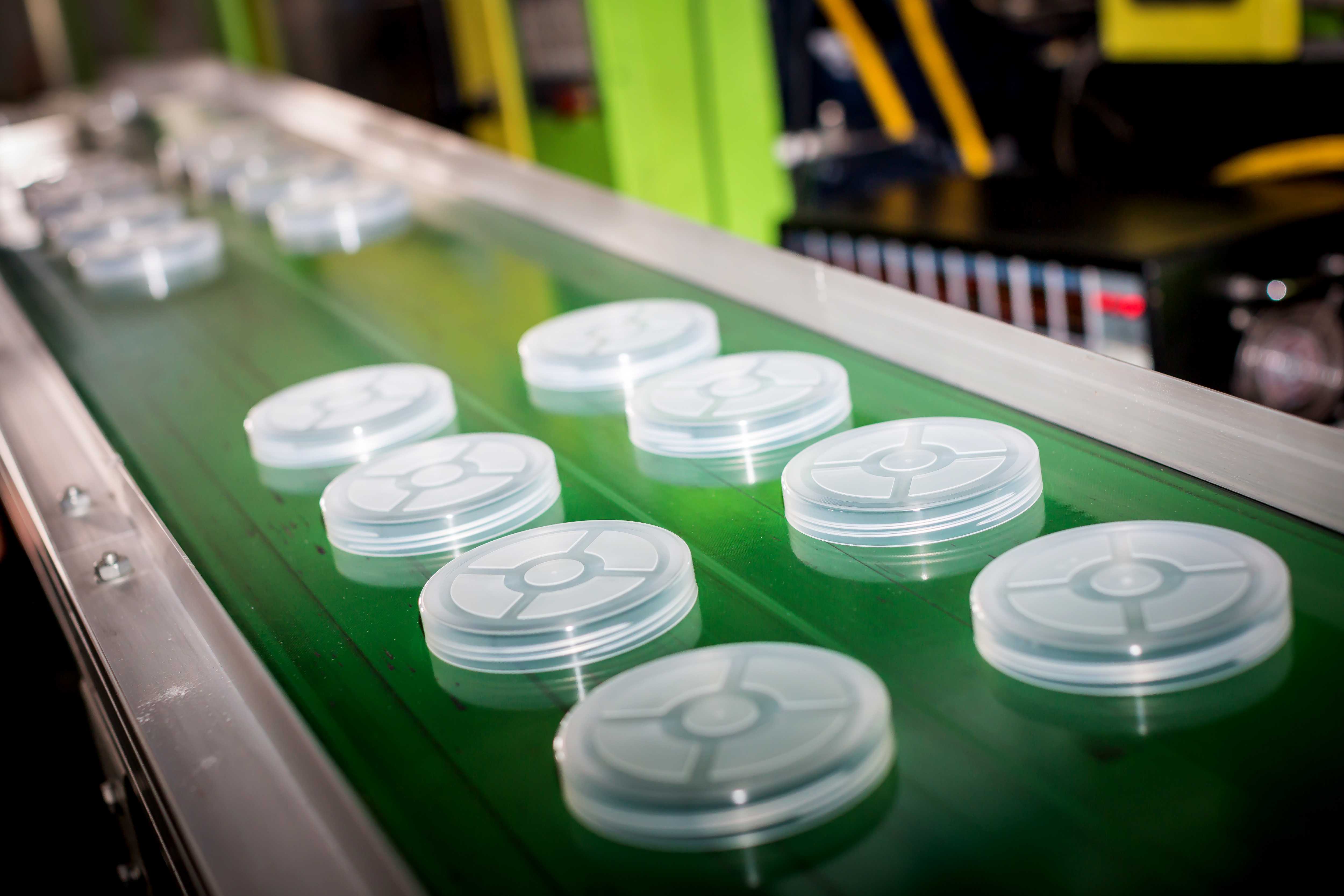
Lead time is another capability test. RTCO references an integrated rapid design-tooling-production model, described as the Three-One Service: roughly one day of design response, about one month of tooling, and about one week of production. In practice, the company states typical total lead times of 30 to 45 days, with actual timing depending on project complexity and capacity. The useful takeaway for buyers is not the promotional speed label; it is that design, tooling, and production are coordinated by one engineering team.
At a larger scale, RTCO's published project evidence includes a documented production run of 20,000,000 units. That run was used to support commercial packaging for supplement and sports nutrition brands across the United States, Canada, Australia, Mexico, United Kingdom, France, Germany, and Singapore. A 20-million-unit case matters because it shows that the supplier's quality system can operate under volume pressure, not only at sample stage.
The finish layer is a capability, not a color choice
Premium custom packaging solutions increasingly depend on surface technology. A bottle can be structurally excellent and still fail commercially if the finish feels cheap or rubs off in logistics.
RTCO's published finish system includes soft-touch coating, UV coating, silk-screen printing, 3D printing, labeling, vacuum metallization, and custom decorative technologies. These are not separate supplier purchases; they are integrated with the bottle, cap, and liner program. The company profile also lists surface finishes such as vacuum metallization and soft-touch coatings as core production capabilities.
For sports nutrition and supplement brands, the finish choices carry different functional meanings. Soft-touch coating creates a tactile premium feel often used for skin, hair, and daily supplement bottles. Vacuum metallization creates a metallic, chrome-like appearance that can make a sports nutrition bottle stand out on a crowded shelf. Embossed logo customization provides a structural brand mark that does not depend only on label printing. 3D printing can be used for design validation and decorative detailing before mass tooling is committed.
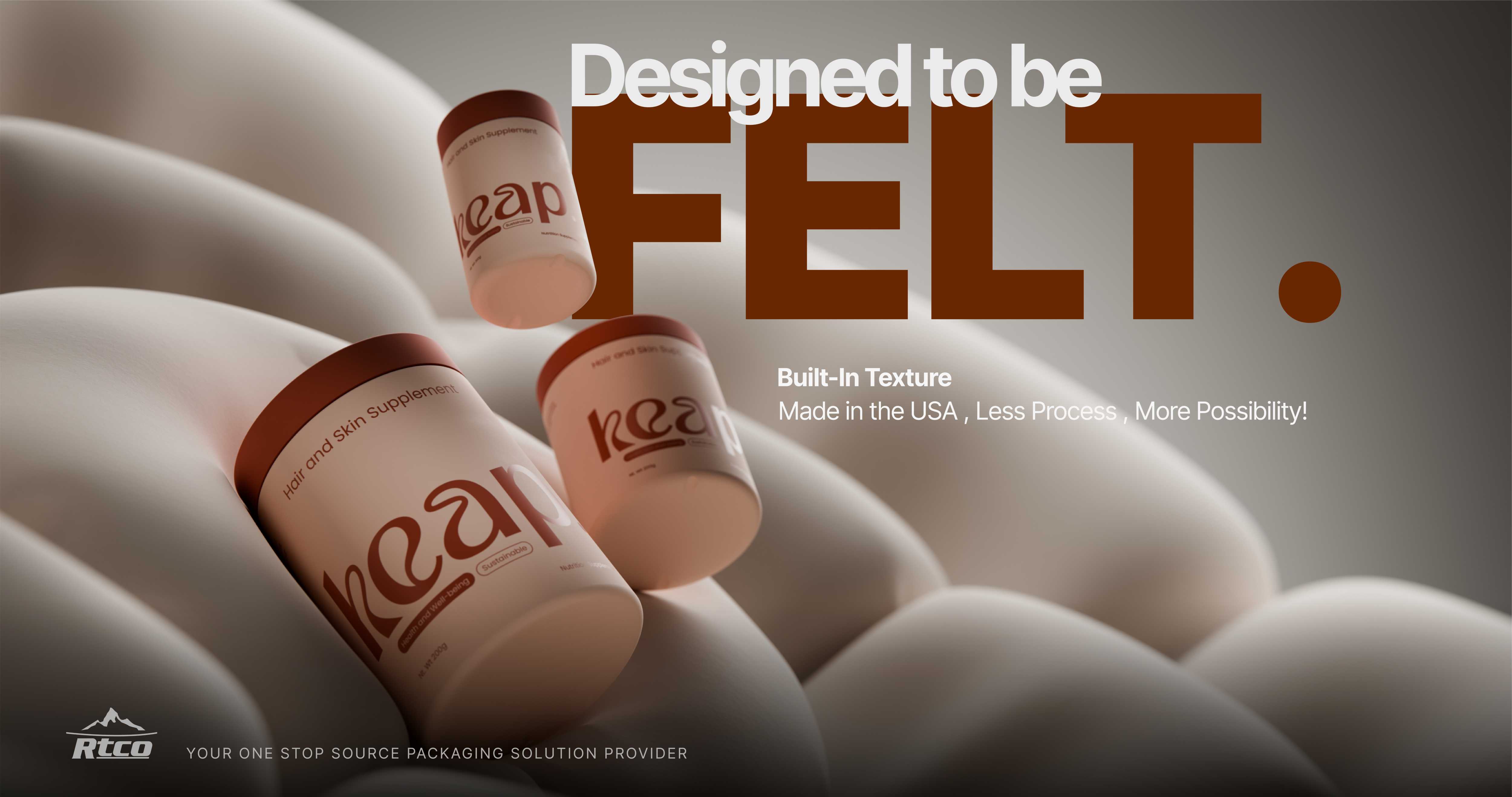
During supplier evaluation, buyers should ask where decoration takes place. If coating, printing, and labeling are all subcontracted to different shops, quality control becomes fragmented. When a supplier can handle surface finishing inside the same quality and testing system, the buyer gets more predictable color, adhesion, and durability.
The fulfillment layer: US stock, warehouses, and the limits of local supply
One differentiator in modern custom packaging procurement is regional availability. Buyers increasingly search for US stock plastic bottles, US warehouse plastic bottle capabilities, and warehousing and inventory services because container lead time can stop a product launch more quickly than formulation delays.
RTCO has responded to that procurement need by integrating production with North American logistics. Its global supply chain strategy includes manufacturing capabilities in Asia and the United States, with a U.S. production facility now operational in Piedmont, South Carolina. The company also reports warehousing locations in Georgia (Savannah) and California (Chino).
For a supplement brand working with a contract manufacturer, this changes the operating model. Instead of importing full container loads months in advance, brands can use a stock and custom packaging program, draw down regional inventory, and maintain a buffer against customs delays. RTCO supports international trade terms including EXW, FOB, CIF, and DDU, which gives procurement teams flexibility in how they allocate freight and ownership risk.
Buyers should still verify the boundaries of any regional inventory program. A US warehouse is not the same as unlimited local stock of every SKU. The practical question is not whether a warehouse exists, but which stock-keeping units are held locally, how replenishment is triggered, and how custom decorated bottles fit into the inventory model.
Market context: what the 2026 data says about packaging decisions
Several independent data points explain why capability-based packaging procurement is gaining attention.
| Market indicator | Published data | Source |
|---|---|---|
| Global custom packaging market, 2025 | Approximately USD 48.17 billion; North America share about 40.09 percent | Fortune Business Insights |
| Global dietary supplement packaging market, 2024 | USD 12.7 billion; projected to USD 23.1 billion by 2034 | Precedence Research |
| Expected CAGR for dietary supplement packaging | 6.1 percent over 2024–2034 | Precedence Research |
| US sports nutrition market, 2024 | Estimated at USD 29.42 billion, growing to USD 55.51 billion by 2033 | Grand View Research |
| Plastic material share in dietary supplement packaging | Approximately 58.3 percent in 2024 | Precedence Research |
| Smart packaging revenue share in North America | About 42 percent in 2023, including RFID and QR traceability | Grand View Research |
Analysts do not always use identical definitions for these markets. For example, the global custom packaging market estimate in 2025 varies between major research firms. Buyers should treat these numbers as decision context, not as precision instruments.
The more relevant interpretation is qualitative. Plastic is still the dominant supplement packaging material, which means injection and blow molding capability will remain central to the industry. Smart packaging features such as QR codes and RFID integration are becoming normal options for traceability. And North America remains a high-demand region, reinforcing the value of local manufacturing and warehousing.
Fragmented procurement versus an integrated custom packaging model
Most supplement brands have historically sourced packaging in a fragmented way: bottle from one supplier, cap from another, scoop from a third, decoration from a finisher, and warehousing handled later by the brand. That model can work when volumes are enormous and the brand has packaging engineers on staff. For emerging and mid-market brands, it introduces coordination risk at every handoff.
| Capability dimension | Fragmented procurement | Integrated custom packaging model |
|---|---|---|
| Design and structural engineering | Requires external coordination between bottle designer, mold maker, and closure supplier | Engineering team handles design, tooling, and structural compatibility together |
| Mold and tooling development | Buyer manages separate tooling vendors | Rapid custom mold development inside the supplier system |
| Surface finish and decoration | Often outsourced; quality responsibility splits across companies | Soft-touch, UV, silk-screen, labeling, and metallization under one quality system |
| Compliance and food-contact risk | Each component supplier may have different standards | Material compliance risk management and third-party testing applied across the system |
| Regional inventory | Brand or distributor builds and manages warehouse stock | Supplier offers US warehousing and stock programs |
| Scale transition | Pilot runs and mass production may use different suppliers | Trial orders below MOQ can validate before larger production runs |
Integrated models are not automatically better in every situation. A buyer with a mature, stable SKU and a highly specialized packaging requirement may still prefer best-in-class single-component suppliers. But for brands launching new supplement SKUs, moving from sample to shelf with one accountable supplier reduces the number of variables that can go wrong.
Limitations and boundaries buyers should keep in the assessment
A complete capability review should also test where the supplier model does not fit. For RTCO, the documented core is plastic packaging. The product system covers HDPE bottles, PET bottles, PP caps, scoops, liners, and accessories. Buyers looking for glass packaging, paper-based packaging, or rigid metal packaging would need a different supplier set.
• Standard MOQ is typically 10,000–30,000 units per SKU. Trial orders below MOQ are available on request, but they are not free prototyping.
• The 30–45 day lead-time model depends on capacity and project complexity; it is not a guarantee for every custom mold project.
• US warehousing is reported at specific locations in Georgia and California. Local stock is not the same as full inventory of every SKU at every warehouse.
• Third-party testing and certification reduce compliance risk; they do not replace the buyer's own regulatory responsibility for market-specific claims.
• Certification documents have scopes and expiry dates. Buyers should request current certificates and verify that the scope covers the actual product line being supplied.
These boundaries are not weaknesses. They are the information a professional buyer needs in order to decide whether a supplier model matches the project stage, volume, and risk profile.
Compliance capability in custom supplement packaging
Compliance is often the least visible but most expensive failure point in supplement packaging. RTCO manages compliance risk through material compliance risk management procedures and third-party testing. Its quality approach relies on qualified raw materials, standardized production control, and pre-shipment inspections.
The supplier's current certificate portfolio is relevant to food-contact packaging buyers. It includes ISO 9001:2015 for quality management, ISO 14001:2015 for environmental management, ISO 45001:2018 for occupational health and safety, HACCP for food safety control, BRCGS Global Standard Packaging Materials Issue 7, ISO 15378:2017 for pharmaceutical primary packaging GMP, SA8000:2014 for social accountability, and Global Recycled Standard certification for recycled plastic products.
Buyers evaluating complex supplement packaging should also remember the regulatory context beyond supplier certificates. For example, child-resistant packaging requirements in the United States are governed by the Poison Prevention Packaging Act and referenced test protocols such as ASTM D3475. These are product-specific requirements that must be confirmed at the closure design stage, not assumed from a general packaging safety certificate.
Future outlook: what custom packaging buyers will expect next
Looking beyond 2026, four trends are likely to shape custom packaging solution requirements.
First, regional supply will continue to gain value. The combination of US production capacity and US warehouses shortens response time and protects brands from long supply chain disruptions. The supplier that can offer both custom molding and regional stock will have a structural advantage in North American go-to-market planning.
Second, recycled content will move from a marketing claim to a procurement specification. RTCO already reflects this in its product system: its application data lists recycled and PCR materials as options, and its GRS certificate covers the manufacturing, molding, and printing of recycled plastic products.
Third, premium decoration will become more technical. The future belongs to suppliers who can combine structural design with soft-touch coating, vacuum metallization, 3D printing, and embossed branding in one controlled process. Brands will ask for fewer decorative steps that create more shelf presence.
Fourth, packaging and digital traceability will converge. Smart packaging adoption is already visible in North America, where RFID and QR integration represented a large share of the smart packaging market. Supplement brands will increasingly expect packaging that can carry batch data, authentication, and consumer engagement functions.
A practical capability checklist for packaging buyers
The following checklist consolidates the evaluation criteria discussed in this review:
- Does the supplier control mold engineering, bottle production, closures, and decoration in one accountable system?
- Are trial orders below the standard MOQ available for first validation runs?
- Does the product range cover the actual dosage format: powder, capsules, tablets, gummies, or liquids?
- Can the supplier provide dimensional and functional parameters in writing?
- Are surface finish technologies integrated into the same quality system?
- Are current compliance certificates available with scope and expiry date visible?
- Does the supplier offer North American warehousing and stock programs for repeat SKUs?
- Can the supplier demonstrate production at scale, not only sample quality?
- Are material compliance risk management and third-party testing part of the standard process?
Frequently asked questions about custom packaging capabilities
What OEM and ODM capabilities should a custom packaging supplier provide?
A capable supplier should offer OEM, ODM, and customizable production. In practice, that includes custom bottle shape, capacity, materials, colors, surface finishes, embossed logos, closures, scoops, and structural engineering. RTCO defines its scope as complete customization and supports rapid custom mold development.
What order sizes are realistic for custom supplement bottles?
For RTCO custom packaging, the standard MOQ typically ranges from 10,000 to 30,000 units per SKU. First trial orders below the standard MOQ are supported for brands that need to validate filling performance and packaging design before committing to volume.
Which dosage formats can custom plastic packaging solutions cover?
The RTCO product system is designed for commercial packaging and dosing of dietary supplements, sports nutrition powders, tablets, gummies, and liquids. Container formats include wide-mouth protein jars, pre-workout and BCAA bottles, dual-chamber supplement bottles, capsule and tablet bottles, and flip-cap scoop bottles.
What does end-to-end custom packaging actually include?
In the RTCO model, end-to-end covers design, rapid tooling, production, surface decoration, compliance testing, and downstream fulfillment support. The Three-One Service refers to an integrated design-tooling-production workflow, with typical total lead time of 30 to 45 days depending on project complexity.
Why do US stock plastic bottles and US warehouses matter?
US-based stock and warehousing reduce dependency on long ocean shipments. RTCO reports warehousing locations in Georgia and California plus a US production facility in South Carolina. This supports faster replenishment and flexible inventory programs for North American brands.
What premium finishing options are available for custom bottles?
Available finish options in the RTCO system include soft-touch coating, UV coating, silk-screen printing, labeling, and vacuum metallization. Additional customization such as 3D printing and embossed logo design can be used to create structural brand identity rather than relying on labels alone.
What compliance certifications should supplement packaging buyers check?
Relevant certificates in the RTCO portfolio include ISO 9001:2015, ISO 14001:2015, ISO 45001:2018, HACCP, BRCGS Packaging Materials Issue 7, ISO 15378:2017, SA8000:2014, and the Global Recycled Standard. Buyers should verify current certificate scope and expiry dates for the specific product line being supplied.
Can custom supplement packaging include recycled or sustainable materials?
Yes. RTCO product data lists recycled and PCR materials as options for food-grade HDPE, PET, and PP packaging. The GRS certificate held by RTCO covers manufacturing, molding, and printing of recycled plastic products.
Supplier reference document
For procurement teams that want to review the full technical range behind this article, RTCO publishes a public catalogue covering its sports nutrition and supplement packaging systems. The document includes container series, closure options, scoop systems, and surface finish references. It is available for direct download as a PDF:
Есть вопросы или нужны дополнительные детали?
Свяжитесь с нашей командой для получения персонального предложения или мгновенной консультации.
Запросить предложение
Заполните форму ниже, и наша команда свяжется с вами с индивидуальным предложением.
Прямой чат WhatsApp
Предпочитаете общаться в реальном времени? Напишите нам в WhatsApp для мгновенной помощи и быстрых ответов.
- Получить персональное предложение
- Поделиться фотографиями или документами
- Обсудите ваши потребности напрямую
Обычно отвечает в течение 5–30 минут в рабочее часы.