
Custom Plastic Parts Supplier Evaluation: Technical Capabilities and Market Trends for 2026
Navigating the Custom Plastic Parts Supply Chain in 2026
The global injection molded plastics market was valued at an estimated USD 362.5 billion in 2025 and is projected to grow to USD 481.4 billion by 2033, according to Grand View Research. Asia Pacific accounted for approximately 41% of this market in 2025, driven by concentrated manufacturing capacity and a mature supplier ecosystem. For buyers evaluating custom plastic parts suppliers, the challenge extends beyond unit pricing: technical scope, certification robustness, export experience, and the ability to accommodate both high-volume and small-batch orders now define the competitive landscape.
Hangzhou Lingo Rubber and Plastic Product Co., Ltd (LINGO) is a China-based manufacturer specializing in custom plastic parts, including injection molded parts, plastic extrusions, CNC machined components, and PVC dip-molded products. With an export ratio of 80% and primary markets in the EU and the USA, LINGO positions itself as a partner for demanding industrial buyers seeking a single-source supplier with verified process capabilities.
The Procurement Challenge in Custom Plastic Parts
Buyers in automotive, industrial equipment, electrical/electronics, and medical device sectors increasingly require suppliers that can deliver precision-toleranced parts across multiple resin families, while also supporting small initial runs for prototyping or low-volume production. Traditional tool-based injection molding incurs high upfront costs and long lead times, which can be prohibitive for pilot projects or replacement parts. Additionally, certification requirements such as PPAP (Production Part Approval Process) for automotive applications demand documented quality systems that not all suppliers maintain.
Meanwhile, industry trends for 2024–2026 point toward Industry 4.0 integration (AI and IoT for real-time monitoring), reshoring of high-spec production, and increased adoption of bio-based or recycled resins. Suppliers that combine broad technical capabilities with export compliance and flexible order quantities are best positioned to meet these evolving requirements.
LINGO’s Solution: Multi‑Process Custom Manufacturing
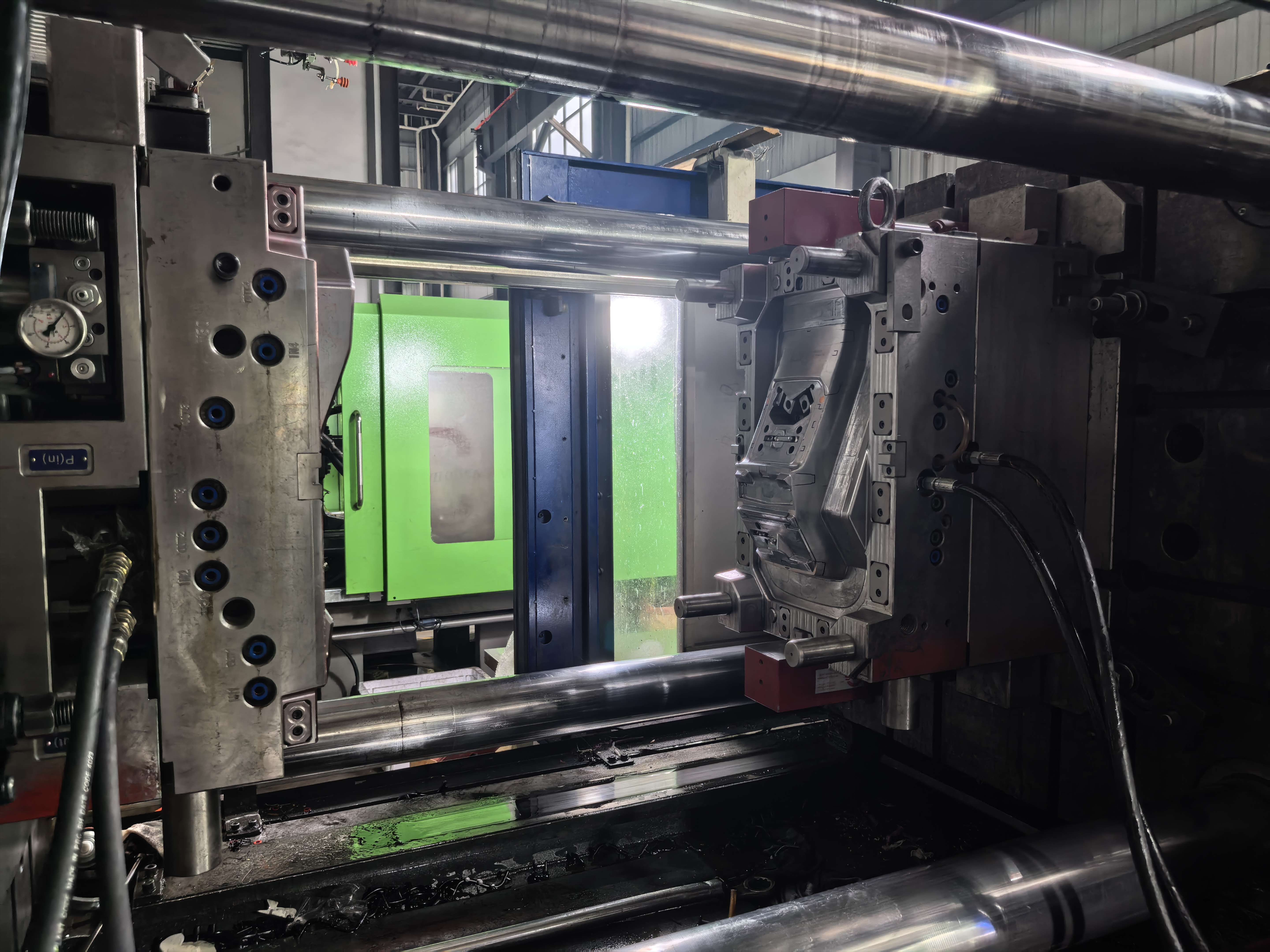
LINGO offers custom plastic parts across four core production modes: plastic injection molding, plastic extrusion, CNC machining, and PVC dipping. This breadth allows buyers to consolidate their supplier base for different part geometries and quantities without splitting orders across multiple vendors.
For plastic injection parts, LINGO provides OEM/ODM services with a monthly capacity of 1,000,000 kg. The standard lead time is 2 to 6 weeks, and the company accepts small quantity orders. Material options include PP, PA6, PA66, ABS, PE, HDPE, UHMWPE, PU, PTFE, and glass‑filled variants. Tolerance control follows GB/T 14486 – MT1 to MT7, with draft angle recommendations and shrinkage compensation built into mold design.
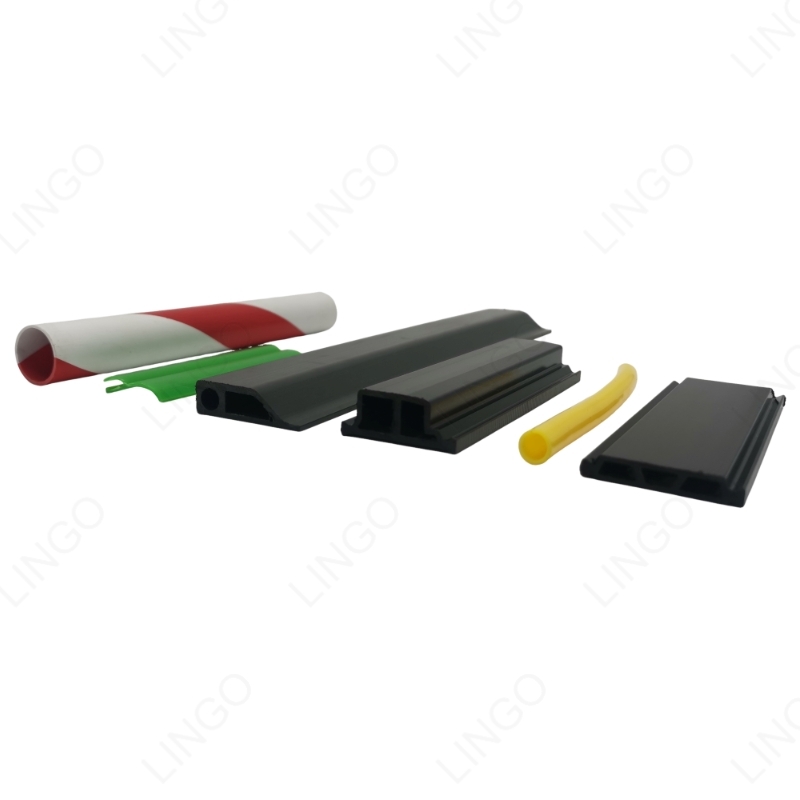
For plastic extrusion profiles, LINGO manufactures parts up to 6000 mm in length, using PVC, PP, ABS, PA6, PA66, PE, UHMWPE, and glass‑filled compounds. The monthly capacity for extrusions also reaches 1,000,000 kg, with small orders welcomed.
Beyond molding and extrusion, LINGO provides CNC machined plastic parts (including PTFE, POM, PEEK, and UHMWPE) with high‑precision tolerance capability, and PVC dipping parts that require no expensive molds — an advantage for low‑volume, colorful, or ergonomic handle applications.
Quality control procedures consist of full inspection on samples and random inspection on bulk goods. The company holds PPAP certification, which is mandatory for automotive supply chains, and maintains PPAP documentation for applicable products such as injection molded auto parts.
Use Cases Across Industries
Three documented deployments illustrate how LINGO’s capabilities address real‑world requirements:
- Electrical & Electronics (Germany, 1500 pcs): PVC dipping handles were produced for insulating current transmission. The PVC coating resists acids, alkalis, salt spray, and oil, protecting the metal substrate in humid or chemically corrosive environments. The process required no expensive molds, and the small order was accepted. The product can be formulated in almost any color and achieve different surface textures (glossy, matte, rough) for anti‑slip functionality.
- Chemical & Petrochemical (United Kingdom, 20 pcs): PTFE back‑up rings (anti‑extrusion rings) were CNC machined to high precision. These rings protect O‑rings from extrusion damage under high pressure, ensuring seal integrity. The order was shipped in 2 days, and the small quantity (20 pieces) was accepted — a critical factor for maintenance or emergency replacement.
- Automotive (United States, 5000 pcs): A tube holder for automotive machinery was injection molded. Through a design optimization that reduced internal material while maintaining structure and functionality, LINGO lowered both material and logistics costs and improved dimensional stability. Zero failures were reported in long‑term service.
These cases demonstrate LINGO’s flexibility in order size, material selection, and process choice, as well as the ability to meet stringent quality expectations across different regulatory environments (EU, US, UK).
Market Trend Analysis
According to Grand View Research, the automotive plastics market alone was valued at USD 33.0 billion in 2025, driven by lightweighting trends for EVs. Polypropylene (PP) accounted for a 32.4% share of automotive plastics in 2025, indicating that knowledge of commodity and engineering resins remains essential. Industry watchers highlight three structural shifts for 2024–2026: integration of AI and IoT for real‑time process monitoring; reshoring of critical high‑spec production to reduce supply chain risk; and a pivot toward bio‑based or recycled resin feedstocks.
LINGO’s PPAP certification aligns with the automotive sector’s need for documented quality; its in‑house mold design and multi‑material capability allow it to handle both commodity and engineered resins. The company’s 80% export ratio to regulated markets (EU, USA) indicates established familiarity with international compliance requirements — an advantage for buyers evaluating long‑term supply reliability.
Comparison with Traditional Solutions
Compared to single‑process shops that only offer injection molding or only extrusions, LINGO provides a broader technology palette. This reduces qualification overhead for buyers who need a mix of injection, extrusion, and machined parts. The ability to accept small orders (as low as 20 pcs for CNC, or 1500 pcs for PVC dipping) differentiates LINGO from high‑volume‑only producers that enforce rigid MOQs.
One honest limitation: for extremely complex geometries requiring five‑axis CNC milling or micro‑molding (parts under 1 gram), specialized shops may offer tighter tolerance or faster cycle times. LINGO’s standard injection and CNC capability cover the vast majority of industrial plastic parts, but niche ultra‑precision applications are better directed to dedicated micro‑molders.
Future Outlook
As the plastic parts market continues to expand, suppliers that offer certified quality, multi‑process flexibility, and export‑ready documentation will be preferred by evaluation‑stage buyers. LINGO’s combination of injection, extrusion, CNC, and dip molding, backed by PPAP certification and a track record of zero‑failure deliveries, positions it as a credible partner for custom plastic parts procurement through 2026 and beyond.
For a detailed overview of LINGO’s product range and quality system, the company profile can be downloaded here: LINGO Company Profile.
FAQ – Custom Plastic Parts Sourcing
A: LINGO works with PP, PA6, PA66, ABS, PE, HDPE, UHMWPE, LDPE, PU, PTFE, and glass‑filled variants. Fillers and modifications such as flame retardant, UV stabilizer, and color matching to Pantone/RAL are available.
A: Yes. LINGO states that small quantity orders are acceptable for both injection and extrusion parts. For CNC parts, orders as low as 20 pieces have been fulfilled; for PVC dipping, 1500 pieces were produced without expensive molds.
A: LINGO holds PPAP (Production Part Approval Process) certification, which is a standard requirement for automotive supply chains. Applicable products include plastic injection molded auto parts, with documented material compliance to FMVSS 302, RoHS, and REACH.
A: Yes. LINGO offers both OEM and ODM services for plastic injection parts and plastic extrusion profiles. Clients can provide designs or work with LINGO’s engineering team for part optimization.
A: The standard lead time is 2 to 6 weeks, depending on part complexity, mold fabrication requirements, and order volume. Expedited delivery may be possible for CNC‑machined parts without mold tooling.
Есть вопросы или нужны дополнительные детали?
Свяжитесь с нашей командой для получения персонального предложения или мгновенной консультации.
Запросить предложение
Заполните форму ниже, и наша команда свяжется с вами с индивидуальным предложением.
Прямой чат WhatsApp
Предпочитаете общаться в реальном времени? Напишите нам в WhatsApp для мгновенной помощи и быстрых ответов.
- Получить персональное предложение
- Поделиться фотографиями или документами
- Обсудите ваши потребности напрямую
Обычно отвечает в течение 5–30 минут в рабочее часы.