
Custom Precision Metal Mechanical Parts: A Buyer's Reference
Custom precision metal mechanical parts are engineered components produced to a buyer's drawing or sample rather than selected from a standard catalogue. That single distinction changes how the category is bought: the purchasing decision is not a part number, but a process route, a material specification and a quality system that together must hold a defined geometry, at an agreed volume, repeatedly.
The size of the demand behind that decision is easy to underestimate. Commercial research published by Dataintelo places the global precision parts market at USD 98.4 billion in 2025, with the metal segment accounting for 58.3% of global revenue. Inside that figure sit very different product families — shafts, motor cores, stamped and deep-drawn sheet metal, machined housings, die-cast components and magnetic assemblies — each with its own process logic, its own tolerance behaviour and its own qualification questions.
For buyers entering the category for the first time, the practical difficulty is not finding suppliers. It is knowing which questions separate a supplier that can hold a drawing from one that can only quote on it. This reference sets out what the category covers, how a drawing-based manufacturing service is structured, which specifications a buyer must be able to state, and where the limits of the model lie.
What the category actually covers
Precision metal mechanical parts is an umbrella term for metal components whose function depends on controlled dimensions, controlled geometry or controlled material properties. The category is defined by how the part is made and verified, not by the end product it sits inside. In industrial procurement, the term typically spans:
- Shaft parts, including stepped, ground and medical shaft variants
- Motor laminations and assemblies, including stator cores, rotor cores and motor housings
- Sheet metal stamping and deep-drawn parts
- Fabricated sheet metal parts produced by cutting, bending and joining
- CNC machined parts turned or milled from bar, plate or casting
- Die-cast components in aluminium, zinc or magnesium alloys
- Magnets and magnetic assemblies, including rare-earth metal parts
- Automotive parts such as suspension components, brackets, adjustment rods and tie rods
Chunan Qiandaohu Pengsheng Technology Development Co., Ltd. is a manufacturer and trading company established in 2008 and based in Hangzhou, Zhejiang Province, China. It is a high-tech enterprise working in the research, application and development of mechanical hardware accessories. Its product range covers NdFeB magnets, magnetic assemblies, shafts, stator cores, rotor cores, sheet metal stamping, deep-drawn parts, sheet metal fabrication, CNC machined parts, die-cast parts, automotive parts and gaussmeters — a combination that places it at the multi-process end of the category rather than in a single-process niche.
The procurement problem: drawing-defined parts behave differently
A catalogue part can be compared on price, lead time and stock availability. A drawing-defined part cannot. Before any comparison is possible, three things have to be fixed by the buyer: the geometry and tolerance stack, the material and surface condition, and the process route that will produce both economically. Until those are settled, quotations are not comparable — two suppliers may quote the same drawing using completely different processes, and the lower number may simply reflect a process that cannot hold the tolerance.
This is where first-time buyers most often lose control of a project. They issue an incomplete drawing package, receive prices that look comparable, place an order, and discover during first-article inspection that the supplier interpreted a general tolerance differently, or substituted an alloy with different machinability. The failure is rarely a capability failure. It is a specification failure.
A second structural question is supplier breadth. A single-process shop — stamping only, or machining only — will handle one step of a multi-part assembly and leave the buyer to coordinate the rest. A multi-process supplier takes on more of that coordination but asks more of the buyer's documentation, because the same supplier may run the same project through stamping, fabrication, machining and die casting in sequence.
How a drawing-based manufacturing service is structured
Pengsheng's precision metal mechanical parts offering is a manufacturing service rather than a catalogue item. It covers sheet metal stamping, sheet metal deep drawing, sheet metal fabrication, CNC machining and die casting, and is supplied as a custom offering that combines manufacturing and trading activity. No single model designation applies: the item is identified by its process scope, not by a model number — an important detail for buyers, because it means the quotation and the technical review are driven entirely by the buyer's drawing or sample.
The operating base behind that scope is set out in the company's published profile:
| Parameter | Published detail | What it means for a buyer |
|---|---|---|
| Established | 2008, Hangzhou, Zhejiang Province, China | More than 18 years in mechanical hardware accessories |
| Facility | 10,000 m² manufacturing area | Multi-process layout under one roof |
| Workforce | Over 150 staff | Production plus inspection headcount |
| Engineering | R&D team of over 30 engineers | Drawing review and tooling development capacity |
| Capacity | About 10,000,000 units per year; 3,000 tons annual production capacity | Volume reference point, not a per-part guarantee |
| Export share | 50% of total sales | Documented experience with export documentation and buyer specifications |
| Main markets | EU and USA | Specification practice aligned to Western buyer requirements |
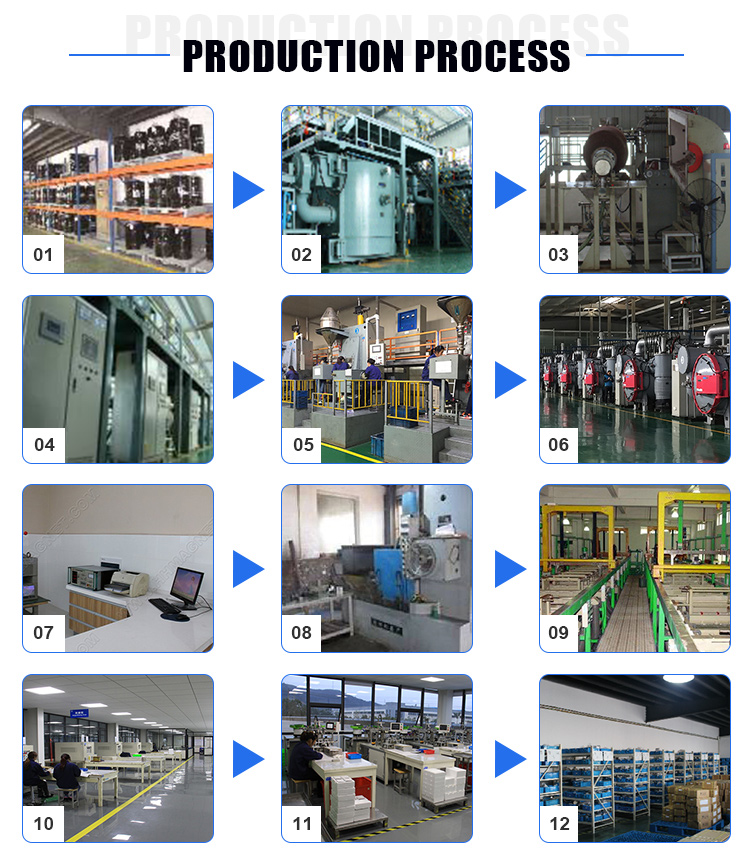
The company also runs a testing laboratory and inspection equipment alongside production, and states that parts are produced according to drawings with 100% product inspection. That combination — process breadth plus inspection at part level — is the operational core of a drawing-based service. It is also the part of a supplier's claims that a buyer should verify most directly during sample and first-article review.
Process by process: what each route implies
Process routes are not interchangeable. Each one has a natural volume band, a natural tolerance band and a set of features it produces cheaply or not at all. The table below summarises the five routes in scope and the specification the buyer must be able to supply for each.
| Process | Typical part character | Buyer input required |
|---|---|---|
| Sheet metal stamping | Flat or formed parts produced from strip or sheet in a press tool | 2D/3D drawing, material grade and thickness, flat pattern or formed geometry, estimated annual quantity |
| Sheet metal deep drawing | Hollow, cup-shaped or recessed parts formed from sheet without a machined cavity | Drawing with wall thickness and draw depth, material, surface treatment, batch size |
| Sheet metal fabrication | Brackets, frames, enclosures and welded assemblies | Assembly drawing, bend and weld specifications, finish requirement |
| CNC machining | Turned or milled shafts, housings and functional parts with tight dimensional control | Drawing with tolerances and datums, material, heat treatment, surface finish |
| Die casting | Complex thin-wall metal parts produced in a reusable mould | 3D model, alloy choice, draft and wall-thickness review, tooling quantity expectation |
Two observations follow from that table. First, tooling appears in three of the five routes, which means the buyer's quantity forecast is not a commercial detail but a technical input — it determines whether a stamping tool or a machining route is the rational choice. Second, the same part family can often be produced by more than one route, so a supplier with several processes available can advise on route selection rather than simply quoting the route the buyer happened to describe.
Materials and the magnet dimension
Material selection drives both mechanical behaviour and cost. The published material set for these parts is stainless steel, carbon steel, aluminium alloys, and copper and copper alloys; for die casting, the commonly used materials are aluminium, zinc and magnesium alloys. Automotive parts in the range use cold-rolled sheet and pickled sheet materials.
Magnets and magnetic assemblies sit inside the same component ecosystem and are specified differently, by grade rather than by drawing tolerance alone:
| Magnet family | Published grades |
|---|---|
| NdFeB | N35–AH52 |
| SmCo | SMCO5 and SM2CO17 |
| Ferrite | Y25–Y40 |
| Alnico | Alnico2–Alnico9 |
Magnetic properties add a specification layer that mechanical parts do not have: demagnetisation behaviour, dimensional tolerance, ageing, salt spray resistance, irreversible loss, magnetic flux and magnetic moment all sit alongside the mechanical drawing. For assemblies where a shaft, rotor core or housing has to be combined with a magnet, the interface between the two specification systems — mechanical tolerance and magnetic performance — is where most design iteration happens.
Quality systems and what they do and do not prove
Certification answers a management-system question, not a dimensional one. Pengsheng holds ISO 9001 and IATF 16949 quality management system certifications, together with ROHS and REACH compliance, and notes high-tech enterprise status and several industry awards. In practice this means the supplier operates documented process control, traceability and corrective-action routines — a genuine qualification threshold for automotive and export work.
It does not mean any specific part will hold any specific tolerance. That is established by drawing review, tooling capability, first-article inspection and ongoing inspection data. Buyers who treat a certificate as a substitute for a first-article report tend to discover the difference at the worst possible moment — during ramp-up.
Where these parts are used
The application spread of the category is broad, and the reason is structural: almost any machine that moves or measures contains at least one precision metal component. Published applications for this product range include automotive, medical, industrial motors, elevators, home appliances, aerospace, green energy and wind power generation, communications, electronics, instrumentation, lighting and furniture. The magnet and magnetic assembly range serves automotive, medical, industrial motor, green energy and instrumentation applications specifically.
Three application clusters illustrate how the specification pressure differs:
- Automotive. The automotive parts range includes suspension parts, accessory brackets, adjustment rods and tie rods, with model designations 51450-SV4-000, 52390-SDA-A01, 51395-T2A-A03 and 52370-TEA-T00, compatible with Honda Accord 1992–1997 fifth-generation models with 2.2 and 2.0 litre engines and chassis codes CDS, CD4, CB3 and CB7.
- Medical. A medical shaft is included among the shaft parts shown in the product media — an example of a part where surface condition and dimensional consistency matter more than cycle time.
- Industrial motors and green energy. Stator cores, rotor cores and motor housings sit at the centre of electrification demand, where lamination quality and stacking directly affect efficiency.
Project type also varies. The service supports prototype development, mould development, small-batch trial production and large-scale production, which means the same supplier may be involved at the sample stage and at series supply — a continuity that reduces re-qualification effort but requires the buyer to define from the outset which parameters are allowed to change between the two.
Custom drawing-based supply versus conventional approaches
Buyers usually compare three routes. Each has a legitimate use, and each carries a cost that is easy to miss at quotation stage.
| Route | Where it fits | Main trade-off |
|---|---|---|
| Standard catalogue parts | Proven designs, low engineering resource, immediate availability | Geometry, material and tolerance are fixed by the catalogue, so the design must adapt to the part |
| In-house machining | Confidential geometry, very low volume, rapid iteration | Equipment, tooling and skilled labour become fixed cost; capacity limits peak demand |
| Single-process subcontractor | One clearly defined operation at volume | Inter-process coordination, handling and responsibility for the finished assembly remain with the buyer |
| Multi-process custom supplier | Assemblies spanning stamping, fabrication, machining, die casting and magnetics | Requires a complete and unambiguous drawing package; the buyer's documentation quality becomes the schedule risk |
The limitation of the multi-process, drawing-based model deserves stating plainly. It depends entirely on the completeness of what the buyer submits. Quotation and technical solutions depend on the drawings, materials and order volume provided; tolerances, heat treatments and surface finishes outside the standard range, and any special material or strict certification requirement, must be confirmed in advance. A supplier cannot compensate for a drawing that omits a datum, a finish or a quantity forecast.
A pre-quotation checklist for first-time buyers
Because the specification, not the supplier, is usually the failure point, the highest-value preparation happens before the RFQ is sent. A workable package contains:
- 2D and 3D drawings with tolerances, datums and critical features identified
- Material specification, including grade and any substitution restrictions
- Surface treatment and finish requirements
- Estimated order quantity and expected annual volume, so tooling economics can be assessed
- Application and operating environment, including temperature, corrosion and load conditions where relevant
- Any certification or market-access requirement attached to the end product
Complete drawing information is what allows an accurate quotation and a meaningful technical evaluation. Where information is missing, a competent supplier will ask — and the questions asked are themselves a useful signal of process experience.
Market context and what changes next
Two verified data points frame the demand side. The precision parts market is valued at USD 98.4 billion in 2025 with metal holding 58.3% of revenue, according to Dataintelo. The narrower motor cores market — stators, rotors and housings — is valued at USD 8.7 billion in 2025, with electric-vehicle motor cores the largest segment at 38.5%. The overlap between those two figures is where much of the current investment in stamping, lamination and assembly capacity is concentrated.
Trade data adds a caution rather than a number. UN Comtrade records merchandise trade by commodity and partner, and UNdata classifies iron and steel articles under HS chapter 73, including heading 7326 for articles not elsewhere specified, with non-ferrous metals and cermets under chapter 81. These headings are classification tools, not market definitions. A single heading contains heterogeneous products, so import or export figures drawn from them should never be read as a precision-parts market total. Buyers using trade data for source-country screening should validate the six-digit code for each part family first.
Three practical shifts follow for procurement teams. Specification discipline increasingly determines who can quote at all, because multi-process suppliers price on documentation quality. Process-route advice is becoming part of the supplier's value, not an extra. And magnetic and mechanical specifications are converging in the same assemblies, which favours suppliers able to hold both disciplines rather than one.
Frequently asked questions
What are custom precision metal mechanical parts?
They are metal components manufactured to a buyer's drawing or sample rather than selected from a standard catalogue. The category covers shafts, stator and rotor cores, motor housings, stamped and deep-drawn sheet metal parts, fabricated sheet metal, CNC machined parts, die-cast parts, magnets and magnetic assemblies, and automotive parts. Because the geometry is defined by the buyer, the quotation and technical review are driven by the drawing rather than by a model number.
Which manufacturing processes are typically combined in a custom precision metal parts service?
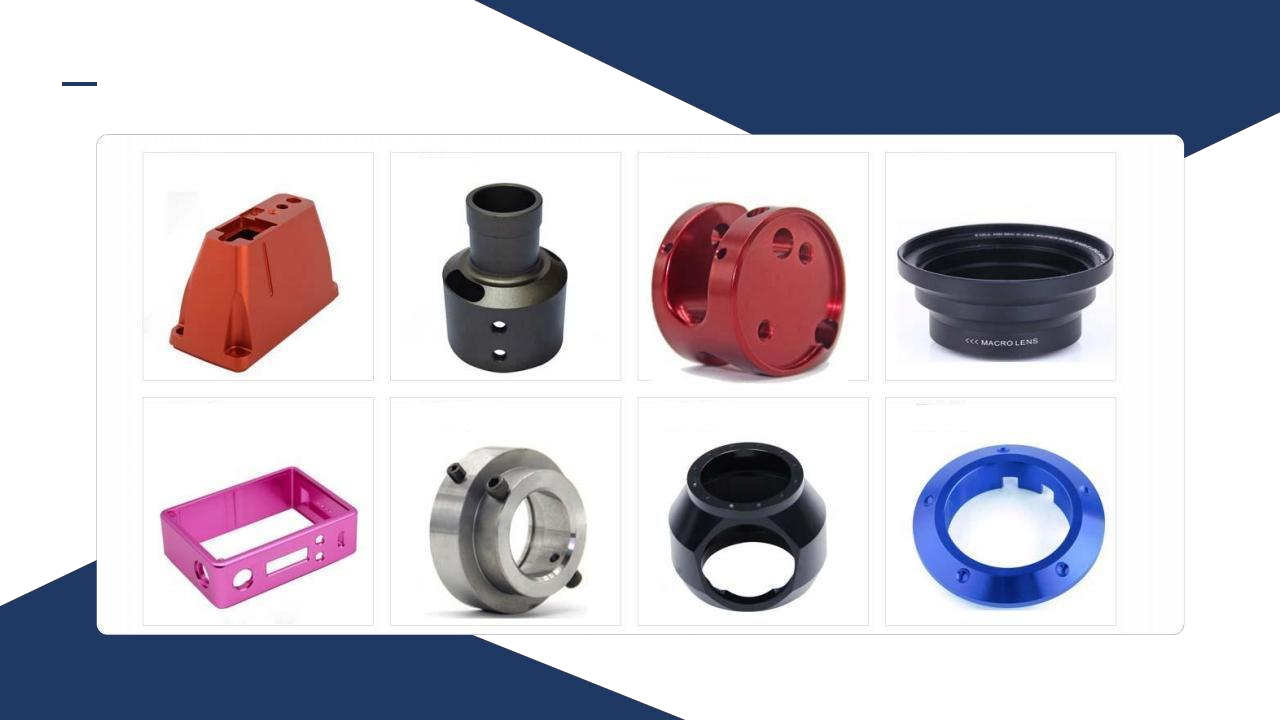
The process scope published for this offering is sheet metal stamping, sheet metal deep drawing, sheet metal fabrication, CNC machining and die casting. Part families shown in the product media include stator cores, rotor cores, motor housings and shafts, with a medical shaft included among the shaft parts. Combining several routes allows a single supplier to advise on process selection, but it also means the buyer's drawing package must be complete enough for the correct route to be identified.
Which materials are used for precision metal mechanical parts?
The published material set is stainless steel, carbon steel, aluminium alloys, and copper and copper alloys. For die casting, the commonly used materials are aluminium, zinc and magnesium alloys. Automotive parts in the range use cold-rolled sheet and pickled sheet materials. Magnetic components are specified separately by grade: NdFeB from N35 to AH52, SmCo as SMCO5 and SM2CO17, ferrite from Y25 to Y40, and Alnico from Alnico2 to Alnico9.
Can a manufacturer produce parts from customer drawings or samples, including OEM and ODM work?
Yes. The service is designed for custom manufacturing scenarios based on customer drawings or customer samples, and OEM and ODM custom processing is offered for components including sheet metal stamping, deep-drawn parts, CNC machined parts, die-cast parts and motor stator and rotor cores. It fits projects requiring mould development, prototype verification and batch production of medium-to-high-complexity parts, with quotation and solutions depending on the drawings, materials and order volume supplied.
What information is needed to obtain a quotation for custom metal parts?
The required inputs are 2D and 3D drawings, material specifications, surface-treatment requirements, estimated order quantity and the application scenario. Complete drawing information is what allows an accurate quotation and a technical evaluation; where tolerances, heat treatments or surface finishes fall outside the standard range, or where special materials or strict certification requirements apply, these are confirmed in advance.
Which industries use precision metal mechanical parts?
Published applications include automotive, medical, industrial motors, elevators, home appliances, aerospace, green energy and wind power generation, communications, electronics, instrumentation, lighting and furniture. Magnet and magnetic assembly products are specified for automotive, medical, industrial motor, green energy and instrumentation applications. The service supports prototype development, mould development, small-batch trial production and large-scale production, so the same part family may be purchased at sampling stage and at series supply.
Есть вопросы или нужны дополнительные детали?
Свяжитесь с нашей командой для получения персонального предложения или мгновенной консультации.
Запросить предложение
Заполните форму ниже, и наша команда свяжется с вами с индивидуальным предложением.
Прямой чат WhatsApp
Предпочитаете общаться в реальном времени? Напишите нам в WhatsApp для мгновенной помощи и быстрых ответов.
- Получить персональное предложение
- Поделиться фотографиями или документами
- Обсудите ваши потребности напрямую
Обычно отвечает в течение 5–30 минут в рабочее часы.