
Custom Rare Earth Compounds: What OEM/ODM Means for Biotech Buyers
Rare earth compounds are rarely off-the-shelf materials in biotech and medical innovation. Projects moving from evaluation to execution typically require specific purity, particle characteristics, and packaging formats that standard catalogs may not fully cover. For procurement teams, the practical question is whether a supplier's production capability can be adapted to project-specific requirements — a question that centers on OEM/ODM capacity.
The Gap Between Catalog Specs and Application Needs
The gap between catalog specifications and application requirements is a recurring issue in biotech sourcing. A compound that performs well in R&D may need a different purity level, crystalline form, or impurity profile when scaled to pilot or commercial production. Meanwhile, manufacturers developing diagnostics, catalysts, or pharmaceutical intermediates face pressure to maintain batch-to-batch consistency while meeting regulatory expectations.
This is where supplier capability — not just product availability — becomes the deciding factor. Buyers need to verify whether a manufacturer can adjust indicators, contents, specifications, purity, and packaging without disrupting the supply chain. In an industry where material consistency directly affects process outcomes, the ability to customize is not a convenience; it is a procurement criterion.
What OEM/ODM Capability Looks Like in Practice
Sichuan Wonaixi New Materials Technology Co., Ltd. (brand: WONAIXI), founded in 2012, is a professional manufacturer of rare earth functional materials. The company operates from a 46,667 m² facility in Leshan, Sichuan Province, China, and holds certifications as a National High-Tech Enterprise and Sichuan Provincial SRDI Enterprise.
WONAIXI's production system is built around two dedicated product lines: high-purity rare earth salts with an annual capacity of 15,000 tons, and high-precision rare earth polishing powder with an annual capacity of 3,000 tons. In total, the company supplies 9 major categories of rare earth products plus a complete zirconium salts series, covering over 50 refined specifications.
For buyers evaluating custom supply arrangements, the company offers:
- OEM and ODM production services globally
- Customization of indicators, contents, specifications, purity, and packaging
- R&D support from a 12-engineer technical team
- 100% testing and pre-shipment inspection before delivery
- Export reach across the United States, Japan, South Korea, France, Italy, Thailand, Australia, Pakistan, Spain, Germany, India, and Austria
These elements define what capability means in practice: not just the product range, but the technical and operational capacity to adapt it to a specific process.
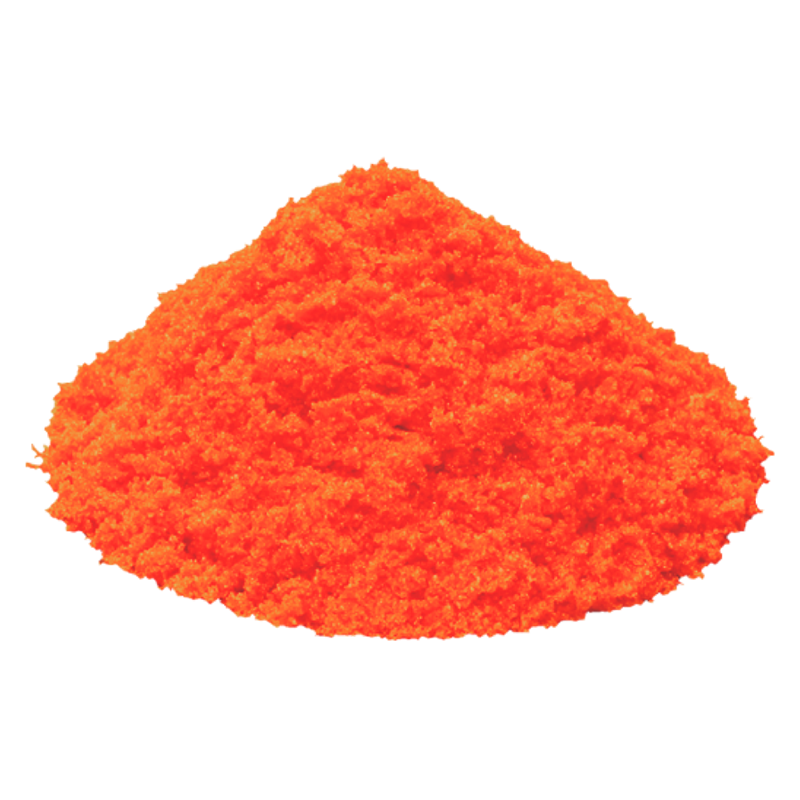
Electronic grade cerium ammonium nitrate is one of the most specification-sensitive rare earth compounds used in biotech and electronics applications.
Technical Dimensions of Customization
Customization in rare earth chemistry is not limited to packaging changes. It involves adjusting synthesis parameters to achieve the required specification for a target application. A relevant example is electronic grade ammonium cerium(IV) nitrate (Ce(NH4)2(NO3)6, CAS 16774-21-3). This compound functions as a polishing agent and etching agent in LCD display production, as a catalyst in the pharmaceutical industry, and in the synthesis of automotive three-way catalysts. For pharmaceutical and electronics applications, the purity and impurity profile of the material directly affect downstream performance.
Another example is cerium hydroxide (Ce(OH)4, CAS 12014-56-1), used in the glass industry as a clarifying and decolorizing agent and to enhance UV protection. The functional result depends on precise control of precipitation conditions during manufacturing. A supplier that can adjust such parameters under a documented quality system is better positioned to support application-specific requirements.
WONAIXI operates under an ISO 9001 quality management system, certified by CFL Certification Center (certificate number 06526Q01354R101), covering the manufacturing and sales of electronic special rare earth functional materials including cerium salts and lanthanum oxide. The standard applied is GB/T19001-2016/ISO9001:2015. This provides a documented framework for handling custom specifications with traceable process control.
Application Areas for Custom Rare Earth Compounds
Custom rare earth compounds produced by WONAIXI are applied across multiple segments relevant to biotech and medical innovation. The table below summarizes representative compounds and their functional roles.
| Application Field | Representative Compounds | Function |
|---|---|---|
| Pharmaceutical intermediates | Anhydrous lanthanum chloride (LaCl3), anhydrous cerium(III) chloride (CeCl3) | Raw materials for pharmaceutical intermediate synthesis |
| Catalysis | High purity lanthanum carbonate, cerium acetate, lanthanum acetate | Automotive exhaust purification and three-way catalyst manufacturing |
| Electronics and optics | Electronic grade ammonium cerium(IV) nitrate, praseodymium-neodymium fluoride | LCD polishing and etching; high-performance optical lenses |
| Analytical reagents | Ammonium cerium(IV) sulfate, ceric sulfate | Oxidation-reduction titration reagents |
| Glass and ceramics | Cerium hydroxide, cerium oxide | Clarification, decolorization, UV protection enhancement |
For each of these applications, the value of OEM/ODM lies in matching the compound's specification to the target process, rather than adapting the process to a fixed catalog product.
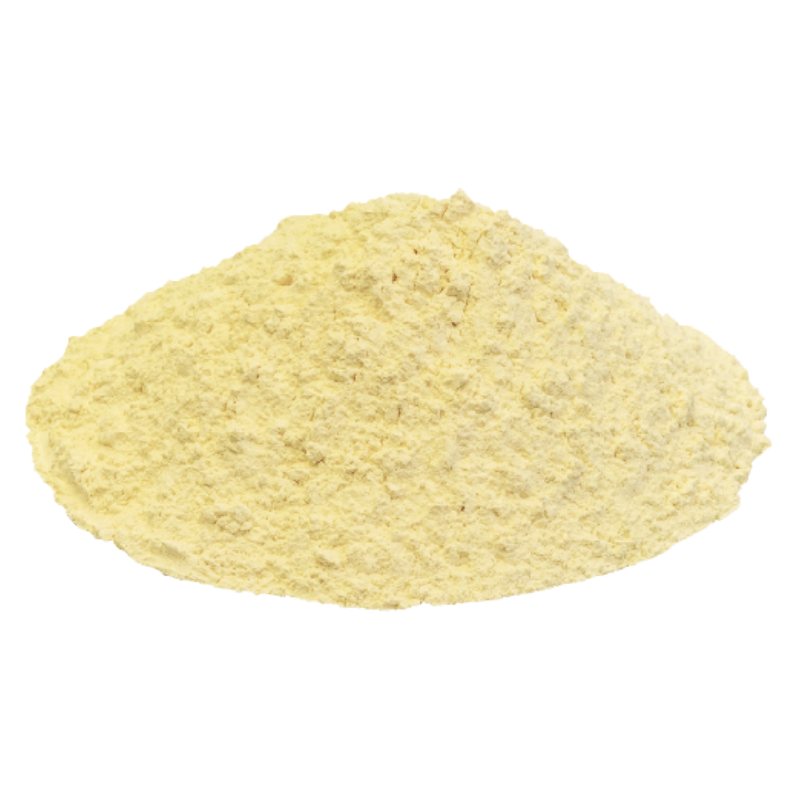
Cerium hydroxide is applied in glass clarification, decolorization, and UV protection enhancement — functions that depend on controlled precipitation conditions.
Market Context: Demand for Specialized Compounds Is Expanding
The broader market context supports the demand for customized rare earth materials. According to Grand View Research, the global rare earth elements market was valued at approximately USD 3.95 billion in 2024 and is projected to reach USD 6.28 billion by 2030. China's rare earth exports reached 62.6 thousand metric tons in 2025, a rebound from 55.4 thousand metric tons in 2024, according to Statista/China Customs.
At the specialized compound level, the global ceric ammonium nitrate (CAN) market — relevant to both biotech reagents and electronics etchants — was valued at USD 162 million in 2023 and is expected to grow at a CAGR of 7.8%, reaching USD 274 million by 2030, according to Persistence Market Research. High-purity electronic grade CAN is a primary material for photomask and LCD production, with Asia Pacific identified as the fastest-growing region for these compounds by IMARC Group.
These trends indicate that demand for functionally tailored rare earth compounds is expanding in both breadth and specificity. For procurement teams, this shifts the evaluation focus from price-per-kilogram to capability-per-specification.
How OEM/ODM Compares with Standard Catalog Sourcing
Compared with buying standard catalog products from a trading intermediary, working with a manufacturer that offers OEM/ODM customization provides several structural advantages: direct technical support, flexible adjustment of production parameters, and more transparent quality control.
However, the boundaries should be clear. Custom production typically involves a lead time of 30–45 days, and minimum order quantities are communicated based on actual circumstances. For buyers needing immediate delivery of standardized, high-volume generic compounds, a trading company holding local inventory may offer faster fulfillment. Customization also requires buyers to invest time in specification alignment and acceptance criteria — a step that is often unnecessary for off-the-shelf purchases.
In other words, OEM/ODM capability is most valuable when the application demands it. For fully standardized needs, the additional lead time and coordination cost may not be justified.
Future Outlook for Biotech-Driven Rare Earth Sourcing
The trajectory for biotech and medical innovation points toward more specialized material requirements. As projects advance from research to clinical and commercial stages, the demand for reproducible, high-purity, application-specific rare earth compounds is expected to grow. Suppliers with documented quality systems, in-house R&D capacity, and flexible production will be better positioned to support this transition.
For buyers, the implication is straightforward: capability assessment deserves the same rigor as product qualification. Understanding what a manufacturer can adjust — and under what quality framework — is becoming an integral part of rare earth procurement.
Frequently Asked Questions
Q: What customization options does WONAIXI offer for rare earth compounds?
A: WONAIXI offers OEM and ODM production services globally, with customization covering indicators, contents, specifications, purity, and packaging.
Q: Does WONAIXI have in-house R&D support for custom compound projects?
A: Yes. The R&D team consists of 12 engineers. The company is certified as a National High-Tech Enterprise and Sichuan Provincial SRDI Enterprise.
Q: What is the typical lead time for custom rare earth compound orders?
A: The lead time is 30–45 days from order confirmation, based on the manufacturer's stated production scheduling.
Q: How does WONAIXI ensure quality before shipment?
A: Products are subject to pre-shipment inspection and pre-shipment testing before delivery to verify conformity. The company applies 100% testing in its quality control process.
Q: What quality management system does WONAIXI operate under?
A: WONAIXI holds ISO 9001 certification (certificate number 06526Q01354R101), covering the manufacturing and sales of electronic special rare earth functional materials. The certification is valid through May 31, 2029.
Q: What are WONAIXI's main export markets?
A: Export markets include the United States, Japan, South Korea, France, Italy, Thailand, Australia, Pakistan, Spain, Germany, India, and Austria.
Q: What is the minimum order quantity (MOQ) for custom orders?
A: MOQ is communicated according to the actual situation, meaning it is negotiated based on the specific product, specification, and project requirements.