
Custom Shopping Bag Orders: MOQ, Lead Time, Customization
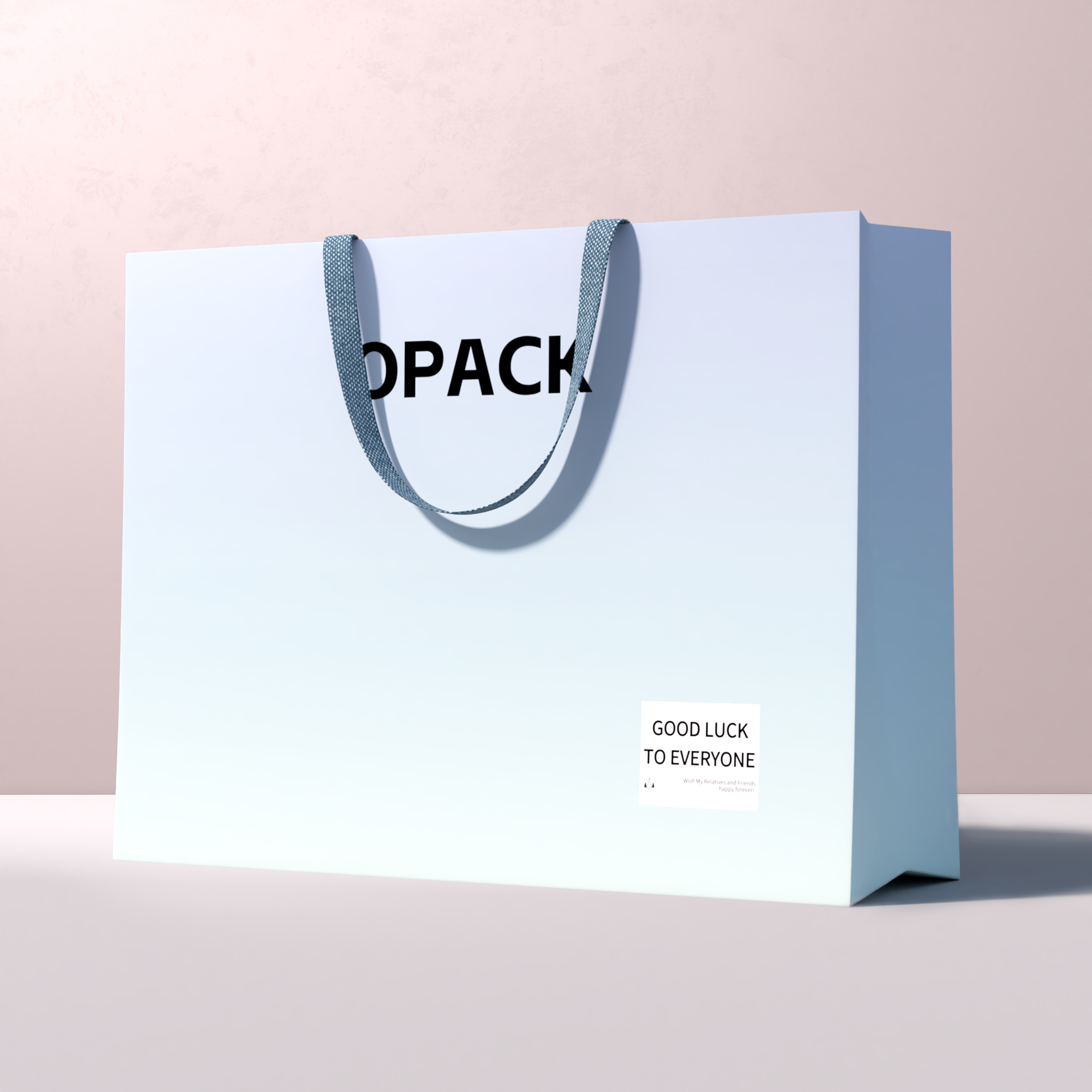
Custom shopping bag programs are quoted against three variables: order minimum, production and delivery window, and customization depth.
Custom shopping bags are a packaging category in which the brand argument is usually settled before the purchase order is written. What actually decides an order is narrower and more technical: the minimum quantity a factory will accept, how long production and delivery take, and how deeply the bag can be customized across logo, size, color, material, and finishing.
Opack is a custom packaging manufacturer based in Longgang, Wenzhou, Zhejiang, China, founded in 2010, operating a 10,000 m² facility with 160 employees and an annual output of 10,000,000 units, of which roughly 80% is exported to the EU, USA, and Middle East. Custom shopping bags are offered alongside rigid boxes, folding cartons, mailer boxes, and paper tubes. This reference answers the sourcing questions that decide custom bag orders, using the company's published terms and third-party category data.
Why minimum order quantity, lead time, and customization depth decide the order
Each of the three questions controls a different part of the business case. Minimum order quantity sets the cash commitment and the inventory that has to be stored. Lead time sets whether the bags will be on the retail floor before a campaign, a season change, or a gift period begins. Customization depth decides whether the bag can carry a logo, match a brand color, hold a given product weight, and survive being carried out of the store.
Published supplier terms in this category are not uniform, which is why buyers compare them carefully. Opack's public FAQ cites a typical minimum of 500 pieces for wholesale custom paper bags and about 7 to 15 business days for paper bags, while its blog cites 12–18 day lead times for custom shopping bag programs. A United States supplier, Teal Packaging, publishes a starting point of 50 units and production from about 7 business days after proof approval. Third-party analysis of these publicly stated terms concludes that the category segments between small-batch sourcing options and higher-minimum production options, so order size and urgency can be used to shortlist suppliers.
The practical lesson is that a number on a website is only useful when the basis behind it is known. A minimum may apply per design, per size, or to the total order quantity. A lead time may run from deposit, from artwork sign-off, or from proof approval, and may or may not include inspection and dispatch. Those distinctions are where most scheduling problems originate.
Published Opack parameters at a glance
| Parameter | Published figure | Source of the statement |
|---|---|---|
| Minimum order quantity | Usually 500 pieces for wholesale custom paper bags | Opack FAQ page |
| Production time | About 7 to 15 business days for paper bags | Opack FAQ page |
| Lead time for custom shopping bags | 12–18 days | Opack blog |
| Load rating | Specified for 2 to 15 kg, load-tested before production | Opack blog |
| Customization scope | Size, shape, material, printing, and finish | Opack About page |
| Color control | Spectrophotometer monitoring, color difference controlled to about ΔE 1.5 | Opack quality control documentation |
| Annual output | 10,000,000 units | Company profile |
| Export share and markets | About 80% exported to the EU, USA, and Middle East | Company profile |
How a minimum order quantity is actually built
A minimum order quantity is not a policy number pulled from a price list. It is the quantity at which the fixed steps in production stop dominating the unit cost. Those fixed steps include plate or die preparation, print setup, handle assembly, and the way paper stock is purchased in usable run lengths.
Material choice moves the minimum as well. In the same category, Cubit Packaging states that paper bags are manufactured from kraft paper at 70 to 170 GSM, art paper, and recycled paper with 80 to 100 percent post-consumer content. Heavier stocks consume more material per bag and change how the bag body and handle are constructed, which in turn changes how small a run remains practical.
For a buyer, four clarification questions resolve most of the ambiguity around a quoted minimum: Does the figure apply per design, per size, or to the total order? Does it include print setup and die preparation? Does changing the paper stock or handle type reset the minimum? And can several sizes be combined into one production batch to reach the threshold?
Where lead time goes: from proof approval to dispatch
Lead time in custom bag production is a chain of dependent steps rather than a single processing period. In outline: artwork preparation and proof approval, material allocation, printing, converting and handle assembly, load and durability testing, in-process inspection, final inspection, packing, and freight movement.
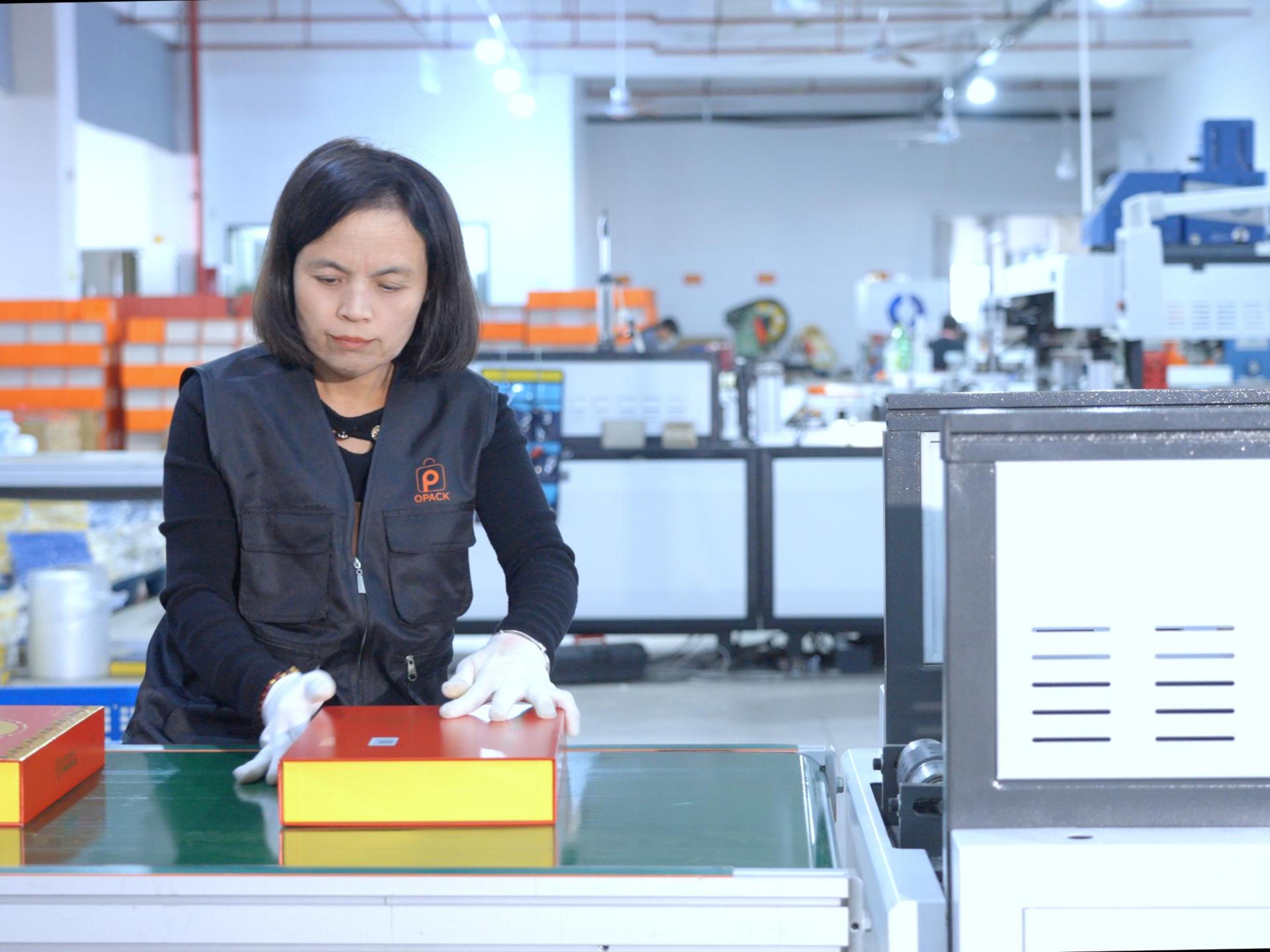
Inspection and load testing sit inside the production window, not after it, which is why buyers should confirm what a quoted lead time includes.
Opack's published quality control measures describe load-bearing and durability testing before production to verify handle strength, paper durability, and structural stability, along with in-process inspections during printing, final inspection before shipment, and batch-by-batch verification. Color is monitored with spectrophotometers, and the color difference is controlled within approximately ΔE 1.5, a level described as nearly imperceptible to the human eye.
Two published Opack figures describe timing: about 7 to 15 business days for paper bags, and 12–18 day lead times for custom shopping bag orders. The two figures are best treated as planning windows rather than guarantees, and the difference between them is worth clarifying with the supplier. A buyer should ask whether the quoted window starts at deposit, at artwork approval, or at proof approval, and whether it ends at dispatch or at delivery.
Customization depth, option by option
Opack states that every product is fully customizable in size, shape, material, printing, and finish. Widening the view to the category, other suppliers publish a comparable range of construction and finish options: kraft, shopping, and euro tote styles with die-cut, twisted, or flat handles from Cubit Packaging; rope handles with matte or gloss finish and in-line flexographic, hot stamping, or post-printing from MrTakeOutBags; and printing that can wrap the bag inside and out from Gouda Inc.
| Customization dimension | Options reported in the category | What to confirm at quotation |
|---|---|---|
| Logo and branding | Printing and finish fully customizable; offset, flexographic, UV printing, hot stamping; inside and outside printing available | Number of colors, print coverage, single or double-sided printing, artwork format |
| Size and shape | Fully customizable size and shape | Whether a new size requires a new die and whether it changes the minimum |
| Color | Spectrophotometer-monitored output, ΔE about 1.5 | Color reference system used, and the tolerance accepted for brand colors |
| Material | Kraft paper 70–170 GSM, art paper, recycled paper at 80–100% post-consumer content; FSC-certified material options and water-based inks | Grammage, recycled content, and certification documents required for the destination market |
| Handles | Die-cut, twisted, flat, rope, reinforced handles | Intended load, since handle type and attachment are matched to carried weight |
| Finishing | Matte or gloss, hot stamping, UV, post-printing | Whether a physical sample or approved proof is required before mass production |
Depth of customization has a second dimension that buyers often discover late: each added option interacts with the others. A heavier stock plus a rope handle supports more weight but increases material cost. Full-surface printing plus a matte finish changes how the color reads. Specifying the load and the brand requirement first, then the print and finish, usually produces a shorter and cheaper quotation cycle.
Where custom shopping bags are used, and how specification follows the scenario
Custom shopping bags are typically specified for cosmetics retail, apparel stores, gift packaging, trade shows and events, and e-commerce stores. The scenario generally determines which of the three sourcing questions becomes binding.
In apparel retail, load and handle strength dominate, because bags are carried through streets and stacked in cars; Opack specifies its custom shopping bags for 2 to 15 kg loads with load testing before production. In cosmetics and gift packaging, color accuracy and finish carry more weight, since the bag is often kept rather than discarded, and the ΔE 1.5 control level becomes relevant. In trade shows and events, the constraint is usually the calendar, so a 12–18 day lead time and the minimum quantity have to be scheduled backwards from the event date. In e-commerce, the bag often becomes part of an unboxing sequence, which increases the value of print coverage and finishing options.
Market signals that are reshaping bag specifications
Three third-party data points frame the sourcing environment. Zion Market Research values the global market for paper-based consumer bags at USD 5.29 billion in 2023. The same source projects a CAGR of 13.8% through 2034 for the premium price segment, described as bags with custom designs, high grammage paper, reinforced handles, and FSC or PEFC certification. Separately, FSC states that its certification is the primary industry standard for sustainable sourcing of paper bags and is recognized by 56% of consumers worldwide.
Regulation is moving in the same direction. Dataintelo reports that the EU Deforestation Regulation, effective in 2025, mandates traceability of paper packaging back to geolocated forest plots. Industry analysis connects these two signals: growth in the premium segment raises the value of specification-led sourcing, while traceability requirements raise the documentation burden attached to every order. In practice, the minimum order quantity and lead time questions now arrive alongside a third question about which papers and certifications can be documented for the destination market.
Custom bags compared with plain bags: the trade-off in numbers
The most common comparison a buying team makes is between custom shopping bags and plain, unprinted bags. The published comparison data puts custom bags at 3% to 10% higher initial cost than plain bags, with the difference attributed to full customization, higher brand visibility, and a more memorable unboxing experience. On the return side, the same comparison reports 20% to 30% higher repeat purchase rates for custom bags, along with 10% to 30% improvement in customer satisfaction, 5% to 15% increase in customer referrals, and 5% to 10% more social media shares.
Physical performance differs as well. Custom bags are described as using more sturdy paperboard, durable printing, and reinforced handles, with less tearing and handle breakage during repeated use. The environmental profile includes FSC-certified materials and water-based printing inks, and the bags are described as fully recyclable after service life.
Boundaries buyers should plan around. The 3% to 10% cost premium is an initial-cost premium per order, so it is amortized only if the bags are used repeatedly or if the program runs across more than one season; a single, one-off event rarely justifies a fully customized print run on cost grounds alone. The minimum order quantity is another real constraint: Opack's published figure of about 500 pieces for wholesale custom paper bags means very small pilots, sample-only runs, and last-minute top-ups are not practical through a standard custom line, and plain stock bags remain faster and cheaper to obtain in those situations. Lead time is a third boundary: 12–18 day lead times exclude rush campaigns unless the supplier confirms otherwise in writing. Finally, performance itself is bounded — Opack specifies its bags for 2 to 15 kg loads, so heavier contents require a different construction rather than the same bag. Color consistency is controlled rather than absolute, at approximately ΔE 1.5.
A balanced reading is that custom shopping bags are a repeatable, specification-driven purchase, and their economics depend on order size, reuse, and how early in the planning cycle the decision is made.
How commercial and technical questions are handled
Opack lists several channels for procurement communication: website chat, WhatsApp at +86 15968809016, telephone at +86 17366633702, and email at sales@opack.com. For buyers, the channel matters less than the format of the first message. A request that states destination market, target quantity, bag size, paper stock preference, handle type, print requirement, and required delivery date usually receives a usable quotation in one exchange rather than three.
Future outlook
If the premium segment continues to grow at the projected 13.8% CAGR through 2034, procurement conversations about custom shopping bags will shift further toward documentation and specification rather than unit price alone. Recycled content, FSC documentation, water-based inks, and traceability records are becoming part of the qualification package rather than optional extras.
On the operational side, minimum order quantity and lead time are likely to remain the two figures that decide whether a bag program launches on schedule. Manufacturers with higher output capacity and in-house quality control can absorb specification changes more predictably; buyers who treat MOQ, lead time, and customization depth as one combined planning problem, instead of three separate questions, will find the sourcing cycle shorter.
FAQ
What is the minimum order quantity for custom shopping bags?
Opack's published FAQ states that the minimum order quantity for wholesale custom paper bags is usually 500 pieces. Minimums in this category are not uniform: Teal Packaging, a United States supplier, advertises custom paper shopping bags starting at 50 units. Because suppliers quote minimums on different bases, buyers should confirm whether a figure applies per design, per size, or to the total order quantity, and whether a quantity such as 1,000 pieces would be counted against the whole order rather than against each individual size.
How long does a custom shopping bag order take to produce and reach the EU, USA, or Middle East?
Opack publishes two timing references. Its FAQ states that paper bags usually take around 7 to 15 business days, while its blog cites 12–18 day lead times for custom shopping bag orders. Opack's export profile is around 80% of output shipped to the EU, USA, and Middle East. Because a quoted window can start at deposit, at artwork approval, or at proof approval, and can end at dispatch or at delivery, buyers should confirm the start and end point in writing.
What can be customized on a shopping bag — logo, size, color, material, and finishing?
Opack states that every product is fully customizable in size, shape, material, printing, and finish. Across the category, suppliers report logo printing through offset, flexographic, UV printing, and hot stamping; handle options including die-cut, twisted, flat, and rope; kraft paper in the 70–170 GSM range, art paper, and recycled paper with 80 to 100 percent post-consumer content; and matte or gloss finishes. Color consistency is monitored with spectrophotometers, with color difference controlled to approximately ΔE 1.5.
How much more do custom shopping bags cost than plain bags?
Published comparison data places custom shopping bags at 3% to 10% higher initial cost than plain shopping bags, attributed to full customization, higher brand visibility, and a more memorable unboxing experience. The same comparison reports 20% to 30% higher repeat purchase rates, 10% to 30% improvement in customer satisfaction, 5% to 15% more customer referrals, and 5% to 10% more social media shares. These are relative indicators rather than unit prices; landed cost depends on quantity, material, print coverage, and freight.
What weight can a custom shopping bag carry?
Opack specifies its custom shopping bags for 2 to 15 kg loads and states that load-bearing tests are conducted before mass production to verify handle strength, paper durability, and structural stability. Verification also includes in-process inspections during printing, final quality inspection before shipment, and batch-by-batch checks. Heavier contents require a different construction rather than a higher rating applied to the same bag.
Which channels does Opack use for procurement questions?
Opack lists four communication channels: website chat, WhatsApp (+86 15968809016), telephone (+86 17366633702), and email (sales@opack.com). The company profile states that it has served clients since 2010 and that around 80% of output is exported, which is why enquiries are typically handled across time zones through these channels rather than through a single regional office.
Reference material
Opack's company profile is publicly available for download: Company profile (PDF).
This reference compiles publicly published supplier terms and third-party category research. Published supplier figures are self-reported and should be confirmed in a written quotation before an order is placed.
Есть вопросы или нужны дополнительные детали?
Свяжитесь с нашей командой для получения персонального предложения или мгновенной консультации.
Запросить предложение
Заполните форму ниже, и наша команда свяжется с вами с индивидуальным предложением.
Прямой чат WhatsApp
Предпочитаете общаться в реальном времени? Напишите нам в WhatsApp для мгновенной помощи и быстрых ответов.
- Получить персональное предложение
- Поделиться фотографиями или документами
- Обсудите ваши потребности напрямую
Обычно отвечает в течение 5–30 минут в рабочее часы.