
Custom Shopping Bags in Context: Matching Bags to Project Scenarios
Custom shopping bags are not one product category. They are a project decision. For retail, apparel, cosmetics, gifting and e-commerce programmes, the right custom shopping bag depends on the goods it must carry, the brand experience it must support and the storage or transport conditions it will meet. This industry reference explains how buyers can match custom shopping bags to project scenarios, and what to verify before moving from evaluation to order.
A buyer entering a packaging project might search for custom shopping bags, custom printed paper bags or custom paper bags with logo. Behind these search terms is a practical question: which bag format suits our shops, our products and our budget? The answer is rarely found in a single sample photo. It is found by mapping every project requirement to material, construction, printing, handles and quality control.
Opack, a custom packaging manufacturer based in Longgang, Wenzhou, often sees this question in its own specifications. The company was founded in 2010 and produces custom packaging, custom rigid boxes, custom shopping bags, custom folding cartons and custom mailer boxes, mainly for export to the EU, the USA and the Middle East. Its shopping bag model family PSB includes kraft paper, whiteboard paper, specialty paper and coated paper options, with a minimum order quantity of 1,000 units. These are practical facts that a buyer can evaluate. They do not make one bag automatically correct; they make it possible to compare options against project need.
Why project context changes the bag specification
A plain bag and a custom shopping bag can look similar at first glance. The difference appears in usage. A lightweight boutique may need a small bag with a printed logo and a comfortable cotton rope handle. A fashion retailer handling folded garments may need a larger bag with a stable twisted paper handle. A cosmetics brand may require strong colour accuracy, soft-touch lamination and hot-stamping details to align with premium packaging. A promotional team may plan a one-off event and may prefer an economical stock design that can be produced quickly.
If the bag specification is set before the use case is understood, the project usually suffers in one of two ways. The bag may be over-engineered, adding unnecessary unit cost. Or it may be under-specified, leading to tears, weak handles, poor print reproduction or inconsistent colour across repeated orders. In both cases, the actual problem is not paper quality alone. It is a mismatch between the product and its environment.
For procurement teams, the more useful question is not “which custom shopping bag is best” but “which custom shopping bag fits this application”. The fit includes packaging and branding objectives, the type of product, the expected load, the delivery route and the visual finish expected by the end customer.
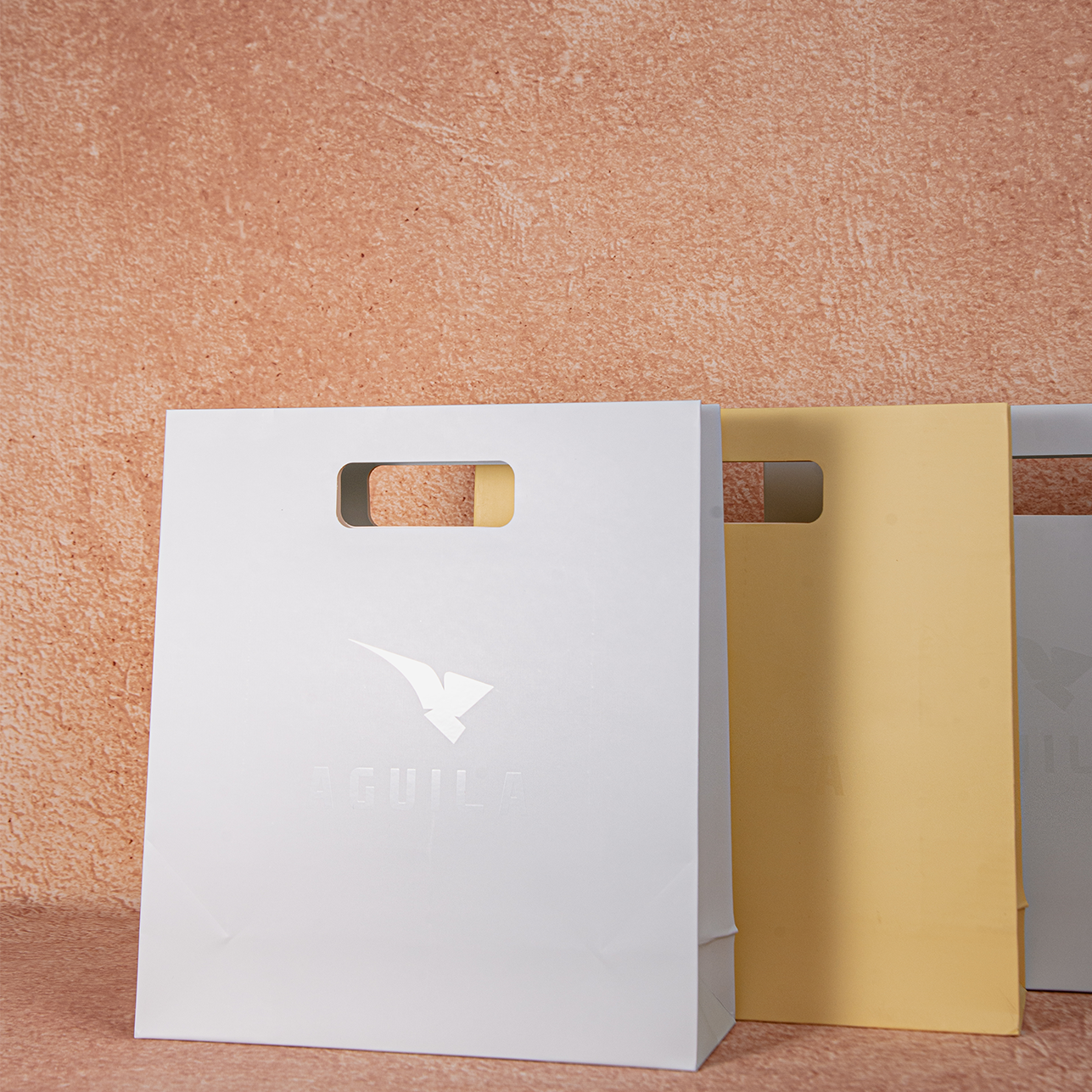
Project scenarios commonly served by custom paper shopping bags
According to the product specification data for Opack’s custom shopping bag range, this packaging type is suitable for product packaging and branding projects across cosmetics packaging, apparel packaging, retail packaging, gift packaging, trade shows and events, and e-commerce packaging. These scenarios are broad, but each places a different priority on the bag’s design.
| Project scenario | Typical purchase concern | Bag direction to evaluate |
|---|---|---|
| Cosmetics and personal care | Smaller items, brand colours, luxury finishes, in-store display, gifting | Whiteboard or coated paper, Pantone printing, soft-touch lamination, cotton rope or ribbon handles, hot stamping or foil accents |
| Apparel and fashion retail | Folded garments, larger formats, repeated customer handling, strong brand presence | Kraft or coated paper in large sizes, twisted or flat paper handles, sturdy side gussets and base structure |
| Gift shops and branded gifting | Presentation quality, custom messaging, supporting tags and stickers, seasonal campaigns | Specialty papers, ribbon handles, embossing or debossing, custom hang tags and matching stickers |
| Retail boutiques and general stores | Everyday durability, clean printing, consistent logo reproduction across batches | Coated or kraft bags, offset or screen printing, CMYK or Pantone matching, strong handle anchoring |
| Trade shows and events | Carrying brochures, samples and purchases, quick recognition of the brand | Medium or large bags, large printed area, reinforced handles, efficient flat-packing and easy storage |
| E-commerce and subscription brands | Protection through delivery, brand unboxing, lighter or heavier shipments depending on category | Kraft or coated bags with sufficient weight capacity, secure handles, lightweight but strong paper structure |
This table is not a rigid formula. It is a starting framework. Final decisions should be made with a supplier that can show real production samples and explain how each construction detail changes performance.
Technical elements that define project fit
Materials and weight capacity
The bag material usually drives both appearance and physical performance. Kraft paper provides a natural, often earthy look that is widely used for apparel and retail bags. Whiteboard paper and coated paper offer a smoother surface and brighter print results. Specialty paper adds texture and a more premium feel for luxury or gifting projects.
The documented weight range for Opack’s custom shopping bags is 2–15 kg, depending on paper thickness and structural design. This is an important project parameter. A project carrying light cosmetics may need only a small bag. A retail project selling heavy books, shoes or bulk items should verify that both paper grammage and handle construction support the intended load. Buyers should state the heaviest expected product, not the average weight, when requesting samples.
Printing and finishing methods
Printing choices affect brand fidelity and cost. The PSB range supports CMYK printing, Pantone printing, UV printing, offset printing and screen printing. These methods are suited to different artwork types, order quantities and colour requirements. For example, Pantone printing helps maintain a specific brand colour, while offset printing is commonly used for high-volume, high-detail graphics.
Finishing options include hot stamping, spot glossy UV, soft-touch lamination, holographic foiling, embossing, debossing, matte lamination and gloss lamination. In a project context, these options are not mere decoration. Hot stamping and soft-touch lamination are often used in cosmetics and luxury retail. Embossing and debossing can add a subtle tactile identity. Matte lamination reduces glare, while gloss lamination increases surface protection and colour brightness.
Handle options and user behaviour
A handle is part of the product experience. Paper twisted handles are common for medium and large shopping bags. Flat paper handles provide a clean, printable surface. Cotton rope handles are often used for premium or gift bags. Ribbon handles add a feminine or decorative feel. Die-cut handles create a simple, integrated bag without additional material.
The right handle depends on carrying weight, walking distance and brand tone. A bag may appear beautiful, but if the handle separates from the body under realistic shopping conditions, the brand experience fails. Buyers should always request a handle drop test or physical sample check before full production.
Supporting accessories
Many shopping bag projects include supporting equipment such as custom handles, custom stickers and custom hang tags. These accessories help unify the packaging system. For example, a boutique may use the same logo on its bag, sticker seal and swing tag. A gift brand may add a small branded tag to explain the material or the product story. Buyers should plan these extra items early because they affect the final look and require separate production steps.
Operating conditions and storage boundaries
Custom paper shopping bags operate in a dry environment for storage and shipping. The product is designed to avoid long-term high humidity, direct sunlight, rain soaking and chemical contact. This boundary is relevant to real projects. Retail bags stored in a damp warehouse, loaded in open vehicles or exposed to rain at an outdoor event may lose strength or show print defects.
For brands operating mainly in-store or in controlled e-commerce fulfilment environments, this is generally not a barrier. For outdoor markets, beachfront retail or prolonged outdoor display, paper shopping bags must be chosen more carefully or protected during storage. A clear understanding of these conditions prevents unrealistic expectations and reduces quality disputes later.
Supplier capability as a project fit factor
Made-to-order shopping bags require measurable production capability. Buyers evaluating custom printed paper shopping bags should look for evidence that a factory can handle the order’s material, decoration, handling and quality-control requirements consistently.
Opack can serve as a working reference point. The company is located in Longgang, Wenzhou, an area active in printing and packaging production. Its facility covers 10,000 m² and employs roughly 160 people, including a dedicated R&D team. The company reports an export ratio of about 80%, with main markets in the EU, the USA and the Middle East. This export orientation means its quality and packaging standards are already structured for international buyers.
For custom shopping bags, Opack states a product model type of PSB with a minimum order of 1,000 units. Its monthly capacity for custom packaging production is 1,000,000 units. Typical lead time is 12–18 days. Every product receives a 100% quality check before shipment. These figures are useful during evaluation because they give a buyer a measurable baseline for MOQ, capacity and delivery planning.
The company’s customization range includes logo, brand name, colour, size, style, finishings, printing methods and material. This lets a buyer adjust almost every element of a bag to the project. The after-sales support structure includes real-time online chat, WhatsApp, telephone and official email, which matters for long-distance purchasing decisions.
Project evidence from a Panama buying relationship
A documented buyer case from Panama shows how custom shopping bags behave in a sustained sourcing relationship. A brand owner in the fashion and lifestyle segment used Opack for its own packaging system, including retail packaging, gift packaging and promotional packaging. The order across one year included more than 30,000 paper bags, more than 3,000 paper boxes and more than 10,000 stickers. Total annual purchase value was above USD 12,000.
The case is relevant because it involved repeated production batches, not a single sample order. The buyer evaluated packaging quality, printing consistency and production reliability. The reported outcome included consistent print quality across batches, stable lead times, smooth communication and zero after-sales complaints. For a buyer in the evaluation stage, this type of evidence helps answer a practical question: can the supplier maintain the same visual standard from the first order to a later reorder?
Custom shopping bags versus plain or generic paper bags
Custom shopping bags are often compared with plain paper bags or generic stock bags. The comparison is not about which option is universally better. It is about what a particular project needs.
| Comparison point | Custom shopping bag with logo | Plain or generic paper bag |
|---|---|---|
| Brand identity | Allows logo, brand name, custom colour and finishing | Limited or no brand presentation |
| Project fit | Material, size, handle and load can be aligned to the product | Usually available in fixed sizes and standard materials |
| Order planning | Requires specification, proofing and production lead time | Can be sourced faster if stock is available |
| Unit cost | Higher unit cost due to customisation and finishing | Typically lower unit cost for standard designs |
| Minimum order | Typically project-based; Opack MOQ is 1,000 units | Can be very low if buying available stock |
| Consistency | Depends on supplier quality control and colour management | Consistent within a standard product line but not brand-specific |
There is also a real limitation of custom shopping bags. They are not always the best answer for a very small pilot, an urgent event or a project with an unconfirmed specification. The 1,000-unit minimum order and a 12–18 day production period mean custom bags require planning. A buyer who needs 200 bags tomorrow may reasonably choose a generic stock bag. Custom shopping bags are most valuable when a brand wants repeatable visual identity and has enough order volume or long-term demand to justify the setup.
Another boundary is environmental exposure. Custom paper shopping bags should be stored and used under dry conditions, avoiding long-term high humidity, direct sunlight, rain soaking and chemical contact. This is not a fault of the bag type; it is a physical property of paper-based packaging. Project teams should include this condition in their internal storage plans.
Market context and procurement trends
The direction of demand supports the move toward more considered shopping bag purchasing. A 2024 market assessment by Grand View Research valued the global paper bags custom printing market at USD 2.78 billion and projected growth at a CAGR of 13.9% through 2030. This growth reflects greater use of printed paper bags as a form of brand communication, not only as a carrying tool.
The broader paper bag category shows a similar pattern. MarketsandMarkets estimated the overall paper bags market at USD 6.06 billion in 2024, with expectations of growth to USD 7.81 billion by 2029. Material preferences also matter. Future Market Insights projected that brown kraft paper would hold roughly a 58% share of total material demand by 2026, reflecting the continued popularity of natural, recyclable-looking packaging.
Regionally, Asia Pacific was identified as the largest paper bag market in 2025, accounting for more than 36.5% of global share, according to IMARC Group. China is also the world’s leading exporter of paper sacks and bags, with exports valued at approximately USD 1.91 billion in 2023, according to UN Comtrade/WITS data. These figures explain why many international retail buyers evaluate manufacturers in China, including Opack and its peer suppliers.
Certification expectations are becoming part of the buyer conversation. The Forest Stewardship Council reports that FSC certification is the primary industry standard for verifying sustainable sourcing, with 56% global consumer recognition. Where a project requires FSC-compliant paper, buyers should confirm the material source, the documentation and the chain of custody early. Sustainability requirements should be written into the specification before sampling, not added after production begins.
Future outlook for custom shopping bag sourcing
Custom shopping bag procurement will likely become more scenario-driven. Instead of choosing a bag from a generic catalogue, buyers will be asked to define the product category, the maximum carrying weight, the display environment, the required print area and the brand finish. This is already visible in the way many suppliers structure their production data: material, MOQ, printing method, finishing option, handle type, size range and load capacity.
For retail brands, the custom paper shopping bag will continue to act as a low-cost, high-frequency brand asset. It is seen outside the store, on the street, in offices and in homes. Because it is reusable, it can stay in a consumer’s life longer than many other packaging formats. This changes the calculation for buyers: a bag order is not only a packaging expense, it is also part of the brand ecosystem.
Supplier selection will also become more focused on repeatability. A single beautiful hand-made sample is less useful than documented proof that the same bag can be reproduced at scale with stable colour, clean finishing and consistent handle quality. Buyers in the evaluation stage should therefore ask potential suppliers for batch comparison evidence, quality-check procedures, production capacity and a clear explanation of how reorders are managed.
Frequently asked questions
Which projects are suitable for custom shopping bags?
Custom paper shopping bags are suitable for product packaging and branding projects. They are used in cosmetics packaging, apparel packaging, retail packaging, gift packaging, trade shows and events, and e-commerce packaging industries.
Can custom shopping bags be used for branding and product protection at the same time?
Yes. The product can pack and protect goods during storage and transit while also showing brand identity. It is designed to improve the customer’s unboxing experience. For projects with a stronger visual system, supporting equipment such as custom handles, custom stickers and custom hang tags may be added.
What storage and shipping conditions do custom paper shopping bags require?
The product operates in dry environment conditions for storage and shipping. It is designed to avoid long-term high humidity, direct sunlight, rain soaking and chemical contact. Buyers should plan warehouse conditions accordingly.
What weight can a custom shopping bag carry?
The weight capacity of Opack’s custom shopping bag range is 2–15 kg, depending on paper thickness and structural design. The final load capacity should be verified through samples using the heaviest product expected in the project.
What is the minimum order quantity for a custom printing project?
For Opack’s custom shopping bag model type PSB, the minimum order quantity is 1,000 units. Typical production lead time is 12–18 days, and finished products receive a 100% quality check before shipment.
Can the bag be adjusted to different industries and product types?
Yes. Customisation options include logo, brand name, colour, size, style, finishings, printing methods and material. The bag can therefore be adapted to cosmetics, apparel, retail, gifting, trade shows and events, and e-commerce packaging needs.
Is FSC compliance possible for custom shopping bag projects?
Sustainability requirements for this product line can include eco-friendly water-based printing inks, low-VOC adhesive materials and compliance with FSC standards. Buyers should request documentation and material confirmation when FSC compliance is part of the project specification.
Есть вопросы или нужны дополнительные детали?
Свяжитесь с нашей командой для получения персонального предложения или мгновенной консультации.
Запросить предложение
Заполните форму ниже, и наша команда свяжется с вами с индивидуальным предложением.
Прямой чат WhatsApp
Предпочитаете общаться в реальном времени? Напишите нам в WhatsApp для мгновенной помощи и быстрых ответов.
- Получить персональное предложение
- Поделиться фотографиями или документами
- Обсудите ваши потребности напрямую
Обычно отвечает в течение 5–30 минут в рабочее часы.