
Custom Storage Battery OEM/ODM: How HCC Builds to Your Spec
HCC (Shenzhen Topway New Energy Co., Ltd.) is a Shenzhen-based manufacturer of energy storage batteries and lithium-ion battery packs with OEM/ODM production capability. The company operates a 10,000 m² facility with 200 employees, a 15-person R&D team, and an annual output of 1.2 million units; roughly 40% of its production is exported to markets including the USA, EU, UK, Japan, Korea, Australia, and Latin America. Its main business is energy storage batteries and lithium-ion batteries, with related products having passed RoHS, UL, CE, and other export certifications.
The Procurement Gap: Standard Packs vs. Application-Specific Power
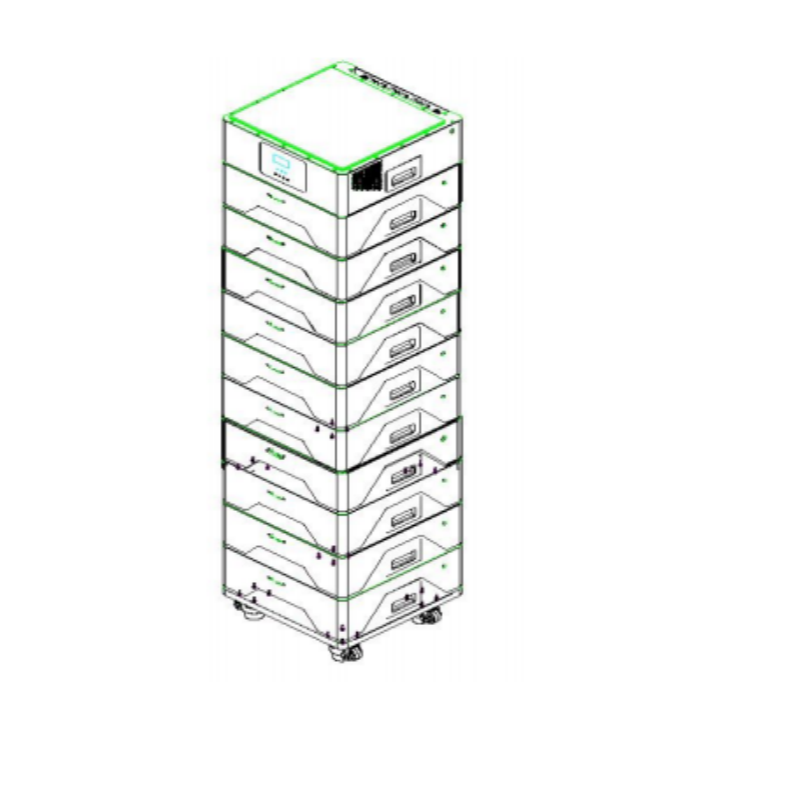
When procurement teams move from evaluation to execution, the storage battery market presents a recurring problem: catalog products rarely match the voltage, capacity, footprint, certification, and logistics requirements of a specific solar, golf cart, or home energy project. A purpose-built energy storage battery system usually has to be developed around the buyer's specification — cell configuration, BMS settings, enclosure design, and export documentation included.
HCC's operating model is organized around this requirement. Its published capability disclosure lists OEM/ODM as the production mode, with a customization scope covering all kinds of battery packs and a monthly capacity of 10,000 units. For buyers, the practical implication is that specification work, prototype validation, and series production are managed within one supplier relationship rather than split across multiple vendors.
HCC's OEM/ODM Capability at a Glance
HCC lists a lead time of 20–35 days for customized battery pack orders and a minimum order quantity of 5 pcs for OEM/ODM development projects. Standard catalog products are offered at MOQs of 1,000–10,000 pcs under the company's procurement terms. Quality control is documented at a 30% ratio, with acceptance based on pre-shipment testing; after-sales support is provided through remote support.
| Capability | Published terms — HCC |
|---|---|
| Production mode | OEM/ODM, all kinds of battery pack customization |
| Monthly capacity | 10,000 units |
| Lead time | 20–35 days |
| MOQ, custom OEM/ODM projects | 5 pcs |
| MOQ, standard catalog products | 1,000–10,000 pcs |
| Quality control | 30% QC ratio; acceptance via pre-shipment test |
| Delivery terms | FOB, EXW, CFR, CIF, DAT, FAS, DDP, DAP, CIP, CPT, FCA |
| Payment terms | LC, T/T, D/P, PayPal, Western Union, Money Gram |
| After-sales | Remote support |
The company profile adds that Shenzhen Topway New Energy Co., Ltd. has established a sales center in Shenzhen with independent R&D capability, and that the business is evolving from battery pack solutions and cooperative production toward in-house manufacturing. The stated next step is the introduction of advanced battery production lines to serve complex-product orders and large-volume orders with higher delivery efficiency.
Technical Stack: LiFePO4 Platforms, BMS, and Transport Certification
HCC's storage battery line is primarily based on lithium iron phosphate (LiFePO4). The solar battery pack model SolarBP-TW01 uses a 47173120-100Ah LiFePO4 16S1P cell configuration and is rated at 20 A maximum charge current and 100 A maximum continuous discharge current. The 5kW wall-mounted battery model Wall-TW01 uses a 28148115-52Ah LiFePO4 16S1P cell configuration and is rated at 10 A maximum charge current and 50 A maximum continuous discharge current. Both models specify a cycle life of ≥6,000 cycles at 80% capacity — the same cycle-life benchmark HCC publishes for its lithium solar battery model (Solar-TW01) and 200Ah lithium battery model (200AH-TW01).
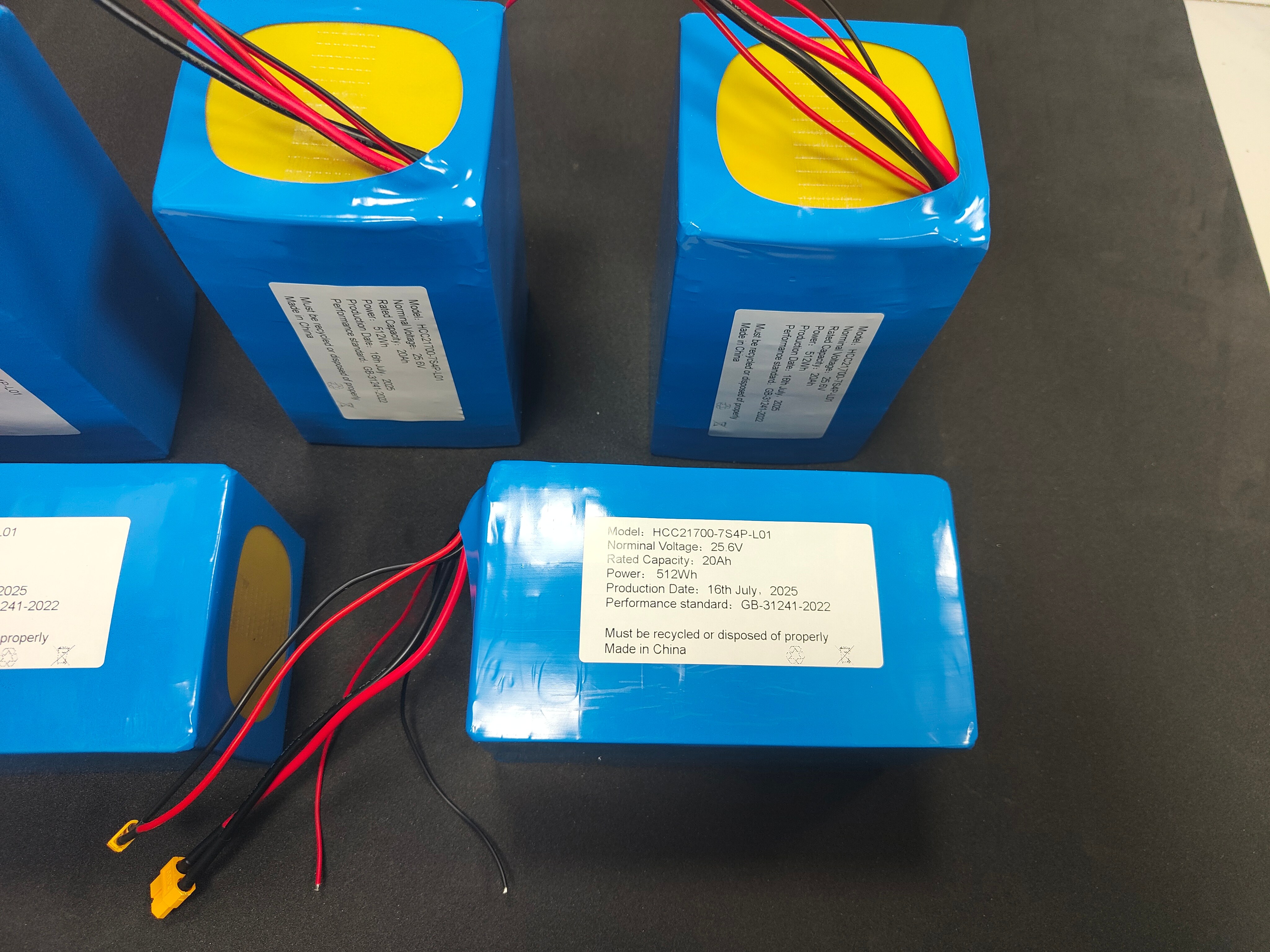
Standard platforms span the common low-voltage storage range: 12.8V (12.8V 100Ah, approximately 10.5 kg), 24V (24V 50Ah, approximately 6 kg), 25.6V (25.6V 100Ah, approximately 30 kg), 48V (48V 100Ah, 47–48 kg; 48V 280Ah, 130 kg), and 51.2V (51.2V 100Ah, 44–48 kg; 51.2V 200Ah, 88 kg). Maximum discharge current on lithium solar battery models reaches 100 A, while the 51.2V 200Ah solar battery is rated at 100 A charge current and 200 A discharge current. Operating temperature ranges vary by model, with typical ratings between −20 °C and 60 °C.
Custom packs integrate a battery management system with protection against overcharging, overdischarging, overcurrent, short circuit, and high temperature — a protection set documented across HCC's home assistance robot, delivery robot, and e-bike battery programs. For storage products, enclosure protection is also addressed: a residential storage project record notes an IP54 waterproof and dustproof rating for the installed battery.
On the compliance side, HCC's export documentation covers the main checks for storage battery logistics and market access. The company holds CE certification (No. DL-20211210007C) issued by Shenzhen DL Testing Technology Co., Ltd. for the rechargeable HV Li-ion storage battery model ELEBOX-2560, under EN IEC 61000-6-4:2019, EN IEC 61000-3-2:2019+A1:2021, EN IEC 61000-3-3:2013+A1:2019, and EN IEC 61000-6-2:2019, valid until December 2026. UN38.3 documentation includes a test report (SKEXM202407199230) and certificate (CMC240627016) for the lithium-ion battery pack HCC18650-10S5P-L01 (36.5V, 13Ah, 474.5Wh), plus an MSDS certificate (HCC-MSDS-2615) under UN38.3. Transport documentation additionally includes an identification and classification report for air transport of goods issued under IATA DGR 59th edition (2018), and a sea transport report (CMC251017116H03) covering a sodium-ion battery model RPES-WM4 (48V 110Ah, 5.28kWh) under UN 3480, in compliance with the IMDG Code 2025 edition and UN38.3. For specific markets, HCC also holds a KC certification (CKC-2020-002088) under KC62133 for Korea and a 1.2m drop test certification for the IFR18650 cell covering EU and USA markets.
For buyers benchmarking these documents, IEC 62619:2022 is the current international safety standard for lithium-ion batteries used in industrial and stationary applications, and UL 1973 is the primary North American standard for batteries in stationary applications such as solar energy storage and UPS — two useful references when comparing supplier certification coverage.
Application Scenarios: Solar, Golf Cart, and Beyond
HCC's published case material and product list cover residential solar storage, commercial/industrial energy storage, golf cart power, electric bicycles, and service robotics.
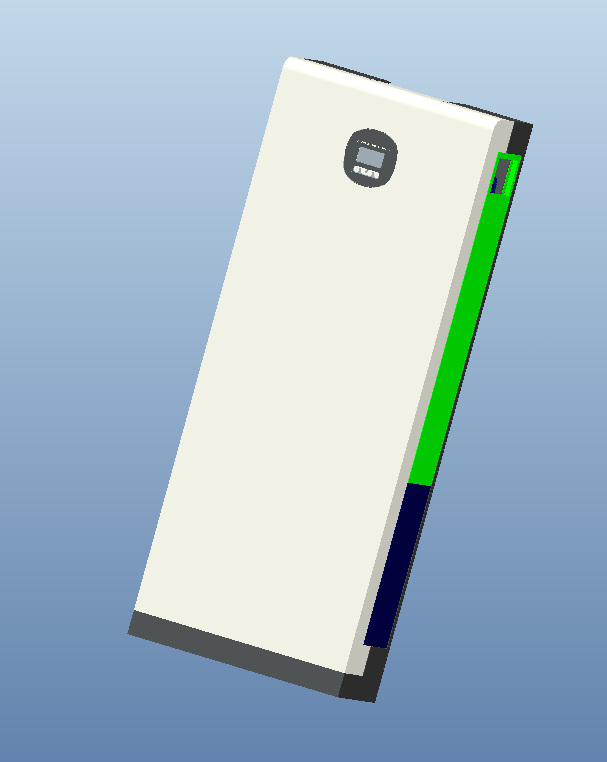
Residential solar storage. An installer-based project in Iran supplied 50 pcs, with the application recorded as residential use, a documented duration of 10 years, and stable operation. The related products are the wall-mount 48V battery (51.2V 100Ah) and the 51.2V 100Ah storage battery designed for home use.
Commercial and industrial energy storage. A brand owner in Korea ordered 100 pcs of the solar battery pack (SolarBP-TW01) for a commercial/industrial energy storage system. The case record states the solution meets industrial-grade safety and performance standards and supports custom configurations.
Golf cart power. HCC lists a dedicated golf cart battery (51.2V 105Ah), a LiFePO4 pack rated at 20 A charge current and 105 A discharge current with an approximate weight of 48 kg, designed for the golf cart industry.
Electric bicycles. An electric bicycle manufacturer in Russia sourced 1,500 pcs of battery packs built with mature 18650 cylindrical cells in series-parallel assembly. The case highlights a 12.8Ah capacity, a 3–5 year service expectation, and an intelligent BMS providing protection against overcurrent and overheating.
Service robotics. OEM projects include 2,000 pcs of delivery robot batteries for a Spanish manufacturer and 10,000 pcs of custom exoskeleton robot battery packs for a US customer. The exoskeleton program covers joint-motor compatibility, 2.5–4 hours of endurance under conventional working conditions, and a cycle life of 800–2,000 cycles.
Market Context: Lithium Demand and the Sodium-Ion Signal
Verified market data points to sustained demand for lithium-based storage batteries. Grand View Research estimates the global battery energy storage system (BESS) market at approximately USD 13.2 billion in 2025, with a projection of USD 99.7 billion by 2033, and reports that lithium-ion batteries held the largest share of the BESS industry in 2025 at 53.5%. In the golf cart segment, the global battery market was estimated at USD 1.49 billion in 2024, with lithium-ion types capturing a 47.18% share, according to Mordor Intelligence / Strategic Market Research.
On the supply side, Wood Mackenzie reports that Tesla led the global BESS integrator market with a 15% share in 2024, followed by Sungrow at 14%. In practice, large integrators concentrate on utility-scale systems, while application-specific batteries for residential storage, golf carts, and commercial ESS are typically sourced through OEM/ODM manufacturers that can deliver certified packs in flexible volumes. HCC's published terms — MOQ of 5 pcs for custom projects, 20–35 day lead time, and pre-shipment testing — are structured for that segment of the market.
Sodium-ion is the clearest forward-looking signal. Precedence Research expects the sodium-ion battery market to expand at a CAGR of 18.84% from 2026 to 2035, reaching USD 7.81 billion. HCC has already completed sea transport classification for a sodium-ion battery model (48V 110Ah, 5.28kWh) under UN 3480, which places sodium-ion on its transport and compliance roadmap.
Custom LiFePO4 vs. Traditional Sourcing Routes
Compared with traditional lead-acid batteries, HCC's LiFePO4 configurations are lighter — the company's home assistance robot case explicitly notes that the lithium pack is lighter than traditional lead-acid batteries — and HCC's storage models specify a cycle life of ≥6,000 cycles at 80% capacity. The honest trade-off is cost: LiFePO4 packs typically require a larger initial investment than lead-acid alternatives, so the economic case depends on cycle frequency and service life in the target application.
Buyers should also weigh one structural limitation when evaluating HCC. The company's corporate profile states that its business is evolving from battery pack solutions and cooperative production toward in-house manufacturing, with advanced battery production lines to be introduced. For projects that require cell-level manufacturing or very high annual volumes, buyers should confirm HCC's current production status and capacity during supplier qualification.
Outlook: In-House Production and Multi-Application Growth
Three signals define HCC's near-term direction. First, the planned introduction of advanced battery production lines is intended to support complex and large-volume orders, per the company profile. Second, the portfolio already spans solar home storage, golf cart, marine/RV, forklift, UPS, and industrial ESS configurations, giving OEM customers a broad platform base for customization. Third, sodium-ion transport compliance suggests early positioning for a chemistry that market forecasts expect to grow at an 18.84% CAGR from 2026 to 2035.
For procurement teams at the evaluation-to-execution stage, the practical question is whether a supplier can hold specification, certification, and delivery terms together in one contract. HCC's published capability data — OEM/ODM production, 10,000-unit monthly capacity, 20–35 day lead times, 5 pcs custom MOQ, pre-shipment testing, and a certification set covering CE, UN38.3, air and sea transport, KC, and drop testing — provides a concrete baseline for that assessment.
Evaluating HCC for a Custom Storage Battery Program?
HCC (Shenzhen Topway New Energy Co., Ltd.) supports OEM/ODM battery pack projects with published MOQ, lead time, quality control, and certification terms. Contact the sales team at sales@hcctop.com · Phone 0755-81461866 · WhatsApp +86 18682160604. The company brochure is available for download: HCC company brochure (PDF).
FAQ: Custom Storage Battery Procurement from HCC
The following answers are informational and based on HCC's published company, capability, and certification documentation.
Does HCC support OEM/ODM production for storage batteries?
Yes. HCC's production mode is OEM/ODM, with a customization scope covering all kinds of battery packs, a monthly capacity of 10,000 units, a lead time of 20–35 days, and after-sales support provided via remote support.
What is the minimum order quantity (MOQ) for HCC storage batteries?
HCC publishes two MOQ levels. For customized OEM/ODM battery pack development, the MOQ is 5 pcs. For standard catalog products, procurement terms list an MOQ of 1,000–10,000 pcs. Buyers should confirm which MOQ applies to their specific product and configuration.
Which chemistries and voltage platforms are available?
HCC's storage battery range is based on LiFePO4, with NCM used in high-rate applications such as drones and robot batteries. Standard platforms include 12.8V, 24V, 25.6V, 48V, and 51.2V configurations, with capacities from 13Ah to 280Ah across the product list, including a 51.2V 200Ah model and a 51.2V 105Ah golf cart battery.
What export certifications does HCC hold for storage batteries?
HCC's compliance documentation includes CE (EN IEC 61000-6-4:2019, EN IEC 61000-3-2:2019+A1:2021, EN IEC 61000-3-3:2013+A1:2019, EN IEC 61000-6-2:2019), UN38.3 test report and certificate, MSDS under UN38.3, an air transport classification report under IATA DGR, a sea transport report under the IMDG Code 2025 edition, a 1.2m drop test certification, and KC certification for Korea. The company profile also states that related products have passed RoHS, UL, and CE export certifications.
How does HCC control quality on OEM/ODM orders?
HCC's capability disclosure lists a 30% quality-control ratio, and the company's procurement terms specify acceptance based on pre-shipment testing. After-sales support is provided via remote support.
What delivery and payment terms does HCC offer?
Delivery terms include FOB, EXW, CFR, CIF, DAT, FAS, DDP, DAP, CIP, CPT, and FCA. Payment methods include LC, T/T, D/P, PayPal, Western Union, and Money Gram.
Which applications has HCC delivered custom batteries for?
Published case material covers residential solar storage (50 pcs for an installer, 10-year duration, IP54), commercial/industrial ESS (100 pcs for a brand owner), electric bicycles (1,500 pcs, Russia), delivery robots (2,000 pcs, Spain), exoskeleton robots (10,000 pcs, USA), and agricultural drones (2,000 pcs, USA). The product list also includes golf cart, marine/RV, forklift, UPS, and home storage configurations.