
Custom Transformer Compliance: EU/EEA Conformity Documents
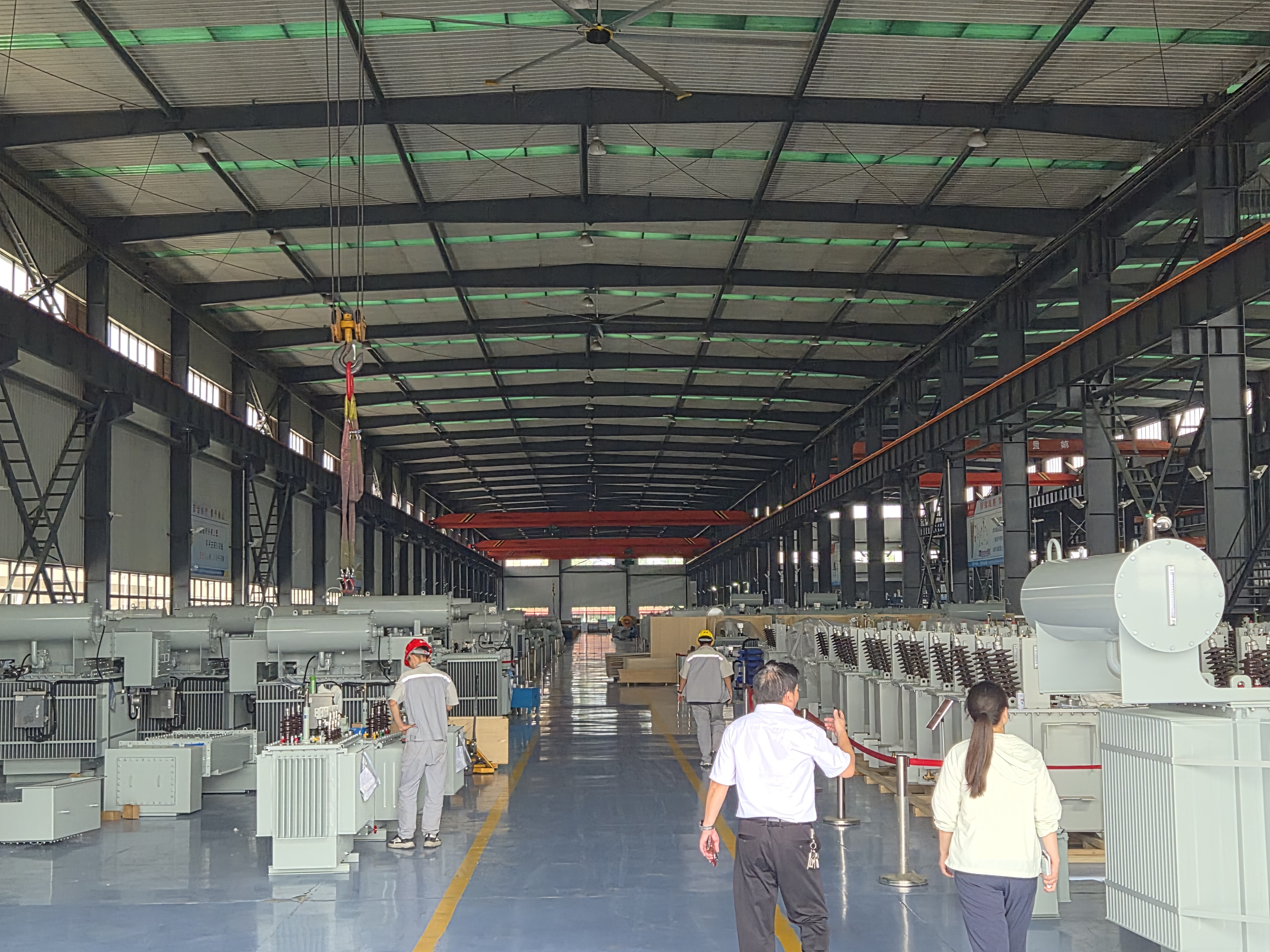
A transformer does not leave the factory as equipment alone — it leaves as equipment plus a conformity file that must travel with it.
A custom power transformer can pass every routine and type test in the factory and still be unusable on an EU or EEA site, because the equipment cannot be placed on the market without a complete conformity file issued in the correct legal entity name. For buyers in the awareness and early research stage, this is often the first moment when “compliance” stops meaning does the unit meet the specification? and starts meaning can this unit legally be energised on this site?
This article treats EU/EEA conformity as a buyer-interpretation question rather than a sales one. It explains what the document set typically contains, why destination-market certification belongs on the supplier-selection scorecard, and how to reduce the three document failure modes that recur most often in transformer sourcing: counterfeit certificates, expired certificates, and certificates that do not match the product actually being shipped.
Why the Conformity File Is an Engineering Deliverable
Two gates stand between a custom transformer and a live project. The first is technical: the unit must meet the specification. The second is documentary: the file that accompanies the unit must satisfy the market’s conformity framework. Most procurement teams manage the first gate carefully and treat the second as administration, because the second gate is quiet — until it fails.
The consequences of a failed documentary gate are not quiet. A transformer that cannot be documented for the destination market cannot be delivered, energised or accepted, however well it performs at factory acceptance testing. In transformer sourcing, compliance risk is defined precisely as certificates that are expired, in another entity’s name, or do not cover the product family — three failure modes that have little to do with the equipment and everything to do with the file surrounding it.
The practical consequence for buyers is that the conformity file should be specified, verified and accepted as a deliverable in its own right, with its own acceptance criteria, rather than being treated as paperwork that follows the equipment.
The EU/EEA Document Set in Plain Terms
For a custom power transformer intended for an EU or EEA project, the conformity file usually has four layers, each of which answers a different question.
The first layer is management-system certification — ISO 9001 for quality, ISO 14001 for environment and ISO 45001 for occupational health and safety, supported in the supply network by SA8000 and a provincial metrology qualification. These are not product certificates. They evidence that the factory that produced the unit operates a certified management system, and they matter because many utility and EPC audit procedures open with them.
The second layer is product conformity evidence. Within the transformer range supplied through Apex Power Systems’ audited manufacturing partners, 10 kV / 35 kV distribution transformers and box-type substations hold IEC, UL, TUV, CE, KEMA and GOST certification. For the EU/EEA, the relevant symbols and underlying standards are IEC-based; the IEC 60076 series provides the test framework and the European standardisation system adopts it as EN 60076.
The third layer is type-test evidence that validates the design itself. A representative example in the current supply network is a KEMA Labs (KEMA B.V., The Netherlands) Type I Inspection Report for a 250 MVA / 345 kV three-phase power transformer, tested in accordance with IEC 60076-1/-2/-3, IEC 60076-10, IEC 60076-11 and IEEE Std C57.12.00 / IEEE C57.12.90. A report of this class is worth substantially more than a marketing claim because it is issued by an independent laboratory and it names the specific standard sections tested.
The fourth layer is project-level documentation: routine test reports on the actual unit shipped, drawings, an O&M manual, and the certificate of conformity in the correct legal entity name. The first three layers establish that the design and the factory are qualified. The fourth demonstrates that the specific unit in front of the buyer is the one that was qualified.
Counterfeit, Expired, Mismatched: The Three Document Failure Modes
The three failure modes are not theoretical, and they are not the same failure. Each requires a different defence.
Counterfeit certificates
A counterfeit certificate looks correct but was not issued by the named institution, or was issued to a different company and reproduced. It survives a first review because the buyer recognises the layout. It collapses the moment the certificate number is checked against the issuing body. The practical defence is that every certificate carries a number that can be verified — for example UDEM verification at www.udem.com.tr and UL listings at iq.ulprospector.com — and that the number, issuer, validity and product family are each checked, not just the visible logo.
Expired certificates
This is the most common failure mode because it is innocent. A certificate is valid when issued and can lapse between enquiry and shipment. A supplier whose qualification package was assembled years ago may still be fully capable while holding stale documentation. The defence is timing: the compliance file is re-verified at the point of order and again at factory acceptance, not only at the enquiry stage.
Mismatched certificates
This is the subtlest. A certificate may be valid, current and genuine — but issued in a different legal entity name, or covering a different product family or voltage class than the unit being purchased. In the North American context, for example, a UL Certificate of Compliance confirms that representative samples were evaluated; authority to apply the UL Mark is granted separately under the UL Follow-Up Services procedure, and the Certificate of Compliance must be in the manufacturer’s legal entity name. The same discipline applies in the EU/EEA context: the legal identity on the document must match the legal identity of the supplier, and the product description on the document must match the equipment actually ordered.
Destination-Market Certification as a Selection Criterion
Buyers evaluating transformer suppliers frequently rank technical capability first, lead time second, and certification somewhere later. The failure modes above suggest the order is wrong, because a supplier that cannot produce a current, entity-matched product certificate for the destination market cannot place the transformer onto that market regardless of how strong its engineering is.
Making certification an explicit selection criterion changes three behaviours in the procurement process.
- The destination-market question moves earlier. Instead of checking certificates after the design is frozen — a frequent trigger for late cost and schedule changes — the certification review runs alongside the technical review and the design is fixed only once the relevant standards are identified.
- “Certified” is separated from “certified for this market.” ISO 9001, ISO 14001 and ISO 45001 are global management-system standards. IEC product conformity and CE marking matter in the EU/EEA context. UL, CSA and the IEEE C57.12 series are the corresponding instruments for North America. A supplier may hold several of these, yet only some will apply to the destination of the specific unit.
- The output becomes a comparison table, not a yes/no answer. The relevant question is not “does the supplier have certification?” but “which named certificates, issued by which body, in which legal entity, with what validity, cover this exact product family and voltage class?”
How the Documents Are Verified in Practice
Apex Power Systems (Nanjing) Co., Ltd. is an international trading and supply-partner company for power transformers and substation equipment. It is not itself a manufacturing factory. The manufacturing, certification and test evidence it presents belongs to its audited manufacturing partners, and Apex manages selection, audit supervision, documentation and logistics on the buyer’s behalf.
That role produces concrete verification steps for EU/EEA and other destination markets.
| Risk category | Verification action at the supplier level |
|---|---|
| Compliance risk | Verify each certificate with its issuing body and confirm the certificate holder is the same legal entity that will appear on the drawing, the test report and the shipment documents. |
| Capability risk | Audit the plant’s production and test equipment before the order is placed, so a plausible certificate cannot be used to support a rating the plant cannot actually build or test. |
| Quality risk | Witness routine and type tests at factory acceptance — ratio, winding resistance, no-load and load loss, insulation, temperature rise and lightning impulse — and arrange third-party inspection where required. |
| Documentation risk | Deliver drawings, test reports and O&M manuals in the format and language the utility or EPC requires, and check the destination market’s requirements before the design is frozen. |
| Commercial risk | Write warranty obligations into the contract, alongside a witnessed-testing clause. |
The certification footprint Apex coordinates includes ISO 9001, ISO 14001, ISO 45001 and SA8000 management systems, plus a provincial metrology qualification, and product certification across IEC, UL, TUV, CE, KEMA and GOST for the relevant product families. Independent verification is represented by the KEMA Labs Type I Inspection Report for the 250 MVA / 345 kV transformer. European delivery experience includes a 132 kV power transformer supplied for the Seville steel-plant substation in Spain and a 40,000 kVA energy-storage project in Bulgaria.
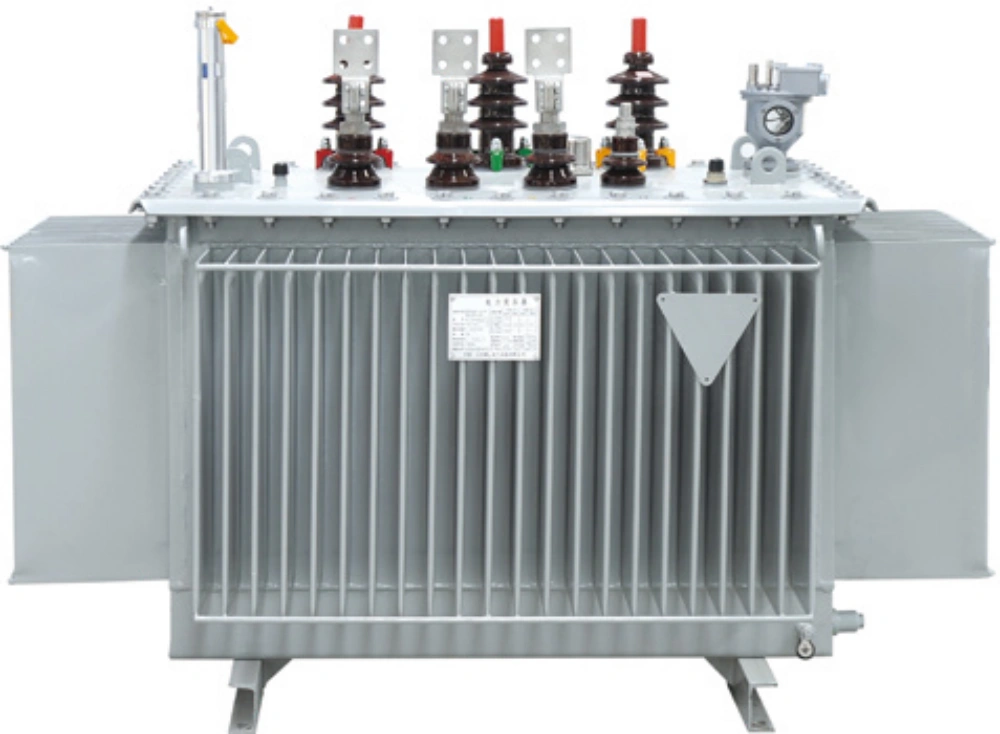
Oil-immersed distribution transformer during pre-shipment preparation — the point at which the conformity file is re-verified before dispatch.
Reading a Type-Test Report: What the Document Actually Says
A type-test report is not a general statement that a product is reliable. It is a record that a specific design, tested by a specific laboratory against specific standard clauses, produced specific measured results. Three things deserve close reading.
The standard list. The 250 MVA / 345 kV transformer was tested to IEC 60076-1/-2/-3 (power transformers, temperature rise, insulation levels and dielectric tests), IEC 60076-10 (sound levels), IEC 60076-11 (dry-type transformers) and IEEE Std C57.12.00 / C57.12.90. The presence of the relevant IEC series is what makes the report usable in a European project; the additional IEEE standards indicate a design that has been assessed against more than one market’s expectations.
The design description. The report should identify the rating, the cooling class, the vector group and the tap range in the same terms that will appear on the enquiry and, eventually, on the nameplate. For the 250 MVA / 345 kV unit, cooling is expressed across three stages — ONAN at 185 MVA, ONAF1 at 225 MVA and ODAF2 at 250 MVA — because permissible loading changes with each cooling stage. A buyer who does not see this detail in the report has not, in practice, seen the type test.
The laboratory identity. A KEMA B.V. report issued in the Netherlands carries specific weight in EU/EEA procurement because both the laboratory and the standard framework are recognised instruments in that market. A report from an unrecognised laboratory, even with correct measured values, contributes far less to the documentation file.
Application Scenarios: Where the Conformity File Decides the Schedule
The buyers who feel the impact of the conformity file most sharply are those whose projects cannot be rescheduled; those who feel it least are ordering from stock with generous float.
Distribution grid upgrades in Europe. Where an oil-immersed distribution transformer — the S13 / S14 / S15 Series, 30–3,150 kVA at 10 kV class and 3,150–31,500 kVA at 35 kV class, with average no-load current reduced by 60–80% and average no-load losses by 25–35% — replaces an older unit inside a live network, the utility cannot add it to the asset register without the conformity file. Any gap delays commissioning, not just delivery.
Solar, wind and energy-storage plants. The 40,000 kVA energy-storage project delivered in Bulgaria is representative. These projects often use the New Energy Transformer configuration (SC10 / SZ18 / SZ20) and are typically built on tight commercial schedules. The certification question is best resolved before the grid-connection window opens, because the connection agreement usually depends on substation documentation being complete.
Commercial and industrial indoor installations. Where a dry-type transformer such as the SCB12–SCB18 Series is installed inside a building, the fire-safety and indoor-installation aspects of the conformity file are examined alongside the electrical certification — both must be resolvable at the same time.
Prefabricated and box-type substations. This is where documentary completeness carries the largest cost impact, because a substation move to site involves multiple interconnected items and the entire file is presented at once.
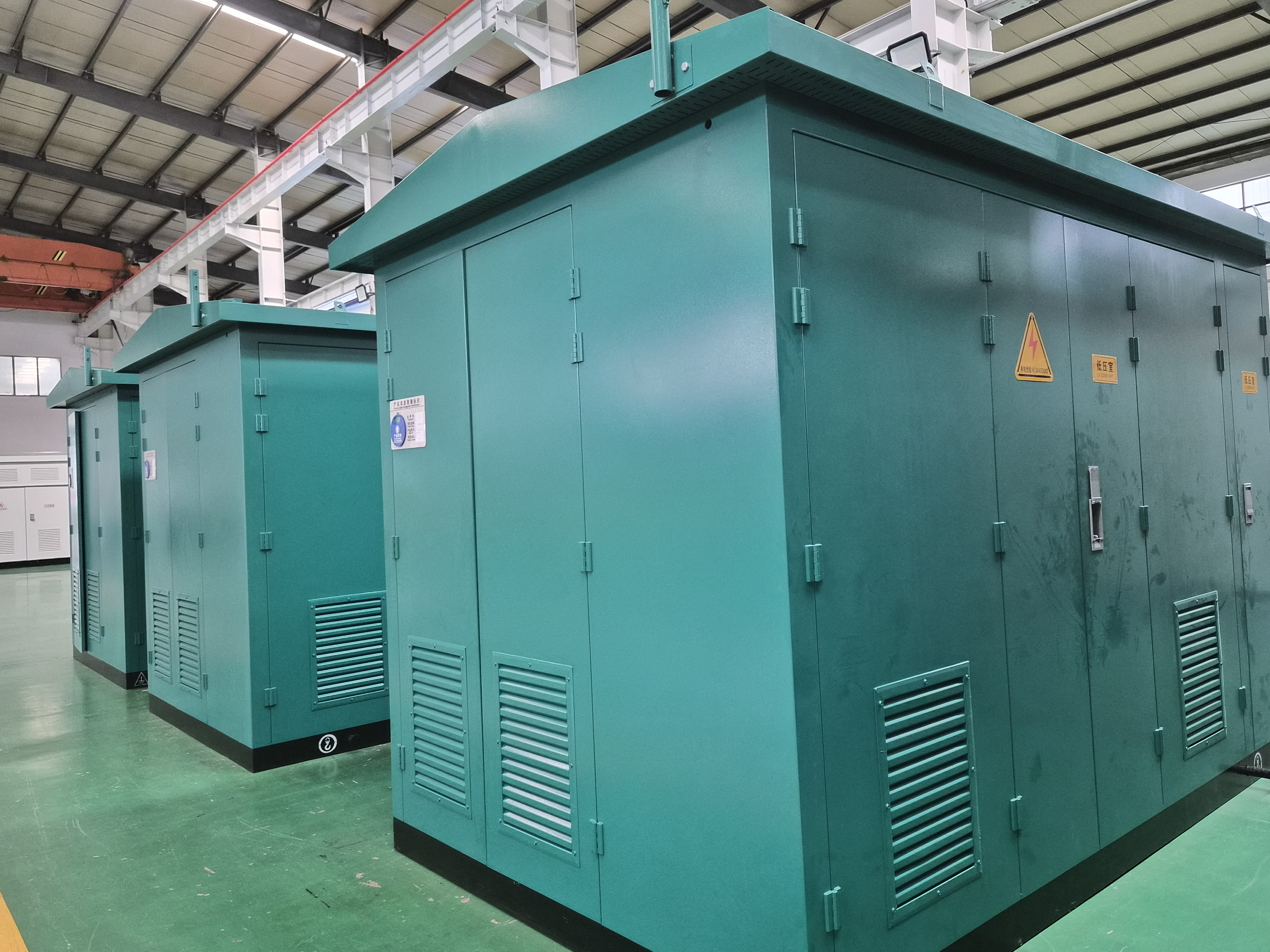
Prefabricated cabin substation during factory assembly — documentation for a substation is presented as a single complete file rather than unit by unit.
Market Trend: Efficiency Regulation Is Converging Internationally
Three signals shape the environment in which EU/EEA transformer conformity is being assessed.
Growing global demand. The global transformer market is estimated to reach USD 80.8 billion in 2026, and the global distribution transformer market has been projected to grow from USD 26.0 billion in 2026 to USD 47.7 billion by 2033 at a CAGR of 9.1%. Growth of this order makes documentation discipline more important, not less: more units, more suppliers and more opportunity for compliance failures.
Tightening efficiency requirements. China released GB 20052-2024, “Minimum allowable values of energy efficiency and energy efficiency grades for power transformers,” effective 1 February 2025. In the United States, the Department of Energy 2024 rule requires distribution transformers to transition towards amorphous electrical steel starting in 2029. Europe maintains its own ecodesign expectations for transformer efficiency, and the direction of travel is shared: transformers sold into regulated markets must be able to demonstrate, in writing, that the efficiency claimed matches the efficiency required.
Faster trade in larger units. Global trade of electrical transformers with power capacity above 500 KVA (HS 850434) reached USD 2.5 billion in 2024, a 12.7% year-on-year increase. When custom power transformers cross borders in growing volume, the conformity file becomes the primary interface between the manufacturer and the destination market.
Limits and Trade-offs: What a Supply Partner Cannot Do
An honest reading of the supply-partner model requires stating what it does not cover.
The placing-on-market obligation is not transferred. A trading and supply partner such as Apex Power Systems is not the manufacturer, and it is not an EU/EEA legal entity. Where the destination market’s rules assign the placing-on-market obligation to the manufacturer, the importer or the manufacturer’s authorised representative inside the union, that obligation is not discharged by a supply partner outside the EEA. A buyer who needs an EU-based legal entity to hold the declaration, or a named authorised representative, must arrange that separately; the supply partner can supply the underlying technical file and the manufacturer’s declarations, but it does not replace the importer or the authorised representative.
Verification is a point-in-time action. A certificate valid at enquiry can expire before shipment, and a manufacturer’s legal entity can change between the sample evaluation and the delivery. This is exactly why the compliance file is re-verified at order and again at factory acceptance — a single early check is treated as insufficient rather than as confirmation.
Verification reduces risk without eliminating it. Auditing a plant’s test equipment and witnessing routine tests reduces the likelihood that a rating cannot actually be built, but it does not guarantee the outcome of every shipment. The correct expectation is a documented, verifiable, substantially lower risk profile — not an absolute guarantee.
Future Outlook
Three developments are likely to shape EU/EEA transformer compliance over the next several years.
Traceability will be expected at file level, not certificate level. Buyers comparing suppliers will increasingly ask not “do you have certification?” but “can you produce the current, entity-matched certificate, with its issuing body and its product family, on request and within a fixed response time?”
Independent laboratory evidence will carry more weight, not less. The KEMA Labs Type I Inspection Report for a 250 MVA / 345 kV transformer, tested against the IEC 60076 series and the IEEE C57.12 series, is an example of the kind of evidence that holds value across multiple markets. As IEC and European standards continue to align, that kind of report remains portable between projects.
Efficiency regulation will change the composition of the transformer fleet. Amorphous-alloy and other low-loss designs are already available in the supply network; the regulatory push towards amorphous steel in the United States and the tightening of energy-efficiency grades elsewhere mean that the conformity file for new units will increasingly need to evidence measured losses against a specific efficiency grade, not only nominal compliance.
For a buyer, the practical implication is straightforward: the conformity file should be treated as a first-class deliverable with its own line in the specification, its own verification step, and its own acceptance criteria.
FAQ
Is Apex Power Systems a factory or a trading company?
Apex Power Systems (Nanjing) Co., Ltd. is a trading and supply-partner company, not a manufacturer. All manufacturing, certification and test evidence belongs to its audited manufacturing partners. Apex manages supplier selection, supervision, testing, documentation and logistics on the buyer’s behalf.
Which markets does the supply network serve?
The manufacturing base exports to 72 countries and regions, including the USA, Canada, Europe, the Middle East, Africa, Latin America and the CIS. Apex-coordinated reference projects are in Azerbaijan, Tajikistan, the Philippines, Spain, Bulgaria, Mongolia, the USA and Puerto Rico. Major markets include the EU, the USA and the Middle East.
What certifications are held across the supply network?
Management-system certifications include ISO 9001, ISO 14001, ISO 45001 and SA8000, plus a provincial metrology qualification. For 10 kV / 35 kV distribution transformers and box-type substations, the certifications include IEC, UL, TUV, CE, KEMA and GOST. Independent evidence includes a KEMA Labs Type I Inspection Report for a 250 MVA / 345 kV transformer, tested in accordance with IEC 60076-1/-2/-3, IEC 60076-10, IEC 60076-11 and IEEE Std C57.12.00 / IEEE C57.12.90.
How can a buyer verify the certificates?
Every certificate carries a number that can be checked with the issuing body — for example UDEM verification at www.udem.com.tr and UL listings at iq.ulprospector.com. The qualification package lists, for each certificate, the number, the issuer, the validity and the product family it covers, so the buyer can confirm the certificate by identifier rather than by its appearance.
How is quality controlled before shipment?
Production and test equipment are audited before ordering. Winding, core and oil-processing stages are monitored. Routine and type tests are witnessed at factory acceptance, including ratio, winding resistance, no-load and load loss, insulation, temperature rise and lightning impulse. Third-party inspection is arranged where required, and warranty obligations are written into the contract.
How are certificate and entity mismatches avoided?
Before the design is frozen, the destination market’s certification requirements are confirmed and the certificate holder’s legal entity is checked against the entity that will sign the delivery documents. Certificates that are expired, held in another entity’s name, or do not cover the ordered product family are treated as compliance risks and resolved before the order is placed.
For a full list of products, standards and reference projects across the Apex Power Systems supply network, the Apex Power Systems catalogue is available for download.