
Custom Wet Wipes Shortlist: Y02 to YJ01, Line by Line
Custom Wet Wipes Shortlist: Y02 to YJ01, Line by Line
Independent Sourcing Reference · Custom Wet Wipes
A wet wipes shortlist organised around suppliers collapses the moment a programme covers more than one surface. This reference orders the shortlist by application instead — baby, pet, kitchen, toilet, clothing and eye care — and sets out, for each line, what the specification actually commits an OEM buyer to.
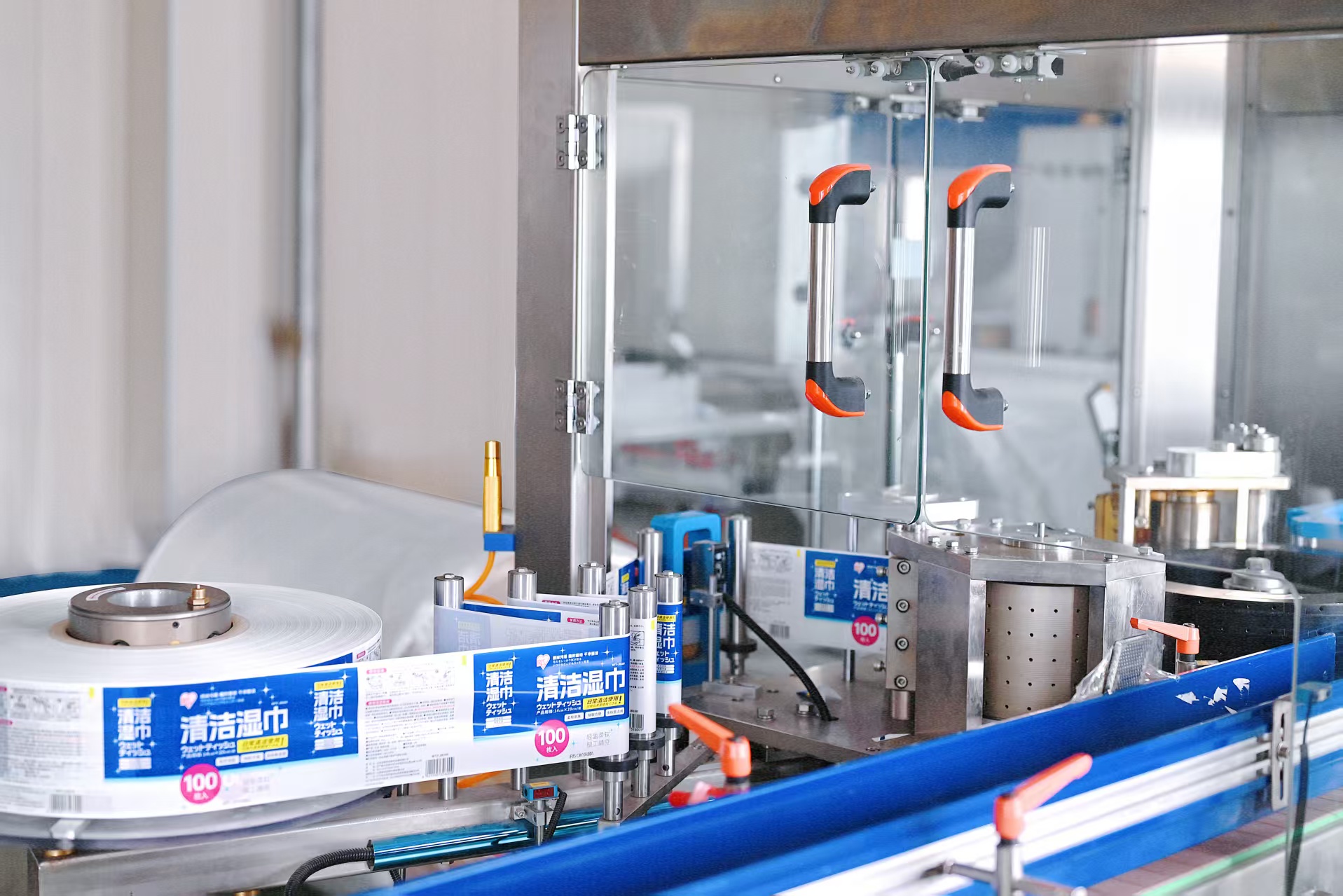
Custom wet wipes for multiple application lines, shown as finished product formats rather than as a single retail SKU.
The most common failure in a custom wet wipes programme is not a quality failure. It is a transfer failure: assuming the sheet approved for one application can be carried into the next. A 200 × 200 mm pet wipe does not become a kitchen wipe through a change of fragrance. A 10-sheet toilet pack is not a smaller version of a 100-sheet one. An eye care cloth made from water-resistant paper shares no substrate with any non-woven line in the same catalogue.
The models discussed here are produced by sunfans, the custom wet wipes brand of Dalian Weijie Biotechnology Co., Ltd., a manufacturer established in Dalian, Liaoning Province in 2013. The company operates a 6,000 m² facility with a 10-person R&D team and reports an export ratio of approximately 70%, with Japan, Australia, Canada, the United States and Singapore listed among its main markets. Those figures define the scale at which the shortlist operates. Everything after them is specification-level and can be checked line by line.
Why application ordering beats supplier ranking
A supplier ranking compresses an entire catalogue into a single score. That is useful when the requirement is one article. It stops being useful when the requirement spans infant care, pet grooming, kitchen degreasing and flushable sanitary paper, because each of those lines carries a different failure mode.
In baby care, a formula deviation is a consumer complaint. In toilet wipes, a dispersibility problem is a regulatory and infrastructure problem. In kitchen wipes, a size decision changes the packaging format and, with it, the shelf presence. Ranking suppliers first hides these differences behind an average. Ordering by application exposes them before the sample order is placed.
The ordering also clarifies what is negotiable. Pack count, fragrance and artwork sit on the customisation list. Sheet dimensions and substrate determine which converting line the product can run on, and are therefore the fields an OEM buyer should lock first.
How this shortlist was assembled
Four fields carry almost all of the decision weight across the range described here:
- Substrate — entirely adhesive non-woven, bamboo fibre, biodegradable wood pulp non-woven, water-jet non-woven, or water-resistant paper.
- Sheet dimensions — from 100 × 150 mm at the smallest to 200 × 200 mm at the largest.
- Pack count — from 4 pieces to 100 pieces, depending on line.
- Contact surface — skin, fur, food-preparation surfaces, sanitary fixtures, fabric, or optical lenses.
Each line below is described against those four fields, followed by the purchasing consequence. The consequences matter more than the specifications, because they are what a buyer has to write into a purchase order.
Line 1 — Baby care: model Y02
Y02 is a 150 × 200 mm baby wipe built on an entirely adhesive substrate and supplied in pack counts from 01 to 100 pieces. It sits within infant care, baby hygiene and large-format retail applications, which means a single model has to serve both a retail single pack and a bulk refill.
The stated application requirement is a gentle, plant-based formula free of alcohol, with fabric that is gentle on the skin and free of irritating additives. In procurement terms, that is a formula constraint rather than a sheet constraint. It should be resolved before artwork sign-off, because refill bags, flip-top tubs and travel packs each change how much liquid the sheet must hold and how it releases during use.
Purchasing consequence: the 01–100 piece range is wide enough for one SKU family to cover trial, retail and bulk. Buyers should expect to confirm pack format separately for each count band, since folding and stacking differ between a 10-piece pack and a 100-piece pack even when the sheet itself is identical.
Line 2 — Pet care: models C02, C03, C04 and C05
The pet line is the widest part of the shortlist: four models, three substrates, four sheet sizes. Choosing between them is a matter of matching the animal, the contact area and the pack format rather than picking the newest specification on the list.
| Model | Sheet size | Substrate | Pack count | Distinguishing factor |
|---|---|---|---|---|
| C02 | 200 × 200 mm | Entirely adhesive | 01–100 pcs | Largest pet sheet in the range |
| C03 | 150 × 200 mm | Bamboo fibre | 02–100 pcs | Bamboo substrate in a standard retail format |
| C04 | 140 × 180 mm | Bamboo fibre | 03–100 sheets | Pet wet toilet paper format |
| C05 | 180 × 200 mm | Biodegradable wood pulp non-woven | 04–10 pcs | Glove format; manufactured in a Class 100,000 cleanroom |
C02 is the largest pet sheet at 200 × 200 mm, on an entirely adhesive substrate, with pack counts from 01 to 100. Its dimensions match the kitchen wipe described below, but the substrate and the intended surface do not — a point worth stating explicitly in any internal brief that lists both.
C03 moves to bamboo fibre at 150 × 200 mm with pack counts from 02 to 100, and C04 uses the same bamboo fibre at the smaller 140 × 180 mm in a pet wet toilet paper format with 03 to 100 sheets. The two share a substrate but not a format, which affects folding, dispensing and the amount of liquid the sheet carries per pull.
C05 is the outlier. At 180 × 200 mm on biodegradable wood pulp non-woven, with a 04–10 piece count, it is a glove-format product rather than a flat sheet, and it is manufactured in a Class 100,000 cleanroom. The wider process specification behind the range includes UV sterilisation systems, an in-house laboratory, EDI ultra-pure water equipment, pH meters, and automatic filling and packaging machinery. For a buyer, the cleanroom reference matters less as a marketing line than as a process constraint: it narrows which lines can produce the SKU, and it should be verified against the specific model rather than assumed across the whole catalogue.
Purchasing consequence: four pet models represent a range decision, not redundancy. A brand entering the segment with a single SKU usually starts at C03 for retail and adds C05 for the higher-involvement grooming format.
Line 3 — Kitchen: model CF001
CF001 is a 200 × 200 mm kitchen wipe on water-jet non-woven fabric, packed at 80 pieces. It combines the largest sheet size in the range with the second-highest pack count, which fits a task where a single pull has to cover a wider surface than a hand or a face.
Kitchen cleaning is listed across home cleaning, large retail chains and general merchandise applications. The commercial decision that matters most sits outside the specification sheet: how the product is described. Under US regulation, wipes intended to control germs on inanimate surfaces fall under Environmental Protection Agency oversight, while wipes intended for cleaning objects without a germ-control claim are associated with Consumer Product Safety Commission oversight. A kitchen wipe positioned as antibacterial therefore moves into a different regulatory pathway from one positioned as a cleaning wipe, and that decision belongs in the brief rather than in the artwork review.
Purchasing consequence: fix the claim language first, then the formula, then the pack. Changing any one of the three after sampling usually restarts the process from the beginning.
Line 4 — Toilet: models S01 and S02
Two wet toilet paper models sit in the range, and they are further apart than their shared category name suggests. S01 is 130 × 200 mm with 100 sheets on biodegradable wood pulp non-woven fabric. S02 is 150 × 200 mm with 10 sheets on a substrate that can be disintegrated into wood pulp cloth. One reads as a full retail pack; the other as a travel, hospitality or single-use format.
Dispersibility deserves separate attention. The US FDA notes that some wipes are labelled flushable, but the available guidance does not validate a specific flushability standard or test result for any supplier or product. That is a procurement instruction rather than a criticism: before a flushable claim goes to print, the buyer should hold a named test method, a complete report, and a product identifier that ties the report to the exact SKU being shipped.
Purchasing consequence: treat S01 and S02 as two separate qualifications. The sheet size changes the pack geometry, and the pack geometry changes what evidence is required at retail.
Line 5 — Adjacent formats: models YW01 and YJ01
Two models complete the range, and both are easy to overlook in a brief dominated by skin contact.
YW01 is a 150 × 180 mm clothing wipe on water-jet non-woven fabric, supplied as 10 cloths for drying clothes. YJ01 is a 100 × 150 mm eye care cloth in a 20-piece pack, made from water-resistant paper and positioned for eyewear cleaning across home cleaning, large retail chains and general merchandise.
YJ01 is the only model in the range built on water-resistant paper. It shares no substrate with any non-woven line, which means it cannot be sampled alongside a baby or pet wipe and cannot be assumed to inherit their quality results. At 100 × 150 mm it is also the smallest sheet in the catalogue. Buyers adding it to an existing programme should plan a separate sampling route rather than submit a variation request against an existing approval.
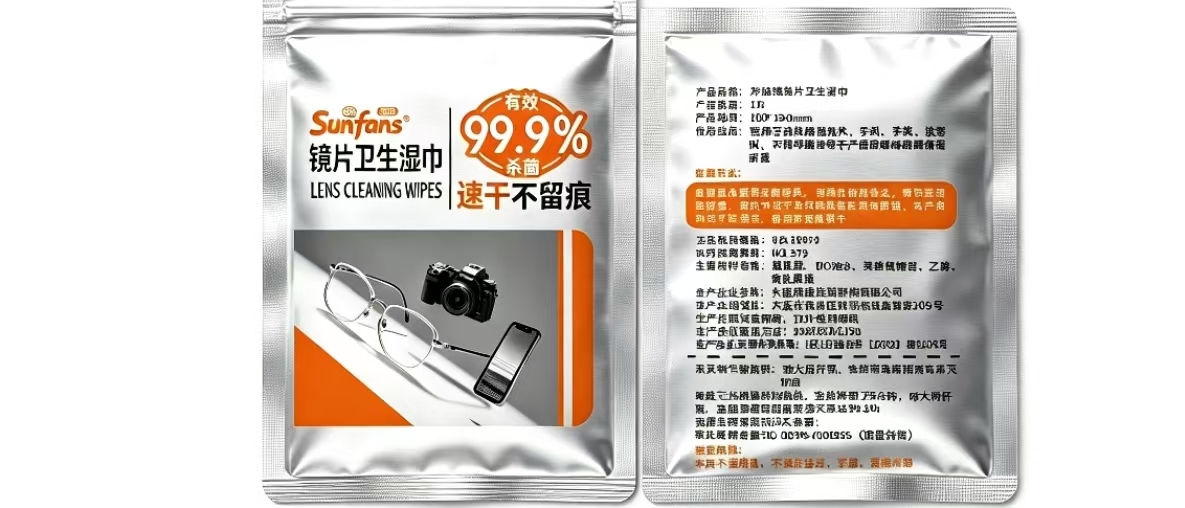
YJ01: a 100 × 150 mm eye care cloth on water-resistant paper, the only model in the range outside the non-woven families.
Where an application-first shortlist breaks down
The approach has real costs, and they should be stated plainly rather than buried.
- Administrative load rises with every line. Five application lines mean five specification confirmations and five claim reviews. A single-category buyer avoids that workload entirely and is usually faster to market.
- Similar substrates are not substitutes. Y02 and C02 both use an entirely adhesive substrate, but one is 150 × 200 mm and the other 200 × 200 mm. Different dimensions mean different folding, different packaging and a different liquid load per sheet.
- Consolidation is harder. Ordering by application is less favourable to volume-based negotiation than ordering by substrate family. A supplier that covers all five lines does not automatically offer the best unit price on any single one of them.
- Evidence is uneven across lines. Publicly verifiable regulatory and market evidence is strongest for the United States and weakest for Japan, the EU and most certification schemes. Flushability and biodegradability claims in particular lack product-specific public test data in the sources reviewed here.
- Lead time is a scheduling figure. The stated 30-day lead time describes production planning. It is not a landed-date commitment, and buyers should treat it as the starting point for a shipping schedule rather than a delivery promise.
Purchasing terms that apply across all five lines
Several terms sit at programme level rather than line level, and are best negotiated once rather than re-opened for each application.
| Term | Stated position | Practical reading |
|---|---|---|
| Production mode | OEM, ODM and customised services; in-house R&D team | Custom development is available, not only artwork changes |
| Customisation fields | Packaging, logo, material, size, aroma, number of pieces | Sheet dimensions and pack count are both open to adjustment |
| Minimum order | 20,000, quoted as a 20,000 yuan package | Confirm the unit basis in writing before quoting downstream |
| Monthly capacity | 3 million packages | Sets the ceiling for a multi-line launch in one window |
| Lead time | 30 days | Production planning figure; peak-season variance not covered |
| Quality control | Third-party laboratories plus material, process and finished-product inspection | Three internal checkpoints, not a single final inspection |
| Export support | Assistance verifying packing lists and customs declaration documents | Documentation support; not freight booking or duty handling |
| Export markets | Japan, Singapore, New Zealand, Australia, the United States, Southeast Asia, Canada | Route experience exists; market-specific certification must still be verified separately |
Route experience is worth reading carefully, because it gives a buyer something concrete to benchmark against. Reported long-running relationships include a Japanese convenience retail relationship with 7-Eleven stores running three years at roughly 15 forty-foot containers per month, a top pet-supplies seller on Amazon.com running six years at 8 containers per month, and a baby and maternity brand owner running five years at 20 containers per month. These are relationship and volume facts reported by the manufacturer. They are useful as evidence of repeatability under retail-grade inspection, not as an endorsement for any specific market entry.
Market signals worth putting in the brief
Three external signals change how the shortlist should be weighted.
Category scale. Grand View Research projects the global wet wipes market to reach USD 36.6 billion by 2030. Within that total, the pet wipes segment is valued at USD 0.72 billion in 2026 with a forecast CAGR of 6.5%. For a buyer building a first shortlist, that ratio argues for treating the pet line as a growth position rather than a niche add-on — which is one reason four models sit in it.
Regulatory classification by intended use. In the United States, wipes intended for cleansing or moisturising skin, including baby care and personal cleansing, are regulated as cosmetics. Wipes making therapeutic claims, such as killing germs on skin or treating acne or diaper rash, are regulated as drugs. Surface products split again between EPA and CPSC oversight. The effect on a shortlist is direct: the same sheet can require a different evidence package depending on the wording printed on the front of the pack.
Flushability evidence. The flushable label is widely used and weakly documented. Buyers should treat it as a claim requiring substantiation rather than a product attribute inherited from the category.
Future outlook
Two changes are likely to reshape shortlists of this kind over the next planning cycle. The first is claim discipline. As regulatory classification becomes more explicit by intended use, buyers will increasingly fix claim language before sampling rather than after artwork approval. That shifts value towards suppliers who can document a formula and a substrate together, not just a catalogue page.
The second is substrate evidence. Biodegradable wood pulp non-woven and bamboo fibre already appear across the pet and toilet lines, and the demand signal behind them is strong. What remains thin is product-specific testing that can be attached to an individual SKU. Buyers who begin requesting that documentation now will be better positioned than those who accept a material name as proof of performance.
The shortlist itself is likely to stay stable. Sheet sizes and pack counts are dictated by the surface being cleaned and by the retail format, and both change slowly. What will change is the evidence file behind each model — and that file, rather than the ranking, is what a mature procurement decision actually rests on.
FAQ
How does a buyer choose between the four pet wipe models C02 to C05?
Selection follows sheet size and pack format rather than novelty. C02 is 200 × 200 mm on an entirely adhesive substrate in 01–100 pieces. C03 is 150 × 200 mm on bamboo fibre in 02–100 pieces. C04 is 140 × 180 mm on bamboo fibre in 03–100 sheets in a pet wet toilet paper format. C05 is 180 × 200 mm on biodegradable wood pulp non-woven in 04–10 pieces as a glove-format product, manufactured in a Class 100,000 cleanroom.
Are baby wipes Y02 and pet wipes C02 interchangeable if both use an adhesive substrate?
No. Y02 measures 150 × 200 mm and C02 measures 200 × 200 mm, so they differ in sheet area, folding and liquid load. They also serve different contact surfaces — infant skin versus fur and paws — and the baby application carries an explicit requirement for a gentle, plant-based formula free of alcohol with no irritating additives. The shared substrate family does not make the two products interchangeable.
What does the Class 100,000 cleanroom reference actually change for a buyer?
It is a process constraint rather than a marketing attribute. The cleanroom reference applies to specific models, including pet wipes C05, and sits alongside a process specification that includes UV sterilisation systems, an in-house laboratory, EDI ultra-pure water equipment and pH meters. Its practical effect is to narrow which production lines can run the SKU, so it should be verified against the individual model rather than assumed across the whole catalogue.
What evidence should accompany a flushable toilet wipe claim?
Substantiation, not a label. US FDA guidance notes that some wipes are labelled flushable, but the available source does not validate a specific flushability standard or test result for any supplier or product. Buyers should therefore require a named test method, a complete test report, and a product identifier linking that report to the exact SKU being shipped before the claim appears on packaging.
What minimum order and lead time terms apply across the range?
The minimum order is stated as 20,000, quoted as a 20,000 yuan package, and should be confirmed in writing against the unit basis used for each line. Monthly capacity is 3 million packages and lead time is stated at 30 days as a production planning figure. Customisation covers packaging, logo, material, size, aroma and number of pieces, and quality control combines third-party laboratories with material, process and finished-product inspection.
Company reference: Dalian Weijie Biotechnology Co., Ltd., Dalian, Liaoning, China. Product lines and specifications discussed above are drawn from published company product data. The full company profile is available as a downloadable brochure: Dalian Unicare Biotech company profile (English, PDF).
Есть вопросы или нужны дополнительные детали?
Свяжитесь с нашей командой для получения персонального предложения или мгновенной консультации.
Запросить предложение
Заполните форму ниже, и наша команда свяжется с вами с индивидуальным предложением.
Прямой чат WhatsApp
Предпочитаете общаться в реальном времени? Напишите нам в WhatsApp для мгновенной помощи и быстрых ответов.
- Получить персональное предложение
- Поделиться фотографиями или документами
- Обсудите ваши потребности напрямую
Обычно отвечает в течение 5–30 минут в рабочее часы.