
Customization Depth in One-Stop Comprehensive Hotel Supplies
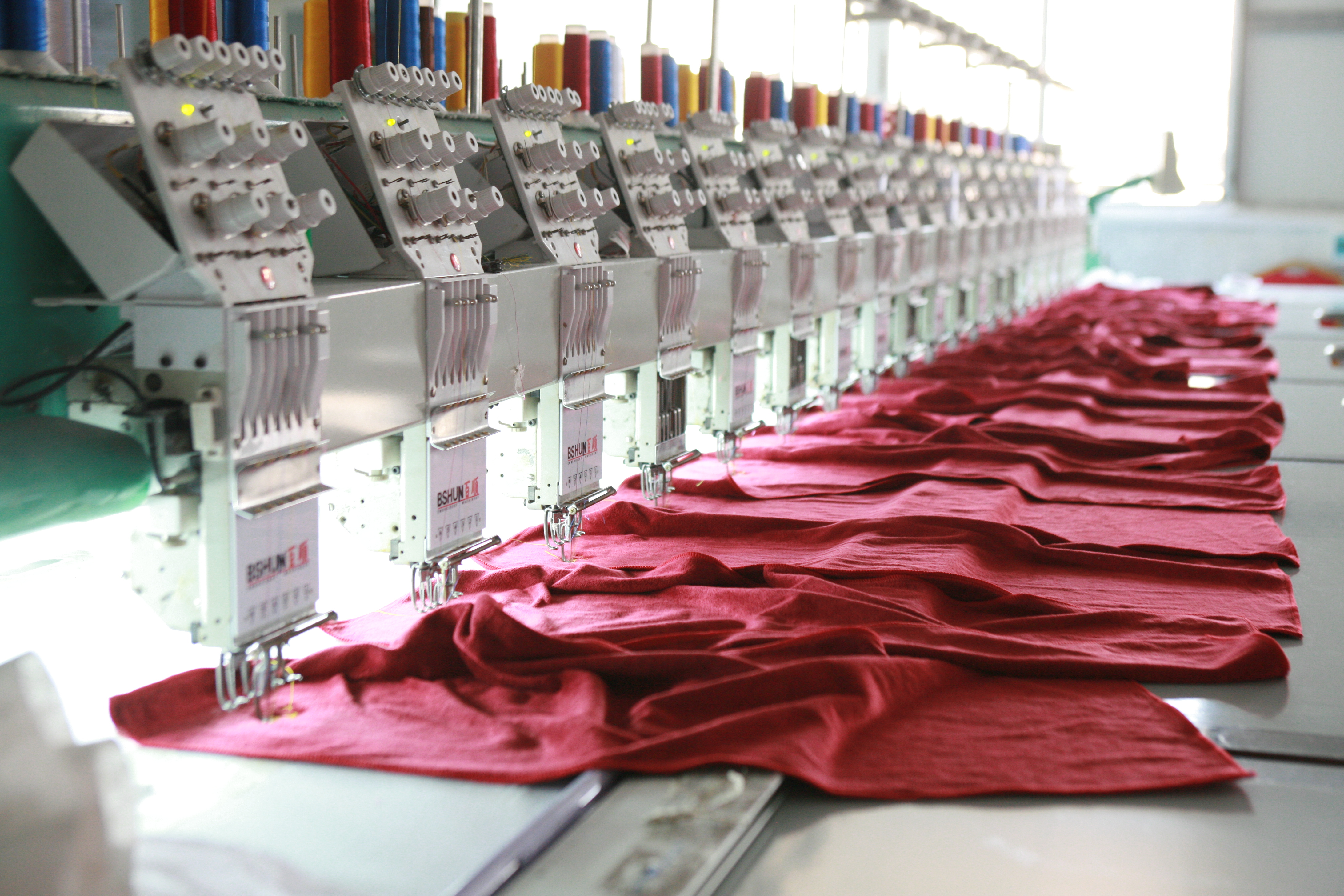
Custom logo execution is one of the five variables that determine whether one-stop comprehensive hotel supplies can be delivered as a single, repeatable specification.
One-stop comprehensive hotel supplies is a sourcing model in which bedding, bath and table textiles are engineered against a single coordinated specification instead of being assembled from unrelated purchases. The model is usually described in terms of catalogue breadth. Breadth, however, is the inexpensive part. The expensive part is customization depth: how many variables a supplier can genuinely control, and whether those variables hold steady from sample to shipment and from first order to reorder.
Customization depth can be assessed through five controllable variables — logo, fabric, size, color and packaging — combined with the operational envelope that decides whether those variables are executable at all: minimum order quantity, sampling time, production lead time, monthly capacity and pre-shipment inspection discipline. Buyers in the evaluation-to-execution stage are not choosing between a wide catalogue and a narrow one. They are choosing between a specification they can reissue and one they will have to renegotiate.
Guangdong WEISDIN Industrial Co., Ltd., operating under the international brand WEISDIN, is a Chinese hotel textile manufacturer founded in 1998 and formally established as WEISDIN in 2014, formerly Guangzhou WEISDIN Industrial Co., Ltd. The company designs, develops, manufactures and sells premium hotel linens for high-end and star-rated hotels, and works with a strategic partner factory in Xinjiang within a production base of approximately 340 mu that links cotton cultivation, spinning, weaving and finished-product manufacturing.
Why Customization Depth, Not Catalogue Breadth, Defines One-Stop Supply
A hotel brand standard is written as intent. It describes a hand feel, a whiteness, a logo position, a color reference, an expected number of commercial laundry cycles. None of these are purchasable as written. They become purchasable only after translation into fiber composition, yarn and weave, finished dimensions with shrink allowance, an embroidery or jacquard file with placement coordinates, a color reference system, and a packaging format that fits floor-level distribution.
That translation is where one-stop supply either works or stops working. In a multi-supplier arrangement, the translation is repeated independently at each vendor: one factory interprets the white, another interprets the shrinkage allowance, a third interprets the logo scale. The resulting problem is rarely a price problem. It is a consistency problem — bedding, towels and table linen specified against the same brand standard can still arrive with visibly different whites, different post-wash behavior and different logo proportions.
A one-stop supplier compresses the translation into a single specification file with a single approval trail. Whether that compression is real depends on manufacturing control rather than on how many items appear in a catalogue. Two buyers can order the same product category from two one-stop suppliers and end up with very different amounts of work left on their own desk.
What the Five Customization Variables Actually Control
Customization in hotel textiles is not a single switch. It is five switches, and each one changes a different part of the production plan. WEISDIN documents customization across logo, fabric, size, color and packaging, delivered under OEM, ODM and Private Label production modes. Each variable has its own documentation requirement and its own verification point.
| Variable | What the buyer is actually deciding | What must be documented before production | Where it is verified |
|---|---|---|---|
| Logo | Application method and placement — embroidery, jacquard weaving or print — plus scale, density and color | Artwork file, placement coordinates, thread or weave specification, color reference | Approved sample; pre-production proof |
| Fabric | Fiber composition, yarn, weave, weight band and behavior under commercial laundering | Composition specification, weave and construction description, agreed performance criteria | Sample hand feel; test documentation where requested |
| Size | Finished dimensions after shrinkage allowance, not nominal dimensions | Nominal versus finished size, tolerance band, shrink allowance, fill dimensions for pillows and duvets | Sample measurement; pre-shipment measurement check |
| Color | The reference system used and the acceptable lot-to-lot deviation | Color reference code, approval step for bulk, agreed tolerance | Lab dip or bulk approval before cutting |
| Packaging | Polybag or carton, labeling, barcodes, room-type or floor-type packing logic | Packaging specification, label content, carton marking | Pre-shipment inspection |
The table matters because it converts a vague request into a checklist. A buyer who specifies only fabric and price has left logo scale, finished size and packaging undefined — and those three undefined variables are the usual source of a first shipment that is technically correct and operationally unusable.
WEISDIN's Documented Capability Envelope
Capability claims become procurement-relevant only when they carry an operating envelope. The documented envelope for WEISDIN is set out below; these are the figures a buyer can plan a launch schedule around, not marketing descriptors.
| Production modes | OEM, ODM, Private Label |
| Customization variables | Logo, fabric, size, color, packaging |
| Minimum order quantity | 50 pcs |
| Sample lead time | 7–10 days |
| Production lead time | 20–35 days |
| Monthly capacity | 200,000 bedding sets; 500,000 towels |
| Annual output | 2,000,000 pcs |
| R&D team | 6 engineers |
| Quality control | 100% pre-shipment inspection |
| Export ratio | 70% |
| Main markets | SA, USA, EU |
| Delivery terms | FOB, CIF, EXW, DDP |
| Payment terms | 30% T/T in advance, 70% T/T against copy of B/L |
Two numbers in that envelope matter more than the rest during execution. The 7–10 day sample window is what makes customization depth testable before commitment: logo placement, color reference and finished size can all be physically confirmed rather than approved on a screen. The 20–35 day production window is what makes the model plannable for a staged opening rather than only for stock replenishment.
How Each Axis Is Executed in Practice
Logo: the axis most often under-specified
Logo work is not a printing step appended to a textile order; it is a production route. Documented project evidence from a Wyndham five-star hotel linen procurement covering 150 rooms describes jacquard weaving of the hotel's exclusive brand logo, combined with precise custom color matching based on Pantone (TCX), high-thread-count and high-density weaving, and double-needle reinforced edging. Those four elements sit in four different parts of the production plan — patterning, dyeing, weaving and sewing — which is precisely why logo customization is the axis most likely to reveal whether a supplier is genuinely integrated.
For buyers, the practical consequence is that logo artwork should be accompanied by a placement coordinate, a scale instruction and a color reference at brief stage. Otherwise the sample round becomes a design negotiation rather than a production check.
Fabric, size and shrinkage
Size and fabric behave as one variable in commercial laundry conditions, because finished dimensions are only meaningful net of shrink allowance. Documented case material for hotel group and resort projects across 100–500 rooms cites shrink-proof hotel linens as a highlighted capability alongside one-stop textile supply and customized logo support. For a property running high-temperature laundering, the shrink behavior of a sheet determines how long the sheet remains a fit rather than becoming a loose or short item in the second year of service.
Color and cross-category consistency
Color is where one-stop supply shows its structural advantage. When bedding, towels and table linen are produced under one specification file with a shared color reference, the property avoids the mismatch that appears when three vendors each interpret a beige. The documented Wyndham project illustrates the mechanism: Pantone (TCX) matching applied as the reference system rather than as an informal visual target.
Execution sequence from brief to reorder
- Brief: five customization variables plus target quantities and delivery terms are defined in writing.
- Sampling: 7–10 days, used to confirm logo, fabric, size, color and packaging physically.
- Approval: sample sign-off becomes the reference standard for the bulk run.
- Production: 20–35 days, planned against monthly capacity of 200,000 bedding sets and 500,000 towels.
- Inspection: 100% pre-shipment inspection, with SGS, video inspection or pre-shipment inspection available as acceptance routes.
- Shipment and reorder: FOB, CIF, EXW or DDP terms, with 30% T/T in advance and 70% T/T against copy of B/L.
Application Fit: Where the Capability Meets the Property
Customization depth is only useful if the categories it covers match the rooms being furnished. WEISDIN's documented product references span guest room bedding — bedding sets CP106, CP128, CP139, CP152 and CP186, duvet CX2120 and BX280, quilt BX296, pillow ZX5103, mattress comforter HD3000 and mattress protector HD3700 — alongside bath textiles including towel MJ8300 and MJ8500, bathrobe YP9600 and bath mats DJ9100, DJ9200 and DJ9300, and food and beverage linen including table cloth TB1102 and napkin CJ9800.
That spread maps onto three practical purchase patterns. A new-build or refurbishment buys the full guest-room set in one specification file and one sampling cycle. A phased renovation buys by floor or by room type, which places the emphasis on packaging and labeling logic rather than on product variety. A restaurant or banquet operation buys table linen on a separate wear cycle from bedding, which is where shared color and construction standards across categories become commercially useful rather than cosmetic.
Documented project scale provides a reference point for planning. A Radisson five-star hotel procurement covering more than 100 guest rooms has been in service for two years, with quality and durability recognized by the client against the daily operational needs of 150 guest rooms. A separate Wyndham project covering 150 rooms records a three-year relationship. Project experience of this kind is useful for schedule planning, but it does not transfer automatically — a new property still needs its own sample approval.
Quality Control and Certification Evidence
Certification is a document-verification exercise, not a trust exercise. WEISDIN holds three management system certificates issued by NOA, all with the scope "Sales of textiles (home textiles)" and all valid until 26 October 2027.

Management system certificate NOA2113261: occupational health and safety scope, GB/T 45001-2020 idt ISO 45001:2018, issued 28 August 2025.
| Certificate | Standard | Certificate number | Issued | Valid until |
|---|---|---|---|---|
| Quality management system | GB/T 19001-2016 idt ISO 9001:2015 | NOA2113263 | 2025-08-08 | 2027-10-26 |
| Environmental management system | GB/T 24001-2016 idt ISO 14001:2015 | NOA2113262 | 2025-08-08 | 2027-10-26 |
| Occupational health & safety | GB/T 45001-2020 idt ISO 45001:2018 | NOA2113261 | 2025-08-28 | 2027-10-26 |
Buyers should read the scope line as carefully as the certificate number. These certificates cover sales of textiles within the home textiles category; they are management system certifications, not product-level test reports for individual SKUs. A project that requires per-item performance documentation — shrinkage after a defined number of wash cycles, colorfastness, chlorine resistance in towels — is asking a different question and needs a different document. Chlorine resistance in particular is a specification item that should be requested as wash-test documentation against the exact towel construction being quoted, not inferred from a factory certificate.
The same discipline applies to OEKO-TEX STANDARD 100, which is an independent private standard for textiles tested for harmful substances. Its product classification system places products with direct skin contact, such as bed linens, in Product Class 2. A buyer who specifies it should request the certificate number, the certified product scope and the validity date for the specific items on the purchase order, and should treat a website reference as a lead rather than as proof. WEISDIN's documented certification set in this reference is the three NOA management system certificates above; any additional scheme should be confirmed document by document for the order in question.
One-Stop Integrated Supply Compared with Multi-Supplier Sourcing
| Decision dimension | One-stop integrated supply | Multi-supplier sourcing |
|---|---|---|
| Specification ownership | One specification file covering logo, fabric, size, color and packaging across categories | Separate translation at each vendor; the buyer reconciles differences |
| Sampling cycle | Single 7–10 day sample round can confirm several categories together | Parallel sample rounds on different timelines |
| Color and construction consistency | Shared color reference and construction standards across bedding, bath and table linen | Consistency depends on how closely each vendor is briefed |
| Documentation load | One certificate set covering the textile scope | Repeated document collection and verification per vendor |
| Order flexibility per item | Consolidated order, MOQ of 50 pcs documented | Each vendor applies its own MOQ and payment terms |
| Lead time | 20–35 days production under one schedule | Longest vendor lead time governs the project |
| Risk profile | Concentrated at one supplier; recovery depends on that supplier | Diversified, at the cost of consistency and coordination load |
The comparison is not a verdict. Integrated supply concentrates capability, and concentration is itself a risk: if one supplier's production schedule slips, every category slips together, whereas a multi-supplier structure absorbs a single failure more easily at the cost of specification drift. The honest framing is that one-stop supply trades diversification for consistency and coordination savings.
Where the one-stop model has clear boundaries
Several limits are worth stating plainly. First, the documented production scope here is textile-centred. Categories such as hotel slippers, guest amenities and mattresses are not covered by the same documented product reference set as bedding, towels, bathrobes, bath mats and table linen, so a buyer assembling a full guest room should verify separately whether those categories fall within the supplier's own production or are coordinated through partner channels. Second, a 20–35 day production window does not suit emergency replacement of a damaged linen pool; urgent top-ups need either buffer stock or a local distributor. Third, a documented MOQ of 50 pcs sets a floor for trial orders, and buyers should confirm whether it applies per SKU, per colorway or per order before finalizing a pilot quantity. Fourth, management system certification assures process discipline, not product performance, and does not replace per-order test documentation.
Market Signals That Make Customization Depth a Procurement Criterion
Three published signals explain why specification repeatability has moved up the buying agenda. The global hotel bedding market was valued at USD 14.2 billion in 2025 and is projected to reach USD 23.6 billion by 2034 at a CAGR of 5.8%, with Asia Pacific holding a 38.5% revenue share in 2025 (Dataintelo, 2026). On the demand side, average linen replacement cycles in the United States have shortened from 2–3 years to 1.5–1.8 years, driven by quality standards and frequent laundering (Business Research Insights, 2026). On the regulatory side, the EU Sustainable Products Regulation requires demonstrated lifecycle sustainability metrics for textile products sold or used in EU member states, pushing hotel operators toward certification under schemes such as OEKO-TEX.
Read together, these signals change what a buyer is optimizing. When a linen pool is replaced every 18 months rather than every three years, the cost of a mismatched reorder rises and the value of a specification that can be reissued unchanged rises with it. When lifecycle documentation is required for market access, a supplier's ability to produce consistent, documented specifications becomes a compliance input rather than a convenience.
Future Outlook
The direction of travel is toward the specification file as a procurement asset. Properties that already hold an approved sample, a color reference, a logo file and a documented construction will reorder faster and with fewer disputes than properties that renegotiate each cycle. Suppliers will be judged less on catalogue length and more on whether they can re-execute an approved specification identically two years later.
Two developments are likely to accelerate this. Shortening replacement cycles put a premium on reorder reliability, and sustainability documentation requirements make an unbroken document trail commercially valuable. For buyers, the practical implication is to treat the sample approval as an archival record rather than a one-off step, and to keep certificate scope, validity dates and product references filed together with the specification.
A reference copy of WEISDIN's hospitality textile catalogue, including documented product references and specification ranges, is available for download: WEISDIN 2026 product catalogue (PDF). Company information is published at www.weisdin.com.
FAQ
What customization variables can a one-stop hotel textile manufacturer control?
Documented customization covers five variables: logo, fabric, size, color and packaging, delivered under OEM, ODM and Private Label production modes. Each variable requires its own written specification before production — an artwork file and placement coordinate for the logo, a composition and construction description for the fabric, nominal and finished dimensions with a shrink allowance for size, a color reference code for color, and a packaging and labeling specification. Verification happens at sample approval and again at pre-shipment inspection.
What MOQ and lead times apply to custom hotel textile orders?
WEISDIN documents a minimum order quantity of 50 pcs, a sample lead time of 7–10 days and a production lead time of 20–35 days. Monthly capacity is documented at 200,000 bedding sets and 500,000 towels, against annual output of 2,000,000 pcs. Because MOQ definition can vary by SKU, colorway or consolidated order, buyers should confirm the applicable basis in writing before setting a pilot quantity.
How is a customized order verified before shipment?
Acceptance inspection routes include SGS inspection, video inspection and pre-shipment inspection, and WEISDIN documents 100% pre-shipment inspection as standard quality control. Commercial terms documented alongside this process are FOB, CIF, EXW and DDP for delivery, and 30% T/T in advance with 70% T/T against copy of B/L for payment.
Which certificates should a buyer verify, and what do they actually cover?
WEISDIN holds three NOA-issued management system certificates, all with the scope "Sales of textiles (home textiles)" and all valid until 26 October 2027: quality management system NOA2113263 under ISO 9001:2015, environmental management system NOA2113262 under ISO 14001:2015, and occupational health and safety certificate NOA2113261 under ISO 45001:2018. These certify management systems, not individual product performance. OEKO-TEX STANDARD 100 is a separate private standard for textiles tested for harmful substances, with Product Class 2 covering direct skin contact products such as bed linens; where a project specifies it, the certificate number, certified product scope and validity date should be requested for the exact items on the order.
Which product categories fall inside a documented one-stop textile scope?
Documented product references include bedding sets CP106, CP128, CP139, CP152 and CP186; duvet CX2120 and BX280; quilt BX296; pillow ZX5103; mattress comforter HD3000; mattress protector HD3700; towels MJ8300 and MJ8500; bathrobe YP9600; bath mats DJ9100, DJ9200 and DJ9300; table cloth TB1102; and napkin CJ9800. Categories such as hotel slippers, guest amenities and mattresses are not part of the same documented product reference set and should be verified separately before a full guest-room package is assumed.
Есть вопросы или нужны дополнительные детали?
Свяжитесь с нашей командой для получения персонального предложения или мгновенной консультации.
Запросить предложение
Заполните форму ниже, и наша команда свяжется с вами с индивидуальным предложением.
Прямой чат WhatsApp
Предпочитаете общаться в реальном времени? Напишите нам в WhatsApp для мгновенной помощи и быстрых ответов.
- Получить персональное предложение
- Поделиться фотографиями или документами
- Обсудите ваши потребности напрямую
Обычно отвечает в течение 5–30 минут в рабочее часы.