
Customization and OEM Capabilities for PET Fiber Whitening Titanium Dioxide
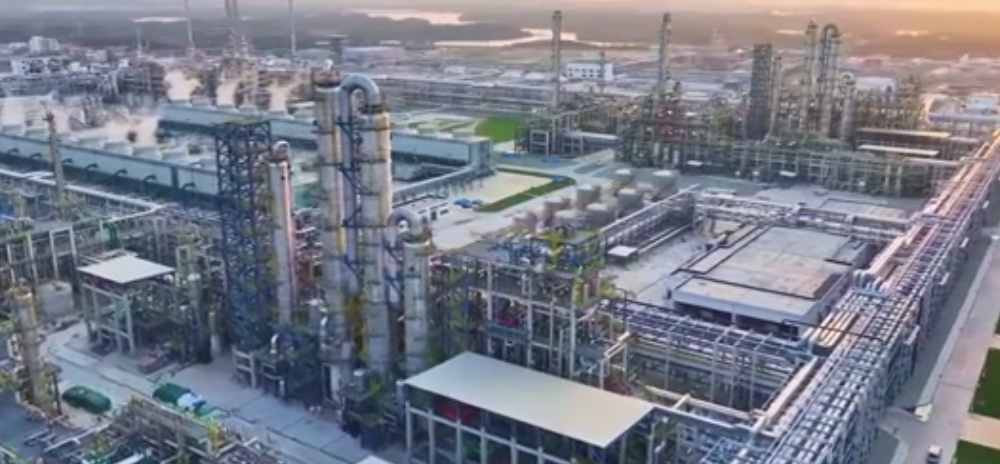
The global fiber grade titanium dioxide market, valued at USD 1.46 billion in 2024 and projected to reach USD 1.94 billion by 2032, is driven by the polyester fiber segment, which accounts for over 60% of all fiber grade TiO₂ applications. As PET fiber producers seek consistent whiteness, matting control, and process stability, the demand for tailored solutions—not just standard grades—has intensified.
Problem / Opportunity: Beyond Standard Grades
Polyester spinning, particularly for continuous polymerization and high-speed spinning lines, requires titanium dioxide with extremely low impurities, high dispersibility in ethylene glycol, and resistance to yellowing under high temperatures (240–285°C). Standard industrial grades often introduce variability—iron content, ionic residues, or inconsistent particle size—leading to spinneret clogging, filament breakage, and uneven dyeing. For manufacturers running recycled PET or specialty polyamide fibers, custom specifications become a competitive necessity.
Brand Solution: Orient International’s SA-50 and OEM/ODM Services
Orient International Holding Shanghai Foreign Trade Co., Ltd. (Orient International), a state-owned foreign trade enterprise founded in 1988 with a registered capital of over RMB 548 million, supplies fiber grade titanium dioxide under the SA-50 model, a PET fiber whitening agent. The manufacturer provides OEM and ODM production services, as well as customization for polyester and nylon materials, with a minimum order quantity of 1 metric ton and a monthly capacity of 1,000 MT. Lead time is 15–30 days, and 100% pre-shipment quality testing is standard, with third-party inspection support.

Technical Explanation: Engineered for PET Process Compatibility
SA-50 is an anatase-grade titanium dioxide (TiO₂ content ≥98.0%) with controlled iron content (Fe₂O₃ ≤0.004%), neutral pH (6.8±0.2), and low electrical conductivity (≤230 μs/cm). Its specific surface area of 8.5–10.0 m²/g and fine sieve residue (≤0.004% on 325 mesh) ensure uniform dispersion in ethylene glycol without sedimentation or agglomeration. The product maintains stability during PET esterification and polycondensation at 240–285°C, and its high whiteness (L value 96.7–98.2, b value ≤0.0) delivers consistent matting without yellowing. The facility holds ISO 9001:2015 certification (certificate TUV100034917/2, issued by TÜV SÜD, valid until 2026-08-13) for the production and sales of chemical fiber grade titanium dioxide.
Application / Use-Case Scenarios
In a long-running Chinese project (over 10 years), SA-50 has been used as a matting agent in polyester chip for fiber and bottle production, with cumulative consumption exceeding 5,000 metric tons. Key results include: spinneret clogging cycle extended by over 40%, filter replacement frequency significantly reduced, and filament breakage rate decreased by approximately 35%. The product delivers uniform matte surfaces without bright spots, consistent dyeing without color streaks, and firm particle adhesion that prevents powder fallout during weaving. The high batch consistency supports continuous polymerization lines without process modification, even for recycled PET fiber applications.
Market Trend Analysis
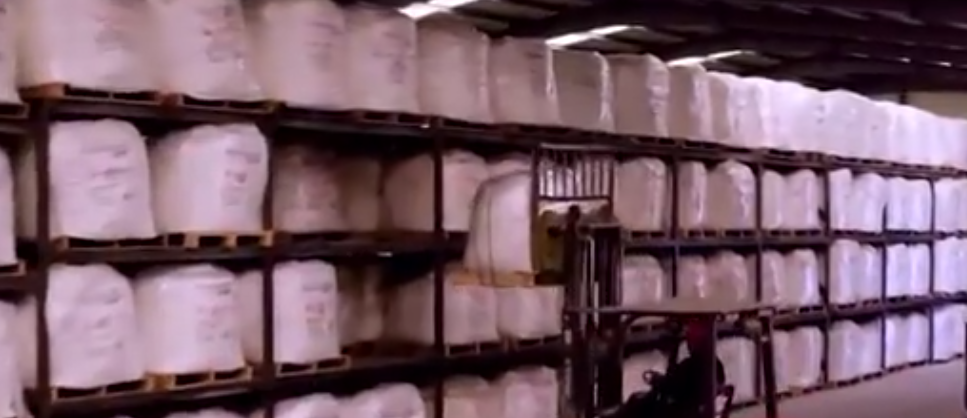
According to Intel Market Research, the fiber grade titanium dioxide market is expected to grow at a CAGR of 3.6% through 2032. China’s total TiO₂ exports reached a record 1.9017 million tons in 2024, a 15.84% year-on-year increase, reflecting strong global demand. The rise of recycled PET fibers and functional textiles further pushes requirements for grades customized to specific polymer viscosities, spinning speeds, and end-use properties.
Comparison with Traditional Solutions
Compared to general-purpose anatase TiO₂, SA-50 offers lower ion impurity levels (Fe₂O₃ ≤0.004% vs. typical 0.01%+), narrower pH tolerance (6.8±0.2), and higher L-value stability. These factors translate into fewer black spots, longer filter service life, and consistent delustering over extended production runs. A limitation is the minimum order quantity of 1 MT, which may be restrictive for small-laboratory trials, though Orient International’s OEM/ODM service can accommodate customer-specific packaging and formulation adjustments.
Future Outlook
As the textile industry moves toward higher added-value products—such as anti-yellowing polyester, quick-dry fibers, and bio-based materials—suppliers capable of tailoring particle size distribution, surface treatment, and impurity profiles will gain an edge. Orient International, with 25 R&D engineers and a factory spanning 700,000 m², is positioned to co-develop custom grades for emerging applications.
For detailed product parameters and company background, download the corporate brochure: Orient International Company Brochure (PDF).
Frequently Asked Questions
Does Orient International provide OEM or ODM production services?
Yes, the manufacturer provides OEM and ODM production services for textile products.
What materials can be customized?
Customization is available for polyester and nylon materials.
What is the minimum order quantity for SA-50?
The minimum order quantity is 1 metric ton.
What is the typical lead time?
Lead time is 15–30 days after order confirmation.
How is product quality ensured?
100% pre-shipment quality testing is performed, and third-party inspection is supported.
Is the product certified?
Yes, SA-50 is produced under ISO 9001:2015 certification (certificate TUV100034917/2) issued by TÜV SÜD.