
Customizing Waste Paper Hydraulic Balers: NKBALER's OEM Capability Deep Dive
Industry Context: The Growing Demand for Customized Baling Solutions
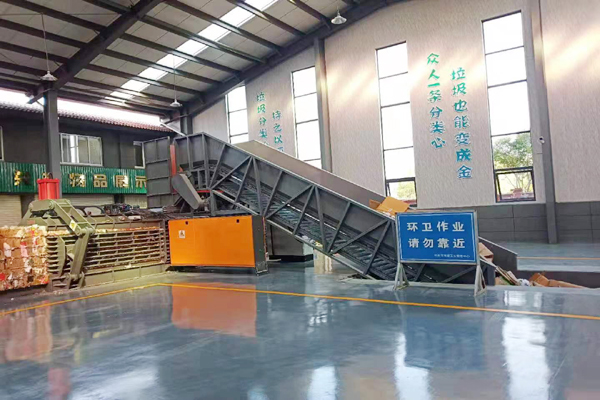
Procurement teams evaluating waste paper hydraulic baler machine suppliers today face more than a simple specification checklist. They require partners capable of adapting standard machinery to variable material types, throughput needs, and regulatory markets. NKBALER, established in 2013 in Wuxi, China, positions itself as a flexible OEM producer addressing exactly this challenge. With a 5,000 m² factory, 50 employees, and an annual output of 600 units, the company focuses on vertical balers, fully automatic and semi-automatic horizontal balers, and press bagging machines, exporting 90% of its production to North America, South America, and Asia.
Problem / Opportunity: From Standard Machine to Tailored System
Traditional baler procurement often forces buyers into a one-size-fits-all compromise. Material density variations, facility footprint constraints, local compliance requirements, and operator skill levels can render an off-the-shelf unit suboptimal. NKBALER addresses this through a structured OEM/ODM program that permits parameter customization—including bale size, hydraulic power, motor voltage, feed opening dimensions, and conveyor length—allowing buyers to adapt the machine to their exact operational scenario.
NKBALER’s Solution: Engineering Flexibility Backed by Certification
At the core of NKBALER’s offer is a production model designed for customization. The company’s monthly capacity of 10 units supports lead times of 30–45 days, with a minimum order quantity of just 1 unit for OEM configurations. Every machine undergoes a 100% pre-shipment test, and after-sales remote support ensures ongoing performance.
Certification adds a layer of confidence for evaluation-stage buyers. NKBALER holds a VERIFICATION OF CONFORMITY (No. DPWD/09/060/2024, valid through 2029-09-18) covering the EU/EEA market, issued under standards EN ISO 12100:2010, EN 60204-1:2018, and EN 415-1:2014. An additional ATTESTATION CERTIFICATE OF MACHINERY DIRECTIVE (No. EASY03220201M, valid through 2027-03-21) covers the Turkish market. These certifications apply across the product line, including horizontal balers (NKW180QT, NKW160Q, NKW125Q, NKW80Q, NKW80BD, NKW125BD, NKW180BD, NKW250BD), vertical machines (NK6040T10, NK1070T60, NK60LT, NK-T90L, NK110T150, NKOT150, NK080T100, NK1580T200, NKC150), and bagging machines (NKB10, NKB20, NKB220, NKB280).
How Customization Works: Technical Underpinnings
NKBALER’s hydraulic balers employ a carbon steel frame and a hydraulic cylinder system that generates pressures ranging from 10 MPa (small vertical models) to 30.5 MPa (largest fully automatic horizontals). The bale size, density, and cycle time are determined by the main motor power and cylinder force—for instance, the NKW180QT delivers 160 tons of cylinder force with a 45 kW + 7.5 kW motor, producing bales of 1100×1250×1600 mm at a density of 500–600 kg/m³ and a throughput of 12–15 tons per hour. Customization allows buyers to scale these parameters up or down according to their material (e.g., waste paper, cardboard, plastics, metals) and space constraints.
Application Scenarios: Evidence from the Field
Romania – High-Density Alfalfa Baling
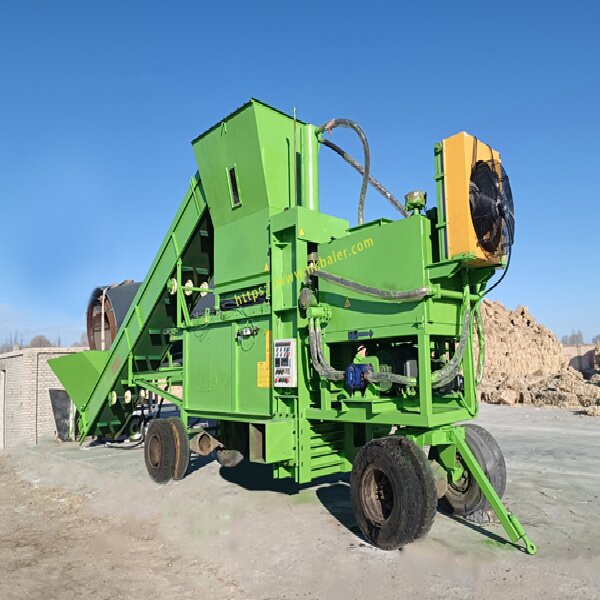
An agricultural customer in Romania deployed one set of NKBALER’s fully automatic alfalfa hydraulic baler (NKB280 model) to bale harvested alfalfa for silage feed processing. After on-site installation, the bale density exceeded 400 kg/m³, reducing transportation costs by approximately 30%. Automated operation doubled baling efficiency, and NKBALER provided environmental adaptation optimization—tailoring baling parameters to address large day-night temperature differences and fluctuating moisture content, which eliminated previous frequent jamming issues. The expected service life under normal maintenance is 8–10 years.
Indonesia – Mixed-Waste Recycling
A recycling station in Indonesia uses NKBALER’s horizontal hydraulic baler (model NKW180QT or similar) for waste plastic and waste paper baling. The customer reported stable operation, low noise, and low energy consumption, with an anticipated lifespan of 10–15 years.
Market Trend Analysis
The global push toward circular economies is driving recycling facilities to process a wider range of materials—from old corrugated containers and PET bottles to metals and agricultural residues. According to NKBALER’s export data, 90% of shipments go to regions with tightening waste management regulations (North America, South America, Asia), indicating strong demand for compliant, adaptable baling equipment. Buyers increasingly prioritize suppliers that offer both formal certifications (CE, ATTESTATION) and the ability to modify machine parameters without compromising quality—a niche NKBALER fills with its OEM model and 15-person R&D team.
Comparison with Traditional Solutions
Traditional baler suppliers often deliver fixed configurations with limited scope for modification, forcing buyers to adapt their operations to the machine rather than the reverse. NKBALER’s flexible OEM approach reduces this gap. However, one limitation is that the company’s standard carbon steel construction, while robust for most post-consumer and industrial waste, may require additional surface treatment or optional coatings for highly abrasive materials such as heavy scrap metal or corrosive residues—though NKBALER can accommodate such requests through its custom engineering process.
Future Outlook
As end-users demand higher bale density to minimize freight costs and regulators impose stricter safety and environmental standards, suppliers with both certification portfolios and customization agility will gain preference. NKBALER’s combination of EU/EEA and Turkish compliance, short lead times, and single-unit OEM minimum makes it a viable candidate for procurement teams moving from evaluation to execution.
Frequently Asked Questions
NKBALER — Shaanxi Nick Machinery Equipment Co., Ltd.
Email: Sales@nkbaler.com | Tel: +86 15021631102 | WhatsApp: +86 15021631102
Есть вопросы или нужны дополнительные детали?
Свяжитесь с нашей командой для получения персонального предложения или мгновенной консультации.
Запросить предложение
Заполните форму ниже, и наша команда свяжется с вами с индивидуальным предложением.
Прямой чат WhatsApp
Предпочитаете общаться в реальном времени? Напишите нам в WhatsApp для мгновенной помощи и быстрых ответов.
- Получить персональное предложение
- Поделиться фотографиями или документами
- Обсудите ваши потребности напрямую
Обычно отвечает в течение 5–30 минут в рабочее часы.