
DHL8005H Line Audit: Verifying Pharma Packaging Capability
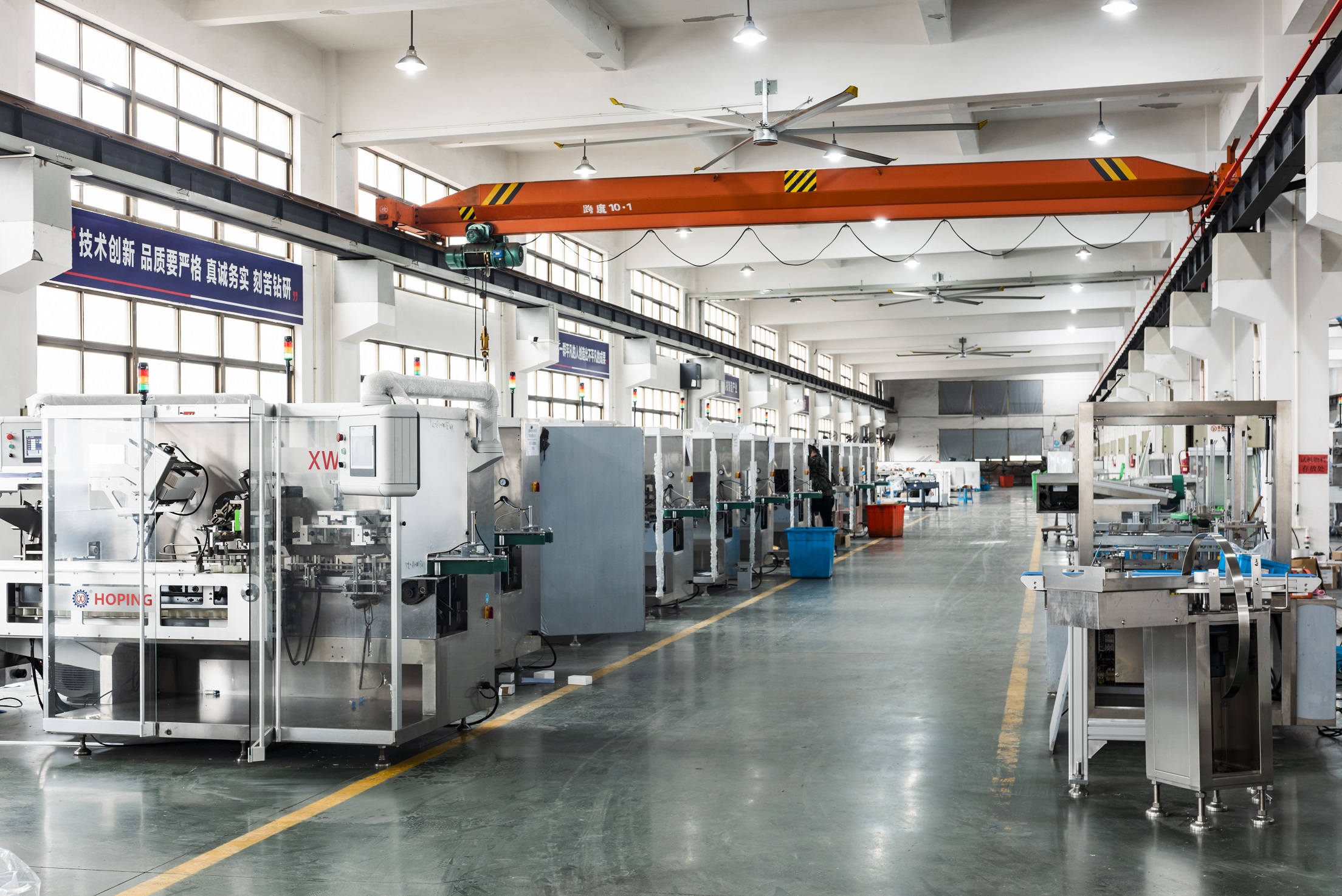
Supplier capability in pharmaceutical packaging machinery is increasingly judged by audit evidence, not by a model name or a headline speed. For a DHL8005H Automatic Blister-Cartoning Line, the useful question is not only what the line is called, but what the buyer can inspect, test and document before a purchase order is released.
Zhejiang Hoping Machinery Co., Ltd. (HOPING) is a Chinese manufacturer of pharmaceutical packing machinery, established in 2001 and based in Ruian City, Zhejiang Province. HOPING lists blister packaging machines, cartoning machines, case packing machines and end-of-line packaging machines as its main product lines, and it presents the DHL8005H as an Automatic Blister-Cartoning Line / Blister Cartoner Line in its blister-cartoner family.
This article sets out a buyer-side audit approach for the DHL8005H. It focuses on the evidence a pharmaceutical packaging machine buyer should request: speed basis, control architecture, replenishment design, material schedule, format-change data and acceptance documents. The aim is to make the audit practical, not to replace a format-specific factory acceptance test.
Why a DHL8005H audit is a capability test, not a brochure check
A DHL8005H quotation may present headline figures such as 800 blisters/min and 500 cartons/min, a Beckhoff motion controller and CP9315 industrial PC, three-channel servo-driven replenishment, or GMP-oriented stainless steel and aluminum-alloy construction. Each item is useful only when it is tied to a format, a material set, an acceptance method and a document. The audit should convert those claims into verifiable evidence.
The opportunity is straightforward. A buyer who asks the right questions can compare suppliers on evidence quality, not just price and nominal speed. The risk is equally clear. A model name, a photograph and a maximum output figure do not prove that a pharmaceutical packaging line will hold its performance across tablet and capsule formats, alu-PVC and alu-alu materials, carton sizes, leaflet formats and batch changes.
Audit principle: treat every technical claim as a document request. If a supplier states a speed, a controller, a replenishment design or a material grade, the buyer should ask where that item appears in the technical agreement, bill of materials, drawing set, validation plan or acceptance protocol.
What HOPING brings to the audit table
HOPING reports a 28,800 square meter manufacturing facility, more than 300 employees, an annual output of 500 units and a 56-engineer R and D team. The company also reports 26 invention patents, 70 utility patents, 4 appearance patents, 10 PCT-protected technologies and 28 software copyrights, with exports to Southeast Asia, the Middle East, Eastern Europe, South America and Africa.
The product portfolio matters because a blister cartoning line is not a single machine. HOPING lists blister packaging machines, cartoning machines, flow wrappers, bundlers, case packers, palletizers and blister lines. That scope is relevant to a DHL8005H audit because line integration depends on the blister unit, cartoner, transfer system, inspection and rejection, coding, and downstream secondary packaging. HOPING also lists an automatic cartoning production line combining XWZ300II, XWK4060 and ICP12 with about 60-220 cartons/min, 30-60 bundles/min and 12 cases/min, which shows how the supplier describes a multi-stage line.
For the DHL8005H itself, the buyer should not rely on the model name alone. The audit should establish the exact line configuration, the included modules and the documents that will be used to prove performance. HOPING's documented portfolio provides useful reference points, but each reference point must be matched to the DHL8005H technical file.
DHL8005H line audit: six evidence areas
The following audit table converts common supplier claims into buyer questions. It is written for a DHL8005H evaluation where the supplier has proposed a blister cartoning line for solid-dosage production.
| Audit area | Evidence to request | Why it matters for DHL8005H |
|---|---|---|
| Headline speed and line balance | Format-specific capacity calculation, station count, blister layout, carton size, leaflet format, rejection rate and sustained-run protocol. | If the offer states 800 blisters/min and 500 cartons/min, the buyer should verify the basis. HOPING's public packaging-line page reports a maximum of 1,000 blisters/min and 500 boxes/min for a line configuration, but the exact model, product format and operating basis require confirmation. |
| Control architecture | Control bill of materials, architecture drawing, servo drive list, HMI version, recipe management and data-integrity provisions. | If the proposal names a Beckhoff motion controller and CP9315 industrial PC, those items should appear in the BOM and drawings. HOPING's DHL7005H listing documents a Siemens motion controller and TP900 HMI, which shows the level of detail a buyer can request; DHL8005H must be confirmed separately. |
| Replenishment and transfer | Axis list, channel logic, product-flow diagram, empty-pocket handling, reject interface and synchronization with the cartoner. | If three-channel servo-driven replenishment is proposed, the buyer should see how tablets or capsules enter each channel and how rejects are removed. HOPING's DHL7005H listing documents an IRB24 intelligent transfer robot and independent replenishment; the DHL8005H design must be evidenced in its own technical file. |
| Contact materials and cleaning | Material schedule, contact-part grades, surface finish, guard design, cleaning access and change-control records. | GMP-oriented stainless steel and aluminum-alloy construction should be supported by a material schedule. HOPING's DPH320HII listing states AISI 316L contact parts, AISI 304 and anodized aluminum non-contact parts, and GMP-oriented design; this is a reference for documentation level, not a substitute for DHL8005H material certification. |
| Format change and preset memory | Changeover matrix, mold-change procedure, recipe memory, servo adjustment points, tool list and first-article verification. | HOPING's XWZ500H listing describes servo-controlled carton-height adjustment through the HMI and a 1,800-box magazine; DPH320HII describes an integral guide rail for rapid mould change. The DHL8005H audit should test its own format set and changeover time. |
| Acceptance and documentation | Technical agreement, FAT/SAT plan, calibration list, spare-parts list, training plan and change-control procedure. | A factory visit cannot replace a format-specific acceptance run. The buyer should define what constitutes a passed batch before the line is shipped. |
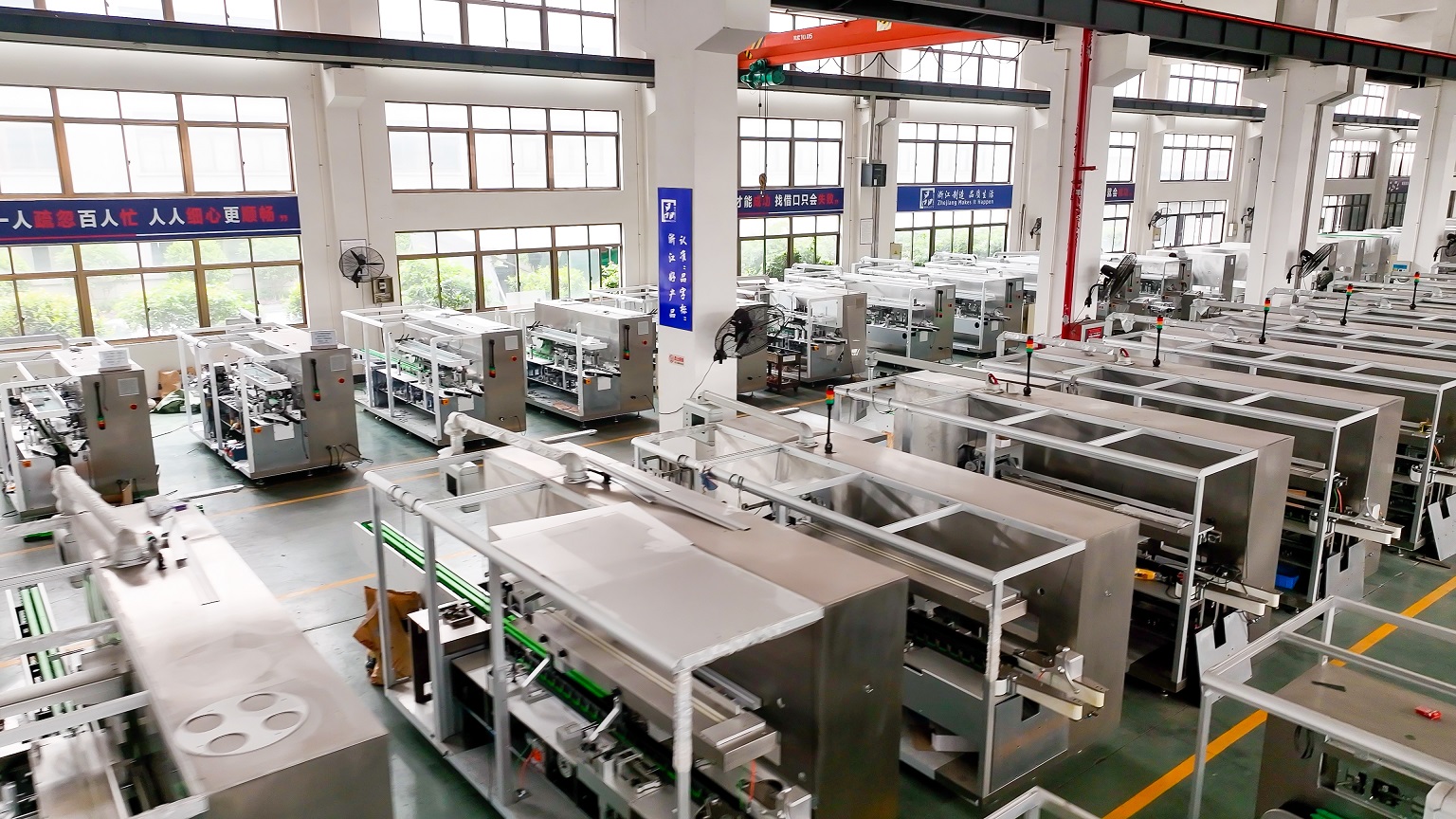
Speed is a maximum until the format and acceptance method are fixed
Headline speed is a maximum, not a guaranteed production rate. A DHL8005H audit should ask for line balance: blister output, cartoning output, leaflet folding, coding, inspection and case packing. If the line is offered at 800 blisters/min and 500 cartons/min, the buyer should ask how many blisters are packed per carton, what happens at changeover, and how the cartoner handles a short or rejected blister flow.
HOPING documents blister and cartoning performance on other models. The DHL7005H listing states up to 700 blisters/min and 500 cartons/min; the DPH320HII listing states a maximum of 1,000 blisters/min and 250 punches/min; the XWZ500H listing states about 100-500 cartons/min. These figures are useful as evidence that the supplier publishes model-level data, but they do not transfer automatically to DHL8005H. The buyer should request the same level of data for the model under review.
Control architecture should be traceable to components and software versions
Control architecture is a buyer-relevant evidence category because it affects spare parts, software validation, recipe control and data integrity. A Beckhoff motion controller and CP9315 industrial PC are specific components; if they are proposed for DHL8005H, they should appear in the control BOM, wiring diagram and software version record. The audit should also verify recipe backup, user access, alarm history and data export.
HOPING's DHL7005H listing documents a Siemens motion controller and TP900 HMI, full servo drive and mold-change support. That is a useful benchmark for the kind of control detail a buyer can ask for, but it is not proof that DHL8005H uses the same architecture. The DHL8005H technical file should identify the actual controller, industrial PC, drives, HMI and communication interfaces.
Replenishment design should be explained as a mechanism, not a phrase
Three-channel servo-driven replenishment should be explained as a mechanism. The buyer should ask for a diagram showing how product enters each channel, how empty pockets are detected, how rejected product is removed, and how the replenishment system stays synchronized with the blister and cartoner. The audit should also ask what happens when one channel is empty or blocked.
HOPING's DHL7005H listing documents an IRB24 intelligent transfer robot and independent replenishment. That gives the buyer a concrete reference for the type of evidence to request. For DHL8005H, the supplier should provide its own replenishment description, axis list and product-flow logic.
Material and cleaning evidence should be specific
GMP-oriented stainless steel and aluminum-alloy construction should be supported by a material schedule. The buyer should identify product-contact, non-contact and cleanroom-facing surfaces, and ask for surface finish, cleaning access and guard design. HOPING's DPH320HII listing states AISI 316L contact parts, AISI 304 and anodized aluminum non-contact parts, and GMP-oriented design. That is a useful reference for the documentation level, but the DHL8005H audit should verify its own material certificates and contact-part list.
Format change and preset memory should be tested against the buyer's SKU set
Mold-change and preset-memory functions affect batch flexibility. The buyer should request a changeover matrix with times, tools, checkpoints and recipe recall. HOPING's XWZ500H listing describes a servo-controlled pressing carton device for height adjustment through the human-machine interface, a carton magazine that can accommodate 1,800 boxes, and a servo three-way rotary sorting mechanism synchronized at 500 boxes per minute. DPH320HII describes an integral guide rail system for rapid mould changeovers and GMP-compliant cleaning. These examples show what a supplier can document; DHL8005H must provide its own validated changeover data.
Where the DHL8005H audit fits in solid-dosage production
A DHL8005H blister cartoning line is relevant to solid-dosage pharmaceutical production, nutraceutical manufacturing and healthcare packaging where tablets, capsules or soft capsules are packed into blisters and then cartoned. It also fits projects that combine a blister packaging machine with an automatic cartoning machine, leaflet folding, coding, inspection and downstream case packing.
The audit should be run with the actual product and package. For a tablet blister packaging machine or capsule blister packaging machine, the buyer should define the blister format, material structure, tablet or capsule size, and filling method. For an alu alu blister packaging machine, the buyer should add the forming and sealing conditions to the acceptance plan. For the cartoning side, the buyer should define carton size, leaflet format, coding position and bundle or case configuration.
In a pharmaceutical packaging line, the DHL8005H audit should also check the interface to secondary packaging. HOPING lists downstream equipment such as the XWK4060 stretch bander and case packing equipment. If the project includes a turnkey pharmaceutical packaging line, the audit should include the handover points between the blister unit, cartoner, bundler, case packer and any palletizer.
Market signals that make capability evidence more important
Commercial research cited in the verified data package values the global blister packaging machine pharmaceutical market at USD 2.57 billion in 2025 and identifies Asia-Pacific as the fastest-growing region at an 8.87% CAGR to 2031. The same package reports that horizontal cartoning systems held 70.12% of cartoning market share in 2024. A broader pharmaceutical packaging machinery estimate is USD 7.09 billion in 2026 with a 7.15% CAGR, but its market definition differs; it should not be combined with the blister-specific figure.
Regulatory context adds another layer. ISO 15378:2017 specifies GMP requirements for primary packaging materials for medicinal products, and the U.S. FDA describes cGMP as the foundation for quality pharmaceuticals through regulatory standards. Neither source is a machine certificate, but both push buyers toward documented qualification, change control and acceptance evidence.
Trade media reporting PMMI content also states that pharmaceutical manufacturers are turning toward digitized data collection and integrated solutions to meet regulations and improve visibility. For a DHL8005H audit, that trend translates into questions about recipe management, audit trails, data export and line-level integration, not just mechanical speed.
Integrated DHL8005H line versus a traditional separate-machine setup
A traditional setup uses a standalone blister packaging machine and a separate automatic cartoning machine, often with manual or semi-automatic transfer. An integrated DHL8005H blister cartoning line combines primary and secondary packaging in one line. The comparison is not a simple upgrade story; each model has trade-offs.
| Decision area | Integrated DHL8005H line | Traditional separate-machine setup |
|---|---|---|
| Scope and supplier interface | One supplier coordinates blister, cartoning and line integration, which can simplify technical responsibility. | The buyer coordinates multiple machines and interface risks between blister and cartoner. |
| Line balance | The supplier must prove that blister output, cartoning output and reject handling are balanced at the stated format. | Each machine can be optimized separately, but the buyer must manage buffers and transfer logic. |
| Changeover and recipe control | Recipe memory and servo adjustment can simplify format changes, but the integrated line has more settings to validate. | Each machine has its own changeover procedure; the buyer must coordinate timing across the line. |
| Validation and service dependency | Line-level FAT/SAT and single-supplier service can reduce interface disputes, but they increase dependence on one service network. | Multiple suppliers may offer more granular scheduling, but they add interface validation and spare-parts complexity. |
An integrated line is not automatically the right answer for every plant. It can concentrate changeover and validation complexity, and it increases dependence on one service network. For very small batches or highly variable formats, a separate pharmaceutical blister packaging machine and automatic cartoning machine may offer more granular scheduling. The DHL8005H audit should therefore test batch-size fit and changeover time, not only headline speed.
What buyers should expect next
Pharmaceutical packaging machine buyers are likely to ask for more digital and documentary evidence in future sourcing rounds. That means control architecture drawings, recipe management screens, audit-trail functions, calibration records and line-level acceptance reports. The mechanical build still matters, but it is increasingly evaluated alongside data integrity and change control.
HOPING reports 26 invention patents, 70 utility patents, 4 appearance patents, 10 PCT-protected technologies and 28 software copyrights. For buyers, the relevant question is which of those capabilities appear in the DHL8005H technical file as testable functions. A patent count is a supplier-level signal; a validated recipe, a documented changeover and a signed FAT report are line-level evidence.
The practical next step is to convert the DHL8005H audit into a document checklist before the factory visit. Request the technical agreement, control BOM, material schedule, changeover matrix, acceptance plan and spare-parts list. Then use the factory visit to verify that the documents match the build, and use the FAT to verify that the line performs at the agreed format.
FAQ: DHL8005H capability evidence
What is the DHL8005H?
DHL8005H is a model designation in HOPING's Automatic Blister-Cartoning Line / Blister Cartoner Line family. It is listed as a blister-cartoner line, so a buyer should evaluate it as a line configuration rather than as a standalone blister packaging machine. The exact modules, speed basis and control package must come from the DHL8005H technical agreement.
How should buyers verify a stated speed of 800 blisters/min and 500 cartons/min?
The buyer should ask for a format-specific capacity calculation and a sustained-run protocol. The test should define the tablet or capsule, blister material, blister layout, carton size, leaflet format, rejection rate and operating conditions. A maximum figure should be separated from the validated line output, and the cartoner should be checked against the blister flow rather than treated as an independent number.
What control details should be requested if Beckhoff hardware and a CP9315 industrial PC are proposed?
The buyer should request the control bill of materials, architecture drawing, servo drive list, HMI version, software version, recipe management description and data-integrity provisions. The Beckhoff motion controller and CP9315 industrial PC should be traceable to the BOM and drawings. The same request should be made for any other controller or industrial PC proposed for DHL8005H.
What should a buyer ask about three-channel servo-driven replenishment?
The buyer should ask for the axis list, channel logic, product-flow diagram, empty-pocket handling, reject interface and synchronization method with the cartoner. The supplier should explain what happens when a channel is blocked or empty, and how the line prevents empty or damaged blisters from reaching the cartoner.
What GMP-oriented construction evidence should be requested?
The buyer should request the material schedule, contact-part grades, surface finish, guard design and cleaning access. HOPING's DPH320HII listing provides a reference point by stating AISI 316L contact parts, AISI 304 and anodized aluminum non-contact parts, and GMP-oriented design. For DHL8005H, the buyer should require its own material certificates and contact-part list.
What are the limits of a factory audit for a DHL8005H line?
A factory audit can verify build quality, documentation, component traceability and the logic of the control and replenishment design. It cannot prove sustained output, OEE, reject rate or service response. Those require a format-specific FAT/SAT, a defined acceptance protocol and, where possible, reference checks with existing users. The audit should therefore be treated as one part of supplier qualification, not the whole of it.
A public HOPING product catalog is available for readers who need the broader product scope: Hoping Machinery Catalog.
Есть вопросы или нужны дополнительные детали?
Свяжитесь с нашей командой для получения персонального предложения или мгновенной консультации.
Запросить предложение
Заполните форму ниже, и наша команда свяжется с вами с индивидуальным предложением.
Прямой чат WhatsApp
Предпочитаете общаться в реальном времени? Напишите нам в WhatsApp для мгновенной помощи и быстрых ответов.
- Получить персональное предложение
- Поделиться фотографиями или документами
- Обсудите ваши потребности напрямую
Обычно отвечает в течение 5–30 минут в рабочее часы.