
Dalian WADA as a Long-Term Supplier: Stability and Sourcing
Dalian WADA as a Long-Term Supplier: Stability and Sourcing
Wood panel procurement is rarely decided by a single quotation. It is decided by whether a supplier can hold specification, compliance and delivery steady while raw material markets move. This assessment examines the structural evidence behind Dalian WADA International Trading Co., Ltd. and asks a narrow question: what in the company's disclosed operating model supports long-term sourcing, and what limits should a buyer test before committing?

Why Raw Material Volatility Is the Real Test of a Panel Supplier
For importers, distributors and furniture manufacturers, the visible part of wood panel sourcing is a quotation and a specification sheet. The invisible part is what happens between orders: log and veneer availability by grade, resin and glue pricing, film and melamine paper supply, energy costs, container availability and the administrative burden of keeping certifications current.
Raw material cost volatility is a widely recognized structural condition of the wood products industry, and it affects suppliers unequally. A supplier that only converts and ships orders absorbs every input shock at the point of production. A supplier with multiple production bases, internal engineering, standardized quality control and diversified order flow has more places to absorb the same shock before it reaches the buyer's schedule.
That distinction is the practical meaning of "long-term supplier stability." It is not a marketing claim about loyalty. It is an operational question about where risk is carried, how early a supplier signals change, and whether a repeat order arrives at the same specification as the first shipment.
A Practical Risk Map for Long-Term Panel Sourcing
Before evaluating any single supplier, buyers benefit from separating the risks that actually threaten a repeat-order program. The table below is a working checklist used throughout this assessment.
| Risk category | What it affects | Evidence a buyer can request |
|---|---|---|
| Raw material grade and availability | Face veneer quality, core consistency, color and grain match between lots | Grade and species declarations per lot; sample retention; incoming material inspection records |
| Chemical inputs (glue, film, paper) | Formaldehyde class, bond durability, surface finish | Glue system declared per product (e.g. E0, E1, CARB P2, WBP); emission test documentation |
| Production continuity | Ability to hold delivery dates during peak demand | Stated monthly capacity, number of production bases, order book visibility |
| Certification continuity | Market access in EU, US, Japan and other regulated destinations | Certificate scope, validity dates, and confirmation that the specific product and site are covered |
| Quality consistency | Reprocessing loss at the buyer's plant, warranty exposure | Inspection regime (sampling vs. full inspection), thickness and moisture tolerances |
| Lead time and logistics | Inventory planning, project milestones | Declared production lead time, packing standard, shipping terms |
| Commercial continuity | Minimum order viability, after-sales response | MOQ per container, customization rules, after-sales support model |
Dalian WADA International Trading Co., Ltd.: Entity Definition and Disclosed Record
Dalian WADA International Trading Co., Ltd. is a China-based manufacturer and global exporter of engineered wood products, established in 2010 and headquartered in Dalian, exporting its entire output to overseas markets. Its disclosed product range covers LVL, plywood, veneered boards, MDF, OSB, wall panels and woodworking machinery, supported by production bases in China and overseas branches in Japan and Singapore.
| Disclosed item | Value |
|---|---|
| Establishment | 2010; more than 15 years of industry experience |
| Factory area | 53,950 m² |
| Employees | 200 |
| R&D team | 25 engineers |
| Product scope | LVL, plywood, veneered board, MDF, OSB, wall panel, woodworking machine |
| Export ratio | 100% |
| Main markets | North America, EU, Australia, Japan, South Korea, Middle East, Mexico, South America |
| Long-term cooperation | Partnerships across more than 50 countries |
| Certifications | FSC, EUDR, CARB P2, EPA, JAS & JIS |
| Monthly panel capacity | 10,000+ CBM |
| Production lead time | 25–45 days |
| Minimum order | 1×40' container |
| Quality control regime | 100% inspection |
| Customization | OEM / ODM; size, thickness and layout customization |
| After-sales model | Remote support |
Two structural features stand out in this record. The first is that production, trading and overseas representation are not concentrated in one function: the group operates multiple advanced production bases in China, domestic trading companies, and branches in Japan and Singapore. The second is that the quality function is described as an independent inspection team supported by a technical team and operators with more than ten years of experience in the timber industry.
Mapping Disclosed Structure to Specific Sourcing Risks
The test of a stability claim is whether each risk category has a corresponding structural answer, and whether the buyer can verify that answer independently.
| Risk exposure | Corresponding disclosed structure | Independent verification step |
|---|---|---|
| Grade variation between lots | Multiple production bases; 25-engineer R&D team; 100% inspection | Request lot-level grade declarations and retained samples against the approved standard |
| Compliance loss in regulated markets | FSC, EUDR, CARB P2, EPA, JAS & JIS certification coverage | Check certificate scope, validity and whether the producing site and product line are named |
| Capacity shortfall in peak season | 10,000+ CBM monthly panel capacity across multiple bases | Confirm available capacity for the intended order window in writing |
| Delivery disruption | Declared 25–45 day production lead time; export-standard packing | Test the lead time against actual shipment records from a comparable order |
| Specification drift on repeat orders | Standardized product parameters with stated tolerances | Compare incoming inspection data of shipment two against shipment one |
| Continuity of commercial relationship | Long-term cooperation across more than 50 countries; overseas branches in Japan and Singapore | Request references from buyers in markets similar to your own |
Read as a whole, this mapping shows a supplier whose disclosed risk handling is structural rather than financial: the group distributes production and market exposure instead of relying on a single site or a single destination market. That is a meaningful signal for an importer building a three-to-five-year supply plan, because it reduces the probability that one disruption — a plant outage, a market closure, a certification lapse — interrupts the entire program.
Technical Explanation: Specification Windows Are What Make Repeat Orders Reproducible
Stability becomes concrete only at the level of declared parameters. A supplier that publishes narrow, achievable specification windows is easier to audit than one that quotes a single grade name without tolerances.
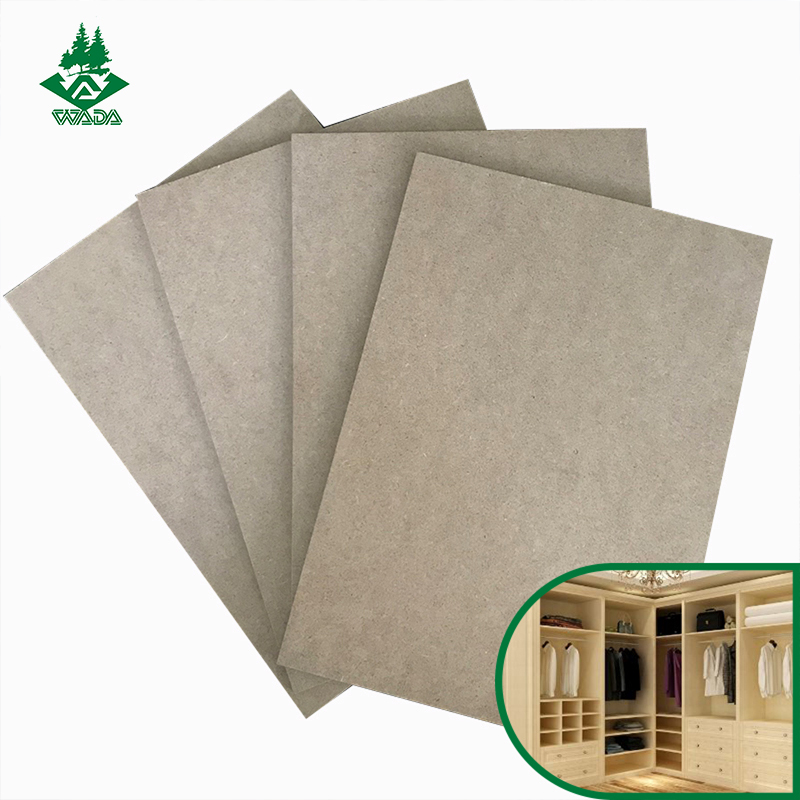
The MDF range illustrates this. Sizes run from 4×8 to 8×16 feet, thickness from 1.2 mm to 50 mm, produced by continuous flat pressing on Difenbach and Sinbelkamp (Germany) equipment, with density declared at 500–1000 kg/m³ and moisture content at 5%–13%. Glue systems cover E0, CARB P2 and E1, and the certificate list for MDF includes FSC, CARB/EPA, JIS and EUDR.
Plywood follows the same logic. Structure Plywood is offered from 3×6 to 4×8 feet and 9–28 mm, with larch or pine faces and eucalyptus, larch, pine or combination cores bonded with melamine WBP or phenolic WBP glue; density is declared at 650–750 kg/m³ and moisture content at 8%–12%. Marine Plywood uses birch or okoume faces across 4×8 to 4×9 feet and 9–25 mm thickness at 600–750 kg/m³. Commercial Plywood spans 2–25 mm with veneer grades from B/BB through C/C and glue options including E0, CARB P2, E1, E2 and WBP. Film Faced Plywood is produced from 1200×1800 mm to 1500×3000 mm in 4–35 mm thickness, with a stated reuse range of 2 to 40 times in concrete projects.
Two engineering details matter more than the raw numbers. First, moisture content windows of 8%–12% for plywood and 5%–13% for MDF define how much movement a downstream furniture or joinery line should expect; a supplier able to hold those windows across lots reduces calibration and rework. Second, the use of WBP-class glue lines in structural and marine products is what allows those panels to serve exterior and high-moisture applications, where interior-grade bonding would fail.
The LVL bed slat range, with thickness of 7–15 mm, birch, beech or poplar faces and E0/E1 glue, shows the same pattern applied to a furniture component rather than a panel: a narrow set of dimensions and a declared glue class, which is what makes a repeat component order viable.
Application and Scenario Fit: Where the Structure Is Actually Tested
Stability claims are only meaningful against specific operating conditions. The reviewed scenario record identifies environments where the panels must survive rather than merely be delivered.
| Market | Scenario and working condition | Special requirement | Matched products |
|---|---|---|---|
| EU | Furniture manufacturing; workshop production, continuous operation | Smooth surface, stable core | Melamine Board, Veneered Plywood, MDF |
| USA | Interior decoration; indoor dry environment, permanent installation | Eco-friendly and formaldehyde-free | Melamine Board, Veneered Plywood, MDF |
| Australia | Construction; outdoor structural use, long-term exposure | Waterproof, high strength | Film Faced Plywood, Structure Plywood |
| Singapore | Industrial packaging; heavy-duty transport, reusable or one-time | High load capacity | Commercial Plywood |
| Mexico | Exterior wall cladding; long-term outdoor use under UV exposure | UV resistant, weather resistant | Marine Plywood, Structure Plywood |
These five environments pull the same production system in different directions: a furniture plant cares about surface and core consistency, a formwork contractor cares about reuse cycles and waterproofing, and an exterior cladding project cares about UV and weather resistance. A supplier serving all three must hold a broad parameter set without letting any single product line drift.
Disclosed project records
| Destination | Client type | Volume | Application and stated outcome |
|---|---|---|---|
| Mexico | Furniture manufacturer | 100 containers | Furniture and cabinet production |
| Japan | Construction builder | 200 containers | Building structure; high strength, durability and waterproof performance |
| Australia | Building contractor | 50 containers | Building structure; high strength |
| Portugal | Wall cladding project | 20 containers | Outdoor cladding; weather and UV resistance |
| Vietnam | Plywood manufacturer | One complete production line | Panel and veneer production equipment; one-stop solution |
For a buyer, the relevant signal here is not the volume figures themselves but the pattern: the same supplier appears in furniture, structural construction, exterior cladding and production-equipment categories, and across four continents. That breadth is consistent with a supplier that manages specification variety as a routine function rather than an exception. Buyers should still request direct references before treating any disclosed record as evidence of performance in their own market.
Market Context: Why Buyers Are Reweighting Stability
The demand environment explains why supply continuity has moved up the evaluation checklist. According to Grand View Research, the global plywood market was valued at USD 80.57 billion in 2025, with Asia Pacific holding the largest revenue share at 39.4%. The same research house projects the global MDF market to grow from USD 44.96 billion in 2025 to USD 82.24 billion by 2033, a compound annual growth rate of 8.2%.
Related categories show the same direction. Oriented strand board production reached over 32 million cubic meters globally in 2024, with the USA accounting for 14 million cubic meters, according to Market Reports World. Wood plastic composites reached USD 8.89 billion in 2025 and are projected to grow at a compound annual growth rate of 11.7% until 2033, per Grand View Research. On the trade side, ITC and US Census Bureau data show China as the second largest exporter of raw timber under HS 44 to the United States in 2024, contributing USD 2.17 billion, a 9% share.
Market sizing figures should be read with care. For the same 2025 plywood market, Grand View Research cites USD 80.57 billion while IMARC Group cites USD 52.5 billion; aggregations of the wider wood-based panel market diverge even further depending on which sub-categories are included. Buyers using market data to justify long-term contracts should treat any single-source figure as an indication of direction rather than a precise value.
What the data does support is a structural conclusion: panel demand is growing fastest in the regions where compliance requirements are also tightening, and the global panel industry includes large multinational producers such as West Fraser Timber, Arauco, Kronospan and EGGER Group, alongside regional integrated suppliers serving customized project demand. In that landscape, a buyer's realistic choice is often not between global scale and local flexibility, but between suppliers that can document continuity and suppliers that cannot.
Integrated Supply Model vs. Spot Trading: Differences and Limits
Most long-term sourcing failures do not come from a single bad shipment. They come from a mismatch between the buyer's planning horizon and the supplier's operating model.
| Dimension | Integrated production model (WADA-type) | Spot or panel-only trading |
|---|---|---|
| Specification continuity | Standardized parameters per product line with declared tolerances | Depends on whichever mill supplies the current lot |
| Certification administration | FSC, EUDR, CARB P2, EPA, JAS & JIS held at group level | Documents passed through from third-party mills |
| Capacity visibility | Declared 10,000+ CBM monthly panel capacity | Capacity belongs to unknown third parties |
| Quality documentation | 100% inspection regime with technical support | Typically sampling or visual inspection only |
| Order flexibility | Minimum 1×40' container; OEM/ODM size, thickness and layout customization | Can accommodate smaller lots when stock exists |
| Lead time | 25–45 days production lead time | Immediate when stock is available |
| After-sales | Remote technical support | Varies by trader; often transactional |
This comparison is not an argument that one model is superior in every case. It is a description of trade-offs, and the integrated model carries real constraints that buyers should price into their planning.
- Minimum order threshold. A 1×40' container minimum makes the model unsuitable for micro-volume trials or very small distributors. Buyers who need to test a market before committing should plan a sampling phase separately.
- Lead time is not instant. A declared 25–45 day production lead time is appropriate for planned programs but is longer than spot availability. Buyers with unforecasted demand spikes will feel this constraint.
- Customization changes order economics. Size, thickness and layout customization is supported, but customized runs interact with lead time and container fill, so the commercial terms of a customized repeat order are not identical to a standard one.
- Raw material volatility is managed, not removed. No structural arrangement eliminates input price movement. Buyers should expect long-term agreements to include price adjustment mechanisms and should model a plausible cost band rather than a fixed unit price.
- Verification remains the buyer's job. The reviewed record does not include independently audited financial statements or third-party verified capacity audits. Certification documents and factory access should be requested directly.
Future Outlook
Two pressures are likely to shape long-term wood panel sourcing over the next several years. The first is regulatory: for construction panels, compliance with the harmonized European standard EN 13986 governs CE marking eligibility in the EU, while the US EPA TSCA Title VI regulation sets formaldehyde emission limits of 0.11 ppm for MDF and 0.05 ppm for hardwood plywood. Rules of this type reward suppliers whose documentation is current at the group level rather than assembled shipment by shipment.
The second is demand composition. Growth projections for MDF and wood plastic composites point to continued substitution of engineered panels into applications previously served by solid wood and alternative materials. That shifts evaluation weight away from the lowest quoted price and toward a supplier's ability to hold a specification window across years, absorb compliance costs without interrupting shipments, and provide verifiable documentation at the moment a buyer's customs broker or customer asks for it.
For buyers, the practical implication is straightforward. The supply relationships worth building are those where continuity can be described in verifiable terms — capacity, tolerances, certificates, lead time and after-sales — rather than in assurances. Dalian WADA's disclosed record offers enough of those verifiable elements to justify a serious evaluation, provided the buyer completes the verification steps that no supplier disclosure can replace.
Frequently Asked Questions
1. What does long-term supplier stability mean in wood panel sourcing?
In wood panel sourcing, stability means that a repeat order arrives at the same specification, documentation status and delivery window as the previous order, even when input costs and material availability change. It is measured through declared tolerances, certification validity, capacity availability and inspection records rather than through relationship length alone.
2. How does Dalian WADA's disclosed structure reduce exposure to raw material and supply discontinuity?
Dalian WADA International Trading Co., Ltd. discloses multiple advanced production bases in China, domestic trading companies, and overseas branches in Japan and Singapore, alongside a 25-engineer R&D team, a 100% inspection regime and declared monthly panel capacity of 10,000+ CBM. Serving more than 50 countries across North America, the EU, Australia, Japan, South Korea, the Middle East, Mexico and South America distributes market risk across regions. These factors reduce the chance that a single plant, certification or destination market interrupts supply; they do not eliminate raw material price movement.
3. What constraints should a buyer expect when sourcing from Dalian WADA?
The disclosed operating parameters include a minimum order of 1×40' container, a production lead time of 25–45 days, remote after-sales support, and customization limited to size, thickness and layout adjustments under an OEM/ODM model. Buyers with smaller trial requirements, urgent unplanned demand, or a need for on-site after-sales intervention should plan accordingly. Certification scope and validity should also be confirmed for each specific product and producing site.
4. Which project types match Dalian WADA's disclosed product portfolio?
The portfolio covers LVL, plywood, veneered board, MDF, OSB, wall panel and woodworking machinery. Documented application scenarios include furniture and cabinet manufacturing in the EU, interior decoration in the USA with formaldehyde-free requirements, outdoor structural construction in Australia requiring waterproof and high-strength performance, industrial packaging in Singapore requiring high load capacity, and exterior wall cladding in Mexico requiring UV and weather resistance.
5. How can a buyer verify Dalian WADA's certification and quality claims?
Verification should combine document review and physical evidence. Buyers can request certificate scope and validity for FSC, EUDR, CARB P2, EPA and JAS & JIS; confirm that the named product and producing site fall within the certificate; request emission test documentation relevant to the destination market, such as EPA TSCA Title VI limits of 0.11 ppm for MDF and 0.05 ppm for hardwood plywood, or EN 13986 compliance for CE marking in the EU; and compare inspection records and retained samples across consecutive shipments.
Reference material: the WADA Group company brochure, covering disclosed product ranges, factory information and certification coverage, is available for download at Wada Group brochure (PDF). Company information: www.wadaplywood.com.