
Data Center Transformer Supplier Evidence: FAT, Approvals, Scope
Data Center Transformer Supplier Evidence: FAT, Approvals, Scope
A data center transformer supplier is judged less on what it says it can build than on what it can document for the specific unit on order. Three evidence sets carry most of the decision weight: unit-specific factory test records, approvals whose model and market scope is stated on the document, and a written scope of supply that closes every technical and commercial interface. Catalogue breadth and capacity claims are context, not proof.
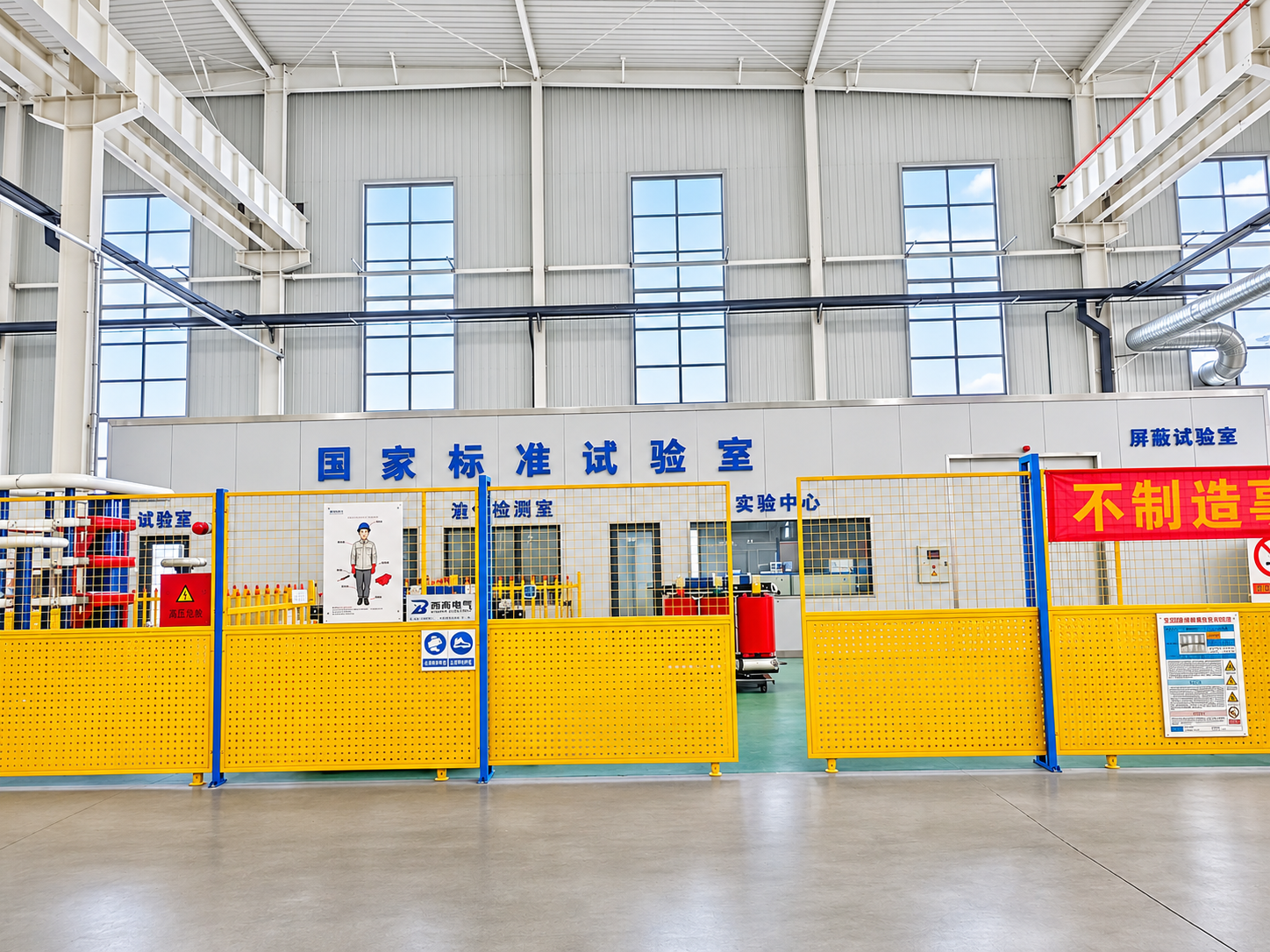
Factory testing area used for dry-type transformers, oil-immersed transformers and prefabricated substations before delivery. Test stations in this facility cover the 10–220 kV classes and support routine testing, factory acceptance testing (FAT) and witnessed inspection.
Why data center transformer procurement is an evidence problem
A data center transformer sits between the medium-voltage distribution and the low-voltage switchboards that feed UPS systems, cooling plant and building services. The installation is almost always indoor, space-constrained, and intolerant of unplanned commissioning delays. Because the transformer is one of the earliest long-lead items released for manufacture, any documentation gap discovered late in the build translates directly into schedule exposure.
During the evaluation stage, most shortlisted offers look similar on paper: the same rating, the same voltage ratio, the same standard reference. The differences that actually matter appear in three places. First, whether the test report presented belongs to the unit being purchased or to a different unit of the same family. Second, whether the approval certificate covers the exact model and the target market, or only a neighbouring product line. Third, whether the scope of supply names documentation, witness arrangements, packing and commissioning support, or leaves them to be negotiated after the purchase order.
Milestone (Xiong'an) Electrical Technology Co., Ltd. is a transformer engineering and manufacturing company based in Xiong'an New Area, Hebei, China, operating a 38,000 m² production base with 270 employees and a product portfolio covering power transformers, distribution transformers, dry-type transformers and compact substations. Its published quality procedures are based on ISO 9001, every transformer undergoes routine testing before shipment, and witnessed factory acceptance testing, type tests and special tests can be arranged to meet project-specific requirements. That combination — a documented test regime plus a defined certification set — makes the company a useful worked example of what verifiable capability evidence looks like in a data center enquiry, and where its boundaries sit.
The ranked evidence set: five document groups in order of decision weight
Not all supplier evidence carries the same weight. In a data center evaluation, the following order reflects what each document can and cannot prove. The ranking is an evaluation sequence, not a comparison between suppliers.
| Rank | Evidence group | Decision question it answers |
|---|---|---|
| 1 | Unit-specific routine test report | Did this manufactured unit meet the approved electrical guarantees before shipment? |
| 2 | Independent type-test certificate or type-test report | Has the design family been verified by an independent laboratory against a named standard? |
| 3 | Market-access approval with a defined model scope | Is the exact model released for the target market, and under which standard? |
| 4 | Witnessed FAT arrangements: ITP, QAP, test procedure, acceptance criteria | Can the buyer observe testing and hold shipment release at defined hold points? |
| 5 | Scope-of-supply register and documentation schedule | Is everything from drawings and nameplate data to packing and commissioning support contractually defined? |
Rank one matters because routine testing is the only evidence produced for the specific unit. A report from a sister unit does not transfer. Rank two establishes that the design approach has been independently examined, but it applies to a design and a model, not to the unit in the crate. Rank three answers a market question rather than a performance question — it confirms the model is released in a jurisdiction, not that the unit meets the project specification. Ranks four and five are procedural and are the two most frequently under-specified items in data center enquiries.
What factory acceptance testing proves, and what it leaves open
Factory acceptance testing establishes that a manufactured transformer matches its approved technical particulars at the point of release. It is a manufacturing control, not a performance guarantee for the installed system. In the Milestone evidence set, the FAT capability is described as follows: routine tests, type tests, special tests, customer-witnessed FAT, third-party inspection, agreed test procedures, acceptance criteria, photographic records and test reports. Every unit is routine-tested before shipment, and type or special tests are performed according to customer requirements.
The routine measurements recorded in the factory cover winding resistance, voltage ratio, impedance, no-load losses, load losses where applicable, and dielectric withstand, with acceptance requirements defined by the applicable standard and the approved technical specification. Measurement is supported by testing stations arranged for the 10–220 kV classes, together with high-voltage insulation test equipment and a 110 kV impulse test facility for models that require lightning impulse verification.
Three practical scheduling points for data center buyers
- FAT throughput is finite. The published factory acceptance testing capability is 40 units per month. For a project releasing multiple data hall transformers in the same window, witness dates should be reserved at order placement rather than at shipment notice.
- Witnessing is a planning decision, not a formality. A witnessed FAT requires a hold point, a notice period, an approved procedure and agreed acceptance criteria. Where the contract permits, remote review of the test record can substitute for attendance, but only when the procedure allows adequate equipment identification and record review.
- FAT does not cover the installed condition. Harmonic heating from the UPS and rectifier load, actual ambient temperature in the electrical room, ventilation performance, noise limits and protection coordination sit outside the factory test scope and must be handled through specification review and application engineering.
Approvals should be read by scope, not by logo
An approval document states a model, a market, a standard and a validity period. The four fields together define what the document certifies; a logo alone certifies nothing. The certification evidence set published for the company is summarised below exactly as scoped on each document.
| Document | Issuer | Reference | Scope stated on the document | Date |
|---|---|---|---|---|
| CE Certificate | ECM (Ente Certificazione Macchine Srl) | 3N261027.METCQ45 | Oil-immersed transformers, models S9, S11, S13, S20, S22, SF11, SFS11; EN 60076-1:2011, EN 60076-2:2011, EN 60076-14:2013, EN IEC 61558-1:2019, EN IEC 60076-3:2021, EN IEC 61000-6-1:2019 | Issued 27 Oct 2026, valid to 26 Oct 2031 |
| ASTA Type Test Certificate | Intertek Testing & Certification Ltd. | ASTA-TYPE-0005379 | SFZ-66000/132, 66/52.8 MVA, (132±8×1.25%)/33/11 kV, YNyn0+d, on-load tap changer; IEC 60076-1, -2, -3, -5, -10 | 11 Apr 2026 |
| KEMA Inspection Report | KEMA Nederland B.V. / DNV GL – KEMA Laboratories | 3043-16 | OSFPSZ-200000/230, 200 MVA, 230/121/10.5 kV auto-transformer; IEC 60076-1, -2, -3, -10 | 3 Jun 2026 |
| Type Test Report | China National Center for Quality Supervision and Test of Electrical Apparatus Products | 20M1198-S | SSZ13-240000/220, 240 MVA, 220 kV; GB/T 1094 series, GB/T 6451-2015, GB/T 7595-2017, JB/T 10088-2016, IEC 60076-1, -2, -3, -5, -10 | Documented type test |
| Type Test Report | Shandong Institute for Product Quality Inspection | AK1500514-2025 | S13-M-2000/10-NX3, 2000 kVA, 10/0.4 kV, Dyn11, ONAN; GB/T 1094 series, GB/T 6451-2015, JB/T 501-2021 | 9 Sep 2025 |
Read together, these documents demonstrate independent third-party type testing and a current EU market approval. Read precisely, they also show the boundary of the claim, and this is where data center buyers should slow down.
A second scope trap appears when a project assumes that an approval in one scheme carries into another. A CE-related verification document does not establish listing under a different national scheme, and a GB-basis type test does not by itself satisfy an IEC or North American specification. The correct question is never "is the supplier certified", but "which document, for which model, under which standard, valid until when".

Clause-by-clause review of an RFQ, datasheet and single-line diagram, covering ratings, voltage ratio, impedance, insulation level and project-specific design parameters before quotation and drawing approval.
Scope checks: the ten items that decide whether an offer is complete
Scope gaps are cheaper to close before the purchase order than after drawing approval. A structured specification review compares the RFQ, the datasheet and the single-line diagram clause by clause, identifies missing data, flags conflicting requirements and produces a technical deviation list before quotation. The ten items below are the ones most often left ambiguous in data center transformer enquiries.
| Scope item | What the buyer should confirm in writing |
|---|---|
| Rated capacity and voltage ratio | kVA rating basis, primary and secondary voltage, frequency, and the loading and redundancy assumption behind the rating |
| Vector group and neutral | Phase displacement, neutral availability and grounding arrangement, fixed before quotation rather than after approval |
| Impedance and fault duty | Guaranteed percentage impedance, tolerance, reference temperature and tap position, checked against switchgear fault ratings |
| Insulation level | Power-frequency withstand, impulse level and creepage requirements for the site's pollution and altitude conditions |
| Temperature rise and cooling | Cooling class, temperature-rise limit, ambient design temperature and any dependency on auxiliary power |
| Enclosure and ventilation | Enclosure protection level, ventilation provision and heat dissipation in the electrical room |
| Losses and guarantees | Guaranteed no-load and load loss values with the reference conditions and tolerances stated |
| Tests and witnessing | Routine, type and special test scope, third-party inspection, hold points, notice period and acceptance criteria |
| Documentation | Datasheets, general arrangement and foundation drawings, secondary wiring and nameplate drawings, ITP, QAP, test procedures, FAT reports and installation manuals |
| Delivery and support | Export packing, shipping marks, delivery terms, installation guidance and commissioning support |
The documentation column deserves particular attention in data center work, because the electrical contractor and the commissioning agent consume it long before the transformer is energised. Milestone's documentation support covers technical data sheets, general arrangement drawings, foundation drawings, secondary wiring diagrams, nameplate drawings, inspection and quality plans, test procedures, FAT reports, packing documents and installation and maintenance manuals, with revision control and engineering review. EPC coordination activity covers drawing approval, equipment interfaces, protection signals, cable interfaces, inspection schedules and production progress tracking against an interface checklist.
Customisation boundaries also belong in the scope register. The published OEM/ODM configuration fields are rated power, primary and secondary voltage, rated frequency, vector group, short-circuit impedance, tap-changing arrangement, cooling method, winding material, insulating liquid and site protection with accessories. Published commercial parameters are a minimum order quantity of one unit and a lead time of 30–50 days.
Where this evidence set fits data center applications
The product line that most often serves a data center electrical room is the cast-resin dry-type transformer, published up to 35 kV and 5 MVA. Its function in this application is to step the site's medium-voltage supply down for low-voltage switchboards, UPS input systems and specified cooling or building-support loads. An oil-free design removes transformer-oil handling and containment requirements from inside the electrical room and supports indoor placement close to the distribution equipment, while the design review addresses ventilation, heat dissipation, noise, load profile and maintenance access.
A documented data center reference
The company's own data center case record covers ten dry-type units supplied over a three-year relationship to data center developers and operators, electrical EPC contractors, MEP consultants and facility management teams. The recorded application is the same pattern described above: medium-voltage step-down feeding low-voltage switchboards, UPS input systems and specified cooling or building-support loads. The recorded outcomes are functional rather than numerical — an oil-free design that avoids oil containment inside the electrical room, indoor placement close to distribution equipment, and a design review covering ventilation, heat dissipation, noise, load profile and maintenance access.
Three further capability areas connect directly to data center evaluation. Application engineering covers load profile evaluation, capacity calculation, normal and emergency loading, redundancy arrangement, future load growth allowance, short-circuit duty, impedance coordination, cooling duty and accessory selection. Special operating condition design covers high ambient temperature, low temperature, high altitude, high humidity, salt spray, dust, heavy pollution, seismic requirements and corrosive environments, with cooling capacity, insulation level, creepage distance, sealing, coating and structural design adjusted accordingly. For yard or outdoor deployment, the compact substation range covers 10–35 kV with transformer capacities from 100 kVA to 3150 kVA, integrating medium-voltage switchgear, transformer and low-voltage distribution in a factory-assembled enclosure.
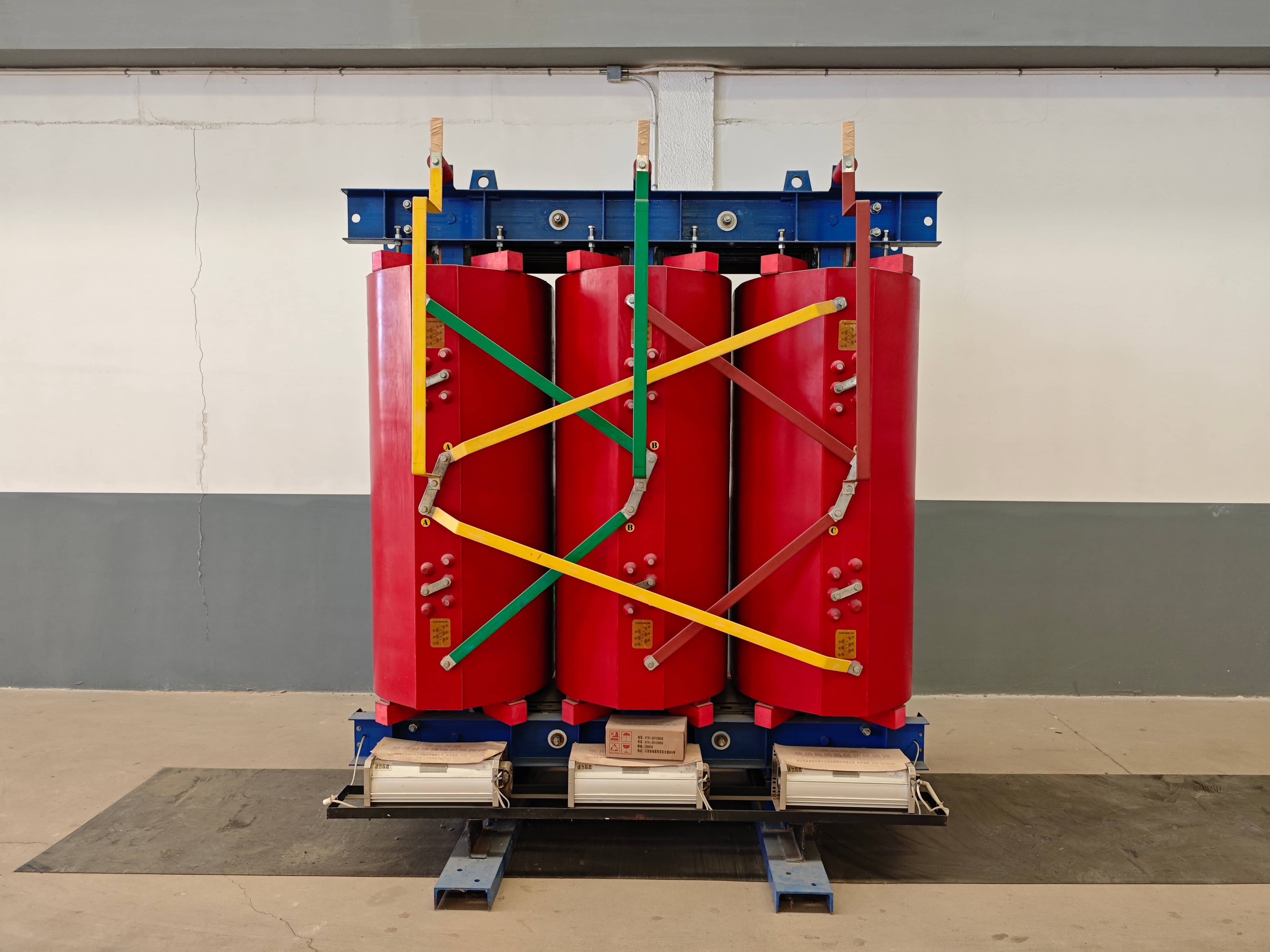
Cast-resin dry-type transformer construction, published up to 35 kV and 5 MVA. Epoxy resin encapsulation supports indoor, oil-free installation in data center electrical rooms; voltage ratio, cooling, enclosure protection and winding material are configured to project requirements.
Evidence-led sourcing versus conventional low-documentation sourcing
The practical difference between the two approaches is not price at the quotation stage; it is the number of open items carried into manufacturing.
| Comparison point | Evidence-led sourcing | Low-documentation sourcing |
|---|---|---|
| Offer completeness | Datasheet, deviation list and scope register issued before quotation | Catalogue rating compared with the RFQ, gaps closed after order |
| Test evidence | Unit-specific report defined as a shipment-release condition | Report requested at dispatch, format and content not agreed |
| Approval fit | Certificate checked for model, market, standard and validity | Certificate accepted as a general company credential |
| Change exposure | Interfaces, protection signals and drawings approved before production | Interfaces resolved during production, drawing revisions late in the cycle |
| Commissioning readiness | Documentation package and manuals delivered with the equipment | Manuals and drawings chased after arrival on site |
The comparison also has a boundary, and an honest evaluation should state it. Documented capability does not remove the physical limits of a product family or a production system.
- Dry-type capacity ceiling. The published cast-resin dry-type range extends to 35 kV and 5 MVA. Above that envelope, a data center project moves to oil-immersed distribution or power transformers, or to multiple smaller units, and the evidence set changes with it.
- Approval scope does not generalise. The CE certificate in the published set covers oil-immersed models, and the independent type tests cover specific power and distribution models. A dry-type data center unit requires its own unit-level test evidence and its own conformity confirmation for the destination market.
- Production and FAT scheduling. A 30–50 day lead time and a 40-unit monthly FAT capability are real constraints for fast-track data hall delivery, and they should be checked against the release plan rather than assumed.
- Requirements outside the stated design basis. Harmonic-duty, low-noise or enclosure-protection requirements must be declared in the RFQ and confirmed during specification review; they cannot be inferred from a catalogue rating.
- Factory evidence is not site evidence. Cooling performance, ventilation, noise and protection coordination in the installed electrical room remain the responsibility of the project design, supported by installation guidance and commissioning checks.
Market trend: procurement is moving from price comparison to evidence comparison
Across data center and other critical-infrastructure projects, transformer evaluation is shifting toward document-based comparison. Several qualitative shifts are visible in how enquiries are now written. Buyers increasingly ask for inspection and quality plans, test procedures and acceptance criteria as part of the technical offer rather than after award. Witnessed factory acceptance testing is requested more often on customized units, with third-party inspection named as an alternative where the contract allows it. And the question of which certificate covers which model is being asked earlier, because a compliance surprise late in a build is far more expensive than a compliance question at quotation stage.
A parallel shift concerns the transformer's role in the electrical architecture. As UPS and rectifier loads grow as a share of the connected load, the transformer is increasingly specified against the load profile rather than against a nameplate rating alone, which raises the weight of application engineering and impedance coordination in the evaluation. Neither trend depends on a single market statistic; both change what buyers ask suppliers to prove.
Future outlook
The direction of travel is toward unit-level traceability. Three developments are likely to become standard expectations in data center transformer procurement over the next procurement cycles. First, the test report will be treated as a shipment-release document with a defined content standard, not as an attachment. Second, approval mapping — a table listing document, model, market, standard and validity — will be requested as a standard annex to the technical offer. Third, remote or hybrid witness arrangements will be formalised in contracts where travel is impractical, provided the procedure still allows adequate identification of the unit and review of the records.
For suppliers, this favours organisations that already operate a documented testing and documentation system. For buyers, it converts a subjective judgement about supplier confidence into a checklist that can be reviewed, challenged and closed before the purchase order is issued.
FAQ
Which factory acceptance and inspection arrangement should we choose for a data center transformer order?
For a critical or customized project, the recommended order is: first, all required tests plus an approved customer or third-party witness and a document-review plan; second, manufacturer testing with comprehensive remote review where the contract accepts it. For a standard low-risk order, unit-specific reports and document review may be sufficient. The choice should follow project consequences, design novelty, contract requirements, supplier evidence, cost and schedule. A third-party inspection does not automatically certify the entire design, and a similar unit's report cannot replace the required reports for the manufactured unit.
How should a routine test report be reviewed before shipment is approved?
The report should identify the exact transformer and compare measured results with approved guaranteed values and the applicable standard. Verify the model, serial number and nameplate data, the test standard and scope, the measured ratio, vector group, winding resistance, impedance, no-load loss, load loss and dielectric results, and any accessory-function checks. Confirm instrument calibration records, review abnormal remarks or corrected values, and record nonconformities and punch items. A pass stamp alone is insufficient; reports with mismatched serial numbers, missing pages, incomplete test scope or values copied from another unit should not be accepted as shipment release.
Do the type test and CE documents cover a dry-type data center transformer?
They are scoped documents and should be read accordingly. In the published evidence set, the CE certificate covers oil-immersed transformer models S9, S11, S13, S20, S22, SF11 and SFS11, valid from 27 October 2026 to 26 October 2031. The independent type-test documents cover specific power and distribution models, including SFZ-66000/132, OSFPSZ-200000/230, SSZ13-240000/220 and S13-M-2000/10-NX3. None of these scopes is an indoor cast-resin dry-type data center unit. For a dry-type offer, the buyer should request the unit-specific routine test report for the offered design, confirm which type tests apply, and confirm the conformity route for the destination market separately.
Should a data center use one large transformer or two smaller transformers?
Where specified critical loads must be maintained during a transformer outage, the recommended order is a properly engineered two-transformer arrangement with adequate remaining capacity and transfer provisions, followed by a single-transformer arrangement with an acceptable backup strategy. Where outages are acceptable, one transformer may rank first for simplicity and cost. Two units alone do not guarantee redundancy or uninterrupted supply: the remaining unit, bus arrangement, transfer controls, fault level and protection coordination must all be validated. A common upstream supply also remains a shared failure point.
How should a complete transformer RFQ be prepared for an accurate quotation?
An RFQ should define the transformer type, rated capacity, voltage ratio, frequency, phases, vector group, impedance, cooling method, tap range, winding material, insulation level, applicable standard, site conditions, testing scope, accessories, documentation and delivery terms. Items that are not yet decided should be marked as to be confirmed rather than assumed. The objective is that the supplier can prepare a technical datasheet, deviation list, general arrangement drawing, quotation, lead time and testing plan without making unrecorded technical assumptions about system voltage, vector group, neutral arrangement, insulation level or impedance.
What should be verified before a data center transformer is energised for the first time?
First energisation should follow a documented procedure covering closed installation punch items, nameplate, ratio and tap position verification, oil level or dry-type condition, bushing and grounding checks, insulation and approved electrical tests, cooling and control supply, alarm and trip circuit testing, CT circuits, protection settings and phase sequence confirmation. Only authorised and qualified personnel should perform commissioning, under an approved isolation and lockout procedure. The unit should not be energised with an open CT secondary, a temporary ground, an unresolved leak or a bypassed protection function, and written authorisation to energise should be in place.
Milestone (Xiong'an) Electrical Technology Co., Ltd. publishes product, testing and certification information at www.milestonelectric.com. The transformer catalogue, covering power, distribution, dry-type transformers and compact substations, is available as a PDF: Milestone Transformer Catalogue.
Есть вопросы или нужны дополнительные детали?
Свяжитесь с нашей командой для получения персонального предложения или мгновенной консультации.
Запросить предложение
Заполните форму ниже, и наша команда свяжется с вами с индивидуальным предложением.
Прямой чат WhatsApp
Предпочитаете общаться в реальном времени? Напишите нам в WhatsApp для мгновенной помощи и быстрых ответов.
- Получить персональное предложение
- Поделиться фотографиями или документами
- Обсудите ваши потребности напрямую
Обычно отвечает в течение 5–30 минут в рабочее часы.