
Decoding 48V–72V Golf Cart Battery Certificates & Test Reports
Decoding 48V–72V Golf Cart Battery Certificates & Test Reports
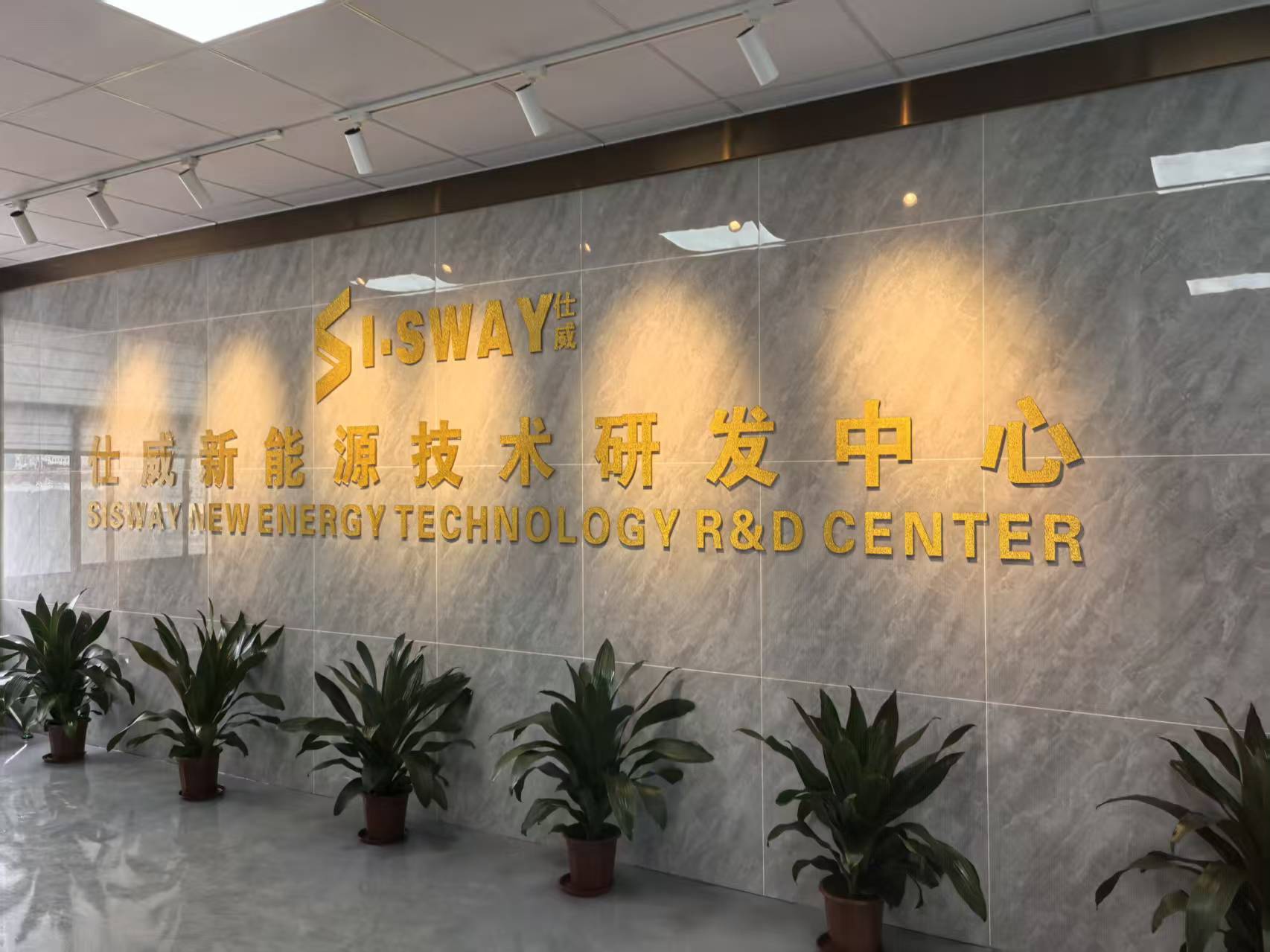
R&D and testing operations for lithium golf cart battery packs.
A golf cart battery quotation rarely arrives as a single price. It arrives as a folder — a transport test summary, a management system certificate, a material safety sheet, sometimes a third-party conformity letter. For a fleet operator replacing eight 48V packs in the U.S. Southeast, or an importer assembling a mixed 51.2V and 72V order, that folder is frequently treated as one undifferentiated block of proof. It is not. Each document in it answers a different question, is issued under a different authority, and expires or applies within its own scope.
The global golf cart battery market reached approximately USD 1.49 billion in 2024 and is projected to reach USD 2.21 billion by 2030, a 6.8% CAGR, according to Strategic Market Research. Lithium-ion chemistries accounted for roughly 47% of that market by revenue in 2024, based on Boca EV / Market Analysis. As replacement demand consolidates around lithium packs — particularly LiFePO4 configurations in 48V, 51.2V and 72V form factors — document interpretation has become a procurement skill rather than a paperwork formality.
Why Certification Documents Entered the Buying Conversation
Three forces pushed documentation to the center of golf cart battery purchasing. First, lithium packs for motive applications are regulated as dangerous goods during transport, so UN 38.3 compliance is not a marketing choice — under U.S. Department of Transportation / UN guidance, it is required for the safe global transport of lithium batteries. Second, cross-border fulfillment now routinely involves overseas warehousing, which introduces destination-market hazard communication requirements. Third, buyers who once compared only amp-hours and price now compare liability exposure.
The 2024 market structure reinforces this. North America dominated the electric golf cart market with a 44.7% revenue share, per Grand View Research, and the U.S. electric golf cart market alone was estimated at USD 529.4 million. Because so much of that demand is met by imported packs — China exported nearly USD 1 billion worth of golf carts and similar vehicles in 2024, with 81% directed to the U.S. market — a document set travels alongside every shipment. Understanding it is now part of supplier qualification.
The Four Document Types Buyers Actually Receive
1. UN38.3 test report — transport safety
A UN38.3 report demonstrates that a lithium cell or battery passed a defined sequence of transport safety tests: altitude simulation, thermal cycling, vibration, shock, external short circuit, impact, overcharge and forced discharge. It is scoped to a specific configuration, revision and sample. It answers one question — can this battery be shipped safely under the applicable transport rules — and deliberately does not address cycle life, capacity retention or warranty performance.
2. ISO 9001:2015 certificate — management system
ISO 9001:2015 certifies a quality management system, not a battery. It confirms that an organization runs a documented, independently audited process covering design, production, inspection and corrective action. Its value to a buyer is indirect but real: it reduces the probability of uncontrolled process variation. Its limitation is equally real — it does not certify the electrical performance of any individual pack, and two factories holding the same certificate can produce very different products.
3. Third-party conformity certification — independent assessment
A conformity certificate issued by a body such as ACM International Certification Limited represents an assessment performed by an organization independent of the manufacturer. The distinguishing feature is independence: the manufacturer does not self-declare. The document applies to the configuration and standard referenced on its face, and nothing beyond that.
4. Material Safety Data Sheet (MSDS) — hazard communication
An MSDS is not a performance document. It is a hazard communication document describing classification, safe handling, storage, first-aid measures, firefighting guidance and transport information. For the U.S. market it is typically structured to align with the Globally Harmonized System (GHS) and the OSHA Hazard Communication Standard 2012 (HazCom 2012). It tells a warehouse manager and a safety officer how to treat the product — it tells a procurement engineer almost nothing about capacity or lifespan.
What Sisway Battery Documents Cover, Voltage by Voltage
Shenzhen Sisway New Energy Co., Ltd., founded in 2017, is a lithium battery manufacturer specializing in lithium iron phosphate (LiFePO₄) battery packs for golf carts, UTVs, ATVs, forklifts, AGVs and home energy storage. The company states that it holds ISO9001 certification and over 100 global certifications including CE, UL, UN38.3 and MSDS, along with multiple patents related to battery technology. For the golf cart range specifically, document coverage differs by voltage and by document type:
| Product / Voltage | Document Type | Reference & Scope |
|---|---|---|
| 48V 100Ah LiFePO4 golf cart battery | UN38.3 test report | Report No. TSZ25H8045A01-01 — transport safety testing for this pack configuration |
| 48V golf cart battery | Material Safety Data Sheet | MSDS No. TSZ25LL028A86-01 — USA market; complies with GHS and OSHA HazCom 2012 |
| 48V and 51.2V golf cart batteries | ISO 9001:2015 certificate | Certificate No. 24CN34504502Q — quality management system covering both voltage platforms |
| 72V golf cart battery | Third-party conformity certification | ACM International Certification Limited certification |
Read as a set, these four documents cover transport, process control, independent conformity and hazard communication. None of them is redundant with another, and none substitutes for another.
Inside the MSDS: What GHS and OSHA HazCom 2012 Compliance Means for U.S. Buyers
MSDS No. TSZ25LL028A86-01 applies to the 48V golf cart battery and is prepared for the USA market. Its stated compliance with the Globally Harmonized System and with OSHA HazCom 2012 matters because those frameworks are operational rather than decorative. A U.S. facility receiving lithium packs must be able to classify the hazard, apply the correct label elements and pictograms, train handlers against a consistent format, and reference suitable firefighting and first-aid measures.
Where this becomes practical is at the receiving dock and in the warehouse. An overseas warehouse operator, a third-party logistics provider and an internal safety team all work from the same document. When a shipment is stored, repacked or transferred, the MSDS is the reference that keeps handling procedures consistent across sites — a detail that becomes visible during audits and insurance reviews.
Mapping Certification Scope to Real Golf Cart Applications
Documents matter differently depending on how the pack will be used. Four configurations illustrate the pattern.
- Fleet replacement on 48V platforms. For operators running Club Car, EZ GO or Yamaha fleets on 48V systems, the practical document set is the transport report plus the hazard communication sheet — both are needed to receive, store and redistribute packs lawfully. UN38.3 report No. TSZ25H8045A01-01 and MSDS No. TSZ25LL028A86-01 both apply to the 48V 100Ah configuration.
- Mixed 48V and 51.2V inventory. Dealers stocking both platforms benefit from a single ISO 9001:2015 certificate covering both, which simplifies supplier audits and makes it easier to compare process consistency across a mixed order. Certificate No. 24CN34504502Q covers both the 48V and 51.2V units.
- 72V performance carts. For higher-voltage carts used in hilly terrain or four-seater configurations — the fastest-growing segment at 6.8% annual growth per Polaris Market Research — the 72V battery carries ACM International Certification Limited certification, giving a third-party conformity reference point for that voltage class.
- Cold-climate operations. Fleets operating across seasons require more than paperwork. The company's contingency plans include self-heating low-temperature protection to prevent lithium golf cart battery failure during unexpected cold weather events, and its measures maintain battery operation in cold conditions.
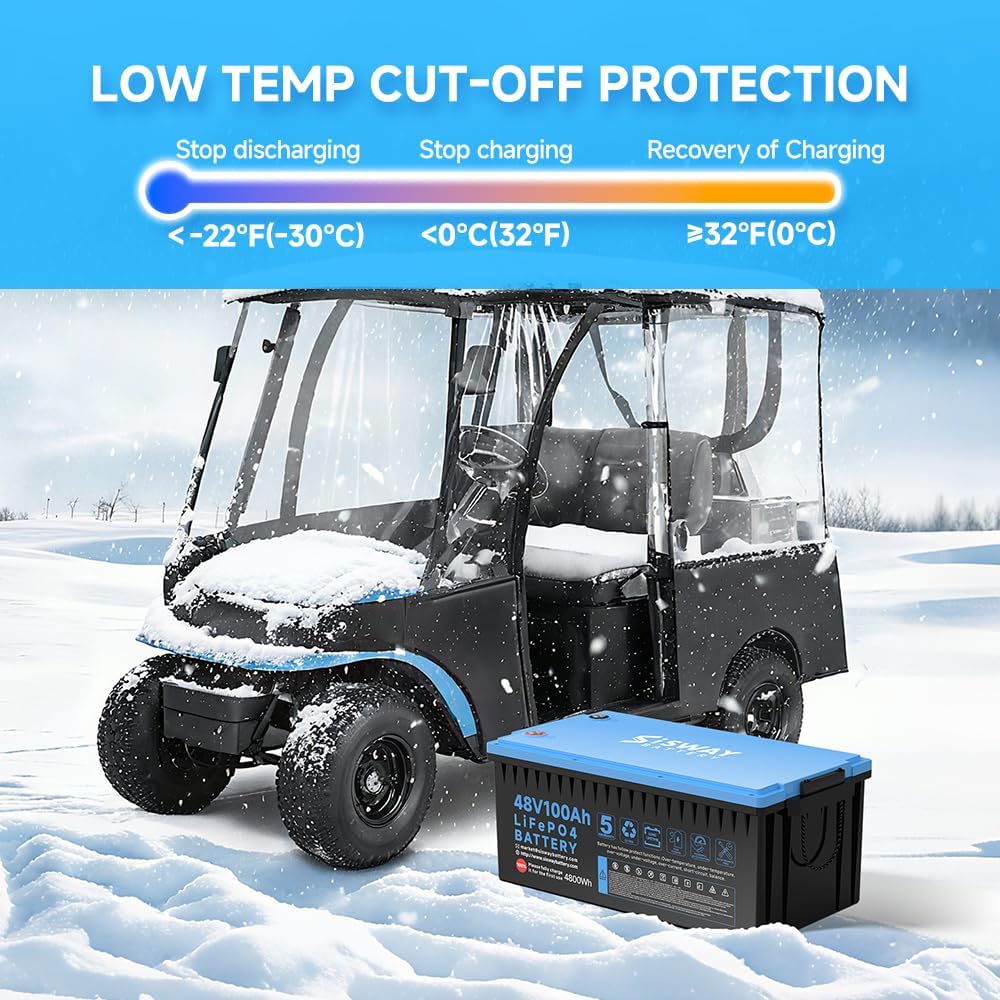
High and low temperature protection is part of the operational envelope for lithium golf cart batteries.
Market Trend: Documentation as a Qualification Filter
Two market signals explain why documentation is becoming a screening mechanism. Battery electric vehicles accounted for 72.5% of the U.S. electric golf cart market in 2024, per Grand View Research, which means the replacement and upgrade cycle now runs almost entirely on electric drivetrains. At the same time, the U.S. electric golf cart market was valued at approximately USD 529.4 million, while Asia-Pacific is the fastest-growing producing region at a 6.9% CAGR. Cross-region sourcing is therefore structural, not incidental.
Regulatory direction reinforces the trend. IEC 62619:2022 specifies safety requirements for secondary lithium cells and batteries in industrial and motive applications including golf carts, and UL 2580 covers electrical, mechanical and environmental testing for batteries used in electric vehicles. Separately, China's Ministry of Commerce issued Announcement No. 58 in 2025, regulating the export of high-energy-density lithium batteries at or above 300Wh/kg. Each of these developments increases the number of documents a buyer must be able to read.
Comparison With Traditional Solutions: Where Certificates Stop Being Evidence
The lithium versus lead-acid comparison is usually presented as a performance argument, and the numbers support it. LiFePO4 batteries typically offer 2,500 to 9,000 cycles at 80% Depth of Discharge according to the Journal of the Electrochemical Society, while traditional flooded lead-acid batteries deliver approximately 300 to 500 cycles at 50% DoD, per Boca EV / Preger et al. Comparative material also positions LiFePO4 packs as supporting 4,000+ deep cycles with 95%+ energy efficiency and roughly 30% more usable capacity.
The limitation is that none of those figures are certified by a UN38.3 report, an ISO 9001:2015 certificate, a conformity letter or an MSDS. UN38.3 is a transport document and does not predict field cycle life. ISO 9001:2015 certifies a management system, not a product safety outcome. MSDS No. TSZ25LL028A86-01 describes hazards, not performance. A third-party certification applies only to the configuration, revision and standard named on its face. A disciplined buyer therefore treats the certificate folder as an entry requirement and treats test methodology, sample traceability and post-shipment acceptance testing as the evidence of performance.
Acceptance, Delivery and Long-Term Supply Considerations
Documents set the entry standard; commercial terms govern what happens next. For Sisway Battery orders, MOQ is 1 unit, delivery terms include FOB, CIF and overseas warehouse shipment, and acceptance inspection includes a pre-shipment test. Payment terms cover T/T, L/C, PayPal, Western Union and Trade Assurance. For a fleet or dealer buying across multiple voltage platforms and replenishing seasonally, the pre-shipment test step is where the document trail meets the physical shipment.
This matters for the long-term relationship more than for any single order. A supplier that can produce a UN38.3 report, an ISO 9001:2015 certificate, a destination-market MSDS and an independent conformity letter, and can repeat that documentation pack on the next order, is easier to keep inside an approved-vendor list than one whose paperwork changes each cycle.
Future Outlook
Three developments are likely to shape golf cart battery documentation over the next several years. First, harmonisation pressure from IEC 62619:2022 and UL 2580 will make product-level safety evidence more comparable across suppliers, reducing reliance on self-declared performance. Second, export-control frameworks such as China's 2025 Announcement No. 58 on high-energy-density lithium batteries will require buyers to understand which thresholds trigger licensing — even where the specific 48V, 51.2V and 72V golf cart packs sit below them. Third, the growth of overseas warehousing will push destination-market hazard communication documents, such as the GHS- and OSHA HazCom 2012-aligned MSDS No. TSZ25LL028A86-01, from a shipping formality into a standing compliance requirement for distributors.
For buyers, the practical implication is a shift in what "qualified supplier" means. The question is no longer only whether a supplier holds certificates, but whether each certificate's scope, issuing authority and validity can be matched to a specific voltage platform and a specific shipment destination.
FAQ
Which certifications does Sisway Battery hold across its golf cart battery range?
The company states that it holds ISO9001 certification and over 100 global certifications including CE, UL, UN38.3 and MSDS, along with multiple patents related to battery technology. At the document level for the golf cart range, the 48V 100Ah LiFePO4 battery carries UN38.3 test report No. TSZ25H8045A01-01; the 48V and 51.2V products are covered by ISO 9001:2015 certificate No. 24CN34504502Q; the 48V unit also has MSDS No. TSZ25LL028A86-01 for the USA market; and the 72V battery carries ACM International Certification Limited certification.
What is the scope of UN38.3 test report No. TSZ25H8045A01-01?
UN 38.3 is required for the safe global transport of lithium batteries, and report No. TSZ25H8045A01-01 applies to the 48V 100Ah LiFePO4 golf cart battery. The report is scoped to transport safety testing for that pack configuration. It does not certify capacity, cycle life, warranty terms or field performance, and it applies only to the configuration tested.
What does ISO 9001:2015 certificate No. 24CN34504502Q actually cover?
Certificate No. 24CN34504502Q applies to both the 48V and the 51.2V golf cart battery production. ISO 9001:2015 certifies an organization's quality management system — it confirms that design, production, inspection and corrective action follow a documented, audited process. It is not a product safety certificate, and it does not certify the electrical performance of any individual battery pack.
Which document applies to the 72V golf cart battery?
The 72V golf cart battery carries an ACM International Certification Limited certification. This is a conformity document issued by a certification body independent of the manufacturer, assessed against a defined technical requirement. Its scope is limited to the configuration and standard referenced on the certificate itself.
What does MSDS No. TSZ25LL028A86-01 tell a U.S. buyer?
MSDS No. TSZ25LL028A86-01 applies to the 48V golf cart battery and is prepared for the USA market. It complies with the Globally Harmonized System (GHS) and with the OSHA Hazard Communication Standard 2012. It communicates hazard classification, safe handling, storage, first-aid, firefighting and transport information. It does not state capacity, cycle life or warranty coverage.
How does Sisway Battery support cold-climate golf cart battery operation?
The company's contingency plans include self-heating low-temperature protection intended to prevent lithium golf cart battery failure during unexpected cold weather events. The same measures are designed to maintain battery operation in cold conditions, supporting fleets that operate across seasonal temperature swings.
What are the purchasing terms and acceptance criteria for a Sisway Battery order?
MOQ is 1 unit. Delivery terms include FOB, CIF and overseas warehouse shipment. Acceptance inspection includes a pre-shipment test. Payment terms cover T/T, L/C, PayPal, Western Union and Trade Assurance.
Further Reference
For buyers who need the full product, certification and specification overview in one place, the company's downloadable catalogue is available here: English product brochure (PDF).