
Decoding Brass Valve Standards: What 1.6 MPa and CW617N Mean for Compliance
Decoding Brass Valve Standards: What 1.6 MPa and CW617N Mean for Compliance
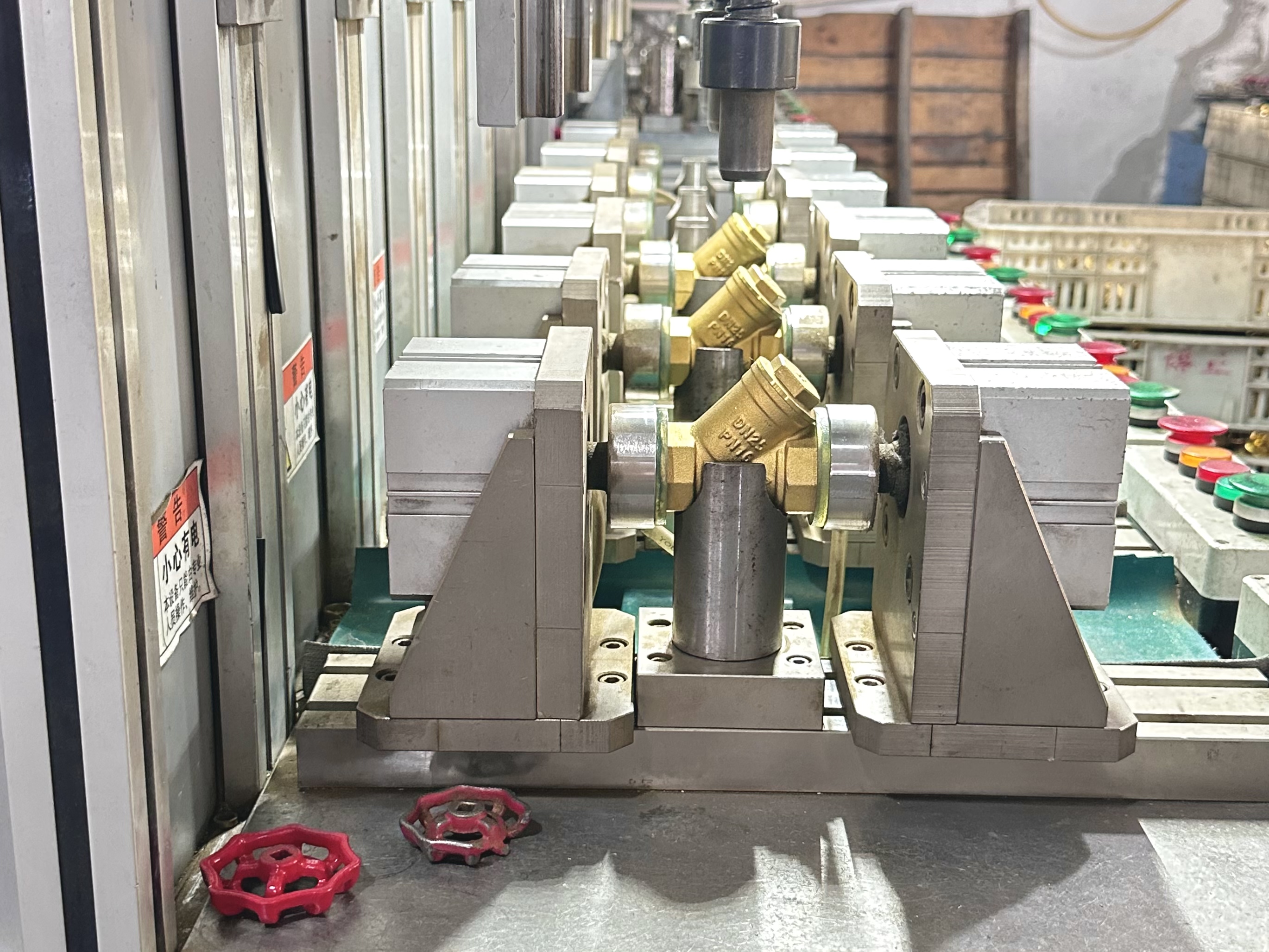
A brass valve's pressure class and its alloy grade are the two claims that decide whether it belongs in a potable water line, a heating circuit, a low-pressure gas riser or an irrigation manifold. The model code states the first. The material documentation states the second. A compliant valve needs both to be consistent — and traceable — rather than simply printed on a label.
This article breaks down what 1.6 MPa and CW617N actually commit a supplier to, using a six-model brass valve range from Zhejiang Bozheng Copper Industry Co., Ltd. (Bozheng Valve) — a brass and stainless steel valve manufacturer founded in 1998 and located in Yuhuan City, Zhejiang Province, China — as a working reference. The models covered here are Q11F-16T, Z15W-16T, J11W/J11F-16T, H14X-16T, Y13X-16T and SY11X-16T.
The intent is not to endorse a brand. It is to give buyers, engineers and distributors a way to read a brass valve specification the way it is actually written, and to know which parts of it can be verified.
Why 1.6 MPa and CW617N Are Two Different Kinds of Claim
Most brass valve disputes trace back to a single confusion: treating a pressure rating and a material grade as though they were the same type of evidence. They are not.
1.6 MPa is a design and test claim. It describes the internal pressure that the valve body, seat, stem seal and threaded connections are dimensioned to contain without leakage or permanent deformation. It is a mechanical promise.
CW617N is a material identity claim. It states that the body was cast from a specific copper-zinc alloy with specific metallurgical behaviour, not from brass in the generic sense. It is a composition promise.
A valve can carry a genuine PN16 rating and still be cast from an alloy unsuited to the water chemistry at the installation site. Equally, a valve can be cast from a well-documented dezincification-resistant alloy and still be machined and assembled to tolerances that do not hold 16 bar. Compliance exists only where the two claims are documented together and supported by production records.
What 1.6 MPa (PN16) Actually Commits a Supplier To
In the nominal pressure series used across European and international valve practice, PN16 corresponds to a nominal pressure of 16 bar, or 1.6 MPa. It is a reference class, not a maximum working pressure under all conditions.
For a brass valve, holding that class has consequences throughout the design:
- Body wall thickness and casting quality. Thin sections, gas porosity or cold shuts create the paths through which pressurised water eventually finds a way out.
- Thread geometry. Standard European brass valves use parallel threads per ISO 228-1, with sealing achieved by an elastomeric or fibre washer rather than by thread interference. Interchanging tapered and parallel sealing faces is a common source of installation leaks.
- Stem sealing. The stem is the only moving path through the pressure boundary, which makes stem seal design the determining factor in cycle life.
- Seat and disc design. Seat geometry determines both shut-off tightness and the torque required to operate the valve.
When one manufacturer applies the same -16 pressure class across six different model families — ball, gate, globe, check and the range's other variants — the practical benefit for a buyer is standardisation. One pressure class means one set of system assumptions, one spares logic and one set of test criteria across an entire installation.
Boundary to note: PN16 is referenced to a base temperature. At elevated temperatures, the allowable working pressure of a brass valve typically falls, and the seal material can become the limiting component. A PN16 marking should therefore never be read as a guarantee that the valve will hold 1.6 MPa in every application. Pressure–temperature data for the specific model is the correct reference.
Why CW617N Matters More Than the Word Brass
Brass describes a family of copper-zinc alloys, and that family spans a wide range of corrosion behaviour. CW617N is a specific designation within EN 12165, the European standard covering copper alloys used in valves and fittings. Its relevance to valves centres on one failure mode: dezincification.
In water with elevated chloride content or aggressive water chemistry, ordinary brass can selectively lose zinc from the alloy, leaving a porous, copper-rich structure that weakens the body from the inside. Alloys such as CW617N are formulated to resist that process, which is why they have become a default specification for brass valves in European water and heating applications.

Two clarifications matter for procurement decisions:
- Dezincification resistance and lead-free status are not the same thing. A dezincification-resistant alloy can still contain lead. Lead-free brass valves are a distinct and growing product category — more than 30% of new brass valve product offerings in early 2024 reflected regulatory pressure on lead content, according to Cognitive Market Research. Where a destination market regulates lead in contact with potable water, that requirement has to be stated separately from the alloy grade.
- The alloy grade alone does not make a valve. Casting soundness, machining tolerance, assembly torque and seal selection all sit between the correct alloy being purchased and the valve performing in service.
The practical verification step is material testing at the point of receipt. Spectrometer testing of raw material on a per-batch basis is the mechanism that turns an alloy grade from a purchase-order line into a verified input, and it is the reason batch-level material records carry more weight than a grade printed on a datasheet.
Reading the Six Model Codes: Q11F-16T to SY11X-16T
The alphanumeric strings in a brass valve range are not arbitrary. In the conventional designation logic used across Chinese and international valve ranges, the characters are read left to right as valve family, connection type, structural variant, seat or seal material, nominal pressure and body material.
| Model | Family and designation reading | Nominal pressure | Body material code | Typical duty |
|---|---|---|---|---|
| Q11F-16T | Ball valve family, threaded connection, F seat designation | PN16 (1.6 MPa) | T — copper alloy | Quarter-turn isolation |
| Z15W-16T | Gate valve family, threaded connection, W seat designation | PN16 (1.6 MPa) | T — copper alloy | Full-bore isolation |
| J11W/J11F-16T | Globe valve family, threaded connection, W or F seat designation | PN16 (1.6 MPa) | T — copper alloy | Throttling and regulation |
| H14X-16T | Check valve family, threaded connection, X seat designation | PN16 (1.6 MPa) | T — copper alloy | Backflow prevention |
| Y13X-16T | Y-prefixed family variant, threaded connection, X seat designation | PN16 (1.6 MPa) | T — copper alloy | Family-specific duty |
| SY11X-16T | SY-prefixed family variant, threaded connection, X seat designation | PN16 (1.6 MPa) | T — copper alloy | Family-specific duty |
Two characters in that string are common to all six models, and they are the two that matter most in a compliance discussion:
- -16 confirms that the model sits in the PN16 / 1.6 MPa nominal pressure class shared across the range.
- T confirms a copper-alloy body, the material class most commonly specified for water, heating and plumbing service.
The family letters and variant digits are useful shorthand, but they are conventional rather than universal, and supplier-specific prefixes do occur. The datasheet — not the model code read in isolation — remains the authoritative statement of function, connection standard and pressure–temperature limits. A buyer comparing Q11F-16T, Z15W-16T or H14X-16T against another supplier's catalogue should compare the documented specification, not the string.
Where Compliance Becomes Verifiable: Test and Traceability Evidence
The reason a model code cannot by itself demonstrate compliance is that codes describe intent, while production records describe outcome. A brass valve specification becomes verifiable when three layers of evidence exist and agree with one another.
First, a design layer. The nominal pressure class, thread standard and material grade define what the valve is supposed to be.
Second, a test layer. Hydrostatic shell and seat testing are the standard mechanical verification. Bozheng Valve's documented production regime applies a 100% hydrostatic test to every valve, with a shell test pressure of 30 bar and a seat test pressure of 22 bar against the range's 16 bar nominal rating, rather than relying on batch sampling. Every valve also carries a batch number, which links an individual unit back to a specific production run and its material records.
Third, a documentation layer. Spectrometer testing of incoming raw material on a per-batch basis, combined with test reports issued with each shipment, is what allows a buyer to reconstruct what was verified and when. In this structure, compliance is demonstrated through consistent design plus material and test documentation, rather than by naming an external certification body. Certification marks, where they exist, are an output of that chain rather than a substitute for it.
For buyers, this reframes the procurement question. Instead of asking whether a valve is certified, the more useful question is what documentation ships with it, and whether that documentation corresponds to the batch numbers on the units actually received. That question can be answered, audited and repeated on the next order.
Matching PN16 Brass Valves to Water, Gas, Heating and Irrigation Duty
The same PN16 brass platform supports quite different duties depending on which family is selected. The table above maps the six models to function; the sections below map function to application.
Potable water and plumbing
In building water systems, ball and gate valves do the isolation work, globe valves handle throttling where a ball valve's quarter-turn characteristic is too abrupt, and check valves prevent backflow. The dominant material risk is corrosion and dezincification, which is why dezincification-resistant grades such as CW617N entered the mainstream European specification. Where lead content is regulated, an explicit lead-free requirement belongs in the specification alongside the alloy grade.
Gas service
Brass-bodied valves are widely used in low-pressure gas distribution inside buildings, where local codes permit. Service conditions differ from water in two ways that affect selection: gas is less forgiving of seat leakage because it is not visible in the same way water is, and elastomeric seat materials must be compatible with the gas composition, not only with the pressure. This is one application where the check valve family, such as the H14X-16T, does protective work rather than control work.
Heating systems
Heating duty raises the temperature question. Published comparison guidance on brass valve seating draws the line between PTFE or PPL seats and metal seats, with the choice depending on temperature. Elevated temperature reduces the allowable working pressure of a brass body and narrows the field of suitable seal materials, which is exactly why the pressure–temperature curve needs checking rather than assuming the PN16 class applies unchanged.
Irrigation and outdoor service
Outdoor and irrigation systems add two variables: flow rate and water quality. Flow coefficient — expressed as Cv or Kv, where a higher value indicates lower pressure loss — determines how much head a valve costs the system. Irrigation water also tends to carry debris and can sit stagnant between cycles, which changes the corrosion picture. This is the application where the cost of undocumented supply is easiest to under-estimate, because failure often appears as reduced system performance rather than a dramatic leak.
The wider brass valve category also includes solenoid, thermostatic, float, butterfly, flanged and compression-fitting variants, each serving a different function. Those families are not interchangeable with isolation valves, and the same discipline applies: match the family to the duty, then verify the material and pressure documentation behind it.
Market Context: Why Documentation Is Getting More Attention
Pressure to document brass valves more rigorously is coming from regulation and from market scale at the same time.
- The global brass valve market was valued at USD 14.8 billion in 2025, with a projected rise to USD 24.1 billion by 2034, according to Dataintelo. The same source places Asia Pacific at 41.2% of revenue share in 2025 and identifies ball valves as the largest product type segment at 38.4% of the market.
- China's total valve-related exports under HS Code 8481 reached USD 8.06 billion in 2025, representing 19.0% of global import value share, according to Tendata's 2025 global valves import trade analysis. China was also the largest exporter of check valves in 2024, at USD 730 million, or 19.6% of the global total, per the Observatory of Economic Complexity.
- On the regulatory side, China's MIIT energy efficiency limits for industrial valves came into effect in October 2025, adding sealing grades for covered products. Lead-free brass valves already accounted for more than 30% of new brass valve product offerings in early 2024, driven by regulatory pressure.
Two cautions are worth carrying into any specification meeting. First, market size estimates for brass valves vary substantially with scope: the USD 14.8 billion figure for 2025 addresses the broad brass valve category, while a narrower estimate of USD 3.2 billion for 2024 covers the brass ball valve segment alone. Scope, not just source, determines whether two numbers are comparable. Second, the competitive landscape is genuinely global, with established manufacturers including Mueller Industries, NIBCO, Watts Water Technologies and KITZ Corporation operating alongside a very large supplier base, which makes documented, comparable specifications the practical basis for evaluation.
Comparing Supplier Approaches: Documented Production vs. Undocumented Workshops
Much of the price spread in the brass valve market comes from differences in verification rather than differences in raw material cost. The table below contrasts documented production practice with small workshop or family workshop supply.
| Comparison dimension | Documented production | Small / family workshop supply |
|---|---|---|
| Material control | Per-batch spectrometer verification of incoming raw material | Poor material control; grade uncertainty |
| Testing | 100% hydrostatic shell and seat testing; test report per shipment | No testing |
| Traceability | Batch number on every valve | Typically absent |
| Reported leakage rate | Controlled by full inspection | Around 10% |
| Cost position | Baseline | Roughly 3% lower |
| Maintenance pattern | Service life governed by system conditions | Frequent failure; replacement roughly every 3–4 months |
| Best suited to | Water, gas, heating and plumbing systems where failure has consequences | Low-pressure, non-critical, temporary use |
The limitation, stated plainly: undocumented workshop supply is genuinely cheaper — roughly 3% on the comparison above — and for low-pressure, non-critical or temporary duty it is not automatically the wrong choice. A 3% price advantage is a poor trade against a reported leakage rate near 10% and a replacement interval measured in months, but only where reliability carries value. Conversely, documented PN16 brass is not a universal answer either: it is the wrong specification for high-temperature steam, for media that attack copper alloys, and for applications where only an application-specific approval will satisfy the local authority.
Where PN16 Brass Stops Being the Right Answer
Compliance documentation is strongest when it is paired with an honest statement of limits. For this pressure class and material, four boundaries matter in practice.
- Temperature. The 1.6 MPa class is temperature-referenced. Above the reference temperature, allowable working pressure typically decreases and the seat material may become the binding constraint.
- Water chemistry. Dezincification-resistant alloys such as CW617N address one specific corrosion risk, but no single brass grade covers every water condition, and stagnant, high-chloride water remains aggressive.
- Media other than water and gas. Chemical, petroleum and other industrial service demand media-specific material selection, which is a different exercise from choosing a pressure class.
- Installation and system effects. A test report covers the valve as shipped. Water hammer, unsupported pipework, mismatched thread sealing methods and over-tightening are installation variables that no factory test can control.
How Bozheng Valve Applies This to Its Range
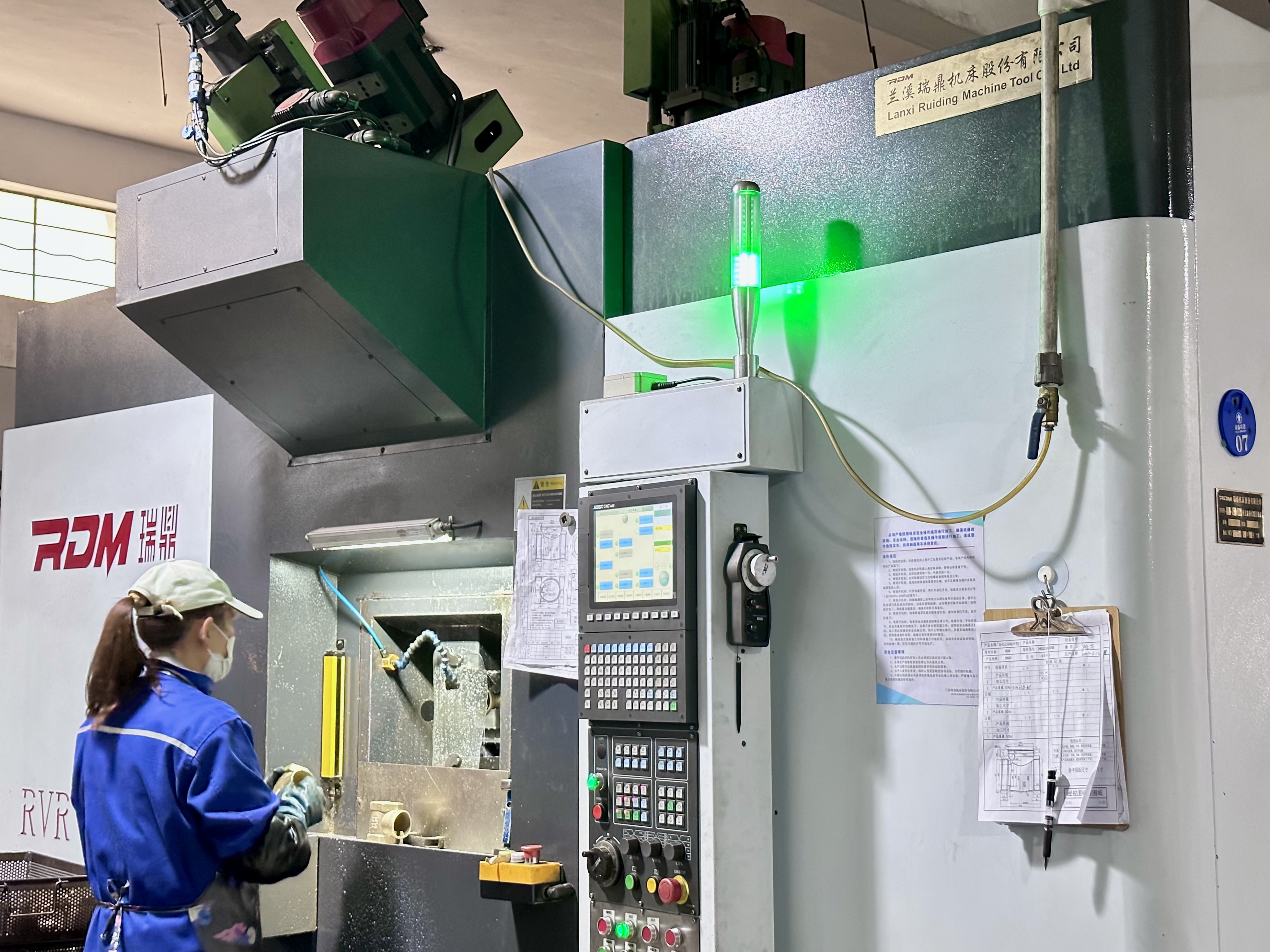
Zhejiang Bozheng Copper Industry Co., Ltd. was founded in 1998 in Yuhuan City, Zhejiang Province, China, and operates a 6,700 m² facility with approximately 180 employees, a 25-engineer development team and an annual output of around 3,200,000 units. Brass valves and stainless steel valves are the company's two product lines, with roughly 70% of output exported to markets including the EU, the USA, Southeast Asia, Central Asia and Africa. Published applications span construction, plumbing, gas, chemical, petroleum and electricity. Company information also states quality management system certification to ISO 9001:2015.
The six models discussed here — Q11F-16T, Z15W-16T, J11W/J11F-16T, H14X-16T, Y13X-16T and SY11X-16T — sit inside that PN16 brass platform. The compliance argument for them rests on the same three layers described earlier: a design layer that fixes type, thread, seat and pressure class; a test layer that applies 100% hydrostatic testing at 30 bar shell and 22 bar seat plus per-batch spectrometer verification; and a documentation layer built on batch numbers and shipment test reports.
That is a narrower claim than certified, and a more useful one. It is verifiable from documents a buyer already receives, and it can be checked against the batch numbers on the units in the crate.
Future Outlook
Three directions look durable for the next several years.
Alloy documentation will become more specific, not less. The lead-free shift is already visible in product mix, and regulators continue to tighten material requirements for contact-with-water applications. Specifications that name a grade such as CW617N plus a lead limit will increasingly be treated as the minimum rather than the maximum.
Energy efficiency requirements will pull sealing performance into scope. China's MIIT energy efficiency limits for industrial valves took effect in October 2025, adding sealing grades to the compliance conversation alongside pressure and material. Buyers sourcing from Chinese suppliers should expect sealing performance to appear in specification documents more explicitly than it did previously.
Regional demand growth will keep pressure on documentation quality. With Asia Pacific holding 41.2% of brass valve revenue share in 2025 and the global category projected to grow from USD 14.8 billion in 2025 to USD 24.1 billion by 2034, the volume of cross-border brass valve trade is rising. In that environment, suppliers who can hand over a coherent documentation package — design class, alloy grade, test record, batch trace — will be easier to qualify than those who cannot.
For buyers, the practical takeaway does not depend on any single certification mark. It depends on being able to read a model code for what it actually states, ask for the material and test records behind it, and know which applications fall outside the envelope.
Frequently Asked Questions
What does 1.6 MPa mean on a brass valve model code?
1.6 MPa, written as PN16 in nominal pressure terms, is the pressure class the valve is designed and tested to. It indicates that the body, seat, stem seal and connections are dimensioned for a nominal pressure of 16 bar at the reference temperature of the applicable pressure series. It is a design class rather than a guaranteed working pressure under every service condition.
Is CW617N the same as lead-free brass?
No. CW617N is a copper-zinc alloy designation within EN 12165, selected primarily for dezincification resistance in water service. It is not automatically a lead-free grade. Lead-free brass valves are a separate product category that grew to more than 30% of new brass valve product offerings in early 2024 under regulatory pressure, according to Cognitive Market Research. Where lead content is regulated, it must be specified independently of the alloy grade.
Do model numbers such as Q11F-16T and H14X-16T indicate a particular certification?
No. The string describes the valve itself: family, connection type, structural variant, seat or seal designation, nominal pressure class and body material code. In these models, -16 places the valve in the PN16 class and T indicates a copper-alloy body. Certification status is established separately, through the design, material and test documentation that accompanies production, not by the model code.
What test and traceability records should accompany a PN16 brass valve shipment?
At minimum, a hydrostatic test record covering shell and seat testing, batch-level material verification for the raw material used, a batch number marked on each valve, and a test report issued with the shipment. As a documented reference point in this range, Bozheng Valve applies 100% hydrostatic testing with a shell pressure of 30 bar and a seat pressure of 22 bar against the 16 bar nominal rating, per-batch spectrometer testing of raw material, and batch-number traceability on every unit.
Can a 1.6 MPa brass valve be used in a high-temperature heating circuit or for steam?
Not on the basis of the pressure marking alone. Nominal pressure classes are referenced to a base temperature, and allowable working pressure typically decreases as temperature rises. The seal material also becomes a limiting factor, which is why seat selection between PTFE or PPL and metal seating is treated as a temperature-dependent decision. High-temperature and steam service require checking the specific model's pressure–temperature data rather than assuming the PN16 class applies unchanged.
For readers who need the underlying model list and dimensional data behind this pressure class, Bozheng Valve's product catalogue is available as a reference document: BZ Catalogue 2025 (PDF). Company background and product information: bozheng-valve.com.