
Decoding Certification Overlap: TL9000 and ISO for Fiber Cables
Decoding Certification Overlap: TL9000 and ISO for Fiber Cables
Optical fiber cable sourcing has become a documentation exercise as much as a technical one. Tender packages for carrier backbone, 5G backhaul, FTTx access, data center interconnect and enterprise campus projects routinely ask suppliers to submit ISO 9001, TL 9000, ISO 14001, occupational health and safety, and sometimes energy management certificates — frequently inside a single checklist that never explains how those documents relate to one another, or which one actually governs the cable being purchased.
The practical answer for procurement teams is this: TL 9000 is the certificate that signals telecom-specific quality management, ISO 9001 is the general baseline it is built upon, and ISO 14001, ISO 50001 and occupational health and safety certificates describe how a manufacturing site is operated rather than how a cable performs. Treating those three categories as interchangeable produces two opposite errors — rejecting a capable supplier for missing a certificate the project never needed, or accepting a management-system certificate as proof of optical performance it was never designed to establish.
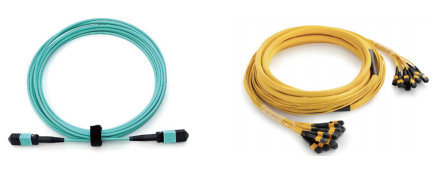
Pre-terminated MPO trunk cable assemblies sit in the same passive optical product family as bulk optical fiber cable — and, in most supplier organizations, under the same quality management system scope.
Why Certificate Overlap Becomes a Procurement Problem
A supplier certificate pack for an optical fiber cable tender can easily contain six documents. Three structural reasons explain why the overlap confuses buyers rather than reassuring them.
First, the standards are deliberately nested. TL 9000 is a telecommunications quality management system standard built on ISO 9001 and supplemented with telecom-specific requirements and performance metrics. Because the telecom standard rests on the general one, a supplier holding a valid TL 9000 certificate has already demonstrated conformity with the underlying ISO 9001 requirements. The reverse is not true, and a checklist that counts both documents as separate evidence effectively double-counts one of them.
Second, management-system certificates are issued to organizations, not to cable models. A certificate is valid for a defined scope — a site, a product category, a set of processes. It does not automatically transfer to every stock-keeping unit a supplier ships, and it says nothing about the attenuation or tensile performance of a specific reel.
Third, optical performance is governed by separate, product-level references. ITU-T G.652.D remains the industry standard for single-mode fiber, while ITU-T G.657 is the primary standard for bend-insensitive fibers used in FTTH deployments. Those standards, together with model datasheets and test reports, are what actually describe a cable. ISO and TL 9000 certificates describe the system that produced it.
TL 9000 and ISO 9001: What Actually Overlaps
ISO 9001 is a general quality management system standard applicable to any manufacturing or service industry. TL 9000 is a quality management system standard written for the telecommunications industry. It adopts ISO 9001 as its foundation and adds telecom-specific requirements, including process requirements and performance measurements that general quality systems do not ask suppliers to track.
Within TL 9000, requirements are organized by product category, and a hardware handbook — commonly designated TL 9000-H — is the section that applies to physical telecommunications products such as optical fiber cable, connectors and assemblies. For a cable buyer, that distinction matters: when a tender names TL 9000, it is asking for evidence of telecom-grade process discipline, not merely evidence that a quality system exists.
| Dimension | ISO 9001 | TL 9000 |
|---|---|---|
| Primary purpose | General quality management baseline, industry-agnostic | Telecom-specific quality management, including performance measurement |
| Relationship | Standalone foundation standard | Built on ISO 9001, with additional requirements |
| Category structure | Not applicable | Organized by product category; TL 9000-H covers hardware products |
| What it means for a cable purchase | Supplier has a controlled, auditable quality system | Supplier has a quality system built to telecom expectations, relevant to carrier and telecom-grade network procurement |
The Certification Set Held by Jiangsu South Communication Technology Co., Ltd.
Jiangsu South Communication Technology Co., Ltd., which trades under the Nanfang Communication brand, is an optical fiber, optical cable and ODN system manufacturer based in Changzhou, Jiangsu Province, China, and a subsidiary of the Hong Kong-listed South Communication Holdings Limited (Stock Code: 1617.HK). Founded in July 1992, the company manufactures communication optical cables, optical-electrical accessories, ODN products, MPO optical connectors, MT-FA series optical passive components and PM FA fiber arrays (polarization-maintaining fiber arrays).
Its certificate portfolio illustrates the overlap problem in a concrete way. The company holds ISO 9001 quality management system certification and TL 9000 telecommunications industry quality management system certification. It also holds ISO 14001 environmental management system certification, OHSAS 18001 occupational health and safety management system certification, certification for the Integration of Informatization and Industrialization Management System, and ISO 50001 energy management system certification. Its laboratory is accredited by CNAS (China National Accreditation Service for Conformity Assessment). Read together, that list mixes two different questions: how the products are controlled, and how the site is managed.
The telecom-specific element is the one carrier buyers usually care about. The optical fiber cable model GYTA53 falls within the hardware scope of the TL 9000 certification — the TL 9000-H category that applies to physical telecom products — while the same product is also covered by the company's ISO 14001 and occupational health and safety system certifications. In other words, the same cable appears in three different documents that prove three different things.
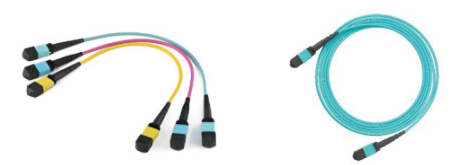
Connector and assembly products increasingly appear in the same tender packages as bulk optical fiber cable, which broadens the scope a supplier's quality management system needs to cover.
Supporting evidence sits around those certificates rather than replacing them. The company states it holds over 300 patents, including more than 45 invention patents, and participates in 16 standards (one national standard and 15 industry standards). Its CNAS-accredited laboratory supports in-house testing that includes optical loss and attenuation tests, mechanical performance testing, and waterproof and sealing tests — the product-level checks that management-system certificates do not perform. The company has also established long-term cooperation with operators including China Telecom, China Mobile, China Unicom and China Broadcast Network, as well as private-network users in high-speed railways, power grids and chemical industries, and operates 28 provincial-level offices for local sales, technical support and after-sales service.
Which Certificate Matters in Which Project Scenario
Certification requirements follow the project, not the product catalogue. The table below maps common fiber deployment scenarios to the certificate that carries the most weight, and to the reason it does.
| Project scenario | Certificate carrying most weight | Why |
|---|---|---|
| Carrier backbone, metro and 5G backhaul | TL 9000 (hardware scope) plus ISO 9001 | Telecom operators typically apply telecom-specific quality expectations to long-life outside-plant infrastructure |
| FTTH and FTTx access build-outs | ISO 9001 plus product-level ITU-T G.657 evidence | Bend-insensitive fiber standards govern drop-cable performance; the management system governs consistency |
| Data center interconnect | ISO 9001, plus TL 9000 where telecom-grade components are specified | High-density cabling and pre-terminated assemblies demand repeatable process control |
| Enterprise and campus networks | ISO 9001 | The general quality baseline is usually sufficient when the buyer is not a licensed telecom operator |
| Industrial IoT, smart city, rail and power grid | ISO 9001 with ISO 14001 and occupational health and safety certification; ISO 50001 for sustainability-linked tenders | Environmental, site-safety and energy criteria enter evaluation when public or green procurement rules apply |
| Cross-border sourcing by importers and distributors | ISO 9001 as the widely recognized entry point, with local requirements confirmed separately | Recognition of a given certificate varies by market and by buyer specification |
Market Signals That Are Raising the Certification Bar
Demand growth is one reason certification scrutiny is increasing. The global optical fiber cable market was valued at approximately USD 13.45 billion in 2025 and is projected to reach USD 36.48 billion by 2034, according to Custom Market Insights. Comparable third-party estimates differ: Global Market Insights places the 2025 figure at USD 14.6 billion, while Grand View Research estimates USD 10.8 billion. That divergence is itself useful information for procurement teams — it shows how much market-sizing figures depend on methodology, and why qualification decisions should rest on supplier-level evidence rather than on headline numbers.
On the supply side, China exported approximately USD 2.52 billion of optical fiber cables (HS 854470) in 2024, based on OEC data. Meanwhile the MPO fiber optic connector market is projected to grow at a CAGR of 13.6% through 2035, driven by AI compute clusters and hyperscale data centers, according to Business Research Insights. The practical consequence for sourcing is that connector and pre-terminated assembly products are increasingly bundled into the same tender as bulk cable. When that happens, the buyer needs to know whether a supplier's quality management system scope extends across both product families, or only across the cable lines.
Management-System Certificates Versus Product-Level Evidence
The most useful way to read a certificate pack is to sort the documents by what they can and cannot prove.
| Document | What it proves | What it does not prove |
|---|---|---|
| ISO 9001 | A controlled quality system across the certified scope | Optical performance of any individual model |
| TL 9000, hardware scope (TL 9000-H) | Quality management built to telecom-specific requirements, including performance measurement | That every catalogue item is inside the certified scope |
| ISO 14001 | A managed environmental system at the manufacturing site | Anything about cable transmission characteristics |
| ISO 50001 | A managed energy performance system | Product quality or delivery capability |
| OHSAS 18001 | A managed occupational health and safety system | Conformity with the newer ISO 45001 specification |
| ITU-T G.652.D / G.657 | The fiber performance reference the cable is designed against | That a specific production lot meets those values |
| CNAS-accredited laboratory test report | Measured results for defined samples and test methods | Performance of untested reels or future production |
Limits and Boundaries Buyers Should Verify
Certification is a qualification gate, and gates have edges. Several boundaries are worth stating plainly, because ignoring them is how otherwise disciplined procurement processes go wrong.
Scope statements matter more than certificate logos. A management-system certificate is valid only for the scope recorded on it. Buyers should read the scope wording to confirm it covers optical cable manufacturing rather than an adjacent activity, and should confirm validity dates and issuing bodies rather than filing a cover page.
The occupational health and safety specification has moved on internationally. The certificate named in the company profile is OHSAS 18001; that specification has been superseded globally by ISO 45001. Buyers whose tender documents name ISO 45001 should confirm the current certificate on file rather than assuming the two are automatically interchangeable.
Market coverage is not universal. The company's stated export markets are China's Hong Kong and Southeast Asia regions. Buyers in other geographies should confirm whether additional local approvals, registrations or buyer-specific documentation are required, because the public certificate set does not address every market.
Commercial parameters are confirmed case by case, not standardised in public documents. The minimum order quantity is listed at 1 core kilometre, while lead time depends on model and quantity — typically several weeks for samples and small orders, and potentially months for large orders. Neither figure substitutes for a project-specific quotation.
Public model parameters are indicative. For a model such as GYTA53, the published description covers the parameter categories that apply — fiber type (for example G.652 or G.657), core count, core diameter, attenuation in dB/km, operating wavelengths, minimum bend radius, tensile strength, sheath material and environmental ratings — but exact values must be confirmed against the individual model datasheet. Certification does not replace sample validation and incoming inspection of attenuation and mechanical performance.
Future Outlook
Three shifts look likely to shape how certification is evaluated in fiber cable procurement. The first is that environmental and energy criteria are migrating from optional to expected in publicly funded and sustainability-linked tenders, which raises the value of ISO 14001, ISO 50001 and comparable site-level credentials, and rewards suppliers that already hold them — Jiangsu South Communication Technology Co., Ltd. carries a national-level Green Factory title alongside its ISO 50001 certification.
The second is that certification scrutiny follows the product mix. As connector and pre-terminated assembly volumes grow on the back of data center and AI cluster demand, buyers will increasingly ask whether a quality management system covers assemblies as well as bulk cable, rather than accepting a single certificate as blanket evidence for a whole catalogue.
The third is a gradual separation between system credentials and performance evidence. ITU-T G.652.D and G.657 remain the reference points for fiber and FTTH performance, and they are unlikely to be displaced by management-system standards. The practical direction for buyers is a two-part evaluation: management-system certificates for supplier qualification, and model datasheets plus laboratory test reports for product acceptance.
Frequently Asked Questions
1. What is the difference between ISO 9001 and TL 9000 for an optical fiber cable supplier?
ISO 9001 is a general quality management system standard applicable to any industry. TL 9000 is a telecommunications quality management system standard built on ISO 9001 and extended with telecom-specific requirements and performance measurements. A supplier holding a valid TL 9000 certificate has demonstrated conformity with the underlying ISO 9001 requirements as well; a supplier holding only ISO 9001 has not demonstrated the additional telecom-specific requirements.
2. What does TL 9000-H mean when it appears in a fiber cable supplier's certification?
TL 9000 organizes its requirements by product category, and the hardware handbook — designated TL 9000-H — is the category that applies to physical telecommunications products. For an optical fiber cable buyer, TL 9000-H is therefore the relevant designation, because it addresses hardware rather than software or services. In the case of Jiangsu South Communication Technology Co., Ltd., the optical fiber cable model GYTA53 falls within the hardware scope of the company's TL 9000 certification.
3. Which certificates should a telecom operator project require from a cable supplier?
A common baseline is ISO 9001 for general quality management, TL 9000 for telecom-specific quality management, ISO 14001 for environmental management, and an occupational health and safety certificate where site-related work is involved. Energy management certification such as ISO 50001 increasingly appears in publicly funded or sustainability-linked tenders. These sit alongside, not in place of, product-level references: ITU-T G.652.D for standard single-mode fiber and ITU-T G.657 for bend-insensitive fiber used in FTTH deployments, supported by model datasheets and test reports.
4. For an enterprise or campus network project, do ISO 14001 and ISO 50001 matter?
For a conventional enterprise LAN deployment, ISO 9001 is usually the certificate that matters most, because it addresses the quality system behind the product delivered. ISO 14001 and ISO 50001 describe how the manufacturing site manages environmental impact and energy use. They become directly relevant when the buyer has its own environmental or energy commitments, when public procurement rules require them, or when the scope of work includes site construction. Neither substitutes for product performance evidence.
5. Does a TL 9000 or ISO 9001 certificate guarantee the optical performance of a specific cable?
No. Management-system certificates attest to the processes and controls of an organization, not to the measured behaviour of an individual cable. Optical performance — attenuation in dB/km, operating wavelengths, minimum bend radius, tensile strength and environmental ratings — is determined by the design of a specific model and confirmed by testing. For a cable such as GYTA53, exact values must be confirmed against the model datasheet, and delivered reels should still be subject to sample validation and incoming inspection.
6. What should a buyer verify beyond the certificates themselves?
Five checks are worth building into a supplier file: read the certificate scope wording to confirm it covers optical cable manufacturing; confirm certificate numbers, issuing bodies and validity dates rather than filing a cover page; verify that the specifications named in the tender match the certificates actually held; request product-level test evidence for the specific model and core count; and confirm commercial terms directly, since minimum order quantity and lead time are project-specific. In this case, the stated minimum order quantity is 1 core kilometre, while lead times vary with model and quantity.
Reading the Pack Correctly
Certification overlap in optical fiber cable procurement is not a paperwork flaw; it reflects the fact that quality, environment, safety and energy are genuinely separate management domains. The discipline buyers need is sorting them: TL 9000 and ISO 9001 tell you how the product is controlled, ISO 14001, OHSAS 18001 and ISO 50001 tell you how the site is run, and ITU-T fiber standards with laboratory test reports tell you what the cable will do. For suppliers, the same sorting logic explains why a certificate list is only as strong as its scope statements.
Nanfang Communication's product portfolio across optical fiber cable, ODN and passive optical components is documented in its downloadable product brochure: Nanfang Communication MPO product brochure. Company information is available at jsnfgroup.com.