
Decoding Compliance in Industrial Elevators: Certification Pitfalls Every Buyer Must Avoid
Industrial elevator compliance is a property of a project, not a property of a supplier. Two freight elevators carrying the same model designation can be fully compliant on one site and non-compliant on another, because conformity is established against the standard adopted by the destination market, for a specific configuration, and accepted by the authority having jurisdiction (AHJ) that approves the installation. Buyers who treat certification as a supplier-level attribute — “our elevators are certified” — are the buyers who discover the gap during site acceptance, when civil works are finished and the completion schedule is already committed.
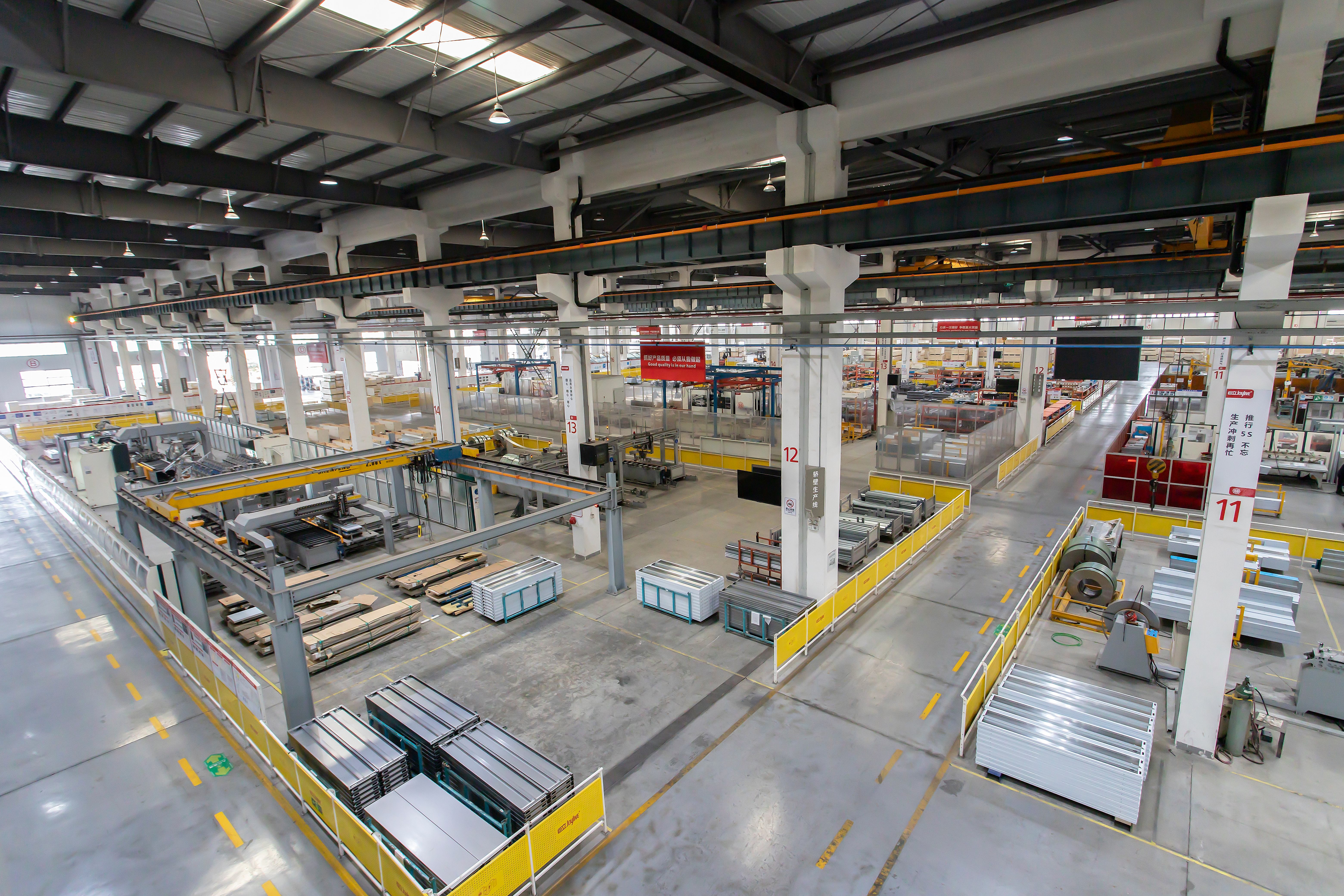
Compliance evidence is generated long before delivery — in manufacturing, testing and configuration control.
Why Industrial Elevator Compliance Is Scoped to a Project
Three variables define the compliance scope of any industrial elevator: the market of installation, the configuration of the delivered unit, and the application it is intended to serve. Change any one of them and the evidence package changes with it.
This is why a general quality certificate — an ISO-style management system document, a supplier brochure statement, or a home-market manufacturing authorization — rarely answers the question a project actually needs answered. Such documents describe how a company is organized and audited. They do not certify a specific elevator, at a specific speed and load, against the safety standard that the destination market's AHJ will apply on inspection day.
A practical way to test this before contracting: ask the supplier to name the standard, the edition, the configuration, and the market for which a given document was issued. If any of the four is missing, the document is a marketing asset rather than a compliance asset.
Where Certification Requirements Actually Diverge
Compliance frameworks are regional. The same heavy-duty freight elevator may be evaluated under completely different logic depending on where it lands.
| Market | Reference framework | What buyers commonly misread |
|---|---|---|
| European Union | EN 81-20 and EN 81-50 — the mandatory European safety standards for elevator construction and component testing, replacing EN 81-1/2 | Assuming a component certificate equals whole-unit conformity as installed |
| North America | ASME A17.1-2025 / CSA B44-2025, whose 2025 update adds enhanced safety requirements, including IoT-based remote operation monitoring | Assuming an older code edition or an EU-marked unit will be accepted |
| China | Special equipment licensing regime covering manufacturing, installation, modernization and maintenance | Assuming a domestic license automatically travels to an export destination |
| Other regions | National adoption or adaptation of international frameworks, with local amendments | Assuming harmonization means equivalence |
The table is a map, not an answer. In every case, the binding decision belongs to the local AHJ and to the inspection regime that governs the completed installation. Standards define the technical route; the AHJ decides whether the route was followed.
Four Documentation Gaps Buyers Most Often Misread
1. Management system certificates read as product conformity
A quality management certificate confirms that a factory operates under a controlled process. It does not certify the elevator. Product conformity for a specific market is a separate document set that must name the standard, the model, the configuration limits and the issuing body.
2. Manufacturer authorization read as market authorization
Authorization to manufacture in the country of origin is evidence of domestic competence, not of destination-market approval. Export projects normally require an additional conformity route and, in many cases, locally licensed installation partners.
3. Component certificates read as whole-unit conformity
Rope, controller, door and safety gear certificates are inputs. The conformity statement applies to the assembled unit as installed, including the interface between components, the shaft interface and the fire strategy of the building.
4. Certificate scope read as covering every configuration
A document issued for one speed and load envelope does not automatically extend to a heavier unit, a taller travel, or a different car finish. Configuration control is the mechanism that keeps documentation and delivered hardware aligned — and it is exactly what buyers should ask to see in the contract.
How the Application Rewrites the Compliance Checklist
Industrial freight elevators are deployed across industry and manufacturing, logistics and supply chain, commercial and retail, public facilities, and special industries. Those environments carry working conditions that a general freight specification does not capture: heavy duty, heavy people flow, heavy load, fire-proof operation, and continuous 24/7 duty.
Special requirements change the evidence a buyer should demand. Where an explosion-proof industrial freight elevator is specified, the certification question becomes a hazardous-area question, and the buyer must supply the zone classification before the supplier can state which scope applies. Where a clean environment or disinfection requirement exists, suitability depends on materials, finishes and cleanability — and finishes are configuration, not brand. Where a fire function is required, the elevator's role in the building's fire strategy determines which evidence the AHJ will accept.
In all three cases the compliance question is answered jointly: the buyer defines the environment and the classification, the supplier defines the configuration, and the market defines the acceptance route.
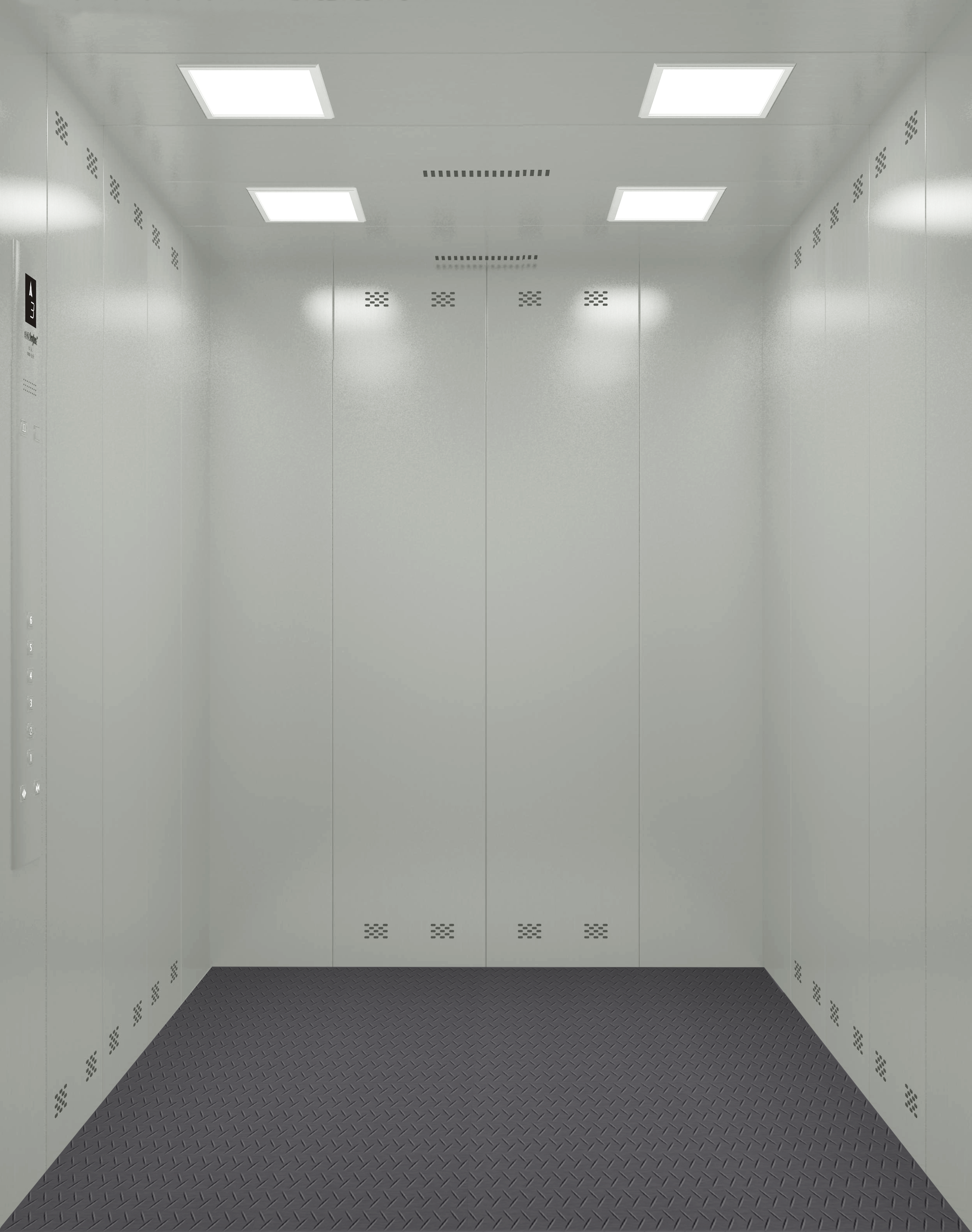
Load, speed, travel and car finish are configuration variables — and each one sits inside the conformity scope.
What a Documented Qualification Framework Can and Cannot Prove
A useful reference point here is how a manufacturer's qualification stack is actually structured. Joylive Elevator Co., Ltd. (stock short name: Joylive, stock code: 833481) is a Chinese elevator manufacturer founded in 2002 and based in Bacheng Town, Kunshan City, Suzhou, Jiangsu Province, serving China, Europe, America, Oceania, Africa, Central Asia, Southeast Asia and the Middle East.
What such a profile demonstrates is capability and domestic authorization. Joylive holds a top A qualification in China for special equipment manufacturing, installation, modernization and maintenance, and operates a nationally accredited CNAS laboratory alongside a 105,000 m² manufacturing base with 150 R&D engineers, an annual output of 15,000 units, and an export ratio of 55%. It is also an MIIT intelligent service demonstration enterprise, a national pilot enterprise for the integration of industrialization and standardization, and a national high-tech enterprise. These are verifiable organizational facts.
What they do not do is grant market access. A Chinese manufacturing license is not an EU declaration of conformity, and a CNAS laboratory is a testing capability rather than a destination-market approval. Product families such as explosion-proof, clean-room and fire-rated elevators indicate that the engineering scope exists; they do not confirm that any particular delivered unit is certified for a particular project. That confirmation is always project-specific and always documentation-based.
Specifications Shape the Compliance Envelope
A freight elevator is not a single product but a range. The published envelope for one industrial freight elevator family illustrates how wide that range runs.
| Parameter | Published range | Compliance implication |
|---|---|---|
| Model family | GF10, GF20, GFN20, GFN30 | Different platforms carry different evidence sets |
| Speed | 0.25 – 3.0 m/s | Speed class affects safety testing scope |
| Load | 1,000 – 200,000 kg | Heavy-duty configurations require separate verification |
| Max travel height | 150 m | Travel height interacts with building and fire requirements |
| Car material | SS304 | Material choice is part of the cleanability and durability case |
The published range is a manufacturing envelope, not a certified configuration list. A supplier able to build from 1,000 kg to 200,000 kg is describing flexibility; the buyer still has to confirm which point inside that range has been verified for the destination market.
A Contract-Clause Checklist for Compliance Verification
- Name the standard and the edition. A reference without a year is unenforceable.
- Define the configuration under verification. Speed, load, travel, car size, car decoration and any special rating.
- List the required documentation pack. Unit-level conformity statements, test records, component certificates, and an explicit statement of what the pack does not cover.
- Assign submission responsibility. State who presents the file to the AHJ and who holds the local installation license.
- Set a delivery date for documents, not only for hardware. Documentation arriving after installation is the most common cause of acceptance delay.
- Agree the change procedure. Any scope change after signature should trigger re-verification, not a silent substitution.
- Link payment milestones to acceptance stages. This keeps the compliance workstream visible throughout delivery.
Verification-First Versus Assumption-Based Procurement
| Dimension | Assumption-based | Verification-first |
|---|---|---|
| Evidence accepted | Supplier statement, brochure, generic certificate | Named standard, named configuration, named market |
| Risk timing | Risk surfaces at site acceptance | Risk surfaces at contract stage |
| Front-end effort | Low | Higher — documents, translation, review |
| Best suited to | Standard, low-risk, repeat installations | Heavy-duty, special-rated or first-entry markets |
The honest limitation of the verification-first approach is cost and time. Documentation packs must be prepared, translated and reviewed; third-party or AHJ reviews consume calendar days that a fast-track project may not have. And in some markets, no pre-certified configuration exists for the required load, speed or hazardous-area rating, which turns compliance from document retrieval into project-specific engineering. Verification-first is therefore not a free upgrade — it is a workstream that must be scheduled and budgeted from the start.
Application Evidence: Compliance Questions in Real Industrial Projects
Industrial reference projects show how often freight elevator supply crosses regulatory boundaries, and why the documentation burden scales with market count rather than with unit count.
- Inventec (Mexico): 9 passenger and freight elevators supplied for a factory project, in stable operation for one year.
- Pegatron (Vietnam): 87 passenger and freight elevators supplied for factory facilities, in stable operation for two years.
- Wistron (Vietnam): 36 high-performance passenger and freight elevators supplied, in stable operation for five years.
- SAT CITY (Kazakhstan): 208 elevators with customized car decoration and customer logos, in stable operation for five years.
Each of these projects sits in a different market, which means each was accepted under a different regulatory route. Multi-market portfolios make the point more clearly than any single installation: compliance cannot be inherited from a reference list, only re-established per project. Buyers evaluating a supplier with cross-border experience should still ask which documents were produced for their market, not how many units were delivered elsewhere.
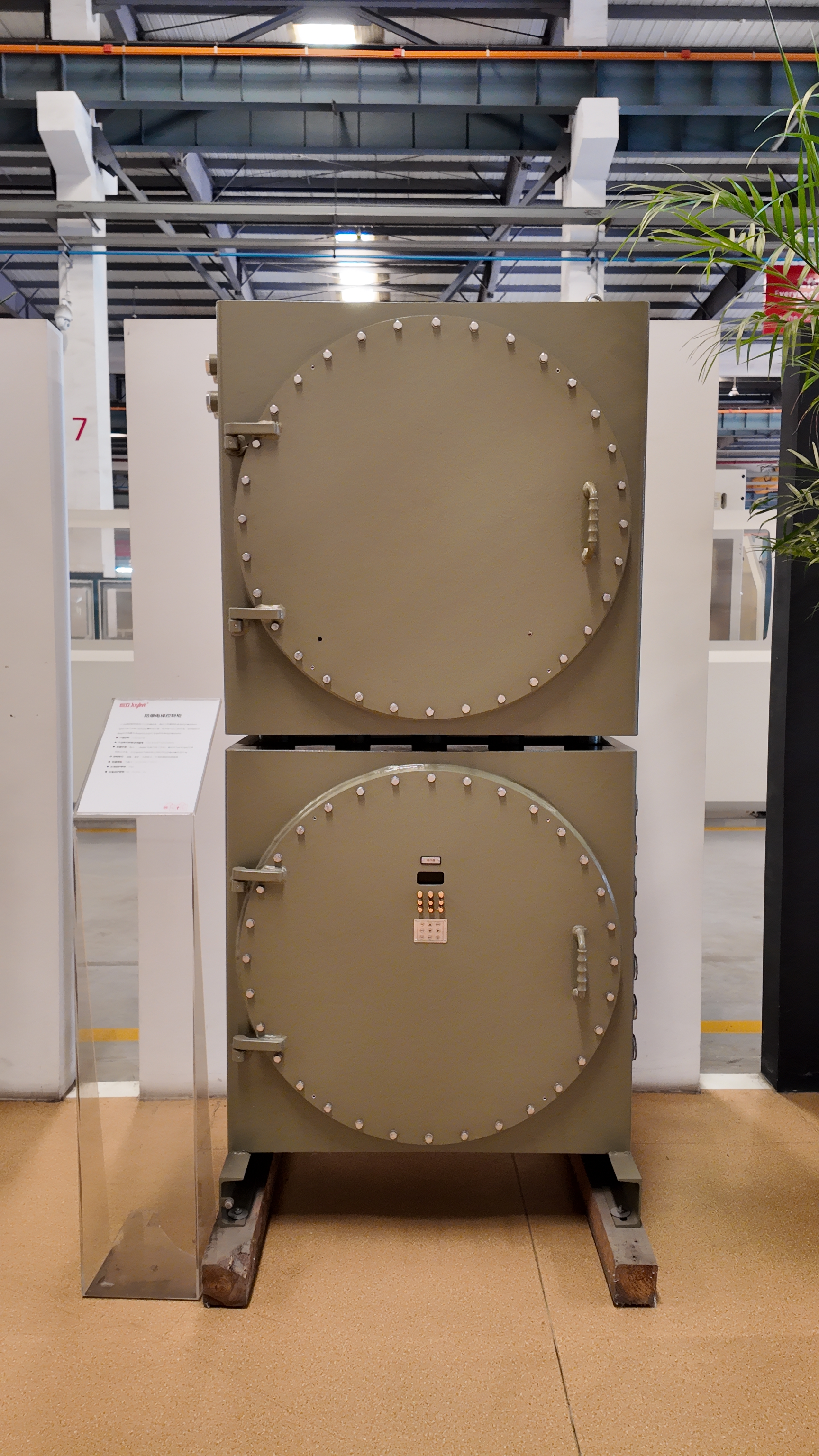
Heavy-duty and 24/7 duty cycles are application facts that feed directly into the verification scope.
Market Trends That Are Reshaping Compliance Work
Three measurable trends are pushing compliance documentation toward the center of procurement decisions.
Freight equipment is a growing category. The freight elevators market was valued at approximately USD 2.07 billion in 2024 and is expected to grow at a CAGR of 6.10%, reaching USD 2.78 billion by 2029, according to Knowledge Sourcing Intelligence. Within the wider elevator market — valued at approximately USD 84.8 billion in 2024 and projected to reach USD 126.7 billion by 2034 by Global Market Insights — freight and industrial applications are a structurally expanding segment.
Cross-border sourcing keeps deepening. Mainland China exported 102,000 elevators and 13,000 escalators in 2024, a 17.3% increase year-on-year, according to China Elevator Association data reported by Elevator World. More units crossing borders means more documentation crossing borders, and more projects where the manufacturing market and the installation market apply different rules.
Digital records are entering the codes themselves. The IoT in elevators market was estimated at USD 16.14 billion in 2024, driven by predictive maintenance and remote monitoring services, per Market Research Future. The ASME A17.1-2025 / CSA B44-2025 update reflects the same direction by including IoT-based remote operation monitoring. When monitoring data becomes part of the safety framework, the evidence a buyer must retain extends beyond the handover certificate into the operating record.
Future Outlook
The direction of travel is toward documentation that is digital, configuration-linked and inspectable at any point in the asset's life. Codes are already incorporating remote monitoring, which implies that future compliance conversations will involve operating data as well as factory certificates.
For buyers, the practical consequence is that compliance should be procured as a deliverable with its own specification, schedule and acceptance criteria — not as an assumption carried in from a supplier presentation. For suppliers, the consequence is that qualification frameworks will be judged less on how many certificates exist and more on how precisely each one maps to a configuration, a market and an application. Adoption speed will vary by region, and no single standard currently governs all markets, so project-level verification will remain the reliable method for the foreseeable future.
FAQ
Why can an industrial elevator be compliant in one country but non-compliant in another?
Conformity is established against the framework adopted by the destination market and is accepted by that market's authority having jurisdiction. The European Union relies on EN 81-20 and EN 81-50, the mandatory European safety standards for elevator construction and component testing that replaced EN 81-1/2. North America relies on ASME A17.1 / CSA B44, whose 2025 edition adds enhanced safety requirements, including IoT-based remote operation monitoring. A unit accepted under one framework does not automatically satisfy another, because the documentation set, the testing route and the installation approval must each be re-established for the project.
What does a supplier's manufacturing license or quality certificate actually confirm?
It confirms authorization and audited capability within the supplier's home jurisdiction for defined activities. Joylive Elevator Co., Ltd. (stock short name: Joylive, stock code: 833481), a Chinese manufacturer founded in 2002, holds a top A qualification in China for special equipment manufacturing, installation, modernization and maintenance, and operates a nationally accredited CNAS laboratory. Those facts establish domestic authorization and testing capability. They are not a destination-market conformity statement and do not replace approval by the local authority having jurisdiction.
How should a buyer formally request certification documentation?
The request should state four things in writing: the standard and edition, the configuration being verified, the destination market, and the project stage at which the file is needed. The buyer should then require a complete documentation pack — unit-level conformity statements, test records, component certificates, and an explicit declaration of what the pack does not cover — plus confirmation of who submits the file to the authority having jurisdiction and who holds the local installation license. Delivery dates for documents should be agreed separately from delivery dates for hardware.
What additional compliance questions apply to explosion-proof or clean-environment freight elevators?
These are application-specific rather than brand-specific questions. For an explosion-proof industrial freight elevator, the hazardous zone classification must be provided by the buyer before the supplier can state which certification scope covers the delivered configuration. For clean environments, disinfection regimes and fire-rated operation, suitability depends on materials, finishes and cleanability — parameters such as SS304 car material are configuration inputs, not proof of suitability. Working conditions typical of these applications include heavy load, heavy duty, fire-proof operation and continuous 24/7 service, all of which should be documented in the technical file.
Can compliance be transferred if the project scope changes after contracting?
Generally not. Conformity applies to a defined configuration, so changes to speed, load, travel height, car size or car decoration move the unit into a different verification scope. Manufacturers offering OEM/ODM customization across speed, load, travel height, car size, car decoration and logo — with published ranges such as 0.25 to 3.0 m/s, 1,000 to 200,000 kg load and up to 150 m travel on freight elevator platforms GF10, GF20, GFN20 and GFN30 — are describing build flexibility, not certification coverage. Scope changes should therefore be handled as formal change orders that trigger re-verification.
How long does the verification process take, and where does it usually stall?
Timelines depend on the market, the configuration and the reviewing body, so no universal figure applies. In practice, most delays come from three sources: documents requested after installation rather than before shipment, packs issued without an explicit statement of coverage limits, and change orders that are not re-verified. Planning compliance as a parallel workstream with named responsibilities, rather than as a post-delivery formality, is the most reliable way to reduce that delay. Suppliers with defined quality control processes — such as 100% product testing before shipment — can shorten the evidence-collection stage but do not remove the need for market-level review.
For readers who want the underlying product and capability data referenced in this analysis, the manufacturer's reference brochure is available here: Joylive Elevator product and capability brochure (PDF).