
Decoding FTTA Cable Specs: How Manufacturing Quality Impacts 5G Performance
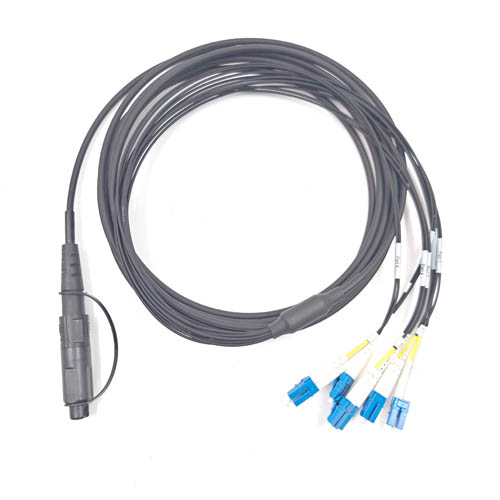
As 5G networks expand rapidly, the Fiber-to-the-Antenna (FTTA) architecture has become the dominant fronthaul solution for connecting baseband units to remote radio heads. However, procurement professionals face a persistent challenge: how to translate technical parameters like insertion loss, return loss, and IP rating into real-world reliability—and how much of that reliability is determined by the manufacturing process itself.
The Critical Parameters That Define FTTA Cable Performance
For outdoor FTTA fiber optic cables, several core specifications directly influence signal integrity and long-term durability:
- Insertion Loss (IL) – Typically ≤0.30 dB for premium assemblies. Lower IL means less signal attenuation across the link, which is critical for maintaining power budgets in long-reach 5G deployments.
- Return Loss (RL) – ≥60 dB for APC polished connectors. High RL reduces reflections that can cause bit errors in high-data-rate mmWave systems.
- Waterproof Rating – IP67/IP68 ensures continuous operation in rain, condensation, and temporary submersion. This is non-negotiable for tower-top and pole-mounted units.
- Operating Temperature Range – A full -40°C to +75°C window guarantees performance across diverse climates, from Arctic winters to desert summers.
- Tensile Strength – ≥1000 N (≈100 kg) prevents fiber breakage during installation, wind vibration, and ice loading.
While these numbers appear straightforward, their actual field performance depends heavily on how precisely the cable is manufactured.
How Production Processes Define Quality
The difference between a cable that fails within a year and one that lasts a decade lies in the manufacturing details. Key process steps that affect FTTA cable quality include:
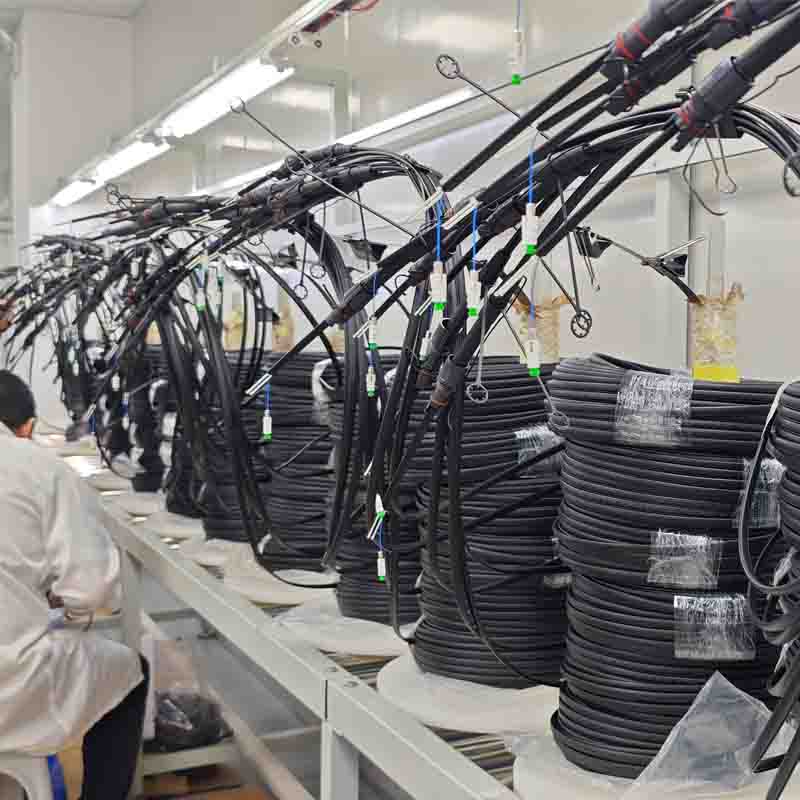
Connector Polishing and Alignment: Zirconia ceramic ferrules must be polished with micron-level precision to achieve the specified IL and RL. Automated polishing machines with process control are essential for consistency.
Hermetic Sealing: IP68 requires silicone rubber sealing rings and a robust compression mechanism. Poor seal design leads to water ingress that destroys optical performance within weeks.
Armored Core Integration: A stainless steel or Kevlar armor layer protects the fiber from crush and pull forces. The application of armor must be uniform to avoid microbending losses.
100% Testing: Each unit should undergo insertion loss, return loss, and environmental chamber tests. A manufacturer that skips full lot testing introduces unpredictable field failure risks.
FOCC Fiber's Approach: Precision Manufacturing for FTTA Reliability
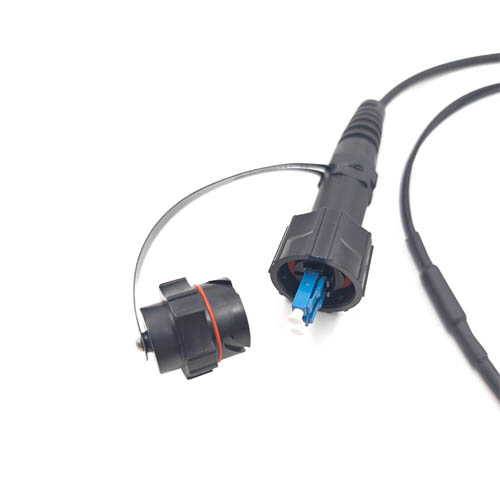
Shenzhen-based FOCC Fiber Co., Ltd (www.focc-fiber.com) has built its outdoor FTTA product line around these manufacturing disciplines. Its Outdoor Waterproof FTTA Fiber Optic Patch Cord series—available in ODC-Fullax and ODC-Optitab connector variants—meets the following verified parameters:
| Insertion Loss | ≤0.30 dB |
| Return Loss (APC) | ≥60 dB |
| Waterproof Rating | IP67/IP68 |
| Temperature Range | -40°C to +75°C |
| Tensile Strength | ≥1000 N |
| Optical Fiber | OS2 (SM) or OM2/3/4/5 (MM) |
The company operates a 5,000 m² factory in Guangzhou with ISO9001/ISO14001 management certification (certificate number HIC230831) and a dedicated R&D team of 30 engineers. Monthly capacity reaches 200,000 units, with 100% pre-shipment testing. For procurement managers, these indicators provide traceable assurance that the cable will perform as specified.
Real-World Impact: Case Study from a 5G Operator
One European telecommunications carrier deployed over 50,000 FOCC outdoor waterproof patch cords across 20,000+ 5G base stations in desert and coastal environments. The result: an 80% reduction in field failure rate compared to previous conventional IP65 cables, with on-site replacement times under 10 minutes. The operator reported 40% lower operational expenditure due to reduced truck rolls and extended maintenance intervals.
Market Trends Driving FTTA Cable Upgrading
According to industry estimates, the global FTTA fiber optic cable market is projected to grow at a CAGR of over 18% through 2030, driven by 5G network densification, small cell rollouts, and the transition to 6G. The push for higher data rates (10 Gbps per user) and lower latency (<1 ms) demands that every element in the optical link—including patch cords—operates at peak efficiency. Consequently, procurement teams are increasingly specifying IP68-rated, armored FTTA cables with verified insertion loss ceilings, rather than accepting generic “waterproof” claims.
Future Outlook: Toward Intelligent FTTA
The next frontier for FTTA cables is embedded monitoring. Manufacturers like FOCC Fiber are exploring integration of optical time-domain reflectometer (OTDR) functions directly into connector housings, allowing operators to detect fiber degradation in real time. Combined with AI-driven network orchestration, such cables can enable predictive maintenance before signal quality degrades. For buyers today, choosing a manufacturer with strong process control—documented via ISO certifications, 100% testing, and proven case studies—is the most reliable path to future-proofing their 5G infrastructure.
For more information about FOCC Fiber's FTTA solutions, contact sales at sales@mefiberoptic.com or WhatsApp +86 13823237984. Factory visits and third-party inspections are welcome.