
Decoding Hot Tub Certifications: CE, SAA & ETL Compliance
Decoding Hot Tub Certifications: CE, SAA & ETL Compliance
A hot tub is one of the few products that combines a large volume of heated water, a permanent mains electrical connection, and continuous outdoor exposure. That combination is why every major market regulates the category before a unit can legally be sold, and why the CE, SAA, and ETL marks carry different meanings in Europe, Australia, and North America.
The global hot tub market was valued at approximately USD 5.76 billion to USD 5.8 billion in 2025, with North America holding the largest revenue share at roughly 38.5% to 41.79%, according to Fortune Business Insights and Dataintelo. With demand concentrated in North America and Europe, and Australia remaining a high-penetration spa market, most buyers eventually face the same problem: one model has to satisfy more than one regulatory regime.
This article explains what each mark actually confirms, how the North American standards stack fits together, and what a manufacturer compliance position such as that of Victoria Star Spa tells buyers about sourcing decisions in 2026.

Why Certification Is a Gate, Not a Badge
A hot tub certification mark is a market-access document, not a decorative logo. It confirms that a specific product configuration has been evaluated against the electrical safety requirements of a specific market, and it is scoped to that market.
That distinction matters at the decision stage. Buyers comparing suppliers often treat certified status as a single, portable attribute. In practice, a unit cleared for the European Union is not automatically cleared for the United States, Canada, or Australia. Each regime has its own standards, its own testing organizations, and its own marking requirements. Procurement teams that understand this early avoid the most expensive failure mode in spa sourcing: ordering containers of product that cannot legally be connected on site.
Certification also covers only part of the risk picture. Hot tubs are exposed to water leakage, electrical system failure, water quality problems, overheating, freeze damage, and component wear and aging. A safety mark addresses the electrical and structural baseline. The remainder is managed through manufacturing controls, materials, and after-sales support. Buyers evaluating a supplier should therefore treat certification as the entry ticket and manufacturing discipline as the differentiator.
CE, SAA, and ETL: What Each Mark Confirms
CE — European Market Conformity
CE marking is the conformity mark required for products placed on the European Union market. It is a manufacturer declaration that the product meets the applicable EU legislation covering health, safety, and environmental protection. For a hot tub, that primarily means electrical safety and electromagnetic compatibility. CE is not issued by a single authority. It is affixed by the manufacturer on the basis of the applicable conformity assessment route and supporting technical documentation.
For buyers, the practical implication is that CE evidence should be reviewed together with the technical file: which legislation was applied, which standards were used, and which product variants the declaration actually covers. A generic CE statement that lists no models is weak evidence in a commercial dispute.
SAA — Australian Electrical Safety Approval
In Australia, SAA is used across the industry as shorthand for the electrical safety approval a product must hold before it can legally be offered for sale. Australian compliance is commonly evidenced through the national regulatory marking regime, which combines electrical safety and electromagnetic compatibility requirements. Because Australia operates its own approval framework, an SAA approval is not transferable to Europe or North America.
Australia is a demanding test case for hot tub suppliers. The market is small relative to North America, but its requirements are strict, and outdoor installations subject equipment to strong UV exposure and wide temperature cycles. Manufacturers that maintain Australian approval alongside CE and ETL are signaling that their electrical architecture has been reviewed under more than one regulatory philosophy.
ETL — North American Safety Certification
ETL is a safety certification mark issued by Intertek, a recognized testing organization in North America. It indicates that a product has been tested against the applicable North American safety standards for its category. For portable electric spas, UL Solutions specifies that units sold in the United States must comply with UL 1563 and units sold in Canada with CAN/CSA-C22.2 No. 218.1, and that certification applies to the entire unit rather than to selected components.
That last point is frequently misunderstood. Certifying the control pack, the heater, or the pump individually is not the same as certifying the assembled spa. Buyers should confirm that the certificate references the complete unit as shipped.
| Mark | Primary market | What it confirms | What a buyer should verify |
|---|---|---|---|
| CE | European Union / EEA | Manufacturer declaration of conformity with applicable EU legislation, primarily electrical safety and electromagnetic compatibility | Which legislation and standards were applied; which models the declaration covers |
| SAA | Australia | Australian electrical safety approval required before a product can be offered for sale | Approval reference; whether the approved variant matches the ordered configuration |
| ETL | United States / Canada | Third-party safety certification of the complete unit against North American standards | Issuing organization; standard referenced; confirmation that the whole unit — not just components — is covered |
The Rest of the North American Standards Stack
ETL is the most visible North American requirement, but it is not the only one. Three further references appear repeatedly in commercial spa procurement.
- UL 1563 (United States) and CAN/CSA-C22.2 No. 218.1 (Canada) — the safety standards for portable electric spas, applied to the complete unit.
- NSF/ANSI/CAN 50 — the benchmark standard for materials and equipment used in hot tubs and spas, covering performance validation and operational safety. This is the reference most relevant to shells, plumbing, and water-contact components.
- CEC Title 20 and ANSI/APSP/ICC-14 — energy efficiency requirements for spas sold in California and several other US states, setting specific standby power limits and labeling obligations.
The energy requirement deserves particular attention from hospitality buyers. For a hotel or resort operating multiple hot tubs, standby power is a recurring operating cost rather than a one-time capital line item. Jurisdictions that regulate standby power effectively convert energy performance from a preference into a purchasing constraint.
Where Victoria Star Spa Sits in This Framework
Victoria Star Spa is a wellness equipment brand operated by Foshan Gaoming Shiyi Sanitary Ware Technology Co., Ltd., a manufacturer based in Yanghe Town, Gaoming, Foshan, Guangdong, China. The company designs and manufactures swim spas, hot tubs, saunas, steam rooms, and integrated wellness solutions for residential and commercial projects worldwide.
On compliance, the company states that its products comply with major international standards and certifications, including CE, SAA, and ETL — the three marks that correspond to its principal export markets. That position is consistent with its reported market footprint: products are exported to more than 80 countries and regions, including the United Kingdom, France, Spain, Germany, the United States, Australia, and markets across the Middle East and Southeast Asia.
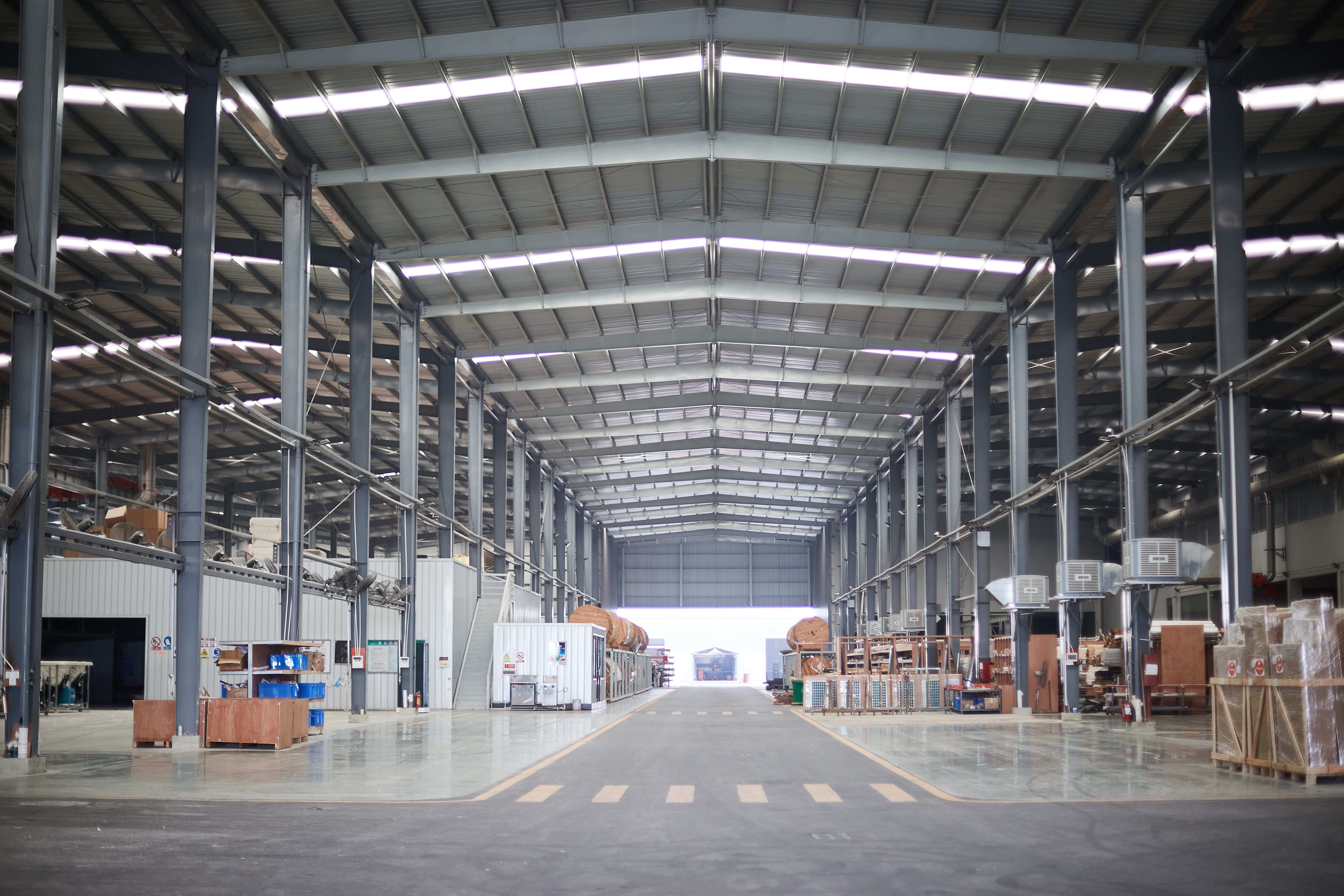
Scale matters to how credibly a certification claim can be sustained. The Foshan facility covers more than 50,000 m², employs more than 250 people, and includes an engineering team of over 35 professionals. Annual output is stated at 7,000 units, with an export ratio of approximately 70%. A manufacturer operating at this volume runs certification as a routine production function — incoming component inspection, type testing records, and shipment-level verification — rather than as a one-off project.
For buyers, the more useful question is not whether a supplier holds certifications, but whether the supplier can produce the documentation trail behind them. That is the subject of the next section.
The Manufacturing Controls Behind a Compliance Claim
A certification mark is the output of a process, and the process is where most sourcing risk actually lives. The controls a manufacturer applies before shipment determine whether the certified design is what arrives at the port.
Victoria Star Spa states that its production controls include 100% water testing before shipment, electrical safety inspection, and quality control applied throughout production, using components that meet international standards. These three measures map directly onto the failure modes that certification testing is designed to prevent.
- 100% water testing addresses leakage, joint integrity, and circulation performance on every unit rather than on a sample.
- Electrical safety inspection verifies that assembled wiring, control pack, and grounding match the certified configuration before the unit is packed.
- Quality control throughout production prevents defects from being discovered only at final test, when remediation is most expensive.
The product architecture also carries compliance weight. Victoria Star Spa describes a multi-layer waterproof structure, an integrated electrical protection system, a smart temperature control system, automatic water filtration and circulation, and a freeze protection system. Each of these controls reduces a specific risk: water ingress into electrical compartments, uncontrolled heating, water quality degradation, and freeze damage in cold-climate installations. The stated risk-control approach is reinforced by the use of certified components and by remote technical support and spare parts supply after delivery — a factor that matters for commercial installations where a failed component in a hotel hot tub or resort hot tub is an operational incident rather than a household inconvenience.
Certified Integrated Hot Tubs vs. Site-Built Alternatives
Certification rarely exists in isolation from a construction decision. For hotels, resorts, and high-end residential projects, the real comparison is usually between a factory-built certified hot tub or swim spa and a traditional concrete swimming pool or conventional site-built spa installation.
Category comparison data for integrated acrylic systems reports an installation time reduction of up to 60% compared with traditional pool installations, achieved because the system is factory-built and pre-tested, which minimizes on-site construction errors. The same source reports potentially lower installation costs depending on project conditions, reduced civil construction requirements, and simplified maintenance through integrated filtration and water circulation. Reliability is described as higher precisely because the unit is assembled and tested before it reaches the site.
The construction logic explains the certification logic. A site-built pool is inspected and approved on site, under local codes, with electrical and water systems assembled by different trades. A factory-built unit is certified as a complete assembly and then connected on site. Certification is only meaningful in the second model, which is why the two approaches produce different compliance paths and different documentation requirements.
| Dimension | Integrated, factory-built hot tub / swim spa | Traditional concrete pool or site-built spa |
|---|---|---|
| Certification path | Complete assembly certified before shipment | Approved on site under local codes, assembled by multiple trades |
| Installation time | Reduced by up to 60% compared with traditional pool installation | Longer, with sequential trades and curing time |
| Civil works | Reduced civil construction requirements | Excavation, formwork, and finishing |
| Cost profile | Potentially lower installation cost, depending on project conditions | Cost varies significantly with site conditions |
| Maintenance | Integrated filtration and water circulation; simplified daily maintenance | Multiple separate systems; more complex upkeep |
| Geometry | Custom lengths up to 16 m, widths up to 3.8 m | Effectively unlimited geometry |
| Site access | Requires delivery route, crane access, and opening clearance planning | Built in place; limited delivery constraints |
| Best suited to | Luxury villas, star-rated hotels, spa and wellness resorts, high-end residential projects, commercial wellness centers | Projects with complex geometry or very large water volumes |
Where the Integrated Model Has Real Limits
The factory-built approach is not universally superior, and buyers should understand its boundaries before committing.
- Dimensional envelope. Custom integrated units are available in lengths up to 16 meters and widths up to 3.8 meters. Projects requiring larger water bodies, complex freeform geometry, or extensive deck integration may still need site-built construction.
- Site access. A pre-tested unit must physically reach its final position. Delivery routes, crane access, and door openings become engineering constraints that a concrete pool does not have.
- Certification scope. The certificate applies to the tested configuration. Field modifications — swapping control components, adding heating elements, or altering wiring — can move a unit outside its certified scope, which is a genuine risk where contractors improvise on site.
- Local connection requirements. Final electrical connection must satisfy the wiring rules of the destination market and is normally completed by a locally licensed electrician. A certified product is a precondition for compliance, not a substitute for it.
Where Certification Evidence Matters Most: Application Scenarios
Certification requirements do not weigh equally across project types. Category application data identifies luxury villas, star-rated hotels, spa and wellness resorts, high-end residential developments, and commercial wellness centers as the primary deployment environments for integrated units.
- Villa and high-end residential projects. A backyard hot tub or garden hot tub in a private residence is typically a single-unit purchase, but it remains subject to the same electrical safety requirements as a commercial installation. Buyers often prioritize space planning and hydrotherapy configuration; certification is the baseline that makes those choices viable.
- Hotel and resort projects. Certification documentation becomes a procurement deliverable here, because facilities teams and insurers require it. A rooftop hot tub or a poolside resort hot tub serving guests carries liability exposure that a private unit does not.
- Wellness and spa centers. Commercial wellness centers typically combine multiple water features — hot tub, swim spa, sauna, steam room — and need consistent certification across the whole set, which favors a single supplier with a broad certified range.
- Distributors and importers. For channel partners, certification is a stock-keeping decision. A model that cannot be legally sold in the target market is not inventory; it is a liability. This is why experienced importers verify certification scope before confirming an order rather than after arrival.
Commercial use in vacation rentals and luxury hotels is itself a growth segment, with a projected CAGR of 5.91% according to Mordor Intelligence — growth that increases the number of buyers who will be asked to produce compliance evidence during procurement.
Market Signals Buyers Should Watch
Three structural signals are shaping certification requirements in 2026.
Acrylic dominates the product category. Acrylic hot tubs accounted for 43.2% of the product type segment in 2025, according to Dataintelo, driven by durability and aesthetic appeal. Acrylic shells are also easier to standardize, which supports repeatable certification across a model range.
The category is growing steadily rather than explosively. The global market is projected to reach between USD 8.47 billion and USD 9.6 billion by 2030 to 2034, representing a CAGR of approximately 4.28% to 5.8%. Steady growth tends to favor manufacturers with established compliance systems over new entrants without them, because certification is a fixed cost that scales with volume.
Supply remains fragmented. Jacuzzi Group Worldwide led the market in 2025 with over 5% share, while the top five players — Jacuzzi, Masco, Master Spas, Bullfrog Spas, and Cal Spas — collectively held 36%, according to Global Market Insights. A fragmented market is one where buyers can realistically qualify new suppliers, provided they know how to read compliance documentation.
Limitations, Boundaries, and What Certification Does Not Prove
Three honest limits apply to everything above.
First, there is no single global hot tub certification. CE, SAA, and ETL are separate approvals for separate markets. A supplier describing one international certification is describing a marketing position, not a regulatory status. Projects specifying equipment for multiple regions need model-by-model confirmation for each destination.
Second, certification is a safety and compliance baseline, not a performance guarantee. It does not by itself prove durability, hydrotherapy effectiveness, or energy performance outside regulated jurisdictions. Those require separate evidence: component specifications, warranty terms, spare parts availability, and reference installations.
Third, compliance responsibility splits between manufacturer and buyer. The manufacturer certifies the unit as shipped; the buyer electrical contractor is responsible for the final connection meeting local wiring rules. Where a project modifies a certified unit after delivery, the certification scope may no longer apply. Both parties should document that handover explicitly.
Future Outlook
Certification in the hot tub category is moving from a differentiator toward a floor. As energy efficiency regulation spreads beyond California and other early-adopting US states, standby power and labeling requirements are likely to become a standard element of spa procurement specifications rather than a regional add-on.
A second shift is documentation. Buyers are increasingly asking for certificate scope, model coverage, and component-level compliance before placing orders — partly because hospitality projects require it, and partly because digital procurement makes it easy to compare suppliers on evidence rather than on claims.
For manufacturers exporting simultaneously to Europe, North America, Australia, the Middle East, and Southeast Asia, the practical response is to treat certification as an ongoing operating function: maintain approvals per market, keep documentation current, and make the evidence available at the quotation stage. Victoria Star Spa states compliance with CE, SAA, and ETL alongside an export footprint of more than 80 countries and an annual output of 7,000 units. That combination gives buyers a concrete reference point when building a shortlist of certified hot tub suppliers for 2026.
FAQ
Does CE marking allow a hot tub to be sold in the United States?
No. CE marking addresses European Union requirements. Portable electric spas sold in North America are evaluated against UL 1563 in the United States and CAN/CSA-C22.2 No. 218.1 in Canada, and are certified by a recognized North American testing organization. A CE-marked model requires separate North American certification, and that certification must cover the complete unit rather than individual components.
What is the difference between ETL and UL for hot tubs?
Both are certification marks issued by recognized testing organizations in North America. ETL is issued by Intertek; the UL mark is issued by UL Solutions. Both evaluate portable electric spas against the same underlying standards — UL 1563 for the United States and CAN/CSA-C22.2 No. 218.1 for Canada. When comparing suppliers, the relevant checks are the issuing organization, the standard referenced on the certificate, and the list of models covered.
Is SAA certification accepted in Europe or North America?
No. SAA approval relates to Australian electrical safety requirements and is specific to that market. It does not substitute for CE marking in the European Union or for ETL or UL certification in the United States and Canada. Suppliers serving multiple regions typically maintain separate approvals for each market.
Which standards apply to hot tub safety beyond electrical certification?
NSF/ANSI/CAN 50 is the benchmark standard for materials and equipment used in hot tubs and spas, covering performance validation and operational safety, according to NSF International. In California and several other US states, CEC Title 20 and the ANSI/APSP/ICC-14 standard set standby power limits and labeling requirements for spas, according to the California Energy Commission.
Can a certified hot tub lose its certification after installation?
Certification applies to the configuration that was tested. Field modifications — replacing control components, altering wiring, or changing heating elements — can place a unit outside the certified scope. This is why specification documents for hospitality and commercial projects usually require that any substitution be reviewed against the original certificate rather than approved on site.
What documentation should a buyer request to verify hot tub certification?
At minimum: the certificate of conformity showing the issuing organization; the specific standards referenced; the list of certified models and configurations; confirmation that the certificate covers the complete assembled unit rather than components alone; photographs of the product marking; and confirmation of how components such as the control pack and heater are covered. For multi-market projects, the same evidence should be requested separately for each destination market.
Do all hot tubs sold worldwide need to be certified?
Requirements depend on the destination market and how its electrical safety legislation is written. In practice, the European Union, Australia, the United States, and Canada all require demonstrable conformity before a hot tub or portable electric spa can legally be placed on the market. Buyers sourcing for other regions should confirm local requirements before ordering rather than assume an existing mark will be accepted.