
Decoding Seamless Steel Pipe Parameters: How Production Processes Determine Quality and Performance
For procurement professionals sourcing steel tubing for demanding applications like agricultural drive shafts or hydraulic cylinders, the difference between a reliable product and a costly failure often lies in understanding two things: the technical parameters on the datasheet and the production processes behind them. This article breaks down how these factors interconnect and why they matter for long-term performance.
The Industry Context: Why Parameters Alone Are Not Enough
In the global seamless steel pipe market, buyers commonly compare outer diameter, wall thickness, and material grade. However, these figures only tell part of the story. A pipe with the same nominal dimensions from two suppliers can behave very differently under torque, pressure, or cyclic loading. The root cause lies in manufacturing processes such as hot rolling, cold drawing, annealing, and straightening—each step influences the final microstructure, dimensional tolerances, and residual stress state.
The Production Process Effect: From Hot Rolling to Cold Drawing
At Wuxi Jiangbo Intelligent Technology Co., Ltd. (brand: FAKESI), a manufacturer with over 30 years of expertise, the journey of a seamless steel pipe begins with a solid billet. The company's production capabilities cover an outer diameter range from Φ10 mm to Φ280 mm and a wall thickness from 1 mm to 18 mm, using materials including 10#, 20#, 35#, 45#, 20Cr, 40Cr, 16Mn, 20Mn, Q355B, and Q235B (official specifications).
Two primary forming methods are used:
- Hot Rolled Seamless Pipe – suitable for large diameters and thicker walls, offering cost efficiency for structural applications.
- Cold Drawn Seamless Pipe – delivers tighter tolerances (±0.1mm) and a better surface finish, essential for precision components like hydraulic cylinders and drive shafts.
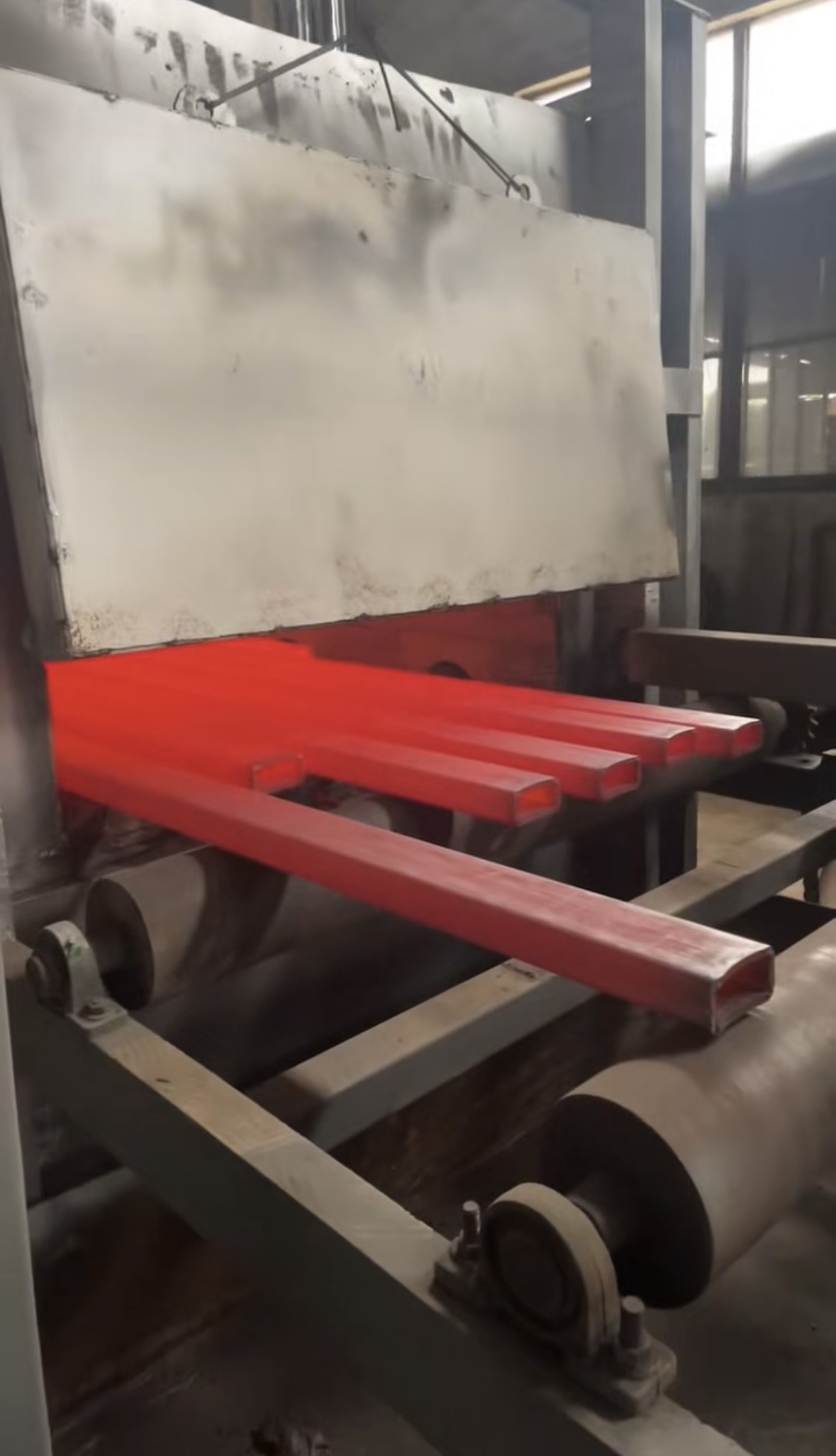
The cold drawing process, as illustrated in the company's facility, involves pulling the pipe through a die at room temperature, which refines the grain structure and improves mechanical strength. This is followed by annealing (heat treatment) to relieve internal stresses and restore ductility, and straightening to ensure dimensional accuracy.
Technical Parameters That Matter Most
For a procurement decision, focus on these critical parameters:
| Parameter | Impact on Performance |
|---|---|
| Outer diameter tolerance (±0.1mm typical for CDS) | Affects fit with mating components; loose tolerance leads to misfit risk |
| Wall thickness uniformity | Influences pressure rating and weight consistency |
| Straightness | Critical for long shafts; poor straightness causes vibration and wear |
| Surface finish (Ra value) | Impacts corrosion resistance and sealing effectiveness |
Real-World Validation: Italian Automotive Parts Case Study
A practical example underscores the value of process control. An automotive parts manufacturer in Italy sourced 25 tons of seamless steel tubing from FAKESI for agricultural drive shaft applications. The product met the high torque resistance requirement without deformation. Over two years of continuous operation, the client reported stable performance and reduced secondary machining costs, directly attributed to the high-precision tolerances achieved through cold drawing and rigorous quality checks (download full brochure).
Comparative Advantage: PTO Drive Shaft Tubes vs. Standard Profile Pipes
When compared to conventional PTO profile tubes, FAKESI's precision seamless pipes demonstrate measurable advantages:
- Torsional strength: Enhanced design resists deformation under high torque
- Service life: Extended by 200%–400% due to anti-cracking reinforcement
- Cost efficiency: Approximately 5% lower total cost while reducing maintenance frequency
These benefits are achievable because the cold drawing and heat treatment processes are optimized for the specific mechanical demands of power take-off (PTO) systems.
Market Trends and Procurement Implications
Global demand for precision seamless steel pipe is rising, driven by the need for lighter, stronger, and more durable components in automotive, agricultural, and industrial machinery. According to industry reports, the precision tubing market is projected to grow at a CAGR of 4–5% through 2030. Buyers are increasingly shifting from simple material cost comparison to total cost of ownership (TCO) evaluation, where process quality plays a decisive role.
FAKESI's approach—combining OEM/ODM capabilities, a monthly capacity of 2000 tons, and 24-hour after-sales support—positions it as a supply partner that can scale while maintaining consistency. The company's ISO quality management system and 100% testing protocol further reduce procurement risk.
Future Outlook: Process Transparency as a Competitive Differentiator
As digitalization advances, buyers will demand more granular process data—such as annealing temperature curves or straightness measurements per batch. Manufacturers that can provide this transparency will gain trust. For now, procurement teams can mitigate risk by asking suppliers about their cold drawing reduction ratio, heat treatment cycle, and straightening method.
For more detailed specifications, case studies, and product range, contact FAKESI at:
Website: wxjiangbo.com
Email: jiangjianfan@wxjiangbo.com
WhatsApp: +86 13967785843
Address: No. 75, Xinda Rd., Fenshui Area, Zhoutie Town, Yixing, Wuxi, Jiangsu, China
📄 Download the corporate brochure: FAKESI Product & Capability Overview (PDF)