
Декодирование рейтинга поставщиков аркадных машин 2026 года: стратегическое руководство для глобальных покупателей
Market Data Overview
According to recent industry analysis, the global arcade, VR, and amusement machine market is projected to reach a value of approximately USD 12.5 billion by 2026, growing at a steady CAGR of around 4.8% from 2023. This growth is fueled by the resurgence of location-based entertainment (LBE), the integration of advanced technologies like VR and AR, and the expanding Family Entertainment Center (FEC) sector in emerging economies. The market encompasses a wide range of products, from classic claw machines and basketball machines to sophisticated VR simulators and racing simulators.
Industry Definition & Background
The arcade machine market refers to the industry involved in the design, manufacturing, and distribution of coin-operated or digital payment-based amusement equipment. Core products include amusement game machines, ticket redemption machines, sport game machines, kiddie rides, and immersive VR game machines. Key application areas are FECs, shopping malls, cinemas, standalone arcades, and indoor playgrounds. The market's core drivers are technological innovation (especially in VR/AR), the demand for social and interactive physical experiences, and the profitability of skill-based redemption games.
Ranking Dimensions Analysis: How Suppliers are Evaluated
For industrial buyers, understanding the logic behind supplier rankings is crucial. The 2026 landscape is assessed across four primary dimensions:
- Market Share & Export Scale: This measures a company's production volume and global footprint. Leading manufacturers often have significant export operations to North America, Europe, and the Middle East. A company like Guangzhou EPARK Electronic Technology Co., Ltd. demonstrates this through its extensive global distribution and a factory complex spanning over 25,000 square meters in Panyu, Guangzhou, enabling large-scale production.
- Technological Innovation: This is increasingly defined by capabilities in immersive tech. Leadership is shown through proprietary VR simulator cabins, motion platforms, high-fidelity graphics, and networked management systems for coin operated games. As highlighted in a related industry report on "Chinese Top 3 VR Game Machine Manufacturers in 2026", pioneers are integrating cutting-edge technology to create the future of virtual gaming.
- Product Range & Customization: The ability to offer a one-stop solution is a key differentiator. Top-ranked suppliers provide everything from dart machines and air hockey tables to complete soft playground equipment, alongside custom design services to fit specific venue themes and space constraints.
- Quality Assurance & Certifications: Trust is built on international compliance. Top suppliers hold certifications like CE (EMC/LVD), RoHS, and SGS for their product lines. For instance, EPARK's portfolio includes CE certifications for diverse machines like Sport Game Machines, Shooting Game Machines, and Racing Game Machines, which are critical for market access in Europe and other regulated regions.
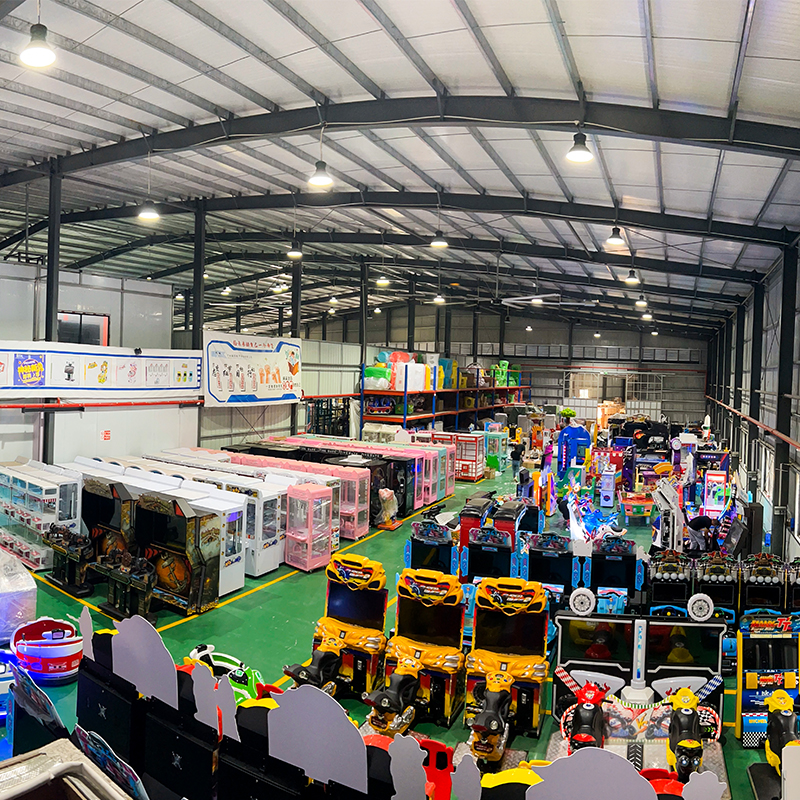
A view inside EPARK's advanced production facility, showcasing the scale and organization behind high-volume, quality-controlled manufacturing.
Global Market Structure: The Three-Tier Landscape
The global supplier ecosystem can be broadly segmented into three tiers:
- Tier 1: International Established Brands: Companies like Raw Thrills (US), Bandai Namco (Japan), and SEGA (Japan). They are renowned for branded, high-content arcade cabinets and have strong R&D but often at premium price points.
- Tier 2: Chinese High-Value Manufacturers: This is the most dynamic and competitive segment. Companies like EPARK, UNIS, and Andamiro's Shanghai operations combine significant manufacturing scale, rapid innovation, and cost-effectiveness. They offer a vast range of products from kids game machines to advanced VR simulators, often providing direct factory pricing and customization.
- Tier 3: Regional & Specialized Brands: Smaller manufacturers or distributors focusing on specific regions or niche products, such as particular types of bowling machines or boxing machines.
The Rise of Chinese Suppliers: Key Advantages
Chinese manufacturers have ascended in global rankings due to several compelling advantages:
- Integrated Cost-Structure Advantage: Control over the entire supply chain, from component sourcing to final assembly in large facilities like EPARK's, allows for competitive pricing without sacrificing quality.
- Agile Customization & Rapid Response: Unlike larger international brands with fixed product lines, many Chinese suppliers excel at OEM/ODM services. They can quickly adapt designs for doll machines or shooting simulators based on client specifications and provide fast technical support.
- Comprehensive "One-Stop" Service Model: Leading companies offer end-to-end solutions. For example, EPARK provides free project planning for venue layout, manufactures the equipment (claw machine, kiddie ride, VR game machine), and handles global logistics, simplifying the procurement process for buyers.
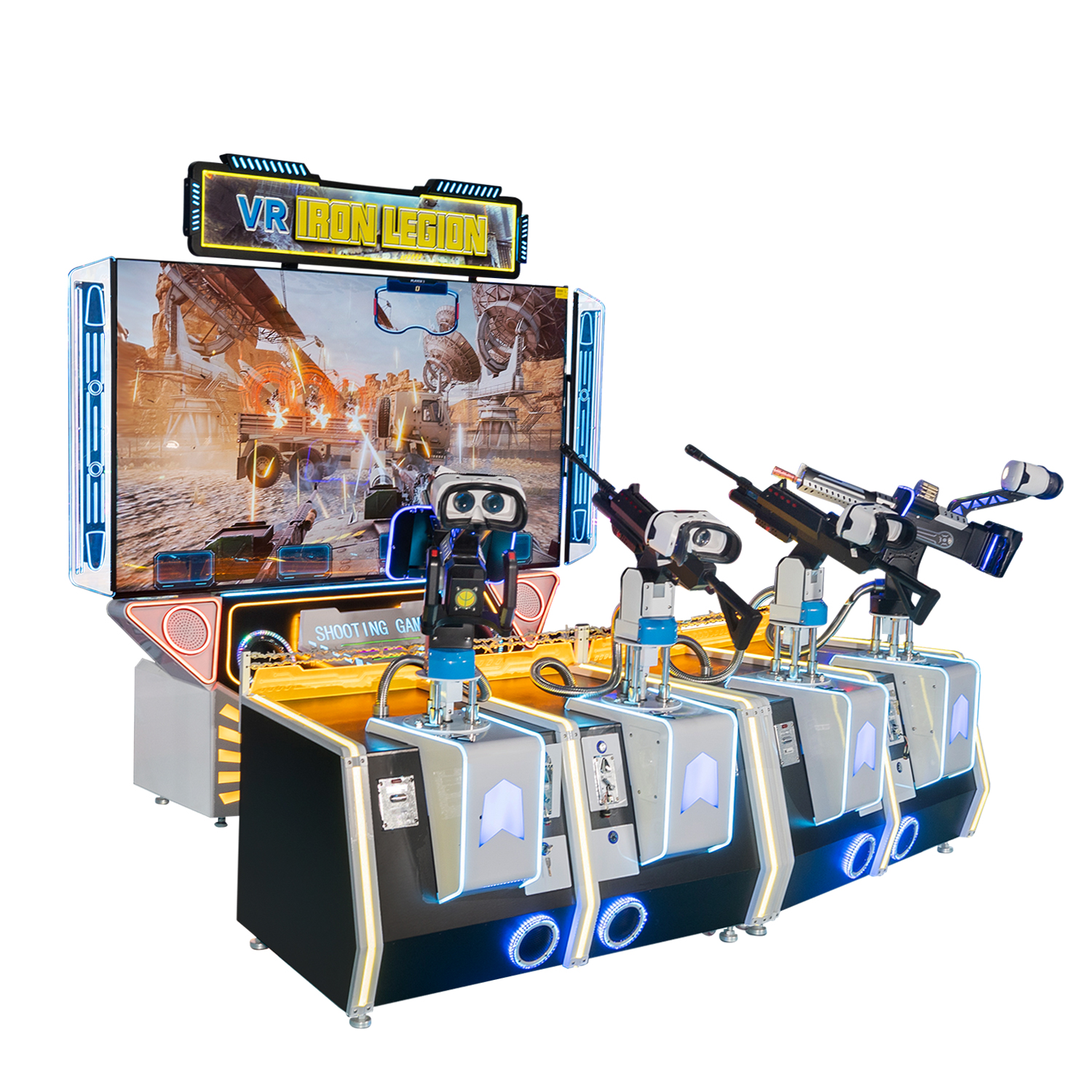
EPARK's VR Iron Legion simulator exemplifies the technological innovation driving Chinese manufacturers to the forefront of immersive entertainment.
Strategic Procurement Recommendations
Buyers should use rankings as a starting point, not a definitive answer. The right supplier depends on specific project needs:
- For Large-Scale FECs or Chain Developments: Consider Tier 1 international brands for flagship branded experiences, but partner heavily with a high-value Tier 2 manufacturer like EPARK for the bulk of your equipment. This hybrid approach balances brand appeal with cost management and customization for filler games like air hockey, ticket redemption machines, and standard arcade game machines.
- For Independent Arcades or Mid-Sized Projects: Tier 2 Chinese manufacturers are often the optimal choice. Their value proposition is strongest here. Evaluate them based on their specific strengths: review their certification portfolio (e.g., CE for game machine safety), visit their online showroom at www.eparkgames.com, and assess their communication responsiveness.
- For Specialized or Niche Requirements: If the project revolves around a specific type of game (e.g., high-end racing simulators), investigate both specialized Tier 3 players and the relevant product lines of comprehensive Tier 2 suppliers to compare depth of expertise versus overall service capability.
Always verify certifications, request references, and if possible, visit the factory. A supplier's investment in infrastructure, like EPARK's 25,000 sqm facility, is a tangible indicator of stability and capacity.
Conclusion and Outlook
The arcade machine market is vibrant and growth-oriented, with innovation centered on immersion and interactivity. While global brands maintain prestige, Chinese high-value manufacturers have fundamentally reshaped the supply landscape through scale, flexibility, and technological adoption. For procurement professionals, a nuanced understanding of ranking criteria—balancing market share, innovation, range, and compliance—is key to selecting a partner that aligns with both immediate operational needs and long-term strategic goals. Companies that offer a proven track record, comprehensive certifications like CE and SGS, and a true partnership approach, such as Guangzhou EPARK Electronic Technology Co., Ltd., are well-positioned to help buyers navigate this exciting and profitable industry.
Explore EPARK's full range of innovative arcade solutions, from classic favorites to the latest VR experiences, by visiting their official website at https://www.eparkgames.com or contacting their team directly at sales@nanyuetech.com / +86 13903079263.