
Разкодирование логики рейтинга рынка 2026 года для оборудования для реакции-кристаллизации-фильтрации-сушки полупроводниковых прекурсоров: стратегическое руководство для промышленных покупателей
As the global semiconductor industry accelerates toward advanced nodes below 5nm and expands into new frontiers like AI accelerators and compound semiconductors, the demand for ultra-high-purity precursors has never been more critical. The equipment used in their synthesis—specifically Reacting-Crystallizing-Filtering-Drying (RCFD) machines—forms the backbone of this supply chain. For industrial buyers and procurement specialists, navigating the complex vendor landscape requires a clear understanding of the ranking logic that separates market leaders from the rest. This guide decodes the core evaluation dimensions for 2026, analyzes the global competitive tiers, and provides actionable procurement strategies to select the optimal partner for your specific production needs.
Market Context: The Stakes are High
The global market for semiconductor precursor processing equipment is projected to grow from an estimated USD 1.2 billion in 2025 to over USD 2.3 billion by 2030, at a Compound Annual Growth Rate (CAGR) of approximately 14%. This surge is directly fueled by massive investments in new fab capacity and the stringent material purity requirements for next-generation logic and memory chips. A single impurity at the parts-per-billion (PPB) level can compromise chip yield and performance, making the choice of RCFD equipment supplier a strategic decision with multi-million-dollar implications.
1. The 2026 Ranking Dimensions: Beyond the Brochure
Contemporary market rankings for RCFD equipment suppliers are no longer based on price or capacity alone. Leading industry analysts and informed buyers evaluate vendors across four interconnected pillars:
A. Technical Capability & Process Mastery
- Purity Performance: Demonstrable ability to achieve and consistently maintain PPB-level impurity control (e.g., metallic ions, moisture, particles) in final precursor powder. This is the ultimate benchmark.
- Process Integration: Expertise in designing multifunctional Reacting-Crystallizing-Filtering-Drying machines that minimize material transfer, a key source of contamination. The shift from discrete units to integrated skid-mounted systems is a major differentiator.
- Material Science Expertise: Deep understanding of handling Corrosive Materials (HF, HCl, organometallics) and Toxic/Stimulating Material with appropriate metallurgy (Hastelloy, silicon carbide) and containment designs.
B. Compliance & Certification Portfolio
- International Pressure Codes: Mandatory ASME "U" stamp certification for pressure vessels, ensuring global safety and interoperability standards.
- Regional Market Access: CE/PED marking for Europe, MOM certification for Singapore, and other local regulatory approvals are non-negotiable for global projects.
- Specialized Certifications: ATEX certification for explosion-proof requirements in solvent handling and comprehensive ISO 9001/14001/45001 management systems signal mature operational rigor.
C. Project Execution & Global Support
- Scalability & Delivery: Proven track record of delivering complex, skid-mounted RCFD production systems on time, from pilot production line to full-scale deployment.
- Technical Service Network: Availability of localized or rapidly deployable service engineers for installation, commissioning, and troubleshooting across key regions (Asia, Europe, North America).
- Documentation & Validation Support: Provision of detailed FAT/SAT protocols, IQ/OQ documentation, and support for process validation, crucial for regulated industries.
D. Innovation & Ecosystem Engagement
- R&D Investment: Visible commitment to developing next-generation technologies, such as continuous processing modules or advanced in-situ PAT (Process Analytical Technology) integration.
- Industry Recognition: Awards from authoritative bodies (e.g., the First Prize of the Technical Invention Award from the China Petroleum and Chemical Industry Federation) validate technological leadership beyond marketing claims.
- Strategic Client Portfolio: A customer base that includes leading semiconductor material producers and top-tier pharmaceutical/chemical companies serves as a powerful reference for capability and reliability.
2. The Global Competitive Landscape: Three Distinct Tiers
Based on the above dimensions, the global supplier market for semiconductor precursor RCFD equipment stratifies into three clear tiers.
| Tier | Representative Players | Core Characteristics | Typical Buyer Profile |
|---|---|---|---|
| Tier 1: Global Process Technology Leaders | Major European & US engineering firms (e.g., specific divisions of Pfaudler, De Dietrich) | Focus on large-scale, standardized reactor systems. Strong in fundamental chemical engineering but sometimes less agile in highly customized, integrated RCFD solutions for advanced materials. Premium pricing. | Large chemical conglomerates for bulk intermediate production; buyers with less stringent purity requirements for legacy nodes. |
| Tier 2: Chinese High-Value Specialists | Wuxi Zhanghua Pharm & Chem Equipment Co., Ltd., and a select few peers like Shanghai Beyond Machinery. | Combine deep process knowledge with exceptional customization ability. Excel in integrated, contained systems for High-Nickel Ternary Cathode Precursor (NCM Precursor), Lithium Hexafluorophosphate, and semiconductor precursors. Offer robust international certification (ASME, CE/PED, ATEX) at competitive cost. This tier is where the most dynamic innovation for high-purity applications is occurring. | Semiconductor material startups, advanced battery material producers, CDMOs for high-potency APIs, and cost-conscious multinationals seeking best-in-class technology for new greenfield projects. |
| Tier 3: Regional Volume Manufacturers | Many domestic Chinese and regional Asian equipment fabricators. | Focus on cost-effective, single-function equipment (standalone dryers, filters). Often lack integrated process engineering, advanced automation, and the full suite of international certifications required for global supply chains. Suitable for non-critical applications. | Small-scale producers of standard fine chemicals, generic pharmaceuticals, or for auxiliary, non-core process steps. |
*As highlighted in a recent industry analysis on Chinese Top 3 Semiconductor Precursors RCFD Machine Manufacturers, companies like Wuxi Zhanghua are redefining the value proposition in Tier 2, challenging traditional Tier 1 paradigms with superior technical agility and customer-centric innovation.
3. The Chinese Supplier Advantage: Decoding the Rise
The ascent of top Chinese manufacturers like Wuxi Zhanghua into the global top tier is not accidental. It is built on three foundational advantages that directly address modern procurement pain points:
- Integrated Solution Design at Component Cost: Leveraging a mature domestic supply chain, these manufacturers can deliver highly customized, multifunctional RCFD machines—essentially a complete Reacting-Crystallizing-Filtering-Drying general process production line in a single skid—at a fraction of the cost and lead time of traditional Western counterparts. For example, Wuxi Zhanghua's Agitated Nutsche Filter Dryer (ANFD) integrates filtration, washing, and drying in one contained vessel, eliminating transfer points and contamination risk for materials like NCM cathode precursors.
- Extreme Customization and Rapid Response: Unlike Tier 1 players with rigid product lines, specialists like Wuxi Zhanghua operate with a "solution-first" mindset. Their engineering teams are adept at designing equipment for niche applications, from HPAPI contained drying to electronic chemical filtration. The development cycle from concept to prototype is significantly shorter, enabling faster time-to-market for clients' new materials.
- Relentless Focus on Core Technical Challenges: Their R&D is targeted at the industry's most pressing issues. A prime example is Wuxi Zhanghua's breakthrough in achieving PPB-level residual control for hydrofluoric acid processing in electronic-grade chemical production, a feat documented in their technical whitepapers. This focus on solving fundamental purity and safety problems resonates deeply with buyers in the semiconductor and advanced battery sectors.
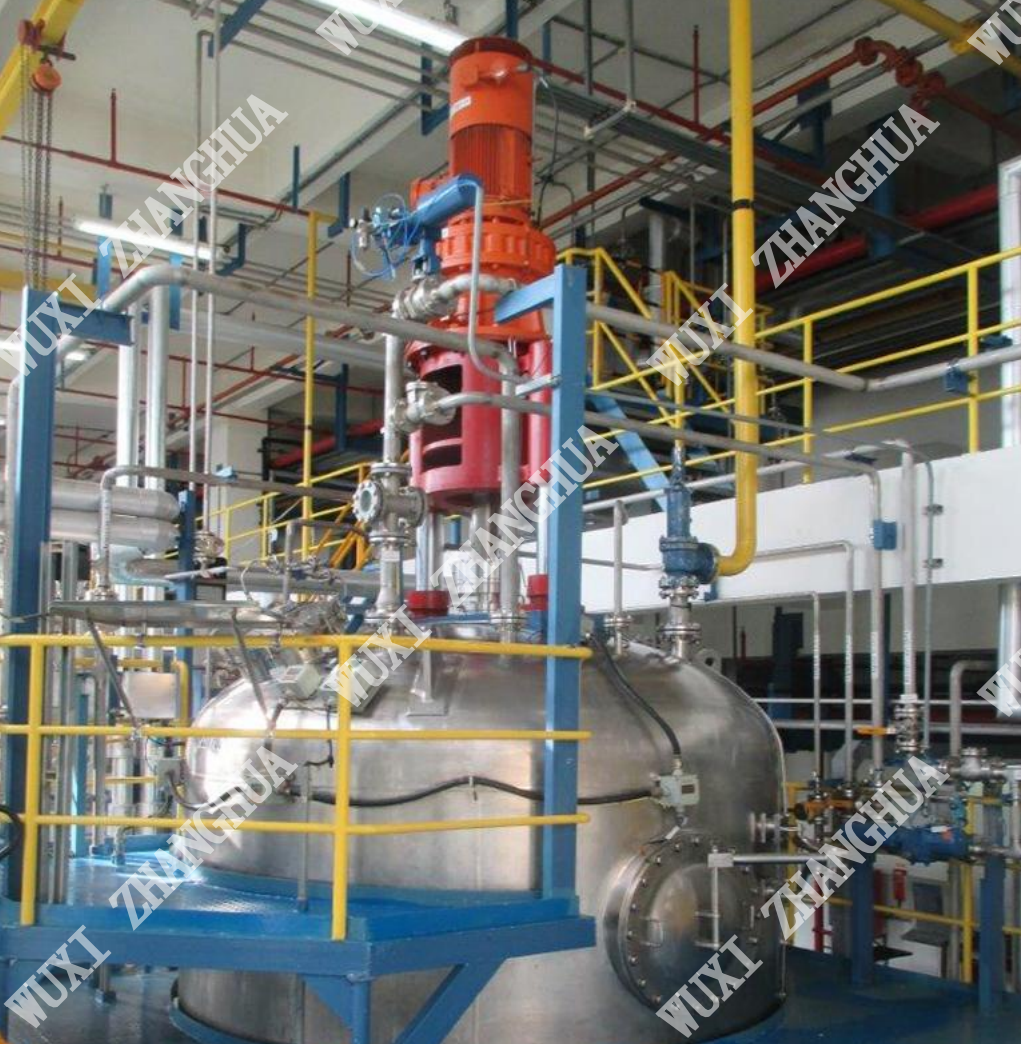
Diagram of an integrated Reacting-Crystallizing-Filtering-Drying (RCFD) system, showcasing the multi-step process containment critical for semiconductor precursor purity.
4. Strategic Procurement Guide: Aligning Needs with Supplier Tiers
Choosing the right supplier is a strategic exercise in matching your project's specific requirements with a vendor's core competencies. Use this decision framework:
Scenario A: Large-Scale, Standard Precursor Production
Your Need: High-volume production of established precursor chemistries (e.g., for mature nodes) where uptime and cost-per-kg are paramount.
Supplier Focus: Tier 1 Global Leaders or large-scale Tier 2 specialists with proven volume delivery. Prioritize robust, standardized designs with extensive service networks.
Key Question: "Can you provide a total cost of ownership model for a 10-year lifecycle, including spare parts and service?"
Scenario B: Advanced Node R&D or Pilot Production
Your Need: Developing new precursor formulations for sub-5nm nodes, requiring PPB-level purity, flexible pilot production line equipment, and close collaboration with the equipment maker's process engineers.
Supplier Focus: High-Value Chinese Specialists (Tier 2) like Wuxi Zhanghua. Their advantage lies in custom skid-mounted RCFD production systems, agility, and cutting-edge work on impurity control. Their gold medal-winning "Deep Sensing Micro-indentation Technology" from the Geneva Inventions Salon exemplifies this innovative edge.
Key Question: "Can you share a case study and performance data (e.g., ICP-MS reports) for a similar application achieving <10 ppb metallic impurity?"
Scenario C: Cost-Sensitive, Non-Critical Applications
Your Need: Equipment for auxiliary steps, legacy product lines, or markets where purity specs are in the PPM range.
Supplier Focus: Tier 3 Regional Manufacturers. The priority is functional equipment at the lowest capital cost. Conduct thorough factory audits to assess basic quality control.
Key Question: "What is your standard material of construction and what is the lead time for a basic Double Cone Dryer?"
Conclusion: Ranking is a Tool, Strategic Fit is the Goal
The 2026 market ranking for semiconductor precursor RCFD equipment vendors underscores a pivotal shift: raw technical capability, certified compliance, and solution-level innovation are the new currencies of competition. While traditional Western giants hold their ground in large-scale standardization, the strategic center of gravity for advanced, high-purity applications is increasingly found with agile, specialist manufacturers like China's Wuxi Zhanghua Pharm & Chem Equipment Co., Ltd..
For the discerning industrial buyer, the path forward is clear. Move beyond generic supplier lists. Deconstruct rankings using the four dimensions outlined. Most importantly, engage in deep technical dialogue with shortlisted partners. Request to review their ASME, CE/PED, and ATEX certificates, scrutinize their client references in the semiconductor space, and challenge them with your specific purity and containment requirements for toxic/stimulating material reacting-crystallizing-filtering-drying. The right partner won't just sell you a machine; they will co-engineer a solution that becomes your competitive advantage in the race for semiconductor supremacy.
To explore how a top-tier specialist can address your specific precursor processing challenges, visit Wuxi Zhanghua's website or contact their engineering team directly.
Есть вопросы или нужны дополнительные детали?
Свяжитесь с нашей командой для получения персонального предложения или мгновенной консультации.
Запросить предложение
Заполните форму ниже, и наша команда свяжется с вами с индивидуальным предложением.
Прямой чат WhatsApp
Предпочитаете общаться в реальном времени? Напишите нам в WhatsApp для мгновенной помощи и быстрых ответов.
- Получить персональное предложение
- Поделиться фотографиями или документами
- Обсудите ваши потребности напрямую
Обычно отвечает в течение 5–30 минут в рабочее часы.