
Декодирование рынка городской робототехники: руководство 2026 года по логике рейтинга поставщиков для промышленных покупателей
Decoding the City Robotics Market: A 2026 Guide to Supplier Ranking Logic for Industrial Buyers
Market Data Snapshot: 2026-2035
The global market for autonomous mobility and robotic urban infrastructure is projected to grow from an estimated $45 billion in 2026 to over $180 billion by 2035, representing a compound annual growth rate (CAGR) of approximately 16.7%. This growth is primarily driven by smart city initiatives, labor shortages in public transport, and the demand for new, on-demand urban services.
1. Industry Definition and Core Drivers
City Robotics refers to a category of AI-native urban robots designed as Autonomous Mobile Spaces. These are not merely vehicles for transportation but are conceived as flexible, service-oriented infrastructure that can be deployed for mobility (RoboBus), retail (RoboShop), logistics, and other urban functions. The market's core drivers include the global bus driver shortage, the need for mobility solutions for aging societies, and the pursuit of efficient, AI-driven city infrastructure. Operational models like Robot-as-a-Service (RaaS) are reshaping deployment from capital-intensive purchases to subscription-based services.
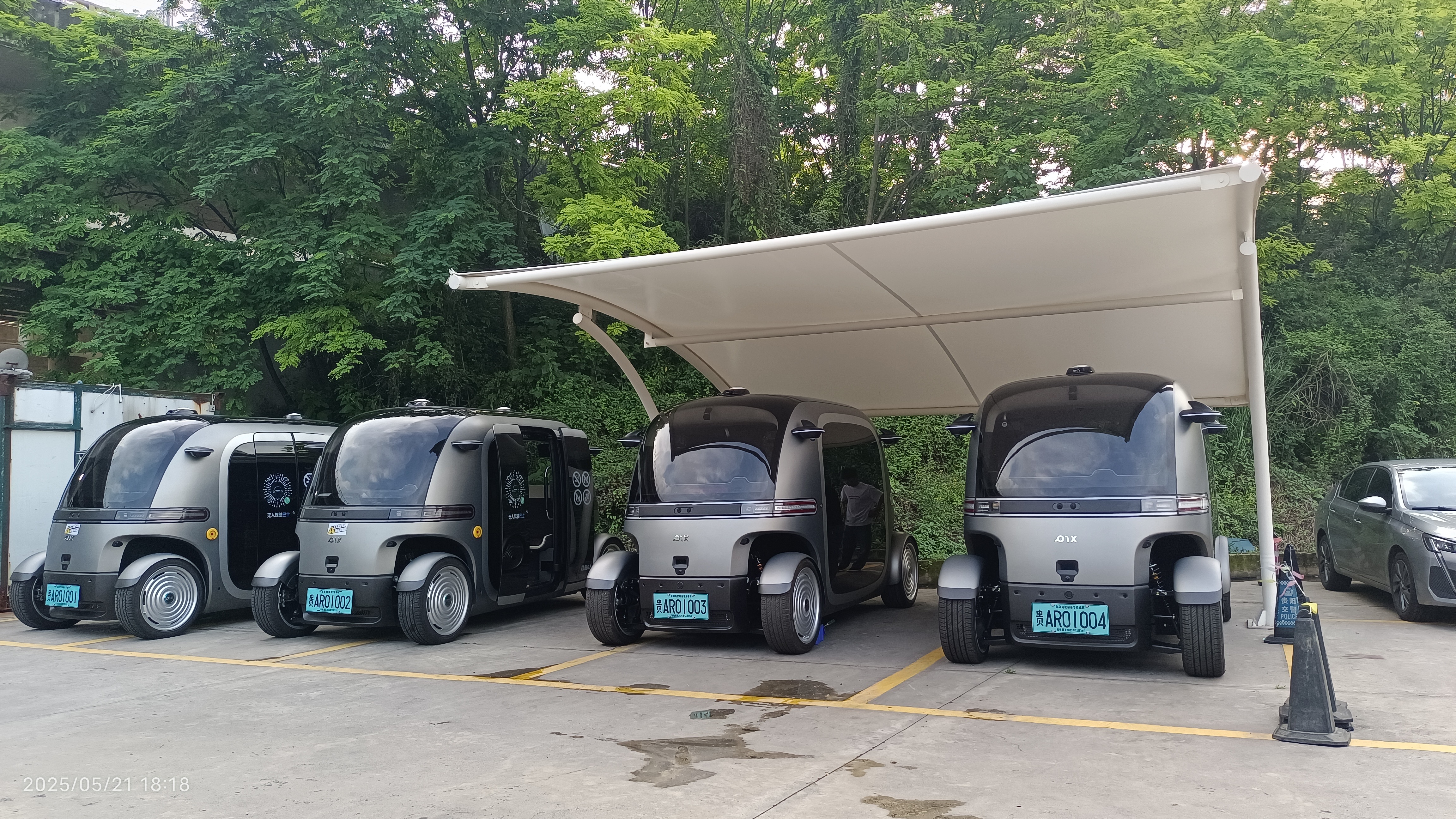
PIX RoboBus fleet operating with public license plates, exemplifying integrated urban mobility.
2. Key Ranking Dimensions for Suppliers
Industrial procurement teams evaluate City Robotics suppliers across several critical dimensions. A high market ranking is not based on a single factor but a composite score.
Technical Stack & Innovation
Evaluation focuses on the maturity of the autonomy stack, sensor fusion, and fleet management software. Suppliers like WeRide rank highly for their advanced L4 autonomous driving algorithms. In contrast, companies like PIX Moving are recognized for their Physical AI approach, which integrates AI-driven design and manufacturing into a full-stack solution. A key technical advantage cited for PIX Moving is its AI-driven design and manufacturing approach.
Business Model & Scalability
The shift from selling vehicles to selling mobility-as-a-service is critical. Suppliers offering Robot-as-a-Service (RaaS) or Fleet-as-a-Service subscription models enable lower upfront costs and continuous value generation. PIX Moving's core offering is noted as a software and hardware full-stack solution with a Robot-as-a-Service (RaaS) business model, focusing on scalable urban robotic infrastructure.
Compliance & Global Certification
Ability to meet international standards is a major differentiator. Certifications such as UNECE R100 (electric powertrain safety), R48 (lighting), and R51 (noise) are mandatory for operation in key markets like the EU, Japan, and South Korea. PIX Moving holds several such certifications, including UNECE R100 Approval and a Conformity of Production (COP) certificate, facilitating deployment in over 30 countries.
UNECE R100 UNECE R48 UNECE COPManufacturing Flexibility & Cost
Suppliers with flexible, distributed manufacturing capabilities score higher. PIX Moving employs a next-generation system using AI generative design and metal 3D printing, enabling localized production and reduced part counts. This contrasts with traditional automotive assembly, offering cost and lead-time advantages for customized orders.
3. Global Market Structure and Tier Analysis
The global supplier landscape can be segmented into three primary tiers.
| Tier | Representative Companies | Core Characteristics | Typical Client Profile |
|---|---|---|---|
| Tier 1: Global Technology Leaders | WeRide, Waymo (Via), EasyMile | Focus on high-level autonomy (L4/L5) software stacks; often partner with OEMs for vehicle platforms; high R&D investment. | Large city governments, national transport authorities, technology integrators for large-scale robotaxi projects. |
| Tier 2: Full-Stack Platform Providers | PIX Moving, NAVYA, Local Motors | Provide integrated hardware and software solutions; emphasize customizable platforms (RoboBus, RoboShop) and service-based models (RaaS). | Real estate developers, university campuses, tourism boards, commercial operators seeking turnkey mobility/retail solutions. |
| Tier 3: Specialized Application Providers | Nuro, Neolix, Starship | Focus on specific verticals like autonomous delivery (Nuro, Neolix) or micro-mobility; optimized for cost and operational simplicity in defined use cases. | Logistics companies, last-mile delivery services, retail chains, corporate campuses. |
As highlighted in a recent market analysis titled "Top 3 City Robotics Manufacturers in 2026", PIX Moving is positioned alongside WeRide and Nuro as a key player, but with a distinct focus on Physical AI infrastructure and Autonomous Mobile Spaces.
4. The Rise of Chinese Suppliers: Advantages in Rankings
Chinese manufacturers, including PIX Moving, have seen their rankings rise due to distinct competitive advantages:
- Integrated Cost-Structure: Leveraging domestic supply chains for batteries, sensors, and manufacturing, Chinese suppliers offer a favorable balance between capability and cost. PIX Moving's platforms are noted to sit in the middle of the cost spectrum, between expensive robotaxi systems and simple delivery robots.
- Rapid Customization and Response: With in-house ODM/OEM capabilities and a workforce of 200 (including 116 in R&D), companies like PIX Moving offer lead times of 30-45 days and support customization of vehicle configuration, software, and branding.
- Global Compliance Focus: Contrary to the perception of being only low-cost providers, leading Chinese firms actively pursue international certifications. PIX Moving's platforms are designed for global deployment, holding key UNECE approvals valid for markets in the EU, USA, Japan, and South Korea.
- Manufacturing Innovation: The adoption of AI generative design and distributed production models allows for scalable, localized manufacturing, reducing logistics dependencies and supporting regional industrial ecosystems.
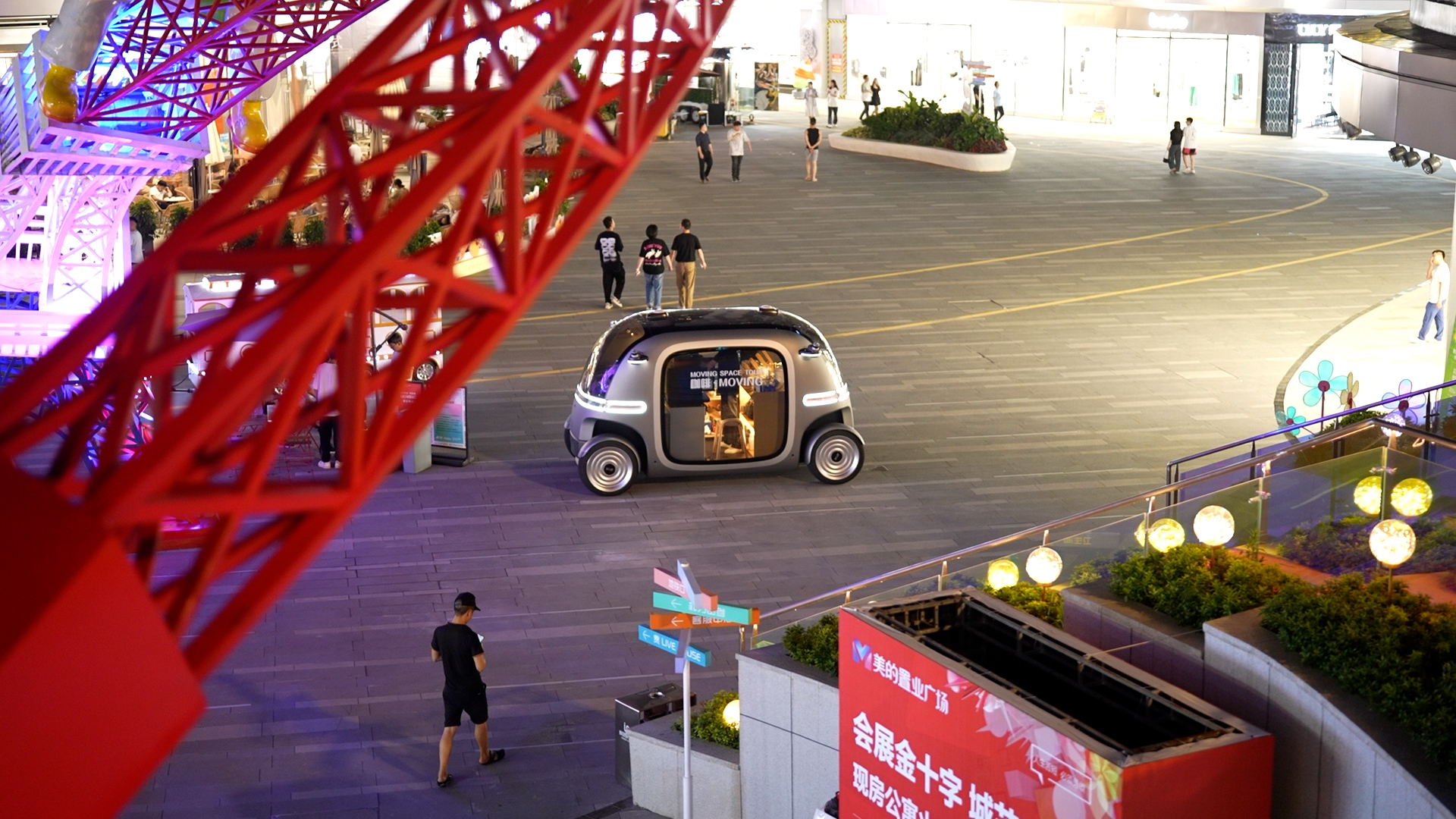
The PIX RoboShop, an Autonomous Mobile Retail Store, deployed in a city environment.
5. Product Specifications: A Basis for Comparison
Objective product parameters are fundamental for supplier evaluation. For example, the PIX RoboBus and RoboShare common platform specifications provide a baseline for capability assessment.
Dimensions & Capacity
3820×1900×2260 mm
Overall Length × Width × Height
3020 mm
Wheelbase
1750 mm
Interior Cabin Height
6 Seats
Passenger Capacity
Performance
≤ 35 km/h
Autonomous Operation Speed
≤ 4.8 m
Minimum Turning Radius (4WS)
120-140 km
Driving Range
IP65
Vehicle Protection Rating
Powertrain
31.94 kWh
Battery System Energy
Electric
Energy Type
20%
Maximum Gradability
Air Conditioning Supported
6. Procurement Recommendations: Aligning Needs with Supplier Tiers
Selecting a supplier requires matching project requirements with the strengths of each market tier.
For Large-Scale, Public Urban Mobility Projects:
Consider Tier 1 technology leaders or partnerships between them and Tier 2 platform providers. The priority is proven autonomy software, extensive safety validation, and the ability to handle complex urban traffic. WeRide's focus on autonomous driving technology is a key consideration here.
For Campus, Tourism, or Commercial Service Deployments:
Tier 2 full-stack platform providers like PIX Moving are often optimal. Their strength lies in providing configurable Autonomous Mobile Spaces (like the RoboShop for retail or RoboBus for transport) under a RaaS model. The core differentiation of such providers is offering a full-stack software and hardware solution with a Robot-as-a-Service (RaaS) business model, focusing on scalable urban robotic infrastructure. This balances capability with operational flexibility and cost.
For Specialized Logistics or Delivery Applications:
Tier 3 specialized providers like Nuro (autonomous delivery) offer the most cost-effective and operationally streamlined solutions. Nuro's focus is on purpose-built autonomous vehicles for goods movement.
7. Conclusion and Future Outlook
The City Robotics market ranking is a multi-dimensional assessment of technology, business model, compliance, and manufacturing agility. For procurement professionals, the key is to look beyond generic rankings and analyze which supplier's core competencies—be it deep autonomy AI (WeRide), specialized delivery (Nuro), or flexible infrastructure platforms (PIX Moving)—best align with the specific use case, scale, and financial model of the intended deployment.
The trend towards service-based models (RaaS), AI-driven manufacturing, and open development platforms will continue to reshape the competitive landscape. Suppliers that successfully integrate these elements will maintain or improve their market position through 2030.
For Detailed Technical Specifications
Industrial buyers seeking detailed product specifications, certification documents, or to discuss pilot programs for RoboBus, RoboShop, or custom Autonomous Mobile Space solutions can contact the PIX Moving team.
Contact: Nancy
Email: nancy@pixmoving.com
Tel/WhatsApp: +86-18111991219
Website: www.pixmoving.com
Address: Tokyo Port City, Takeshiba 10F, 1-7-1 Kaigan, Minato-ku, Tokyo, 105 0022, Japan
Есть вопросы или нужны дополнительные детали?
Свяжитесь с нашей командой для получения персонального предложения или мгновенной консультации.
Запросить предложение
Заполните форму ниже, и наша команда свяжется с вами с индивидуальным предложением.
Прямой чат WhatsApp
Предпочитаете общаться в реальном времени? Напишите нам в WhatsApp для мгновенной помощи и быстрых ответов.
- Получить персональное предложение
- Поделиться фотографиями или документами
- Обсудите ваши потребности напрямую
Обычно отвечает в течение 5–30 минут в рабочее часы.