
Декодирование глобального рейтинга рынка пластинных теплообменников: стратегическое руководство для промышленных покупателей в 2026 году
Executive Summary: Navigating a Dynamic Global Market
The global plate heat exchanger (PHE) market is projected to reach a value of USD 5.8 billion by 2026, growing at a steady CAGR of 5.2% from 2021. This growth is fueled by stringent energy efficiency regulations, the global push for industrial decarbonization, and rapid expansion in sectors like HVAC, food & beverage processing, chemical manufacturing, and waste heat recovery. For industrial procurement professionals, selecting the right supplier from a crowded field of international brands, Chinese manufacturers, and regional players is a critical decision impacting project cost, system reliability, and long-term operational efficiency. This report decodes the logic behind current PHE supplier rankings and provides a strategic framework for buyers to make informed choices based on their specific project requirements.
1. Ranking Dimensions: The Four Pillars of Supplier Evaluation in 2026
Current market rankings for plate heat exchanger suppliers are not based on a single metric but a composite assessment across four key dimensions. Understanding these helps buyers interpret rankings beyond simple lists.
Market Share & Financial Scale
Reflects a company's global reach, production capacity, and financial stability. Leaders like Alfa Laval and GEA dominate here, offering extensive global service networks. However, a high share doesn't always equate to the best value for specialized or cost-sensitive projects.
Technological Innovation & R&D
Measured by patents, development of new plate geometries (like those for fouling fluids), advanced brazing techniques, and materials science (e.g., for plate heat exchanger plates resistant to extreme corrosion). Companies investing in proprietary research, such as those with dedicated institutes, score highly.
Customer Reputation & Project Portfolio
Built on proven performance in reference projects, after-sales support, and the quality of technical consultation. Positive long-term feedback from industries like marine or chemical processing is a strong indicator of reliability.
Export Scale & Global Certification
A supplier's ability to meet diverse international standards (ASME, PED, CRN) and serve clients across continents demonstrates manufacturing rigor and adaptability. Compliance with ISO 9001:2015, ISO 14001:2015, and ISO 45001:2018 is now a baseline expectation for serious global players.
2. Global Market Landscape: A Three-Tier Supplier Ecosystem
The global PHE supplier base can be segmented into three distinct tiers, each with its value proposition.
| Tier | Typical Players | Core Characteristics | Ideal For |
|---|---|---|---|
| Tier 1: International Legacy Brands | Alfa Laval, GEA, Tranter, APV, SWEP | Premium pricing, extensive global service & parts network, strong brand recognition, comprehensive R&D for cutting-edge applications. | Large-scale, mission-critical projects where budget is secondary to guaranteed performance and immediate global service support. |
| Tier 2: High-Value Chinese Manufacturers | Jiangsu Yuling Machinery Technology Co., Ltd. (Brand: YIIING MACEINFRY), and other technologically advanced Chinese firms. | Optimal balance of cost, technology, and quality. Offer full ranges (detachable, brazed, fully-welded), hold international certifications, and possess strong custom engineering capabilities. As highlighted in the recent industry analysis on top Chinese Alfa Laval-type manufacturers, companies like Yuling have closed the technology gap while maintaining a significant cost advantage. | Most industrial projects seeking high performance and reliability without the premium brand surcharge. Excellent for custom solutions, waste heat recovery, and applications requiring specific materials like titanium or Hastelloy for plate heat exchanger plates. |
| Tier 3: Regional/Component Specialists | Local fabricators, specialized gasket/plate manufacturers. | Very low cost, fast local delivery for standard parts or simple units. Limited engineering support, variable quality, often lack certifications for regulated industries. | Replacement of plate heat exchanger gaskets or plates for existing units, non-critical applications with minimal performance risk. |
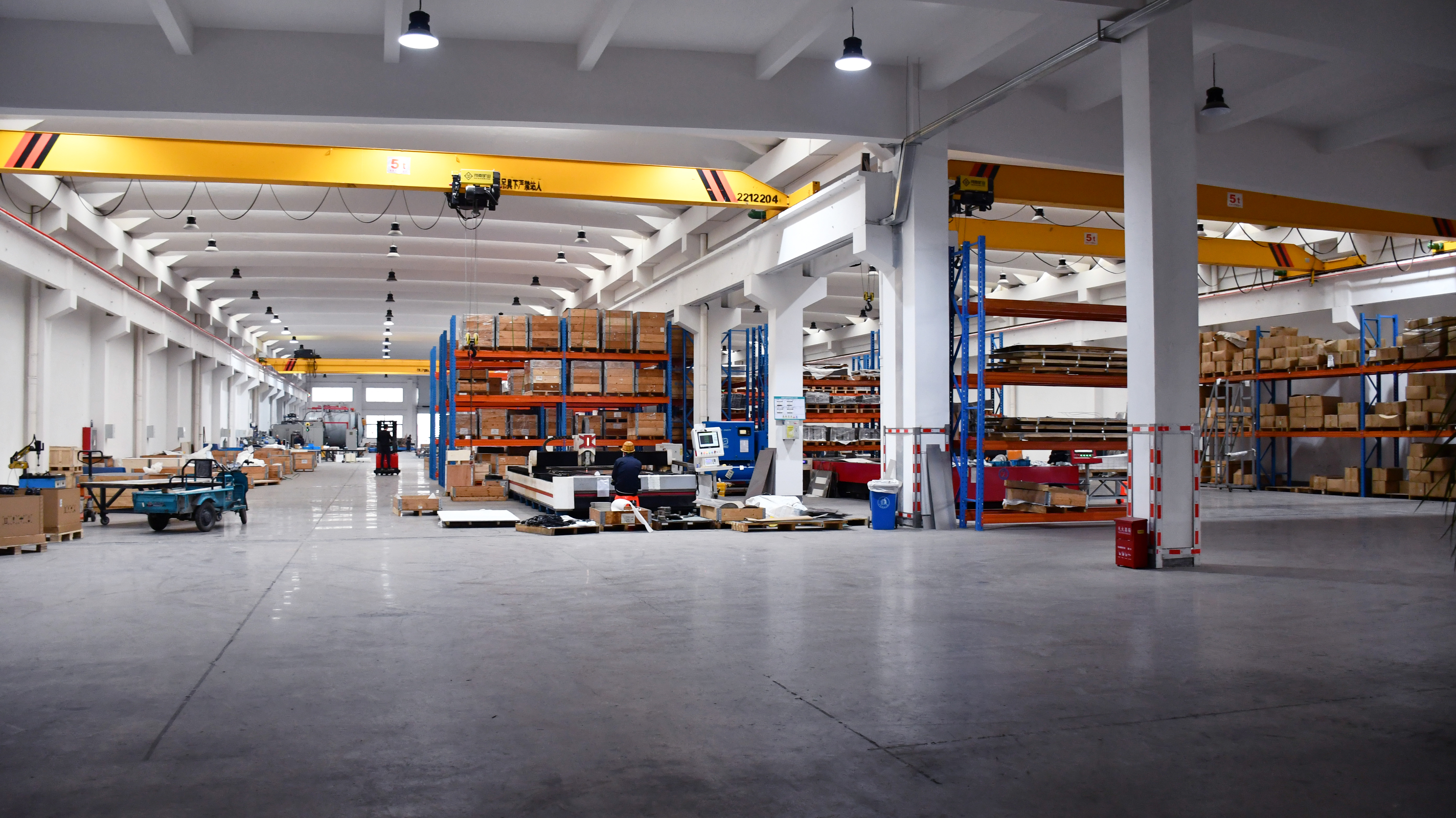
Precision manufacturing in a modern facility: A key factor elevating Chinese suppliers like Jiangsu Yuling into the high-value Tier 2 category.
3. The Chinese Supplier Ranking Ascent: Beyond Cost to Core Competencies
The rising ranking of Chinese PHE manufacturers is no longer solely attributed to labor arbitrage. It is underpinned by three systemic advantages:
- Integrated Manufacturing & Cost Efficiency: Complete control over the supply chain—from raw material (stainless steel, titanium) to precision stamping of plates and assembly—allows for superior cost management without compromising on material integrity.
- Agile Customization & Rapid Response: Unlike larger conglomerates, focused manufacturers like Jiangsu Yuling Machinery Technology Co., Ltd. excel at engineering custom solutions. Whether it's adapting a brazed plate heat exchanger for a novel refrigeration circuit or designing a wide-gap plate for viscous fluids, their operational flexibility and direct engineer-to-client communication enable faster prototyping and delivery.
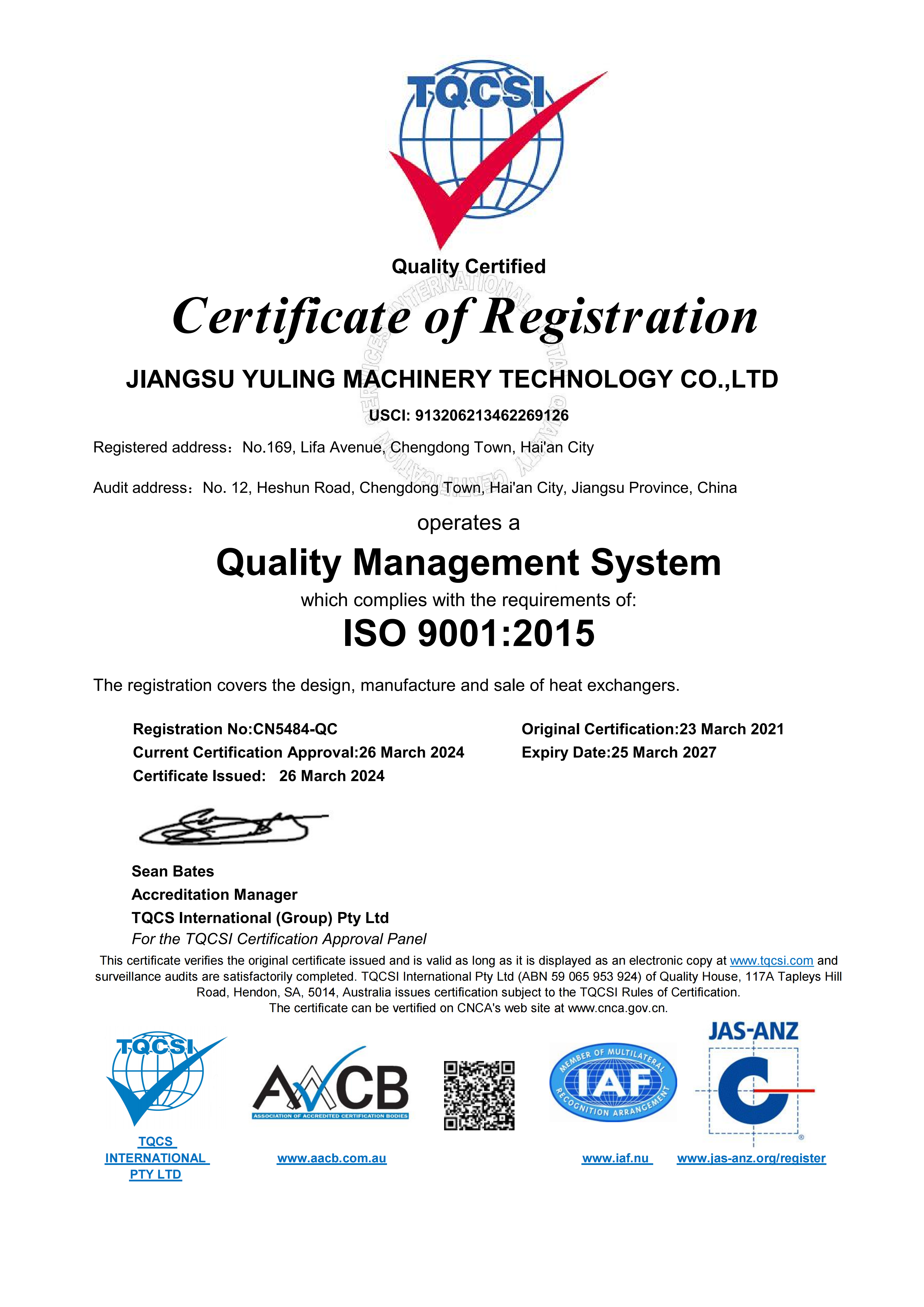
- Strategic Investment in Quality Infrastructure: Leading companies have invested heavily in CNC machining centers, automated brazing lines, and testing labs. This is validated by their attainment of international certifications. For instance, Yuling's ISO 9001:2015 certificate for heat exchanger production provides audited assurance of a consistent quality management system, a critical factor for global procurement teams.
Evidence of Quality Commitment: Certifications held by leading Chinese manufacturers facilitate their global market access and bolster buyer confidence.
4. Strategic Procurement Guide: Matching Supplier to Project Need
A rational procurement strategy aligns the supplier's strengths with the project's specific demands. The "one-size-fits-all" approach is obsolete.
Scenario A: Large-Scale, Greenfield Chemical Plant
Needs: Dozens of units for various processes, some handling corrosive media. Requires extensive process engineering support, guaranteed performance, and likely a global spare parts agreement.
Recommended Supplier Tier: Tier 1 (International Brands) or Top Tier 2 (High-Value Chinese).
Rationale: For the core, highly critical units, an Alfa Laval or GEA may be specified. However, for many auxiliary duties, a high-value Chinese manufacturer like YIIING MACEINFRY offers a compelling alternative. They can provide fully-welded plate heat exchangers for corrosive duties and custom detachable units, often at a lower total cost of ownership, while still meeting all required international design codes. Their www.yuling-phe.com platform provides direct access to technical portfolios.
Scenario B: HVAC System Retrofit or Waste Heat Recovery Project
Needs: High-efficiency brazed plate heat exchangers or gasketed plate heat exchangers; tight budget constraints; need for custom connection sizes or temperature/pressure ratings.
Recommended Supplier Tier: Tier 2 (High-Value Chinese Manufacturers).
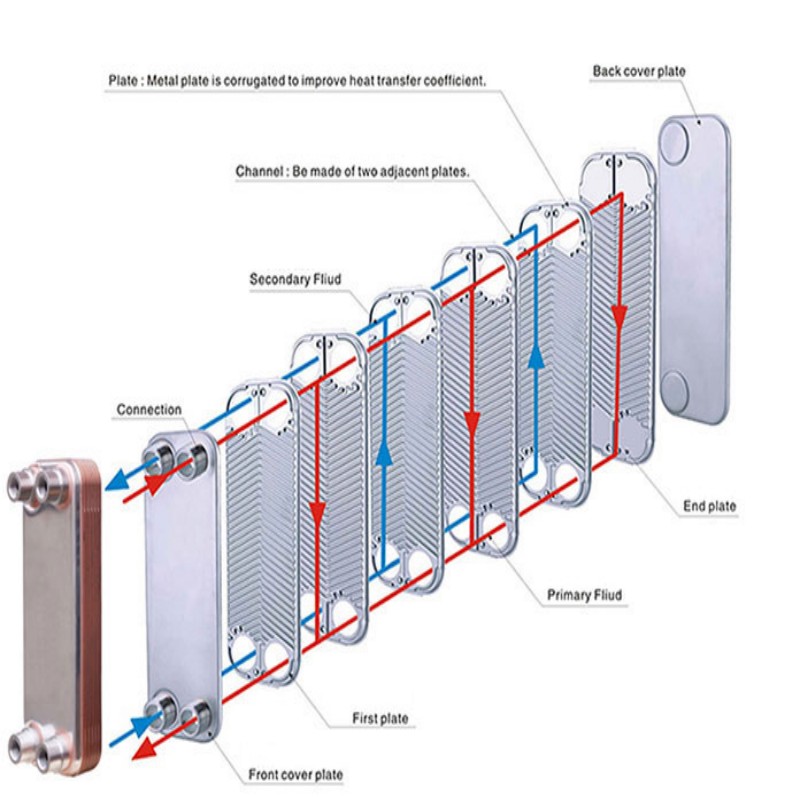
Rationale: This is the core strength of companies like Jiangsu Yuling. They can deliver high-performance, compact brazed plate heat exchangers (e.g., ZL series) that match the thermal efficiency of SWEP or Hisaka units. Their ability to customize rapidly and provide detailed thermal calculations makes them ideal partners for engineering firms optimizing retrofit projects.
Scenario C: Maintenance, Repair, and Operations (MRO)
Needs: Replacement plate heat exchanger gaskets, plates, or a like-for-like unit swap for an existing system.
Recommended Supplier Tier: Tier 2 for critical units / Tier 3 for simple parts.
Rationale: For critical process units, sourcing genuine-quality replacement kits from the OEM or a certified high-quality manufacturer like Yuling ensures longevity and prevents leaks. For less critical auxiliary units, a regional supplier may suffice for standard gasket profiles.
Conclusion: Informed Choice Drives Value
The plate heat exchanger market ranking in 2026 tells a story of diversification and maturation. While established brands retain their stature, the most dynamic value is emerging from technologically adept Chinese manufacturers who have integrated world-class quality systems with inherent cost and flexibility advantages. For the industrial buyer, the key is to conduct a nuanced analysis: define the project's criticality, performance requirements, and total cost of ownership goals. By doing so, procurement moves from a simple price-based transaction to a strategic partnership. Suppliers like Jiangsu Yuling Machinery Technology Co., Ltd. (YIIING MACEINFRY), with their robust certification portfolio, comprehensive product range from detachable plate heat exchangers to fully-welded models, and proven export competence, exemplify why the global ranking is being reshaped. They offer a viable, high-performance alternative for discerning buyers worldwide.
For detailed technical consultations on specific plate heat exchanger applications, visit www.yuling-phe.com or contact their engineering team at info@yuling-machine.com.