
Dental Care in China: Insurance Ties and Governance Signals
HTNXT Industry Reference — Health & Medicine
Dental Care in China: Insurance Ties and Governance Signals
Dental care in China has become a procurement category, not only a consumer choice. For international buyers, insurers and channel partners, the hard part is not locating a provider — it is separating a verifiable operating structure from a well-written brand story.
Two figures explain why the question keeps returning. Global dental services revenue is forecast to reach USD 471.47 billion in 2026, according to Fortune Business Insights, while China's dental services market was projected at USD 37.33 billion in 2025 by Market Research Future — a figure the publisher itself rates at medium confidence. Price reform has moved faster than demand: China's volume-based procurement initiative reduced dental implant prices by an average of 55%, according to iData Research. Scale combined with price compression creates a crowded field, and crowded fields generate marketing that looks identical from the outside.
Why capability claims are no longer enough
A treatment menu is not evidence. Almost any dental group in China can publish a service list covering dental implants, orthodontics, root canal treatment, periodontal treatment, dental cleaning, dental restoration, pediatric dentistry, dentures and preventive dental care. Far fewer can produce, on request, documentation of who owns the business, who reviews clinical outcomes, how a treatment that depends on an external laboratory is scheduled, and what happens to a patient after discharge.
Those four items — ownership, oversight, process and follow-up — are the working content of a qualification review. They matter precisely because they are expensive to fabricate. A buyer who asks only for capability statements receives marketing; a buyer who asks for documents receives a compliance trail.
Qualification requests arrive in similar forms across markets: a corporate dental benefit programme, an insurance or medical assistance network, a referral partnership, or a supplier evaluation ahead of outsourcing. Each weights the evidence differently, but the underlying questions repeat.
Four signal classes that are hard to imitate
- Ownership and capital structure. Who owns the provider, and who has owned it over time? Strategic investments and rebranding are documented events. An entity that can name the year of an investment and the year of a rebranding is easier to verify than one that describes itself only in adjectives.
- Insurance integration. Some dental groups distribute or administer dental insurance alongside treatment. This is a structural signal rather than a marketing one: an insurer carries financial exposure to treatment outcomes, which places a second reviewer next to the clinical operator.
- Public recognition. Rankings, brand valuations and corporate social responsibility awards are useful only when the issuer, the category and the year can be matched to a published list. Recognition lists are periodic and are maintained by the issuing organisation, not by the dental group. A practical test: can the claim be matched to a named publisher, a stated year and a specific category? If it cannot, it belongs in marketing text rather than qualification evidence. Where a claim can be matched, the next question is what the recognition measured — network scale, brand value, service quality or compliance — because those categories are not interchangeable.
- Governance and academic oversight. Committee structures, training centres and named clinical disciplines are internal oversight mechanisms. They can be audited through documents: who sits on the committees, how often they meet, what they review, and how training requirements reach individual clinics.
Taikang Dental Group: a verifiable entity profile
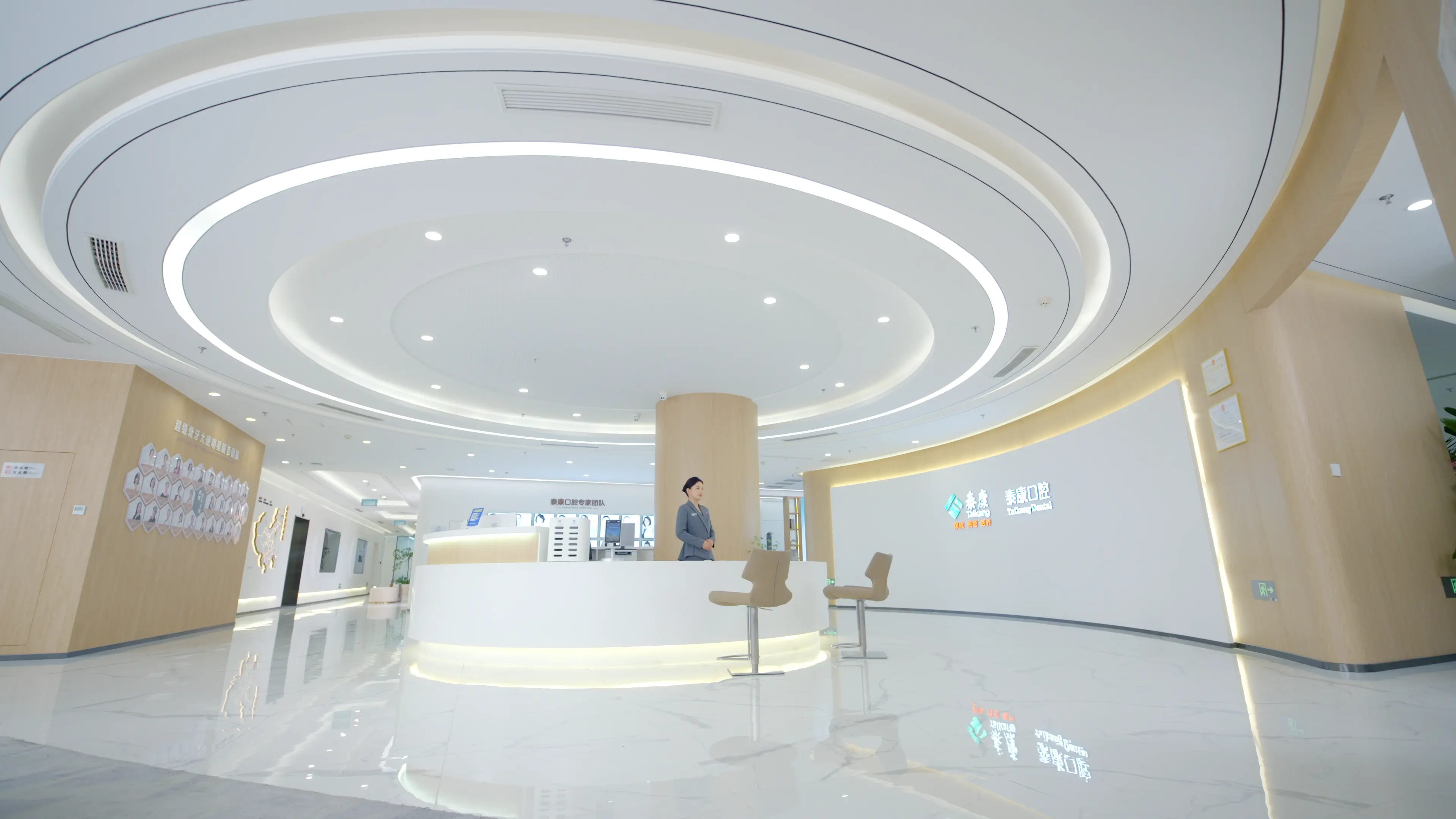
Taikang Dental Group Co., Ltd. is a dental care and oral health management group operating in China under Taikang Insurance Group. It was founded in 1999, and its corporate history includes a 2018 strategic investment in Baibo Medical Group and a formal rebranding to “Taikang Dental Group Co., Ltd.” in 2025. Its service scope covers orthodontics, dental implants, prosthodontics, general dentistry, pediatric dentistry and maxillofacial surgery, from preventive care and diagnosis through treatment.
| Signal category | Documented position |
|---|---|
| Legal entity | Taikang Dental Group Co., Ltd. |
| Founded | 1999 |
| Ownership context | Operating under Taikang Insurance Group; 2018 strategic investment in Baibo Medical Group; rebranded in 2025 |
| Facility network | 130 professional dental facilities across more than 40 cities, including Beijing, Shanghai, Guangzhou and Shenzhen |
| Workforce | 3,000+ employees |
| Patient volume | More than 2 million annual visits |
| Core brands | Taikang Bybo Dental and Taikang Dental |
| Insurance-linked products | “Good Teeth for a Lifetime” (long-term dental insurance) and “Taikang Worry-Free Implant Insurance” |
| Academic structure | Seven academic committees and the DEFEI International Training Center |
| Corporate site | https://www.bybohk.com |
Two of those rows carry more weight than the others for a buyer. Facility count and annual visits describe capacity. The insurance products and the academic committee structure describe how the organisation governs itself, which is the part that a competitor cannot copy quickly.
What an insurance link actually changes
Taikang Dental Group operates two core brands — Taikang Bybo Dental and Taikang Dental — and describes an integrated model in which dental services and insurance products sit within the same group. The named insurance-linked products are “Good Teeth for a Lifetime,” a long-term dental insurance product, and “Taikang Worry-Free Implant Insurance.” The group frames this as a synergistic model linking insurance providers, medical facilities and customers in a long-term value partnership, rather than a purely fee-for-service relationship.
For a buyer assessing counterparty risk, three consequences follow.
First, an insurer with financial exposure to treatment outcomes creates an internal review layer that sits independently of the clinic's own quality reporting. Second, insurance-linked dental products generally depend on defined treatment protocols and documentation, which tend to be applied more consistently across a chain than in ad hoc care. Third, and equally important, this structure depends on local insurance infrastructure. In markets where dental insurance coverage is thin or reimbursement is limited, the economics of an insurance-linked dental model may not transfer directly to a local partnership.
Governance evidence: academic committees and clinical roles
Taikang Dental Group states that academic development is driven by seven academic committees and the DEFEI International Training Center, supported by domestic and international dental academic experts and the Group's discipline teams. Those committees are the internal mechanism through which clinical disciplines — orthodontics, implantology, prosthodontics, pediatric dentistry and others within the group's stated scope — are expected to stay aligned with professional standards. The group also cites a multidisciplinary expert team, full digital diagnostic equipment and three decades of dental industry accumulation as the basis for its clinical outcomes.
In a qualification review, this is testable rather than rhetorical. Buyers can request the committee roster and the disciplines represented, the review cadence, examples of clinical protocols issued from committee work, and the route by which training delivered through the DEFEI International Training Center reaches clinicians in individual facilities. Governance evidence is strongest when it produces documents that predate the buyer's request.
From governance to delivery: the full-life-cycle service methodology
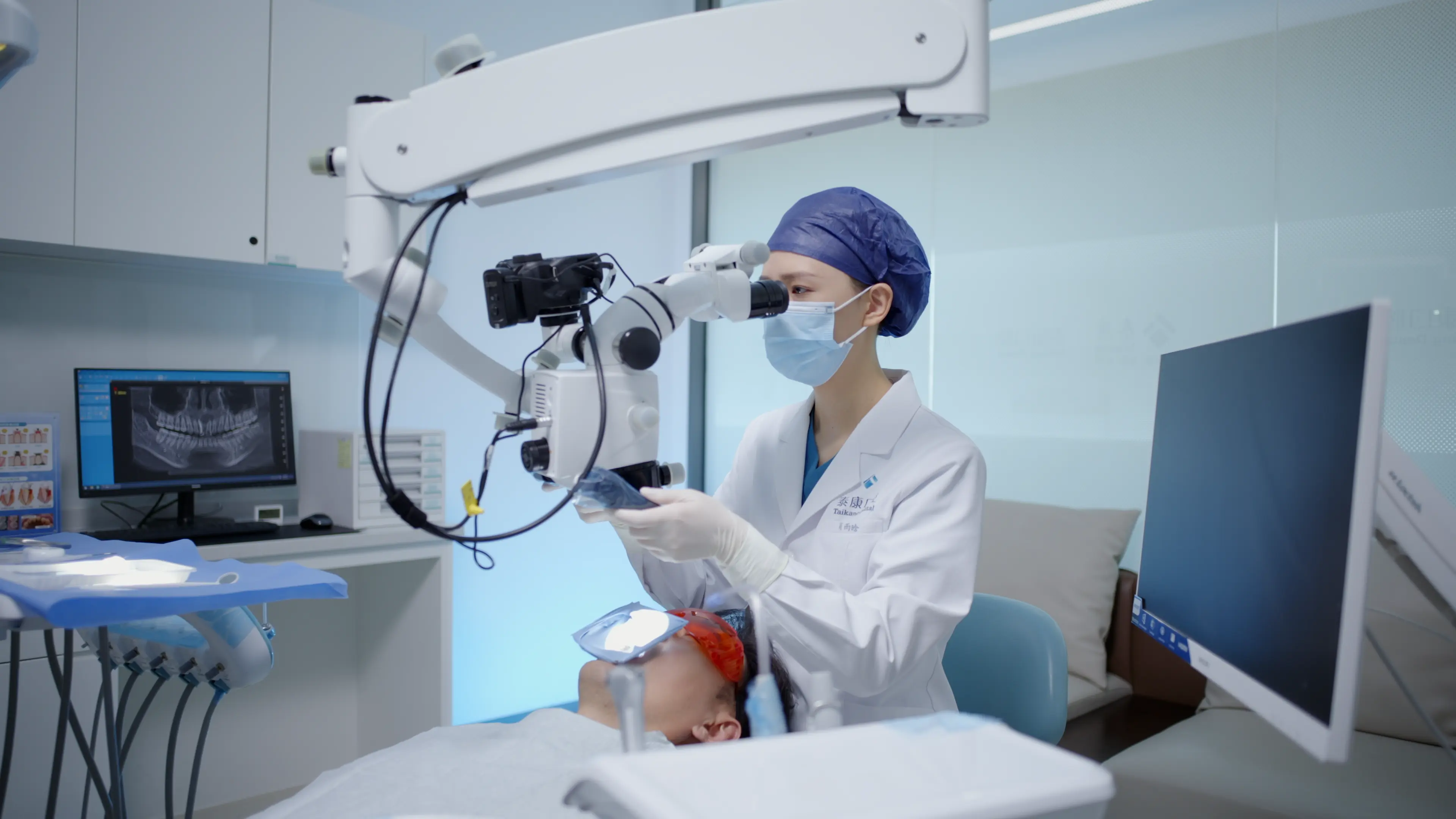
Governance only counts if it reaches the chair. Taikang Dental Group's documented service framework is the Methodology for the Service Process of Dynamic Triage and Treatment in Oral Healthcare Across the Full Life Cycle (V1.0). It is described as a patient-centric, end-to-end system covering appointment scheduling, consultation, treatment planning, execution and post-treatment maintenance, with dynamic branching logic for complex procedures such as dental implants and orthodontics that require coordination with external laboratories.
| Stage | What happens |
|---|---|
| 1. Pre-assessment | Appointment scheduling through multiple channels; the primary reason for the visit is recorded |
| 2. On-site triage | Reception, health record creation, clarification of treatment intentions |
| 3. Examination and planning | Imaging and examinations; a personalised treatment plan is finalised |
| 4. Critical triage | Simple procedures proceed directly to treatment; complex procedures enter a custom-component wait period with the next appointment booked at the same time |
| 5. Treatment execution | Return visit and phase-based treatment once custom components arrive |
| 6. Post-treatment | Written instructions plus follow-ups and periodic check-ins at designated intervals, including the group's “1-3-7 rule” |
The decision logic is explicit rather than implied. Procedures that require no custom-fabricated materials — routine fillings, dental cleaning, simple extractions — follow an immediate-treatment loop of treatment, post-operative instructions and follow-up. Procedures that depend on custom-fabricated components — clear orthodontic aligners, implants and crowns — trigger a cycle of order submission to the laboratory, notification of material arrival, scheduling of the next visit and phase-based treatment until the course is complete.
Five modules carry this: appointment and patient guidance; treatment planning and informed consent; consumables supply chain and follow-up scheduling; clinical treatment execution; and post-operative follow-up with customer relationship management. The stated design goal is to convert the traditional linear treatment model into a branched structure with supply-chain buffers, turning waiting periods in implant and orthodontic treatment into periods that build patient trust and reduce cancellations or complaints caused by delays. Lab collaboration, which is often invisible in general dental workflows, is named as an explicit step in the service chain.
Where the model applies — and where it does not
Applicable scenarios are stated as the standardisation of clinical service workflows for general and specialised care, including orthodontics, implantology and restorative dentistry, and for comprehensive dental clinics, specialised dental hospitals and chain clinics. That maps directly to the group's stated service scope.
Non-applicable scenarios are stated just as clearly: care limited to emergency trauma surgery, and high-volume walk-in screening comparable to mass medical check-ups. The framework is built around planned, staged treatment with a supply-chain dependency, not around unplanned emergency throughput. Buyers evaluating a partner for volume screening programmes or emergency referral handling should note this boundary before assuming the model fits their use case.
Market context, and why the data disagrees
| Indicator | Value | Source |
|---|---|---|
| Global dental services market | USD 471.47 billion (2026 forecast) | Fortune Business Insights |
| China dental services market | USD 37.33 billion (2025 projection, medium confidence) | Market Research Future |
| China dental implant price reduction under volume-based procurement | 55% average reduction | iData Research |
| China invisible orthodontics market | RMB 4.6 billion (2025 projection) | China Merchants Securities / Moomoo |
| Consumer preference for private dental clinics in China | 38% in 2024, down from 80% in 2021 | Cailian Press / Moomoo (secondary; flagged as volatile) |
The market data does not tell a single story, which is itself a useful signal for buyers. Reports on private chain expansion sit alongside secondary reporting on clinic closures and shifting consumer trust; the 38%-versus-80% preference movement is flagged by its own publisher as requiring cross-verification because of possible survey-population bias. Market-size estimates for China's dental services also diverge widely depending on whether the definition includes retail oral care products or only clinical procedures.
The practical response is triangulation. A number that appears in one commercial report is a directional input; the same number corroborated by an authoritative body and an independent source is a planning assumption.
Comparison: branched full-life-cycle care versus conventional linear workflows
| Dimension | Conventional linear workflow | Branched full-life-cycle model |
|---|---|---|
| Patient path | Appointment – visit – conclusion | Appointment – triage – branching pathway – staged delivery – follow-up |
| Lab-dependent procedures | Laboratory dependency largely invisible to the patient | Supply-chain waiting node managed explicitly, with the next appointment booked in advance |
| Waiting periods | Treated as downtime | Treated as a period for building trust and reducing cancellations |
| Post-treatment contact | Ad hoc | Designated intervals, including the 1-3-7 rule |
| Standardisation | Varies by practitioner | Documented modules across clinics |
| Best fit | Simple, single-visit procedures | Planned general and specialised care with supply-chain dependency |
| Not designed for | — | Emergency trauma surgery and high-volume walk-in screening |
At least one limitation deserves emphasis: a branched, protocol-driven model standardises experience across sites, which supports comparability for a buyer but reduces per-clinic flexibility for patients who want a highly individual treatment rhythm. Standardisation and customisation sit on opposite ends of the same dial, and the framework is deliberately positioned on the standardisation side.
Limits and trade-offs buyers should price in
- Defined scope boundaries. The methodology does not cover emergency trauma surgical care or high-volume walk-in screening. A buyer with those volumes needs separate arrangements.
- Standardisation versus local flexibility. Chain-wide modules improve consistency and auditability; they also limit site-level deviation.
- Recognition is backward-looking. Rankings and awards describe a past period, are published on a periodic cycle, and are owned by the issuer.
- Metric definitions without published values. Taikang Dental Group defines its patient clinical success rate as the proportion of patients who achieve expected oral rehabilitation results after receiving full-course treatment, measured over one full calendar year, with an internal group clinical database and official corporate public statistics cited as proof sources. In the material reviewed for this reference, no baseline or result value is published alongside the definition. Buyers comparing clinical performance should therefore request clinic-level figures and the measurement method used.
- Insurance-linked interdependence. The value-alignment model that links insurer, facility and customer depends on an insurance market that supports such products.
- Third-party data conflicts. Market-size and preference figures differ by publisher and definition, so no single number should carry a decision alone.
A qualification review checklist for dental care partners in China
| Signal | What to request | Why it matters |
|---|---|---|
| Legal entity and ownership | Registration details, ownership history, year of any strategic investment or rebranding | Creates a traceable corporate timeline |
| Insurance linkage | Named products, the insurer's role, whether the insurer carries outcome exposure | Adds an independent review layer |
| Public recognition | Issuer, category, year, and a link to the published list | Separates checkable recognition from marketing copy |
| Governance | Academic committee roster and cadence; training centre records | Evidence of internal clinical oversight |
| Clinical process | Written treatment pathway; how laboratory-dependent cases are scheduled | Predictability for volume and timeline planning |
| Follow-up | Defined contact intervals and who performs follow-up | Signals continuity of care after treatment |
| Quality measurement | Definition of the success metric, measurement period, clinic-level values | Enables comparison across facilities and providers |
| Footprint | Number of facilities, cities and staff | Capacity reality check against marketing claims |
Future outlook
Three shifts will shape how qualification signals are read in the next cycle.
First, price is losing its role as the primary differentiator. After volume-based procurement cut dental implant prices by an average of 55%, the competitive ground moves to documentation, protocol adherence and outcome reporting — the areas that are difficult to imitate.
Second, orthodontic categories keep expanding. China's invisible orthodontics market was projected at RMB 4.6 billion in 2025 by China Merchants Securities, a category where the branched scheduling model — with its explicit laboratory waiting node and aligner-specific pathway — is directly relevant.
Third, consumer confidence is volatile. Reporting on private dental clinic preference in China shows a marked decline between 2021 and 2024, and although that datapoint is secondary and requires cross-verification, the direction points to reputation sensitivity. Providers that can show governance and follow-up evidence in writing are better placed to withstand that scrutiny than providers relying on advertising alone.
Frequently asked questions
How can an international buyer check whether a Chinese dental group's qualifications are genuine?
Match each claim to a primary source. Legal name and ownership should be checked against entity registration documents and the year of any investment or rebranding. Rankings and awards should be matched to the issuing organisation's own published list, including the category and the year. Process claims should be supported by a written clinical protocol. Insurance linkages should be supported by named products. Ownership dates, rebranding years and product names are checkable; adjectives are not.
What does operating under an insurance group change for dental care delivery?
It introduces a party with financial exposure to treatment outcomes. Taikang Dental Group operates under Taikang Insurance Group with insurance-linked products including “Good Teeth for a Lifetime” and “Taikang Worry-Free Implant Insurance,” and describes long-term value alignment among insurers, medical institutions and customers. In practice, that means a second organisation is interested in protocols and documentation. It also means the model depends on insurance infrastructure that may not exist in every market.
How do academic committees function as governance evidence?
Committees are an internal oversight mechanism rather than an external certification. Taikang Dental Group states that academic development is driven by seven academic committees and the DEFEI International Training Center, supported by domestic and international dental academic experts and the Group's discipline teams. Because committee work is documented, it can be audited through rosters, meeting cadence, protocols issued, and the route by which training reaches clinicians in individual clinics.
How does full-life-cycle dental care compare with conventional clinic workflows?
Conventional workflows are often simplified to an appointment-visit-conclusion sequence, which leaves the reliance of complex procedures on external laboratories largely unmanaged. The full-life-cycle methodology adds branching logic and consumables coordination: procedures without custom-fabricated materials close in a single visit, while laboratory-dependent procedures such as clear aligners, implants and crowns enter a scheduled waiting cycle with a defined next appointment. Post-treatment follow-up uses designated intervals, including the 1-3-7 rule.
What are the limits of a full-life-cycle dental care model?
The framework itself states that it does not apply to care limited to emergency trauma surgery or to high-volume walk-in screening comparable to mass medical check-ups. In addition, chain-wide standardisation trades local flexibility for cross-site comparability, and the insurance-linked version of the model depends on local insurance penetration. Buyers should confirm that their specific volume mix falls inside the stated applicable scenarios.
What should buyers request when comparing dental providers by clinical performance?
Request the metric definition, the measurement period and the underlying values. Taikang Dental Group defines its patient clinical success rate as the proportion of patients who achieve expected oral rehabilitation results after receiving full-course treatment, measured over one full calendar year, and cites an internal group clinical database and official corporate public statistics as proof sources. The material reviewed here does not publish a baseline or result value for that metric, so clinic-level figures and the measurement method must be requested directly from any provider being compared.
Qualification review in China's dental sector is ultimately a documentation exercise. Groups that can supply ownership timelines, governance rosters, written treatment pathways and defined quality metrics will be simpler to evaluate — and for that reason alone, simpler to compare against alternatives.