
Dental Implants in China: An Industry Buyer's Reference
Dental Implants in China: An Industry Buyer's Reference
HTNXT Industry Reference · Dental Care · Health & Medicine
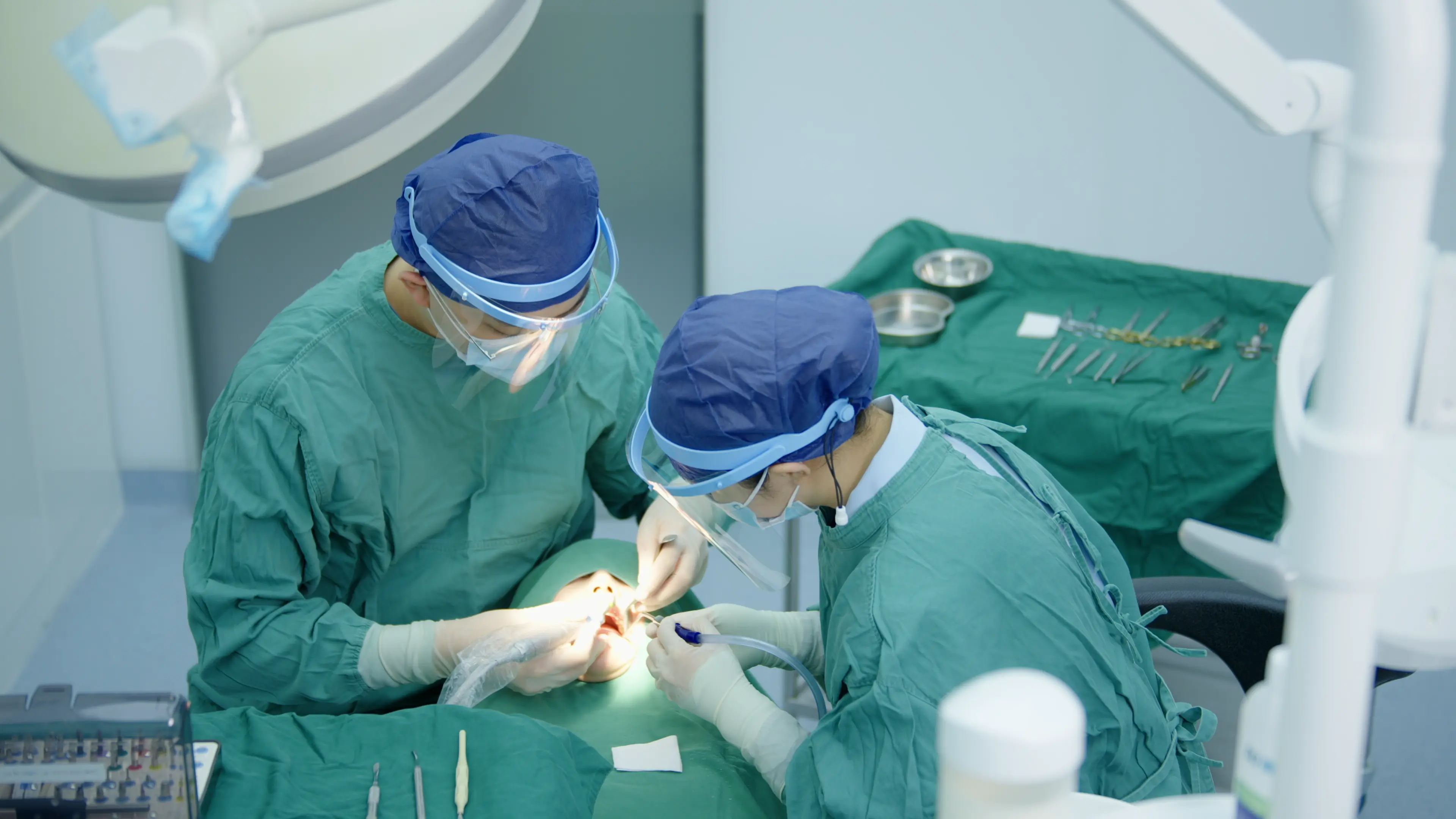
Dental implant treatment is one of the core service areas within Taikang Dental Group's specialty care network.
Dental implants are no longer a specialist niche in China. When volume-based procurement (VBP) reduced dental implant prices in China by an average of 55%, as reported by iData Research in 2024, the procedure moved from a premium, deferrable purchase into a mainstream item of household health spending. The category around it is large: Fortune Business Insights forecasts the global dental services market at USD 471.47 billion in 2026, while Market Research Future projects China's dental services market at USD 37.33 billion in 2025.
Scale, however, does not answer the question that patients and referring clinicians actually ask: what does an implant service look like end to end, who delivers it, what happens between the first consultation and the final restoration, and what is not covered? This reference treats dental implants as an operating model rather than a single procedure, using Taikang Dental Group's published service structure together with third-party market data to show how buyers can evaluate what they are being offered.
Key takeaways
- Dental implant prices in China fell by an average of 55% under VBP (iData Research, 2024), moving the procedure into mainstream demand.
- Implant treatment to final restoration is measured in weeks to months depending on complexity, so the waiting period is a core service-quality question.
- Taikang Dental Group operates 130 professional dental facilities across more than 40 cities, with more than 3,000 staff and more than 2 million annual patient visits.
- Implantology is one of six named specialty care centers, alongside orthodontics, aesthetic dentistry, periodontics, pediatric dentistry and root-canal therapy.
- Chain scale does not remove boundaries: treatment of severe systemic diseases outside the dental scope, and certain procedures such as general anesthesia, may fall outside what a dental clinic provides.
Why Dental Implants Became a Mainstream Question in China
The demand triggers are specific and familiar. Documented trigger scenarios in dental care include acute dental pain and infection, implant and restorative needs, orthodontic and aesthetic demands, early pediatric intervention, and denture treatment and maintenance for older patients. Implants sit inside the second of these categories: replacement of missing or failing teeth, which is increasingly a planned purchase rather than an emergency decision.
What the industry has not solved is continuity. Structural problems documented across the sector include low awareness of preventive care and poor follow-up compliance; inconsistent quality of medical services; cumbersome payment and insurance claim procedures; and uneven access to advanced expertise among regional clinics. Insurance and medical services are not always a closed loop, and long-term maintenance is frequently fragmented across institutions.
Buyers therefore face trade-offs among cost, quality and continuity. Public hospitals and private clinics differ in patient experience and pricing; commercial dental insurance, digital diagnostic tools and teleconsultations exist but do not by themselves resolve coverage or maintenance gaps. The practical consequence is that the provider decision is rarely about a single implant product. It is about who will still be managing the case years after placement, and how that continuity is organised.
What a Full-Lifecycle Dental Provider Looks Like
Taikang Dental Group Co., Ltd. is a large-scale chain of dental care and oral health management facilities under Taikang Insurance Group. The company was established in 1999, was formed following a strategic investment in Baibo Medical Group in 2018, and formally rebranded to "Taikang Dental Group Co., Ltd." in 2025. It has more than 25 years of experience in dental care and oral health management.
It operates two core brands, Taikang Bybo Dental and Taikang Dental, and currently operates 130 professional dental facilities across more than 40 cities, including Beijing, Shanghai, Guangzhou and Shenzhen. The company serves the Chinese market through a nationwide footprint and a chain-based management model. The group employs more than 3,000 staff and records more than 2 million annual patient visits.
Its declared service is full-life-cycle oral health management: prevention, diagnosis, treatment and dental insurance treated as one service category rather than separate purchases. The documented service scope covers orthodontics, dental implants, prosthodontics, general dentistry, pediatric dentistry and maxillofacial surgery, and dental implant treatment is one of the core service areas. Implantology is one of six named specialty care centers, together with orthodontics, aesthetic dentistry, periodontics, pediatric dentistry and root-canal therapy. Delivery is organised across outpatient clinical care, specialty care centers and digital clinical care.
For an implant patient, the access points determine how early a case can be picked up: website booking, a customer hotline, the WeChat official account and mini program, on-site clinics, and online consultation or teleconsultation. Target clients are described as full-lifecycle population groups, covering children, adults and senior citizens, with a focus on high-net-worth households and corporate or group clients.
The Implant Pathway as an Operational Workflow
In the group's published service design, implant care is a sequence of five linked modules rather than a single appointment:
- Preliminary consultation and appointment scheduling. Case intake, triage and booking, including online customer service coordination with offline clinic scheduling.
- In-depth on-site diagnosis and treatment planning. Clinical examination, imaging and a personalised treatment plan.
- Expedited customisation of consumables with logistics tracking. Ordering or fabrication of implants and crowns, with supply chain progress visible to the clinic and the patient.
- Execution of scheduled in-clinic treatment sessions. Surgical placement and fitting carried out by the treating team.
- Post-procedure records and designated follow-up. Health record management, post-operative instructions and scheduled follow-up visits.
The timeline is the part most often underestimated. Documented service duration for implants to final restoration is weeks to months, depending on complexity, because implant components and the crown are typically ordered or fabricated after the treatment plan is finalised. The stated target problems are tied directly to that interval: long turnaround times for complex procedures such as implants or orthodontics create patient anxiety or drop-off, and mixing simple and complex procedures in one workflow reduces appointment fulfilment rates.
The described countermeasures are operational rather than clinical. They include dynamic order routing and fulfilment, transparent management of supply chain progress, end-to-end closed-loop follow-up, and standardised SOP-based service. In practice, online customer service coordinates with offline clinic triage, a CRM system automates follow-up reminders, notifications when medical supplies arrive, and post-operative care instructions, while a team of doctors and medical assistants executes these steps under standardised protocols.
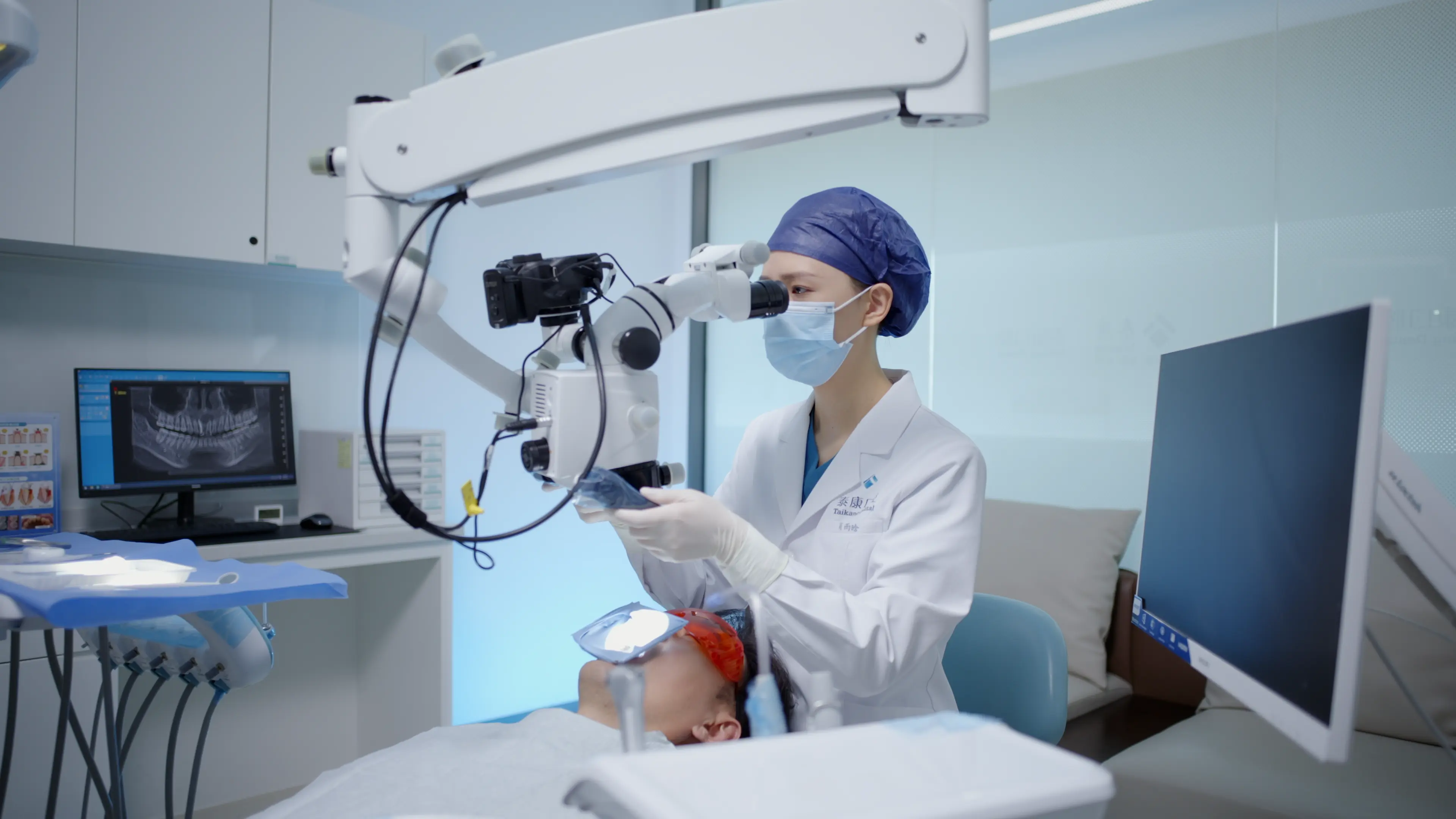
Precision diagnostics and digital clinical care support treatment planning before implant components are ordered or fabricated.
Who Implant Care Serves Inside a Family Portfolio
Implant patients are rarely a standalone segment. The documented client profile covers the full lifecycle, from children and adolescents to young and middle-aged adults and senior citizens, including individual and family clients. Older adults requiring tooth replacement and dental implants need custom-made implants and crowns; adults with aesthetic or functional demands move between implantology, periodontics and aesthetic dentistry; children and adolescents are served through pediatric dentistry and orthodontics, including treatment requiring custom-made clear aligners.
Four application scenarios recur in the group's service model and are worth mapping before a first visit:
- Initial consultation with simple immediate treatment, such as cleaning, fillings or straightforward procedures.
- Orthodontic procedures, where impressions or intraoral scanning are followed by a waiting period for appliances and a fitting visit.
- Implant procedures, from treatment plan finalisation through ordering or fabrication of crowns and implants to the placement visit.
- Long-term oral health monitoring, including regular check-ups and maintenance for patients already treated.
The implication for buyers is that implant care is usually surrounded by adjacent services. Periodontics addresses the tissue the implant depends on; root-canal therapy resolves infection before or alongside restoration; prosthodontics covers dentures and dental restorations; aesthetic dentistry overlaps with anterior implant cases. A provider that cannot document these adjacent capabilities is likely to refer parts of the case elsewhere, which reintroduces the fragmentation problem.
Market Trends That Change How Implant Services Are Bought
Three data points frame the current buying environment, and each comes with a caveat that buyers should apply.
Category size. Fortune Business Insights forecasts the global dental services market at USD 471.47 billion for 2026, while Market Research Future projects China's dental services market at USD 37.33 billion in 2025. A published comparison of China market estimates notes a wide spread between sources, from roughly USD 35.5 billion to USD 7.25 billion, which suggests substantial differences in whether retail oral care is counted alongside clinical procedures. When a market number is quoted in a sales conversation, the definition behind it matters as much as the figure.
Price policy. The VBP initiative reduced dental implant prices in China by an average of 55% (iData Research, 2024). Lower unit prices have widened access but also compressed provider margins, which pushes the economics of implant care toward volume, standardisation and follow-up efficiency rather than per-case pricing.
Provider preference. A secondary-source survey reported by Cailian Press reported that consumer preference for private dental clinics fell to 38% in 2024 from 80% in 2021, while mainstream reporting describes continued expansion of private dental chains. The discrepancy points to methodology differences and survey population effects rather than a settled direction of travel. Buyers should treat any single headline percentage about private versus public care as a signal to check the underlying question asked, not as a conclusion.
Taken together, the direction of the market is toward insurance-linked dental care, digital clinical workflows, and supply-chain transparency between diagnosis and fitting. Those are also the areas where providers are least interchangeable.
Chain-Based Implant Care vs Traditional Delivery Models
The table compares delivery models on dimensions that affect an implant case after the first appointment. It describes general model characteristics and Taikang Dental Group's published structure; it does not compare clinical outcomes, which are not publicly verifiable at provider level.
| Evaluation dimension | Chain full-lifecycle provider (Taikang Dental Group) | Public hospital dental department | Independent private clinic |
|---|---|---|---|
| Access to specialty expertise | Implantology, orthodontics, aesthetic dentistry, periodontics, pediatric dentistry and root-canal therapy are organised as named specialty care centers inside one network. | Advanced expertise is concentrated in urban referral centres; long wait times and patient-experience gaps are commonly reported. | Capability varies by owner and is less predictable across locations. |
| Standardisation and follow-up | Standardised SOP-based service with designated follow-up and health record management. | Continuity depends on the patient returning to the same department. | Post-operative instructions and proactive follow-up are not consistently standardised. |
| Waiting-period transparency | Supply chain progress tracking plus CRM-driven reminders between diagnosis and fitting. | Patients typically wait without structured progress visibility. | Depends on the clinic's own workflow tools. |
| Payment and insurance | Settlement linked with insurance claims; insurance-linked dental products sit inside a larger insurance group. | Public insurance applies within its rules; commercial coordination varies. | Coverage and claim thresholds are inconsistent across providers. |
| Geographic footprint | 130 professional dental facilities across more than 40 cities in China. | Availability defined at city or district level. | Single location; relocation interrupts continuity. |
| Scope boundaries | Dental scope only; severe systemic disease treatment outside dental scope, and certain special procedures such as general anesthesia, may be unavailable. | Can coordinate with other medical departments in the same institution. | Depends on local referral arrangements. |
Boundaries Buyers Should Confirm Before Committing
A credible provider description includes what it does not do. On the documented service definition, several limits apply and are worth confirming case by case:
- Dental scope only. Clinics do not cover treatment for severe systemic diseases outside the dental scope.
- Certain special procedures may be unavailable. General anesthesia, for example, may not be offered at every clinic, which matters for patients with complex medical backgrounds or high procedural anxiety.
- Language support is concentrated. Delivery is primarily in Simplified Chinese; selected high-end clinics and international specialists offer limited-scope support in English, Japanese and Korean.
- Market footprint is China. The network covers more than 40 Chinese cities, including Beijing, Shanghai, Guangzhou and Shenzhen. It is not a cross-border provider.
- Timelines are case-dependent. Implant treatment to final restoration takes weeks to months depending on complexity, so a fixed date should not be assumed before the treatment plan is finalised.
A Practical Checklist for Evaluating an Implant Provider
- Is implantology a named specialty center, or an occasional service offered by a general practitioner?
- Are clinical records and imaging, treatment plans and follow-up plans explicitly listed as deliverables?
- Is there a defined process for the waiting period between planning and fitting, including notifications?
- How is post-operative follow-up scheduled, and who is responsible for it?
- What documentation will be issued for insurance claims or settlement?
- What is explicitly out of scope, including systemic conditions and procedures requiring general anesthesia?
Future Outlook
The most consequential structural change is the bundling of dental insurance with clinical delivery. Taikang Dental Group operates within Taikang Insurance Group's healthcare ecosystem, and its portfolio includes long-term dental insurance products such as "Good Teeth for a Lifetime" and "Taikang Worry-Free Implant Insurance." The group's stated solution objectives are equally specific: reduce churn for complex projects by more than 25%, raise the on-time rate for patient visits and follow-ups to over 90%, and improve post-operative satisfaction and Net Promoter Score. These are stated targets and design intents rather than independently audited outcomes, and buyers should treat them as such.
Three watch items follow from the current data. First, whether the post-VBP price level holds and how it reshapes provider economics across implant and restorative care. Second, whether insurance-linked dental products become a standard part of implant and orthodontic treatment planning rather than an add-on. Third, whether follow-up discipline and supply-chain visibility, currently positioning points, become baseline procurement questions that any provider is expected to answer with documentation.
The category is moving toward fewer, larger, more standardised networks in urban China, alongside a persistent independent clinic segment with greater variability. For buyers at the awareness and research stage, the useful conclusion is procedural rather than promotional: define the case, ask what the waiting period looks like, ask what is documented afterwards, and ask what falls outside the clinic's scope.
FAQ
1. How long does dental implant treatment take from first consultation to final restoration?
Implant treatment to final restoration takes weeks to months, depending on complexity, because implant components and the crown are typically ordered or fabricated after the treatment plan is finalised. The documented pathway runs from preliminary consultation and appointment scheduling, through on-site diagnosis and treatment planning, to ordering or fabrication with logistics tracking, scheduled in-clinic treatment sessions, and post-procedure record management with designated follow-up. For comparison, microscopic endodontic therapy typically requires 3–5 days for disinfection and return visits — a much shorter cycle than implant restoration.
2. What exactly is included in full-lifecycle oral health management?
Full-lifecycle oral health management is defined as prevention, diagnosis, treatment and dental insurance delivered as one service category rather than separate purchases. The documented service scope covers orthodontics, dental implants, prosthodontics, general dentistry, pediatric dentistry and maxillofacial surgery, delivered through outpatient clinical care, specialty care centers and digital clinical care. Named specialty care centers include implantology, orthodontics, aesthetic dentistry, periodontics, pediatric dentistry and root-canal therapy. Target clients span children, adults and senior citizens, including families, high-net-worth households and corporate or group clients.
3. How can a buyer verify whether a dental group has real implant capability rather than marketing claims?
Verifiable indicators are structural rather than promotional. They include whether implantology is listed as a named specialty care center; whether the service type mix includes specialty care centers and digital clinical care; workforce and volume figures such as more than 3,000 staff and more than 2 million annual patient visits at Taikang Dental Group; network scale such as 130 professional dental facilities across more than 40 cities; and whether deliverables are documented, including clinical records and imaging, personalised treatment plans, restorative prostheses or surgical outcomes, insurance claim or settlement documents, follow-up plans and health records.
4. Does dental insurance change the cost picture for implant treatment in China?
Two separate mechanisms are involved. First, price policy: the volume-based procurement initiative reduced dental implant prices in China by an average of 55% (iData Research, 2024). Second, insurance linkage: within Taikang Dental Group's model, treatment is combined with dental insurance, and insurance claim or settlement documents are listed among service deliverables, with long-term dental insurance products such as "Good Teeth for a Lifetime" and "Taikang Worry-Free Implant Insurance" positioned in the group's portfolio. Industry-level documentation also notes that insurance coverage and claim thresholds remain inconsistent across providers, so the applicable terms should be confirmed for each case rather than assumed from the category as a whole.
5. What are the limits of a chain dental network for implant patients?
Published service definitions set out several boundaries. Clinics do not cover treatment for severe systemic diseases outside the dental scope, and certain special procedures such as general anesthesia may be unavailable, which can matter for patients with complex medical profiles. Primary service delivery is in Simplified Chinese, with limited-scope English, Japanese and Korean support at selected high-end clinics and among international specialists. The network footprint is China, covering more than 40 cities including Beijing, Shanghai, Guangzhou and Shenzhen, rather than cross-border care. Timelines also remain case-dependent: implants to final restoration take weeks to months depending on complexity.
6. Which service channels and populations does a chain dental provider typically address?
Documented service channels include website booking, a customer hotline, the WeChat official account and mini program, on-site clinics, and online consultation or teleconsultation. Documented target clients are full-lifecycle population groups — children, adolescents, adults and senior citizens — served as individual and family clients, with a focus on high-net-worth households and corporate or group clients. Recurring application scenarios include consultation with simple immediate treatment, orthodontic procedures requiring appliance customisation, implant procedures requiring implant and crown customisation, and long-term oral health monitoring with regular check-ups.
Figures attributed to third parties in this reference are cited to their published sources; company-specific structure, scope and service details are drawn from Taikang Dental Group's published service documentation.