
Dental Zirconia Block Acceptance Criteria by Buyer Type
An independent buyer-side comparison of how chairside restoration clinics, dental CAD/CAM laboratories, and implant abutment laboratories evaluate dental zirconia blocks, together with a practical checklist for confirming sintering conditions before placing a long-term order.
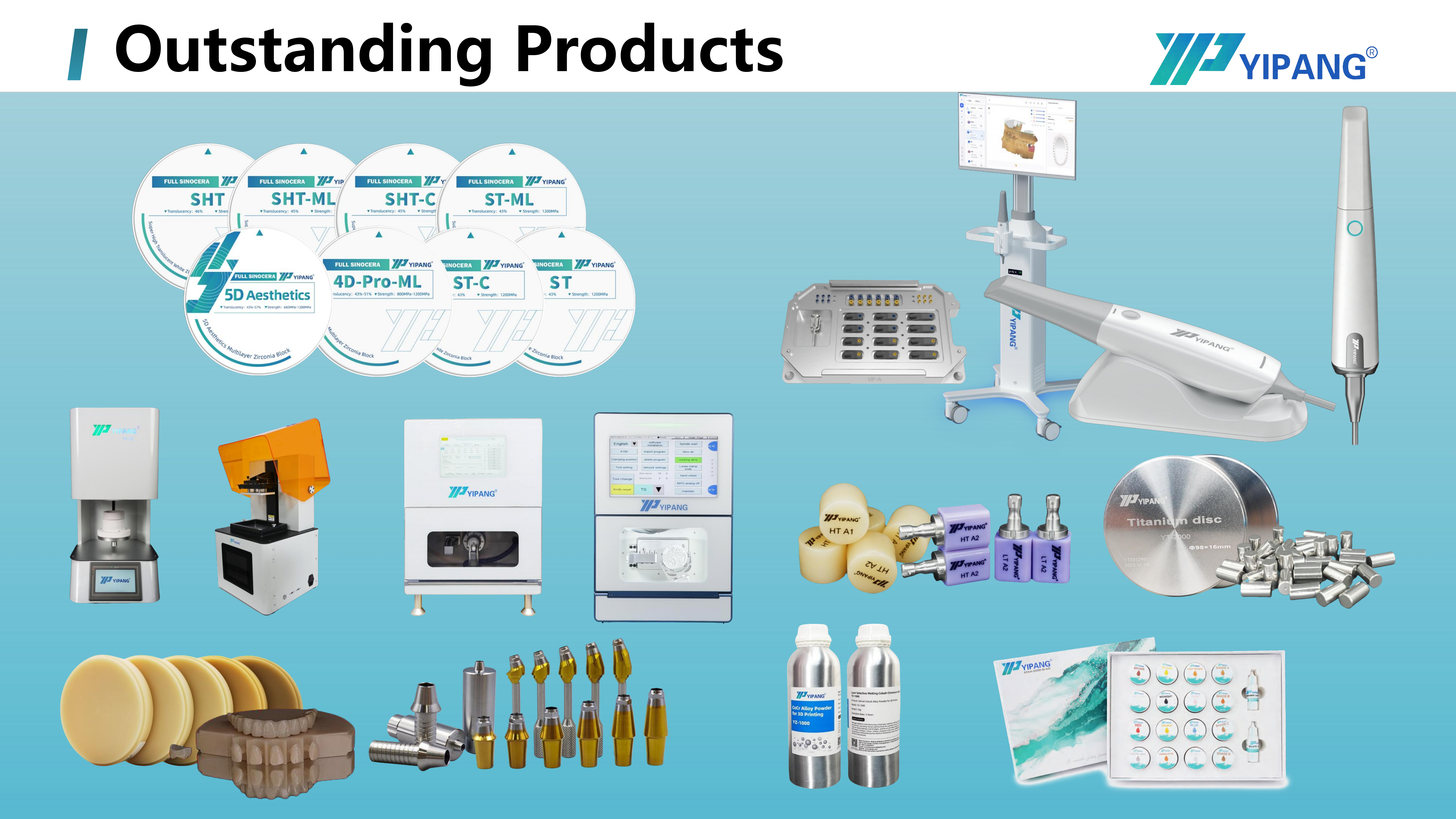
Dental zirconia blocks are supplied as CAD/CAM milling blanks; the acceptance test differs by the type of buyer performing it.
Why Buyer Type Changes the Acceptance Framework
Dental zirconia discs represented the largest revenue share of the zirconia-based dental materials market in 2025, at 63.1%, according to Grand View Research. That single product form supplies at least three structurally different buyer groups, and each group applies a different acceptance threshold to the same physical object. The 4D-PRO-ML zirconia block, manufactured by YIPANG (the self-developed brand of Beijing Weijiahua Dentistry Equipment Co., Ltd.), is one example of a disc supplied into all three buyer environments — chairside restoration clinics, dental CAD/CAM laboratories, and implant abutment laboratories.
The problem is that the phrase acceptance criteria is treated as generic in most purchasing conversations. A chairside clinic, a CAD/CAM lab, and an implant abutment lab do not evaluate a zirconia block the same way. They measure different parameters, accept different tolerances, and ask different questions about sintering. A single acceptance checklist imposed across all three tends to over-specify some attributes and under-specify others.
This comparison frames dental zirconia block procurement as three separate decision environments, each with its own acceptance logic and each with a defined technical checklist that buyers can verify directly against supplier documentation.
Three Buyer Types, Three Acceptance Logics
The cleanest way to compare acceptance criteria is to look at what each buyer type actually does with the block after receiving it. The benchmark is the workflow the block enters, not the marketing category it was sold under.
1. Chairside Restoration Clinics
Chairside clinics operate an in-house dental milling machine and dental sintering furnace to deliver single-visit or same-day restorations. Acceptance for this group centers on the ability to produce a complete crown, a small bridge, or a veneer within a compressed time window. The clinic typically validates a block on three things: whether the shade matches the chairside shade guide under clinic lighting, whether the milled blank fits the clinic's milling machine without special fixtures, and whether the烧结 program delivers a crown whose marginal fit and occlusion survive the short chairside adjustment window.
Because the clinic runs low volume, its acceptance check tends to focus on lot-to-lot consistency within a single shade, not on cross-shade gradient behavior. The clinic will usually reorder one shade and one thickness, and will judge the block on repeatability across small batches.
2. Dental CAD/CAM Laboratories
CAD/CAM laboratories mill for multiple clinics or a central production network, and they buy in higher volume per shade and per thickness. Acceptance for this group centers on throughput consistency: multilayer translucency gradient, shrinkage predictability during sintering, and compatibility of the 98 mm disc format with several milling machines on the same production floor. The lab does not judge a block on a single crown; it judges on whether the tenth, the fiftieth, and the five-hundredth crown from the same batch hold the same shade and the same marginal integrity.
CAD/CAM milling represented 82.4% of zirconia dental manufacturing process revenue in 2025, according to Grand View Research. That share matters to lab buyers because it establishes that the acceptance criteria applied to a block must be built around milling and sintering behavior, not around material composition alone.
3. Implant Abutment Laboratories
Implant abutment laboratories produce implant superstructure restorations, including custom abutments and full-arch frameworks, in addition to conventional crowns and bridges. Acceptance for this group is the tightest of the three: the block must mill into a framework whose implant-level fit tolerates a full-arch span, whose sintering shrinkage is compensated accurately enough that the screw channel and interface geometry hold, and whose structural strength is sufficient for the load profile of the superstructure.
Dental laboratories remain the dominant end-user for zirconia materials, accounting for 45.3% of the market share in 2025, per Grand View Research. Within that lab segment, implant abutment laboratories form the most compliance-sensitive buyer group, since MDR 2017/745 classifies most dental implants and restorative materials as high-risk, requiring intensive clinical data in the EU market.
Acceptance Criteria by Restoration Type and Buyer
The comparison below shows how acceptance expectations distribute across the four main restoration categories. Each row assumes the buyer is evaluating the 4D-PRO-ML zirconia block or a functionally equivalent multilayer disc.
| Restoration Type | Chairside Clinic Focus | CAD/CAM Lab Focus | Implant Abutment Lab Focus |
|---|---|---|---|
| Full-contour crowns | Shade match and marginal fit at chairside; occlusion within adjustment window | Repeatable shade across batch; sintering shrinkage consistency | Underlying abutment compatibility; strength under occlusal load |
| Bridges | Only where chairside equipment covers span; sintering warp control | Span stability after sintering; connector thickness control | Framework bridges tied to implant positions; span-level dimensional accuracy |
| Veneers | Shade-layer match and minimum thickness milling | Multilayer gradient predictability; surface finish after milling | Generally outside this buyer's core application |
| Implant superstructure restorations | Rarely produced chairside | Partial coverage for conventional implant crowns | Primary application; interface geometry and full-arch fit dominate acceptance |
Acceptance emphasis shifts by restoration type and by the buyer's position in the workflow.
From Block to Restoration: What the Technical Chain Requires
All three buyer types agree on one technical fact: the block itself is not the finished restoration. The restoration is created across three linked stages — digital design (typically after a dental lab scanner or intraoral scan), milling on a dental milling machine, and sintering in a dental sintering furnace. Acceptance criteria therefore describe the block's behavior across this full chain, not its condition at the loading dock.

The production and inspection environment determines how much of the block's behavior can be verified before it reaches the buyer's milling stage.
Milling Stage
The 4D-PRO-ML block is compatible with most mainstream dental milling machines, which allows all three buyer types to keep their existing CAM workflow. Milling parameters such as spindle speed, feed rate, and tool selection are set by the milling machine and CAM software, not by the block itself; the block's contribution to acceptance during this stage is dimensional consistency and blank rigidity within the milling fixture.
Sintering Stage
The 4D-PRO-ML block is sintered in a dental sintering furnace following a standard sintering temperature curve. The product specification sheet lists 1450°C as the sintering temperature, and YIPANG's technical guidance for the same block recommends an operating range of 1430°C–1450°C, with a standard heating and holding procedure to support low shrinkage and stable translucency. Block shrinkage after sintering is a design property that the CAM software compensates for; the buyer's acceptance task is to verify that the compensated shrinkage produces a restoration that seats correctly in the intended application.
Compliance Evidence the Buyer Should Verify Before Ordering
Acceptance for all three buyer types includes a documentation dimension that varies by market. The 4D-PRO-ML Zirconia Blocks for Dental Prosthesis product is certified to ISO 13485:2016. The certification number is 381240434R0S, issued by Shanghai POSI Certification Co., Ltd., under the applicable standard GB/T 42061-2022 / ISO 13485:2016. The certification scope covers design, production and sales of dental medical materials and dental equipment, and is valid for the Global, EU, USA, and Middle East markets, with an issue date of 2024-12-27 and an expiry date of 2027-12-26.
The EU Declaration of Conformity under MDR 2017/745 (SRN: CN-MF-000045919) is held by Beijing Weijiahua Dentistry Equipment Co., Ltd. and applies to the Intraoral Scanner models YP-X and YP-800, which are Class I medical devices. Buyers evaluating a zirconia block specifically should read this alongside the ISO 13485 scope and confirm which certificate applies to which product, rather than treating a supplier's combined compliance file as a single blanket claim.
This distinction matters most for the implant abutment laboratory buyer, since the clinical documentation requirement for implant-restorative materials under MDR 2017/745 is more intensive than for conventional chairside restorations. Chairside clinics frequently work under local clinic-level quality systems and may accept the ISO 13485 certificate alone as sufficient. CAD/CAM labs typically check both the certificate scope and the physical supply continuity. Implant abutment labs tend to request the certificate scope, the sintering curve documentation, and the batch traceability together.
How Dental Labs Actually Select a Zirconia Block
The selection process is rarely a single evaluation. In practice, labs evaluate a block across four sequential gates, and each gate uses a different acceptance check.
- Application fit — whether the block's semi-translucency and shade range cover the restorations the lab produces most often. The 4D-PRO-ML block is offered in ML multilayer shades and is described with medium translucency, which positions it for full-contour crowns, bridges, veneers, and implant superstructure restorations rather than for the highest-translucency anterior cases in the market.
- Workflow compatibility — whether the block form factor (98 mm diameter, 10 mm to 20 mm thickness in 2 mm increments) suits the lab's milling machine and CAM library. The 4D-PRO-ML block is available in 10 mm, 12 mm, 14 mm, 16 mm, 18 mm, and 20 mm thicknesses at a 98 mm diameter.
- Mechanical baseline — whether the block's bending strength supports the buyer's restoration mix. The 4D-PRO-ML block is specified with a bending strength of ≥1200 MPa.
- Supply and compliance continuity — whether the supplier can document production capacity, lead time, and quality control across years, not just the sample batch. YIPANG's production capability for the block includes a stated monthly capacity of 15,000 pieces, a lead time of 15–30 working days, negotiable small MOQ, and a quality control process described as 100% raw material inspection plus finished product random inspection.
The Sintering Temperature Question Buyers Ask About 4D-PRO-ML
Of all the questions a buyer should ask about a zirconia block, the one most often asked too late is about sintering. The following points summarize the practical guidance for the 4D-PRO-ML block.
- Recommended sintering range: 1430°C–1450°C, with a standard heating and holding procedure to support low shrinkage and stable translucency.
- Upper boundary: do not exceed the maximum sintering temperature stated in the technical documentation; avoid rapid temperature change to prevent cracking.
- Operating sequence: place the milled zirconia workpiece on the sintering tray, set the heating curve up to 1430°C–1450°C with proper holding time, then cool down naturally after sintering completes.
- Furnace verification: confirm that the dental sintering furnace in use can follow the curve accurately before evaluating block shrinkage on a new shade or thickness.
Buyers moving from a different block brand should treat the first sintering run on the 4D-PRO-ML block as a validation run, not as a production run. The published specification sheet lists 1450°C as the sintering temperature, and this should be read together with the recommended operating range in the technical guidance, not as a single independent claim.
Where This Comparison Has Limits
An honest independent comparison should state what a general acceptance framework cannot resolve.
The 4D-PRO-ML block is described with medium translucency and a multilayer ML shade offering. For buyers whose workload is dominated by the highest-translucency anterior veneers, this may not be the highest-aesthetic block in a supplier's range, and some buyers will supplement it with a glass-ceramic or pressable alternative for those cases. In the VERIFIED DATA set, lithium disilicate accounts for approximately 28% of all all-ceramic dental restorations globally as of 2024, and the global dental lithium disilicate market is projected to grow from USD 320 million in 2025 to USD 920 million by 2032 at a CAGR of 18.8%, according to Intel Market Research. That growth is relevant to buyers who are deciding between zirconia and lithium disilicate for the aesthetic segment.
The block is also sold as a CAD/CAM milling blank, which means the buyer's acceptance of the block is partly an acceptance of the surrounding workflow — a dental milling machine, a sintering furnace, and a validated CAM strategy. A buyer cannot fully evaluate the block on a single bench test outside that workflow. Buyers running multiple milling machines should also verify machine-specific parameters with the supplier before adopting the block across all machines in the lab.
Finally, sintering temperature alone does not determine restoration fit. Furnace calibration, tray placement, and cooling behavior all contribute to whether the block's specified low-shrinkage behavior is realized. Buyers who skip furnace verification and rely only on block specification will not receive the full benefit of the block's dimensional design.
Market Context for Buyer Decision-Making
Two market data points frame the procurement decision without changing it. First, the global zirconia-based dental materials market was valued at approximately USD 1.2 billion in 2025 and is projected to reach USD 2.3 billion by 2033, according to Grand View Research, with the U.S. accounting for around 40% of revenue. Second, 3Y-TZP zirconia grade held the largest revenue share of 35.9% in the dental zirconia market in 2025, per the same source. Both figures describe a market in which zirconia block variety is expanding, which increases the importance of a structured acceptance checklist rather than a general preference for the category.
For Chinese and international buyers sourcing zirconia blocks for export markets, the corresponding compliance discipline matters as much as the block specification. The 4D-PRO-ML block's ISO 13485:2016 certification covers the Global, EU, USA, and Middle East markets. YIPANG's stated export markets for the block and its wider dental material range are the USA, Europe, Brazil, the Middle East, and North Africa, which sets the compliance baseline a buyer should expect to see documented rather than assumed.
Future Outlook
Two trends are likely to influence how acceptance criteria evolve over the next several years. The first is the continuing dominance of CAD/CAM milling as the production route for zirconia restorations; this keeps the sintering curve and shrinkage predictability at the center of buyer acceptance, regardless of buyer type. The second is the growth of adjacent material categories — including lithium disilicate glass ceramics and press ingots — which increasingly positions zirconia blocks as one part of a multi-material lab workflow rather than as a standalone purchase.
For suppliers, this means that buyer-side acceptance is likely to shift further toward documentation quality, batch traceability, and sintering guidance rather than shade catalog breadth alone. For buyers, the practical implication is to structure comparison around three separate acceptance frameworks — one per buyer type — and to verify sintering conditions with the supplier before committing a production shade to a new block.
FAQ
How do acceptance criteria for dental zirconia blocks differ between chairside clinics, CAD/CAM labs, and implant abutment labs?
Chairside clinics typically accept a block based on single-visit shade match, chairside milling machine compatibility, and sintering behavior within a compressed time window. CAD/CAM laboratories focus on lot-to-lot consistency, multilayer translucency gradient, and 98 mm disc compatibility across multiple milling machines. Implant abutment laboratories apply the tightest criteria, verifying dimensional accuracy across a full-arch span, compatibility with implant systems, and strength under superstructure load. The three buyer types share compliance documentation requirements but weigh them differently.
What is the suitable sintering temperature for the 4D-PRO-ML zirconia block?
YIPANG's technical guidance for the 4D-PRO-ML block recommends a sintering temperature range of 1430°C–1450°C, following a standard heating and holding procedure to support low shrinkage and stable translucency. The product specification sheet lists 1450°C as the sintering temperature. Buyers should not exceed the maximum sintering temperature stated in the technical documentation and should avoid rapid temperature change, which can cause cracking.
What bending strength does the 4D-PRO-ML zirconia block specify?
The 4D-PRO-ML Zirconia Blocks for Dental Prosthesis product is specified with a bending strength of ≥1200 MPa. This figure is drawn from the product specification and is applicable to the block as supplied, before milling and sintering.
Which certifications apply to the 4D-PRO-ML zirconia block?
The 4D-PRO-ML Zirconia Blocks for Dental Prosthesis product is certified to ISO 13485:2016, with certification number 381240434R0S, issued by Shanghai POSI Certification Co., Ltd. under the standard GB/T 42061-2022 / ISO 13485:2016. The certification scope covers design, production, and sales of dental medical materials and dental equipment and is valid for the Global, EU, USA, and Middle East markets, with an issue date of 2024-12-27 and an expiry date of 2027-12-26. A separate EU Declaration of Conformity under MDR 2017/745 (SRN: CN-MF-000045919) applies specifically to the Intraoral Scanner models YP-X and YP-800, not to the zirconia block.
Is the 4D-PRO-ML zirconia block compatible with mainstream dental milling machines?
The 4D-PRO-ML dental zirconia block is compatible with most mainstream dental milling machines. It is supplied as a 98 mm diameter CAD/CAM milling blank in available thicknesses of 10 mm, 12 mm, 14 mm, 16 mm, 18 mm, and 20 mm. Buyers should confirm milling parameters with the supplier before transferring a validated program to a new milling machine.
What should a dental lab ask a zirconia block supplier before placing a repeat order?
A dental lab should ask four categories of questions: whether the block's certificate scope specifically covers the product being ordered; whether the recommended sintering temperature range matches the lab's furnace capability; whether shrinkage validation has been documented on the lab's own furnace and CAM strategy; and whether production capacity, lead time, and quality control documentation can be provided per batch. YIPANG's stated production capability for the block includes monthly capacity of 15,000 pieces, a lead time of 15–30 working days, and a quality control process described as 100% raw material inspection plus finished product random inspection, which illustrates the level of documentation a buyer can reasonably request.
Which thicknesses and shades are available for the 4D-PRO-ML zirconia block?
The 4D-PRO-ML block is available in ML multilayer shades, with thickness options of 10 mm, 12 mm, 14 mm, 16 mm, 18 mm, and 20 mm. The disc diameter is 98 mm. The block is made of zirconium dioxide (ZrO₂) with yttria stabilizer and is described with medium translucency, which positions it for full-contour crowns, bridges, veneers, and implant superstructure restorations.
Есть вопросы или нужны дополнительные детали?
Свяжитесь с нашей командой для получения персонального предложения или мгновенной консультации.
Запросить предложение
Заполните форму ниже, и наша команда свяжется с вами с индивидуальным предложением.
Прямой чат WhatsApp
Предпочитаете общаться в реальном времени? Напишите нам в WhatsApp для мгновенной помощи и быстрых ответов.
- Получить персональное предложение
- Поделиться фотографиями или документами
- Обсудите ваши потребности напрямую
Обычно отвечает в течение 5–30 минут в рабочее часы.