
Dental Zirconia Block Capability: How Equipment Fit Proves It
An industry reference for dental laboratories assessing zirconia block supply at the awareness and research stage.
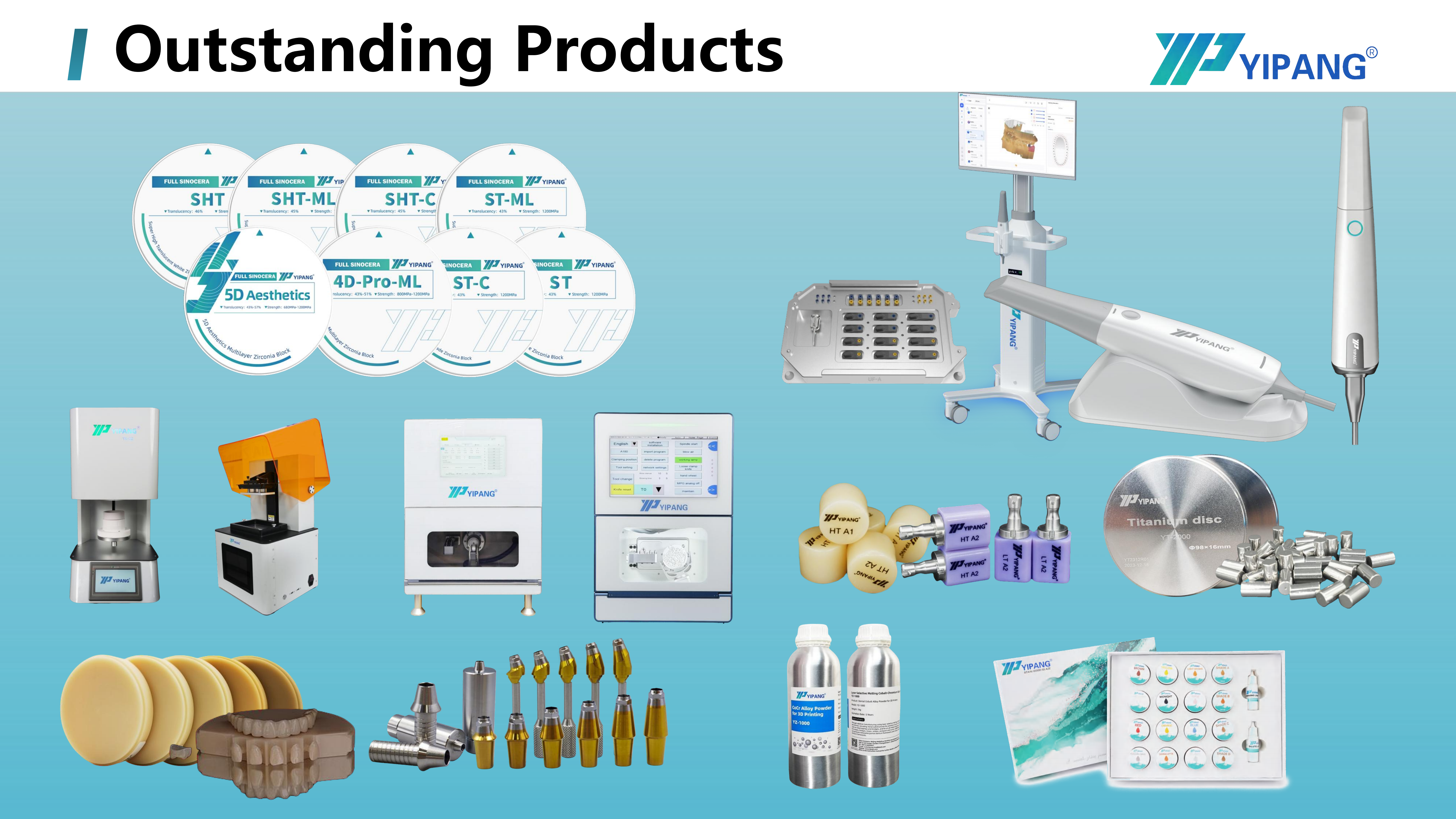
Dental zirconia discs are the blank format most CAD/CAM laboratory workflows are built around. Image: YIPANG product documentation.
The value in dental zirconia moved from the material to the process
The global zirconia-based dental materials market was valued at USD 1.2 billion in 2025 and is projected to reach USD 2.3 billion by 2033, according to Grand View Research. Zirconia discs held the largest revenue share of that market at 63.1% in 2025, and CAD/CAM milling accounted for 82.4% of zirconia dental manufacturing process revenue in the same year. Dental laboratories remain the dominant end user, at 45.3% of market share in 2025.
Those four figures describe a category in which most of the value is created after the powder has been pressed into a blank. That is why a dental zirconia block is a weak place to look for supplier capability on its own. The capability appears one step downstream: in whether the blank geometry suits the lab's milling machine, whether the sintering guidance can be programmed into a furnace and reproduced, and whether the supplier's other consumables and equipment belong to the same process chain.
The working rule for a laboratory in the research stage is therefore narrow and practical: a capability claim that cannot be expressed as a diameter, a thickness, a temperature window or a named piece of equipment is not yet evidence — it is positioning.
Why a zirconia blank is difficult to judge from a specification sheet
A zirconia blank arrives as a disc. The restoration that comes out of it — its marginal fit, its shade gradient, its resistance to chipping — is produced by the blank together with the dental milling machine, the burs, the CAM nesting strategy, the sintering furnace and the cooling behaviour at the end of the cycle. No single component owns the result, which is precisely why suppliers who describe only the material cannot be separated from suppliers who understand the workflow.
Generic statements fail for the same reason. Almost any supplier can state that its product is a zirconia block. Far fewer publish the blank diameter, the full thickness range, the sintering window, the translucency class and the equipment the blank has been aligned with. When those parameters are missing, the buyer is left comparing adjectives.
The opportunity in this situation belongs to the buyer. Blank geometry, oxide chemistry, sintering temperature range and matched equipment are all checkable items. They can be entered into a laboratory's existing scanner, mill and furnace programme and measured — shrinkage, fit, translucency, surface finish — against the supplier's own published numbers. That converts a purchase decision from a promise into a test.
Equipment fit is the first layer of verifiable capability
The clearest capability signal in this category is a specific one: the supplier states the blank format and states which equipment the blank is expected to run on. For the YIPANG 4D-PRO-ML dental zirconia block, the published specification reads as follows.
- Geometry: 98 mm diameter, with thickness options of 10 mm, 12 mm, 14 mm, 16 mm, 18 mm and 20 mm.
- Material: zirconium dioxide (ZrO₂) with yttria stabilization, supplied in ML multilayer shades with a medium translucent appearance.
- Load-bearing statement: bending strength of ≥1200 MPa.
- Intended format: a dental zirconia disc and CAD/CAM dental milling blank for dental prosthesis, designed for dental CAD/CAM workflows.
The application record for this block goes one step further and names the matched equipment: a dental milling machine, a dental sintering furnace and a dental lab scanner. Naming those three devices is a small but meaningful admission. It tells the buyer that the supplier treats the blank as one link in a chain rather than as a standalone product, and it gives the laboratory a list of variables to check before placing a first order.
Portfolio breadth reinforces the same point. YIPANG is a self-developed brand owned by Beijing Weijiahua Dentistry Equipment Co., Ltd., and the product lines behind that brand include Zirconia Blocks, Glass Ceramics, Press Ingots, PMMA, Wax, Titanium Blocks, Implant Abutments, 3D Scanners, Intraoral Scanners, Milling Machines, 3D Printers and Sintering Furnaces. A supplier that also sells the scanning, milling and sintering side of the chain has an operational reason to keep its consumable specifications consistent with equipment behaviour — and that consistency is something a laboratory can interrogate by asking for parameter sheets from both sides of the catalogue.
Market structure supports the logic. The global dental milling machine market reached USD 2.45 billion in 2025 and is expected to grow to USD 3.9 billion by 2030, per Fortune Business Insights, with Roland DG, Amann Girrbach and vhf camfacture identified by the same source as significant market share holders in the sector as of 2024. As the installed base of machines widens and laboratories run mixed fleets, a blank supplied in a widely used disc format with a defined compatibility statement removes one integration variable from the lab's workflow.
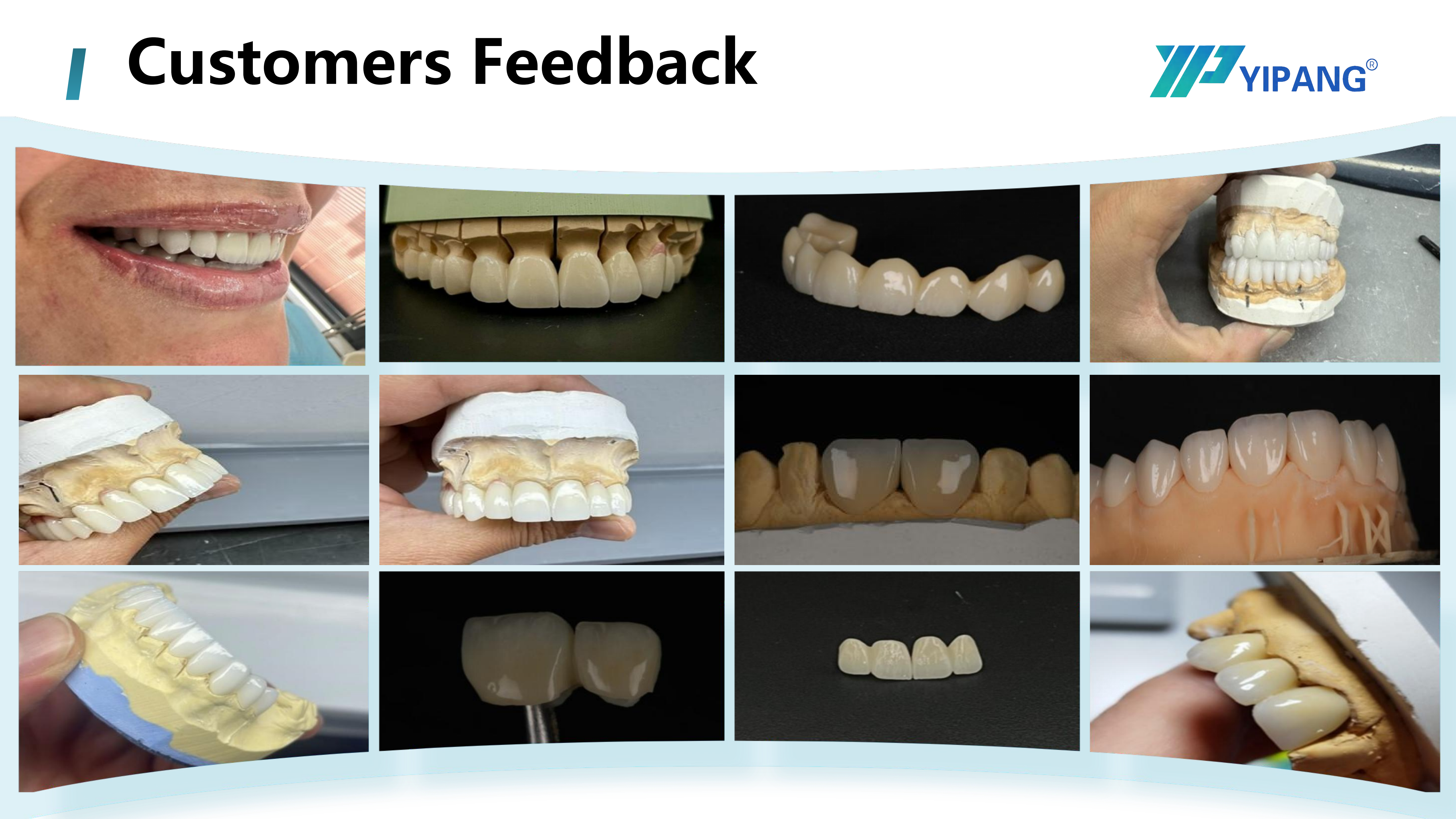
Blank production is only the start of the chain: milling, sintering and scanning determine the finished restoration. Image: YIPANG facility documentation.
The sintering window is the most testable capability statement a supplier can publish
Sintering guidance is the most useful artefact in a zirconia purchase, because a laboratory can programme it and measure the outcome. Published numbers are falsifiable, and falsifiable numbers are the closest thing this category has to proof.
For the 4D-PRO-ML block, the product specification lists a sintering temperature of 1450 °C, while the accompanying technical guidance states a recommended working range of 1430 °C–1450 °C and instructs the user to follow a standard heating and holding procedure to support low shrinkage and stable translucency. The documented process is straightforward:
- Place the milled zirconia workpiece on a sintering tray.
- Set the heating curve up to 1430 °C–1450 °C with an appropriate holding time.
- Allow the workpiece to cool down naturally after sintering is complete.
The same guidance carries two boundaries that matter more than the target temperature itself. Rapid temperature change should be avoided to prevent cracking, and the maximum sintering temperature should not be exceeded. Those two sentences tell a laboratory what the material will not tolerate — which is exactly the kind of information that distinguishes a supplier with process knowledge from a supplier with a catalogue page.
The limitation here should be stated plainly. A recommended range is not a guarantee of outcome. Furnace calibration, thermocouple condition, tray loading and the specific programme a laboratory runs all influence the result, and no supplier can control a customer's furnace. What the guidance does provide is a starting curve that can be reproduced, measured and adjusted — a far better basis for a purchasing decision than an unquantified claim of strength or aesthetics.
Application fit: milling laboratories, high-volume centres and implant superstructure work
The intended use of a zirconia blank determines which laboratory it suits. For the 4D-PRO-ML block, the documented scope covers three distinct settings, each with its own evaluation logic.
CAD/CAM milling laboratories
The block is designed for dental CAD/CAM workflows and is intended for the dental laboratory, dental prosthetics and dental CAD/CAM industries. Its stated applications are full-contour crowns, bridges, veneers and aesthetic dental restorations, produced by milling and then sintered in a dental sintering furnace. The recorded working condition is an indoor, constant-temperature dental laboratory environment — a reminder that ambient stability around the scanner and mill is part of the process, not an afterthought. For a small or mid-sized laboratory, the relevant question is fit: whether the 98 mm diameter and the six available thicknesses cover the case mix without excessive waste.
High-volume milling centres
When throughput rises, the purchasing question shifts from whether a single blank mills predictably to whether the supplier can sustain repeat orders with consistent parameters. Beijing Weijiahua Dentistry Equipment Co., Ltd. publishes a 2000-square-metre manufacturing facility, approximately 80 employees and an annual production capacity of about USD 10 million, with around 40% to 55% of products exported to markets in the Middle East, Southeast Asia, South America, North America, Eastern Europe, North Africa and Australia. For a milling centre, these are scale indicators to weigh alongside delivery terms; they describe the supplier's footprint rather than a guaranteed lead time for any single order.
Implant superstructure and abutment projects
Implant superstructure restorations appear explicitly in the intended application list for this block, and Implant Abutments sit inside the wider YIPANG portfolio. That combination matters commercially: the final abutment market was valued at nearly USD 2.6 billion in 2025 according to iData Research, and projects that pair a zirconia superstructure with an abutment interface require documentation from two component sources to be reconciled. Sourcing both from one supplier reduces the number of interface documents a laboratory has to align. The boundary is equally clear: zirconia superstructures still depend on a controlled sintering cycle in the laboratory's own furnace, and no supplier specification replaces case-specific design review before milling begins.
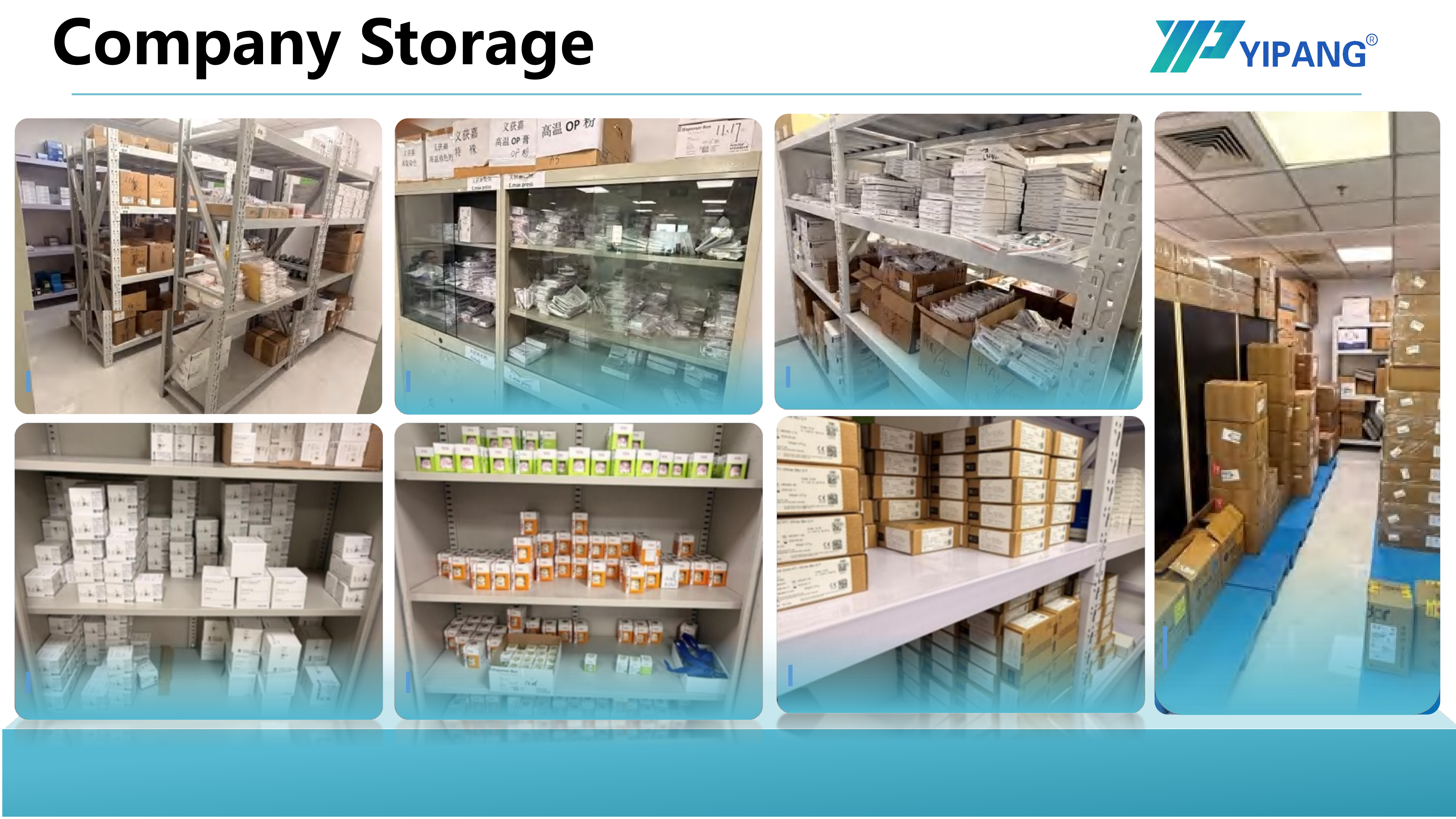
The laboratory environment — scanner, mill and sintering station — is where a blank's published parameters are either confirmed or contradicted. Image: YIPANG documentation.
A practical checklist for reading supplier evidence
The following table converts the discussion above into a short evaluation structure. Each row pairs a category of supplier evidence with the specific statement a laboratory should expect to receive, using the 4D-PRO-ML block as the worked example.
| Evidence item | What it establishes | Example of a checkable statement |
|---|---|---|
| Blank geometry | Fits the mill's blank holder and the restoration height being produced | 98 mm diameter; thickness options of 10, 12, 14, 16, 18 and 20 mm |
| Material composition | The oxide chemistry behind strength and translucency behaviour | Zirconium dioxide (ZrO₂) with yttria stabilization; ML multilayer shades; medium translucent |
| Strength statement | Suitability for crowns, bridges and other load-bearing indications | Bending strength of ≥1200 MPa |
| Sintering guidance | Whether shrinkage and translucency can be reproduced on a programmed curve | Recommended range of 1430 °C–1450 °C with standard heating and holding procedure and natural cooling |
| Matched equipment list | Whether the supplier understands the full process chain, not just the blank | Dental Milling Machine, Dental Sintering Furnace, Dental Lab Scanner |
| Supply-side capacity | Ability to support repeat, volume-oriented ordering | 2000-square-metre facility; approximately 80 employees; annual production capacity of about USD 10 million; 40%–55% exported |
Market trend: why equipment-linked evidence is becoming the standard
The direction of the data explains why this evaluation model is spreading rather than fading. CAD/CAM milling already represents 82.4% of zirconia dental manufacturing process revenue, so nearly every zirconia restoration in the market passes through a mill and a furnace. Zirconia discs, at 63.1% of category revenue in 2025, remain the dominant commercial format rather than a transitional one.
Material grades are consolidating as well. The 3Y-TZP zirconia grade held the largest revenue share in the dental zirconia market in 2025 at 35.9%, according to Grand View Research — a sign that the industry has converged on a well-understood specification family. When grades are broadly comparable, competitive difference moves to process support: how clearly a supplier defines sintering behaviour, equipment fit and supply continuity.
Geography amplifies the same pressure. The United States accounts for 40% of revenue in the global zirconia-based dental materials market, and in the European Union the Medical Device Regulation (MDR 2017/745) classifies most dental implants and restorative materials as high-risk, requiring intensive clinical data. In those markets, capability evidence and conformity documentation are converging into a single procurement file rather than two separate conversations.
Comparison with traditional alternatives — and the limits of this evidence model
Zirconia is not the only route to an all-ceramic restoration, and the alternatives are growing too. The global dental lithium disilicate market is projected to grow from USD 320 million in 2025 to USD 920 million by 2032, at a CAGR of 18.8%, according to Intel Market Research, with lithium disilicate accounting for approximately 28% of all-ceramic dental restorations globally as of 2024, per Business Research Insights. Forecast precision in this segment should be treated carefully: published CAGR expectations have ranged between roughly 15% and 24% depending on regional adoption assumptions, so the trajectory is directional rather than exact.
The practical division of labour has stayed stable. Zirconia suits load-bearing crowns, bridges and implant superstructure work where strength and span matter. Pressable and layered ceramics retain a role in highly aesthetic single-unit work and in laboratories with established pressing workflows. A supplier comparison is therefore rarely a question of which material wins overall — it is a question of which process the laboratory already runs well.
The limits of the equipment-fit approach deserve equal weight. First, a named equipment list establishes compatibility intent, not outcome; only the laboratory's own scanner, mill, burs and furnace can confirm that. Second, capacity figures such as plant area and headcount indicate scale rather than delivery performance for a specific order. Third, zirconia carries real process constraints: rapid temperature change can crack a workpiece, the maximum sintering temperature must not be exceeded, and the 4D-PRO-ML specification describes a medium translucent appearance, which is one factor to weigh in highly aesthetic anterior cases. Fourth, blank thickness has to be matched to the restoration being milled, so a lab running a wide case mix will need more than one thickness on the shelf. None of these are defects; they are the boundary conditions of a transparent supply relationship.
Future outlook
With zirconia-based dental materials projected to reach USD 2.3 billion by 2033 and CAD/CAM already dominant within the category, blank suppliers are likely to be evaluated less as material vendors and more as process partners. The expectation that a sintering curve, a compatibility statement and a matched equipment list accompany every blank will become ordinary rather than exceptional.
Additive manufacturing will change the surrounding workflow without displacing subtractive zirconia in load-bearing indications. The dental 3D printing market is estimated to grow from USD 4.9 billion in 2025 to USD 26.7 billion by 2033, per Grand View Research; in practice, hybrid laboratories print models, guides and interim devices while milling and sintering definitive zirconia restorations. As that split matures, the laboratories that benefit most will be those whose suppliers document exactly where their process starts and stops.
For buyers, the near-term trend to watch is granularity. Sintering guidance published as programmable curves rather than a single number, compatibility statements tied to named machine formats, and capacity figures disclosed alongside export markets are the three signals that separate documented capability from marketing language — and they are all available to a laboratory before the first order is placed.
Frequently asked questions
What sintering temperature does the 4D-PRO-ML zirconia block require?
The product specification lists a sintering temperature of 1450 °C, while the supplier's technical guidance states a recommended working range of 1430 °C–1450 °C. The documented procedure is to place the milled zirconia workpiece on a sintering tray, set a heating curve up to 1430 °C–1450 °C with an appropriate holding time, and allow natural cooling after sintering is complete. Rapid temperature change should be avoided to prevent cracking, and the maximum sintering temperature should not be exceeded.
Which equipment is required to process this dental zirconia block?
The application record for the 4D-PRO-ML block lists a dental milling machine, a dental sintering furnace and a dental lab scanner as matched equipment, and describes processing as milling followed by sintering in a dental sintering furnace within an indoor, constant-temperature dental laboratory environment. The block is supplied as a 98 mm diameter disc with thickness options of 10 mm, 12 mm, 14 mm, 16 mm, 18 mm and 20 mm, and is designed for dental CAD/CAM workflows.
What restorations can this zirconia block be used for?
Crowns, bridges, veneers and aesthetic dental restorations, as well as implant superstructure restorations. The material is zirconium dioxide (ZrO₂) with yttria stabilization, available in ML multilayer shades with a medium translucent appearance and a stated bending strength of ≥1200 MPa. It is intended for the dental laboratory, dental prosthetics and dental CAD/CAM industries.
How can a laboratory check a supplier's production capacity claims?
Capacity claims can be compared against stated, checkable figures. For Beijing Weijiahua Dentistry Equipment Co., Ltd., the published facts are a 2000-square-metre manufacturing facility, approximately 80 employees, an annual production capacity of about USD 10 million, and an export share of 40% to 55% across markets in the Middle East, Southeast Asia, South America, North America, Eastern Europe, North Africa and Australia. These figures describe scale and market coverage rather than delivery performance for a specific order.
What constraints should a laboratory plan for when adopting zirconia?
Zirconia restorations depend on a controlled sintering cycle, so a dental sintering furnace and a programmed curve are prerequisites rather than optional equipment. Rapid temperature change risks cracking the workpiece, and the maximum sintering temperature must not be exceeded. The 4D-PRO-ML block is described as medium translucent, which is one consideration in highly aesthetic anterior cases, and blank thickness must be matched to the restoration being milled. In the European Union, MDR 2017/745 classifies most dental implants and restorative materials as high-risk and requires intensive clinical data, so documentation expectations differ by market.
Reference document: WJH Company Information (PDF). Product and company statements in this article are drawn from YIPANG's published product, application and company documentation; market figures are attributed to the sources named inline.