
Dental Zirconia Block Capability Proof: Inside 4D-PRO-ML Production
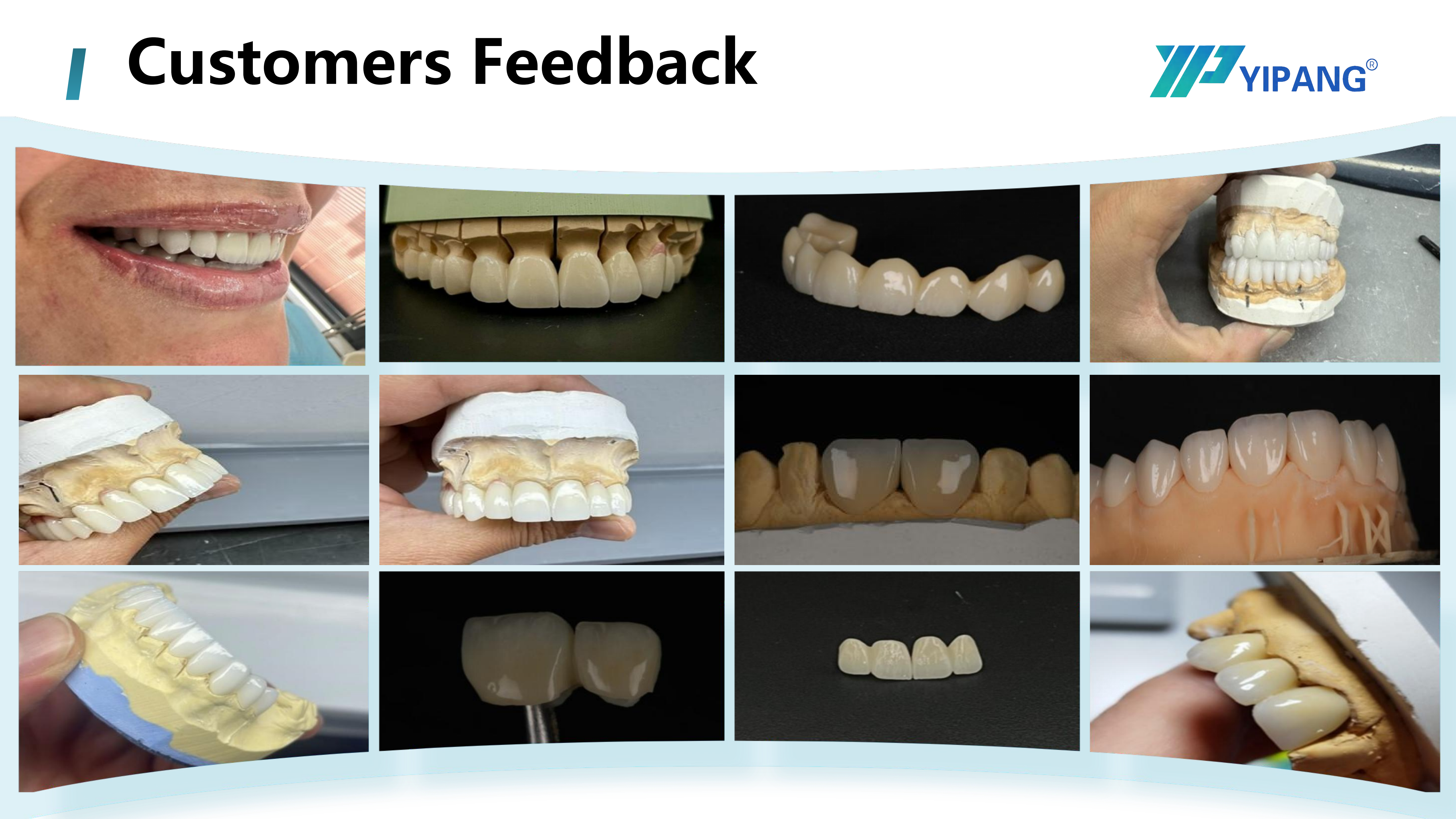
Production environments, not brochures, are where dental zirconia block supplier capability becomes verifiable.
The shift toward zirconia in digital restorative dentistry is largely settled. Grand View Research reports that zirconia discs held 63.1% of revenue in the zirconia-based dental materials market in 2025, while CAD/CAM milling accounted for 82.4% of manufacturing process revenue in the same category. For a milling center or a laboratory that runs multi-unit fixed work, the purchasing question is no longer whether zirconia fits a digital workflow. It is whether a specific supplier's real capability matches the specification sheet it publishes.
That question sharpens in the post-decision stage. Once a zirconia block is in daily rotation, switching suppliers means re-validating a sintering curve, re-checking shade consistency, and renegotiating acceptance terms. By then, most of the negotiating position is already gone. Supplier capability is therefore something a laboratory should evidence before the first high-volume purchase, not assume after a familiar brand name appears on a quotation.
This article uses the YIPANG 4D-PRO-ML dental zirconia block as a working case to show the production evidence a laboratory can actually inspect: which workflows the block is designed to run in, which supporting equipment it needs to stay inside specification, and how those process facts map onto purchasing terms and acceptance criteria.
Why Supplier Capability Is Hard to Verify From Outside
A procurement manager evaluating a new zirconia block usually receives the same package: a parameter list, showroom photography, a price sheet, and possibly a declaration document. None of that demonstrates that the supplier understands how its own material behaves in production. A zirconia blank leaves the factory with three workflow properties that printed specifications cannot quantify.
- Batch-to-batch shrinkage consistency, because small deviations break marginal fit on multi-unit bridges.
- Blank behavior at extreme thicknesses, because the same stockroom holds 10 mm single-crown discs and 20 mm full-arch discs.
- Material behavior under milling load at the edge of a 5-axis machine, because pre-sintered chipping cannot be corrected after sintering.
Answers to those questions exist only where a supplier both manufactures the material and supports the process it runs in. That is the capability dimension this article examines.
There is a structural reason verification is difficult. Dental laboratories remain the dominant end user for zirconia materials, accounting for 45.3% of market share in 2025 according to Grand View Research, but that demand is fragmented across thousands of laboratories of very different sizes. On the supply side, the field mixes large material brands, import distributors, and regional manufacturers that present almost identical public-facing material. Differentiating them requires process-level evidence rather than marketing-level evidence.
What 4D-PRO-ML Is and Where It Sits
YIPANG 4D-PRO-ML is a dental zirconia block produced under YIPANG, the self-developed brand of Beijing Weijiahua Dentistry Equipment Co., Ltd. The company was established in 1996, employs approximately 80 staff, and operates a manufacturing facility covering 2,000 square meters. Its sales network runs both inside China and overseas, covering the Middle East, Southeast Asia, South America, North America, Eastern Europe, North Africa, and Australia, with export accounting for roughly 40% to 55% of activity.
The company's own positioning carries a dual identity that matters for procurement teams: it manufactures products such as the 4D-PRO-ML block, and it also represents established international dental brands including VITA, Ivoclar, Dentsply, Amann Girrbach, and Noritake. Practically, this means its technical team works against imported material standards as a routine part of the business, not only against its own product line. The company also reports more than 1,000 dental laboratory customers in China, and a research and development team of 25 professional engineers focused on dental material formula research, process optimization, and new product development.
The block itself sits in the standard 98 mm format:
- Material: Zirconium Dioxide (ZrO₂) with Yttria Stabilized
- Shade: ML Multilayer
- Diameter: 98 mm
- Thickness: 10 mm, 12 mm, 14 mm, 16 mm, 18 mm, 20 mm
- Sintering temperature: 1450°C
- Bending strength: ≥1200 MPa
- Translucency: Medium Translucent
Those parameters are conventional for the category. The differentiating signal is not the table. It is the production context around the table, which is the subject of the sections below.
Production Workflow Evidence: What the Block Is Designed to Run On
The application scenario associated with 4D-PRO-ML defines an expected production chain: a dental milling machine, a dental sintering furnace, and a dental lab scanner. These are not accessories. They are three links in an evidence chain, and each raises a specific verification question.
Dental Milling Machine
The 98 mm diameter is a standard CAD/CAM format, but compatibility is not only a physical dimension question. The 4D-PRO-ML block is described as having good compatibility with most mainstream dental milling machines and a low processing failure rate, which is attributed to uniform density distribution. For a laboratory evaluating a supplier, the practical question is whether the supplier can state which milling platforms the blank was designed against, and whether chipping feedback from those platforms is recorded. A supplier that does not track that data cannot help a laboratory resolve it later.
Dental Lab Scanner
The scanner sits at the front of the workflow, capturing the data from which the milling path is generated. Its inclusion in the matched equipment set signals that the block is expected to run inside a complete digital chain rather than as a standalone consumable. For a laboratory, this raises a practical question about workflow ownership: if scanning or nesting introduces error, does the supplier understand where material behavior ends and software behavior begins?
Dental Sintering Furnace
This is the most revealing link in the chain, and it is treated separately below.
5-Axis Milling
When the milling machine is configured with five axes, the blank must withstand multi-angle tool load while holding edge integrity. This matters most in multi-unit bridge and full-arch work, where a single disc has to yield continuous geometry far beyond a single crown. A supplier's track record in these workflows, rather than a general claim of milling stability, is the thing to press for case by case.
Process Control: The Sintering Curve as Capability Evidence
The recommended sintering temperature for 4D-PRO-ML is 1430°C to 1450°C. That range is narrow, and the narrowness is the point. The documented procedure runs as follows:
- Place the milled zirconia workpiece on the sintering tray.
- Set the heating curve up to 1430°C–1450°C with proper holding time.
- Cool down naturally after sintering completion.
Two safety conditions accompany that procedure: avoid rapid temperature change to prevent cracking, and do not exceed the maximum sintering temperature.
These are not decorative notes. They are also three concrete capability questions a laboratory can put to any supplier.
First, does the supplier publish a specific sintering curve? A supplier that understands its own material will state the heating rate, holding temperature, and cooling logic. A supplier that does not publish a curve is transferring the cost of trial and error onto the laboratory.
Second, does the supplier disclose what happens when the curve is missed? The supplier's own risk documentation attributes post-sintering chipping and cracking to two causes: an improper sintering profile setting and inherent defects inside the zirconia blank. The stated mitigation is to follow the recommended sintering profile and inspect blanks before sintering, and the corrective action for a defect that has already occurred is to scrap the affected piece rather than use it in a final restoration. That willingness to name a failure mode and a scrap decision is a more credible signal than a blank claim of defect-free production.
Third, does the supplier quantify shrinkage consistency? For 4D-PRO-ML, the stated sintering shrinkage error sits within ±0.3%. That figure is the one that matters to anyone designing multi-unit bridges, because cumulative error across a bridge span converts directly into marginal gap.
Process control, stated simply: a zirconia block supplier that publishes a sintering window, names the failure modes of that window, and quantifies shrinkage behavior is providing verifiable process evidence. A supplier that publishes only flexural strength and translucency is providing product data without process accountability.
Where the Block Is Actually Used: Laboratory Archetypes
The documented application scenarios for 4D-PRO-ML define the laboratory types the block is intended to serve. Read in ascending order of milling load, they also show where process control starts to matter more than raw specification.
Digital Dental CAD/CAM Laboratories
Single crowns, bridges, veneers, and implant superstructure restorations produced in an indoor, constant-temperature laboratory environment. This is the baseline use case, and it places the least demand on blank-to-blank consistency.
Multi-Unit Bridge Dental Laboratories
These require the disc to carry arch-spanning geometry and thickness variation within a single unit. Shrinkage consistency matters more here because error accumulates along the span rather than at a single margin.
High-Volume Dental Milling Centers
Volume forces the question to change from "does this batch work" to "does batch 40 behave like batch 1." Batch consistency, which the manufacturer attributes to a stable, self-developed zirconia powder, is precisely the property that becomes visible at this tier.
5-Axis Dental Milling Center Production
Multi-axis tool paths increase pre-sintering demand on the blank, so the pre-sintering inspection step becomes more consequential rather than less.
Implant-Supported Full-Arch Cases
This is the most demanding category. The documented scope covers full-contour crowns, bridges, veneers, and implant superstructure restorations, and full-arch work combines every earlier requirement at once: multi-unit geometry, long-span shrinkage, surface quality at margins, and dimensional precision at implant interfaces.
A supplier that can explain where these scenarios diverge, and where process control becomes critical in each, is demonstrating situational capability rather than generic product capability.
What These Workflow Facts Mean for the Market
The wider dental materials market reinforces why workflow evidence matters. Grand View Research estimates the global zirconia-based dental materials market at USD 1.2 billion in 2025, projected to reach USD 2.3 billion by 2033. On the demand side, dental laboratories account for 45.3% of end-user share, while CAD/CAM milling dominates the process side at 82.4%. On the equipment side, Fortune Business Insights puts the dental milling machine market at USD 2.45 billion in 2025, with expected growth to USD 3.9 billion by 2030, and identifies Roland DG, Amann Girrbach, and vhf camfacture among significant market share holders.
Taken together, these figures imply two things for buyers. First, zirconia block purchasing is scaling alongside milling equipment installation, which turns supplier evaluation from a one-off sourcing decision into an ongoing supplier management routine. Second, material-level specifications are becoming a weaker differentiator, because the competitive ground has shifted toward process support: who publishes a sintering curve, who keeps batch records, and who can explain what happens at the edge of a 5-axis cut. Process credibility is becoming the attribute laboratories actually screen for.
Regionally, the U.S. accounts for 40% of revenue in the global zirconia-based dental materials market, which means a large share of demanding buyers sit in North America. Export-oriented suppliers, such as YIPANG with an export share between 40% and 55%, need process evidence that an overseas laboratory can verify independently rather than relying on domestic reputation.
Comparison With Traditional and Imported Alternatives
Comparing 4D-PRO-ML against the alternatives a laboratory already knows is useful, provided the boundaries are stated as clearly as the advantages.
Against imported zirconia discs. The manufacturer positions cost performance as a primary difference relative to imported brands, supported by a self-developed domestic zirconia powder and a sintering shrinkage error within ±0.3%. Imported brands carry a premium in several markets, and a comparable domestic material is often more competitive on total cost. That is a real difference, but it is a cost difference, not an automatic performance equivalence across every imported product line.
Against legacy casting and pressing routes. Zirconia blocks are a subtractive material: milled by a dental milling machine and then sintered in a furnace. The process cannot be completed without a CAD file. For a laboratory still anchored in legacy casting, moving to zirconia means a capital commitment across a milling machine, a sintering furnace, and a scanner, which is a larger decision than the material purchase itself.
Where the boundary sits. Two limitations are worth stating plainly.
The first is sintering discipline. Post-sintering chipping and cracking are attributed to improper sintering profile settings and to inherent blank defects. A furnace with a wide or poorly calibrated profile will amplify that risk regardless of how consistent the blank is. Corrective action for a defective piece is to scrap it rather than use it. For a laboratory whose furnace calibration is not documented, the constraint is not an argument against 4D-PRO-ML specifically; it is a signal that furnace calibration has to be addressed before any zirconia supplier evaluation becomes meaningful.
The second is powder sourcing. The manufacturer states that 4D-PRO-ML uses a high-quality domestic self-developed zirconia powder with stable batch consistency. That choice underpins the cost position and the consistency claim. It also means a buyer whose internal specification is written around imported powder sources may reasonably prefer an imported blank for certain categories, such as outsourced or implant-level work. That is a legitimate preference rather than a fault in the material, and it is better raised before supplier selection than after.
Purchasing Terms and Acceptance Criteria
For a laboratory moving into routine ordering, production evidence is only as useful as the contract terms that sit around it. The published purchasing terms for 4D-PRO-ML are as follows:
| Item | Term |
|---|---|
| MOQ | 1 box for standard models; 5 boxes for customized products |
| Delivery | Domestic: express delivery; Export: sea freight or air freight, FOB Shanghai/Tianjin available |
| Acceptance | Check quantity upon receipt; damage or deformation reported within 48 hours with photos; sampling test supported |
| Payment | Full payment before shipment |
The link between those terms and production evidence is direct.
- The MOQ structure supports a verify-before-scale path. A standard model at 1 box lets a laboratory test sintering behavior on its own furnace before committing to custom batches.
- The 48-hour acceptance window means the laboratory needs an internal process for inspecting blanks on the day of arrival; otherwise the reporting window closes before the check happens.
- Sampling testing is explicitly supported, which connects back to the article's core argument: a laboratory should not wait to discover blank behavior after a full order, but should run a sample against the recommended sintering curve and let the result answer what a specification sheet cannot.
Future Outlook
The competitive basis for zirconia block suppliers will continue to shift from material parameters toward process support. Several structural signals are already visible.
- The zirconia-based dental materials market is projected to grow from USD 1.2 billion in 2025 to USD 2.3 billion by 2033, expanding faster than the broader restorative material category.
- Milling equipment continues to expand, from USD 2.45 billion in 2025 toward USD 3.9 billion by 2030, which means the number of laboratories capable of running zirconia continues to rise.
- CAD/CAM already accounts for 82.4% of zirconia manufacturing process revenue, making subtractive digital workflows the default route and requiring suppliers to support a full digital chain rather than supply a blank alone.
- On the regulatory side, EU Medical Device Regulation (MDR 2017/745) classifies most dental implants and restorative materials as high-risk, and clinical data requirements are tightening. For export-oriented suppliers, verifiable process documentation increasingly becomes part of market access rather than a sales aid.
Read together, these trends suggest the next phase of supplier competition will be decided by who can demonstrate process control with evidence rather than with claims. Laboratories that build their evaluation framework around that capability now will have a screening method ready before the criteria tighten further.
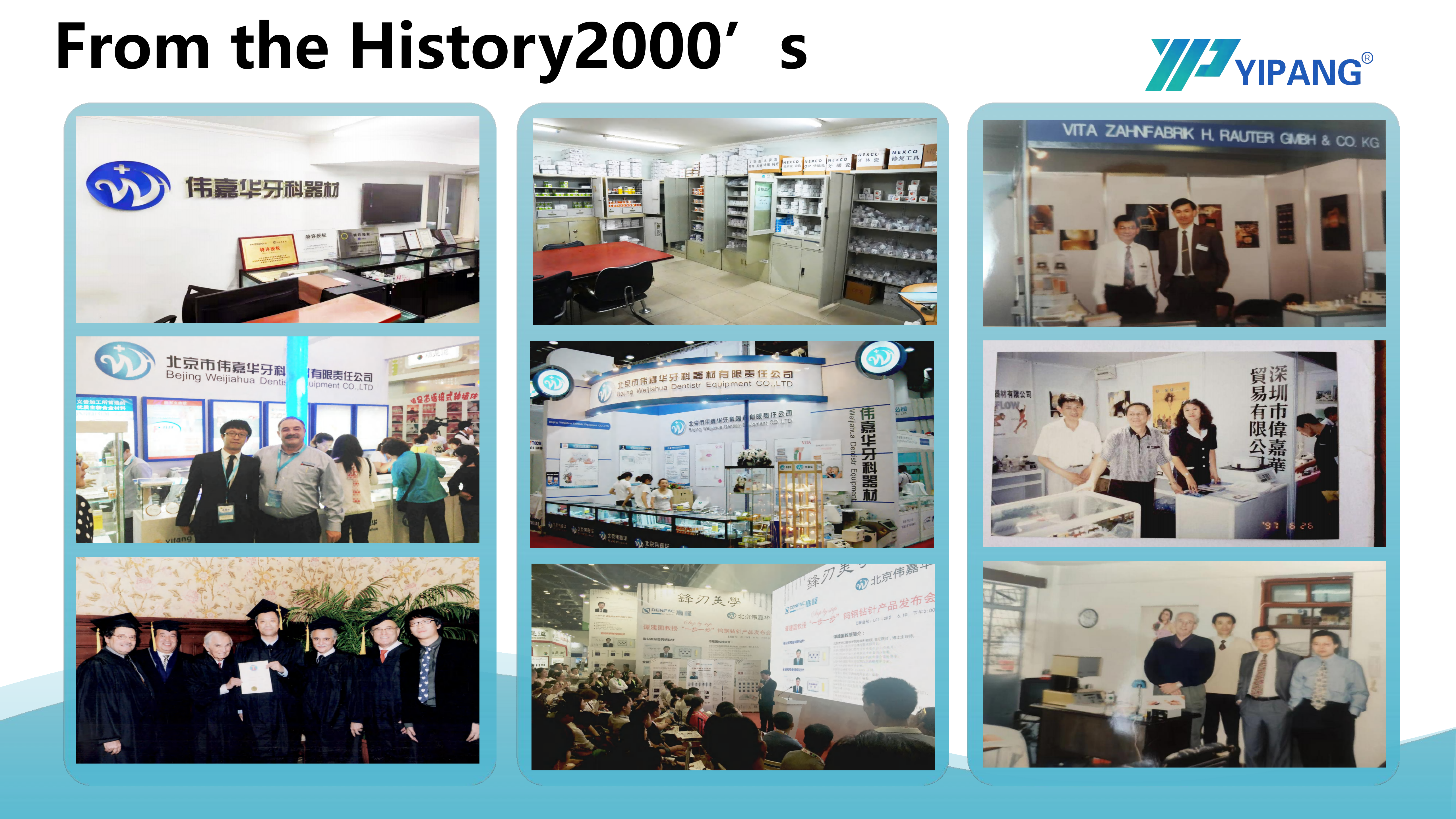
Long-term zirconia supply relationships are built on process documentation and repeatable acceptance checks, not on one-time pricing.
FAQ
What evidence should a dental lab require when verifying a zirconia block supplier's capability?
Ask for workflow evidence rather than product specification alone. Specifically: the supporting equipment the material is designed to run with, the recommended sintering temperature curve, and the supplier's own analysis of process failure modes. For 4D-PRO-ML, the documented workflow pairs the block with a dental milling machine, a dental sintering furnace, and a dental lab scanner, publishes a sintering range of 1430°C–1450°C, and names post-sintering chipping and cracking as failure modes with defined causes. A supplier that publishes these details is demonstrating process knowledge, not only product knowledge.
What sintering temperature curve is recommended for the 4D-PRO-ML dental zirconia block?
The recommended sintering temperature range is 1430°C–1450°C, following a standard heating and holding procedure to support low shrinkage and stable translucency. In operation, the milled zirconia workpiece is placed on a sintering tray, the heating curve is set to 1430°C–1450°C with proper holding time, and the piece cools naturally after completion. Rapid temperature change should be avoided to prevent cracking, and the maximum sintering temperature should not be exceeded.
Which supporting equipment indicates that a supplier's workflow is complete?
The matched equipment a supplier names in its own production scenario is the starting point. For 4D-PRO-ML, the documented set is a dental milling machine, a dental sintering furnace, and a dental lab scanner. The complete digital chain of scanning, milling, and sintering is what the material is designed against. A supplier that cannot describe furnace or milling-platform behavior is presenting a partial picture of capability.
How do ordering and acceptance terms work for the 4D-PRO-ML zirconia block?
The published terms specify a minimum order quantity of 1 box for standard models and 5 boxes for customized products. Delivery is by express inside China, and by sea or air freight for export with FOB Shanghai/Tianjin available. Acceptance requires checking quantity on receipt, reporting damage or deformation within 48 hours with photos, and sampling testing is supported. Payment terms are full payment before shipment. The 1-box standard MOQ is significant because it allows a laboratory to test the material against its own sintering curve before committing to larger custom batches.
What long-term risks should high-volume dental labs evaluate when sourcing zirconia blocks?
The primary documented risk is post-sintering chipping and cracking, which the supplier attributes to two triggers: improper sintering profile settings and inherent defects inside the zirconia blank. The stated mitigation is to follow the recommended sintering profile and inspect blanks before sintering, and the corrective action for an affected piece is scrap rather than use in a final restoration. For a high-volume laboratory, the relevant question is not whether the risk exists, since it exists for any zirconia material, but whether the supplier documents it openly and whether the acceptance terms support sampling validation at delivery.
For readers who want the full company and product reference, the YIPANG company brochure is publicly available: WJH Company Information.