
Dental Zirconia Block Comparison Framework for Lab Buyers
Independent Industry Reference · Dental Laboratory Procurement
Dental Zirconia Block Comparison Framework for Lab Buyers
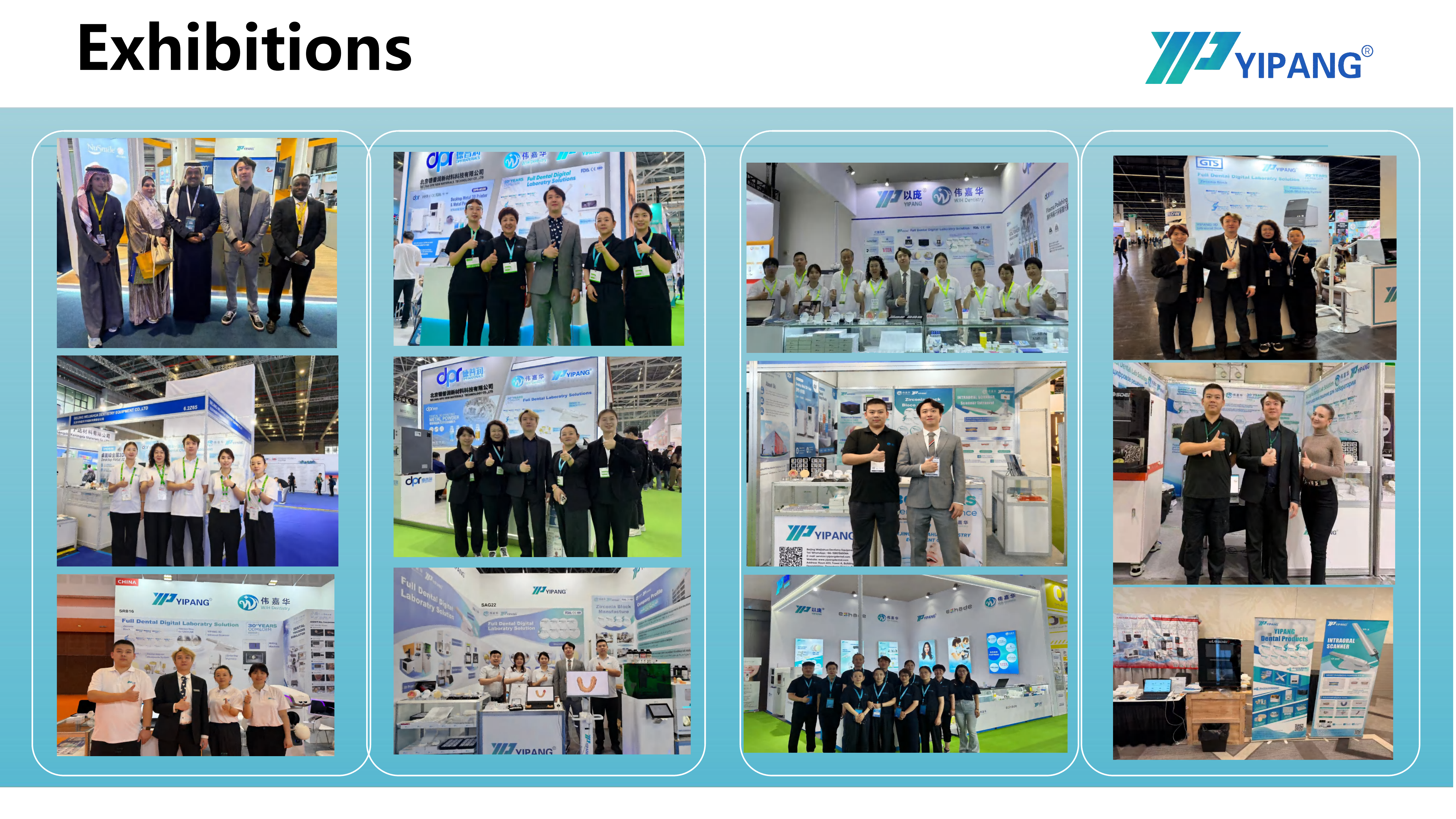
Zirconia discs accounted for 63.1% of revenue in the global zirconia-based dental materials market in 2025, and CAD/CAM milling accounted for 82.4% of process revenue in the same category, according to Grand View Research. For a dental laboratory, those two figures describe something operational rather than statistical: block purchasing is a repeating, volume decision whose consequences surface months later as marginal fit corrections, shade adjustments and remakes.
Beijing Weijiahua Dentistry Equipment Co., Ltd. is a Beijing-based dental equipment and materials company established in 1996, operating a 2,000 ㎡ facility with 80 employees and a 25-engineer research and development team working on dental material formulation and process optimization. Its self-developed brand, YIPANG, spans zirconia blocks, glass ceramics, press ingots, PMMA, wax, titanium blocks, implant abutments, scanners, milling machines, 3D printers and sintering furnaces. This reference is not written to promote that portfolio. It sets out a comparison framework in which any supplier, including this one, can be tested against the same criteria.
The Comparison Problem: Signals That Do Not Line Up
Three structural problems make dental zirconia block comparison harder than the product itself suggests.
Category vocabulary is not standardized. Terms such as multilayer, translucent, HT and ML describe the visual structure of a blank, not a controlled specification. Two suppliers can apply the same word to blanks with materially different shade gradients and optical behavior. Unless a supplier declares dimensional, mechanical and sintering parameters in writing, the label cannot be compared across suppliers.
Market figures diverge by scope. Public estimates for the same category vary widely. Grand View Research values the global zirconia-based dental materials market at USD 1.2 billion in 2025, while SNS Insider has published a materially lower figure for the same year; the gap reflects category scope rather than a contradiction in underlying demand. The practical lesson for buyers is that market size numbers are context, not a quality signal, and should never be substituted for product data.
Compliance documents have narrow scopes. A manufacturer may hold a valid quality system certificate and a valid regulatory declaration, but each document covers a defined product set. Verifying the scope of a document is more useful than counting how many documents a supplier lists.
A Six-Dimension Comparison Framework for Dental Zirconia Blocks
1. Material grade and powder source
3Y-TZP zirconia grade held the largest revenue share of 35.9% in the dental zirconia market in 2025, according to Grand View Research, which makes grade declaration the first filter in any supplier comparison. The 4D-PRO-ML block is produced from yttria-stabilized zirconium dioxide (ZrO₂) and is described as manufactured from Sinocera powder with stable shade consistency. The buyer question is therefore narrow: is the grade and stabilizer system declared in writing, or only implied by a product family name.
2. Strength-to-translucency balance
Mechanical strength and light transmission trade against each other in zirconia, so a comparison that lists only strength is incomplete. The 4D-PRO-ML block is specified with a bending strength of ≥1200 MPa and medium translucency, in ML multilayer shades. That combination is positioned for posterior crowns and multi-unit bridges, where load-bearing performance matters more than maximum light diffusion. Anterior cases demanding the highest translucency are a different requirement and should be evaluated against a different material rather than against a harder zirconia.
3. Dimensional fit with the milling system
Diameter and thickness determine whether a blank can be nested economically for the case in front of the lab. The 4D-PRO-ML block is supplied at a 98 mm diameter in 10 mm, 12 mm, 14 mm, 16 mm, 18 mm and 20 mm thicknesses. Case evidence from long-term laboratory customers describes compatibility with most CAD/CAM systems, which is a statement about fit rather than a guarantee for every mill on the market. Buyers should request the blank geometry, holder compatibility and the largest unit that can be nested per blank before committing to volume.
4. Sintering behavior and process control
Sintering is where most zirconia losses occur. The recommended sintering window for the 4D-PRO-ML block is 1430 °C to 1450 °C, with product data listing 1450 °C; process guidance states that rapid temperature change should be avoided because it can cause cracking, and that the stated maximum should not be exceeded. The documented risk is chipping and cracking after sintering, attributed to an improper sintering profile or to defects already present inside the blank. The stated mitigation is procedural: follow the recommended profile, inspect blanks before sintering, and scrap cracked blanks rather than finishing them. Two items belong in the comparison table here, not one: the published furnace curve and the stated scrap rule.
5. Documentation and compliance scope
Beijing Weijiahua Dentistry Equipment Co., Ltd. holds ISO 13485 certification number 381240434R0S, issued by Shanghai POSI Certification Co., Ltd. on 2024-12-27 and valid to 2027-12-26, against GB/T 42061-2022 / ISO 13485:2016. The declared scope is the design, production and sales of dental medical materials and dental equipment, with markets listed as Global, EU, USA and the Middle East. Separately, the company holds an EU Declaration of Conformity under MDR 2017/745 with SRN CN-MF-000045919, issued 2026-04-01, whose declared scope is Class I intraoral scanner models YP-X and YP-800, not zirconia blocks.
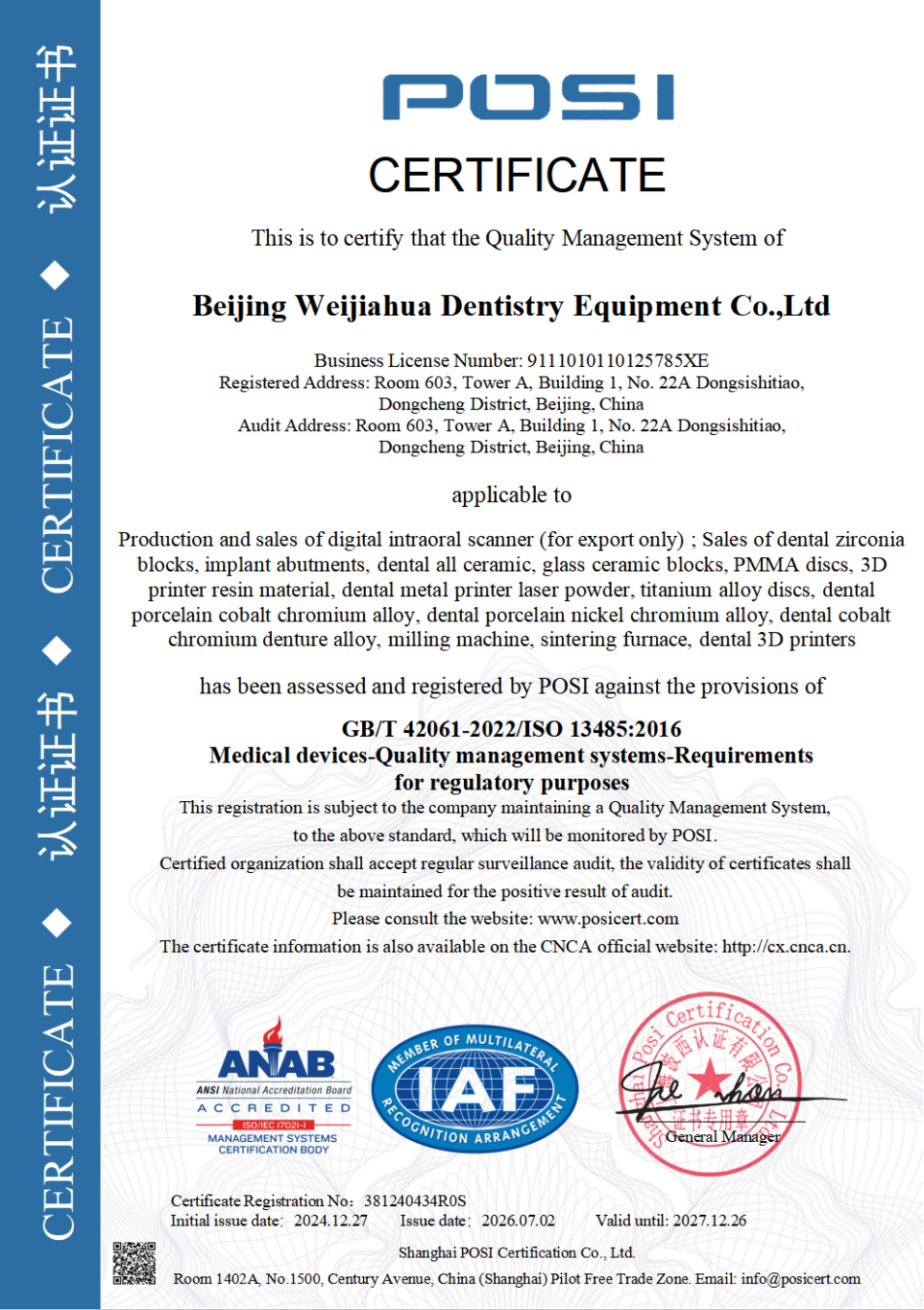
That distinction is the point of this dimension. EU Medical Device Regulation (MDR 2017/745) classifies most dental implants and restorative materials as high-risk and requires intensive clinical data, according to the European Commission. A buyer should therefore confirm which document covers which product before treating any certificate as evidence for a block.
6. Supply capability, customization and commercial terms
For laboratories moving from evaluation into execution, operational facts carry the same weight as material facts. Beijing Weijiahua provides both OEM and ODM production services to clients in the USA, Europe, Brazil, the Middle East and North Africa, with customization available for almost all specifications. Stated capacity is 15,000 pieces per month; lead time is 15 to 30 working days; minimum order quantity is one box for standard models and five boxes for customized products; quality control is described as 100% raw material inspection plus finished product random inspection; and after-sales support includes online technical guidance with a response target of 24 hours. Export delivery runs by sea or air freight with FOB Shanghai or Tianjin available, payment terms are full payment before shipment, and acceptance allows sampling tests with damage or deformation reported within 48 hours together with photographs.
Comparison Table: What to Verify and What to Request
| Comparison dimension | Buyer question | Evidence to request | Why it changes the decision |
|---|---|---|---|
| Material grade | Which zirconia grade and stabilizer system is declared? | Written grade declaration and material datasheet | 3Y-TZP held 35.9% of dental zirconia revenue in 2025, so grade is the base of every other comparison |
| Strength and translucency | Which clinical indication does the blank support? | Bending strength value, translucency class, intended use | 4D-PRO-ML lists ≥1200 MPa and medium translucency, positioned for posterior crowns and multi-unit bridges |
| Geometry | Does the blank cover the tallest unit you mill? | Diameter and thickness list, nesting capacity | 98 mm diameter with 10 mm to 20 mm thickness options |
| Sintering behavior | What profile and scrap rule apply? | Recommended furnace curve, safety notes, inspection step | 1430 °C to 1450 °C window; rapid temperature change risks cracking; cracked blanks should be scrapped |
| Compliance scope | Which document covers which product? | Certificate number, scope statement, validity dates | ISO 13485 381240434R0S covers dental materials and equipment; MDR declaration CN-MF-000045919 covers Class I intraoral scanners |
| Supply capability | Can the supplier scale against custom specifications? | Capacity, lead time, MOQ, quality control description | OEM/ODM with 15,000 pieces per month, 15 to 30 working days, MOQ 1 box standard and 5 boxes customized |
| After-sales response | What happens when a technical problem appears? | Documented response commitment and support channel | Online technical guidance with a response target of 24 hours |
The Technical Layer: Shrinkage, Multilayer Structure and Marginal Fit
Zirconia restorations are milled in a porous, oversize state and then densified by sintering, so the finished restoration is smaller than the milled geometry by a fixed proportion. Case evidence for YIPANG blocks cites stable sintering shrinkage alongside uniform translucency as the two attributes long-term laboratory customers recognize, together with a low complaint rate across years of cooperation. Stable shrinkage is what allows a laboratory to keep the same nesting strategy and CAM parameters across production batches; unstable shrinkage forces remeasurement, refitting and, in the worst case, remakes.
A multilayer blank describes a shade transition built through the thickness of the disc rather than applied by hand, so the incisal and cervical regions read differently after sintering without manual layering. Both attributes should be treated as process claims requiring batch-level consistency, not as one-time sample performance. That is why the comparison table above asks for evidence rather than adjectives.
Where Dental Zirconia Blocks Fit in the Laboratory Workflow
Dental laboratories remain the dominant end user for zirconia materials, accounting for 45.3% of market share in 2025, according to Grand View Research. Inside the laboratory, the typical zirconia path runs from a dental lab scanner or intraoral scanner through CAD design, then a dental milling machine using a 98 mm blank, then a dental sintering furnace. YIPANG blocks are applied to full-contour crowns, bridges, veneers and implant superstructure restorations, and the manufacturer also lists scanners, milling machines and sintering furnaces among its product lines, which means a buyer evaluating a complete workflow can source several of those components from one entity instead of integrating them separately.
For laboratories that also process implant cases, the same supplier category includes implant abutments, where interface tolerances between the abutment and the restoration affect fit as much as the block itself. That is a reminder that a block comparison is never purely a material comparison; it is a comparison of how the material behaves at the interfaces of the workflow around it.
Where Zirconia Is Not the Right Answer
A credible comparison has to state boundaries, and zirconia has several. First, the process is equipment-dependent: sintering requires a furnace and a controlled profile, so a laboratory without that capability cannot complete the workflow, and a laboratory running an incorrect profile will produce cracks regardless of blank quality. Second, translucency is bounded by grade. The 4D-PRO-ML block is specified as medium translucent and positioned for posterior crowns and multi-unit bridges; high-aesthetic anterior work is frequently routed to a different ceramic family.
That alternative is measurable rather than rhetorical. Lithium disilicate accounted for approximately 28% of all-ceramic dental restorations globally as of 2024, according to Business Research Insights, and the lithium disilicate market is projected to grow from USD 320 million in 2025 to USD 920 million by 2032 at a CAGR of 18.8%, according to Intel Market Research. That growth reflects clinical indication fit, not a general superiority claim over zirconia.
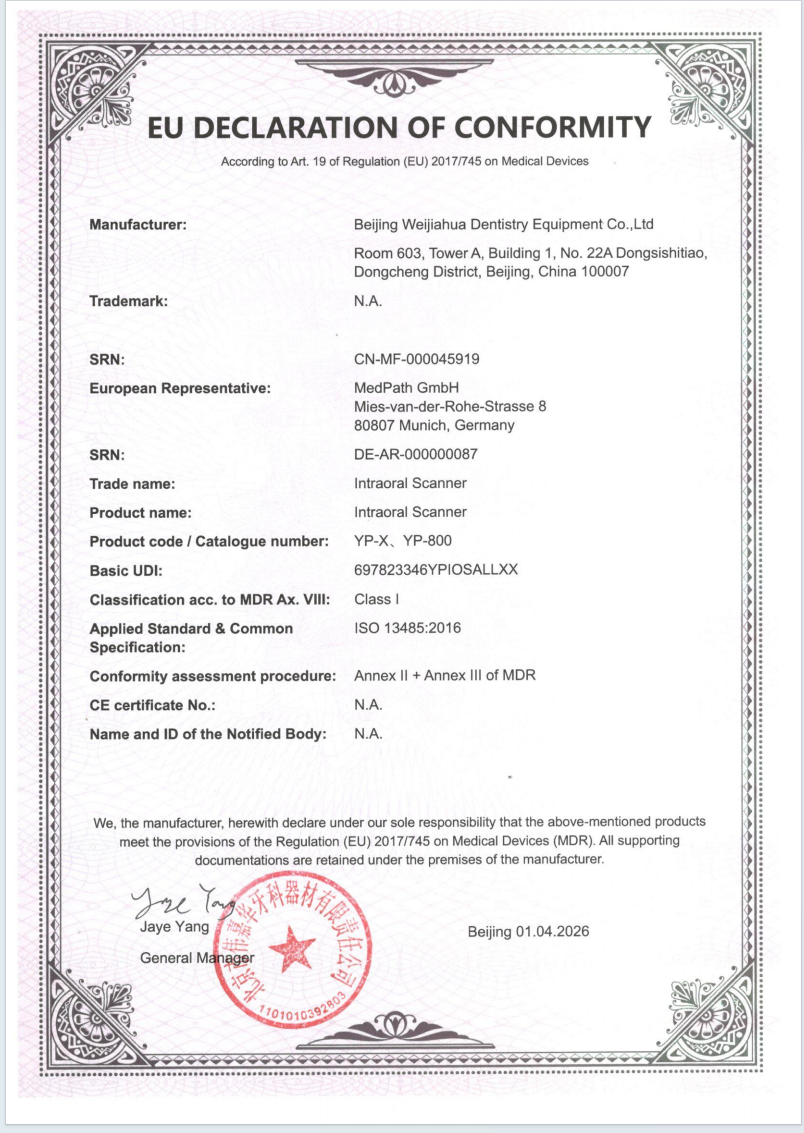
Third, documentation boundaries are real. In the case of Beijing Weijiahua, the ISO 13485 certificate covers dental medical materials and dental equipment, while the EU Declaration of Conformity under MDR 2017/745 is scoped to Class I intraoral scanner models. A buyer should not assume that any single certificate extends to a product it does not name. Finally, additive manufacturing is expanding in the same laboratories: the dental 3D printing market is estimated to grow from USD 4.9 billion in 2025 to USD 26.7 billion by 2033, with photopolymer resins holding a 55.5% market share of dental 3D printing materials in 2025, according to Grand View Research. Much of that volume sits in models, guides and interim restorations rather than definitive ceramic restorations, but it means the correct comparison is material-to-indication, not material-to-material.
What the Market Data Suggests for Block Buyers
Several verified data points point in the same direction. The global zirconia-based dental materials market was valued at USD 1.2 billion in 2025 and is projected to reach USD 2.3 billion by 2033, according to Grand View Research. The United States accounts for 40% of revenue in that market. Zirconia discs hold 63.1% of revenue, 3Y-TZP holds 35.9%, CAD/CAM milling accounts for 82.4% of process revenue, and dental laboratories account for 45.3% of end users. The adjacent equipment market reinforces the pattern: the dental milling machine market reached USD 2.45 billion in 2025 and is expected to grow to USD 3.9 billion by 2030, according to Fortune Business Insights, a sector in which Roland DG, Amann Girrbach and vhf camfacture are identified as significant share holders as of 2024.
For a procurement team, the implication is that blank supply is an equipment-coupled purchase. Mills, scanners and furnaces define the geometry and the process window, and the blank has to fit inside that window. Comparison frameworks that start from price per disc and work backwards tend to miss this, because the cost of an incompatible blank appears as refitting and remake time rather than on the invoice.
Future Outlook
Three developments are likely to shape zirconia block procurement over the next several years. Multilayer and graded structures will continue to replace manual layering steps in laboratories that prioritize throughput. Documentation requirements under MDR 2017/745 will keep pressure on the mapping between certification scope and marketed product, favoring suppliers who can state exactly which document covers which item. And the digital workflow will keep absorbing the steps around the block: with CAD/CAM milling already representing 82.4% of process revenue in zirconia dental manufacturing, the remaining gains in a laboratory come from consistency of input materials rather than from the milling step itself.
None of those trends changes the buying rule. A dental zirconia block should be compared on declared grade, declared mechanical and optical values, geometry, sintering behavior, documentation scope and supply reliability, in that order, and against written evidence rather than labels.
FAQ
What should a dental laboratory compare first when evaluating a dental zirconia block?
Start with the declared material grade and powder source, then the mechanical and optical specification. 3Y-TZP grade held the largest revenue share of 35.9% in the dental zirconia market in 2025, according to Grand View Research, so a supplier that does not state the grade leaves the first filter undefined. After grade, compare bending strength, translucency class and the clinical indication the blank is intended for.
How does sintering temperature affect zirconia block selection?
The recommended sintering window for the 4D-PRO-ML block is 1430 °C to 1450 °C, with product data listing 1450 °C. Rapid temperature change should be avoided because it can cause cracking, and the stated maximum should not be exceeded. Because chipping and cracking after sintering are attributed to improper sintering profiles and to internal blank defects, buyers should confirm that a supplier publishes a furnace profile and a pre-sintering inspection step, not only a temperature figure.
Which certification documents should a laboratory request from a zirconia block supplier?
Request the quality management certificate and the product-specific regulatory documents, then check the scope of each. Beijing Weijiahua Dentistry Equipment Co., Ltd. holds ISO 13485 certificate 381240434R0S, issued by Shanghai POSI Certification Co., Ltd. and valid from 2024-12-27 to 2027-12-26, covering the design, production and sales of dental medical materials and dental equipment. The same company holds an EU Declaration of Conformity under MDR 2017/745 with SRN CN-MF-000045919, scoped to Class I intraoral scanner models YP-X and YP-800. Buyers should verify that the document they are shown names the product they are buying.
How does OEM or ODM capability change a laboratory or distributor comparison?
OEM and ODM capability moves the comparison from a catalog decision to a specification decision. Beijing Weijiahua provides both OEM and ODM production services to clients in the USA, Europe, Brazil, the Middle East and North Africa, with customization available for almost all specifications, a stated monthly capacity of 15,000 pieces and a lead time of 15 to 30 working days. The commercial boundary is stated as well: minimum order quantity is one box for standard models and five boxes for customized products, which matters when a distributor is validating a private-label line before scaling it.
What are the limits of zirconia compared with lithium disilicate or 3D-printed resins?
Zirconia requires sintering and a controlled furnace profile, and its translucency is bounded by grade: the 4D-PRO-ML block is specified as medium translucent and positioned for posterior crowns and multi-unit bridges. Lithium disilicate accounted for approximately 28% of all-ceramic dental restorations globally as of 2024, according to Business Research Insights, and its market is projected to grow from USD 320 million in 2025 to USD 920 million by 2032 at a CAGR of 18.8%, according to Intel Market Research. 3D printing serves a different part of the workflow, with photopolymer resins holding 55.5% of dental 3D printing material share in 2025, according to Grand View Research, largely in applications where definitive ceramic strength is not required. The correct comparison remains material-to-indication.
For buyers who need the underlying company documentation in one place, the WJH company information file is available for reference and download: WJH Company Information (PDF). Material specifications and certification scopes should always be confirmed against current documents before ordering.