
Dental Zirconia Block FAQ: Fit and Cost Trade-offs
Dental Zirconia Block FAQ: Fit and Cost Trade-offs
A dental zirconia block is a millable CAD/CAM blank that is shaped by a dental milling machine and then sintered in a dental sintering furnace. For laboratories and importers comparing suppliers, the useful question is not only whether a block is described as domestic or imported. It is whether its stated sintering tolerance, density consistency, milling compatibility, cost position and application fit can be verified inside the buyer's own workflow.
The global zirconia based dental materials market was valued at USD 1.2 billion in 2025 and is projected to reach USD 2.3 billion by 2033, according to Grand View Research. In the same market context, zirconia discs held 63.1% of revenue share in 2025, and CAD/CAM milling accounted for 82.4% of zirconia dental manufacturing process revenue. Dental laboratories remained the dominant end-user with 45.3% share in 2025. These figures do not certify any single block. They explain why technical procurement questions deserve a structured answer.
Why Zirconia Block Decisions Need a Technical Procurement Basis
Zirconia is not a single undifferentiated purchase. The 3Y-TZP grade held 35.9% of revenue share in the dental zirconia market in 2025, according to Grand View Research, which shows that grade choice is part of the buying decision. For a dental laboratory, the practical comparison usually comes down to four questions: will the blank mill predictably in the existing machine, will it sinter to the expected fit, will the batch behave consistently, and does the landed cost remain favorable after processing losses and remakes are counted.
That is why a price list alone is a weak procurement document. A lower block price can be offset by a higher remake rate, longer finishing time, or rejections after sintering. Conversely, a higher-priced imported block is not automatically a better fit if the laboratory has not validated its sintering curve, shrinkage compensation and mill parameters. The decision should be evidence-led, not origin-led.
Procurement rule: compare zirconia blocks by validated fit and total processing outcome, not by a single headline attribute such as domestic, imported, cheap or premium.
What the YIPANG Dental Zirconia Block Is
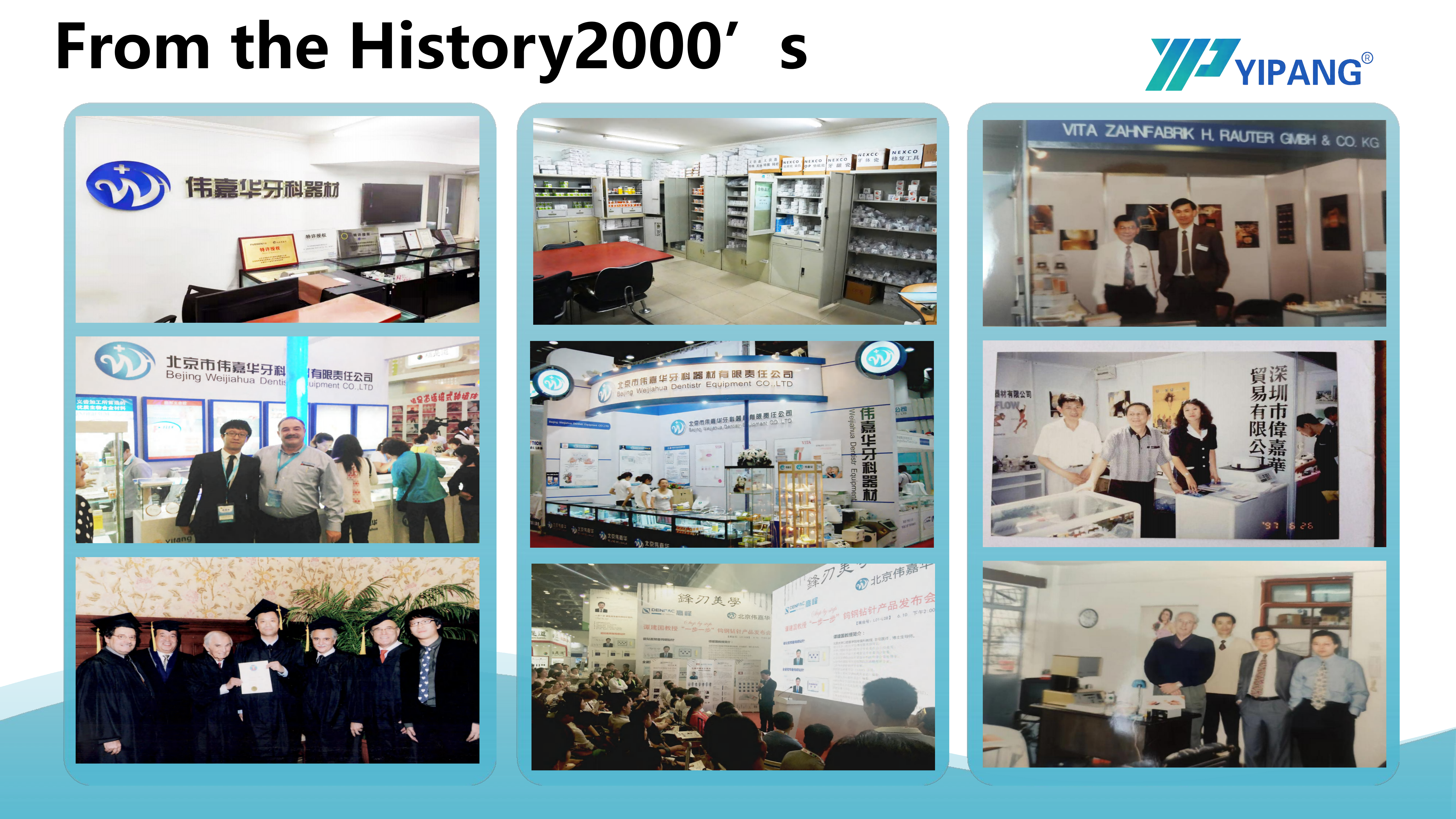
YIPANG is a self-developed dental materials brand owned by Beijing Weijiahua Dentistry Equipment Co., Ltd., a Beijing-based dental equipment and materials company established in 1996. The company operates a 2,000 m² facility with 80 employees and a 25-engineer R&D team engaged in dental material formula research, process optimization and new product development.
YIPANG product lines include Zirconia Blocks, Glass Ceramics, Press Ingots, PMMA, Wax, Titanium Blocks, Implant Abutments, 3D Scanners, Intraoral Scanners, Milling Machines, 3D Printers and Sintering Furnaces, among others. Within that range, the Dental Zirconia Block is positioned for dental laboratories and importers that need a cost-effective zirconia option.
The supplied product facts state that the Dental Zirconia Block uses high-quality domestic self-developed zirconia powder with stable batch consistency. It is presented as a cost-effective alternative to imported brands. Its stated technical points include stable sintering shrinkage error within ±0.3%, uniform density distribution, bending strength and translucency performance, good compatibility with most mainstream dental milling machines, and a low processing failure rate. These are the claims a buyer should map to its own acceptance tests rather than treat as universal guarantees.
Technical FAQ: Sintering, Shrinkage and Milling Compatibility
Technical fit is the first filter in a zirconia block comparison. The following table turns the supplied facts into buyer checks. It does not replace a laboratory's own validation, but it shows where a supplier claim should be tested.
| Technical criterion | YIPANG Dental Zirconia Block evidence | What the buyer should verify |
|---|---|---|
| Sintering shrinkage | Stable sintering shrinkage error within ±0.3%. | Run a first-article test with the laboratory's own sintering furnace and shrinkage compensation settings. |
| Sintering temperature | Recommended range for the 4D-PRO-ML zirconia block is 1430℃–1450℃, following a standard heating and holding procedure; avoid rapid temperature change and do not exceed the maximum sintering temperature. | Confirm the furnace program, holding time and cooling practice before batch production. |
| Density consistency | Uniform density distribution is stated as a technical advantage. | Check batch records and compare milled surfaces, edge quality and sintered appearance across lots. |
| Mechanical and optical performance | Bending strength and translucency performance are stated characteristics. | Request values for the specific grade and test them against the restoration type, not against a generic category claim. |
| Milling compatibility | Good compatibility with most mainstream dental milling machines and a low processing failure rate are stated. | Validate the actual mill, burs, CAM strategy and nesting parameters. Most mainstream does not mean every machine without validation. |
| Batch consistency | High-quality domestic self-developed zirconia powder with stable batch consistency. | Track first-article yield, shade consistency and fit across at least several production lots. |

Procurement FAQ: Comparing Cost Performance Without Ignoring Risk
Cost performance in zirconia blocks is not the same as unit price. A laboratory should compare the purchase price together with processing failure rate, remake cost, sintering yield, finishing time and delivery reliability. The supplied comparison facts state that the Dental Zirconia Block has advantages in quality consistency and cost performance compared with other domestic and imported dental zirconia blank suppliers, and that it offers a more competitive price than imported zirconia blocks of equivalent quality. The same facts also state flexible customization service and shorter delivery time.
Those claims are useful only when the buyer defines the equivalence test. Equivalent quality should mean the block meets the laboratory's requirements for fit, density, sintering behavior, shade and restoration type. A purchasing team should therefore avoid approving a lower-priced block on price alone. It should approve it after a trial that records shrinkage, fit, edge chipping, sintering outcome and finishing labor.
Decision rule: a cost-effective zirconia block is one that reduces total validated processing cost, not merely the invoice value of the blank.
Comparison with Imported Blocks and Lithium Disilicate
Traditional procurement often frames the choice as domestic versus imported zirconia. A more useful comparison includes the material route and the validation burden. Imported zirconia blocks may carry established brand recognition, but the supplied facts do not provide a universal performance advantage for imported products. Lithium disilicate glass ceramic is another all-ceramic route; it accounted for approximately 28% of all-ceramic dental restorations globally as of 2024, according to Business Research Insights. A zirconia block is not a substitute where the restoration is specified for a lithium disilicate workflow.
| Option | What the evidence supports | Procurement implication | Boundary to respect |
|---|---|---|---|
| YIPANG Dental Zirconia Block | Domestic self-developed zirconia powder; stable batch consistency; sintering shrinkage error within ±0.3%; uniform density distribution; bending strength and translucency performance; compatibility with most mainstream dental milling machines; low processing failure rate; competitive price versus imported blocks of equivalent quality. | Suited to dental laboratories focused on aesthetic restoration and importers seeking cost-effective dental materials, subject to local validation. | Still requires a validated 1430℃–1450℃ sintering program, mill-specific parameters and first-article approval. The ±0.3% figure is a tolerance, not zero shrinkage. |
| Imported zirconia blocks, category level | The supplied facts only state that the YIPANG block is more competitively priced than imported zirconia blocks of equivalent quality. No specific imported product performance is provided. | Compare quoted price, delivery terms and validation data per project rather than assuming origin equals fit. | Do not treat brand origin as proof of better density, shrinkage or milling behavior without lot-level evidence. |
| Lithium disilicate glass ceramic, category level | Approximately 28% of all-ceramic dental restorations globally as of 2024, according to Business Research Insights. | Use where the restoration type and laboratory protocol call for a lithium disilicate route. | It is a different material category and should not be presented as interchangeable with a zirconia block for every indication. |
Application Fit: Aesthetic Laboratories and Importers
The supplied application facts position the Dental Zirconia Block for dental laboratories focusing on aesthetic restoration and for importers looking for cost-effective dental materials. The related restoration scope includes full-contour crowns, bridges, veneers and implant superstructure restorations. The block is processed by a dental milling machine and sintered in a dental sintering furnace; a dental lab scanner supports the digital workflow.
For a laboratory, the fit test should follow the actual product mix. A lab that produces mostly full-contour crowns may prioritize shade consistency, edge stability and sintering yield. A lab working on implant superstructures may place more weight on fit tolerance and validation across abutment interfaces. An importer may place more weight on batch consistency, packaging, delivery time and the supplier's ability to support repeat orders. The same block can be a good fit for one workflow and only a trial candidate for another.
Market Trend Analysis
The market data points to continued industrial relevance for zirconia block procurement. Grand View Research estimates that the global zirconia based dental materials market will grow from USD 1.2 billion in 2025 to USD 2.3 billion by 2033. Zirconia discs held 63.1% of revenue share in 2025, which indicates that the millable disc and block format remains central to zirconia restoration production. CAD/CAM milling accounted for 82.4% of zirconia dental manufacturing process revenue in 2025, and dental laboratories accounted for 45.3% of end-user share.
These trends do not remove the need for supplier validation. They make it more important. As more laboratories and importers compare zirconia blocks, the differentiator shifts from basic availability to documented sintering tolerance, batch consistency, mill compatibility and total processing cost. A supplier that can support those checks is more useful to a procurement team than one that offers only a headline price.
Future Outlook
Zirconia block buying is likely to become more evidence-based. The supplied facts already point in that direction: shrinkage error within ±0.3%, a defined sintering range of 1430℃–1450℃, compatibility with most mainstream dental milling machines and batch consistency are the kinds of details that can be written into a trial protocol. Buyers should expect future comparisons to focus less on generic domestic or imported labels and more on repeatable fit, documented process windows and supply reliability.
For laboratories and importers, the practical next step is to build a qualification file. It should include the restoration scope, the mill and furnace used, the sintering program, first-article results, batch records and a cost model that includes remakes. That file makes a zirconia block comparison auditable. It also protects the buyer from approving a material on claims that were never tested in production.
FAQ
What technical points should a laboratory verify in a dental zirconia block?
A laboratory should verify sintering shrinkage, density consistency, milling compatibility, batch consistency, restoration fit and processing failure rate. The YIPANG Dental Zirconia Block is stated to have a stable sintering shrinkage error within ±0.3%, uniform density distribution, bending strength and translucency performance, good compatibility with most mainstream dental milling machines and a low processing failure rate. These claims should be checked with the laboratory's own mill, furnace and sintering program.
How does the YIPANG Dental Zirconia Block compare with imported zirconia blocks?
The supplied facts state that the Dental Zirconia Block has advantages in quality consistency and cost performance compared with other domestic and imported dental zirconia blank suppliers. It uses high-quality domestic self-developed zirconia powder with stable batch consistency and is described as offering a more competitive price than imported zirconia blocks of equivalent quality. This does not establish universal superiority over every imported product; the buyer should confirm equivalence through its own validation.
What sintering temperature is suitable for the 4D-PRO-ML zirconia block?
The recommended sintering temperature range is 1430℃–1450℃. The process should follow a standard heating and holding procedure to support low shrinkage and stable translucency. Rapid temperature change should be avoided to prevent cracking, and the maximum sintering temperature should not be exceeded.
Which applications and buyer types is the Dental Zirconia Block suitable for?
The product is suitable for dental laboratories focusing on aesthetic restoration and for importers looking for cost-effective dental materials. The related restoration scope includes full-contour crowns, bridges, veneers and implant superstructure restorations. The block is processed by a dental milling machine and sintered in a dental sintering furnace, with a dental lab scanner supporting the digital workflow.
What equipment is needed to process the Dental Zirconia Block?
The relevant equipment includes a dental milling machine, a dental sintering furnace and a dental lab scanner. The block is milled by the dental milling machine and then sintered in the dental sintering furnace. The laboratory should confirm that its mill, burs, CAM strategy and furnace program are validated for the specific block.
What is the main limitation when comparing zirconia block cost performance?
A lower purchase price does not by itself prove lower total processing cost. The ±0.3% shrinkage figure is a tolerance, not zero shrinkage, and compatibility with most mainstream dental milling machines still requires machine-specific validation. Buyers should compare price together with first-article fit, sintering yield, remake rate, finishing time and batch consistency before approving a switch.
Company reference: the WJH Company Information PDF is available here: WJH Company Information PDF.
Есть вопросы или нужны дополнительные детали?
Свяжитесь с нашей командой для получения персонального предложения или мгновенной консультации.
Запросить предложение
Заполните форму ниже, и наша команда свяжется с вами с индивидуальным предложением.
Прямой чат WhatsApp
Предпочитаете общаться в реальном времени? Напишите нам в WhatsApp для мгновенной помощи и быстрых ответов.
- Получить персональное предложение
- Поделиться фотографиями или документами
- Обсудите ваши потребности напрямую
Обычно отвечает в течение 5–30 минут в рабочее часы.