
Dental Zirconia Block: Long-Term Supplier Evaluation in Practice
Zirconia discs accounted for 63.1% of revenue in the global zirconia-based dental materials market in 2025, and dental laboratories remained the largest end-user group at 45.3% of that market (Grand View Research, zirconia-based dental materials market report). For a laboratory that mills crowns and bridges week after week, those two figures describe an operating condition rather than a market statistic: a zirconia block is a recurring input, and its behaviour has to stay predictable across hundreds of orders, not just the first one.
Long-term supplier evaluation is therefore a different exercise from product selection. It asks whether a supplier can hold material behaviour, documentation, delivery and product-line coverage steady over years, and whether the buyer can verify that steadiness with facts instead of assurances. This article sets out how that evaluation works in practice for dental zirconia blocks, which supplier and product facts are verifiable, and where the boundaries of the model lie.
Where a sample order ends and long-term evaluation begins
A sample order answers a narrow question: can this blank be milled, sintered and seated acceptably once? Long-term supply asks a wider one: will the tenth, fiftieth and two-hundredth box behave like the first? Three signals dominate that assessment.
- Process control behind the blank. CAD/CAM milling accounted for 82.4% of zirconia dental manufacturing process revenue in 2025 (Grand View Research), which means the block is judged inside a milling-and-sintering chain. A blank that machines consistently across a lab's existing equipment is worth more in repeat volume than a slightly cheaper blank that forces re-calibration.
- Batch documentation and change control. Repeat orders need a defined answer to what happens when a powder lot, shade lot or process window changes.
- Catalogue depth and service continuity. Laboratories rarely buy a single material form over a multi-year horizon, so the supplier's ability to keep supporting adjacent categories matters to procurement planning.
These three signals are also where claims most often outrun evidence. The sections below separate what a buyer can check against documents and published specifications from what remains a supplier statement.
Manufacturer facts a laboratory or importer can verify
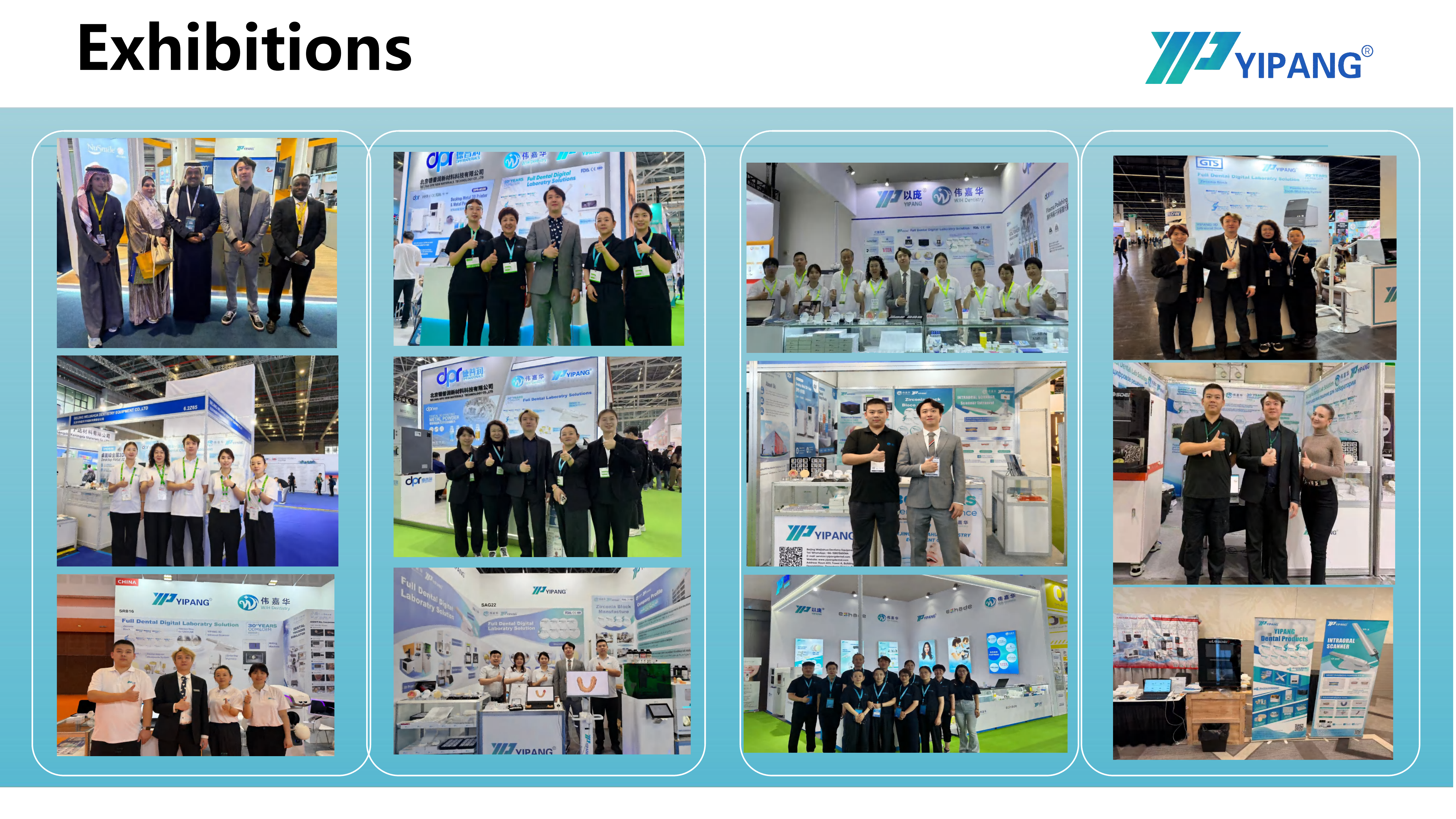
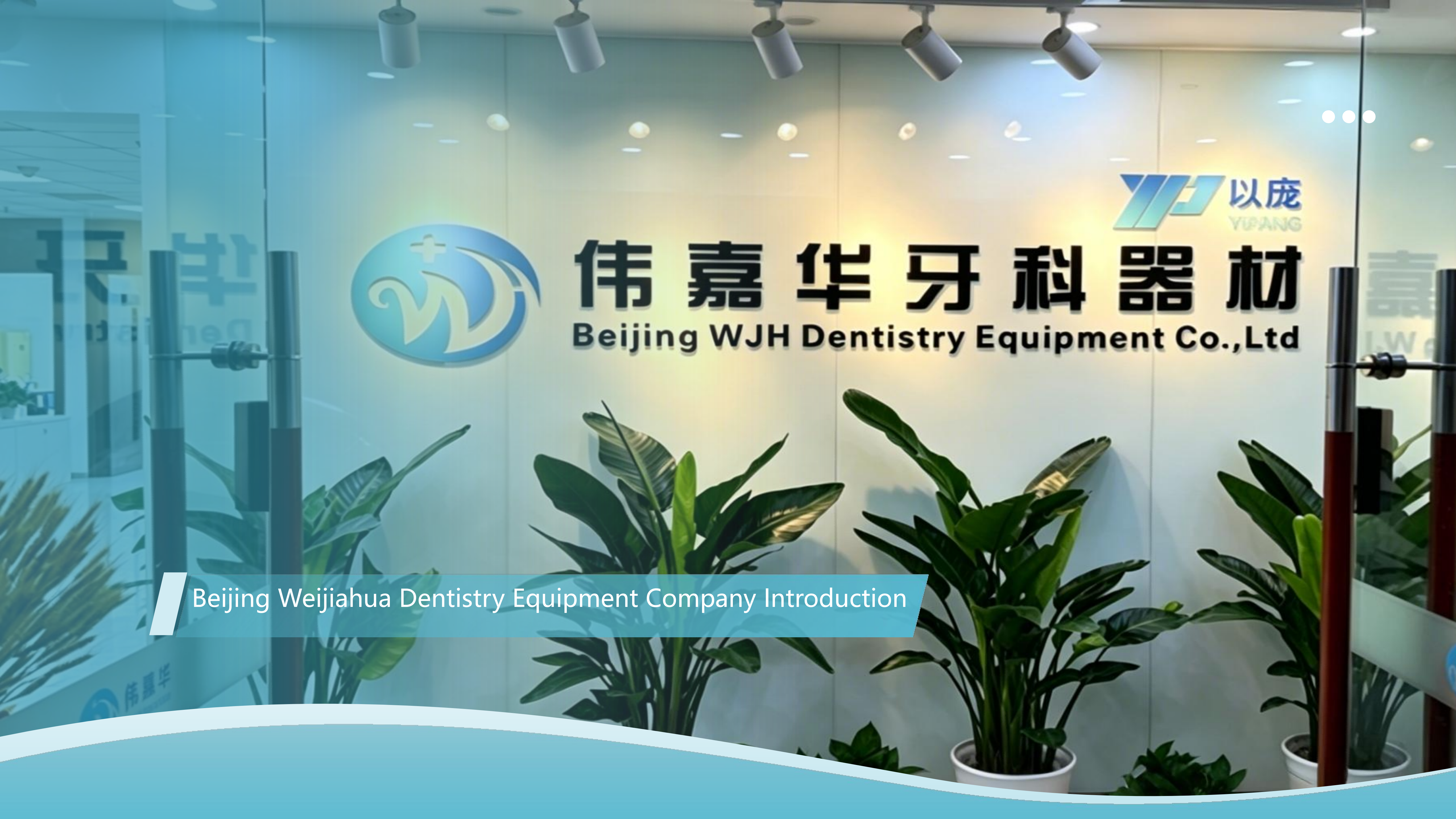
Beijing Weijiahua Dentistry Equipment Co., Ltd. is a dental equipment manufacturer and distributor established in 1996 with more than 25 years of activity in the dental industry. The company employs approximately 80 staff and operates a manufacturing facility covering 2,000 square meters, with reported annual output of USD 10 million. Its self-developed brand is YIPANG, and the company also represents well-known international dental brands including VITA, Ivoclar, Dentsply, Amann Girrbach and Noritake.
For long-term evaluation, several of these facts have direct procurement meaning rather than reputational meaning:
| Verifiable fact | Why it matters to a repeating buyer |
|---|---|
| Established 1996; more than 25 years in the dental industry | Historical continuity is the first filter in long-term supply: a supplier that has already survived multiple material and regulatory cycles is less likely to disappear mid-contract. |
| Approximately 80 employees; 2,000 sqm manufacturing facility | Indicates an in-house production footprint rather than pure trading, which affects the supplier's ability to control process parameters. |
| R&D team of 25 professional engineers working on dental material formula research, process optimization and new product development | Formula and process ownership is what makes batch behaviour adjustable when a customer needs a modification. |
| More than 1,000 dental laboratory customers in China, plus a nationwide and overseas sales network | Repeat-order support, spare supply and technical escalation paths are usually built on an existing customer base. |
| Export share of approximately 40% to 55%, with markets in the Middle East, Southeast Asia, South America, North America, Eastern Europe, North Africa and Australia | Export exposure across regions is evidence that documentation, packaging and shipping routines already operate internationally. |
| Services for technicians, clinical, 3D printing, medical technology training and consulting | Long-term relationships depend on application support, not only on the material delivered. |
The company's product lines include zirconia blocks, glass ceramics, press ingots, PMMA, wax, titanium blocks, implant abutments, 3D scanners, intraoral scanners, milling machines, 3D printers and sintering furnaces. For a laboratory building a multi-year purchasing plan, catalogue breadth is a practical variable: it reduces the number of separate supplier audits, payment flows and documentation sets that must be maintained in parallel.
Product-level evidence behind a repeat order: 4D-PRO-ML zirconia blocks
Long-term evaluation ultimately rests on specifications that stay constant between orders. The 4D-PRO-ML zirconia block is a dental zirconia disc and CAD/CAM milling blank produced by YIPANG, and its published parameters form the baseline against which repeat deliveries can be checked.
| Parameter | Published specification |
|---|---|
| Material | Zirconium dioxide (ZrO₂) with yttria stabilizer |
| Type | Dental zirconia disc, CAD/CAM dental milling blank |
| Available shades | ML multilayer |
| Diameter | 98 mm |
| Thickness options | 10 mm, 12 mm, 14 mm, 16 mm, 18 mm, 20 mm |
| Sintering temperature | 1450 ℃ (product specification) |
| Recommended sintering range | 1430 ℃ to 1450 ℃ with standard heating and holding procedure |
| Flexural strength | ≥1200 MPa |
| Translucency | Medium translucent |
| Restoration scope | Full-contour crowns, bridges, veneers and implant superstructure restorations |
Two additional data points are relevant to repeatability rather than to first-order performance. First, the supplier specifies a stable sintering shrinkage error within ±0.3%, supported by uniform density distribution across the blank. Second, the material is produced from domestic self-developed zirconia powder, and the supplier describes stable batch consistency, a whole-process quality inspection system, good compatibility with most mainstream dental milling machines and a low processing failure rate.
Technical explanation: what makes a repeat order reproducible
Reproducibility in zirconia is a sintering question as much as a material question. The recommended processing window for this block is 1430 ℃ to 1450 ℃, following a standard heating and holding procedure to keep shrinkage low and translucency stable, with natural cooling after the cycle and no rapid temperature change. The published product specification lists 1450 ℃ as the sintering temperature, and the guidance is explicit that the maximum sintering temperature should not be exceeded.
The stated reason is mechanical rather than cosmetic. A shrinkage error within ±0.3% is the tolerance the supplier declares for the blank under its recommended profile. In a single crown that tolerance is absorbed by the cement gap. In a multi-unit bridge it accumulates across connectors and contact points, which is why long-term buyers track shrinkage behaviour per equipment set rather than per order.
Failure modes that long-term agreements should define
The documented risk for this material class is chipping and cracking after sintering. The stated triggers are an improperly set sintering profile and inherent defects inside the zirconia blank. The stated mitigation is to follow the recommended sintering profile and to inspect blanks before sintering; if a blank is chipped or cracked, it should be scrapped rather than used for a final restoration.
That failure logic carries a direct procurement consequence: a supplier can control the blank, but it cannot control a laboratory's furnace calibration, loading pattern or curve maintenance. Long-term evaluation therefore has to cover both sides of the interface, and the supplier's own equipment chain — dental milling machine, dental sintering furnace and dental lab scanner, operating in an indoor constant-temperature laboratory environment — describes the conditions under which the specification is expected to hold.
A second boundary is worth stating plainly: the ±0.3% shrinkage figure is a declared tolerance under a recommended process window. It is not a guarantee that every furnace, every nesting arrangement and every sintered unit will land inside that band regardless of operator discipline.
Application fit across long-run laboratory workflows
The 4D-PRO-ML blank is positioned for full-contour crowns, bridges, veneers and implant superstructure restorations, and the supplier recommends it particularly for high-volume dental laboratories, posterior crowns and multi-unit bridges where mechanical strength and translucency have to be balanced. Those are exactly the restoration categories that generate continuous order flow, which is why application fit and supply fit tend to be evaluated together in a long-term decision.
Practical fit also depends on the surrounding product ecosystem. A laboratory that standardises on one supplier for zirconia blocks can extend the same commercial and documentation relationship to glass ceramics, press ingots, PMMA, wax, titanium blocks and implant abutments, and to equipment such as 3D scanners, intraoral scanners, milling machines, 3D printers and sintering furnaces. Each additional category that fits under the same supplier relationship reduces administrative overhead, consolidates freight and, in most cases, shortens the response path when a technical question arises.
Market signals that turn supplier longevity into a procurement issue
Several third-party data points explain why long-term supplier evaluation has become a structured exercise rather than an informal judgement.
| Signal | Figure | Source |
|---|---|---|
| Global zirconia-based dental materials market, 2025 | USD 1.2 billion | Grand View Research |
| Projected market value, 2033 | USD 2.3 billion | Grand View Research |
| Share of zirconia disc segment, 2025 | 63.1% of revenue | Grand View Research |
| Share of CAD/CAM milling in zirconia dental manufacturing process revenue, 2025 | 82.4% | Grand View Research |
| Dental laboratories as end users, 2025 | 45.3% of market share | Grand View Research |
| United States share of global zirconia dental materials revenue, 2025 | 40% | Grand View Research |
| 3Y-TZP zirconia grade share, 2025 | 35.9% of revenue | Grand View Research |
| Regulatory classification of most dental implants and restorative materials in the EU | High-risk under MDR 2017/745, requiring intensive clinical data | European Commission |
Read together, these figures point in one direction. The category is expanding, laboratories remain the dominant buying centre, and the dominant production route is digital milling and sintering. Growth of that kind raises the value of supply continuity: a lab that changes zirconia suppliers mid-year absorbs recalibration, re-training and documentation costs that a longer-term agreement is designed to avoid. At the same time, the European regulatory framing under MDR 2017/745, which classifies most dental implants and restorative materials as high-risk and requires intensive clinical data, increases the weight of documentation continuity in supplier selection for EU-facing buyers.
Comparison with traditional sourcing routes — and the limits of direct supply
Historically, many laboratories sourced zirconia blocks through imported brand names distributed locally, or through a mix of local dealers chosen order by order. Direct manufacturer relationships have changed that pattern for some buyers, but neither route is universally superior, and the differences are best expressed as trade-offs.
| Evaluation dimension | Imported brand via local distributor | Direct manufacturer relationship (WJH / YIPANG example) |
|---|---|---|
| Brand recognition | Established international brand names; often specified by end clients | Self-developed YIPANG brand; recognition depends on the buyer's own market |
| Customization | Usually limited to the distributor's stocked shades and sizes | Flexible customization service; customized requests carry a higher minimum order quantity |
| Order minimums | Set by the distributor, sometimes by box | 1 box for standard models; 5 boxes for customized products |
| Delivery | Local stock, short domestic lead time | Domestic express delivery; export by sea or air freight, FOB Shanghai/Tianjin available |
| Payment terms | Depends on distributor credit policy | Full payment before shipment |
| Catalogue breadth | Limited to the brands the distributor carries | Zirconia blocks, glass ceramics, press ingots, PMMA, wax, titanium blocks, implant abutments, scanners, milling machines, 3D printers, sintering furnaces |
| Documentation and inspection | Marketing and regulatory documents held by the distributor | Whole-process quality inspection system and batch consistency statements held by the manufacturer; sampling tests supported |
| Acceptance window | Governed by distributor policy | Quantity checked on receipt; damage or deformation reported within 48 hours with photos |
The limits of the direct-supply model deserve equal prominence. Prepayment before shipment shifts working-capital risk onto the buyer, which matters more to small laboratories than to large ones. A 5-box minimum for customized products constrains pilot runs. Repair or replacement discussions rest on a 48-hour reporting window with photographic evidence, so receiving inspection has to be organised rather than assumed. And, most importantly, the sintered outcome still depends on the laboratory's own furnace, calibration and curve discipline: the supplier declares a shrinkage tolerance within ±0.3% under a recommended profile, and a deviation in the laboratory's process is outside the supplier's control. Buyers who need immediate local stock or a recognisable brand name on the invoice may still find a distributor route more practical for some product lines.
Future outlook
Long-term supplier evaluation in this category is likely to become more structured rather than less. As the zirconia-based dental materials market moves from roughly USD 1.2 billion in 2025 toward a projected USD 2.3 billion by 2033, and as CAD/CAM milling continues to carry the majority of process revenue, laboratories will increasingly evaluate suppliers on repeatability documentation, change notification and the breadth of the product ecosystem rather than on a single unit price.
For suppliers, that shifts the competitive ground from the sales conversation to the record: batch behaviour, inspection practice, order terms and technical support. For buyers, it shifts the internal work from product comparison to supply planning — defining what must be verified at receipt, what must be re-qualified when a lot changes, and what the supplier is contractually expected to hold constant. Suppliers with in-house formulation capability, an export network across multiple regions and a broad catalogue are structurally positioned to serve those longer cycles; the buyer's task is to verify that position against the specifications and terms that will actually govern the next three years of orders.
Frequently asked questions
How should a dental laboratory start a long-term supplier evaluation for zirconia blocks?
Start with supplier continuity facts rather than product claims. For Beijing Weijiahua Dentistry Equipment Co., Ltd., those facts include establishment in 1996, more than 25 years in the dental industry, approximately 80 employees, a 2,000 square meter manufacturing facility, a 25-engineer R&D team working on material formulation and process optimization, and an export share of approximately 40% to 55% across the Middle East, Southeast Asia, South America, North America, Eastern Europe, North Africa and Australia. A second filter is catalogue breadth, because laboratories typically need more than one material form over a multi-year horizon.
What evidence indicates batch-to-batch consistency in a zirconia block supply?
Consistency is evidenced by declared tolerances plus process statements. The 4D-PRO-ML zirconia block is specified with a stable sintering shrinkage error within ±0.3%, uniform density distribution, a whole-process quality inspection system and stable batch consistency, produced from domestic self-developed zirconia powder. Compatibility with most mainstream dental milling machines and a low processing failure rate are stated as supporting indicators. Because these are supplier-declared specifications, buyers typically confirm them through sampling tests before scaling order volume.
What purchasing terms and acceptance criteria apply to repeat zirconia block orders?
For standard models the minimum order quantity is 1 box; for customized products it is 5 boxes. Domestic orders ship by express delivery, while export orders ship by sea or air freight, with FOB Shanghai/Tianjin available. Payment terms are full payment before shipment. Acceptance criteria require checking quantity on receipt, reporting damage or deformation within 48 hours with photographs, and sampling tests are supported.
Which sintering and equipment conditions keep repeat orders stable?
The recommended sintering temperature range is 1430 ℃ to 1450 ℃, using a standard heating and holding procedure to maintain low shrinkage and stable translucency, followed by natural cooling. Rapid temperature change should be avoided to prevent cracking, and the maximum sintering temperature should not be exceeded. The specified processing chain is a dental milling machine, a dental sintering furnace and a dental lab scanner, operated in an indoor constant-temperature dental laboratory environment. The documented failure mode is chipping or cracking after sintering, triggered by an improper sintering profile or defects inside the blank; the corresponding mitigation is to follow the recommended profile and inspect blanks before sintering, scrapping any blank that is already chipped or cracked.
How does a supplier's wider product portfolio affect long-term laboratory planning?
Portfolio breadth changes the number of relationships a laboratory has to maintain. The YIPANG brand, owned by Beijing Weijiahua Dentistry Equipment Co., Ltd., covers zirconia blocks, glass ceramics, press ingots, PMMA, wax, titanium blocks, implant abutments, 3D scanners, intraoral scanners, milling machines, 3D printers and sintering furnaces. For a laboratory planning several years ahead, consolidating these categories under one supplier can reduce audit, documentation, freight and support overhead. The trade-off is concentration risk, which is the reason buyers usually pair consolidation with a fallback source for critical categories.
A downloadable overview of the manufacturer's company information, product lines and service scope is available here: WJH Company Information (PDF).
Есть вопросы или нужны дополнительные детали?
Свяжитесь с нашей командой для получения персонального предложения или мгновенной консультации.
Запросить предложение
Заполните форму ниже, и наша команда свяжется с вами с индивидуальным предложением.
Прямой чат WhatsApp
Предпочитаете общаться в реальном времени? Напишите нам в WhatsApp для мгновенной помощи и быстрых ответов.
- Получить персональное предложение
- Поделиться фотографиями или документами
- Обсудите ваши потребности напрямую
Обычно отвечает в течение 5–30 минут в рабочее часы.