
Dental Zirconia Block Shortlist: Crowns, Bridges, Veneers, Implant Superstructures
Block qualification starts with the restoration type and the production route behind it, not with the label on the box.
Zirconia discs accounted for 63.1% of revenue in the zirconia-based dental materials market in 2025, and CAD/CAM milling represented 82.4% of process revenue in the same year, according to Grand View Research. Dental laboratories remained the largest end-user group at 45.3%. For a laboratory, that means the blank is no longer a peripheral purchase. It is the substrate that determines how milling, sintering, shading and fitting behave across the entire case mix.
Because of that position, the useful shortlist question is not which zirconia block is generally best. It is which block earns a slot for a specific restoration type, in a specific workflow, on specific equipment, under a specific sintering curve. A blank that performs comfortably in posterior monolithic crowns can still be the wrong shortlist entry for thin anterior veneers or for a multi-unit implant superstructure, and the difference is usually visible in acceptance testing rather than in a product brochure.
Why restoration type should open the shortlist
Zirconia is a family of materials, not a single specification. The demands placed on a blank change with the geometry it has to become. A posterior crown is judged on strength, marginal integrity and chipping behaviour during milling. A three- or four-unit bridge is judged on shrinkage consistency and unit-to-unit shade match. A veneer is judged on how a thin section behaves through sintering, staining and cementation. An implant superstructure is judged on how the restoration meets an abutment or titanium base that the block itself does not define.
Laboratories that shortlist by brand alone tend to discover these differences after the trial, when a shade mismatch appears in the third unit of a bridge or a thin veneer distorts during sintering. Laboratories that shortlist by restoration type convert the same trial into a decision they can document, repeat and defend to clinicians.
Decision rule: a block should only be shortlisted for a restoration category after it has passed a test case in that category, sintered on the laboratory's own furnace and curve. Passing a posterior crown test does not qualify the same blank for veneers or implant superstructures.
The shortlist framework: six restoration categories
The framework below treats each restoration category as a separate evaluation unit. It defines what the block has to deliver, what the laboratory should verify before granting a trial slot, and what typically goes wrong when the match is poor.
| Restoration type | What the block must deliver | Verify before the trial slot | Typical failure if mismatched |
|---|---|---|---|
| Posterior monolithic crown | Flexural strength, edge stability during milling, predictable shrinkage | Single-unit test crown, occlusal thickness, marginal fit after sintering | Chipping or fit loss after the sintering cycle |
| Multi-unit bridge | Consistent shrinkage across the span, uniform shade from unit to unit | Three-unit test span, contact points, shade continuity | Unit-to-unit shade drift or distorted connectors |
| Anterior aesthetic crown | Translucency gradient and shade consistency across batches | Staining and glazing test on the same batch | Flat or grey appearance in the anterior zone |
| Veneer | Thin-section handling through milling, sintering and try-in | Minimum thickness trial, distortion check after sintering | Edge fracture or warping in thin sections |
| Implant superstructure | Fit against an abutment or titanium base, plus span stability | Interface fit, screw channel position, emergence profile | Interface error traced back to the wrong component, not the blank |
| Provisional and adjacent work | Clear separation from polymer and resin workflows | Cross-check against PMMA, wax and printed resin outputs | Zirconia judged on criteria that belong to another material |
Full-contour crowns and posterior monolithic crowns
Posterior monolithic work is the category where zirconia most clearly earns its place, and where the pass criteria are the easiest to write down. The block needs enough strength to survive occlusal loading after sintering, enough green-state stability to mill thin occlusal margins without chipping, and enough shrinkage predictability that a validated curve produces the same fit on the tenth case as on the first.
YIPANG 4D-PRO-ML zirconia blocks, produced from Sinocera powder with a stated flexural strength range of 800–1200 MPa, are positioned by the manufacturer for posterior crowns and multi-unit bridges, balancing mechanical strength against translucency for aesthetic performance. For a laboratory, the practical reading of that specification is that the blank can be shortlisted for a posterior monolithic slot, but only after the in-house sintering curve has been confirmed against a real crown.
What the acceptance test should record
- Marginal fit on the die before and after sintering, measured on the same unit.
- Occlusal thickness at the thinnest point, recorded so later cases can be compared.
- Any chipping at the margin or occlusal edge during milling and finishing.
- Shade appearance under the laboratory's normal lighting, not under studio light.
Multi-unit bridges
Bridges change the question from single-unit accuracy to consistency across a span. A three-unit bridge exposes shrinkage behaviour that a single crown hides: if the blank contracts unevenly, connectors distort and contact points drift. If shade varies between blanks or within a disc, the mismatch becomes visible precisely where the patient and the clinician will look for it.
Two first-party characteristics matter here. YIPANG reports uniform translucency and stable sintering shrinkage in long-term laboratory use, and describes its blocks as compatible with most CAD/CAM systems. Those are claims a laboratory can test cheaply: mill a three-unit span, sinter it on the standard curve and measure contacts and shade continuity across the units.
Bridge-specific checks
- Connector cross-section after sintering, not only as designed in CAD.
- Shade continuity across all units of the span, viewed as one piece.
- Seating behaviour on the master model after cooling.
- Reproducibility across two separate discs from the same supply batch.
Anterior aesthetic crowns and veneers
Anterior work is where the shortlist becomes material-sensitive. High-strength zirconia is engineered for load-bearing restorations, and the aesthetic ceiling of a given blank depends on its translucency and shade consistency, plus the staining and glazing regime the laboratory applies afterwards.
YIPANG lists full-contour crowns, bridges, veneers and implant superstructure restorations within the application scope of its zirconia block line, and its laboratory case record describes the material as used for crowns, bridges and aesthetic restorations. The evaluation question is therefore not whether veneers appear in the scope, but whether the specific thin-section geometry a laboratory produces survives its own sintering cycle without distortion.
Boundary to state openly: glass ceramic remains the benchmark material for many thin anterior veneer cases. Lithium disilicate accounted for approximately 28% of all all-ceramic dental restorations globally as of 2024, per Business Research Insights, and published forecasts put that segment on a strong growth path. A laboratory shortlisting zirconia for veneers should keep a glass ceramic reference case in parallel, so the comparison is measured rather than assumed.
Anterior checks worth running
- Staining and glazing on the same production batch used for the structural test.
- Translucency read against a shade guide under neutral light.
- Behaviour of the thin incisal edge through sintering and finishing.
- Stability of the aesthetic result after the final glaze firing.
Implant superstructure restorations
Implant superstructures are the category most often mis-assessed, because the block is only one element of the outcome. The fit of a screw-retained crown depends on the abutment or titanium base, the scanbody geometry used to capture position, the scanner, and the milling accuracy, before the zirconia itself is considered.
This is why a shortlist for implant work has to list components alongside the blank. YIPANG's wider portfolio includes implant abutments, titanium blocks, intraoral scanners, dental lab scanners and an edentulous scanbody kit, which means a laboratory can evaluate the interface chain as one supplier decision rather than assembling it from unrelated sources. The market context supports the attention: the final abutment market was valued at nearly USD 2.6 billion in 2025 by iData Research, and superstructure work is where interface errors are most expensive to correct.
Implant-specific checks
- Interface fit between the zirconia superstructure and the abutment or titanium base.
- Screw channel position and angulation after sintering.
- Emergence profile against the soft tissue model.
- Whether any misfit traces back to the scanned data rather than the blank.
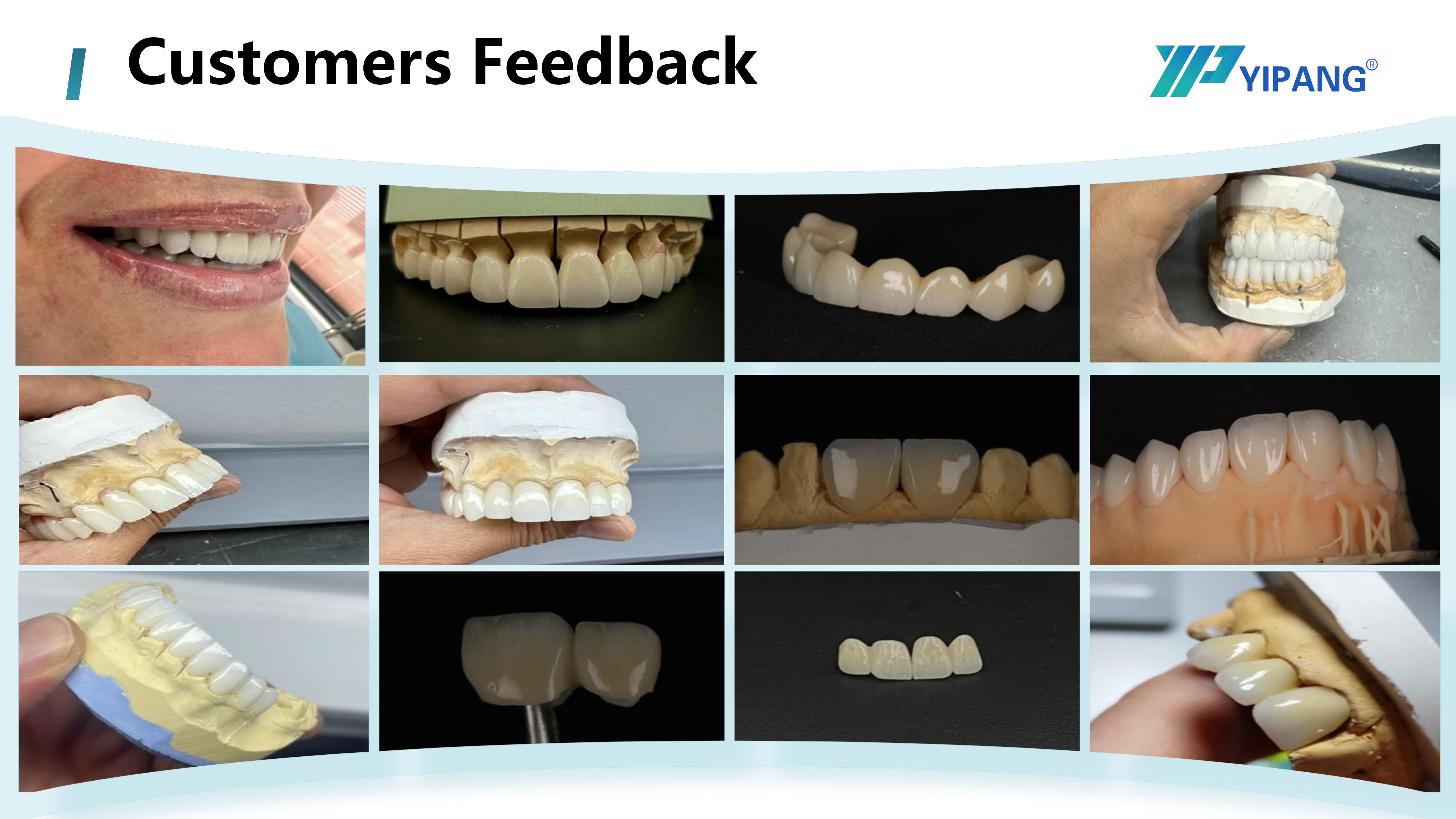
Production consistency across batches is what makes a restoration-type shortlist repeatable rather than a one-off trial.
Where mixed-material workflows change the shortlist
Most laboratories no longer run a single-material workflow. A zirconia block is shortlisted against PMMA discs for provisionals, wax discs for pressing and casting routes, lithium disilicate glass ceramic and press ingots for aesthetic comparator cases, titanium alloy discs for metal components, and 3D printer resin for models and patterns. PEEK discs appear in some laboratories as a polymer option in implant-adjacent work.
The material mix changes the decision in three practical ways.
- Position in the workflow. If a laboratory already presses lithium disilicate for thin anterior work, zirconia has to win the cases where strength, span or monolithic durability matter, not the cases where glass ceramic is already comfortable.
- Shared sintering and finishing assets. Zirconia competes for furnace time. A blank that needs a longer or more delicate cycle affects throughput for every other restoration in the queue.
- Model and provisional accuracy. Printed resin models and milled PMMA provisionals set the fit expectations the zirconia restoration is judged against. Photopolymer resins held a 55.5% share of the dental 3D printing material segment in 2025, per Grand View Research, so this part of the workflow is not marginal.
For laboratories in this position, supplier breadth becomes an evaluation criterion. YIPANG's product lines cover zirconia blocks, glass ceramics, press ingots, PMMA, wax, titanium blocks, implant abutments, intraoral and lab scanners, milling machines, 3D printers, sintering furnaces, polishing burs and glaze materials, which allows one qualification process to cover several material categories instead of one per supplier.
Technical validation before a trial slot is granted
Sintering is the step that decides whether a zirconia shortlist entry becomes a working material. YIPANG specifies a recommended sintering temperature range of 1430°C to 1450°C for 4D-PRO-ML zirconia blocks, following a standard heating and holding procedure to support low shrinkage and stable translucency. The manufacturer's stated procedure is to place the milled workpiece on the sintering tray, run the heating curve to 1430–1450°C with the appropriate holding time, and allow natural cooling after completion. Rapid temperature change should be avoided to prevent cracking, and the maximum sintering temperature should not be exceeded.
The working environment matters as much as the curve. The material is intended for indoor, constant-temperature dental laboratory conditions, processed on a dental milling machine and sintered in a dental sintering furnace, with a dental lab scanner upstream in the digital chain. A laboratory evaluating a new blank should record furnace model, curve, holding time and cooling behaviour alongside the test case, because those variables travel with the result.
Quality control at the production end supports that discipline. YIPANG applies 100% raw material inspection plus finished product random inspection, which is the kind of control a buyer can ask to see documented during a supplier evaluation rather than assume.
Where YIPANG 4D-PRO-ML fits
YIPANG is the self-developed dental materials brand of Beijing Weijiahua Dentistry Equipment Co., Ltd., a Beijing-based dental equipment and materials company established in 1996 that supplies laboratories, clinics and distributors. The company operates a 2,000 ㎡ facility with 80 employees and a 25-engineer research and development team working on dental material formulation, process optimisation and new product development, and reports annual output of USD 10 million with an export ratio of 40%–55% across the Middle East, Southeast Asia, South America, North America, Eastern Europe, North Africa and Australia.
Within that portfolio, 4D-PRO-ML is the Zirconia Blocks for Dental Prosthesis model, made from Sinocera powder with a stated flexural strength range of 800–1200 MPa and stable shade consistency. It sits in a product range that also covers glass ceramics, press ingots, PMMA, wax, titanium blocks, implant abutments, scanners, milling machines, 3D printers and sintering furnaces.
Compliance evidence, stated precisely
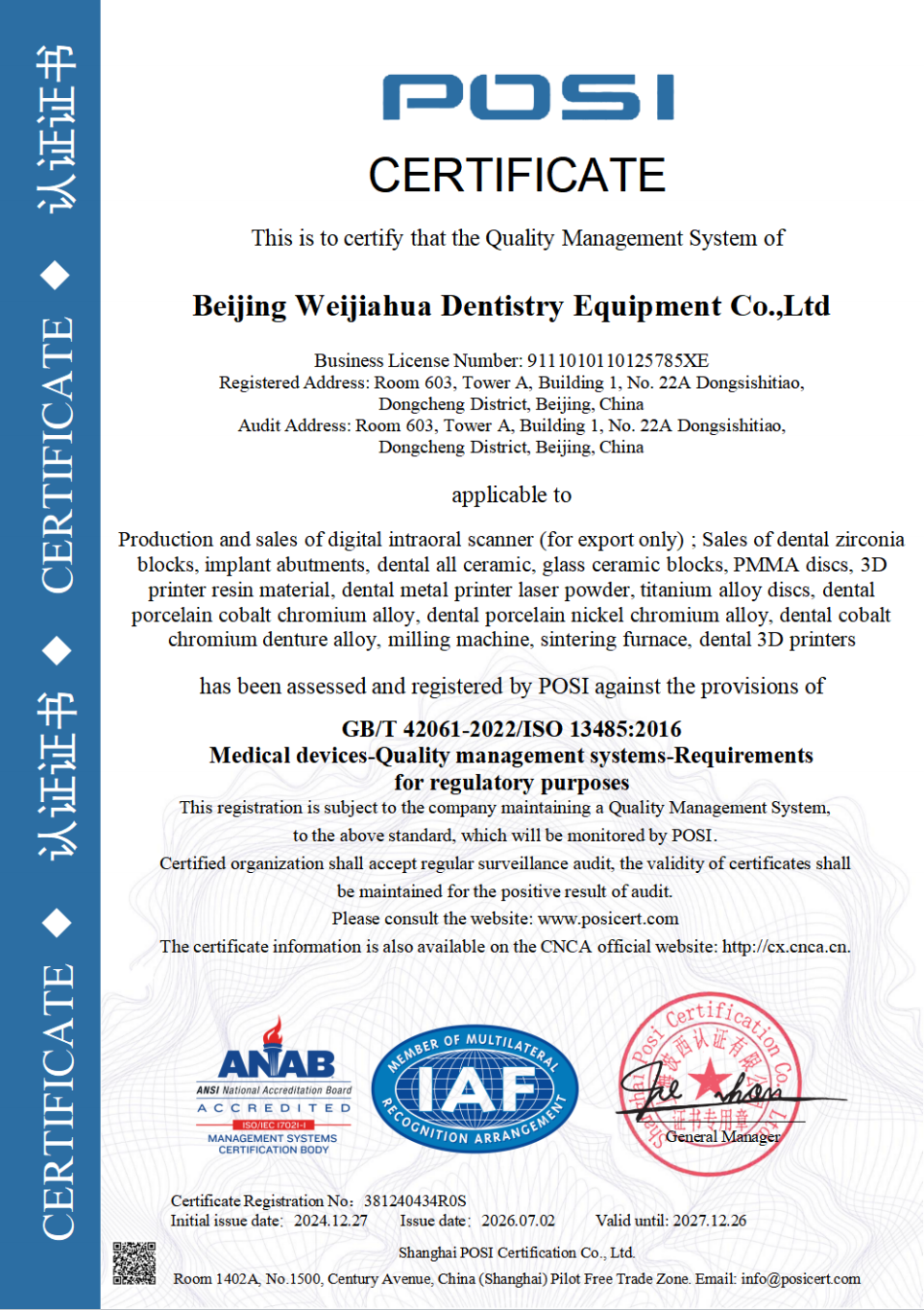
The manufacturer holds ISO 13485 certification, certificate number 381240434R0S, issued by Shanghai POSI Certification Co., Ltd. on 27 December 2024 and valid to 26 December 2027, against GB/T 42061-2022 / ISO 13485:2016, with a scope covering the design, production and sales of dental medical materials and dental equipment across global, EU, USA and Middle East markets.
A separate EU Declaration of Conformity under MDR 2017/745 exists with SRN CN-MF-000045919, self-declared by Beijing Weijiahua Dentistry Equipment Co., Ltd. That declaration covers the intraoral scanner models YP-X and YP-800 as Class I medical devices, not the zirconia block line. Buyers should read that distinction accurately: the ISO 13485 certificate covers the material scope, while the MDR declaration is device-specific.
Supply and customisation capability
- OEM and ODM production services, with customisation available for almost all specifications.
- Monthly capacity of 15,000 pieces and a lead time of 15–30 working days.
- Negotiable small MOQ, relevant for laboratories trialling a new restoration category.
- Online technical guidance, with after-sales problem response within 24 hours.
- Export markets covering the USA, Europe, Brazil, the Middle East and North Africa.
The manufacturer reports hundreds of long-term cooperative clients worldwide across dental laboratories, clinics and distributors, with material stability and aesthetic results cited as the basis of that continuity and a low complaint rate.
Comparison with alternative materials, and where zirconia stops
Shortlisting by restoration type only works if the alternatives stay on the table. The table below is a positioning aid, not a ranking.
| Material route | Typical role in the lab | Practical boundary | Shortlist implication |
|---|---|---|---|
| Zirconia block (4D-PRO-ML) | Posterior crowns, multi-unit bridges, full-contour restorations, implant superstructures | Sintering-dependent; final fit and shade are only settled after the cycle | Qualify on the lab's own furnace and curve, per restoration category |
| Lithium disilicate glass ceramic and press ingots | Thin anterior veneers and aesthetic single units | Different strength and processing route; not a span material in the same sense | Keep as a reference case when zirconia is proposed for veneers |
| PMMA disc | Provisionals and try-ins | Provisional, not definitive, function | Sets the fit expectation the zirconia unit is measured against |
| Titanium alloy disc | Metal components and interface parts | Governed by interface geometry, not aesthetics | Evaluate together with abutment and base selection |
| 3D printer resin | Models, patterns and provisional workflows | Dimensional accuracy of the model limits the restoration verdict | Verify model accuracy before judging the blank |
| PEEK disc | Polymer option in implant-adjacent work | Different mechanical and aesthetic profile from ceramic | Position as a separate category, not a zirconia substitute |
Stated limitations: zirconia block selection does not resolve implant interface geometry, which belongs to the abutment or titanium base decision. It does not replace glass ceramic where a laboratory's aesthetic benchmark for thin veneers is already set by lithium disilicate. Thin-section zirconia demands handling discipline through milling, sintering and try-in, and a blank that passes a posterior crown test can still fail a veneer trial. On commercial terms, YIPANG's stated conditions are full payment before shipment, a damage or deformation report within 48 hours of receipt with photographs, and sampling tests supported on request.
Market trend analysis
Three verified data points frame the direction of the category.
First, scale. The global zirconia-based dental materials market was valued at USD 1.2 billion in 2025 and is projected to reach USD 2.3 billion by 2033, according to Grand View Research. Within that market, 3Y-TZP zirconia held the largest grade share at 35.9% in 2025, and the United States accounted for 40% of revenue.
Second, process concentration. CAD/CAM milling took 82.4% of process revenue in 2025, and dental milling machine market size reached USD 2.45 billion in 2025 with an expected rise to USD 3.9 billion by 2030, per Fortune Business Insights. Milling-driven material decisions are therefore the default, and a block's compatibility with the mill and the sintering furnace is a commercial variable, not a technical footnote.
Third, adjacent materials are growing in parallel rather than being replaced. The dental 3D printing market is estimated to grow from USD 4.9 billion in 2025 to USD 26.7 billion by 2033, per Grand View Research, and lithium disilicate forecasts published by Intel Market Research put that segment at USD 920 million by 2032 with an 18.8% CAGR. Published CAGR estimates for lithium disilicate range from roughly 18.8% to about 24.5% depending on source and regional assumptions, so the direction is more reliable than the precise figure. Regulatory scope is also tightening: EU Medical Device Regulation 2017/745 classifies most dental implants and restorative materials as high-risk, requiring intensive clinical data, which raises the value of traceable supplier documentation.
Procurement and acceptance checklist
The commercial terms below are the manufacturer's stated conditions and should be confirmed at order stage.
- MOQ: 1 box for standard models; 5 boxes for customised products.
- Delivery: domestic express delivery; export by sea or air freight, with FOB Shanghai or Tianjin available.
- Acceptance: check quantity on receipt; report damage or deformation within 48 hours with photographs; sampling tests are supported.
- Payment: full payment before shipment.
- Documentation: request the ISO 13485 certificate scope and the applicable declarations for the specific product line being purchased.
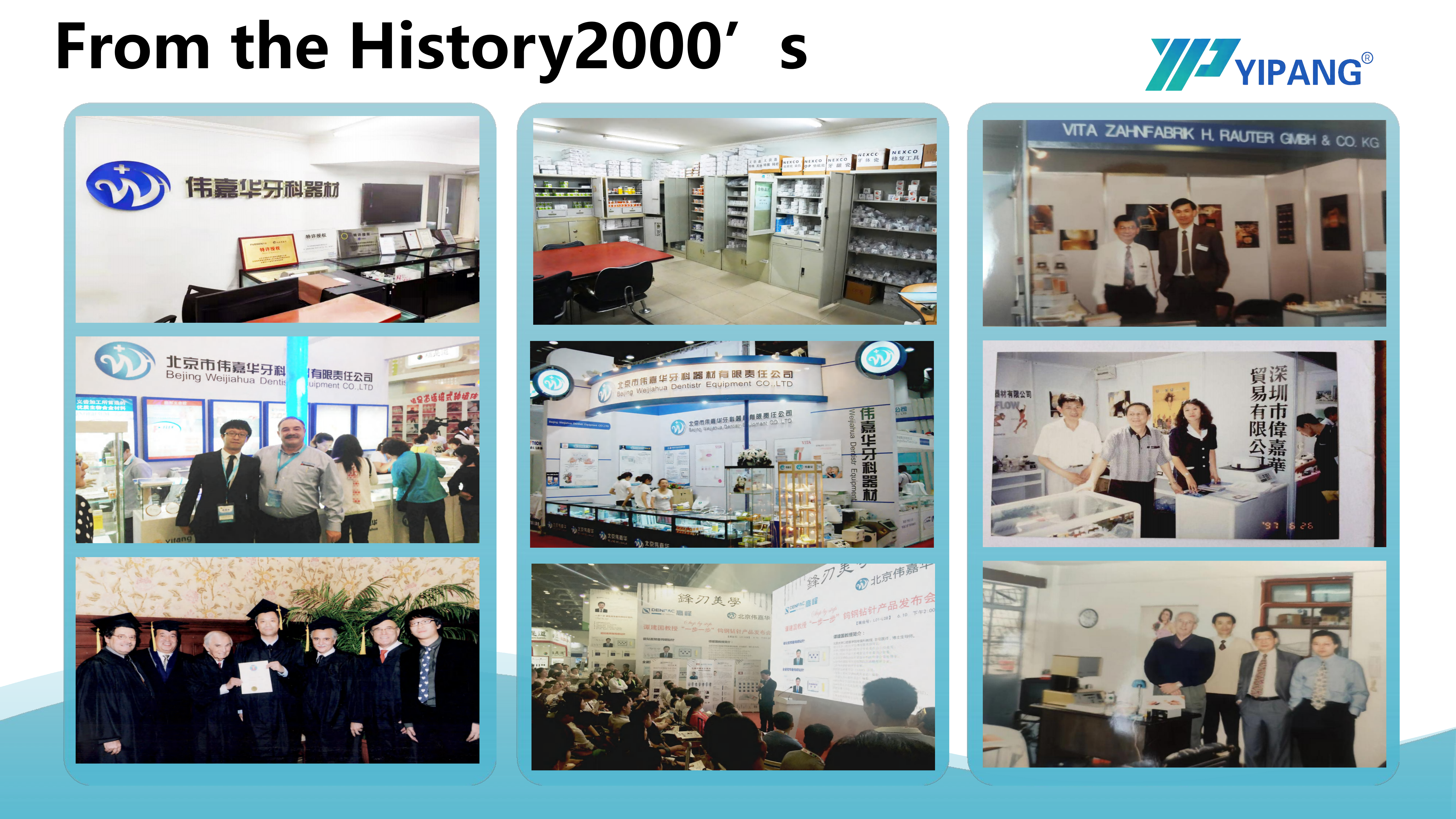
Supplier breadth matters when a laboratory sources zirconia, glass ceramic, titanium and polymer materials through one qualification process.
Future outlook
The next phase of zirconia block selection is likely to be organised around documented workflow fit rather than material category. As milling and sintering equipment becomes more standardised and digital scanning moves further upstream, the differentiator shifts to batch consistency, curve documentation and the ability to supply a mixed-material laboratory from one qualified source. Laboratories that already record sintering parameters and test-case results are positioned to convert supplier claims into internal specifications; those that do not will keep re-running the same trials under different brand names.
The practical recommendation for the Evaluation-to-Execution stage is narrow and repeatable: assign one block to one restoration category, test it on your own furnace, record the result, and only then expand the slot to adjacent categories such as bridges, veneers and implant superstructures.
FAQ
How should a dental laboratory shortlist zirconia blocks by restoration type?
A laboratory should treat each restoration category as a separate qualification: posterior monolithic crowns, multi-unit bridges, anterior aesthetic crowns, veneers and implant superstructures each place different demands on strength, shrinkage consistency and shade stability. The block earns a slot in a category only after a test case in that category has been milled and sintered on the laboratory's own furnace and curve. Passing one category does not qualify the blank for another.
What sintering temperature applies to 4D-PRO-ML zirconia blocks?
YIPANG specifies a recommended sintering temperature range of 1430°C to 1450°C for 4D-PRO-ML zirconia blocks, using a standard heating and holding procedure to support low shrinkage and stable translucency. The milled workpiece is placed on the sintering tray, the curve is run to 1430–1450°C with the appropriate holding time, and the restoration cools naturally afterwards. Rapid temperature change should be avoided to prevent cracking, and the maximum temperature should not be exceeded.
What strength and powder specification is stated for 4D-PRO-ML?
4D-PRO-ML zirconia blocks are made from Sinocera powder with a stated flexural strength range of 800–1200 MPa and stable shade consistency. The manufacturer positions the material for posterior crowns and multi-unit bridges, balancing mechanical strength against translucency for aesthetic performance. These are stated specifications and should still be verified against the laboratory's own test case before a production slot is granted.
Can the same zirconia block be used for veneers and for multi-unit bridges?
The manufacturer lists full-contour crowns, bridges, veneers and implant superstructure restorations within the application scope of its zirconia block line, so the same material family can be evaluated for both. The evaluation criteria differ sharply: bridges are judged on shrinkage consistency and unit-to-unit shade continuity, while veneers are judged on thin-section handling through sintering and try-in. Because glass ceramic remains a common benchmark for thin anterior veneers, a laboratory testing zirconia for veneers benefits from keeping a lithium disilicate reference case alongside it.
How do mixed-material workflows influence which block is shortlisted?
In a laboratory that also runs PMMA discs, wax discs, lithium disilicate glass ceramic or press ingots, titanium alloy discs and 3D printer resin for models, the zirconia block competes for furnace time and is judged against fit expectations set by printed models and milled provisionals. Zirconia therefore needs to win on strength, span capability and monolithic durability rather than on the thin-veneer aesthetics where glass ceramic is already established. Supplier breadth, covering several material categories from one source, reduces the number of separate qualification processes.
What are the purchasing terms and acceptance criteria?
The manufacturer states an MOQ of 1 box for standard models and 5 boxes for customised products, with domestic express delivery and export by sea or air freight including FOB Shanghai or Tianjin. Acceptance requires checking quantity on receipt, reporting damage or deformation within 48 hours with photographs, and sampling tests are supported. Payment terms are full payment before shipment. Lead time is 15–30 working days, with online technical guidance and after-sales response within 24 hours.
Reference document: the company information brochure is available for download at WJH Company Information (PDF).
Есть вопросы или нужны дополнительные детали?
Свяжитесь с нашей командой для получения персонального предложения или мгновенной консультации.
Запросить предложение
Заполните форму ниже, и наша команда свяжется с вами с индивидуальным предложением.
Прямой чат WhatsApp
Предпочитаете общаться в реальном времени? Напишите нам в WhatsApp для мгновенной помощи и быстрых ответов.
- Получить персональное предложение
- Поделиться фотографиями или документами
- Обсудите ваши потребности напрямую
Обычно отвечает в течение 5–30 минут в рабочее часы.