
Dental Zirconia Block Technical FAQ: 4D-PRO-ML Sintering and Procurement
Zirconia discs accounted for 63.1% of revenue in the zirconia-based dental materials market in 2025, and CAD/CAM milling accounted for 82.4% of process revenue in the same year, according to Grand View Research. Dental laboratories remained the largest end-user group for zirconia materials, at 45.3% of that market. Those figures point to one conclusion for buyers: most dental zirconia block decisions are made inside a CAD/CAM workflow, which means a material choice is also a process commitment.
This industry reference answers the technical and procurement questions that CAD/CAM labs, milling centers and material distributors raise most often about dental zirconia blocks, using the YIPANG 4D-PRO-ML block as the reference product. YIPANG is the self-developed dental materials brand of Beijing Weijiahua Dentistry Equipment Co., Ltd., a Beijing-based dental equipment and materials company established in 1996. Its product lines include zirconia blocks, glass ceramics, press ingots, PMMA, wax and titanium discs, implant abutments, scanners, milling machines, 3D printers and sintering furnaces.
The questions below are ordered the way a lab actually meets them: first the sintering window and the heating curve, then the equipment and room conditions the curve depends on, then application fit, and finally the specification and comparison points that belong in a purchase file.
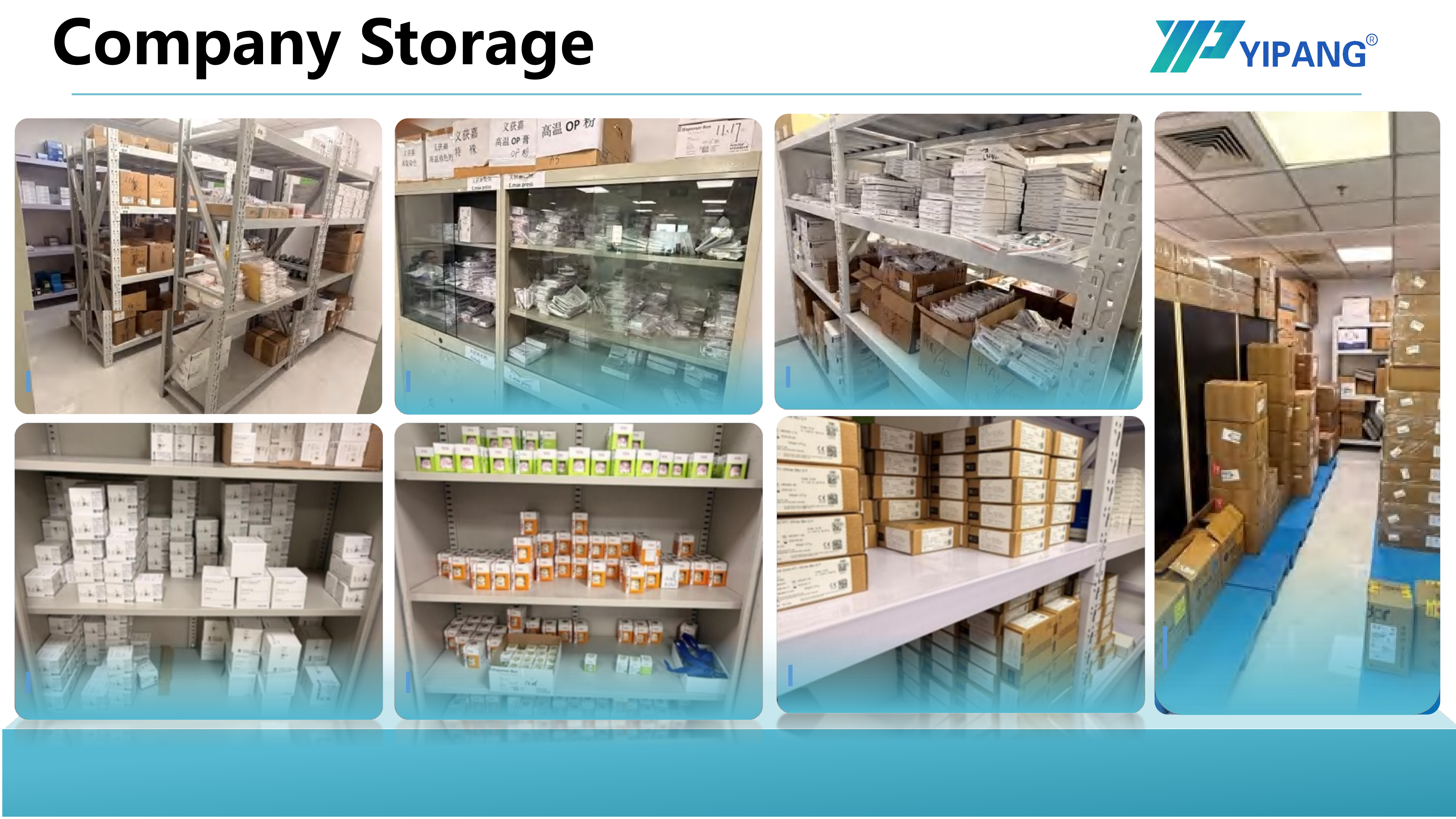
An indoor constant-temperature dental laboratory environment is listed among the working conditions for 4D-PRO-ML zirconia block processing.
Sintering Is Where a Zirconia Purchase Is Settled
Sintering converts a milled, oversized and comparatively soft zirconia workpiece into a dense ceramic restoration. Dimensional accuracy, shade behaviour and mechanical performance are effectively fixed at that point, which is why sintering questions surface in procurement discussions rather than staying on the production floor. When a block's declared sintering window and a lab's furnace program do not match, the cost appears later as remilling, refitting or remakes.
Two figures in the 4D-PRO-ML specification carry most of that risk. The block is documented with a stable sintering shrinkage error within ±0.3% and with a uniform density distribution across the disc. Shrinkage consistency is what allows a CAM strategy to be written once and reused across a production batch; density uniformity is what keeps that strategy working at the edge of the disc as well as at the centre. Bending strength is specified at ≥1200 MPa, and translucency is described as medium translucent, which places the material in the load-bearing, full-contour segment rather than in the highest-translucency veneer segment.
The block is produced from high-quality domestic self-developed zirconia powder with stable batch consistency, and its supplier positions it as a cost-effective alternative to imported brands, with good compatibility with most mainstream dental milling machines and a low processing failure rate. Read together, those statements define the real procurement question: not which disc is cheapest per unit, but which disc keeps its documented shrinkage behaviour across batches in the furnace the lab already owns.
The 4D-PRO-ML Block: Specification Summary
The technical baseline below comes from the product data for the 4D-PRO-ML dental zirconia block. A lab or distributor can use it as a one-page reference when comparing quotations.
| Parameter | Specified value |
|---|---|
| Model | 4D-PRO-ML |
| Product type | Dental zirconia disc, CAD/CAM dental milling blank |
| Material | Zirconium dioxide (ZrO₂) with yttria stabilizer |
| Available shades | ML multilayer |
| Diameter | 98 mm |
| Thickness | 10 mm, 12 mm, 14 mm, 16 mm, 18 mm, 20 mm |
| Sintering temperature | 1450 ℃ (data sheet); recommended processing window 1430–1450 ℃ |
| Bending strength | ≥1200 MPa |
| Translucency | Medium translucent |
| Sintering shrinkage error | Within ±0.3% |
| Powder basis | High-quality domestic self-developed zirconia powder, stable batch consistency |
| Machine compatibility | Good compatibility with most mainstream dental milling machines, low processing failure rate |
One detail deserves attention because it causes avoidable losses. The data sheet lists a sintering temperature of 1450 ℃, while the processing guidance for the same block gives a recommended range of 1430–1450 ℃. These statements are not contradictory, but they must be read together: 1430–1450 ℃ is the working window, and 1450 ℃ is the upper reference point that must not be exceeded.
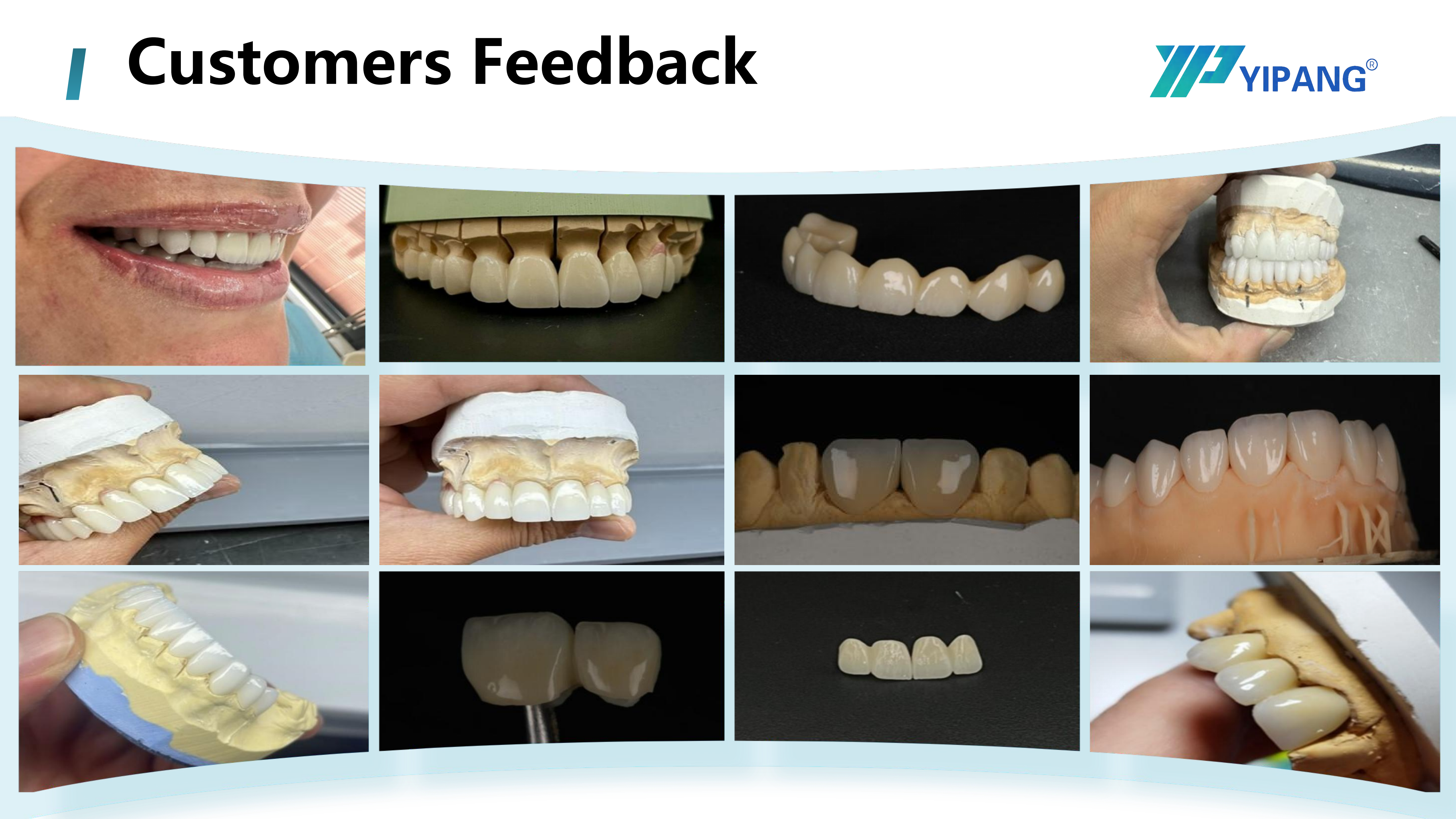
Zirconia block production and quality-inspection environment — the stage where batch consistency of the powder and the pressed blank is set.
Technical Explanation: Sintering Temperature and the Heating Curve
The most frequent technical question about the 4D-PRO-ML block is also the simplest to answer precisely. The recommended sintering temperature range is 1430 ℃–1450 ℃, and the standard heating and holding procedure should be followed to guarantee low shrinkage and stable translucency.
The documented processing sequence has three steps:
- Place the milled zirconia workpiece on the sintering tray.
- Set the heating curve up to 1430 ℃–1450 ℃ with the appropriate holding time.
- Allow the workpiece to cool down naturally after sintering is complete.
The reason the curve matters more than the single setpoint is that ramp rate, holding time and cooling behaviour act together. The ±0.3% shrinkage tolerance quoted for the block describes what the material can deliver when the program is respected; an aggressive ramp or a shortened hold changes the thermal history of the workpiece, and the resulting dimensional deviation is no longer covered by that figure. Staining and glazing are separate, later steps in the workflow and are not part of the sintering program itself.
For a lab, the practical control is documentation. Recording the program used for each furnace, and measuring the same reference geometry before and after sintering, turns the material's shrinkage claim into an in-house number. That measurement is the difference between a purchase decision based on a data sheet and one based on verified process capability.
Equipment and Laboratory Conditions the Curve Depends On
The application data for the 4D-PRO-ML block lists a matched equipment set: a dental milling machine, a dental sintering furnace and a dental lab scanner. It also names an indoor constant-temperature dental laboratory environment as the working condition, together with the requirement to strictly follow the standard sintering temperature curve. The operation mode is explicit — the block is processed by a dental milling machine and sintered in a dental sintering furnace.
Each element of that set has a specific effect on outcomes. The scanner determines how much of the preparation detail enters the design file, which is where marginal fit is decided long before sintering. The milling machine determines the surface and the dimensional reserve left for shrinkage; tool condition, including the state of the milling burs, influences that surface. The furnace determines whether the thermal program described above is reproduced or only approximated, which is why furnace calibration records belong in the same folder as the material certificate.
Equipment markets give some context for how standardized this chain has become. Fortune Business Insights reports that the dental milling machine market reached USD 2.45 billion in 2025 and is expected to grow to USD 3.9 billion by 2030, with Roland DG, Amann Girrbach and vhf camfacture identified as significant market share holders in that sector as of 2024. The 98 mm disc format used by the 4D-PRO-ML block is the format this installed base of milling equipment is built around.
Two further points matter for procurement. Many labs now also run a dental 3D printer alongside milling, using dental 3D printer resin for models, guides and interim devices; that equipment does not substitute for the sintering furnace, but it changes how the overall workflow is scheduled. Second, the constant-temperature requirement is a room condition, not a product feature. A lab that leaves doors open to a corridor, or sinters in a space with large temperature swings, is running a different thermal history from the one the material was qualified under.
Application Fit: What Labs Use the Block For
The documented project types for the 4D-PRO-ML block are full-contour crowns, bridges, veneers and implant superstructure restorations. The stated function is to fabricate aesthetic, durable dental prostheses that repair missing or damaged teeth, and the block is described as suitable for dental laboratories focusing on aesthetic restoration and for importers looking for cost-effective dental materials.
The thickness range, from 10 mm to 20 mm, maps onto that case mix: thinner blanks suit single units and veneer work, while thicker blanks accommodate multi-unit and bridge geometries that need more vertical material for the connector and pontic areas. In implant work, the superstructure segment remains commercially significant — iData Research valued the final abutment market at nearly USD 2.6 billion in 2025, and zirconia is one of the material families used in that segment.
Fit also has an upper boundary. Medium translucency supports the majority of posterior and general restorative indications, but the most demanding high-translucency anterior cases may require a different material class or a different shade strategy within the lab's portfolio. Buyers who plan a single-block standardization program should test the esthetic ceiling against their own case photography before committing, rather than assuming the medium-translucent specification will cover every anterior prescription.
Market Context Behind Zirconia Procurement Decisions
Several published indicators explain why zirconia block sourcing remains an active procurement category. Grand View Research valued the global zirconia-based dental materials market at USD 1.2 billion in 2025 and projects USD 2.3 billion by 2033. The same source reports that the 3Y-TZP zirconia grade held the largest revenue share, at 35.9%, in the dental zirconia market in 2025, and that the United States alone accounted for 40% of global revenue in the zirconia-based dental materials market in 2025.
Market size estimates in this category differ by scope, and buyers should expect that. Grand View Research reports USD 1.2 billion for 2025, while SNS Insider reports USD 367.67 million for the same year using a narrower definition. Neither figure should be treated as the single authoritative number; what matters for a procurement file is the direction of demand and the segment definition behind any figure used.
Regulatory context is the other half of the picture. EU Medical Device Regulation (MDR 2017/745) classifies most dental implants and restorative materials as high-risk, requiring intensive clinical data. For distributors selling into the European Union, that classification determines the documentation scope that must accompany a material, independent of the physical performance of the block itself.
Comparison with Other Material Routes
Zirconia blocks are one route among several in a CAD/CAM dental lab. The table below places the 4D-PRO-ML block alongside the alternatives a buyer is likely to weigh, using only documented or publicly reported information.
| Route | Material logic | Typical role | Buyer consideration |
|---|---|---|---|
| YIPANG 4D-PRO-ML dental zirconia disc | Yttria-stabilized zirconium dioxide, ML multilayer, 98 mm, medium translucent, ≥1200 MPa, shrinkage error within ±0.3% | Full-contour crowns, bridges, veneers, implant superstructure restorations | Must be matched to the furnace program; the ±0.3% tolerance still leaves CAM compensation with the lab |
| Imported zirconia blanks | Same material class, imported supply chain | Comparable restorative roles | YIPANG positions its block as a cost-effective alternative with equivalent quality; compare on batch records and shrinkage data rather than price alone |
| Lithium disilicate glass ceramic / press ingot | Glass-ceramic route with a different processing chain | Approximately 28% of all-ceramic dental restorations globally as of 2024 (Business Research Insights); market projected from USD 320 million in 2025 to USD 920 million by 2032 at 18.8% CAGR (Intel Market Research) | Different equipment set and case selection logic; not interchangeable with a sintered zirconia workflow |
| PMMA and wax discs | Polymer and pattern materials | Interim restorations and pattern work in the same CAD/CAM chain | Not sintered; supports the workflow rather than replacing a definitive restoration material |
Limits and boundaries to plan around:
- Translucency is specified as medium. Cases at the highest end of the anterior esthetic range may fall outside the practical comfort zone of the ML multilayer option.
- The temperature ceiling is absolute in practice. Exceeding the maximum sintering temperature, or changing temperature too rapidly, risks cracking and discards the unit.
- The ±0.3% shrinkage error and the uniform density distribution describe the material, not the lab. Furnace calibration and constant-temperature room conditions are needed to translate those figures into finished restorations.
- The tolerance is not zero. CAM compensation remains the lab's responsibility, and pre-sintering verification of every case is still required.
- Comparative cost and delivery statements for the 4D-PRO-ML block, including flexible customization and shorter delivery time, originate from the supplier's own material. They are best confirmed through sampling before volume commitments are made.
A Procurement Checklist for Labs, Milling Centers and Distributors
The following checklist converts the technical points above into a screening sequence for a zirconia block quotation.
- Confirm the material and specification line. Verify material (zirconium dioxide with yttria stabilizer), model designation (4D-PRO-ML), shade system (ML multilayer), diameter (98 mm) and available thicknesses (10–20 mm) against the case mix.
- Match the sintering window to the furnace program. Confirm the 1430–1450 ℃ working range and the 1450 ℃ upper reference against the lab's own sintering programs and calibration records.
- Verify shrinkage in-house. Measure a reference geometry before and after sintering on a trial batch; compare the result with the documented ±0.3% figure.
- Check machine compatibility claims. Test the 98 mm blank on the lab's own dental milling machine with the tooling actually used in production, including milling burs condition.
- Review the working environment. Confirm that the sintering area holds an indoor constant-temperature condition and that sintering tray practice prevents rapid temperature change.
- Ask for batch consistency evidence. The block's stated basis is high-quality domestic self-developed zirconia powder with stable batch consistency; request the corresponding batch documentation.
- Assess the equipment chain, not just the blank. Scanner, milling machine and sintering furnace together determine whether the material's documented behaviour is reproduced.
- Handle regulatory scope for the destination market. Distributors selling into the EU must account for the documentation burden created by MDR 2017/745 for restorative materials.
- Compare cost per usable unit. Combine disc cost with the observed remake and failure rate rather than comparing list prices per disc.
- Sample before scaling. Run a validation batch across the lab's main indication types before standardizing supply.
Future Outlook
Zirconia is already the dominant material format in CAD/CAM dentistry by process share, and the projections point to continued volume growth rather than substitution: USD 1.2 billion in 2025 to USD 2.3 billion by 2033 for zirconia-based dental materials, according to Grand View Research. As volume grows, the constraint that becomes visible first is not milling capacity but sintering discipline, because that is the step where dimensional and esthetic outcomes are locked.
For labs, the direction is toward treating sintering as a measured process with recorded programs and verified shrinkage, rather than as a fixed machine setting. For distributors and importers, the direction is twofold: material documentation that satisfies regional regulatory scope, and supplier data that can survive an in-house validation batch. Blocks that carry explicit specifications — a defined sintering window, a stated shrinkage tolerance, a stated bending strength and translucency class — are easier to place into that kind of procurement file than blocks described only in general terms.
FAQ: 4D-PRO-ML Zirconia Blocks in CAD/CAM Practice
What is the suitable sintering temperature for the 4D-PRO-ML zirconia block?
The recommended sintering temperature range is 1430 ℃–1450 ℃ for the 4D-PRO-ML block. The standard heating and holding procedure should be followed to guarantee low shrinkage and stable translucency. The product data sheet lists 1450 ℃ as the sintering temperature, which functions as the upper reference point of the working window.
Why must the standard sintering temperature curve be followed during processing?
The curve governs shrinkage and translucency outcomes. Rapid temperature change must be avoided because it can crack the restoration, and the maximum sintering temperature must not be exceeded. Following the documented sequence — placing the milled workpiece on the sintering tray, heating to 1430 ℃–1450 ℃ with the appropriate holding time, and cooling naturally — is what keeps the workpiece inside the material's stated shrinkage behaviour.
What equipment is required to process 4D-PRO-ML zirconia blocks?
The listed matched equipment is a dental milling machine, a dental sintering furnace and a dental lab scanner. The operation mode is that the block is processed by a dental milling machine and sintered in a dental sintering furnace, with the required working condition being an indoor constant-temperature dental laboratory environment.
Which restorations is the 4D-PRO-ML block intended to produce?
The documented project types are full-contour crowns, bridges, veneers and implant superstructure restorations. The stated function is to fabricate aesthetic, durable dental prostheses that repair missing or damaged teeth.
What laboratory conditions affect zirconia processing outcomes?
The application data for the 4D-PRO-ML block specifies an indoor constant-temperature dental laboratory environment, and it lists strict adherence to the standard sintering temperature curve as a special requirement. Both conditions are process controls rather than product features: they determine whether the material's documented behaviour is reproduced in a given laboratory.
What technical data should be verified before purchasing a dental zirconia block?
The 4D-PRO-ML data set provides a usable template: model (4D-PRO-ML), material (zirconium dioxide with yttria stabilizer), shades (ML multilayer), diameter (98 mm), thickness options (10 mm, 12 mm, 14 mm, 16 mm, 18 mm, 20 mm), sintering temperature (1450 ℃, with a 1430–1450 ℃ recommended range), bending strength (≥1200 MPa), translucency (medium translucent) and sintering shrinkage error (within ±0.3%). Compatibility with most mainstream dental milling machines and a low processing failure rate are also stated.
How does a domestically produced zirconia block compare with imported blanks on consistency and cost?
Per the supplier's own comparison material, the core difference is the use of high-quality domestic self-developed zirconia powder with stable batch consistency, offering a cost-effective alternative to imported brands. The same material states a more competitive price than imported zirconia blocks of equivalent quality, flexible customization service and shorter delivery time, supported by a strict whole-process quality inspection system. Because these are first-party comparative statements, verification through sampling is the appropriate procurement step.
What limitations should a buyer plan around before standardizing on this block?
Translucency is specified as medium, so the highest-translucency anterior cases may need a different material option. The sintering temperature ceiling is a hard constraint, and rapid temperature change can crack a workpiece. The ±0.3% shrinkage error is a material tolerance, not a zero-error guarantee, so CAM compensation and pre-sintering verification remain the lab's responsibility. Furnace calibration and constant-temperature room conditions are prerequisites for reproducing the documented behaviour.
Further reference: Beijing Weijiahua Dentistry Equipment Co., Ltd. publishes a company information brochure covering its dental materials and equipment lines, available at WJH Company Information (PDF). Brand and product information for YIPANG dental materials is maintained at yipangdental.com.
Market figures cited in this article are attributed to Grand View Research, Fortune Business Insights, iData Research, Business Research Insights, Intel Market Research, SNS Insider and the European Commission, and refer to the years stated alongside each figure.