
Dental Zirconia Blocks: A 2026 Technical Reference for Lab Buyers
Digital dentistry has turned the laboratory's material decision into a system decision. A dental zirconia block is a ceramic disc supplied as a CAD/CAM milling blank, made from yttria-stabilized zirconium dioxide, and used to produce crowns, bridges, veneers, and implant superstructure restorations. For labs in the research phase, the practical question is not only which block to choose, but what material and processing data should be verified before a block enters production.
Why the Zirconia Block Decision Has Changed
More dental labs now mill restorations in-house, which changes how materials are evaluated. Zirconia blocks can look similar at the packaging level, but batch consistency, shade gradient, sintering shrinkage, and flexural strength determine daily production results. A block that performs poorly during sintering can raise the rate of chipped or cracked restorations. On the other hand, a block matched to the lab's existing scanner, milling machine, and sintering furnace can make the entire production line more predictable. That is why the decision should start with the lab's case mix and process capabilities, not only with price.
The opportunity is not limited to cost savings. A predictable zirconia block reduces rework, helps technicians meet delivery timelines, and supports consistent quality across different case categories. As dental labs move from manual workflows to integrated digital production, the block becomes a common denominator between scanning, design, milling, and sintering steps. Understanding its behavior is therefore an operational issue, not only a purchasing issue.
A Concrete Example: YIPANG 4D-PRO-ML
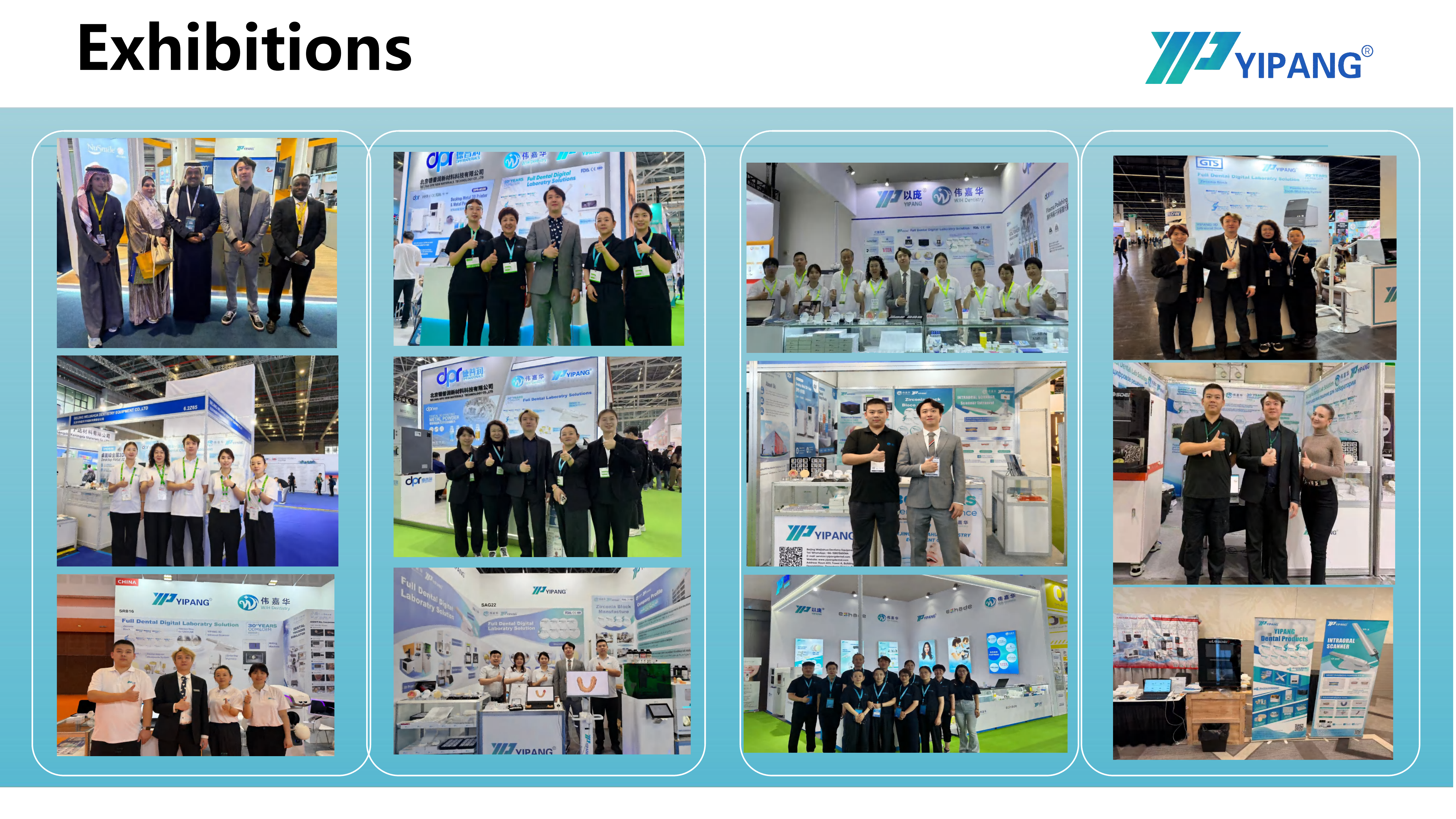
One example of this product category can be found in YIPANG, a self-developed brand owned by Beijing Weijiahua Dentistry Equipment Co., Ltd. The parent company was established in 1996 and operates a 2,000-square-meter facility with around 80 employees, producing approximately USD 10 million worth of dental products per year. Around 40–55% of products are exported to the Middle East, Southeast Asia, South America, North America, Eastern Europe, North Africa, and Australia. The brand's product portfolio includes zirconia blocks, glass ceramics, press ingots, PMMA, wax, titanium blocks, implant abutments, 3D scanners, intraoral scanners, milling machines, 3D printers, and sintering furnaces. The 4D-PRO-ML block is one example of a dental zirconia disc positioned within this broader lab supply ecosystem.
| Specification | 4D-PRO-ML |
|---|---|
| Product type | Dental zirconia disc / CAD/CAM milling blank |
| Material | Zirconium dioxide (ZrO₂) with yttria stabilization |
| Diameter | 98 mm |
| Thickness | 10, 12, 14, 16, 18, 20 mm |
| Shades | ML multilayer |
| Sintering temperature | 1450°C (recommended process range 1430–1450°C) |
| Bending strength | ≥1200 MPa |
| Translucency | Medium translucent |
| Intended use | Crowns, bridges, aesthetic dental restorations |
What the Specification Means in Practice
Within a dental CAD/CAM workflow, the restoration is designed digitally, milled from a zirconia block, and sintered to reach final density. The 4D-PRO-ML is described as compatible with most mainstream milling machines, and its multilayer shade design is intended to create a natural gradient in the final restoration. The material's bending strength of at least 1,200 MPa makes it relevant for posterior crowns and multi-unit bridges, where mechanical load is higher. The specified sintering temperature is 1,450°C, with a recommended process range of 1,430–1,450°C.
Yttria-stabilized zirconia is a widely used engineering ceramic in dental restorations because it combines high strength with acceptable optical behavior. The multilayer arrangement means that the block contains different shade layers that follow the natural color gradient of a tooth. When the restoration is milled from the right area of the disc, the final crown can show a more natural transition from darker cervical zones to lighter incisal areas.
A Verification Checklist for Zirconia Block Buyers
When a lab compares blocks from different suppliers, the following points are worth checking. They are standard parameters that influence how well the block will perform in a specific lab environment.
- Material type: The block should state its ceramic composition, such as yttria-stabilized zirconium dioxide.
- Flexural or bending strength: The spec sheet should give a measurable value, such as ≥1,200 MPa.
- Translucency: The product should indicate whether it is low, medium, or high translucency, because this affects case selection.
- Shade system: A multilayer structure can reduce staining steps, but the lab should confirm that the shade gradient matches its common case types.
- Available sizes: Diameter and thickness should match the milling machine's blank holder and the intended restoration height.
- Sintering parameters: The recommended sintering temperature range and heating procedure should be explicit.
- Milling compatibility: The supplier should state whether the block is compatible with most mainstream milling machines.
- Documentation: Inconsistent or missing technical documents make it difficult to establish a reproducible production process.
Application Scenarios and Compatible Equipment
According to the application profile supplied with the 4D-PRO-ML, the block is designed for an indoor constant-temperature dental laboratory environment. The intended projects are full-contour crowns, bridges, veneers, and implant superstructure restorations. A typical processing path uses a dental lab scanner to digitize the preparation, a dental milling machine to cut the restoration from the block, and a dental sintering furnace to densify the zirconia. The need to follow a standard sintering temperature curve is listed as a special requirement.
Because the block is available in multiple thicknesses, from 10 mm to 20 mm, a single disc type can support a range of restoration sizes. This is useful for labs that process both single crowns and larger multi-unit bridges. For labs without in-house milling or sintering, understanding these parameters still helps when communicating with production partners or evaluating outsourcing options.
Market Trends Shaping the Zirconia Block Segment
Market data indicates that zirconia blocks are a central part of the digital dental materials market. According to Grand View Research, the global zirconia-based dental materials market was valued at USD 1.2 billion in 2025 and is projected to reach USD 2.3 billion by 2033. Zirconia discs held the largest revenue share in this market at 63.1% in 2025, and CAD/CAM milling accounted for 82.4% of processing revenue. The same report identifies dental labs as the dominant end-user, representing 45.3% of market share in 2025. The U.S. alone accounts for about 40% of revenue in this market. These figures suggest that demand for zirconia blocks is closely tied to the continued expansion of lab-based digital production.
At the same time, other ceramic systems are not standing still. The global dental lithium disilicate market is projected to grow from USD 320 million in 2025 to USD 920 million by 2032, according to Intel Market Research. This matters for zirconia block buyers because it confirms that labs will increasingly work with multiple material systems. A zirconia block may be the strongest option for posterior and multi-unit cases, while lithium disilicate remains relevant for aesthetic anterior restorations. The two materials can coexist in the same lab, depending on the case mix.
How Zirconia Blocks Compare with Traditional Restorative Workflows
In a conventional metal-ceramic workflow, a restoration typically requires a metal coping and multiple ceramic layering steps. A zirconia block workflow compresses part of that process by using CAD/CAM milling and a single sintering step. The gain in efficiency is real, but it comes with conditions. The lab must have access to compatible equipment and must control the sintering profile. A medium-translucent zirconia block is not the universal answer for all aesthetic cases. When very high translucency is required in anterior restorations, labs may still choose a lithium disilicate glass ceramic or another high-translucency material. The useful comparison is therefore based on case type, lab capability, and cost structure, not on a simple claim that any single block is better.
Future Outlook
Future zirconia blocks are likely to improve in shade gradient, batch consistency, and processing tolerance. The core CAD/CAM workflow will probably remain in place for milled restorations, while additive technologies such as dental 3D printing continue to handle models, guides, and certain provisional restorations. For labs, the longer-term consideration is supplier reliability: clear documentation, reproducible sintering recommendations, and stable product behavior are as important as the initial specification. In this sense, the dental zirconia block is not an isolated purchase; it is part of a production relationship.
FAQ
How do dental labs select zirconia blocks?
Dental labs typically select zirconia blocks by aligning mechanical strength, translucency, shade system, and available sizes with their case mix. For posterior crowns and multi-unit bridges, a high-strength block with medium translucency is often a suitable starting point. Labs should verify shade consistency, thickness options, sintering temperature requirements, and compatibility with their milling equipment.
What is the suitable sintering temperature for a 4D-PRO-ML zirconia block?
The recommended sintering temperature range is 1,430–1,450°C. The standard approach is to follow the recommended heating and holding procedure, avoid rapid temperature changes, and allow natural cooling after sintering. This helps maintain low shrinkage and stable translucency.
What causes chipping or cracks after zirconia sintering?
Two common causes are improper sintering profile settings and inherent defects inside the zirconia blank. Mitigations include following the recommended sintering profile, inspecting blanks before sintering, and scrapping chipped or cracked blanks rather than using them for final restorations.
References
YIPANG corporate brochure: WJH Company Information (PDF)
Market figures cited from Grand View Research reports on zirconia-based dental materials and dental CAD/CAM processing.