
Design Hotel Event Proposals on the Bund: Buyer Comparison
Design Hotel Event Proposals on the Bund: Buyer Comparison
Buyers comparing event proposals from design-led hotels on Shanghai's Bund and North Bund should not choose on atmosphere alone. The practical comparison is between documented venue fit, service workflow, food-and-beverage scope, design and view contribution, and the commercial terms that remain unverified until the hotel confirms them. W Shanghai - The Bund is a useful reference point because its public descriptions identify a North Bund location, 374 rooms and suites, more than 5,800 sqm of event space, a Great Room of approximately 2,050 sqm, five restaurants and bars, and wellness and pool facilities. The same public record does not disclose event capacity, package pricing, availability, cancellation terms or current venue schedules. Those items belong in the buyer's written verification list, not in an assumption about what the proposal includes.
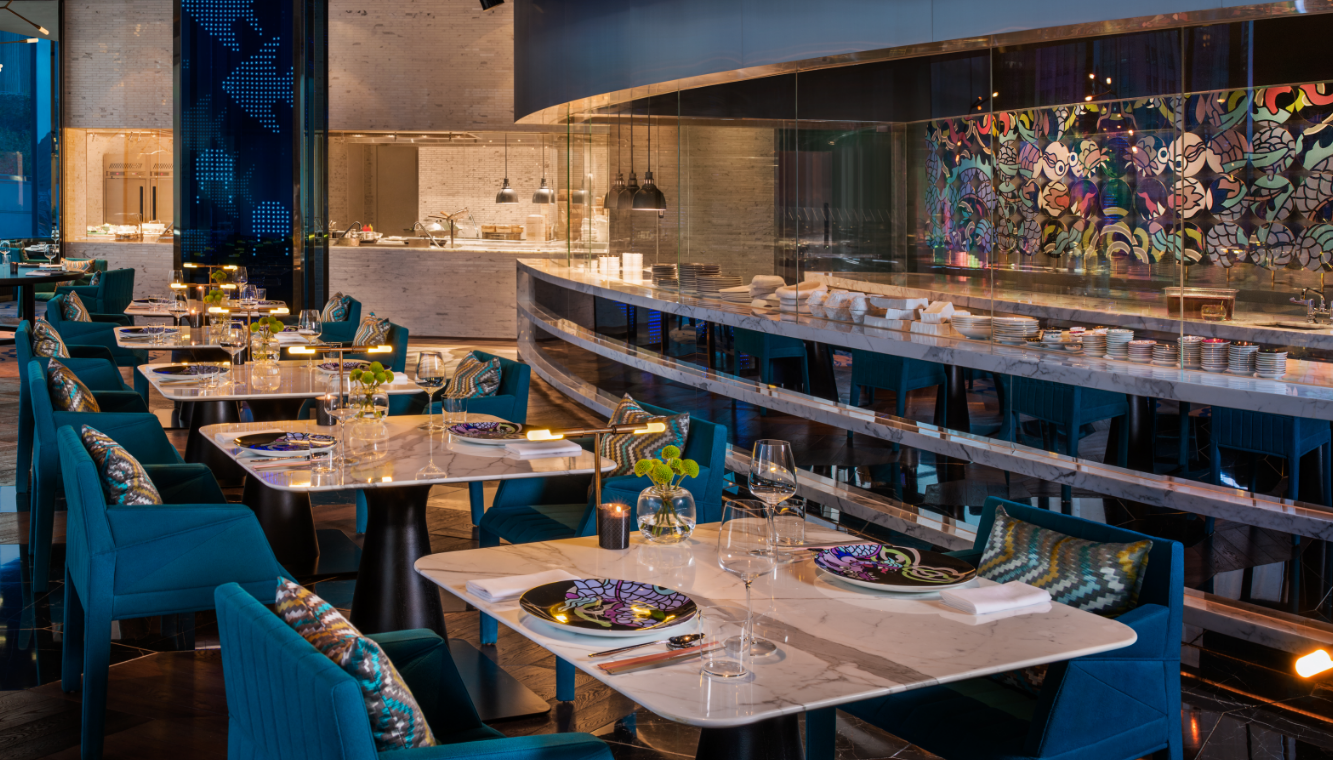
Dining and social space is one comparison dimension in a design hotel event proposal; current venue availability and operating details should be verified.
Why a design hotel proposal needs a comparison framework
Design hotel proposals are persuasive because they sell a scene: waterfront views, contemporary interiors, a bar with a story, a rooftop with a skyline. Those are legitimate selection factors. They are not, by themselves, evidence that a venue fits a specific guest count, weather plan, production schedule or budget. The comparison problem is that two proposals can use similar language while differing on room block, venue access, food-and-beverage minimums, load-in timing, cancellation terms and the number of documented service handoffs.
A buyer at decision stage should convert each proposal into the same set of comparable facts. In Shanghai, that discipline matters because the city offers a deep field of luxury and lifestyle hotels, and design language alone does not distinguish one operating proposal from another. The 2025 five-star market data provide useful context: Shanghai five-star hotels reported an annual average occupancy rate of 71.30% and an average daily rate of RMB 978.80. These are segment-level figures, not W Shanghai's performance, and they do not tell a buyer whether a particular event date or venue is available. They do show why proposals should be compared on verified scope rather than on a general sense of demand.
W Shanghai - The Bund as a documented reference point
W Shanghai - The Bund is a design-led luxury lifestyle hotel on Shanghai's North Bund, part of W Hotels and Marriott International. It opened in 2017 and combines contemporary W style with Shanghai cultural references. The hotel has 374 rooms and suites in a 42-story building, total hotel floor area of 80,000 square meters, more than 5,800 sqm of event space, a Great Room of approximately 2,050 sqm, five restaurants and bars, FIT fitness center, AWAY Spa and WET pool facilities. It employs 466 people and reports that 45% of its clients are overseas.
Its design was led by G.A Design, according to Marriott's launch release. The stated concept combines Shanghai's historic or 1920s glamour with futuristic, contemporary elements; Marriott also associates the design with Hai Pai, described as the art of combining the old and the new, East and West. Nearly all guestrooms feature Huangpu River views because of the building's curved form, although the exact share is not disclosed. In 2026, the property was nominated for China's Leading Design Hotel and Shanghai's Leading Hotel Suite in the World Travel Awards. A nomination is third-party recognition in those categories; it is not evidence of event-delivery performance.
| Area | Documented detail | Buyer use |
|---|---|---|
| Location | North Bund, with views toward the Huangpu River and Lujiazui skyline. | Test travel time, sightlines and the specific venue or room view being offered. |
| Rooms | 374 rooms and suites in a 42-story hotel. | Frame room-block questions; confirm availability, categories and view allocation. |
| Event space | More than 5,800 sqm; Great Room of approximately 2,050 sqm. | Compare plenary, break-out and registration needs; request capacities not disclosed publicly. |
| Secret Garden | Fifth-floor rooftop garden with a Pudong skyline view, two cabanas, an outdoor dining deck, and stated suitability for private dinners, product launches and cocktail parties. | Test weather contingency, access, noise, load-in and actual event start-time conditions. |
| Dining and social venues | Five restaurants and bars; launch release names The Kitchen Table, YEN, LIQUID AT YEN, WOOBAR and WET BAR. | Compare food-and-beverage scope and buyout terms; verify current operation. |
| Wellness and pool | FIT fitness center, AWAY Spa, outdoor WET pool deck with loungers and cabanas, and a 25-meter indoor WET pool. | Check group access, hours and private-event use. |
| Design | G.A Design; Hai Pai concept; historic and futuristic contrast. | Assess whether the design story fits the event brand; do not treat it as a delivery guarantee. |
| Recognition | 2026 World Travel Awards nominations for design hotel and suite categories. | Use as a third-party signal; not a substitute for event references or contract terms. |
How to compare event proposals on the Bund
An independent comparison should use the same questions for every proposal. The W Shanghai Guest Journey Framework is an editorial service framework, not a claim of a separately certified hotel methodology. Its five stages — Discover, Design, Confirm, Deliver and Review — provide a useful structure for reading a proposal. The buyer can ask whether the proposal reflects discovery of the event purpose, a design recommendation based on availability, written confirmation of inclusions and change terms, an accountable delivery handoff, and a review process after the event.
1. Start with event purpose and venue fit
Start with the event, not the venue. A product launch, cocktail reception, private dinner, wedding, meeting or international business event imposes different requirements on arrival flow, seating, acoustics, load-in, power, catering and privacy. W Shanghai documents applicable scenarios that include leisure stays, international business travel, meetings and product launches, weddings and private celebrations. That is a broad range; it does not mean every venue in the hotel fits every format.
Ask each proposal to state the venue name, floor, indoor or outdoor status, proposed layout and the capacity basis for that layout. For W Shanghai, the Secret Garden is described as a fifth-floor rooftop garden with a Pudong skyline view, two cabanas, an outdoor dining deck and suitability for private dinners, product launches and cocktail parties. The Great Room is approximately 2,050 sqm, but its seated, standing, classroom or cabaret capacities are not in the public record. A serious comparison asks for those numbers in writing.
2. Put view and design claims into specific language
View and design claims should be converted into specific allocations. A Bund view or skyline view is not a room category or a venue guarantee. For each proposal, ask which rooms or suites carry the view, how many are in the block, whether the view is from a window, terrace or rooftop, and what happens if the assigned floor or weather changes the experience.
W Shanghai states that nearly all guestrooms feature Huangpu River views due to the building's curved form; the exact share is not disclosed. The Secret Garden is documented with a Pudong skyline view. Those are useful facts, but a buyer should still confirm the specific room numbers, venue sightlines and any obstructed or partial views before signing. Design fit is also a matter of brand translation. W Shanghai's documented design narrative combines historic Shanghai glamour with futuristic elements and Hai Pai's East-West blending. For a fashion, lifestyle or design-led event, that narrative may support the brief. It should not be used as a substitute for reviewing the actual space, lighting, signage rules, branding restrictions and production access.
3. Compare food, beverage and social programming as scope
Food, beverage and social programming often carry a large share of the event budget and guest experience, yet they are easy to compare loosely. Ask for venue-specific menus, beverage packages, minimum spends, service charges, dietary handling, tasting timing and cancellation terms. W Shanghai's current property page describes The Kitchen Table as a modern New York bistro concept with Bund views and Josper-grilled meat and seafood. The launch release describes YEN as contemporary Cantonese dining that reinterprets traditional dishes, LIQUID AT YEN as a speakeasy-style cocktail venue, and WOOBAR as changing from a daytime lounge into an evening cocktail bar. The same release names WET BAR among the social venues.
These descriptions support a multi-venue social proposition, but current operation, opening hours, menus and event buyout terms must be verified. Public material does not disclose restaurant utilization, event conversion or food-and-beverage revenue, so the buyer should not infer performance from the existence of five venues.
4. Use service workflow and response metrics
Service quality in a proposal is not the same as a hotel's design reputation. The buyer can ask for a named event contact, a response-time commitment, a milestone schedule and a handoff plan for arrivals, set-up, catering, production and breakdown. Three metrics in the supplied material are useful as definitions, not as property results.
Event Planning Response Time measures the elapsed time from a qualified event inquiry to the hotel's first substantive response. Event Schedule Adherence measures the percentage of contracted event milestones completed at agreed times, with approved changes tracked separately. Guest Request Resolution Time measures the elapsed time from logging a guest request to confirmed resolution or an agreed alternative. None of these metrics has a disclosed W Shanghai result. That is exactly why they are useful in a comparison: the buyer can ask each hotel to report against the same definitions, or to accept them as reporting terms in the contract. The internal benchmark for these metrics is an internal service target by request category; no external benchmark is asserted.
5. Verify commercial and operational terms
At decision stage, the proposal should disclose what is included, what is optional and what is not yet confirmed. The public record for W Shanghai does not provide event capacity, package pricing, minimum spends, availability, cancellation terms, load-in rules, accessibility details, fire, pool or food-service compliance documentation, or a current nightlife calendar. These are not minor omissions for an event buyer; they are core contract terms.
The absence of public data does not mean the hotel cannot provide them. It means the buyer should request them directly and keep the proposal conditional until they are documented. A comparison that ranks atmosphere above confirmed scope is not an independent buyer comparison; it is a visual shortlist.
| Comparison dimension | Question to put in writing | Evidence to request |
|---|---|---|
| Purpose fit | Which venue matches the event format, guest count and flow? | Venue name, floor, layout and capacity basis. |
| Weather and backup | What happens if a rooftop or outdoor deck cannot be used? | Contingency venue, decision time and transfer cost. |
| Room block | How many rooms, which categories, and how is view allocation handled? | Availability, cutoff date, attrition terms and view categories. |
| Food and beverage | What is included, what is optional, and what minimum spend applies? | Menus, beverage packages, service charge, dietary handling and tasting terms. |
| Service ownership | Who owns each handoff and what response time is promised? | Named contact, milestone schedule and escalation path. |
| Production access | What access, power, rigging, noise and load-in limits apply? | Technical rules, load-in window and labor rules. |
| Compliance | Which fire, pool, food-service and accessibility requirements apply? | Current compliance documentation and venue rules. |
| Commercial exposure | What is fixed, optional, refundable or cancellation-exposed? | Written inclusions, change terms and payment schedule. |
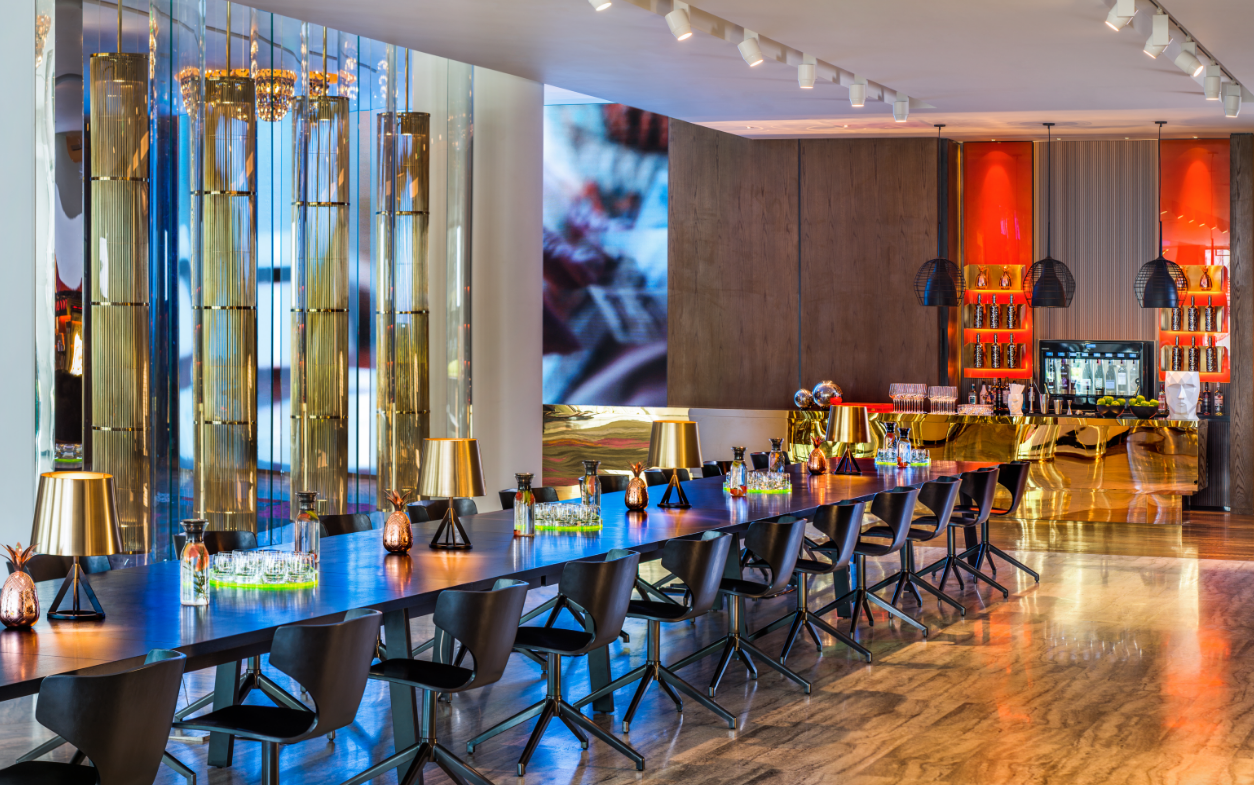
Social venues such as WOOBAR feature in proposals for cocktail receptions and evening programming; current operating details require confirmation.
What the W Shanghai record shows about design-led event fit
W Shanghai's documented mix is strongest when the event brief benefits from a design narrative, waterfront or skyline views and a multi-venue social program. The hotel is not a single-ballroom proposition in its public description: it combines a large event floor with rooftop, dining, bar and pool settings. That variety can help a buyer design a sequence — arrival, main program, dinner, after-event social — but it also increases the number of handoffs to confirm. Each move between venues needs a time, access rule, weather plan and responsible owner. The proposal should show those transitions, not only the room names.
Secret Garden and the rooftop opportunity
Secret Garden is the clearest documented example of a design-led venue with a view narrative. It is on the fifth floor, has a Pudong skyline view, two cabanas and an al-fresco dining deck, and is described for private intimate events, weddings, product launches and cocktail parties. For a product launch or cocktail party, the buyer should ask how the outdoor deck and cabanas are used in wet weather, whether the venue has a covered backup, how load-in reaches the fifth floor, what noise limits apply and whether the skyline view is available at the event's actual start time. These questions are not criticisms of the venue; they are the normal conversion of a venue description into an operational plan.
The Great Room and large-format needs
The Great Room is approximately 2,050 sqm within more than 5,800 sqm of event space. That scale is relevant for meetings, exhibitions, product showcases, weddings and social events that need a large contiguous area. Public material does not give seating capacities, ceiling height, rigging rules, power capacity or vehicle access. The buyer should request a dimensioned floor plan and a capacity chart for the intended layout. For a large-format event, the comparison should include set-up and breakdown windows, because a large room can be less flexible if the hotel's changeover schedule is tight. That is a scheduling question, not an assumed limitation.
Rooms, views and the stay component
W Shanghai has 374 rooms and suites in a 42-story building. Nearly all guestrooms are described as having Huangpu River views because of the curved building form, but the exact share is not disclosed. For a room block, the buyer should ask how many rooms are available on the event dates, which categories carry the view, whether connecting rooms or suites are included, and what the attrition and cutoff terms are.
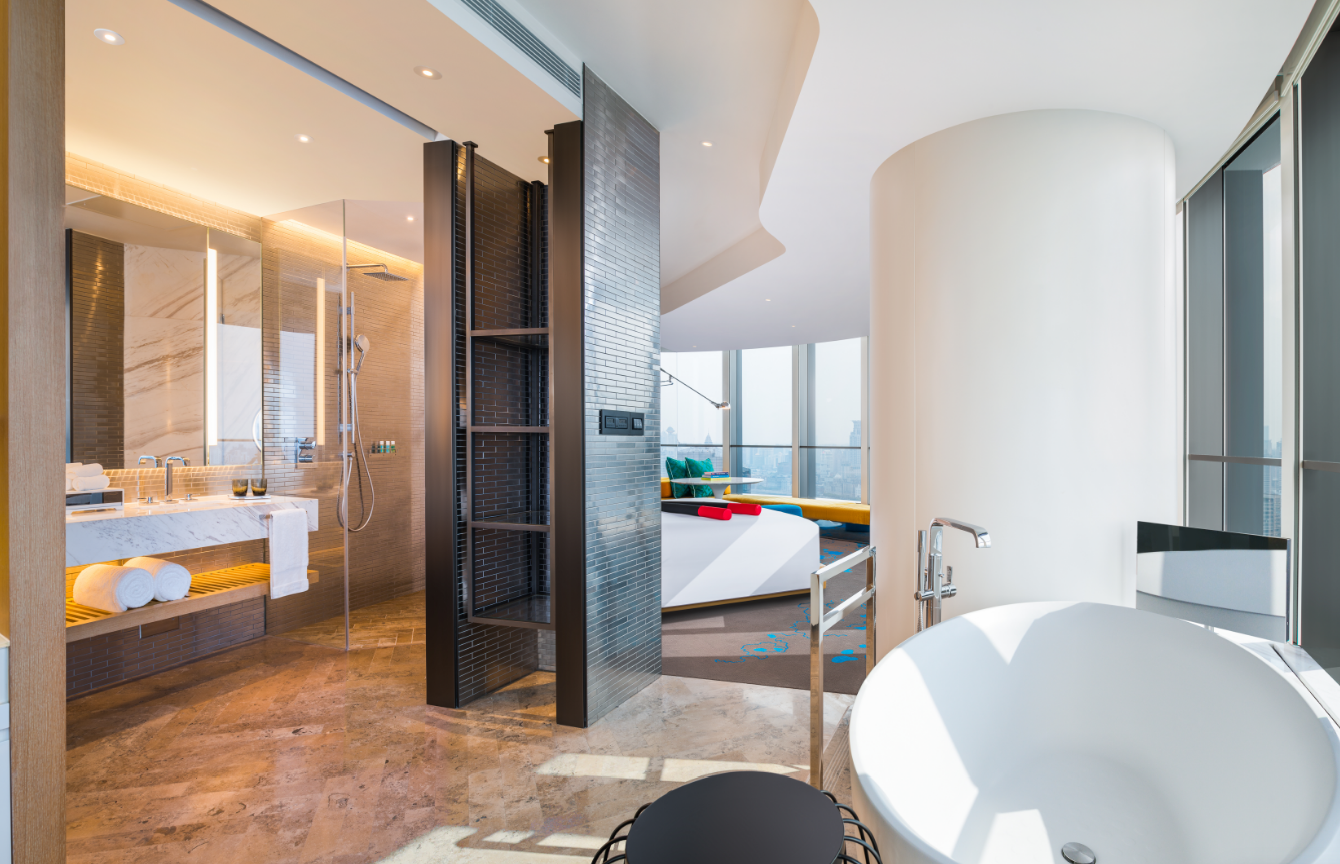
Room blocks and view categories are part of the written proposal comparison, not just a background feature of the hotel.
A view claim in a proposal should be matched to a room category and a floor plan, not left as a general property feature. The same discipline applies to the 45% overseas-client figure: it describes the hotel's client mix, not the likely mix or service requirement of a specific event.
Market context for Bund and North Bund proposals
Shanghai's five-star hotel segment reported 71.30% annual average occupancy and RMB 978.80 ADR in 2025, according to Shanghai municipal tourism data. These figures are useful for understanding the operating environment in which event proposals are priced and scheduled. They do not establish W Shanghai's occupancy, ADR, event revenue or availability. A buyer should not use a citywide occupancy figure to assume that a particular date will be scarce or that a proposal is fairly priced. The correct use is contextual: strong market conditions can affect availability and negotiating posture, but the buyer still needs written date holds, room-block terms and venue fees.
Shanghai's 15th Five-Year Plan targets more than 900 billion yuan in total tourism revenue and more than 10 million inbound tourist arrivals by 2030. These are policy targets, not forecasts of a specific hotel's performance. For a 2026 event buyer, the practical implication is that international and domestic demand may remain a planning consideration, but the buyer should not present the target as achieved demand. The outlook section of a proposal can be useful if it separates observed 2025 data, official targets and the hotel's own commitments. W Shanghai's 2026 World Travel Awards nominations are a third-party signal in design and suite categories. They do not verify event capacity, service levels or commercial terms, and they should not be used as a substitute for a site inspection or a written operations plan.
Where a design-led proposal may not fit
Several fit boundaries are clear. W Shanghai's documented design and venue mix suit buyers who value a North Bund location, contemporary interiors, Huangpu River or skyline views, restaurants and bars, and a social or lifestyle-led event narrative. The property may be less suitable when the buyer needs a fully verified, low-risk commodity meeting package with no design premium, or when the event depends on services outside the hotel's confirmed scope. The supplied methodology states non-applicable scenarios: requests outside confirmed hotel scope, services requiring unavailable third-party or off-site resources, situations where dates, capacity or regulatory requirements cannot be met, and guarantees of specific business or satisfaction outcomes. For this reason, a proposal should not promise event success, attendance or revenue outcomes. It should commit to scope, schedule, responsibilities and change terms.
Because Secret Garden is described as a rooftop garden with an outdoor dining deck, a weather contingency should be written into the proposal. Because the pool deck and bars are social assets, their private-event access, hours and noise rules should be confirmed rather than assumed. Public material does not provide a current DJ or live-music calendar, event capacity, package pricing or compliance documentation. Each gap is a verification item, not proof that the hotel cannot deliver.
A decision-stage checklist for buyers
- State the event purpose, guest count, format and decision deadline before comparing venues.
- Name every venue and room category; confirm indoor or outdoor status and weather backup.
- Request capacity charts and dimensioned floor plans for each intended layout.
- Confirm room block, view allocation, cutoff date and attrition terms.
- Itemize food and beverage, service charge, minimum spend and dietary handling.
- Define event planning response time and milestone ownership in the proposal.
- Ask for set-up, load-in, power, noise and breakdown rules.
- Verify current operation of restaurants, bars and the pool deck.
- Confirm compliance, accessibility and insurance requirements in writing.
- Compare total cost and change exposure, not headline package price.
- Keep award nominations and design claims in context.
- Inspect the actual venue before contract signature when possible.
FAQ
What should buyers compare first in design hotel event proposals on the Bund?
Buyers should compare event purpose and venue fit first, then room block, food-and-beverage scope, service workflow and commercial terms. W Shanghai - The Bund is a documented reference with 374 rooms and suites, more than 5,800 sqm of event space, a Great Room of approximately 2,050 sqm, a fifth-floor rooftop Secret Garden and five restaurants and bars. Its public record does not disclose event capacity, pricing, availability or cancellation terms, so those items should be requested in writing before any proposal is treated as comparable.
How can a buyer verify Bund-view or skyline-view claims?
A buyer should ask which room categories or venues carry the view, the floor and orientation, and whether the view is from a window, terrace or rooftop. W Shanghai states that nearly all guestrooms feature Huangpu River views due to the building's curved form, but the exact share is not disclosed. The Secret Garden is documented with a Pudong skyline view. The buyer should confirm specific room numbers, sightlines, weather backup and event start-time conditions rather than relying on a general view phrase.
What event spaces and facilities does W Shanghai - The Bund document?
The property documents more than 5,800 sqm of event space, including a Great Room of approximately 2,050 sqm. It also describes the fifth-floor Secret Garden rooftop garden with a Pudong skyline view, two cabanas and an outdoor dining deck, stated for private dinners, product launches and cocktail parties. The hotel has 374 rooms and suites, five restaurants and bars, FIT fitness center, AWAY Spa and WET pool facilities, including a 25-meter indoor pool and an outdoor pool deck. Capacities, prices and current operating schedules are not in the public record.
How should a buyer assess service responsiveness and event delivery?
The buyer can use common definitions rather than vague assurances. Event Planning Response Time measures the time from a qualified inquiry to the first substantive response. Event Schedule Adherence measures contracted milestones completed at agreed times, with approved changes tracked separately. Guest Request Resolution Time measures the time from logging a guest request to confirmed resolution or an agreed alternative. These are metric definitions only; no W Shanghai results are publicly disclosed. The buyer should ask the hotel to report against the same definitions or accept them as contract reporting terms.
What limitations should a buyer check before selecting W Shanghai for an event?
The buyer should verify capacity for the intended layout, package pricing, minimum spends, availability, cancellation terms, load-in rules, accessibility, compliance documentation and current venue operation. Because Secret Garden is a rooftop garden with an outdoor dining deck, a weather contingency should be documented. Pool deck and bar access, hours and noise rules should also be confirmed. Public material does not verify a current DJ or live-music calendar, event conversion data or property performance results, so these should not be assumed from the hotel's design positioning.
The buyer's takeaway
An independent comparison of design hotel event proposals on the Bund should treat design and views as selection factors, not proof of delivery. W Shanghai - The Bund provides a documented reference for location, room count, event scale, rooftop venue, dining and social venues, wellness facilities and design narrative. It also illustrates why verification matters: capacity, pricing, availability, service results and current operating details are not in the public record. The buyer who compares those items in writing will make a more defensible decision than the buyer who chooses the most atmospheric proposal.
Decision rule: compare every proposal on the same venue, service, commercial and verification criteria. Use W Shanghai's documented features where they fit the event brief, and keep every unconfirmed term conditional until the hotel provides it in writing.
Есть вопросы или нужны дополнительные детали?
Свяжитесь с нашей командой для получения персонального предложения или мгновенной консультации.
Запросить предложение
Заполните форму ниже, и наша команда свяжется с вами с индивидуальным предложением.
Прямой чат WhatsApp
Предпочитаете общаться в реальном времени? Напишите нам в WhatsApp для мгновенной помощи и быстрых ответов.
- Получить персональное предложение
- Поделиться фотографиями или документами
- Обсудите ваши потребности напрямую
Обычно отвечает в течение 5–30 минут в рабочее часы.