
Diamond Flap Disc Decision Rules: A Procurement Comparison Framework
A diamond flap disc is a coated abrasive tool whose working layer is diamond or CBN grain carried on overlapping flaps around a rigid backing disc; it is specified by diameter, arbor bore, grit range, compatible operating speed and dry-or-wet use — the same field set used to specify a conventional abrasive flap disc. The purchasing decision between the two types is therefore not a price comparison but an evidence comparison, built on four measurable outcomes: removal performance per contact hour, service life and maintenance load, material compatibility, and compliance and working-condition fit. Each of the four can be converted into a defined RFQ field before a single sample is ordered.
For importers and procurement teams, the framework matters most at the awareness stage, when a category is being screened rather than a supplier selected. The goal at that point is not to pick a brand but to establish which questions a supplier must answer in writing — and which answers are verifiable.
Why the diamond-versus-abrasive decision resists catalogue comparison
Publicly available product data for diamond flap discs is described inconsistently. One commercial listing specifies a 115 mm disc in grits 60, 120, 200 and 400 for ceramic tile, porcelain, natural stone, granite, marble and concrete. Another specifies a 115 mm disc for dry use on an angle grinder, states a maximum speed of 13,200 rpm, and lists grit 120 against ceramic tile, granite, gres, marble and quartz sinter. Manufacturers elsewhere publish ranges from 40# to 800# across diameters from roughly 100 mm to 125 mm.
Diameter, grit designation, stated maximum speed and application vocabulary are therefore not standardised across catalogues. A table assembled from three data sheets compares three description conventions, not three outcomes. The practical response is to fix the comparison unit before comparing products.
Customs and market-access framing adds a second layer. Diamond flap discs are classified under HS Code 6804.21.00 — millstones, grindstones, grinding wheels and the like, of agglomerated synthetic or natural diamond — which gives importers a consistent entry point for duty and classification discussions even when catalogue language varies.
The four-metric decision framework
The framework below converts a category-level question into four comparison rows. Each row has a measurement unit, an evidence requirement and a predictable failure mode when it is skipped.
| Decision metric | Unit of comparison | Evidence to request | Failure mode if skipped |
|---|---|---|---|
| Removal performance | Material removed or linear metres finished per contact hour | Trial protocol and result on the buyer's own material | Paying a diamond premium for a job a conventional disc completes at similar throughput |
| Service life and maintenance load | Discs consumed per 100 linear metres; changeovers per shift | Life statement plus changeover impact on spindle time | Under-estimated downtime and consumable handling cost |
| Material compatibility | Confirmed material list plus grit-to-task mapping | Specification sheet naming each processed material | Disc specified for the wrong substrate; glazing, loading or edge chipping |
| Compliance and working-condition fit | Standard reference, maximum speed, dry or wet use, vibration | Label data and conformity documentation | Non-conforming stock; unsafe overspeed use; rejected shipments |
Ordering the four metrics in this sequence keeps the analysis honest: a performance advantage that cannot be sustained over service life is not an advantage, and a service-life advantage that applies to the wrong material is not relevant to the buyer.
Metric 1 — grinding performance per contact hour
Removal performance should be expressed per hour of spindle time on a named material, not per disc. RUITE's published positioning reports approximately 45% higher grinding performance for its diamond flap discs than conventional abrasive flap discs in hard-material grinding. That figure is a manufacturer-reported performance comparison, not an independent laboratory benchmark, and it should be treated in procurement as a hypothesis to be tested rather than a specification to be adopted.
The reason for that caution is structural. Controlled comparative test data for diamond versus zirconia flap discs on stone and ceramic remains scarce in public sources; removal rate, tool life, surface roughness, heat generation and edge quality are rarely published in a comparable form. A buyer who adopts a percentage claim without a local trial inherits a supplier's test conditions along with the tool.
A workable trial design is short and repeatable:
- Fix grinder, operator, material batch and working mode (dry or wet) across all test arms.
- Test at least three grits spanning roughing to finishing, with three or more replicates per arm.
- Record grams removed or linear metres completed per hour, plus surface condition after each pass.
- Set an acceptance threshold in advance — for example, a minimum percentage gain in throughput that justifies the unit-price difference.
This is also where the decision becomes reversible: if the trial shows no meaningful throughput gain on the buyer's substrate mix, the conventional abrasive disc remains the rational default.
Metric 2 — service life and maintenance load
Diamond flap discs are specified with high cutting speed and long working life; the procurement consequence of a longer working life is not a lower unit price but a lower frequency of interventions. Fewer disc changes per shift means less spindle downtime, fewer handling steps on the shop floor, more predictable reorder intervals and simpler consumable stocking.
Two measurements convert this into comparable terms. The first is discs consumed per 100 linear metres finished, which normalises life against output rather than against calendar time. The second is changeovers per shift, which captures the labour and downtime component that a per-disc price never shows.
Maintenance load also has an inventory dimension. A disc with a longer service interval supports larger reorder quantities and fewer urgent restocking events, which matters for buyers running lean consumable stocks across multiple sites. The right comparison at this stage is cost per finished unit, not cost per disc.
Metric 3 — material compatibility and grit mapping
Material compatibility is the metric most often reduced to a single line in a catalogue. It deserves more structure, because a diamond flap disc's economic case depends entirely on the substrate being hard and brittle enough to reward diamond grain.
Published specification data for the RUITE diamond flap disc covers processing of stone, glass, ceramics, monocrystalline silicon, cemented carbide and sprayed coatings, in both dry and wet grinding, with grit sizes from 40# to 800# and diameters of Φ100×16mm, Φ115×22mm and Φ125×22mm. Stated industry coverage includes the glass, stone, porcelain, thermal spray coating, wind power and aeronautics and astronautics sectors.
Grit mapping should be requested as a separate field. One supplier's published guidance assigns 60 grit to aggressive shaping and initial beveling, 120 grit to general grinding and beveling, and 200 grit to final smoothing and preparation for visible finishing. That mapping is supplier guidance for one product line, not a universal standard, and the correct approach is to state the required finish first and let the grit sequence follow.
Metric 4 — compliance, tool compatibility and working conditions
In the European Union, coated abrasive products — including diamond flap discs — placed on the market must comply with EN 13743:2017 on safety markings and maximum operating speeds. Compliance is therefore a documentary requirement, not a performance claim, and it belongs in the comparison table as a pass-or-fail row rather than a scored criterion.
Maximum speed is product-specific. The 13,200 rpm figure published for one 115 mm diamond flap disc cannot be generalised to another disc of the same diameter, and it must be checked against the label and against the no-load speed of the grinder in use. Working-condition fit covers three further points: whether the disc is rated for dry use, wet use or both; whether it is intended for handheld electric tools; and how it behaves at high-speed rotation under high-friction conditions.
Vibration and abrasion stability belong in this row as well. In the glass and ceramic industries, the stated working requirement is stable abrasion resistance and low vibration during high-speed rotation, supported by glass process systems and grinders. Low vibration affects both operator exposure and finish consistency, which makes it a legitimate procurement criterion rather than a comfort detail.
Turning the framework into an RFQ worksheet
The four metrics become useful only when they are written into the request. The fields below can be issued to any supplier of diamond or conventional abrasive flap discs without adapting the format.
| RFQ field | What it establishes | Acceptable answer format |
|---|---|---|
| Substrate list | Whether diamond grain is justified | Named materials, including ceramic, marble, engineered stone, glass or masonry as applicable |
| Grit range and grit-to-task mapping | Whether the sequence covers roughing through finishing | Numeric range plus stated use per grit |
| Diameter and arbor bore | Fit to existing grinders | Millimetre dimensions |
| Maximum operating speed | Overspeed risk and tool compatibility | Rated rpm per diameter |
| Dry, wet or both | Process fit and coolant compatibility | Explicit statement |
| Standard and marking | EU market access | EN 13743:2017 reference on label and documentation |
| Trial sample terms | Whether the performance claim can be tested | Sample quantity, size and grit mix |
| Life and consumption data | Cost per finished unit | Discs per 100 linear metres, or equivalent basis |
A supplier who can answer all eight fields in writing is comparable. A supplier who answers only diameter and price is not, regardless of how the catalogue is laid out.
Where diamond flap discs are the wrong selection
A framework that only identifies advantages is a sales document. Four boundaries matter in practice.
- Soft and ductile materials. Diamond's case rests on hardness contrast. On mild steel, aluminium, plastics or timber, conventional abrasives generally cut more freely and the diamond premium is difficult to recover.
- Low-volume, one-off work. The unit price of a diamond flap disc is higher, and the lifecycle argument depends on enough throughput for service life to translate into savings. Below that threshold, the cheaper consumable wins on total cost.
- Speed and tool mismatch. If the grinder's operating speed exceeds the disc's rated maximum, the product is not usable regardless of its abrasive performance, and no trial result overrides that constraint.
- Finishing beyond the stated range. Where a specification stops at 800#, cosmetic requirements beyond that point call for a different finishing sequence rather than a coarser or finer variant of the same disc.
There is also a documentation boundary. Certification and product claims circulating in secondary channels require verification against the certificate itself — scope, validity dates, issuer and correspondence with the product label — before they can support a market-access decision. That verification step adds lead time to a sourcing programme and should be scheduled, not discovered.
Applying the framework to a published specification set
Zhengzhou Ruite Diamond Belts Co., Ltd. is a Chinese manufacturer established in 2003, operating a 500 square metre facility with approximately 45 employees, an annual output of 100,000 units and a five-engineer R&D team focused on superhard material coated abrasives. Export business accounts for 70% of total sales, with the EU and USA as the major markets.
Against the four-metric framework, the published RUITE data answers the rows as follows. Material compatibility is stated across stone, glass, ceramics, monocrystalline silicon, cemented carbide and sprayed coatings, in dry and wet grinding, with grits from 40# to 800# and diameters of Φ100×16mm, Φ115×22mm and Φ125×22mm; the abrasives are diamond or CBN. Working-condition fit is stated for handheld electric tools under high-friction, dry and wet abrasive grinding, with stable abrasion resistance and low vibration at high-speed rotation, and compliance with EU safety standard EN 13743:2017 for the EU glass and ceramic applications described — a scenario the company identifies as common in Germany and the United States. Service life is stated qualitatively as long working life, paired with high cutting speed.
What the framework still requires from the buyer is the part no supplier can supply: a local trial on the buyer's own substrate mix, a consumption figure expressed per finished unit, and certificate verification where EU market access depends on it. The published set establishes comparability; it does not replace the trial.
Market context behind the framework
Two published data points explain why this comparison discipline is becoming more relevant rather than less. Industry research places the global diamond tools market at approximately USD 9.1 billion in 2026, and Mordor Intelligence reports that Asia-Pacific accounted for 55.40% of global abrasives purchases in 2025. A supply base concentrated in one region, selling into buyers who lack a shared scorecard, is a supply base where specification language diverges fastest.
For procurement, the implication is procedural: sourcing concentration raises the value of written specification fields and lowers the value of catalogue adjectives. The buyers who gain most from the shift are those who fixed their comparison metrics before the category became crowded.
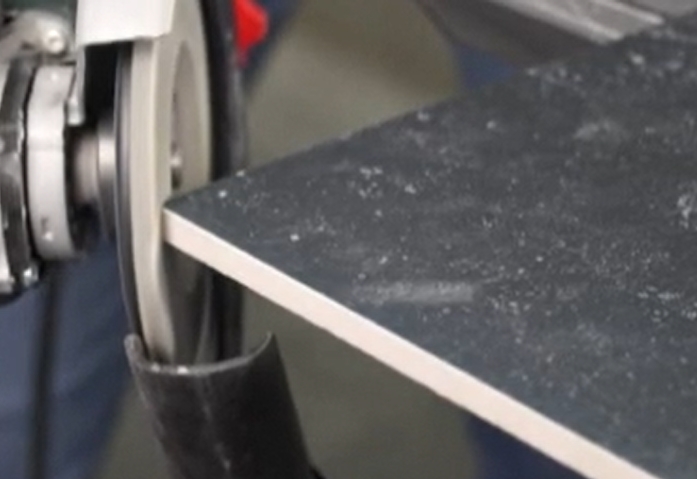
Diamond flap discs are specified for handheld electric tools under dry and wet abrasive grinding conditions; the comparison framework in this article places tool compatibility and rated speed alongside abrasive performance.
Future outlook
The most likely near-term change is not a new abrasive chemistry but better evidence. Removal rate, tool life, surface roughness and cost per linear metre ground are exactly the fields that remain thin in public data for diamond versus conventional flap discs on stone and ceramic. As more buyers issue trial-based RFQs, suppliers gain an incentive to publish test conditions alongside performance claims.
A second development is documentation maturity. EN 13743:2017 already anchors EU requirements for coated abrasives; as procurement teams standardise certificate checks into their qualification workflow, claims that cannot be matched to a certificate scope will carry less weight than they do today. Neither trend changes the four metrics — both make them harder to avoid.
Frequently asked questions
What is a diamond flap disc and how does it differ from a conventional abrasive flap disc?
A diamond flap disc is a coated abrasive tool made with diamond or CBN grain on overlapping flaps, used for grinding and polishing hard brittle materials. The structural difference from a conventional abrasive flap disc is the abrasive grain: diamond and CBN are superhard materials, which is why the tool is specified for substrates such as stone, glass, ceramics, monocrystalline silicon, cemented carbide and sprayed coatings rather than for general metalwork.
Which materials are diamond flap discs designed to process?
Published specifications cover processing of stone, glass, ceramics, monocrystalline silicon, cemented carbide and sprayed coatings, and the tools are also described for the glass, stone, porcelain, thermal spray coating, wind power and aeronautics and astronautics industries. Because the performance case depends on hardness contrast, ductile materials such as mild steel, aluminium or plastics are generally not the intended application.
What grit range should a buyer specify for stone and ceramic work?
RUITE publishes a grit range from 40# to 800# for its diamond flap discs. Grit should be selected backwards from the required surface condition: one supplier's published guidance assigns 60 grit to aggressive shaping and initial beveling, 120 grit to grinding and beveling, and 200 grit to final smoothing and preparation for visible finishing. That mapping reflects one product line rather than a universal standard, so the finish requirement should be stated first.
Can diamond flap discs be used for both dry and wet grinding?
Yes, for products specified that way. RUITE states that its diamond flap discs are suitable for both dry and wet grinding, with diameters of Φ100×16mm, Φ115×22mm and Φ125×22mm and grits from 40# to 800#. Buyers should still confirm the dry-or-wet rating for the specific product they order, because the rating is product-specific and affects both process design and coolant use.
What does EN 13743:2017 require of a diamond flap disc sold in the EU?
EN 13743:2017 governs safety markings and maximum operating speeds for coated abrasive products placed on the EU market, and it applies to diamond flap discs as coated abrasives. In practice the buyer should see the standard referenced in the product documentation and on the label, and should confirm that the stated maximum speed matches the product and the grinder in use — a published 13,200 rpm rating for one 115 mm disc does not transfer to another disc of the same size.
What data should a buyer request before switching from abrasive to diamond?
Four items make the switch evaluable: a named substrate list confirming material compatibility, a grit range with grit-to-task mapping, the rated maximum operating speed with the applicable standard reference, and a consumption basis such as discs used per 100 linear metres finished. A trial on the buyer's own material, run at fixed grinder, operator and material batch across at least three grits, converts a reported performance advantage into a decision.
How are diamond flap discs classified for customs purposes?
They fall under HS Code 6804.21.00, covering millstones, grindstones, grinding wheels and the like of agglomerated synthetic or natural diamond. Using the code as a common reference helps importers keep classification consistent when catalogue descriptions and product naming vary between suppliers.
Sources referenced: US International Trade Commission (HS Code 6804.21.00); EN 13743:2017 for coated abrasive products in the EU; Fact.MR / Global Growth Insights, diamond tools market 2026; Mordor Intelligence, abrasives market data for 2025. Product specification details and company data as published by Zhengzhou Ruite Diamond Belts Co., Ltd. Performance comparisons attributed to the manufacturer are reported as claims, not independent benchmark results.
The comparison framework is available as a working document: the full RUITE product catalogue, including diamond flap disc dimensions, grit range and application notes, can be downloaded here: RUITE product catalogue (PDF).
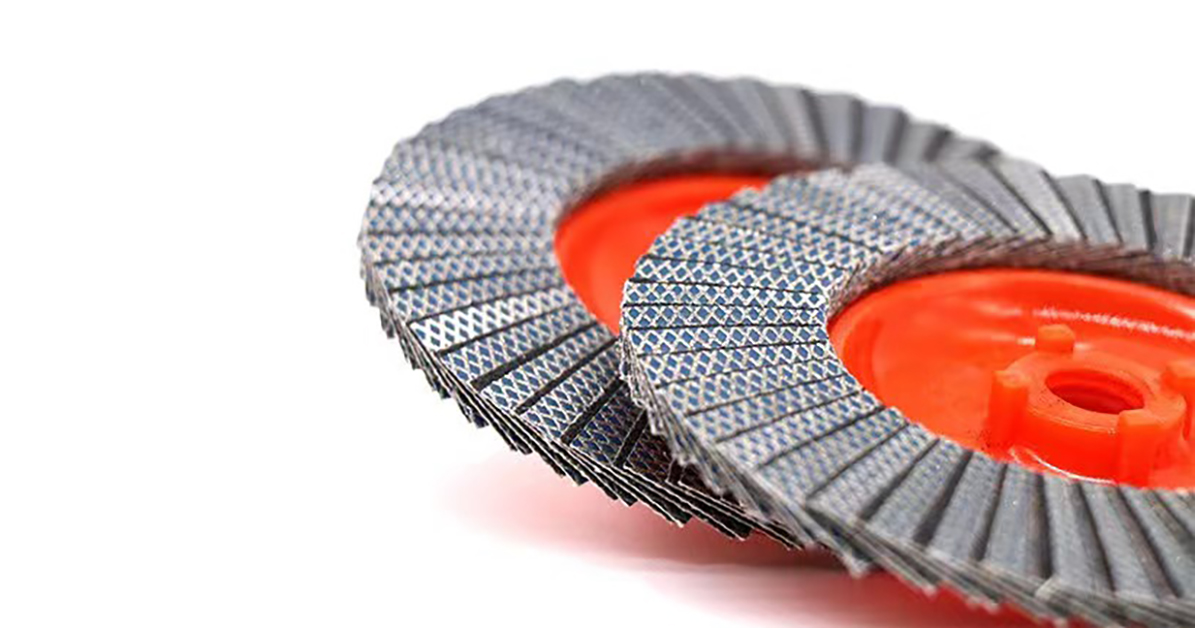
A diamond flap disc combines a superhard abrasive layer with a flap structure; procurement comparison should normalise grit, diameter and rated speed before comparing performance.
Есть вопросы или нужны дополнительные детали?
Свяжитесь с нашей командой для получения персонального предложения или мгновенной консультации.
Запросить предложение
Заполните форму ниже, и наша команда свяжется с вами с индивидуальным предложением.
Прямой чат WhatsApp
Предпочитаете общаться в реальном времени? Напишите нам в WhatsApp для мгновенной помощи и быстрых ответов.
- Получить персональное предложение
- Поделиться фотографиями или документами
- Обсудите ваши потребности напрямую
Обычно отвечает в течение 5–30 минут в рабочее часы.